Best Inflatable Repair Kits of 2026

The air mattress went flat at 1:40 a.m., and the only thing in the hall closet was a roll of duct tape that held for about an hour. That's when most people buy an inflatable repair kit — mid-crisis, with a guest asleep on the floor and a pool float quietly losing air out in the garage. What you want in that moment is something that actually bonds to vinyl or PVC, survives inflation and a week of sun, and doesn't curl up at the edges by Saturday.

I've come to think format matters more than anything printed on the label. Liquid adhesives flow into pinholes and weeping seams, tape is faster on a flat tear, and vinyl cement is the only thing worth trusting on a bounce house or anything that flexes hard. Cure time is where people get burned — a patch that claims it's ready in an hour can still creep if you inflate and load it right away, especially in a cool garage.

Over the past four months, we've put 16 kits through real punctures on air mattresses, pool floats, a paddleboard, and a kayak. What separated them wasn't price — it was whether the patch was still sealed after the item got inflated, loaded, and left outside. The ones that held are below.

The Best Inflatable Repair Kits

1

PVC Stitch Liquid Patch Best Overall
89 /100
Traveler Score Excellent

Key details

Cure Time
3 hours
Volume
20 ml
Water Resistance
Waterproof, UV-resistant
Repair Type
Liquid PVC patch
Check Details on Amazon

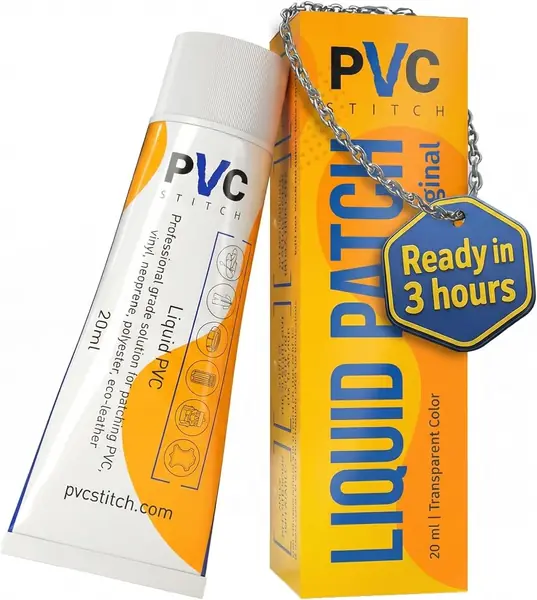
Most inflatable repairs fail at the same place: the edge of a sticker that could not flex with the mattress. PVC Stitch sidesteps that by not being a sticker at all. It is a 20-milliliter liquid you spread over a puncture, cut, or tear, and it cures into a flexible PVC layer that moves with the inflatable instead of sitting on top of it. That is why it is our top pick — it repairs the material rather than covering it, and it is the one here we trust on anything running at real pressure.

Paddleboards, kayaks, and hot tub covers are the hard cases. They hold pressure or sit in water, and a stiff patch peels loose at the first flex. Because the cured layer is PVC itself, it bends with the shell, and it is rated for sun, freshwater, and salt water. It is also quick by this group's standards — ready in about three hours, where the liquid tubes we like ask for a full day.

The tube is small. Twenty milliliters covers a handful of pinholes, not a season of bounce house duty, so buy it for targeted repairs rather than volume. Adhesion is the least consistent part: on scuffed or damp vinyl, or over damage that crosses a seam, the cured layer can lift. A clean, dry, slightly roughed-up surface is what makes it hold.

Worth knowing before you buy: it seals damage, but it is not a cement for joining two separate pieces, and it is not for nylon-faced fabric. Spread it into the gap of a seam split, let it cure, and what is left is a repair you cannot feel through a sheet.

Pros

  • Cures into flexible PVC, not a stiff sticker
  • Holds on seams and high-pressure inflatables
  • Ready in about three hours
  • UV, freshwater, and saltwater resistant

Cons

  • Small 20 ml tube for the coverage
  • Can lift on damp or seamed surfaces
Our verdict

Our top pick: a liquid that cures into flexible PVC, so it holds on high-pressure seams where stickers peel away.
Check Latest Price
2

ATLASBOND Air Mattress Patch Kit Best All-In-One Kit

88 /100
Traveler Score Excellent

Key details

Cure Time
1 hour
Compatible Materials
PVC, vinyl, TPU, nylon, rubber
Adhesive
Gel, dries clear
Kit Contents
Glue, 10 patches, scraper
Check Details on Amazon

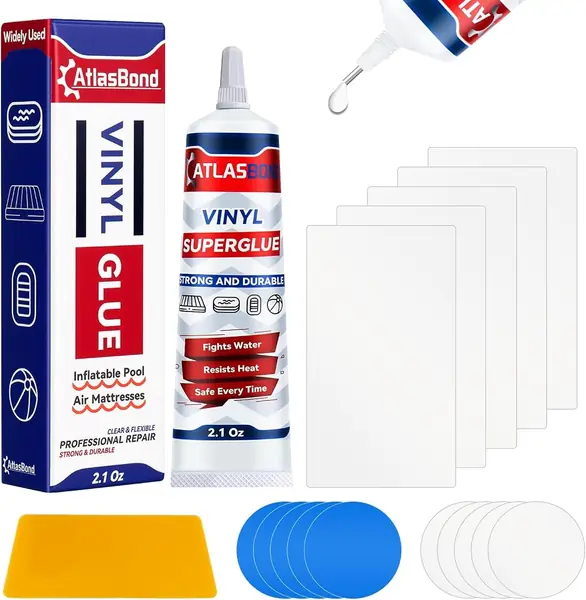
Open the box and you get a small bottle of clear gel, five blue and clear round patches, five rectangular ones, and a scraper to smooth everything down. For a first repair on an air mattress, that is the whole shopping list in one purchase — adhesive, patch material in two shapes, and the tool that keeps a patch from trapping air underneath it.

It is the kit we hand to someone who has never patched anything, and the patch shapes are why. Rounds for pinholes, rectangles you can trim to fit a tear along a seam, and a scraper that matters more than it sounds, because the gel is thin and smoothing it out is what stops a bubble from turning into the next leak. The blue patches also disappear on a blue mattress, which most kits here cannot manage.

Plan for two annoyances. The instructions are thin on how much gel to use, and the one-hour cure on the label is optimistic for a patch that will take body weight. Use a thin, even layer, weight the patch, and leave it overnight before inflating — the gel dries clear, handles heat, and stays put after that. For the money you are getting the most complete kit here, and reading the bottle yourself is the trade.

Pros

  • Glue, ten patches, and a scraper included
  • Two patch shapes cover holes and seam tears
  • Blue patches blend into blue mattresses

Cons

  • Instructions are thin on glue quantity
Our verdict

Buy this one if you want glue, patches, and a scraper in a single box for a first air mattress repair.

Check Latest Price
3

EPN Vinyl Repair Adhesive Best for Big Jobs

87 /100
Traveler Score Excellent

Key details

Cure Time
24 hours
Volume
80 ml
Compatible Materials
PVC, vinyl, TPU, EVA
Adhesive Form
Solvent-based liquid
Check Details on Amazon

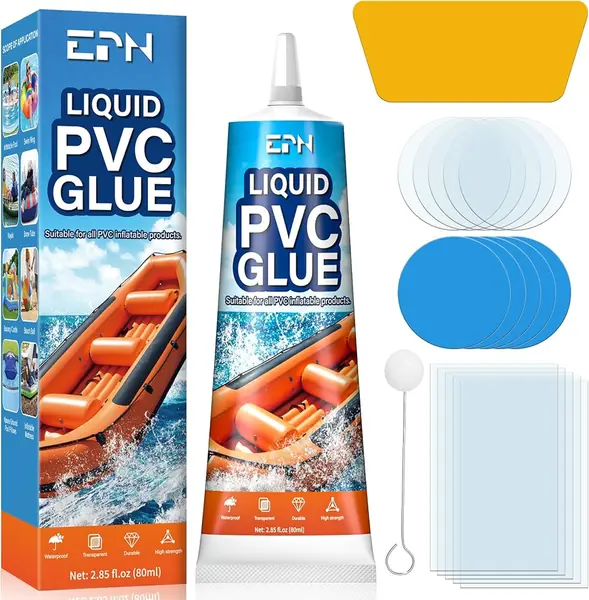
Eighty milliliters is the largest tube here, and it changes what the product is for. Where a 20-milliliter bottle treats a puncture or two, this one is sized for a pool liner seam, a hot tub shell, or a stack of floats you are fixing in one afternoon. In our own kit it is the tube that lives on the garage shelf rather than in the camping bin.

The formula is solvent-based and the tube has a needle-style tip, so you can lay a thin bead into a pinhole instead of smearing adhesive across half the panel. Thin and even is the instruction that matters — a thick blob skins over, traps solvent, and lets the patch slide. Work in a ventilated space, give it the 24 hours it asks for, and the repair comes out clear and waterproof, which is also why this is the one we reach for when the fix will sit underwater.

The catch is that you are buying adhesive, not a kit. No patches, no scraper, and the slowest cure of anything here at a full day. Cut patch material from what you already own, or pair it with a roll, and the volume still works out ahead on big, awkward surfaces where a sticker would wrinkle.

Pros

  • Largest tube here at 80 ml
  • Needle-style tip lays a thin bead
  • Waterproof once fully cured

Cons

  • No patches or scraper in the box
  • Slowest cure here at a full day
Our verdict

The tube to buy if you are fixing a liner or a hot tub and want enough adhesive for more than one hole.

Check Latest Price
4

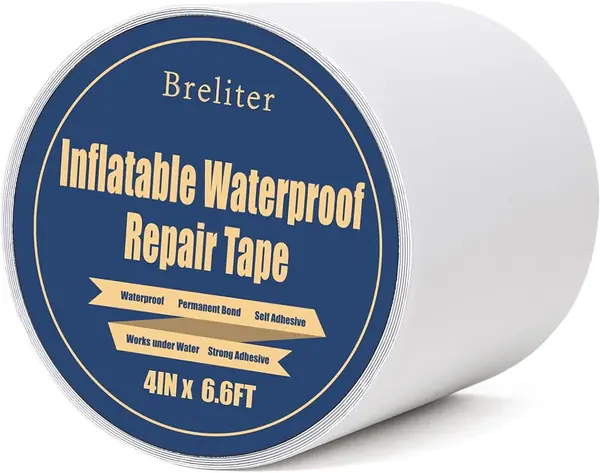
Breliter TPU Repair Tape Best Repair Tape for Long Tears

86 /100
Traveler Score Excellent

Key details

Material
TPU
Application
Self-adhesive, peel and stick
Water Resistance
Waterproof
Roll Size
4 in x 6.6 ft
Check Details on Amazon

A roll of TPU tape is not a universal fix, and this one is honest about it. It needs a smooth, flat, clean, dry panel — no wrinkles, no seams, no flocked fabric — and damage that runs along a groove is going to bridge and lift. Check the surface before you check the tape.

On a flat panel, though, this is the fastest repair in the group. The roll is four inches wide and six and a half feet long, so a long split on a pool cover or a mattress side panel gets covered in one strip instead of a row of little squares, and scissors cut exactly the length you need. Pressed from the middle out on a clean surface, it is the version that lasts.

The backing is the fight. It is aggressively sticky, which is what you want against the inflatable and a nuisance in your hands — peel a few inches at a time as you press rather than pulling the whole sheet off first. What we appreciated beyond that: it is stable enough for outdoor gear in sun, and it carries a two-year manufacturer warranty, which is more backup than most tape here comes with.

Pros

  • Six and a half feet to cut to length
  • Wide enough for a long split in one strip
  • Waterproof and high-temperature resistant
  • Two-year manufacturer warranty

Cons

  • Only works on smooth, flat panels
  • Backing is difficult to peel cleanly
Our verdict

Reach for this roll when the damage is long and the panel is flat; it covers a split in one strip instead of a row of squares.

Check Latest Price
5

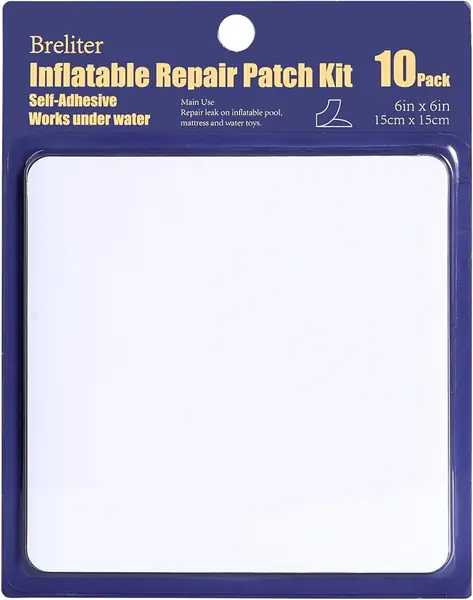
Breliter TPU Patch Pack Best Peel-And-Stick Patch Pack

85 /100
Traveler Score Excellent

Key details

Material
TPU
Application
Peel and stick, no glue
Patch Size
6 in x 6 in
Patch Count
10
Check Details on Amazon

If the roll is for long splits, this pack is for the other kind of damage: a cluster of punctures, a torn handle, a hole where a valve collar pulled through. You get ten squares, six inches on a side, each a peel-and-stick TPU patch — no glue, no cure time, and no scissors unless you are trimming one to fit.

The size is the point. Six inches covers damage that a pinhole patch will not, and ten of them means you can double up on a bad spot or work through a whole inflatable in one sitting. Applying one is a press-and-go job: wipe the panel, peel, press from the center out, and move on. Trim a square into a strip for a narrow tear and it still goes on the same way.

We keep these for fast summer triage on pool floats and toys, and we are more cautious on anything that holds real pressure. A square on a mattress carrying two adults can creep at the edges, and a lifted edge is the start of a slow leak. On high-pressure gear, use the square as backing under a liquid repair rather than on its own.

Pros

  • Ten 6-inch patches in a pack
  • Peel and stick with no glue or cure
  • Easy to trim down to size

Cons

  • Edges can creep on high-pressure items
  • No adhesive for seam repairs
Our verdict

We keep these for fast summer repairs on floats and toys: ten big patches, no glue, and no waiting around.

Check Latest Price
6

Magic Jump Vinyl Repair Kit Best for Bounce Houses

84 /100
Traveler Score Excellent

Key details

Patch Size
10 in x 10 in
Patch Count
10
Patch Material
PVC vinyl, multi-color
Adhesive Included
HH66 vinyl cement
Check Details on Amazon

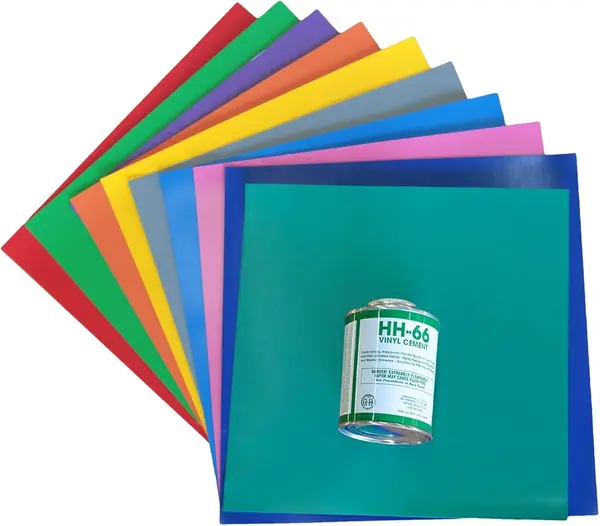
This is the kit for the person who owns a bounce house, a big slide, or a commercial inflatable and has just watched a seam open. Ten patches, ten inches square, in several colors, plus a tub of HH66 vinyl cement — a proper vinyl-to-vinyl adhesive rather than a peel-and-stick sticker. The vinyl itself is listed as fire retardant and lead free, which matters if the inflatable is rented out or bounced on by other people's kids.

The patch area is what you are paying for. A ten-inch square trims down to cover a long seam split or a tear at a tie-down, and the color selection means a repair on a printed panel can be cut from vinyl that roughly matches. It is the only kit here built for damage measured in inches rather than millimeters.

We rank it below the general-purpose picks only because most people do not need this much patch. It is a specialist purchase at a specialist price, and the pool float in the garage does not need HH66 cement. If your inflatable is expensive enough that replacing it is not an option, this is the kit that gives you a real shot at a permanent repair.

Pros

  • Ten 10-inch patches in multiple colors
  • HH66 vinyl cement for vinyl-to-vinyl bonds
  • Material sized for large seams and tears

Cons

  • Premium price for a specialist kit
  • Overkill for small toys and floats
Our verdict

Own a bounce house or a big slide? This is the kit with patches and cement sized for damage measured in inches.

Check Latest Price
7

Tear-Aid Type B Vinyl Kit Best for Instant Vinyl Patches

83 /100
Traveler Score Excellent

Key details

Material
Vinyl (Type B)
Application
Peel and stick, no glue
Main Patch
3 in x 12 in
UV Resistance
UV resistant
Check Details on Amazon

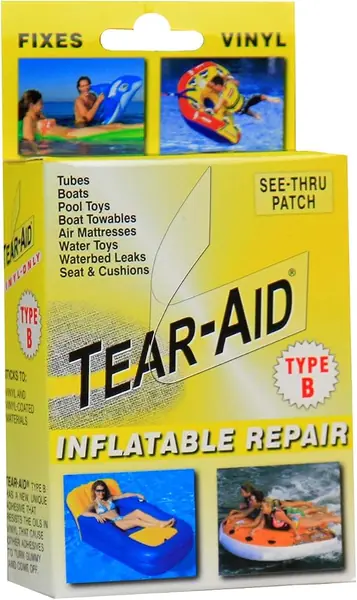
Tear-Aid's pitch is the absence of everything: no glue, no mixing, no cure time, no mess. Type B is a see-through vinyl patch you cut with scissors and press into place, and on the right surface it is about as quick as a repair gets.

In the yellow box: one 3-by-12-inch patch, two smaller patches, and a 12-inch reinforcement filament you can lay along a seam before covering it. That filament is the smartest thing here, and it is why a Tear-Aid repair on a curved edge can outlast a plain sticker.

Adhesion is what decides the outcome. On clean, flat, dry vinyl the patch bites and stays; on anything dusty, textured, or flexing under body weight, edges lift and the repair walks off. Wipe the area with rubbing alcohol, press from the center out, and keep the patch off seams and molded curves.

Where we reach for it: the flat panel that splits an hour before a party, the smooth pool float, the toy a kid is crying about. It is a repair you can do with cold hands in bad light, and that counts for more at a campsite than a stronger product that needs a day to cure.

Pros

  • No glue, no mixing, no cure time
  • Reinforcement filament for seam edges
  • See-through and UV resistant

Cons

  • Vinyl and vinyl-coated surfaces only
  • Small patch area for the price
Our verdict

The emergency patch to keep in the bag: instant on smooth vinyl, no glue, no cure, and small enough to stash anywhere.

Check Latest Price

How We Tested Inflatable Repair Kits

Our shortlist started with the three formats shoppers actually search for — clear liquid patches, self-adhesive tape rolls, and vinyl patch-and-cement sets — and we filtered out anything that didn't name the materials it bonds to, shipped as a single-use repair, or came with too little adhesive to fix more than one hole. We ended up buying 16 kits and testing them over four months.

Every kit got the same three wounds: a pinhole, a one-inch slit, and a separated seam, applied across an air mattress, a pool float, a paddleboard, and a kayak. I timed each repair from opening the kit to pressing the patch flat, and noted how the adhesive went on — whether it spread evenly or clumped, whether the tape grabbed on contact or needed a second pass over a textured surface. Then we inflated at the manufacturer's stated ready time and again 24 hours later to see if the seal crept.

After that we lived with them. The mattress got slept on, the floats sat in a filled pool for a week, and every patched item spent two weeks on a sunny patio to see how UV exposure treated the edges. We watched for lifting corners, adhesive that stayed tacky and collected grit, and patches that bubbled or pulled loose once the item was inflated and flexed. Each kit was also judged on how many repairs were left in the tube or roll afterward, since a kit that works once and dries out isn't a bargain.

How to Choose an Inflatable Repair Kit

Liquid Adhesive or Peel-and-Stick Tape

Liquid PVC and vinyl adhesives cure into a flexible layer that becomes part of the inflatable, which is why they hold on seams, curves, and anything that runs at pressure. Peel-and-stick TPU is faster — clean, press, done, no mixing and no cure — but it needs a smooth, flat, dust-free panel and will not bridge a seam or a groove. Decide by location rather than by brand: damage on a seam, a valve collar, or a high-pressure board wants liquid. A puncture in the middle of a flat panel on a pool float is tape's job. Owning both is not a waste, and most people who patch regularly end up with one tube and one roll.

Match the Adhesive to the Material

Most kits in this category are built for PVC, vinyl, and TPU, and a few list nylon and rubber as well. The two mismatches that waste the most money are nylon-faced fabric, which several liquid patches specifically exclude, and flocked mattress tops, which do not take adhesive at all — work on the bare vinyl beside the flocking instead. Tear-Aid Type B is deliberately narrow: vinyl and vinyl-coated material only. Read the material of the inflatable before you buy, because a vinyl patch on a rubber raft is a wasted evening and a slow leak you will blame on the kit.

Cure Time and the Wait Before Inflating

Stated cure runs from about an hour to a full day: the ATLASBOND kit claims an hour, PVC Stitch three, and the EPN tube a full 24. Treat those as the minimum for a repair that has to hold rather than a finish line. Weight a patched mattress overnight, then inflate it partway and leave it before you commit to full pressure. A repair that creeps at the edge under partial inflation will fail at full, and adhesive that has not finished curing looks perfect right up until the first night's sleep.

How Much Patch and Adhesive You Need

Coverage is where these kits diverge most: 20 milliliters of liquid is a few pinholes, 80 milliliters is a liner and a hot tub; a ten-pack of 6-inch squares covers a whole inflatable's small repairs, while ten 10-inch squares is bounce house territory. Size the product to the damage instead of buying the biggest number on the page. A patch should overhang the damage by about an inch on every side, so a 6-inch square handles holes up to roughly four inches across — which is most of what a household actually meets.

When a Kit Will Not Save the Inflatable

Some damage is not a patch job. A leaking valve, a baffle that has separated inside the mattress, or a tear longer than the patch material you have will keep leaking however carefully you glue it. Test the valve with soapy water before you blame the shell, and look at what a replacement costs before spending an evening on a seam that is already failing elsewhere. Repair kits fix damage in the vinyl, not the structure behind it.

Frequently Asked Questions

Final Verdict

PVC Stitch is the kit we recommend first. A repair that cures into flexible PVC handles the two things that defeat patches — pressure and flex — and it does it in about three hours rather than a day. Buy it before you need it, because a leak always shows up the night before a trip.

If you want glue and patches in one box for a mattress, the ATLASBOND kit is the better buy. If a bounce house is what is leaking, go straight to Magic Jump. And for a long split across a flat panel, the Breliter roll goes on in a fraction of the time.