Wilderness Systems Heavy Duty Kayak Cart Best Overall
Key details
- Wheels
- Solid, flat-free
- Load Capacity
- 450 lb
- Cart Weight
- 13 lb
- Hull Support
- Adjustable bunker bar
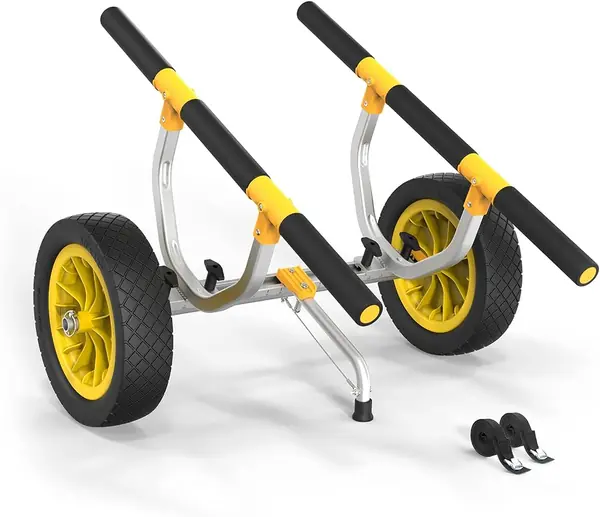
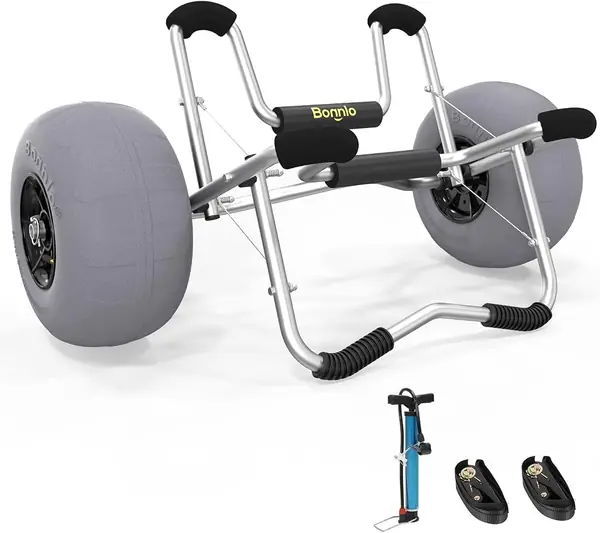
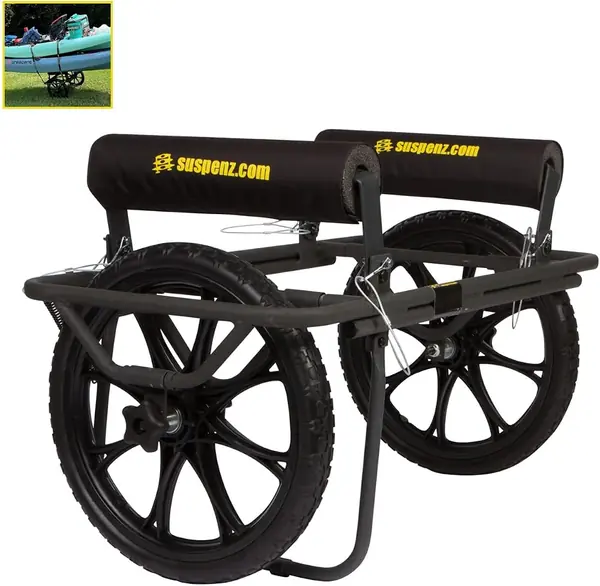
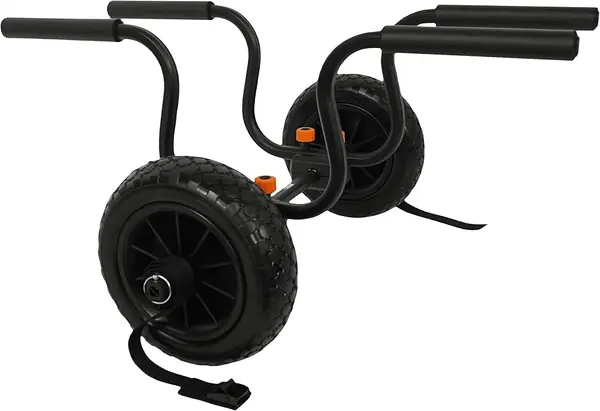
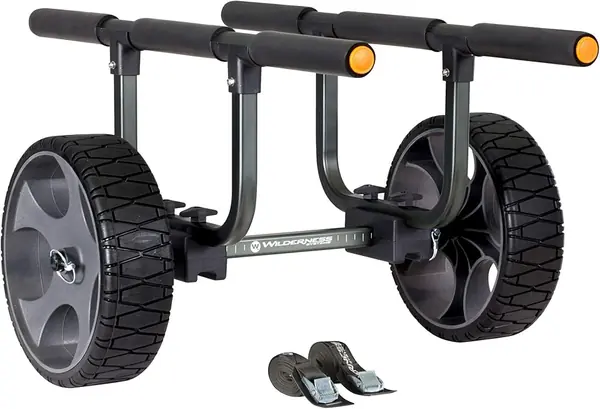
The worst moment in kayak fishing isn't the paddle — it's getting a hundred pounds of boat and gear from the truck to the water alone. Most carts make you balance the hull on two posts while you thread a strap through something. This one lets you set the boat down and walk. The bunker bars are wide, padded saddles that catch the hull, there's no kickstand to kick out of the way and no scupper posts to line up, and we noticed the difference most on a sloped concrete ramp, where a narrower cart lets the boat rotate as you pull.
The two height settings earn their keep. Set low, the hull sits close to the axle for a lower center of gravity, which is what keeps a loaded boat from tipping on a sidehill. Set high, the cradle lifts so a deep-V hull clears the tires instead of rubbing them. With a 450-pound rating and a 13-pound aluminum frame, we had no worries rolling a rigged fishing kayak up a gravel ramp, and the width adjustment held its setting trip after trip.
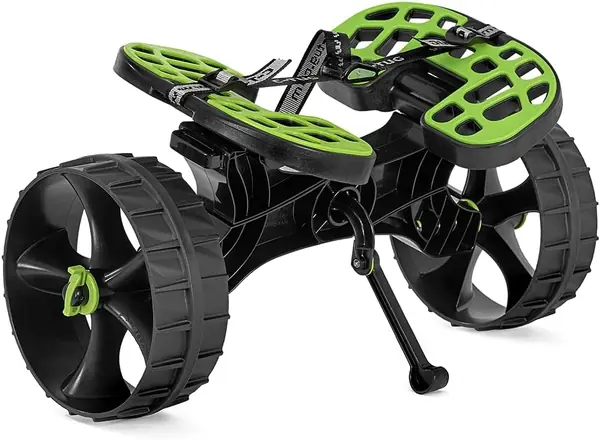
What you give up is compactness. At 32 by 26 by 16 inches it doesn't fold, so it rides in the truck bed rather than in the kayak's hatch — a genuine problem if your put-in is a paddle away from the road, and the reason the C-Tug further down this list exists. It also sits at the top of the price range here; the capacity and the no-fuss loading are what you're paying for.
Pros
- Cradles the hull so it can't twist sideways
- 450-pound rating with no kickstand or scupper posts
- Two height settings clear deep-V hulls
Cons
- Doesn't fold, so it rides in the truck bed
For a heavy, fully rigged kayak and a launch with a slope, this is the cart we recommend first: it cradles the hull, doesn't tip, and needs no kickstand or scupper posts.