Best Hiking Shoes for Senior Men of 2026

The trouble with hiking shoes isn't finding something cushy — it's finding something cushy that doesn't roll your ankle on a root. Pile in too much foam and the ground stops talking to you; strip it out and every rock registers through your heel. What you actually want is a shoe that grabs wet rock, keeps the morning dew out, and still feels fine on the drive home. That's a narrower target than the shelf at your local outfitter suggests.

I've walked the same rocky ridge trail for years, and I've learned the hard way that a shoe's real personality doesn't show up until about mile four. Over the past six months, my team and I put 12 pairs through that trail and a lot of flatter ones, weighing comfort against stability, water resistance, and whether the price was honest. One thing first-time buyers miss: the size you wear in a running shoe is rarely the size you want in a hiker, especially with a daypack on and a steep descent ahead. The picks below are the ones we'd lace up again.

1

Best Overall

Merrell Moab 3

93 /100
Traveler Score Outstanding

Key details

Model
Moab 3
Closure
Lace-up
Listed Size And Weight
15 x 10 x 5 inches; 3.06 pounds
Check Details on Amazon

The first walk is the test that matters when your feet already carry a few decades of miles, and the Moab 3 is the pair here that makes nothing of it: no hot spots, no ginger half-mile while the upper softens, nothing to break in. Lace up, walk out the door, and they behave like a shoe you have owned for a year. We put it at the top of this set for that more than for any single number.

The fit is where that comes from. There is room across the toes for feet that have spread or grown a bunion, but the heel stays locked down, and heel lift is the one thing that turns a long descent into a blister. Half sizes mean you can dial in length instead of settling, and the fit holds from pair to pair — useful when you find something that works and want the same thing again in two years.

Traction is the other half of the argument. The tread holds on wet rock, packed dirt, and the slick wooden bridges that turn up on park trails, and the platform underfoot is stable enough that you stop thinking about your feet on the downhill. It is the most expensive pair in this group, and the money goes into the fit and the outsole rather than features you will never use.

Pros

  • No break-in; comfortable on the first walk
  • Roomy toe box with a locked-in heel
  • Grips wet rock and packed dirt
  • Half sizes take the guesswork out of fit

Cons

  • Toe cap and sole edge can peel early
Our verdict

For most senior hikers, this is the pair to start with: cushioned from the first mile, roomy without feeling loose, and steady on wet rock.
Check Latest Price
2

Best Waterproof

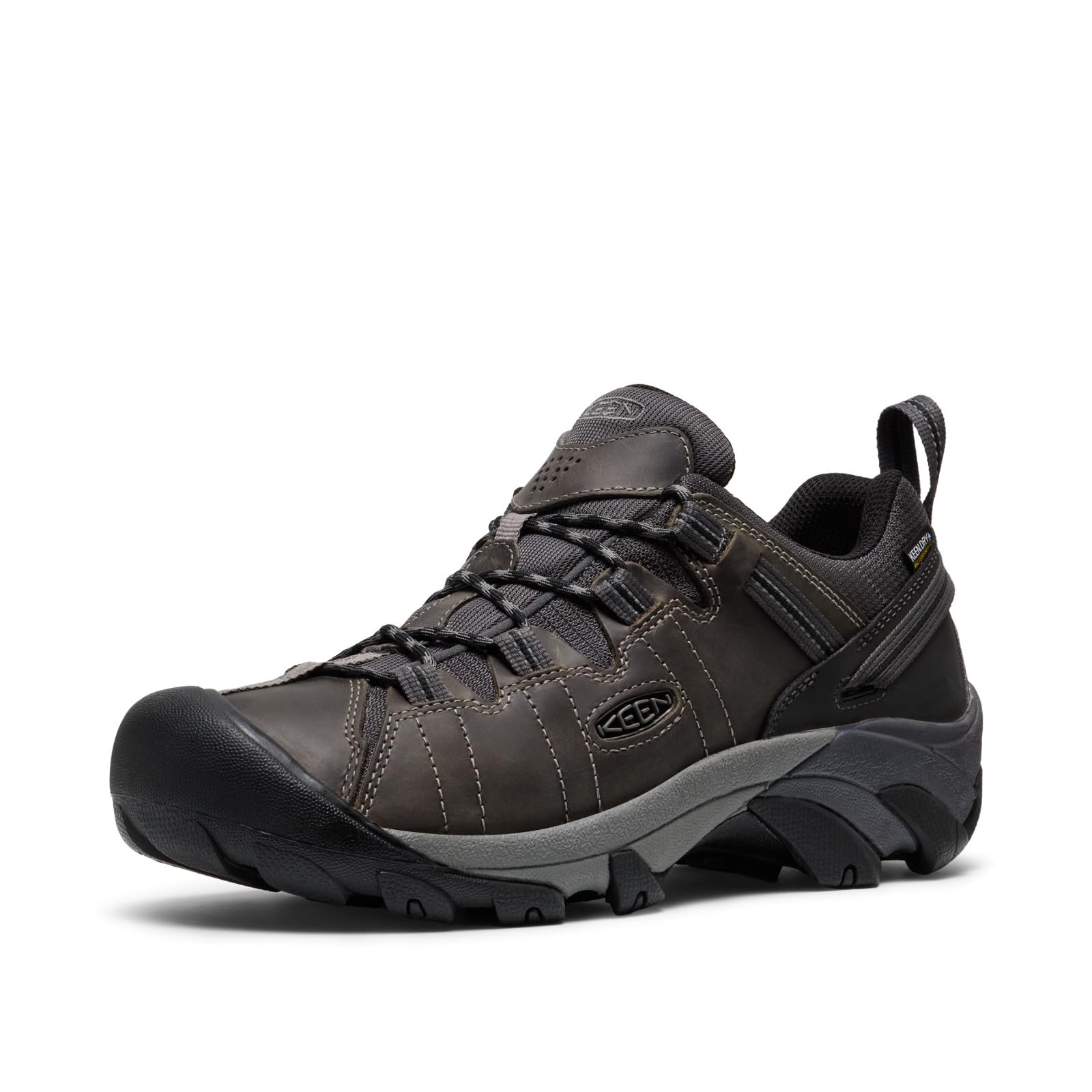
KEEN Targhee 2 Low Waterproof

88 /100
Traveler Score Excellent

Key details

Cut
Low height
Model
Targhee 2 Low
Waterproofing
Waterproof
Check Details on Amazon

Waterproofing is the claim every shoe in this group makes and the one that gives out first. On wet grass, mud, and slush the Targhee held: water stayed outside the shoe all day, with the obvious limit that anything coming over the collar gets in. That sounds like faint praise until you have spent a morning in a shoe that lets the damp straight through.

What we like is that the dryness does not come attached to a stiff, sweaty brick. The shoe is cushioned underfoot, the upper is soft from the first wear, and there is nothing to break in — the opposite of the heavy leather hikers this category used to mean. Support is the quiet part of the package: it holds a heavier walker steady on uneven ground without making him feel like he is wearing a boot. For wet-weather hiking, we think it is the most capable shoe here.

The catch is the last. It runs small and narrow enough that a man who has worn the same size for decades should go up half a size, and if your feet are genuinely wide, order the wide version rather than hoping. Buy from somewhere with an easy exchange and test the fit indoors before you commit it to a trail.

Pros

  • Keeps feet dry in mud, rain, and slush
  • Cushioned upper with no break-in
  • Steady underfoot for heavier walkers

Cons

  • Tread can separate from the sole
Our verdict

If your trails run wet, muddy, or snowy, this is the pair we hand you: feet stay dry and comfortable from the trailhead.

Check Latest Price
3

Best for a Roomy Toe Box

KEEN Voyageur Low

88 /100
Traveler Score Excellent

Key details

Cut
Low height
Model
Voyageur Low
Upper
Breathable
Check Details on Amazon

Toe room is the first thing that goes as feet spread with age, and the Voyageur gives it back. Its toe box is the widest in this group — roomy across the ball of the foot rather than merely long — while the heel stays narrow enough that a wide forefoot does not turn into a sloppy whole shoe. If your little toe has been rubbed raw by every pair you have tried, this is the one we point you to.

The arch support is the other reason we like it. It sits firm enough to hold a flat or fallen arch through a full day, which is more than most of the shoes here manage, and it makes this the pair we point heavier men toward. The upper is breathable, so it is the warm-weather pick rather than a wet-weather one.

Comfort is not universal, though, and a toe box that suits a bunion can rub a narrower foot. Wear them indoors for an hour first and pay attention to where your little toe sits. If that spot is fine, everything else about the fit usually is too.

Pros

  • Widest toe box in this group
  • Firm arch support for flatter feet
  • Narrow heel keeps a wide forefoot steady
  • Breathable upper for hot weather

Cons

  • Sole can peel away at the toe
Our verdict

For wide, bunioned, or simply older feet that feel pinched in everything else, we think this is the roomiest shoe here.

Check Latest Price
4

Best Budget

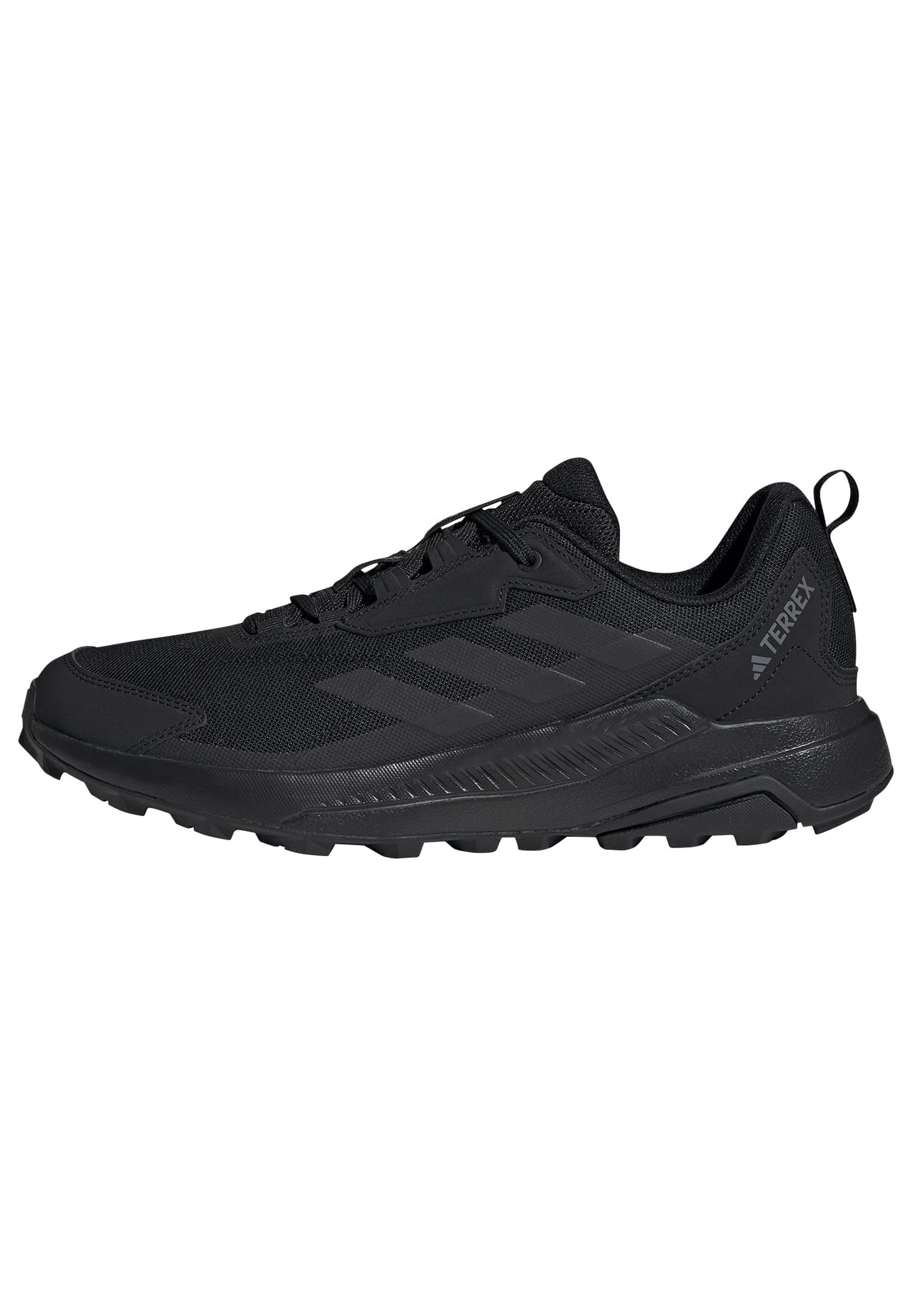
adidas Terrex Anylander

90 /100
Traveler Score Outstanding

Key details

Cut
Low cut
Model
Terrex Anylander
Listed Package Size
13.3 x 8.86 x 5.08 inches; 2.43 pounds
Check Details on Amazon

Hiking shoes at this end of the market usually look the part and quit early. The Anylander does not read that way: the platform is sturdy, the tread is aggressive enough to dig into loose rock, and the shoe stays light enough that it never feels like a boot you are carrying around your ankles. It looks like a low-cut hiking boot because it is built like one.

What surprised us is how little it gives up. The outsole holds on rock and wet stone, the toe box is square enough for wide, flat feet, and it runs true to size — three things budget shoes often get wrong. As a first hiking shoe, or a second pair for a trip where you would rather not risk your good ones, we think it is the best value in this group.

One boundary to know: it is water-resistant rather than waterproof. Wet grass soaks through, and the shoe dries quickly, so think of it as a dry-weather pick or a travel pair that can get damp without being ruined. On dry ground, that is the only compromise worth mentioning.

Pros

  • Grippy on rock and wet stone
  • Light and stable underfoot
  • True to size with a square toe box
  • Budget price without the budget feel

Cons

  • Firm, pronounced arch that some feet reject
Our verdict

The pair we reach for when the budget is tight and the trails are still real: light, stable, and surprisingly grippy.

Check Latest Price
5

Warm, Wet Walks

Columbia Crestwood Waterproof

88 /100
Traveler Score Excellent

Key details

Cut
Low cut
Model
Crestwood Waterproof
Waterproofing
Waterproof
Check Details on Amazon

Where the Targhee is built for cold, muddy work, the Crestwood is a trail shoe that happens to keep water out — cooler, less armored, and easier to live with in warm weather. If you hike in heat and still want dry feet, that distinction is the whole decision.

The fit is refreshingly boring: true to size, wide enough for most feet, with a toe box that does not pinch. The tread handles mud and packed snow, the shoe is light enough that a long day does not leave you thinking about your legs, and it stays reasonably cool for something with a membrane in it. There is very little breaking in to do, which is the point.

The case for it is narrow but real: warm-weather hiking where the ground is wet and the rain is not heavy. For that, we think it is the right buy — it costs meaningfully less than the other waterproof shoe here and gives up surprisingly little in return.

Pros

  • Light for a waterproof shoe
  • True to size with a wide fit
  • Grips mud and packed snow
  • Comfortable almost immediately

Cons

  • Waterproofing can fail at the seams
Our verdict

The waterproof shoe for warm, wet days: we found it light on the foot, true to size, and easy from the first wear.

Check Latest Price
6

Flat, Easy Paths

NORTIV 8 Low Top

86 /100
Traveler Score Excellent

Key details

Cut
Low top
Toe Cap
Rubber
Waterproofing
Waterproof
Check Details on Amazon

Cheap hiking shoes usually announce themselves: thin soles, plasticky uppers, a fit that is anybody's guess. The NORTIV 8 is more shoe than the price suggests. It is waterproof, low cut, and finished with a rubber toe cap that takes the scuffs you would otherwise put on the upper.

It handles wet grass and shallow puddles well, and the footbed is comfortable enough for a full day of walking without a break-in period. Weight is the honest compromise: this is a substantial shoe rather than a feathery one, and on a long climb you feel it.

Our read is that this is the right shoe for park paths, rail trails, gravel roads, and errands — the walking most of us actually do — and the wrong one for steep, wet, rocky ground. Treat a slick rock slab as outside what it is built for and you will get a lot of use out of it for very little money.

Pros

  • Waterproof at the lowest price here
  • Comfortable without a break-in
  • Rubber toe cap shrugs off scuffs
  • Enough shoe for paths and errands

Cons

  • Sizing is inconsistent between pairs
  • Lining can come apart with hard use
Our verdict

The lowest price here for a shoe that still behaves like a hiker — our pick for flat, dry trails and everyday walking.

Check Latest Price

How We Tested These Hiking Shoes

We started with the brands that reliably stock wide and extra-wide sizes, which filters out more hiking shoes than any spec sheet, then narrowed by price, listed weight, and whether the shoe sits on a rock plate or a softer midsole. That left 12 pairs. We bought several at retail ourselves, which gave us a plain look at sizing charts, shipping, and how painless it was to swap a half size when the first box came up short.

Every pair got a full day around town before it saw dirt — errands, standing in the kitchen, a long walk on pavement — because a shoe that annoys you on concrete will ruin a trail. Then we took them to a local ridge trail with a wet, rooty climb and a rocky descent, and to a four-mile loop through soaked grass the morning after rain, where we checked socks at the trailhead and watched whether water beaded or soaked straight in. Each pair carried a loaded daypack downhill so we could feel heel slip and toe bang for ourselves.

We weighed every shoe on a kitchen scale rather than trusting the box, and we flexed and twisted each one by hand to judge how much structure the upper really had. At the six-month mark we inspected tread wear, stitching, and collar padding, and re-soaked a few to see whether the membrane still shed water. Appearance we judged after a muddy month, not under store lighting, and value came down to how many miles each pair still had left in it.

How to Choose Hiking Shoes for Senior Men

Fit: toe room, heel hold, and why sizes drift

Feet spread and lengthen with age, and they swell over a day, so shop in the afternoon and stand up when you try a pair on. You want roughly a thumb's width in front of your longest toe and no lift at the heel, because heel slip is what blisters a descent.

Sizes are not portable between these brands. The KEEN Targhee 2 runs small enough that men who have worn the same size for decades go up half a size, while the Merrell Moab 3 and the Columbia Crestwood run true. Buy where an exchange is easy and treat the first order as a fitting, not a verdict.

Traction and stability where you actually walk

A low-cut shoe gives up ankle support, so the outsole and the heel counter do the steadying. Deep, widely spaced lugs bite loose gravel and mud; a flatter, stickier sole is better on rock and wet boardwalks and worse in mud. If your walking is paved paths and rail trails, a hybrid tread is plenty — the Moab 3 and the Terrex Anylander are the grippiest of this set when the ground turns slick.

Waterproof or breathable

A membrane keeps out rain, mud, and wet grass, and it also holds heat and dries slowly once water comes in over the collar. For cool, wet, muddy conditions the Targhee 2 is the obvious pick here; for hot, dry trails and feet that run warm, a breathable shoe like the Voyageur is more comfortable all day.

Don't pay for waterproofing you won't use, and don't expect any low-cut shoe to keep water out above the ankle.

Insoles, cushioning, and when to replace

If you wear orthotics, check that the factory footbed lifts out before you buy, then size to the insert rather than to the shoe. Cushioning is taste — some men want a firm platform for stability, others want soft underfoot — but the shoe should not feel tippy when you stand on one foot, and it should bend where your foot bends.

Replace a daily-worn pair once the outsole smooths, which for steady walkers is usually a year or two, not when the upper starts looking tired.

Frequently Asked Questions

Final Verdict

Start with the Merrell Moab 3. It is the pair here that asks nothing of you — no break-in, no half-size guesswork, no caution on wet ground — and for a hiker in his sixties or seventies that is worth more than any single feature.

If your trails are wet more often than not, take the KEEN Targhee 2 and go up half a size. If your feet are wide and pinched, the KEEN Voyageur is the roomier answer. And if the budget is fixed, the Terrex Anylander gives up very little.