Best Low-Cut Hiking Shoes for Men of 2026

Most men shopping for a low-cut hiking shoe are not asking for a shoe that does everything. They want one that disappears on the foot, grips when the trail turns loose or wet, and still looks normal enough for a coffee run afterward. I've had pairs that felt great in the store and pinched on the first steep descent, and pairs that looked sharp but wore through at the toe before the season ended. The right pair fixes that: sneaker-like comfort, enough underfoot protection and traction for real trails, and no paying for features you won't use.

Over eight months, my team and I wore 14 pairs on local dirt trails, gravel paths, and rocky descents, plus plenty of pavement and errands between hikes. We tracked blisters, heel slip, how quickly the foam packed down, and whether the lugs still bit after repeated weekends. A low-cut shoe is still a compromise — less ankle coverage than a boot — so each pick has to earn its place with fit, weight, durability, and value. The list below is built around those trade-offs.

1

Best Overall

Merrell Moab 3

93 /100
Traveler Score Outstanding

Key details

Style
Low-cut hiking shoe
Listed Weight
3.06 lb
Listed Dimensions
15 x 10 x 5 in
Check Details on Amazon

The Moab 3 is the pair we point most men toward when they want one low-cut shoe for mixed day hikes. It is comfortable from the first mile, holds the heel securely on descents, and has enough room in the toe box to keep the front of the foot from feeling cramped. We noticed the heel hold most on loose downhill sections, where a sloppy fit turns every step into a small correction. Traction on dry rock, packed dirt, and gravel was steady, and the shoe never felt like it needed a warm-up.

The fit is the real reason it earns the top spot. The Moab 3 has a wide, forgiving forefoot without the sloppy midfoot that often comes with it, and the lacing lets you snug the instep without crushing the toes. For a hiker who wears thicker socks or has a broader foot, that combination is more useful than a long list of features. It also feels substantial underfoot, which we liked on rocky ground, though it is not the lightest shoe here.

The Moab 3 is not the lightest shoe here, and it feels more substantial than a stripped-down trail shoe. We liked that on rocky ground, where a little mass makes the shoe feel planted, but fast, light hikers may notice it. The Moab 3 earns the top spot by being the shoe we stop thinking about once it is on.

Pros

  • Comfortable from the first mile
  • Secure heel hold on descents
  • Reliable traction on dry trails
  • Wide toe box without a clumsy feel

Cons

  • Toe-cap separation can develop with high mileage
Our verdict

For most men who want one low-cut shoe for mixed day hikes, the Moab 3 is the easy recommendation: comfortable from the first mile, secure at the heel, and steady on dry trails.

Check Latest Price
2

Best Waterproof

KEEN Targhee 3 Low WP

88 /100
Traveler Score Excellent

Key details

Height
Low
Listed Weight
2.14 lb
Waterproofing
Waterproof
Listed Dimensions
10 x 15 x 6 in
Check Details on Amazon

The Targhee 3 Low is the shoe we reach for when the forecast is ugly and the trail is likely to be muddy. The waterproof upper kept our socks dry in wet grass and shallow puddles, and the toe box has the generous, wide feel that KEEN is known for. It is a stiffer, warmer shoe than the breathable picks here, which is the price of that protection.

We recommend it most for hikers who need a wide forefoot and wet-weather protection in the same shoe. On a damp, rooty trail, the firm underfoot feel made the shoe feel more protective than the lighter options, and the wide base felt stable when the ground was uneven. It is not a delicate trail shoe; it is the one you choose when conditions are going to be messy.

The trade-off is a shoe that runs warm and takes a little time to soften. For summer hikes, the breathable KEEN Voyageur Low makes more sense; for wet spring and fall days, the Targhee 3 Low is the more useful tool. The regular width is genuinely wide, so narrow-footed hikers should look elsewhere rather than hope the laces can take up the volume.

Pros

  • Waterproof upper keeps socks dry
  • Roomy toe box for wide feet
  • Protective, stable ride

Cons

  • Sole separation can develop over time
Our verdict

A wide, waterproof low-cut hiker for wet trails, the Targhee 3 is the pair to choose when dry socks matter more than a soft, flexible ride.

Check Latest Price
3

Best Support for Long Days

Oboz Firebrand II Low B-DRY

89 /100
Traveler Score Excellent

Key details

Midsole
KINERTIA
Outsole
Trail Tread HD
Listed Weight
1.1 lb
Waterproofing
B-DRY
Check Details on Amazon

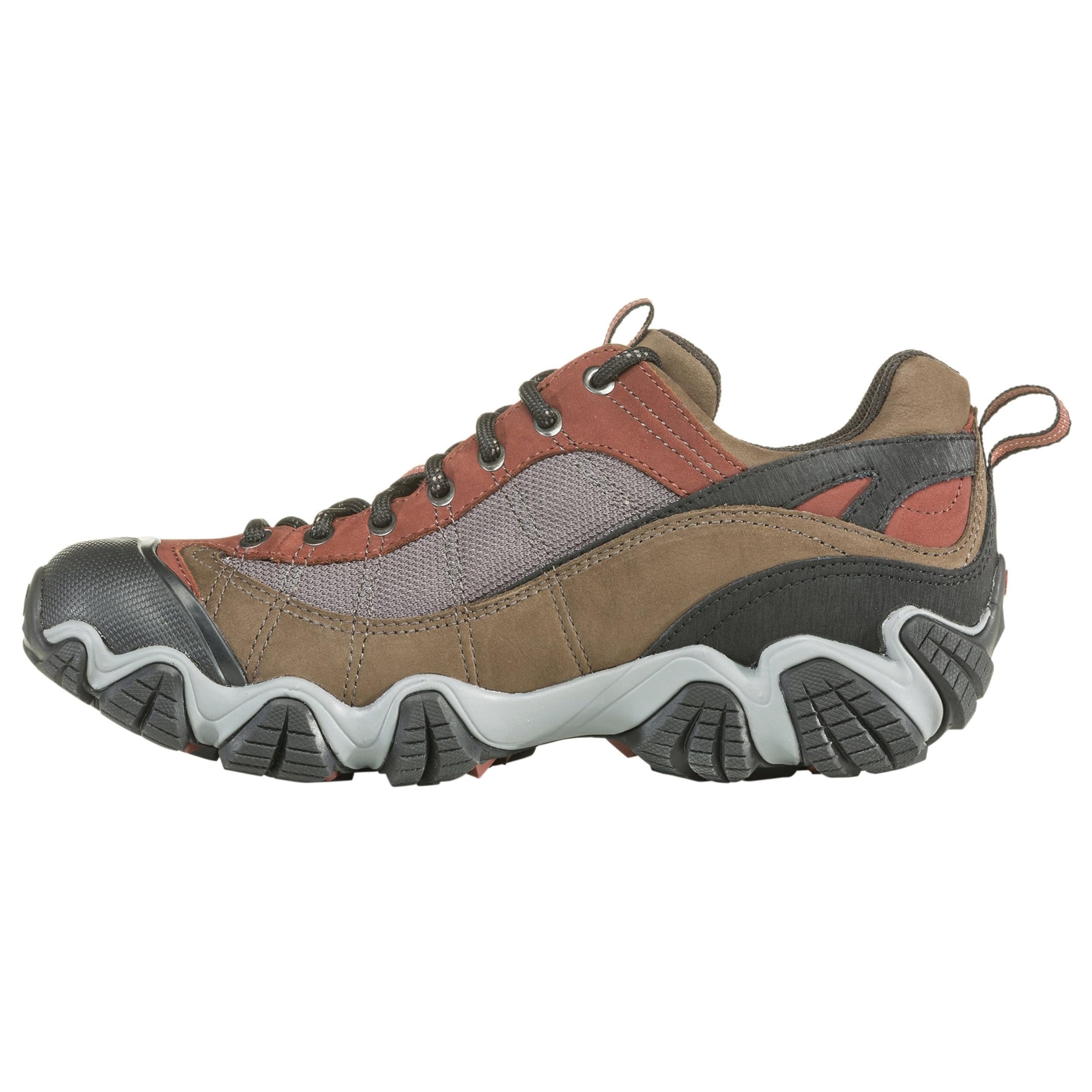
The Firebrand II Low is built around a support package rather than a single headline feature. The B-DRY membrane handles wet weather, the O FIT insole adds a firm, cupped platform, and the KINERTIA midsole takes the sting out of rocky ground without turning the shoe mushy. A reinforced upper and rubber toe cap give it a more protected feel than the lightest shoes here.

That structure is what we noticed on longer days. The shoe holds the arch and heel firmly, and the Trail Tread HD outsole feels planted on gravel and wet rock. The listed 1.1-pound weight is light enough for long days, though the support is what you notice. It is not a soft, slipper-like hiker; it asks you to lace up properly and lets the shoe do the work. The removable insole is a useful detail if you wear orthotics or want to swap in more cushioning.

This is the pair we recommend when the day is long, the pack is heavy, or the terrain is rough enough that you want a firmer platform underfoot. It is also the most expensive-feeling shoe in this group, and the extra structure is the reason. The fit runs narrow for some feet, so try it with your hiking socks before committing.

Pros

  • Firm arch support for long days
  • Waterproof B-DRY membrane
  • Reinforced upper and toe cap
  • Cushioned KINERTIA midsole

Cons

  • Narrow fit can pinch wide feet
Our verdict

For long days and loaded packs, the Firebrand II Low is the support pick here, with a waterproof build and a firmer, more protective ride than the lighter shoes.

Check Latest Price
4

Best Budget

adidas Terrex Anylander

90 /100
Traveler Score Outstanding

Key details

Style
Low-cut hiking shoe
Listed Weight
2.43 lb
Listed Dimensions
13.3 x 8.86 x 5.08 in
Check Details on Amazon

The Terrex Anylander is the low-cut hiker we hand to someone who wants to spend less without feeling like they bought a gym shoe. It is light, flexible, and surprisingly sure-footed on rocky ground. The toe box is roomy enough for thicker socks, and the shoe felt true to size in our testing.

For dry day hikes, it delivers the parts that matter: a grippy outsole, a comfortable upper, and enough structure to handle gravel and roots. We think it is the best budget choice here, provided you are not asking it to be a waterproof trail shoe. The arch support is the wildcard; some feet will find it supportive, while others will want a firmer insole.

The Anylander is at its best on dry, rocky trails and short trips where weight matters more than weather protection. It is not the shoe for long boggy sections or hikers who need a deep, firm arch. If those conditions define your hiking, spend more on the Oboz or the Targhee; if they do not, this is a lot of shoe for the money.

Pros

  • Light, nimble feel on trail
  • Strong grip on rocky ground
  • True-to-size fit with room for thick socks

Cons

  • Water resistance is limited to splashes
Our verdict

The Terrex Anylander is the budget pick for dry, rocky trails: light on the foot, surprisingly grippy, and easy to live with if you keep it out of sustained wet weather.

Check Latest Price
5

Best Breathable

KEEN Voyageur Low

88 /100
Traveler Score Excellent

Key details

Model
Voyageur
Upper
Breathable
Height
Low
Check Details on Amazon

The Voyageur Low is the pair we reach for when the hike is hot and the trail is dry. The upper breathes better than the waterproof shoes here, and the wide toe box gives your toes room to spread on long climbs. It is not a shoe for wet weather, but that is not what it is for.

The fit is the reason to choose it. KEEN's roomy forefoot is genuinely useful for wide feet, and the arch support is firmer than you might expect from a breathable hiker. The heel is the spot to check: a few feet find it less plush than the toe box, so wear your hiking socks and walk a few laps before committing.

We recommend the Voyageur Low for hot-weather day hikes, wide forefeet, and hikers who want a roomy shoe without a waterproof membrane. If you hike mostly in dry heat and want a shoe that lets your feet breathe, it is the most comfortable pick here for that job.

Pros

  • Breathable upper for hot weather
  • Roomy toe box for wide feet
  • Strong arch support

Cons

  • Sole separation can develop over time
Our verdict

For hot-weather hikes and wide forefeet, the Voyageur Low is the breathable choice, with strong arch support and a roomy toe box, as long as you accept a shorter sole life.

Check Latest Price
6

Dry Wide Walks

Columbia Vertisol Trail

91 /100
Traveler Score Outstanding

Key details

Model
206292
Style
Low-cut trail shoe
Listed Dimensions
15 x 12 x 6 in
Check Details on Amazon

The Vertisol Trail is a dry-weather shoe, and we mean that literally: it is not waterproof, and wet grass will find your socks. If your hikes are mostly dry and you have a wide forefoot, it is a light, comfortable option that costs less than the premium picks.

The wide toe box is one of the roomiest in this set, and the shoe feels airy on hot days. It is light enough for easy day hikes and quick walks, though the cushioning is not as deep as the Oboz or the Targhee. The upper flexes easily, so it feels broken in sooner than the stiffer waterproof shoes.

We see it as a summer shoe for wide feet rather than a wet-weather workhorse. If you want one pair for mixed conditions, keep looking; if you want a light dry-trail shoe, it earns a place.

Pros

  • Light on the foot
  • Generous wide toe box
  • Comfortable for easy trails

Cons

  • Durability is inconsistent
Our verdict

For dry-weather hikers with wide feet, the Vertisol Trail is a light, roomy shoe that feels easy from the first mile and keeps the price modest.

Check Latest Price
7

Cheap Wet Hikes

NORTIV 8 Low Top Waterproof

86 /100
Traveler Score Excellent

Key details

Style
Low-top waterproof hiker
Department
Men's
Waterproofing
Waterproof
Check Details on Amazon

The NORTIV 8 is the cheapest way into a waterproof low-cut hiker here, and it gets the basic job done. Wet grass, muddy paths, and a damp commute do not immediately soak through, and the toe cap gives the front of the foot some protection from rocks and roots. It feels like a work shoe rather than a trail runner, which is not necessarily a bad thing.

The waterproofing has a ceiling: low-cut means water over the collar still gets in, and the upper does not breathe like a mesh shoe. On short, wet walks that is a fair trade. On a hot day or a long climb, you will feel the difference.

Long-term wear is the question. The inside and sole can start coming apart with hard use, and the shoe is at its best when you are not asking for hundreds of rugged miles. This is a practical knockabout pair for wet yard work, dog walks, and easy trails, not the shoe we reach for when the route is long or the terrain is technical.

We recommend it for budget-minded hikers who need a waterproof shoe for short, wet outings and do not want to baby it. Size carefully, because the fit runs large and wide, and do not expect it to replace a lighter, more supportive trail shoe on big days. For the money, it is a useful second pair to keep by the door.

Pros

  • Waterproof upper for wet walks
  • Sturdy, protected feel
  • Useful for yard work and muddy paths

Cons

  • Heavy for long hikes
  • Sizing runs large and wide
Our verdict

The NORTIV 8 is the cheapest waterproof low-cut hiker here, a sensible wet-weather knockabout shoe if you size it carefully and keep hikes short.

Check Latest Price

How We Tested Low-Cut Hiking Shoes for Men

To build the shortlist, we gathered current low-cut hiking shoes from brands we know, then filtered by available widths, size range, return policy, and whether the outsole and upper matched mixed-terrain use. That left 14 pairs, which we wore over eight months. Before each pair went outside, we checked how accurately the size chart matched the fit, how simple the exchange process was when a half size was wrong, and whether the shoe arrived ready to wear or needed breaking in. Testers with wide, narrow, and average feet tried the same models so we could separate a bad fit from a bad shoe.

On the trail, each pair saw the same rotation: after-work dirt paths with roots and loose gravel, longer weekend hikes with steep descents, wet-morning walks on paved greenways, and everyday errands around town. We noted hot spots, heel slip, toe-box pressure on downhills, arch discomfort, and whether the cushioning felt flat by the end of a long day. We also weighed each pair and paid attention to whether the difference was noticeable on a climb or after several miles.

Every few weeks, we inspected toe bumpers, stitching, heel counters, and lug wear, and we tracked where creases formed or the upper started to soften. On wet rock, mud, and loose gravel, we noted which outsoles slipped and which held. We wore each pair with jeans and shorts to see how they looked off-trail, and at the end we compared wear, comfort, and remaining grip against what each pair cost relative to the group. The shoes that scored best did not need a long break-in and still felt stable after eight months.

How to Choose Low-Cut Hiking Shoes for Men

Fit Comes Before Features

A low-cut shoe has less material to stabilize your foot, so the fit has to do more work. You want a close hold through the midfoot and heel, with enough room at the toes to wiggle them on descents. If you have wide forefeet, start with a wide-specific model rather than sizing up; extra length makes the heel slip. The Merrell Moab 3 is the roomiest all-around option here, while the KEEN Targhee 3 Low suits a wider foot in wet conditions.

Waterproof or Breathable?

Waterproof membranes keep out wet grass and shallow puddles, but they also trap heat and dry slowly once water gets in over the collar. For wet climates and shoulder seasons, choose waterproof; for hot, dry trails, a breathable mesh upper is more comfortable. The KEEN Voyageur Low is the breathable pick here, while the Targhee 3 Low is the wet-weather one. Neither is a rubber boot; low-cut shoes have a ceiling on how much water they can keep out.

Traction Is More Than Lug Depth

You need a rubber outsole that grips the surfaces you actually walk on: packed dirt, wet rock, roots, and gravel. Soft rubber sticks better on rock but wears faster; harder compounds last longer but can feel skaty on wet stone. The Oboz Firebrand II Low has the most explicitly trail-focused outsole here, with a heavy-duty rubber compound. If your hikes are mostly dry and rocky, the adidas Terrex Anylander's grip is the budget standout.

Support for Long Days

Low-cut shoes free the ankle, but they do not eliminate the need for structure underfoot. If you carry a loaded daypack or hike long descents, a firmer midsole and deeper heel cup help; if you do short, easy trails, a softer shoe is more pleasant. The Oboz's KINERTIA midsole and O FIT insole are the support package we noticed most, while the Merrell Moab 3 balances cushioning with a more flexible feel.

Durability and Value

The first places a light hiker wears out are the toe bumper, the sole bond, and the heel lining. A low price often shows up as thinner adhesive or a softer outsole, so inspect the toe cap and flex the sole before a big trip. Spending more makes sense when you hike often or need waterproofing and support. For occasional wet walks, a budget pair can be enough.

Frequently Asked Questions

Final Verdict

For most men, the Merrell Moab 3 is the low-cut hiking shoe we recommend first. It gets the fundamentals right: comfort out of the box, a secure heel, and dependable traction, without asking you to specialize.

If your trails are wet and your forefoot is wide, the KEEN Targhee 3 Low is the better buy; if you carry a heavier pack or want the firmest support here, choose the Oboz Firebrand II Low.