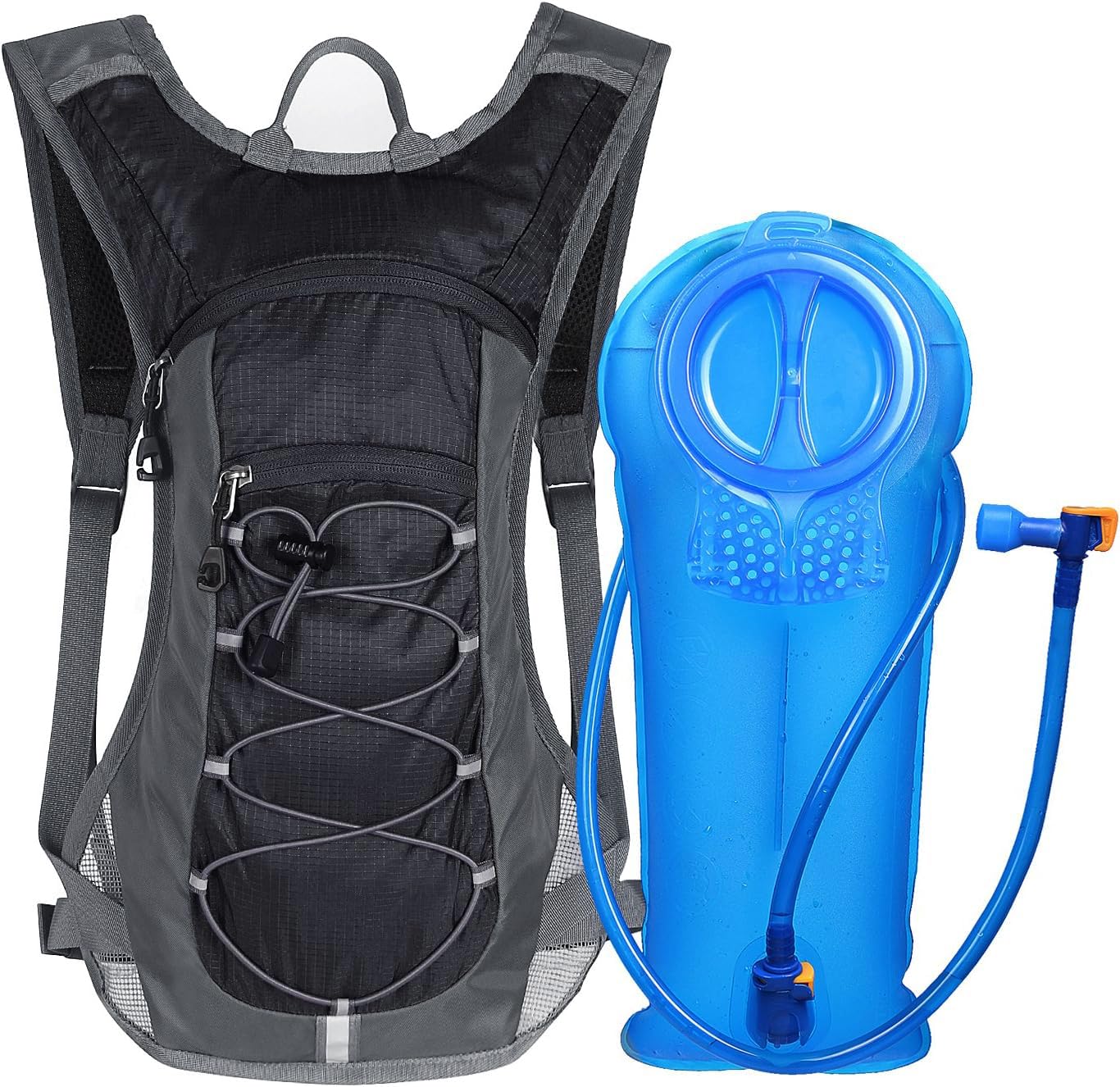
Best Hiking Hydration Packs of 2026

Most hydration packs force a choice: enough room for a layer and snacks, or a fit that stays put when the trail tilts uphill. A good one should do both, keep the bite valve within reach, and not turn every sip into a wrestling match. I’ve spent enough sweaty miles fumbling with bottle pockets and shoving a bladder back into its sleeve to be picky. Over six months, my team and I hiked with 10 packs, from after-work loops to loaded day hikes, judging storage, size, fit, and value.

What separates a pack that works from one that just holds water is rarely the liter count. A full bladder changes how a pack sits, so we noted how each carried weight, whether the hose stayed put when we ducked under branches, and how easily the bladder rinsed and dried. The best of the 10 were the ones I forgot about until I needed a drink; the picks below are the ones that earned a spot by the door.

1

Best Overall

N NEVO RHINO 18L

92 /100
Traveler Score Outstanding

Key details

Weight
1.74 lb
Pack Volume
18 liters
Bladder Capacity
3 liters
Insulated Pocket
Yes, up to 5 hours
Check Details on Amazon

An 18-liter pack with a 3-liter bladder is the combination that makes the N NEVO RHINO our default for a full day on the trail. We like that the bladder rides in its own insulated compartment, designed to keep water cool for up to five hours, and that the 18 liters leave room for a shell, lunch, and a first-aid kit without turning into an overnight pack. The ventilated shoulder straps, waist belt, and back panel also make sense for the way a full bladder pulls on your shoulders.

At 1.74 pounds empty, this is not the featherweight of the group. We think that weight is easier to accept once the pack is on: the waist belt takes some of the load, and the back panel keeps the pack from feeling like a hot plate on a climb. The 3-liter bladder is the real variable. Full, it dominates the carry, so fill it at the trailhead and use the harness to keep it close rather than letting it swing.

Storage is the other reason it earns the top spot. The main compartment is roomy enough for a day's layers and food, with separate pockets for smaller items and a sleeve that keeps the bladder upright. We also like the wraparound access to the main body. For a shorter hike, the 18-liter body is more pack than you need; the 12L NEVO RHINO or the Miracol is easier to carry. But when the day includes variable weather and a real lunch, the extra capacity earns its keep.

Pros

  • 3L bladder plus 18L of cargo
  • Insulated pocket rated to five hours
  • Ventilated harness with a waist belt
  • Organized pockets for day-hike gear

Cons

  • Bottom seam and mouthpiece are durability weak points
Our verdict

The N NEVO RHINO 18L is our all-day hiking pick, pairing a 3-liter bladder and an insulated sleeve with enough cargo for layers, lunch, and a first-aid kit.

Check Latest Price
2

Best Value

Miracol Insulated 15L

93 /100
Traveler Score Outstanding

Key details

Weight
16 oz
Pack Volume
15 liters
Bladder Capacity
2 liters
Insulated Pocket
Yes, up to 4 hours
Check Details on Amazon

Sixteen ounces and a 2-liter bladder is a sensible starting point for a day hike, and the Miracol adds an insulated sleeve that is designed to keep water cool for about four hours. The 15-liter body has enough room for a light layer, snacks, and a small first-aid kit, with a chest strap and waist belt to keep it from bouncing.

We think this is the value pick in the group. It costs less than the 3-liter packs here, but it does not feel like a stripped-down emergency bag: the pockets are useful, the harness adjusts widely, and the insulated sleeve makes a hot-weather hike more pleasant. The fit is the part to watch. It wears like a compact daypack, and taller or broader hikers may find the side pockets awkward to reach while the pack is on.

The 2-liter bladder is the right call for a half-day or a moderate full day, especially if you refill at a stream or a tap. For a long, exposed hike, the 3-liter N NEVO RHINO or MARCHWAY gives you more reserve. We like the Miracol most as a first hydration pack or a second pack for shorter trips, because it keeps the price and the weight down without making the water a hassle. The insulated sleeve is the detail that makes it feel more finished than its price tier suggests.

Pros

  • Insulated 2L bladder for day hikes
  • Light 16-ounce body
  • 15L of storage with useful pockets
  • Wide strap adjustment

Cons

  • Inner pocket and bladder seal can fail
Our verdict

A light, low-cost daypack that keeps two liters cold, the Miracol Insulated 15L is the one we suggest for newer hikers.

Check Latest Price
3

Best Rugged Pack

MARCHWAY Tactical 3L

95 /100
Traveler Score Outstanding

Key details

Shell
1000D nylon
Weight
2 lb
Pockets
2
Bladder Capacity
3 liters
Check Details on Amazon

The 1000D nylon shell is the first thing you notice about the MARCHWAY, and it is why this pack belongs on a list of hiking hydration packs rather than a shelf of lightweight running vests. The material is water-repellent and abrasion-resistant, the MOLLE webbing lets you lash on a pouch or a tool, and the 3-liter bladder sits in a main compartment that is shaped to keep it from sliding around.

That toughness comes with a two-pound empty weight, among the heaviest here. We think the trade is fair for rough trails, hunting, or any trip where branches and rocks are more likely than a smooth path. The pack is compact against your back, and the sternum and waist straps do useful work. The storage is enough for a jacket, snacks, and a few tools, but this is not a pack for a big camera kit and a day's worth of layers.

What we like most is the sense that the pack can take a scrape without you worrying about it. The 3-liter bladder gives you a long drink supply, and the MOLLE layout is genuinely useful if you already carry modular gear. The top seal is the detail to check before you fill it. If you want a light fast pack, the 12L NEVO RHINO is the better tool; if you want a pack that shrugs off brush and carries 3L, this is it.

Pros

  • 1000D nylon resists abrasion
  • 3L TPU bladder for long days
  • MOLLE webbing adds modular storage
  • Compact profile with adjustable harness

Cons

  • Bladder top seal can spill if not seated squarely
Our verdict

For rough, gear-heavy days, we choose the MARCHWAY Tactical 3L and its 1000D shell over the lighter packs here.

Check Latest Price
4

Best for Wet Weather

Teton Oasis Trailrunner

91 /100
Traveler Score Outstanding

Key details

Weight
2 lb
Rain Cover
Sewn in
Pack Volume
18 liters
Bladder Capacity
2 liters
Check Details on Amazon

A sewn-in rain cover is a small thing until the weather turns, and it is the reason the Teton Oasis Trailrunner stands apart here. The cover stays attached to the pack, so you do not have to remember a separate shell or stop to dig one out. Add an 18-liter body, a 2-liter bladder, six pockets, and weather-guarded zippers, and you have a daypack built for wet, changeable days.

We like the organization. The main compartment holds a layer and lunch, the pockets keep small items sorted, and the bungee cord gives you a place to stash a jacket without opening the pack. The 2-inch opening on the bladder is wide enough to add ice and to clean, and the insulated pocket helps the water stay cooler. The fit is the variable: the harness is adjustable, but smaller-framed hikers may find the straps sit differently than they do on a unisex pack. Try it with the bladder full before a long trip.

The Trailrunner is the most expensive pack in this group, and the rain cover and pocket layout are what justify the step up. It is also two pounds empty, so it is not the pack for a fast-and-light mission. For a wet-weather day hike where you want your gear organized and dry, the trade makes sense.

Pros

  • Sewn-in rain cover
  • 18L body with six pockets
  • 2L bladder with wide opening
  • Bungee and weather-guarded zippers

Cons

  • Waist strap is a durability weak point
Our verdict

When rain is likely, the Teton Oasis Trailrunner is our pick, with a sewn-in cover and 18 liters of organized storage.

Check Latest Price
5

Best Ultralight

N NEVO RHINO 12L

91 /100
Traveler Score Outstanding

Key details

Weight
8.5 oz
Pockets
4
Pack Volume
12 liters
Bladder Capacity
2 liters
Check Details on Amazon

At 8.5 ounces, the N NEVO RHINO 12L is the pack we reach for when the plan is to move fast and travel light. The 12-liter body holds a 2-liter bladder, a shell, snacks, and a phone, and the vest-style shoulder straps put the load close to your chest instead of letting it bounce behind you. We think it is the best ultralight option in this group.

The harness is the reason it works. The shoulder straps adjust from 19 to 34 inches, the chest strap moves up and down, and the four pockets give you a place for a phone, a gel, and a small item without opening the main body. We appreciate that the pack does not need a waist belt to feel stable on a short hike, though the belt helps when the bladder is full.

The 12-liter volume is a real limit: this is a pack for a half-day, not for a full day with a big lunch and a camera. The thin nylon is light and water-resistant, but it is not the shell you want for bushwhacking. If your hikes are short and quick, that is a fair trade. If you need to carry more, the 18L NEVO RHINO or the Teton is the better shape.

Pros

  • 8.5-ounce empty weight
  • 12L pack with a 2L bladder
  • Vest-style straps with broad adjustment
  • Four pockets for small essentials

Cons

  • Chest clips can stick
  • Bladder can taste of plastic at first
Our verdict

The N NEVO RHINO 12L is our ultralight choice for fast half-day hikes, at 8.5 ounces with a 2-liter bladder.

Check Latest Price
6

Short Hikes

MIYCOO 10L

90 /100
Traveler Score Outstanding

Key details

Weight
1.48 lb
Pockets
5
Pack Volume
10 liters
Bladder Capacity
2 liters
Check Details on Amazon

The MIYCOO 10L is a small pack with five pockets, a 2-liter bladder, and an insulated bladder pocket that is designed to keep water cool for about four hours. It is the kind of pack you grab for a short hike, a daily walk, or a bike ride where you want water and a few essentials without a big harness.

We like the pocket layout. There are dedicated spots for a phone, keys, and snacks, and the mesh shoulder straps keep the pack from feeling bulky. The 10-liter body is big enough for a light layer or a small first-aid kit, but it fills quickly. For a half-day hike, that is enough. For a full day, you will want one of the 15- or 18-liter packs here.

What makes the MIYCOO worth considering is the combination of a small body and a useful number of pockets. It does not feel like a bare-bones hydration sleeve, and the insulated sleeve is a nice touch on a hot day. The bladder is the part we trust least: the seals can weep, so check the cap and hose connection before you load the pack. We think it is a sensible choice for short outings.

Pros

  • Five pockets in a compact pack
  • 2L bladder with a 10L body
  • Insulated pocket rated to four hours
  • Mesh shoulder straps

Cons

  • 10L body is tight for full-day gear
Our verdict

We rate the MIYCOO 10L for short hikes and daily walks, where five pockets and a 2-liter bladder are enough.

Check Latest Price
7

Minimal Carry

Unigear 2L

91 /100
Traveler Score Outstanding

Key details

Shell
Splash-resistant nylon
Weight
1.1 lb
Pockets
1
Bladder Capacity
2 liters
Check Details on Amazon

The Unigear 2L is a minimal hydration pack: a 2-liter bladder, a 1.1-pound body, and one small front pocket. The pack measures 16.5 by 8 by 6 inches, so it sits close to your back and does not try to be a daypack. If you want a place for a rain shell, lunch, and a first-aid kit, this is not that pack.

What it does well is stay out of the way. The shoulder, chest, and waist straps adjust over a wide range, and the compact body works for a short hike, a bike ride, or a run. The 2-liter bladder is enough for an hour or two of hard effort, and the pack is light enough that you notice the water more than the bag.

The storage is the compromise. One small front pocket is enough for keys and a snack, not for a layer or a camera. That is the trade for the low weight and compact shape. The drinking end is the other part to treat carefully: a leak there turns the whole pack into a problem, so check the bite valve and hose connection before you head out.

We think the Unigear makes sense as a low-cost pack for short, simple outings where water is the main cargo. It is not the pack we recommend for a full day, and the small pocket count makes that clear. If you want a budget pack that can also carry lunch and a layer, the MIYCOO 10L or the 12L NEVO RHINO is the better buy.

Pros

  • Very light 1.1-pound body
  • 2L bladder included
  • Adjustable shoulder, chest, and waist straps
  • Compact for short outings

Cons

  • Drinking end and mouthpiece are leak-prone
  • Bladder can taste of plastic at first
Our verdict

We see the Unigear 2L as a minimal budget pack for short outings, not a full-day hauler.

Check Latest Price

How We Tested the Best Hydration Packs

We started by pulling together the hydration packs that kept surfacing in hiker forums and retailer reviews, then narrowed the list by capacity, bladder design, harness adjustability, and price, aiming for a spread of sizes rather than one type of trail. That left 10 packs, which we used for six months on after-work loops, weekend day hikes, and a few longer loaded days. Each pack carried the same basic load—water, a rain shell, lunch, a first-aid kit, and an extra layer—so we could compare what actually fit, how the weight sat, and whether the storage layout made sense when we were moving.

On the trail, we paid attention to fit first: did the pack stay close when we climbed, did it bounce on descents, and could we reach the bite valve without stopping? We also checked for leakage by filling each bladder, sealing it, and leaving it upside down on a towel in a hot car between hikes, then squeezing the hose and valve to see if water crept out at the seams. Durability got tested the unglamorous way—setting packs down on granite, brushing through scrub, and watching zippers, fabric, and hose connections over repeated outings.

After each hike, we emptied and rinsed every bladder, noting whether the opening was wide enough to reach inside, whether the hose detached, and how long the whole thing took to dry. We also compared construction and price at the end: a pack can have all the pockets in the world, but if the harness frayed or the valve started leaking, it didn’t feel like a good value. The 10 packs that stayed in rotation were the ones that made drinking and carrying gear feel like one less thing to manage.

How to Choose Hiking Hydration Packs

Match Bladder Capacity to the Day

Two liters is enough for many half-day and moderate full-day hikes, while three liters buys reserve for hot, exposed, or longer routes. Remember that water is heavy: a full two-liter bladder adds more than four pounds, and a full three-liter bladder adds more than six. That weight sits high on your back, so a bigger bladder is not automatically the better choice.

Check the filling opening and the hose connection before you commit. A wide opening makes ice and cleaning easier, and a bite valve with a shutoff is worth having on a pack that rides in the car or on a bike. The N NEVO RHINO 18L uses a three-liter bladder for full days, while the Miracol Insulated 15L keeps the load lower with two liters.

Choose Pack Volume Around Your Gear

A 10-liter pack is a short-hike shape: water, a snack, a phone, and a light layer, with little room to spare. A 15- to 18-liter pack is the better day-hike size when you carry lunch, a rain shell, a first-aid kit, and a camera. More pockets help only if you can reach them; hip-belt pockets are more useful for snacks than a deep front pocket you have to take the pack off to open.

Think about the bulk of what you carry, not just the listed volume. The MIYCOO 10L has five pockets but a compact body, while the Teton Oasis Trailrunner spreads 18 liters across six pockets. If you routinely carry a layer and a lunch, the larger packs here save you from strapping a jacket to the outside.

Fit and Weight Matter More When the Bladder Is Full

An empty pack weight tells only half the story. A 1-pound pack with a full three-liter bladder weighs more than a 2-pound pack with two liters, and the harness has to manage that load. Look for a sternum strap, a waist belt, and shoulder straps that adjust enough to sit against your back without digging in.

We prioritize a harness that keeps the pack close when the bladder is full. The N NEVO RHINO 12L is the lightest option here at 8.5 ounces, but the 18-liter packs carry a full day more comfortably. Smaller-framed hikers should try the Teton with the bladder full, because its unisex cut does not suit every torso.

Insulation, Rain, and Wear Parts

An insulated bladder pocket slows warming; it does not refrigerate the water. Start with a cold bladder and the sleeve buys you a few hours on a hot hike. A sewn-in rain cover is more reliable than a separate one you leave in the car, which is why the Teton earns its premium for wet climates.

Treat the bladder, hose, and bite valve as wear parts. Check the hose connection and the top seal before a long hike, and rinse the bladder after every trip so it does not develop a taste or mildew. A rugged shell helps with brush and rocks, but the drinking system is what decides whether the pack is useful on the trail.

Frequently Asked Questions

Final Verdict

For most day hikers, the N NEVO RHINO 18L is our top recommendation: it pairs a three-liter bladder with 18 liters of organized cargo, and the insulated pocket and ventilated harness make a long day more comfortable. The Miracol Insulated 15L is the better choice when you want a lighter, less expensive pack for shorter hikes, while the Teton Oasis Trailrunner earns its premium if wet weather is part of the plan. Start with the NEVO unless your day is short or the forecast is ugly.