Best Hydration Packs for Big Guys

Most hydration packs are sized for a 150-pound hiker with a 32-inch chest, so if you're bigger, you know the drill: the sternum strap won't reach, the shoulder straps dig in, and a full reservoir turns the pack into a pendulum on descents. A pack that actually fits a larger frame fixes that by spreading weight across your back and hips, keeping the bite valve within reach, and leaving room for a layer, lunch, and a first-aid kit without straining the seams.

I've spent the last eight months hiking, biking, and camping with eleven packs built for bigger bodies, and the differences come down to strap length, reservoir access, and whether the storage makes sense on a real trail day. The best ones didn't just add inches — they rethought where the weight sits and how the hose routes around a broader chest. Below you'll find picks for long day hikes, quick after-work laps, and tight budgets, all tested for leaks, durability, and how easy they are to clean.

1

Best Overall

MARCHWAY Tactical Molle Pack

95 /100
Traveler Score Outstanding

Key details

Harness
Adjustable shoulder, sternum and waist
Reservoir
3 liters
Pack Weight
2 lb
Pack Dimensions
8.7"W x 19.7"H
Check Details on Amazon

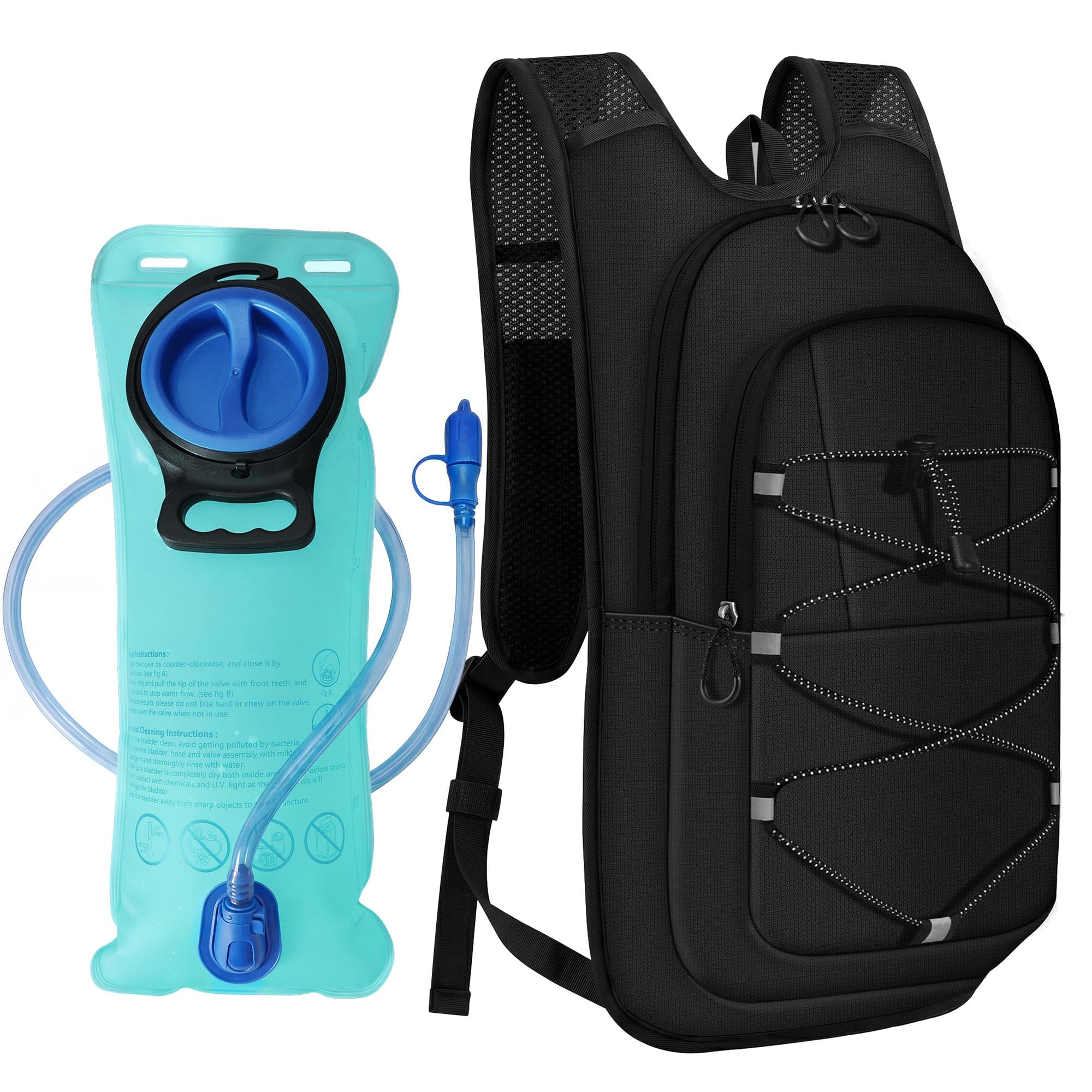
The harness is the reason this is our default. It adjusts at the shoulders, across the sternum and around the waist, and the strap tails run long, so a broad chest does not leave you hanging on the last inch of webbing. The body is 19.7 inches tall, and that length is what a big guy actually feels: the waist belt lands at your waist instead of riding up under the ribs the way the short cycling packs here do.

Three liters is the other half of the argument. Most of the packs in this guide carry two, and the gap shows up late on a hot afternoon when the two-liter crowd is hunting for a tap. The reservoir sits in its own sleeve against the back panel rather than loose in the main pocket, so a full bladder does not slide sideways while you are climbing.

Storage is the tactical half of the design. The shell is 1000D nylon with MOLLE webbing across the back, which means you can lash a pouch on for a longer day or leave it bare for a run, and it is only 2.6 inches deep either way. That slim profile is why it does not feel like luggage on a wide back.

Give the seam where the shoulder strap meets the bottom of the pack a hard tug before your first trip. That joint is the wear point on this design, and it takes five seconds to check. Keep the heaviest item off the floor of the main compartment and it will carry a full bladder plus lunch without complaint.

Pros

  • Three-point harness with long strap tails
  • 3-liter bladder held in a stable sleeve
  • Slim 2.6-inch profile with MOLLE webbing
  • 1000D nylon shell

Cons

  • Top cap can spill if the bladder is overfilled
Our verdict

This is the one we recommend first for a broad chest and a long torso: three-point adjustment, a full three liters of water, and a body slim enough to forget about.

Check Latest Price
2

Best for Long Hikes

N NEVO RHINO 18L

92 /100
Traveler Score Outstanding

Key details

Reservoir
3 liters
Pack Weight
1.61 lb
Bladder Pocket
Insulated
Total Capacity
18 liters
Check Details on Amazon

Eighteen liters of pack around a three-liter bladder is the biggest combined load in this guide, and the bladder rides in an insulated sleeve instead of sitting against bare nylon. On a hot climb that is the difference between water that is still cold at the summit and water you drink out of duty. The sleeve is the reason this pack exists.

Weight sits where it should. The shoulder straps, waist belt and back panel are all lined with ventilated mesh, and the belt takes the load once the bladder is full — a detail that matters more on a heavier frame than any pocket count. It is also the pack here with the most adjustment left over on a big back, so it does not fight you at the sternum.

Storage is generous without being fussy: three pockets, a mesh slash pocket outside for a shell, and slip pockets on the waist belt for a phone or a bar. At 0.73 kg empty it is not the lightest thing here, and you feel that on the first climb before you have drunk anything. After that the weight is in the right place and the pack settles.

Pros

  • 18 liters of cargo plus a 3-liter bladder
  • Insulated bladder compartment
  • Ventilated mesh on straps and back
  • Waist belt takes load off the shoulders

Cons

  • Bottom seam can rupture under a heavy load
Our verdict

We pick it when the day runs long and hot: 18 liters of cargo around a three-liter bladder that stays cold in its own insulated sleeve.

Check Latest Price
3

Best in Wet Weather

Teton Oasis Trailrunner 18L

91 /100
Traveler Score Outstanding

Key details

Reservoir
2 liters
Rain Cover
Sewn in
Pack Weight
2 lb
Total Capacity
18 liters
Check Details on Amazon

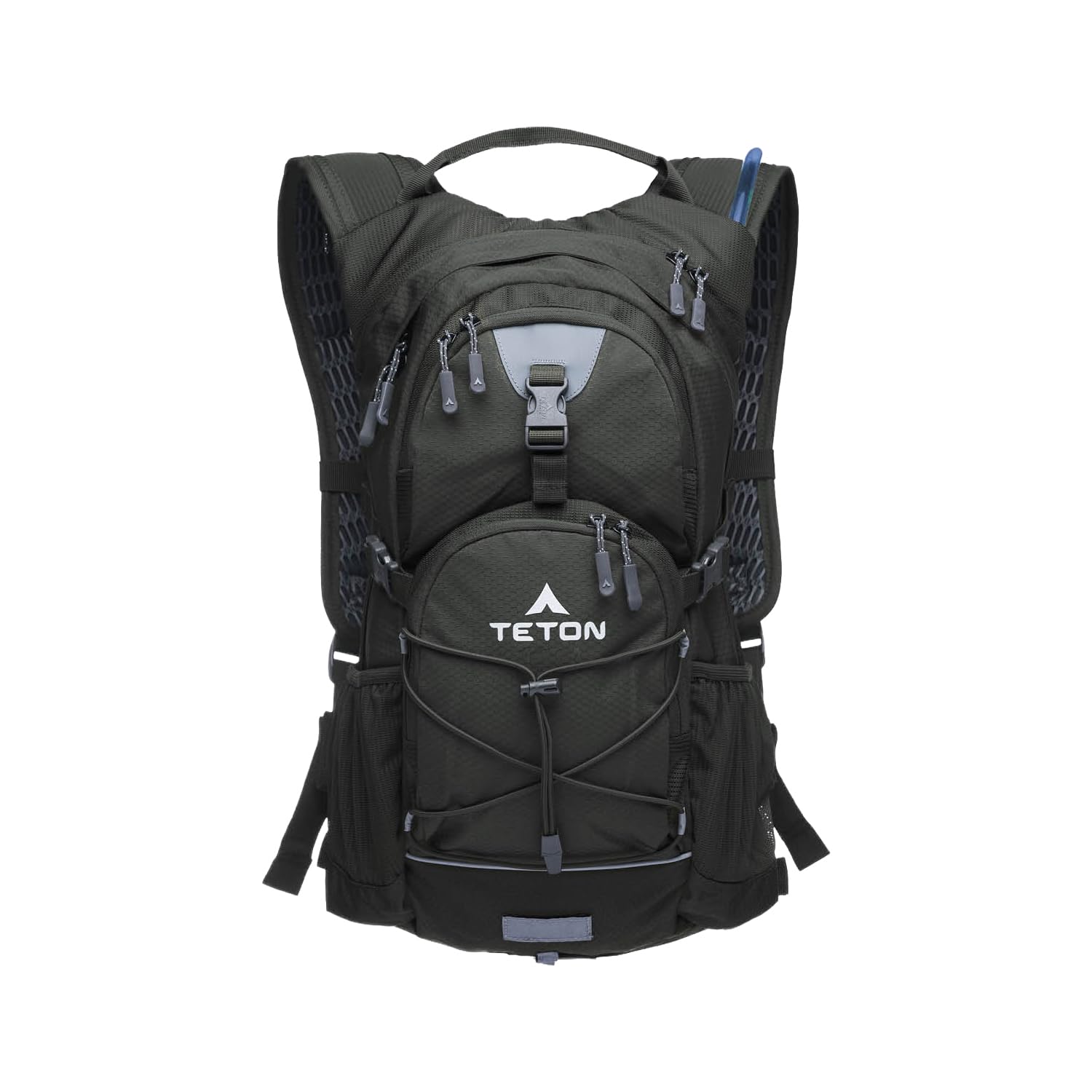
A rain cover sewn into the base is a small thing that changes a wet hike. It is always there, it cannot be left in the car, and you can pull it over the pack without taking it off your back. Teton also weather-guards the zippers, which is the detail most packs in this price band skip entirely.

The cut is built for a male torso. At 18.5 inches tall with high-density foam shoulder straps, it sits on broad shoulders and stays put. On a small frame the same cut swims, which is worth knowing if you are buying for a partner who is narrower than you are — that is a boundary of the design, not a fault in it.

Four pockets, an insulated bladder sleeve and a bungee that takes a shell or a helmet round out a pack that costs the most here. We think it earns that if your hikes happen in weather, and the limited lifetime warranty softens the outlay. For a fair-weekend hiker, the N NEVO RHINO 18L does most of the same job for less.

Pros

  • Sewn-in rain cover
  • Weather-guarded zippers
  • Cut suits a male torso
  • Limited lifetime warranty

Cons

  • Waist strap can pull away at the attachment
Our verdict

If your hikes happen in rain, this is the one we reach for: a cover that is always attached and a cut built for broad shoulders.

Check Latest Price
4

Best for Hot Days

Miracol Insulated 15L

93 /100
Traveler Score Outstanding

Key details

Harness
Sternum strap and waist belt
Reservoir
2 liters
Pack Weight
16 oz
Total Capacity
15 liters
Check Details on Amazon

Pockets on both sides of the waist belt are what make this 15-liter pack feel bigger than it is — keys, a bar, a phone, all reachable without swinging the pack around. We rate that design above the extra liter of cargo it saves you. The catch is height: on a long torso the belt sits high, so those pockets land nearer your ribs than your hands, and the front mesh pocket ends up doing the work.

The insulated sleeve is the other reason it is here. Miracol rates the compartment at four hours of cold, which covers a morning hike in summer rather than an all-day climb. At 16 ounces empty it asks very little of a wide back, the sternum strap and waist belt both adjust, and the whole thing flattens into a suitcase between trips.

Fifteen liters is day-pack territory: a shell, lunch and a small first-aid kit, not much beyond that. Treat it as a good-value day pack rather than a lifer. The inner pocket and the bladder seal are the parts that wear, and the warranty runs three months, so fill and pressurize the bladder the day it lands instead of the morning of your hike.

Pros

  • Pockets on both sides of the waist belt
  • Insulated bladder sleeve
  • 16 ounces empty
  • Adjustable sternum strap and waist belt

Cons

  • Two-liter bladder caps long, hot days
Our verdict

Our pick for hot-weather day hikes on a budget: insulated water, hip-belt pockets you will use, and 16 ounces of pack carrying it all.

Check Latest Price
5

Best Range of Adjustment

Unigear Hydration Pack 2L

91 /100
Traveler Score Outstanding

Key details

Reservoir
2 liters
Pack Weight
1.1 lb
Stated Chest Fit
27 to 50 inches
Check Details on Amazon

Unigear is the only pack in this set that puts a number on its fit: a chest range of 27 to 50 inches. Every other listing says adjustable and leaves you to guess whether that includes your chest. When you are shopping online and cannot try a pack on, that one sentence is worth more than any feature list.

Which is why it is our pick for a genuinely wide chest. Fifty inches covers most big frames with room for a base layer, and the shoulder, chest and waist straps all move independently, so you can drop the sternum strap and still keep the pack from swaying when you move fast. For the money, nothing else here is this explicit about who it fits.

What you give up is padding and reservoir size. The shoulder straps are thinner than the ones on the MARCHWAY or the 18-liter N NEVO, and the bladder is two liters, so plan a refill on a full day. The fabric is splash-resistant rather than waterproof, so if rain is likely, put anything that matters in a dry bag inside.

Pros

  • Published chest range of 27 to 50 inches
  • Shoulder, chest and waist straps move independently
  • Light 0.5 kg build

Cons

  • Hose and bite-valve connections can leak
  • Front pocket is small
Our verdict

We steer very broad chests here first, because it is the only pack in this guide that tells you in inches what it will fit.

Check Latest Price
6

Best for Running

N NEVO RHINO 12L

91 /100
Traveler Score Outstanding

Key details

Reservoir
2 liters
Pack Weight
8.5 oz
Total Capacity
12 liters
Shoulder Strap Range
19 to 34 inches
Check Details on Amazon

At 8.5 ounces empty this is the lightest pack in the guide, and it is built like a running vest rather than a scaled-down backpack. The shoulder straps are wide and ventilated, with elastic pouches on each side that swallow a phone or a handful of chews without unzipping anything. That is the pocket you actually use at speed.

The adjustment is unusually specific: shoulder straps from 19 to 34 inches, and a chest strap that slides 2.4 to 7.9 inches vertically as well as tightening. The vertical slide is the underrated part on a big chest. You can drop the sternum strap below the pectorals instead of running it straight across them, which is where a strap that will not move starts to chafe.

Twelve liters plus the two-liter bladder is a half-day setup, enough for a fast hike or a long run in cool weather. The PU-coated nylon shrugs off brush and drizzle better than the weight suggests, and the vest harness keeps the load from swinging when you are moving quickly downhill.

Pros

  • 8.5 ounces empty
  • Vest-style straps with shoulder pouches
  • Chest strap slides vertically

Cons

  • Two-liter reservoir caps long, hot days
  • Bottle pockets are too small for a spare
Our verdict

The running pick: nothing else here carries two liters this lightly, with a chest strap that drops below a broad chest instead of across it.

Check Latest Price
7

Short Hikes

MIYCOO Hydration Backpack 10L

90 /100
Traveler Score Outstanding

Key details

Reservoir
2 liters
Pack Weight
1.48 lb
Bladder Pocket
Takes an ice pack
Total Capacity
10 liters
Check Details on Amazon

The insulated sleeve here takes an ice pack, and that is a better trick than it sounds. A frozen block beside a two-liter bladder keeps water cold for hours, and you can slide it out when you do not need it. Five pockets in a 10-liter pack is a sensible ratio as well: the strap pockets take a phone, and the main compartment still swallows a shell and lunch.

The adjustable mesh harness is forgiving across a wide back, and at 0.67 kg the pack never becomes the reason you turn around. Ten liters is the honest limit — a shell, lunch and a phone rather than a summit load — and the one-year warranty gives you time to find out whether the seams agree with the way you load it.

Pros

  • Insulated sleeve takes an ice pack
  • Five pockets in a 10-liter pack
  • Adjustable mesh harness

Cons

  • Hose connection can drip down your back
Our verdict

We keep it in the guide for shorter, hotter outings: an ice pack, five pockets, and a mesh harness that does not fight a wide back.

Check Latest Price

How We Tested Hydration Packs for Bigger Frames

We started with a list of 30 hydration packs marketed as extended-size or unisex designs with long straps, then narrowed it to eleven based on reservoir volume, strap adjustment range, pocket layout, and price. Each pack went to a tester with a 48- to 52-inch chest and a 19- to 21-inch torso, and we ran them through eight months of day hikes, bike commutes, and weekend camping trips. We weighed every pack empty and loaded, measured strap reach with a full three-liter reservoir, and noted where the shoulder harness and hipbelt landed on a broader frame.

On the trail, we paid attention to how each pack carried a full reservoir plus a rain shell, lunch, and a small first-aid kit over six- to ten-mile hikes. We checked whether the load stayed close to the back on steep descents, whether the hose stayed put when we turned our heads, and whether any buckles or stitching started to fail after repeated tightening and loosening. Storage capacity got a real-world test: could we fit a packed lunch, a liter bottle, and a layer without unzipping the whole bag?

Back home, we filled each reservoir, inverted it on a towel overnight, and squeezed the bite valve to check for drips at the seam and cap. We also turned the reservoirs inside out, scrubbed them with a bottle brush, and let them air-dry to see how easily they cleaned and whether corners held moisture. Durability checks included dragging loaded packs over granite, setting them down in dirt, and working every zipper and buckle fifty times. At the end, we compared what each pack cost against its included reservoir, hardware, and warranty to judge value.

How to Choose Hydration Packs for Big Guys

The Harness Is the Whole Decision

Three points of adjustment matter: shoulder straps, a sternum strap, and a waist belt that actually closes around you. A pack with a sternum strap and no belt will sway on a wide back however hard you cinch the shoulders, and a belt that runs out of webbing is decoration. Look for long strap tails — if you are on the last inch with a t-shirt on, the pack has nothing left for layers.

The word adjustable on its own tells you nothing. One pack in this guide publishes a real figure, a chest range of 27 to 50 inches. Measure your chest at the widest point, add an inch for a base layer, and hold that against whatever the listing states. Where there is no figure, read the return window before you cut the tags.

Two Liters or Three

Two liters covers roughly three to four hours of steady hiking in mild weather. Three gets most people through a full day with margin and is the safer call in heat. Water is the heaviest thing you carry, though, and a full three-liter bladder sits high and back — which is exactly why a waist belt matters more as capacity climbs.

If your route passes a refill point, a two-liter pack plus a filter beats hauling water you never drink. If it does not, buy the bigger bladder, and buy it in a pack with an insulated sleeve. Warm water is the reason bottles come home full.

Torso Length, Not Pack Length

Pack bodies in this guide run from 12.6 to 19.7 inches tall, and that figure changes where the waist belt lands. Short cycling packs ride high, which is right on a bike and wrong on a long back: the belt ends up around your ribs, where it can carry nothing. Taller packs drop the belt onto your hip bones.

Measure from the bony bump at the base of your neck to the top of your hip bones. Long result, favour the taller packs here. Short result, the compact ones will sit better. Either way the belt should rest on bone, not on your stomach.

Insulation, Pockets and Weather

An insulated bladder sleeve is the one comfort feature worth paying for; it keeps water drinkable hours in. After that, judge pockets by whether you can reach them with the pack on. Hip-belt pockets and shoulder pouches get used constantly. A deep front compartment does not, because reaching it means stopping and swinging the pack around.

If your hiking happens in wet country, a rain cover sewn into the base beats a separate one that stays in the car. If it does not, put the difference into fit.

Frequently Asked Questions

Final Verdict

The MARCHWAY is the pack we hand someone with a broad chest and a long torso first. Three-point adjustment, a full three liters, and a 19.7-inch body that puts the waist belt where it can take weight — it is the one that makes the fewest compromises on fit.

If your days run past four hours in heat, the N NEVO RHINO 18L adds cargo and an insulated bladder sleeve for a little more money. If you are running rather than hiking, the 12-liter N NEVO RHINO is the one that disappears on your back.