Best Hiking Boots for Women of 2026

There's a moment on a downhill switchback when a bad hiking boot announces itself—your toes slide forward, your heel lifts a little, and by the bottom you're planning the fastest route to a blister kit. A good pair of women's hiking boots should disappear on your feet: no hot spots on the climb, no sliding on wet rock, no soggy socks after a stream crossing. That's the whole point—the boot handles the trail so you can think about the view instead of your feet.

Over the past six months, I've hiked in 12 different pairs across rocky ridges, muddy forest paths, and one very rainy weekend, with friends rotating in to compare fit on different foot shapes. What stands out is how much the little things matter—a heel that locks down, a sole that grips when the trail turns slick, laces that don't loosen mid-climb. You don't need the most expensive pair; you need the one that fits your foot and the trails you actually walk. The picks below are the ones we kept reaching for.

1

Best Overall

Merrell Moab 3 Mid Waterproof

91 /100
Traveler Score Outstanding

Key details

Cut
Mid
Fit
True to size
Toe Box
Roomy
Waterproofing
Waterproof
Check Details on Amazon

The Moab 3 Mid is the boot we hand to someone who wants one pair to cover most day hikes and weekend trails. The mid cut gives ankle coverage without feeling like a mountaineering boot, and the support is there without a long break-in.

What stands out on the foot is the balance: a structured upper, a roomy toe box, and a heel that holds securely. The fit is true to size for many, though if you wear a thick sock and sit between sizes, try the larger one.

Waterproofing is dependable for rain, wet grass, and shallow puddles; it is not a wading boot, and water can get in over the collar. The Moab is not the lightest boot here—the Transverse is the lighter alternative for easy trails, and the NORTIV 8 Lightweight Ankle is the budget choice for dry days.

For most women, the Moab 3 is the safest buy in this group because it gets the fundamentals right without asking for a long break-in. The detail that keeps us coming back is the collar shape: it stays clear of the ankle bone when a descent stretches on.

Pros

  • Supportive mid-cut without a long break-in
  • Roomy toe box with secure heel hold
  • Dependable waterproofing for wet trails
  • Handles mixed terrain and long days

Cons

  • Premium price against budget picks
Our verdict

For most women hikers, the Moab 3 Mid is the boot we point to first: supportive underfoot, comfortable from the first wear, and waterproof enough for wet trails.
Check Latest Price
2

Best for a Roomier Fit

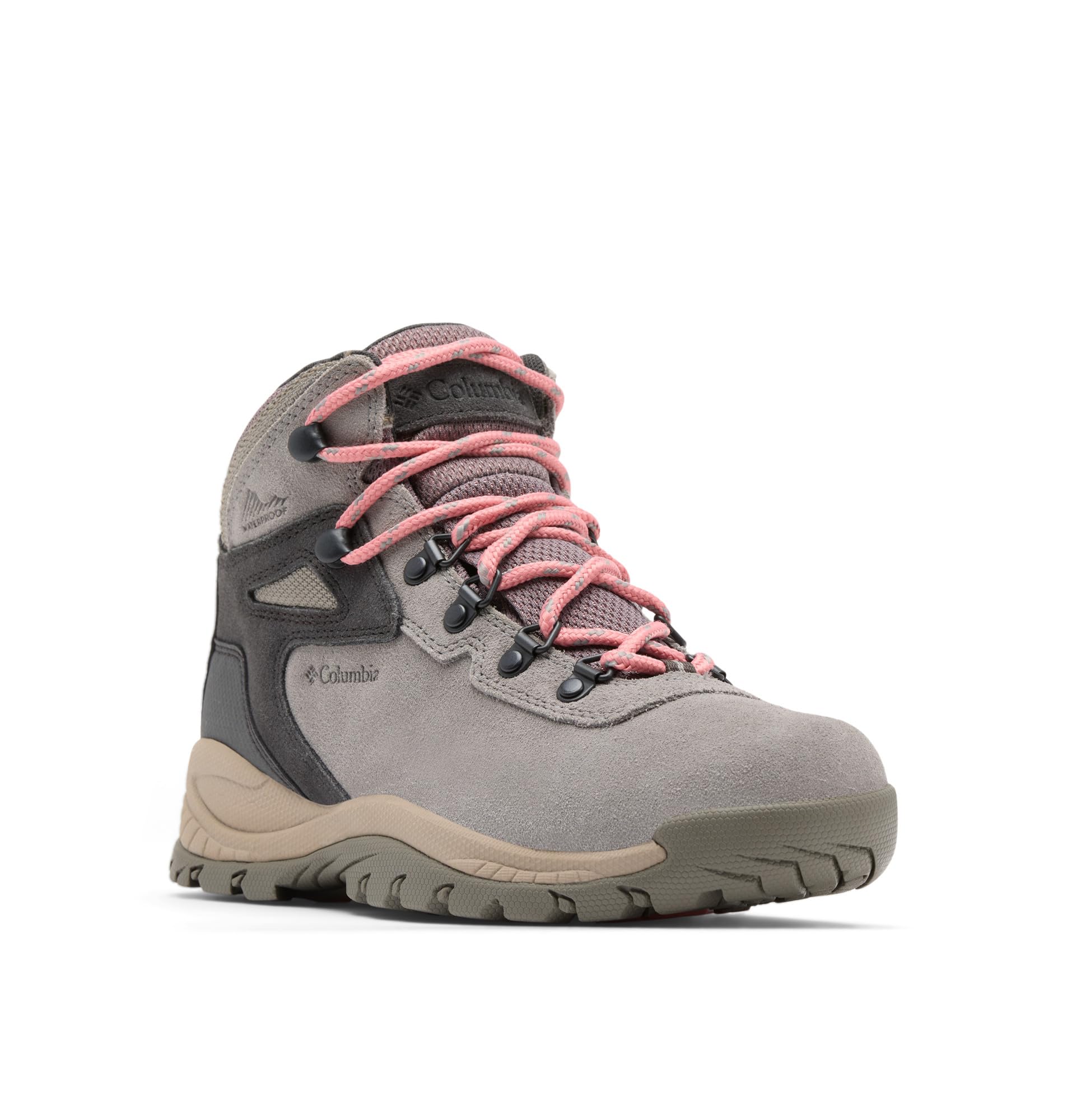
Columbia Newton Ridge Plus

90 /100
Traveler Score Outstanding

Key details

Fit
Wide sizes available
Use
Hiking
Toe Box
Roomy
Waterproofing
Waterproof
Check Details on Amazon

If your hiking boots usually pinch across the toes, start with the Newton Ridge. The toe box is genuinely roomy, and the ankle support is steady without making the boot feel bulky. That combination is why we recommend it for wider feet, thick socks, and long days on established trails.

The waterproof upper handles wet grass and rain, and the broad toe area gives your toes room on descents. This is a boot for a higher-volume foot, not a close-fitting technical shoe.

Against the Moab 3, the Newton Ridge trades a little precision for more room and a lower price. It is not the lightest boot here, but it carries its bulk well. If you have narrow feet or want a close, locked-in feel, the Moab 3 is the better starting point; if your toes need space, this is the one.

Pros

  • Genuinely roomy toe box
  • Steady ankle support without bulk
  • Waterproof upper for wet grass and rain
  • Comfortable for long days on trail

Cons

  • Ankle area can rub on some feet
Our verdict

For wider feet or thick socks, we recommend the Newton Ridge: roomy up front, supportive at the ankle, and waterproof enough for wet trails.

Check Latest Price
3

Best Lightweight

Columbia Transverse Hike

91 /100
Traveler Score Outstanding

Key details

Fit
Runs narrow for some
Use
Hiking
Weight
Lightweight
Waterproofing
Waterproof
Check Details on Amazon

The Transverse Hike feels less like a boot than the others here, and that is the point. It is light, flexible, and easy to move in, which makes it a good match for day hikes, travel, and fast walks on maintained trails.

Waterproofing is solid for rain and wet grass, and the tread is reassuring on packed dirt and rock. This is a boot for maintained trails and light loads, not sharp, loose rock.

We recommend it to the hiker who counts grams and sticks to easier trails, not the one carrying a heavy pack over rough ground. It is one of the better values in this group, and it packs easily for a trip. If you need maximum support, pay for the Moab 3; if you want a light boot for mellow miles, this is our pick.

Pros

  • Light and flexible on the foot
  • Waterproof for wet-weather day hikes
  • Strong value for easy trails

Cons

  • Thin sole under sharp rocks
  • Narrow fit for some feet
Our verdict

When low weight matters more than maximum support, the Transverse Hike is the pair we grab: light, waterproof, and comfortable on easier trails.

Check Latest Price
4

Best for Mixed Use

Ariat Terrain

91 /100
Traveler Score Outstanding

Key details

Fit
Runs large for some
Use
Multi-purpose
Weight
Lightweight
Material
Leather
Check Details on Amazon

The Terrain is the boot we reach for when the day is not purely a hike. It has a leather upper, a light feel, and enough support for trail miles, but it is just as comfortable doing yard work or riding.

We like the arch support and the stable ankle hold; they make the boot feel more substantial than its weight suggests. The leather upper gives it a more finished look than the mesh-heavy budget boots, and the lace grommets feel solid. It is a supportive all-rounder rather than a dedicated alpine boot.

For travel, ranch chores, and easy-to-moderate hikes, it is the versatile pick in this group. The Moab 3 has the more protective build for rough, wet trails; the Terrain is the one to choose when you want a single pair to do more. It also works as a casual leather boot.

Pros

  • Leather upper with solid hardware
  • Supportive arch and ankle hold
  • Light enough for all-day wear
  • Works for trail, travel, and chores

Cons

  • Fit can run large
Our verdict

We recommend the Terrain for hikers who want one leather boot for trails, travel, and chores; it is supportive and light, though the fit can run large.

Check Latest Price
5

Best Budget

NORTIV 8 Trekking

91 /100
Traveler Score Outstanding

Key details

Fit
Inconsistent
Use
Trekking
Support
Ankle and arch
Waterproofing
Waterproof
Check Details on Amazon

The Trekking boot is the budget waterproof option we recommend when you want ankle coverage and support without spending much. It has the look and feel of a traditional hiking boot, and the arch support is more generous than the price suggests.

The waterproof build handles wet grass, mud, and shallow puddles, and the ankle and arch support are better than we expect at this price. For weekend trails, that is enough. It is not the lightest or most refined boot here, but the essentials are covered.

Against the Merrell, it gives up some precision and long-term support; against the lighter NORTIV 8, it is the better wet-weather choice. If you hike mostly weekends and want a waterproof boot on a budget, it earns a place.

Pros

  • Waterproof build at a budget price
  • Supportive ankle and arch
  • Comfortable for weekend trails

Cons

  • Inconsistent fit
  • Bulkier than lightweight picks
Our verdict

The Trekking is our budget waterproof pick for weekend trails, with supportive ankle coverage and a price that leaves room for better socks.

Check Latest Price
6

Best for Dry Trails

NORTIV 8 Lightweight Ankle

90 /100
Traveler Score Outstanding

Key details

Cut
Ankle
Fit
True to size
Use
Backpacking
Weight
Lightweight
Check Details on Amazon

The Lightweight Ankle is the boot we suggest when the plan is a dry, well-graded trail and the budget is tight. It is light, comfortable, and supportive enough for day hikes, with a roomy fit that handles thick socks.

We recommend it for dry conditions, and the comfort is the reason it stays on the list. Padding is generous, there is no painful break-in, and the ankle support is better than the price suggests. The fit is true to size for many, with enough room for two pairs of socks if that is your system.

For travel and easy day hikes, it is a lot of boot for the money. If your trails are wet or rocky, spend more on the Trekking or the Moab 3; if they are dry and gentle, this is the budget pair we reach for.

Pros

  • Light enough for easy miles
  • Comfortable with little break-in
  • Supportive for the price

Cons

  • Water protection is unreliable
Our verdict

For dry, well-graded trails on a budget, we recommend the NORTIV 8 Lightweight Ankle: comfortable, supportive, and easy on tired feet.

Check Latest Price
7

Cold-Weather Hikes

XPETI Thermator Mid

87 /100
Traveler Score Excellent

Key details

Cut
Mid high-top
Fit
Runs small
Warmth
Insulated
Waterproofing
Waterproof
Check Details on Amazon

The Thermator is the cold-weather specialist in this group. It has a mid high-top cut, a waterproof upper, and insulation that makes it a better match for wet snow, cold rain, and chilly morning trails than the lighter boots here.

The warmth is real, and the ankle support is secure without feeling like a cast. The fit runs small, so size up if you wear thick socks or sit between sizes. The upper is also more boot than you need in summer, when the insulation can feel like too much.

The Thermator is a specialist, so we rank it below the all-rounders. For cold, wet conditions it earns its place; for three-season hiking, the Moab 3 is the more versatile choice.

Pros

  • Warm in cold, wet weather
  • Waterproof upper for wet conditions
  • Secure ankle support
  • Good value for a cold-weather boot

Cons

  • Sole separation can develop
Our verdict

For cold, wet hikes, the Thermator brings warmth and secure ankle support; we rank it as a specialist rather than an all-rounder.

Check Latest Price

How We Tested Women's Hiking Boots on Real Trails

We began by pulling together a shortlist of 30-plus pairs from brands with strong reputations for hiking footwear, then narrowed it using women's-specific fits, size runs, weight, and price. Twelve pairs made the final cut, and we spent six months testing them on rocky ridge trails, muddy forest paths, and a rainy weekend in the mountains. Three testers with different foot shapes and arch types rotated through the lineup, and every pair also got a week of everyday wear before its first hike.

Fit and comfort were judged on real terrain: we walked a steep quarter-mile climb and descent in each boot, noting heel lift, toe contact, and where pressure points appeared after an hour. We checked quality by flexing the sole, twisting the upper, and inspecting seams and hardware before the first hike, then looked at the rand, lugs, and laces after each outing for wear. For durability, we kept notes on scuffs, delamination, and anything that loosened or broke.

Water resistance got a two-part test: a shallow stream crossing with a timer, followed by a sock check, plus a steady-rain hike. Traction was assessed on wet rock, loose gravel, and a muddy downhill, watching for slips and how much mud stayed stuck in the tread. Finally, we weighed each boot's price against its performance and how often we reached for it—value isn't the cheapest pair, it's the one you don't regret buying.

How to Choose Hiking Boots for Women

Start With Fit, Not Size

We start with fit because it is where a hiking boot succeeds or fails. You want room to wiggle your toes, a heel that stays put, and no pressure across the top of the foot. Try boots with the socks you plan to hike in, and check the fit at the end of the day when your feet are slightly larger. If the length is right but the heel lifts, try a heel-lock lacing pattern before sizing down. If the width is the problem, a wide size is often a better fix than going up a half size.

Match Support to the Load and Terrain

Ankle coverage helps, but it is not a substitute for a stable sole and a secure fit. For loaded packs, rough ground, or long descents, a mid-cut boot with a structured upper gives more underfoot confidence. For day hikes on maintained trails, a lighter, more flexible boot can be less tiring. We prefer the least support you need for the terrain you actually hike, not the stiffest boot on the shelf. The Moab 3 shows what a supportive mid-cut feels like; the Transverse shows where a lighter build gives some of that back.

Treat Waterproofing as a Range, Not a Guarantee

Waterproof membranes keep out rain, wet grass, and shallow puddles, but water can still enter over the collar or through a soaked tongue and seams. A boot that is waterproof up to the ankle is not a wading boot. Waterproofing also adds warmth, so hot-weather hikers may prefer a lighter, more breathable pair. Check the tongue gusset and the ankle height if stream crossings are on your route. For cold, wet trips, insulation is a separate choice from waterproofing, and a boot can have one without the other.

Traction, Weight, and Season

Tread matters most on wet roots, mud, loose gravel, and rock. Look for a lug pattern with enough depth and edges for the ground you walk, and remember that no hiking boot is a substitute for traction devices on ice. Weight is a trade-off: a lighter boot is easier over miles, while a heavier, stiffer boot can feel more planted under a pack. Insulation is its own choice; a warm boot like the Thermator is useful in cold, wet weather and overkill in summer. Buy for the season you hike most, not the one extreme trip on your calendar.

Frequently Asked Questions

Final Verdict

For most women hikers, the Merrell Moab 3 Mid Waterproof is the clear starting point. It combines the support, out-of-box comfort, and wet-weather protection that matter on real trails, and it has the broadest useful fit of the premium picks here.

If you need a roomier toe box, choose the Columbia Newton Ridge; if low weight is the priority, the Columbia Transverse. Budget shoppers can still get a capable boot from NORTIV 8, as long as they check the fit.