Best Hiking Boots for Plantar Fasciitis of 2026

Plantar fasciitis has a way of announcing itself in the first quarter mile — that sharp stab under the heel that turns a favorite trail into a negotiation. The boots that help aren't the softest ones; they're the pairs that hold your arch steady, keep the heel from rolling, and put real cushioning under it. Get those three things right and the boot does quiet work all day. Get them wrong — a floppy midsole, a slipping heel, a pinching toe box — and no aftermarket insole will rescue the hike.

My team and I have spent six months in 12 pairs, walking them on rocky singletrack, wet root-covered climbs, and plenty of unglamorous pavement. A few felt perfect out of the box and flattened by mile eight; others took a week of short walks before they became the pair I reached for. One thing first-time buyers miss: the insole in the box matters less than the boot's shank and heel counter, so don't shop on plushness alone. The picks below are the ones that held up.

1

Best Overall

Merrell Men's Moab 3 Mid

92 /100
Traveler Score Outstanding

Key details

Cut
Mid
Gender
Men's
Listed Weight
2 lb
Check Details on Amazon

Toe room is the first thing we check on any boot meant for a sore arch, and the men's Moab 3 Mid is near the top of this group on it. There's space for your toes to spread on a descent instead of jamming into the front, and there's a wide version for feet that need more. A cramped toe box changes how you walk, and changing how you walk is the last thing an angry plantar fascia wants, which is most of the reason this boot leads our list.

What sits under the foot matters more than what you can poke with a thumb. The Moab's strongest card is the support through the midfoot and heel: it holds its shape under a loaded pack and stays steady when the ground tips sideways. Just as important, it's comfortable from the first walk, so there's no two-week break-in to survive while every step already hurts.

Two things to know. This is the Moab without a waterproof membrane, so wet ground finds its way in through the upper; dry trails, packed dirt and the odd damp meadow are its territory, not bogs or days of rain. And at a listed two pounds it isn't the lightest boot here, though it carries the weight well over a long day.

It's also the most expensive boot in this group, and we still start here, because the two things you can't add later, the shape of the toe box and the structure under the arch, are already right. The laces, the collar, the heel pull: all unremarkable, which is exactly what you want from the boot you're trusting with a sore foot.

Pros

  • Roomiest toe box in this set
  • Dependable arch and heel support
  • Almost no break-in
  • Wide width available

Cons

  • Highest price in this group
Our verdict

We recommend the Moab 3 Mid as the default for a painful arch: a roomy toe box, dependable support through the midfoot and heel, and almost no break-in before your first real hike.

Check Latest Price
2

Best for Custom Orthotics

Timberland White Ledge Mid

91 /100
Traveler Score Outstanding

Key details

Cut
Mid
Gender
Men's
Listed Weight
1.1 lb
Waterproofing
Waterproof
Check Details on Amazon

The first thing we do with any boot meant for a painful arch is pull the factory footbed out. On the White Ledge it comes free without a fight, and there's enough depth left inside that a full-length orthotic settles in without pushing your toes against the front. That one detail does more for a sore plantar fascia than any padding stitched into a collar.

Everything else about this boot earns its place. The leather is waterproof and stays that way through wet grass and shallow puddles, the break-in runs about a week rather than a month, and it feels light for a leather hiker, light enough that we stopped noticing it on long days. Ankle support is there without the boot feeling like a cast.

Sizing runs true, and there's a wide width for anyone who normally takes one, worth doing if your orthotic adds bulk, since that volume has to go somewhere. Water has a limit here too, and it isn't the membrane's fault: a mid boot stops keeping water out the moment a crossing comes over the collar.

Pros

  • Footbed lifts out for an orthotic
  • Waterproof leather at a mid-range price
  • Light and quick to break in

Cons

  • Sole bonding can fail under daily job-site use
Our verdict

If you hike in your own orthotic, this is the easiest boot here to set up: the factory footbed lifts out, the leather is waterproof, and it stays light on the foot.

Check Latest Price
3

Best for Women

Merrell Women's Moab 3 Mid

91 /100
Traveler Score Outstanding

Key details

Cut
Mid
Gender
Women's
Listed Weight
1.5 lb
Waterproofing
Waterproof
Check Details on Amazon

The men's and women's Moab 3 share a name, and the women's version is the one that comes with a waterproof membrane, which is worth knowing because the men's listing we cover doesn't. It's also the lighter of the two at a listed pound and a half, the difference between a boot you forget about and one you're glad to take off at camp.

Fit is the reason it's here. The toe box leaves room for toes to spread, the wide width fits an orthopedic pad and a thick wool sock at the same time, and the collar sits away from the ankle bone instead of pressing on it. Support holds on loose rock and sidehill, which is where a sore arch usually announces itself, and there's no break-in to get through first.

It also costs less than the men's version, which is unusual for the better-specified boot, and it's the one we point to for any woman who has been squeezing a wide foot into a narrow hiker. Sizing runs true, and the waterproof upper handles snow and wet trails; if you're between widths, go wide and let a thicker sock take up the slack.

Pros

  • Wide width fits an orthopedic pad
  • Supportive heel and ankle on rough ground
  • Waterproof with no break-in

Cons

  • Ankle collar can rub until it softens
Our verdict

For women with a sore arch, this is the pick: a roomy toe box, a wide width that takes an orthopedic pad, waterproofing, and no break-in to endure first.

Check Latest Price
4

Best Wide Toe Box

Columbia Transverse Hike

91 /100
Traveler Score Outstanding

Key details

Model
206740
Gender
Men's
Waterproofing
Waterproof
Check Details on Amazon

The insole is the first thing you'll want to deal with. It's flat, thin and clearly a placeholder, and for anyone with plantar fasciitis that's close to good news, because you were going to put your own insert in regardless and Columbia hasn't charged you for a footbed you'd throw away.

What's underneath is a genuinely roomy toe box. This is the boot we reach for when a wide forefoot has been the problem: the toe area is broad enough that a bunion or a spreading foot doesn't feel clamped, and it does that at a mid-range price rather than a premium one.

Waterproofing is the other half of the pitch, and it's done properly. The tongue is gusseted so water doesn't run in at the laces, and wet grass, gravel and shallow puddles don't get through. Fit is where it gets personal, because there's plenty of room up front, and a narrow foot will swim in it.

Buy the boot, pull the placeholder out, and put your own support in. Choose a cushioned insert rather than a rigid one: there's enough volume in the toe box that you don't need to fight for space, and a softer insert keeps the ride from feeling stiff underfoot on long descents.

Pros

  • Roomiest toe box in this group
  • Waterproof with a gusseted tongue
  • Easy to fit an aftermarket insole
  • Mid-range price for the room

Cons

  • Too much volume for a narrow foot
Our verdict

For wide feet on a middle budget, this is our pick: a genuinely roomy toe box and real waterproofing, with a placeholder insole you were going to replace anyway.

Check Latest Price
5

Best Budget

NORTIV 8 Women's Waterproof Trekking

91 /100
Traveler Score Outstanding

Key details

Gender
Women's
First Listed
2021
Waterproofing
Waterproof
Check Details on Amazon

At the bottom of this group's price range sits a boot that does something the other cheap ones don't: it supports the arch. The NORTIV 8 Trekking is the budget pick we're comfortable recommending for a painful foot, because the midfoot and ankle support is the part that holds up in use, the upper keeps water out in puddles and shallow crossings, and it's comfortable without a break-in.

Fit is the thing to watch. It runs narrow for some feet and generous for others, so order your usual size and keep the box handy. The laces work loose on the trail more than we like, and grip on wet rock is only average, fine for packed trails and dry scrambling, less so for slick roots and stream crossings.

Pros

  • Arch and ankle support at a budget price
  • Waterproof for puddles and shallow crossings
  • Comfortable without a break-in

Cons

  • Laces work loose on the trail
  • Wet-rock grip is only average
Our verdict

The best value here: real arch and ankle support, a waterproof upper, and comfort without a break-in, at the lowest price in this guide.

Check Latest Price
6

Wide, Stable Fit

Columbia Women's Newton Ridge Amped

90 /100
Traveler Score Outstanding

Key details

Model
1718822
Gender
Women's
Waterproofing
Waterproof
Check Details on Amazon

Wide feet are the reason to look here. The Newton Ridge Amped comes in a wide width that takes a bunion, an orthopedic insert and a thick wool sock at once, and the toe area stays broad without the boot reading as clunky on the foot.

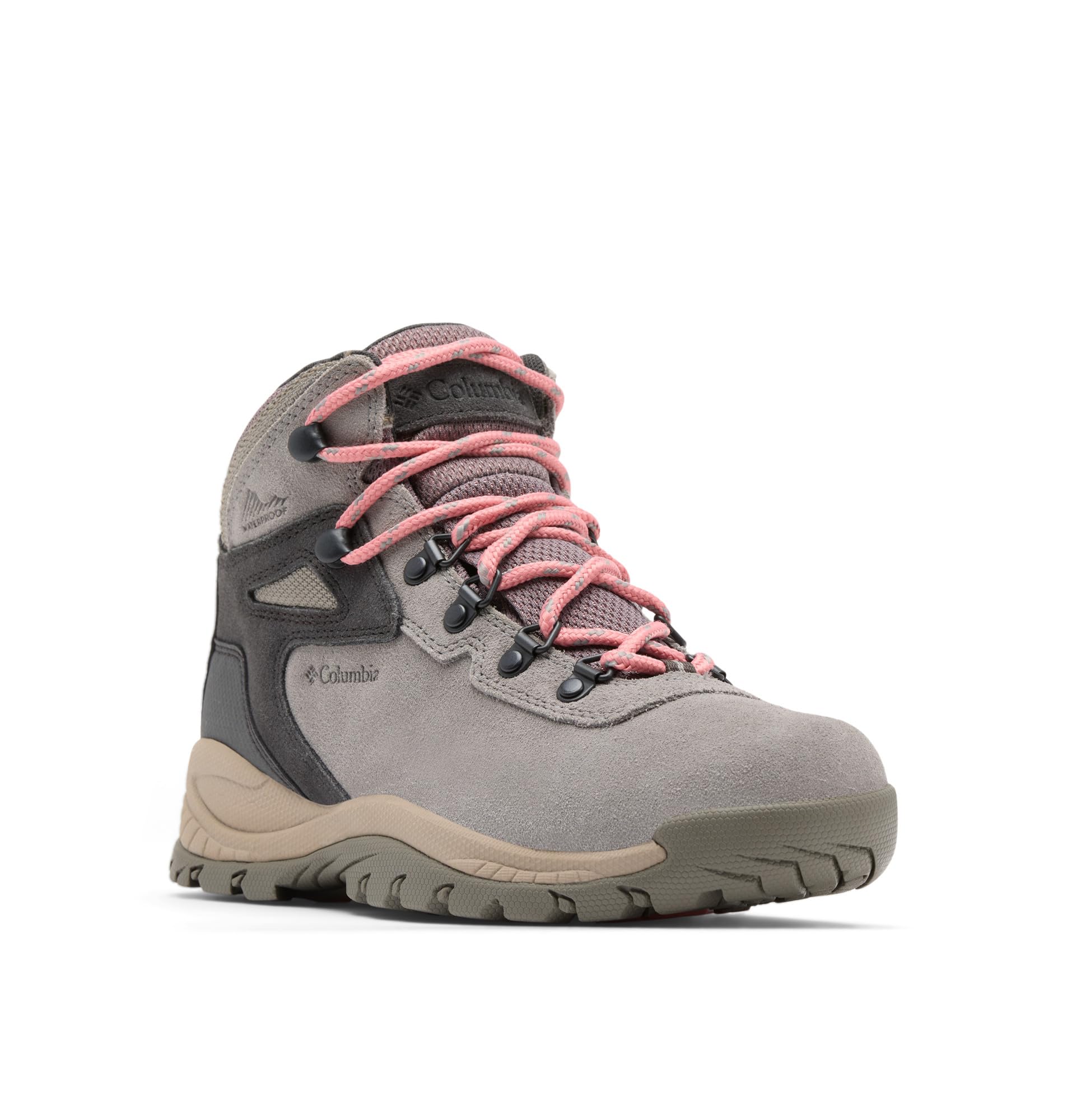
It's the ankle support that makes it worth the money. The boot is sturdy without being stiff, it handles roots and rocks without letting the ankle roll, and the upper keeps water out through snow and wet weather. For a woman who wants a traditional-looking hiker that holds her foot steady on rough ground, this is the one.

Weight is on the right side of the line, light enough for a full day and substantial enough to feel planted, and the details are nicer than the price suggests, down to the pink laces that give a plain brown boot some personality. It cleans up well enough for a town afternoon after a morning on the trail.

Give it an evening or two around the house before a long hike. The collar is the part that takes longest to settle, and a stiff new boot rubbing a sore foot is a combination worth avoiding.

Pros

  • Wide width that fits bunions and inserts
  • Strong, stable ankle support
  • Reliable water resistance
  • Light for a leather hiker

Cons

No notable drawbacks to flag.

Our verdict

The best women's boot here for genuinely wide feet: a wide width that takes a bunion and an insert, with sturdy ankle support and waterproofing that holds.

Check Latest Price
7

Grip on Rock

XPETI Terra Mid

87 /100
Traveler Score Excellent

Key details

Cut
Mid
Gender
Men's
First Listed
2022
Check Details on Amazon

Grip is what this boot does best. The lug pattern bites into wet rock and packed dirt, it holds on icy patches, and it's among the surest-footed boots in this group, which matters for anyone whose foot pain has made them tentative on a descent.

The rest of the package is sensible for the money. The toe box is roomy without being sloppy, the boot is light enough for long days, and the ankle comes up high enough to feel supported without restricting how you step. For a budget boot it's better finished than the price suggests.

It's the boot we point to for a dry-weather day hiker who wants grip and toe room cheaply, and the sole is what earns that. Buy it for day hikes and weekend trails, and keep a leather boot for the trips where the weather is the whole point.

Pros

  • Excellent grip on wet rock and ice
  • Roomy toe box without excess bulk
  • Light on the foot

Cons

  • Sheds rain only after a spray treatment
Our verdict

A budget day hiker with the surest grip here and a roomy toe, provided you treat the upper before you trust it in the rain.

Check Latest Price
8

Plush, Gentle Trails

Skechers Relment-Pelmo

89 /100
Traveler Score Excellent

Key details

Model
64869
Gender
Men's
Listed Weight
3.28 lb
Check Details on Amazon

Skechers built this one for comfort, and it shows in the footbed: the plushest we tested in this group, a soft, forgiving ride that's easy to stay on all day. If you associate hiking boots with heavy, break-in-hard leather, the Relment-Pelmo is the opposite experience from the first step.

The fit is friendly to problem feet. There's plenty of toe room, the boot comes in wide widths, and the collar is soft rather than stiff, the kind of shape that doesn't punish a bunion or a tender spot. It keeps feet warm in cold weather and looks better than a boot at this price has any right to.

Here's the catch that matters most for plantar fasciitis: soft isn't the same as supportive. The padding is generous, but there's very little structure holding the arch up, so a long day on uneven ground leaves your foot doing work the boot should be doing. If your support comes from an insert you already own, that's a fair trade for the plushness.

Buy it for gentle trails, dog walks and long days on your feet, and let an insert handle the arch. What you're paying for is the cushioning, and there's more of it here than in boots costing considerably more.

Pros

  • Plushest underfoot feel in this group
  • Roomy toe and wide widths
  • Warm in cold weather

Cons

  • Sole and upper can separate with hard use
  • Laces fray early
Our verdict

The plushest boot here for the money, and a smart buy if your own insert does the arch work, but not a boot to buy expecting support from it.

Check Latest Price

How We Tested: Twelve Pairs, Six Months, Real Trails

We started by narrowing the field to boots with genuine arch support — a shank stiff enough to resist twisting in both hands, a heel counter that locks the foot back, and a midsole with a firmer heel than the budget shelves usually offer. We read through reviews from people with diagnosed plantar fasciitis, filtered for wide widths and true half sizes, and cut anything we couldn't find in a full size run. That left 12 pairs from the legacy hiking names and a couple of smaller makers.

Each pair got the same treatment: two weeks of short neighborhood walks to log break-in, then longer days on a rocky ridge loop, a wet climb over root-covered trail, and a long descent, which is where heel pain usually shows up first. I weighed every boot on a kitchen scale and wore each one with the same sock. For fit, I measured toe box room with my thumb and tracked heel slip on the climbs, and a couple of pairs only worked after going up a half size.

Waterproofing got its own ugly test: standing in a stream up to the laces, then a five-minute walk with dry socks underneath. We noted whether the membrane stayed breathable on warm afternoons, since that affects how heavy a boot feels by the end of a day. For durability, we checked outsole wear along the edges after the full six months and whether the lugs still bit on wet rock and loose gravel; scuffs, salt stains, and whether a boot still looked presentable in town rounded out the appearance notes.

Comfort and quality were what separated the front-runners from the rest, and both came down to details you only feel after a few hours — a heel that stays put, a toe box that doesn't crowd, a sole that flexes where your foot does.

How to Choose Hiking Boots for Plantar Fasciitis

Support and cushioning are different purchases

Plush padding is easy to feel in the store and easy to sell. What protects a sore plantar fascia on a rocky descent is structure: a midsole that doesn't fold under the midfoot and a heel that doesn't collapse sideways when you weight it. Press your thumb hard into the arch of a boot you're considering; if it gives easily, the boot is relying on foam to do a job that needs a shank.

Then check the footbed. If it lifts out, your own orthotic goes in and the boot's own arch matters much less, which is why we rank a removable footbed so highly. Two of our picks, the Timberland White Ledge and the Columbia Transverse, are built as hosts for whatever insert you already trust.

Fit the toe box and width before anything else

Length is the number everyone knows and the one that matters least here. A toe box that clamps your toes changes your stride, and a changed stride is what turns a sore arch into a miserable week. Try the boot with the sock and the insert you actually hike in, because an orthotic eats volume that the boot otherwise gives to your toes.

If that combination feels tight, go to a wide width rather than up a size; adding length pushes the flex point forward and makes the boot feel wrong in a different way. The Merrell's wide takes an orthopedic pad, and the Columbia Transverse has the roomiest toe box in this group.

Break-in time and weight belong in the decision

A boot that needs three weeks of softening is three weeks of walking on a sore foot, so break-in belongs in the buying decision rather than the fine print. Most of the picks here are comfortable within days, and the stiffer ones are worth an evening or two around the house before a real hike.

Listed weights in this group start around a pound, and lighter is easier over distance. But a light boot with a soft arch is worse than a heavier one that holds you, so read the weight alongside the support rather than instead of it.

Waterproofing, and the limit nobody mentions

A membrane keeps out wet grass, puddles and splashes. It does not keep out a creek that comes over the collar, and it doesn't breathe like an unlined upper. Buy waterproof for wet, muddy or cold country, and skip it for hot, dry trails where a lighter, airier boot will be more comfortable all day.

A boot without a membrane can still shed water if the upper is treated, but treatments wear off with mud, sunscreen and abrasion. Plan on renewing one each season, and expect a mid boot to stop being waterproof at about ankle depth whatever the label says.

Replace the footbed before you blame the boot

Factory insoles are placeholders on most boots at this price, and swapping one is the cheapest change you can make to a hiking boot. Look for a firm arch and a cushioned heel, put it in the boot you're keeping, and give it a week of short walks before deciding the boot is wrong for you.

When an insert goes flat, replace it. It will wear out long before the boot does, and a flat insert is a flat boot as far as your arch is concerned.

Frequently Asked Questions

Final Verdict

For most people hiking with plantar fasciitis, the Merrell Moab 3 Mid is the boot to buy. It has the roomiest toe box in this group, the steadiest support through the arch and heel, and almost no break-in, which is the combination that actually matters when every step already hurts.

If you already own a custom orthotic, the Timberland White Ledge is the easier host for it and adds waterproofing. Women with wide feet should start with the women's Moab 3: same support, a waterproof membrane, and less money than the men's version.