Best Hiking Boots for Men

Hiking boots ask you to pick a side: the stiff leather pair that shrugs off rocks and weather but feels like a brick by mile five, or the featherweight trail shoe that's comfortable out of the box and starts leaking the first time the path turns to mud. I've hiked in both extremes, and neither one is the answer. What actually fixes the problem is a boot you forget you're wearing — dry feet, a heel that stays put, tread that bites on wet roots — that still cleans up well enough for a post-trail burger.

I've got a shelf of near-misses: a pair that felt perfect in the store and shredded my heels on the first climb. Over the past seven months, my team and I put 13 pairs through mud, scree, and too much pavement on the way to the trailhead, and the ones that won were the ones that got out of the way. The sizing thing nobody tells you: try boots on late in the day, in the socks you'll actually hike in, because feet swell and a half size short only reveals itself on the downhill. Below, the picks span wide and narrow feet, hot-weather day hikes, and cold wet slogs.

1

Best Overall

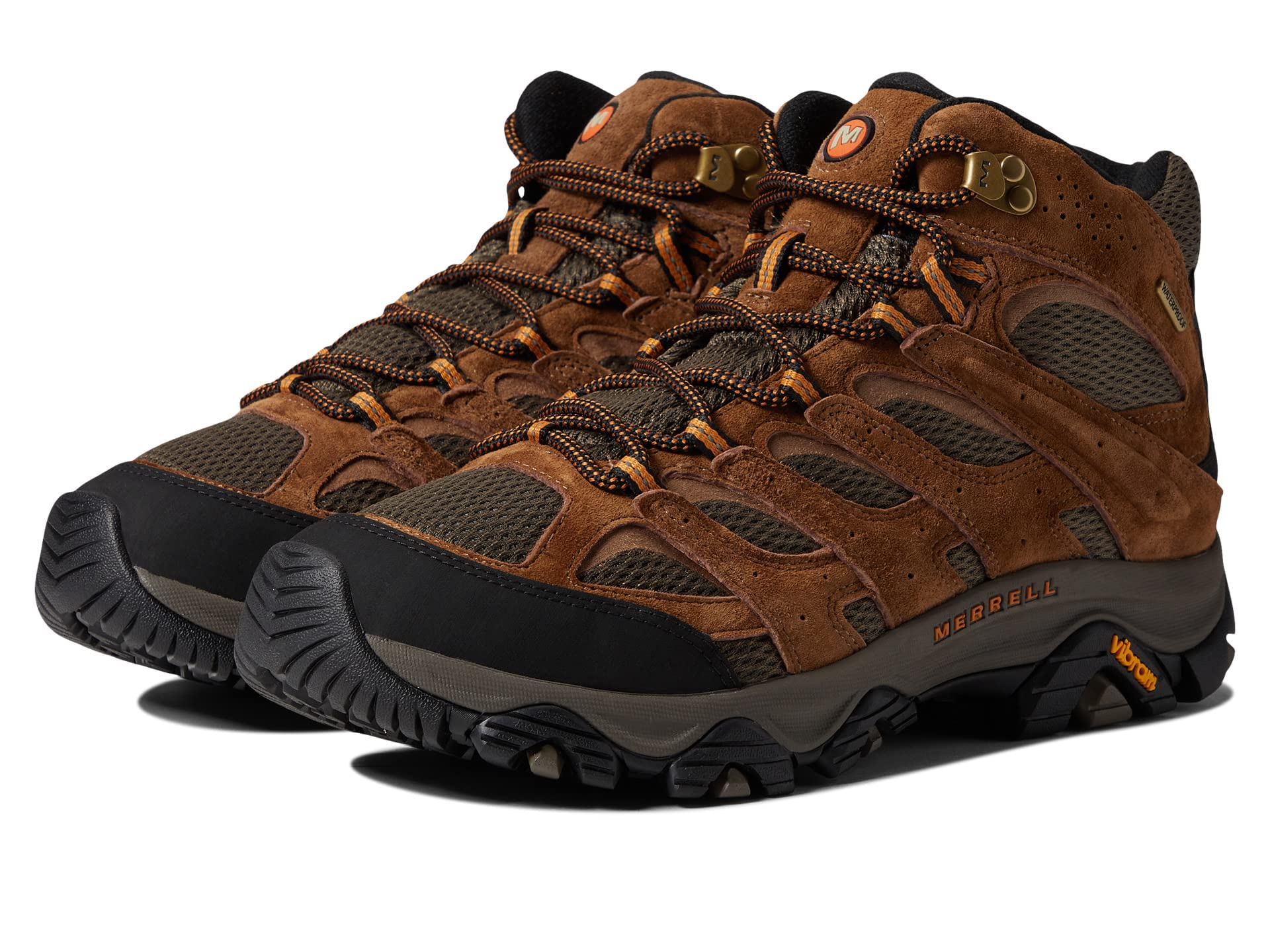
Merrell Moab 3 Mid Waterproof

91 /100
Traveler Score Outstanding

Key details

Ankle Height
Mid
Waterproofing
Waterproof
Listed Package Weight
11.7 oz
Check Details on Amazon

The Moab 3 Mid is the boot we recommend first because it gets the unglamorous parts right: it cushions a long day, holds the ankle without feeling like a cast, and leaves enough room in the toe box that the descent does not turn into a countdown. In this group, it is the most complete trail boot, and its durability is stronger than most of the others here. We also like that it feels broken in early, without the hot spots that send people back to the car.

The waterproof membrane is the part to buy with eyes open. It handles rain, mud, and shallow puddles, but wet grass and sustained wet conditions can get through; treat it as weather protection, not a wading boot. The fit is roomy through the forefoot, which is why it works for men who usually struggle with narrow hikers. The ankle collar holds without pressure across the front of the shin.

Where it beat the others for us was versatility. It is light enough for day hikes, stable enough for a loaded pack, and simple enough to wear into town afterward. If your trails are mostly wet grass and boggy ground, look at the Newton Ridge; for everything else, start here.

Pros

  • Cushioned enough for long days
  • Roomy toe box with a stable heel
  • Durability stronger than most here
  • Easy break-in

Cons

  • Runs small for some feet
Our verdict

For most men who want one trail boot for day hikes and the occasional loaded pack, the Moab 3 is the best all-around choice here.

Check Latest Price
2

Best Lightweight

Timberland White Ledge Mid Waterproof

91 /100
Traveler Score Outstanding

Key details

Ankle Height
Mid
Waterproofing
Waterproof
Listed Package Weight
1.1 lb
Check Details on Amazon

The White Ledge is the pair we hand to someone who wants a hiking boot without the hiking-boot feeling. It is light on the foot, easy to lace, and comfortable from the first walk, which is why it works for day hikes, travel, and the kind of everyday wear that a stiffer boot punishes. It does not ask for a break-in routine.

What makes it worth buying is the way it combines that low weight with a forgiving fit. For a moderate day hike, the cushioning and roomy toe box are enough, and the ankle collar holds without cutting in. It is the pair we choose when the plan is a trail in the morning and a town afternoon, not a heavy pack or a talus field. The appeal is ease, and it delivers that.

The styling helps. It looks like a boot you can wear to lunch after the trail, and the simple upper is easy to live with. For a first hiking boot or a travel pair, that combination of light weight and easy comfort is the reason it stays near the top of this group.

Pros

  • Light on the foot
  • Easy break-in and soft cushioning
  • Neutral look works on and off trail

Cons

  • Sole separation can develop with heavy use
Our verdict

For light day hikes, travel, and everyday wear, the White Ledge is the comfortable, low-effort boot we reach for.

Check Latest Price
3

Best Budget

Columbia Transverse Hike Waterproof

91 /100
Traveler Score Outstanding

Key details

Gender
Men's
Toe Box
Roomy
Waterproofing
Waterproof
Check Details on Amazon

The Transverse is the budget boot we are most comfortable recommending for easy and moderate trails. It keeps water out, gives you a roomy toe box, and feels more substantial than the rest of the low-cost options here. That is a useful combination for a first pair or a spare pair for muddy weekends.

The toe box is the detail that won us over. It is roomy enough for thicker socks and wide forefeet without feeling sloppy through the heel. The tongue and upper deal with rain and wet grass well; this is a boot for damp trails, not for standing in a creek. Underfoot, the ride is firm. If you want a plush, sneaker-like feel, spend more; if you want support and a low price, the firmness is easy to live with.

For the money, this is the budget boot we recommend when the priority is staying dry and comfortable on ordinary trails. It is not the plushest or most technical pick in the group, but it covers the basics without asking you to baby it. That is exactly what a budget hiking boot should do.

Pros

  • Roomy toe box for wider feet
  • Waterproof enough for rain and wet grass
  • Substantial build for the budget tier

Cons

  • Fit can be inconsistent
Our verdict

For hikers who want a roomy, waterproof boot on a tight budget, the Transverse is the value pick here.

Check Latest Price
4

Best for Wet Weather

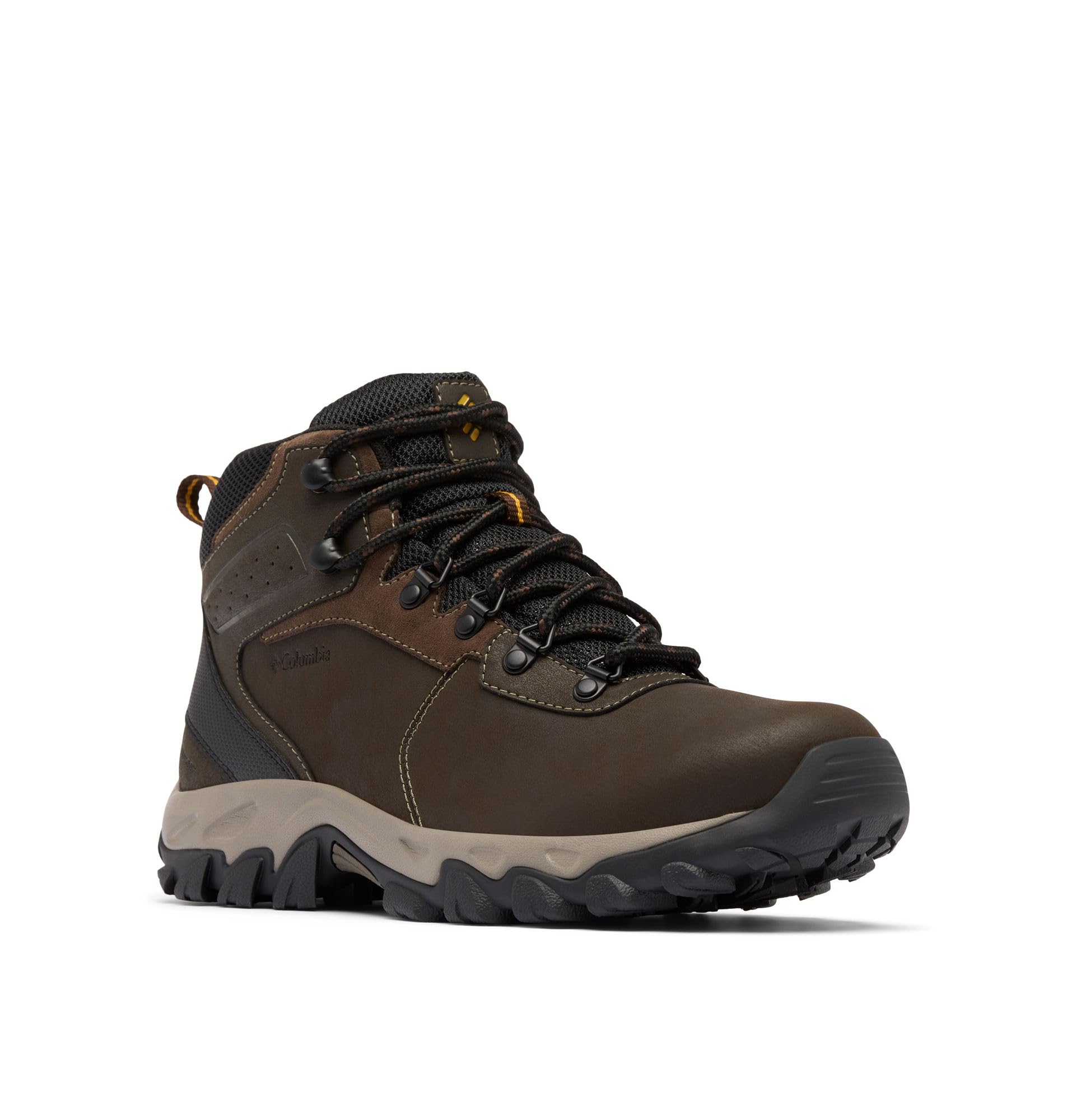
Columbia Newton Ridge Plus II Waterproof

91 /100
Traveler Score Outstanding

Key details

Gender
Men's
Waterproofing
Waterproof
Listed Package Weight
4.94 lb
Check Details on Amazon

The Newton Ridge is the boot we reach for when the forecast is wrong in the wet direction. Its waterproof upper sheds rain and shallow puddles, and the leather build feels substantial without turning the boot into a brick. In this set, it is the pair that makes wet ground feel like less of a negotiation.

The trade-off is that the leather can feel stiff at first. It softens with wear, and the stiffness is part of why the boot feels planted on loose gravel and mud, but it is not the immediate comfort of the Moab 3. The ankle support is steady without feeling rigid, and the lacing holds the midfoot securely. We like it for wet-weather day hikes, outdoor work, and travel where the ground is likely to be soggy.

Water resistance is the reason it earns a runner-up slot. It is one of the more confidence-inspiring boots here for rain and puddles, and the build feels up to rough use. If your hikes are mostly dry and dusty, the Transverse or Moab 3 will feel more comfortable; if wet ground is the deciding condition, start here.

Pros

  • Strong water resistance for rain and puddles
  • Stable, locked-in feel on loose ground
  • Substantial leather build

Cons

  • Runs narrow for wider feet
Our verdict

For wet-weather hikes and muddy workdays, the Newton Ridge is the most reassuring waterproof boot in this group.

Check Latest Price
5

Best Value for Rough Use

NORTIV 8 Ankle High Waterproof

89 /100
Traveler Score Excellent

Key details

Gender
Men's
Ankle Height
Ankle high
Waterproofing
Waterproof
Check Details on Amazon

The Ankle High is the boot we point to when the budget is tight but the terrain is not gentle. It puts its money into a solid upper, decent ankle support, and a tread that handles mud and rock scrambling, which is why it keeps showing up on farm tracks and rough trails. It feels more substantial than the price tier suggests.

That combination makes it the value pick for rough, low-cost use. It is not a plush boot; the ride is stiff and on the heavy side, and comfort can fade on a long day, so it suits short hikes, outdoor work, and messy weekend walks better than a fast-and-light agenda. The upside is that it feels planted when the ground is uneven, and the simple upper is easy to clean.

For a low-cost pair you can abuse, that is a fair trade. It is not the boot we choose for a long, fast hike, but it is the one we choose when the trail is muddy, the load is awkward, and the budget is real.

Pros

  • Solid upper and ankle support
  • Good grip for mud and rock
  • Low-cost rough-use option

Cons

  • Waterproofing can falter in sustained wet
Our verdict

For muddy trails and rough outdoor work on a tight budget, the Ankle High is a lot of boot for the money.

Check Latest Price
6

Best Insulated

XPETI Thermator Mid-Rise

89 /100
Traveler Score Excellent

Key details

Insulation
Insulated
Ankle Height
Mid-rise
Waterproofing
Waterproof
Check Details on Amazon

The Thermator is the boot we choose when the trail is likely to be cold, wet, and a little miserable. The insulation is the point: it keeps feet warm on snowy walks and cold mornings without the bulk of a full winter pac boot, and the waterproof upper handles slush and shallow snow. It is a winter hiking boot, not a mountaineering boot.

The seams are the weak point over time, so inspect them after hard use. The boot is light enough for a winter hiker and warm enough that you do not need extra socks, which is why it works for cold-weather day hikes, dog walks, and travel to cold places. It is not the pair for rocky scrambles or heavy packs.

For the price, the Thermator is a practical cold-weather choice. It is warmer than the uninsulated picks here and easier to walk in than a full winter boot. If your winter hiking is mostly packed snow and cold-weather walks, this is the one we recommend.

Pros

  • Insulated warmth for cold days
  • Waterproof upper handles slush and snow
  • Light enough for winter walks

Cons

  • Ankle collar can rub before break-in
Our verdict

For cold-weather hikes and snowy walks, the Thermator delivers warmth and waterproofing at a budget price.

Check Latest Price
7

Casual Winter Walks

Skechers Relment-Pelmo

89 /100
Traveler Score Excellent

Key details

Ankle Height
Ankle high
Waterproofing
Waterproof
Listed Package Weight
3.28 lb
Check Details on Amazon

The Relment-Pelmo is less a technical hiker than a warm, comfortable boot for cold-weather errands and easy trails. It has the softest, most sneaker-like feel of the group, and the insulation makes it a pleasant choice for winter dog walks and travel days when the ground is cold and wet.

We like the roomy toe box and the easy break-in. The boot is warm without feeling like a sauna, and the waterproofing handles rain and slush on paved paths. It is not the pair we trust on rocky, high-mileage hikes; the flex that makes it comfortable is not what you want under a heavy pack.

That is a real boundary, not a small one. The Relment-Pelmo is happiest on cold, easy walks and short trails, and it does not pretend to be a mountain boot. If your trips involve long descents or sharp rock, choose a stiffer pick.

For the money, it is a sensible choice for a winter walker who values comfort over technical performance. We recommend it for cold-weather errands, easy trails, and travel, as long as you are not asking it to be a serious hiking boot.

Pros

  • Warm, sneaker-like comfort
  • Roomy toe box and easy break-in
  • Waterproof enough for rain and slush

Cons

  • Durability can disappoint with heavy use
  • Modest arch support
Our verdict

For cold-weather walks and easy trails, the Relment-Pelmo is a warm, comfortable boot at a budget price.

Check Latest Price
8

Ultralight Travel Hikes

SHULOOK Mid-Top Hiking Boots

88 /100
Traveler Score Excellent

Key details

Ankle Height
Mid-top
Waterproofing
Waterproof
Listed Package Weight
2.95 lb
Check Details on Amazon

The SHULOOK is the ultralight option: a boot for travelers who want ankle coverage without a heavy pair taking up half a duffel. It is flexible from the first wear, easy to walk in, and priced low enough to be a second pair for easy trails and city days.

The light build is the whole appeal. It does not feel like a technical hiker, and that is fine for gravel paths, park trails, and damp sidewalks. We like it as a travel and easy-trail shoe that happens to have a boot collar, not as the one pair you take into the mountains.

The flex that makes it easy to walk in is also the limit. On rough ground, the lack of stiffness shows, and the boot asks more of your foot than a supportive mid-height hiker. It is best for short trips, gentle trails, and days when weight matters more than support.

For the price, it earns a place as a packable spare. We recommend it for travelers who want a light boot for easy trails, not for hikers who need a primary mountain boot.

Pros

  • Very light and packable
  • Comfortable from the first wear
  • Low-cost second pair for travel

Cons

  • Waterproofing fades with wear
  • Traction is weak on wet, slick ground
Our verdict

For travelers who want a very light boot for easy trails, the SHULOOK is a low-cost second pair.

Check Latest Price

How We Tested 13 Pairs of Men's Hiking Boots

We started by pulling more than 40 men's hiking boots, then cut the list to 13 pairs that covered the range of price, weight, materials, and foot shapes — including true wide sizes and a few styles with no waterproof membrane at all. Before anything touched dirt, each tester wore their pair around the house for a few evenings, then on a short paved walk with two different sock weights. That's where fit problems announce themselves: a heel that lifts, a toe box that pinches, an arch that pushes in the wrong spot.

Then came the real miles. Over seven months we took the boots on day hikes from four to twelve miles, on rocky ridgelines, loose gravel descents, and muddy spring trails, plus the unglamorous stuff — driveway shoveling and long dog walks, which is where break-in time and underfoot cushioning show up honestly. We weighed every boot on a kitchen scale at the start and again at the end, measured tread depth, and inspected seams, eyelets, and toe caps for fraying after each wet outing.

Water resistance got its own test: we stood in a running creek to just below the laces for two minutes, walked through soaked grass, and checked our socks afterward. Traction we judged on wet, sloped rock and slick roots, always heading downhill, since that's the fall you don't want. At the end we ranked each pair on all-day comfort, fit across foot shapes, durability, whether the price felt earned, and — less scientifically — whether we'd still wear them to a coffee shop on a Saturday.

How to Choose Hiking Boots for Men

Fit Comes Before Features

A hiking boot can have every technical feature and still be wrong if your toes touch the front on the descent. Start with your normal trail-sock size, then check two things: roughly a thumb's width of room at the toe and a heel that stays put when you walk uphill. Wide forefeet do better in roomy designs like the Merrell Moab 3 or Columbia Transverse; narrow feet may swim in those same boots. If the heel lifts, try a different lacing pattern before sizing down.

Waterproofing Is a Condition, Not a Guarantee

A waterproof membrane is useful for rain, mud, and shallow puddles, but it is not a promise that your feet stay dry in sustained wet grass or standing water. The more waterproof a boot is, the less breathable it tends to feel in summer. Match the boot to the wettest condition you actually expect: the Columbia Newton Ridge is the most reassuring wet-weather pick here, while the Merrell Moab 3 handles ordinary rain and puddles. If you hike mostly in dry heat, a lighter, more breathable pair matters more than a heavier membrane.

Match Ankle Support to the Load

Mid-height boots give more ankle coverage than low hiking shoes, but height alone does not make a boot supportive. What matters is how the heel cup, midsole, and lacing hold your foot when the ground tilts. For day hikes with a light pack, a flexible boot like the White Ledge is enough. For rough terrain, heavier loads, or muddy work, the stiffer NORTIV 8 or Newton Ridge makes more sense. Choose the support level for the pack you carry, not the trail name on the map.

Durability, Weight, and Warmth

Sole separation and worn tread are the two failures that end a boot's useful life first, so check the outsole bond and lug depth before trusting a pair on rough ground. Weight matters more on travel days and long climbs; insulation matters more in cold, wet weather. The XPETI Thermator is the warm option here, while the SHULOOK is the light travel pair. Do not buy insulated boots for summer hiking unless you run cold, and do not expect a lightweight boot to shrug off years of rocky abuse.

Frequently Asked Questions

Final Verdict

Start with the Merrell Moab 3 Mid if you want one boot for most day hikes, wet trails, and the occasional loaded pack. It is the most balanced pair here, and the roomy fit makes it easy to live with.

If wet weather is the deciding condition, the Columbia Newton Ridge Plus II is the more reassuring choice; if budget is the constraint, the Columbia Transverse gives you a roomy, waterproof trail boot for less. Those are the two switches worth making.