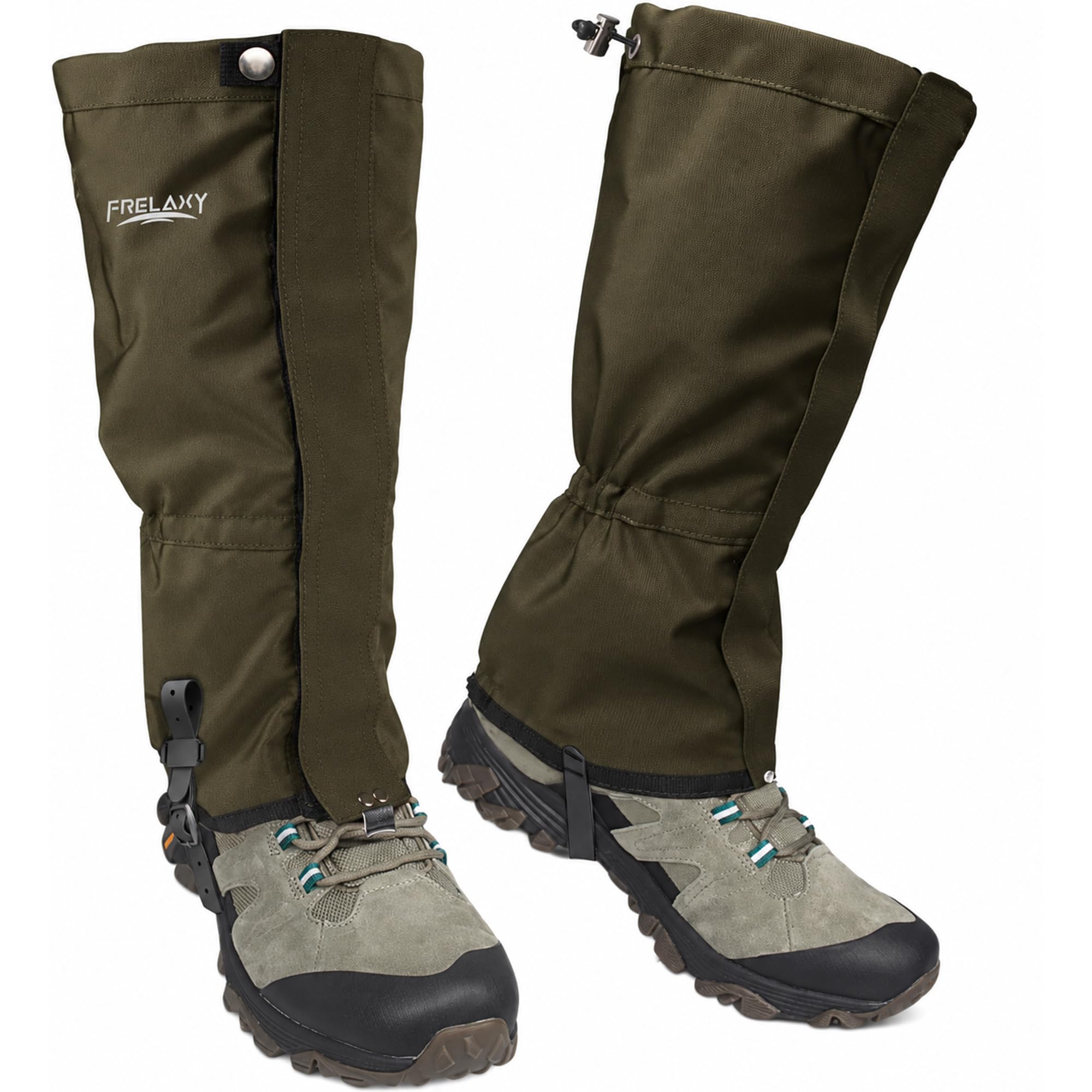
Best Gaiters for Backpacking of 2026

The day I postholed knee-deep through a melting snowfield in trail runners and shorts, I learned what gaiters are actually for: I spent the next mile with an ice cube dissolving inside my sock, and I have not hiked a shoulder-season trail without them since. A good pair keeps snow, grit, mud, and scree on the outside of your boot, which means your socks stay dry and your mind stays on the trail instead of on your feet. Simple in theory — until you wear a pair that creeps down your calf every half mile, or one whose underfoot strap grinds through on the first talus field.

My team and I have spent the past six months hiking in 12 pairs, from barely-there ankle gaiters to full calf-height mountaineering ones, in slush, mud, and loose rock. The surprise, for me, was how little price tracks with protection: the closure system and the fit over your specific boot matter more than the fabric or the logo. A modest gaiter that seats cleanly below your boot's ankle collar will outperform a fancy one that gaps. Below are the pairs we'd strap on again, sorted by the kind of walking you actually do.

1

Best Overall

Frelaxy 900D Gaiter

88 /100
Traveler Score Excellent

Key details

Size
Medium
Weight
7.68 oz
Material
900D Oxford
Warranty
12 months
Check Details on Amazon

Four sizes is the detail that makes the Frelaxy the first pair we point most backpackers toward. The 900D Oxford upper is roomy enough to go over hiking pants, and the adjustable drawcords and wide hook-and-loop closure let you take up the slack without fighting the fabric. The rubber instep straps are a thoughtful upgrade, too: they sit under the boot more securely than the thin plastic straps on some budget pairs here.

What makes it our default is the combination of fit range and real protection. The tall cut keeps mud and twigs off the lower leg, the coated Oxford sheds a surprising amount of water, and the closure stays put once you press it flat. At 7.68 ounces, it is not the lightest full-length gaiter here, but it carries like a normal pair of gaiters and packs down without a fight. The size exchange and warranty take some of the risk out of ordering, which matters when the fit has to work over boots and layers.

The weak point is durability. The instep straps and buckles can fail, and that is the sort of fault that turns a good day into a limping one. We still recommend the Frelaxy for backpackers who need a roomier cut and want a warranty behind the purchase, but check the hardware before a long trip and keep a spare cord in your repair kit. If your trips are hard on hardware, the Unigear's simpler, heavier build is the safer bet.

Pros

  • Four sizes fit thicker calves
  • 900D Oxford handles brush
  • Rubber instep straps stay secure
  • Wide closure and drawcords

Cons

  • Under-boot straps and buckles can fail
Our verdict

Our default for backpacking: four sizes, a roomy 900D build, and rubber instep straps make it the easiest full-length gaiter to fit over layers, though the hardware needs watching.

Check Latest Price
2

Best Lightweight Value

TRIWONDER 6000mm Gaiter

88 /100
Traveler Score Excellent

Key details

Size
Small
Weight
4.59 oz
Material
600D Oxford
Waterproof Rating
6000 mm
Check Details on Amazon

The 6000 mm waterproof rating and three-point adjustment are what put the TRIWONDER near the top of this list. The 600D Oxford upper is not the burliest fabric here, but it is light and stiff enough to shed mud and low brush, and the drawstring, lace hook, and TPU instep strap give you three places to fine-tune the fit. We found that combination easier to settle over a boot than a single front strip of hook-and-loop.

At 0.13 kg, the pair disappears into a pack, and the full-height cut still covers the boot opening and the lower calf. On wet, muddy trails, that is the balance most backpackers need: enough fabric to keep debris out without a heavy, stiff gaiter that makes every step feel like a chore. The TRIWONDER also packs down small enough to leave in the pack for the one overgrown section of a trip.

The size is the catch. The listed Small runs small, and the fit is closer around the calf than the Frelaxy or Pike Trail, so measure your calf over the pants you plan to wear rather than ordering your shoe size. If the size works, this is the best lightweight value here and a fine alternative to our top pick. If you need more room, stay with the Frelaxy.

Pros

  • Light 0.13 kg pair
  • 6000 mm waterproof upper
  • Three-point adjustment stays put

Cons

  • Small sizing runs tight over layers
Our verdict

The lightweight value pick: 6000 mm waterproof fabric and three-point adjustment at 0.13 kg, provided you can fit the small sizing.

Check Latest Price
3

Best for Abrasive Brush

Unigear 1000D Gaiter

88 /100
Traveler Score Excellent

Key details

Size
Medium
Weight
9.52 oz
Closure
Buckle
Material
1000D nylon
Check Details on Amazon

The 1000D upper is the reason to look at the Unigear pair. It feels burlier than the 600D and 900D gaiters here, and on a wet, brushy hike we were glad for the extra scuff resistance across the shin and ankle. That toughness comes with weight: at 270 g, these are the heaviest full-length gaiters in this group, and you feel the difference when you pick up the pack after a resupply.

The cut is close around the calf. We had to work a little harder to get the medium over hiking pants, and the top buckle helps but does not turn it into a roomy gaiter. The wide hook-and-loop front is secure once aligned, though the tape can lift from the fabric at the edge, so check that seam before a long trip.

For most backpackers, the Frelaxy is the easier all-around choice. The Unigear earns its place when the route is all scratchy brush, rock, and deep snow, and you want the extra fabric between your legs and the terrain. It is a specialist's gaiter, not the lightest default.

Pros

  • 1000D upper resists abrasion
  • Tall coverage for snow and brush
  • Wide hook-and-loop front

Cons

  • Heavier than the 600D picks
Our verdict

The abrasion-first pick: 1000D fabric and a tall cut handle brush and snow, though the fit is tighter and the pair is heavier than our top pick.

Check Latest Price
4

Best Adjustable Fit

Pike Trail Trekpro

89 /100
Traveler Score Excellent

Key details

Size
Adjustable
Weight
1.6 oz
Closure
Hook-and-loop with metal studs
Material
Ripstop nylon with 900D lower
Check Details on Amazon

The Pike Trail Trekpro takes the sizing guesswork out of the purchase. Instead of picking a fixed size, you adjust a drawstring at the top and a wide hook-and-loop closure down the front, with metal press studs adding a second line of defense. That is a useful design for a backpacker who swaps between summer trail shoes and bulkier boots across trips.

At 1.6 ounces, the pair is light enough to leave in the pack, and the ripstop nylon upper keeps the bulk down while the 900D lower section takes the abuse around the ankle and boot. We found the closure quick to line up and easy to tighten over pants, which is more than we can say for some of the fixed-size gaiters here.

The underfoot harness is where the design gives ground. It can tear away with hard use, and the foot straps can slip or loosen, especially if you walk pavement between trailheads. That is not a reason to baby the gaiters, but it is a reason to check the strap and studs before a long day and to keep a spare cord or repair tape in your kit.

Our call: the Trekpro is the pick for a backpacker who wants one adjustable pair to cover different boots and layers, and who values easy on-and-off over the toughest possible build. If you need a gaiter for constant scree and snow, the Unigear is more durable; if you want a roomier fixed size, the Frelaxy is the better fit.

Pros

  • Adjustable fit over boots and pants
  • Light 1.6 oz pair
  • Wide closure with metal studs

Cons

  • Underfoot harness can tear
  • Foot straps can loosen
Our verdict

The easiest full-length pair to fit without guessing: adjustable ripstop nylon and a wide closure suit mixed boots and pants, though the underfoot harness is less durable.

Check Latest Price
5

Best Budget

Azarxis 600D Gaiter

0 /100
Traveler Score Fair

Key details

Size
Small
Weight
7.04 oz
Closure
Velcro
Material
600D Oxford
Check Details on Amazon

The Azarxis gaiters are the pair we hand to someone who wants full-length coverage without paying for the most technical fabric here. The 600D Oxford upper is stiff enough to turn thorns and brush, the drawstring and TPU instep belt seal the top and bottom, and the 20-month warranty is longer than most budget gaiters offer. At 7.04 ounces, they are not the lightest pair, but they pack down to a reasonable bundle. The 600D fabric is not as supple as the ripstop on the Pike Trail, so it takes a moment to settle over a boot, but that stiffness is what keeps thorns from poking through.

Our call is simple: this is a smart first pair or a backup for a backpacker who wants full-length protection on a budget and can get the size right. The listed Small is genuinely small, and the bottom strap can come undone if you do not seat it carefully, so check the fit before a long trip. For occasional weekend trips, that is enough; for a thru-hike, the lighter TRIWONDER is easier to live with, and our overall default is the Frelaxy.

Pros

  • 600D Oxford resists thorns
  • 20-month warranty
  • Budget full-length coverage

Cons

  • Small fit runs tight
  • Bottom strap can come undone
Our verdict

A straightforward value pick: 600D Oxford and a 20-month warranty give full-length protection for occasional backpacking, if the small fit works for you.

Check Latest Price
6

Ultralight Backup

MAGARROW 600D Gaiter

86 /100
Traveler Score Excellent

Key details

Size
Medium
Seams
Taped
Weight
1.6 oz
Material
600D Oxford
Check Details on Amazon

At 1.6 ounces, the MAGARROW pair is the one we stopped noticing on the trail. The 600D Oxford upper is simple and stiff, the taped seams add a useful layer of water protection, and the whole thing rolls into a bundle small enough to forget in a pack pocket. If you are counting grams, this is the full-length gaiter that makes the least fuss about being carried.

The protection is honest for the weight. The tall cut keeps debris off the lower leg, the lace hook keeps the front from riding up, and the coated fabric sheds mud and light snow. It is not the pair for day after day of sharp scree, because the 600D fabric is not the abrasion leader here, but for three-season backpacking on mixed trails it covers the basics.

The front hook-and-loop closure is the part that asks for patience. It is narrow enough that you need to line it up carefully, especially over bulky pants, and the sizing is not as consistent as the Frelaxy's four-size range. Our call: a good ultralight second pair or a budget choice for a fast trip, but not the easiest primary gaiter if you want a secure fit in the dark.

Pros

  • Very light 1.6 oz
  • Taped seams
  • Simple 600D build

Cons

  • Front closure is fiddly
  • Sizing is inconsistent
Our verdict

An ultralight full-length gaiter for pack-weight obsessives: 600D Oxford and taped seams at 1.6 ounces, with a fiddly front closure.

Check Latest Price
7

Low Trail Shoes

OrrinSports Low Gaiter

84 /100
Traveler Score Excellent

Key details

Size
Medium
Weight
2.12 oz
Closure
Hook and loop
Material
Nylon and spandex
Check Details on Amazon

The OrrinSports gaiter solves a specific backpacking problem: low shoes that scoop up gravel on every descent. Its four-point fixing system wraps the shoe and covers the lace area, and the Hypalon rubber band at the bottom is fixed in place, so there is no loose underfoot strap to stop and tighten. We think it is the low-shoe option to beat here for dry, rocky trails.

The nylon and spandex upper is light and stretchy, and it stayed in place on the test walks we used it for. The hook at the front grabs the laces, the band under the shoe is durable enough for trail use, and the whole pair weighs next to nothing. It is a much less fussy way to keep pebbles and sand out of a trail runner than a full gaiter with a long front closure.

The limit is coverage. This is an ankle-height gaiter, so it will not keep snow out of a boot top or protect your calf from brush. The underfoot band also wears faster if you walk pavement or scramble on rough rock. For fast and light trips in low shoes, that trade is worth it; for snow, mud, and tall brush, choose a full-length pair like the TRIWONDER.

Pros

  • Fixed four-point system
  • Covers the lace area
  • Light and stretchy

Cons

  • No lower-leg coverage
  • Underfoot band wears on rock
Our verdict

The low gaiter we choose for trail shoes: a fixed four-point system keeps grit out without an underfoot strap to readjust, but it stops at the ankle.

Check Latest Price
8

Altra Trail Shoes

Altra Trail Gaiter

88 /100
Traveler Score Excellent

Key details

Type
Low trail gaiter
Attachment
Hook-and-loop
Compatibility
Altra shoes
Check Details on Amazon

The Altra Trail Gaiter is less a universal gaiter than an accessory for Altra shoes. It attaches to the Velcro patch at the back of the shoe and hooks to the laces at the front, which means it sits close and stays out of the way. If you do not wear Altra shoes with that patch, this is not the gaiter for you; if you do, the integration is the whole point.

On dry, rocky trails, the close fit does its job. The stretch nylon keeps pebbles and grit out of the shoe, the low profile does not catch on brush, and the pair is light enough to forget you are wearing it. We liked that it does not need an underfoot strap, so there is nothing to readjust after a stream crossing or a scramble.

The durability is the weak point. The fabric can tear at the ankle, and it does not hold up well to repeated river crossings. The fit also runs close, so check the size against your shoe rather than your street size. Those are real limits for backpacking, where a gaiter may be wet and abused for days.

Our call: buy this if you already wear Altra shoes and want low-profile debris protection on fast, dry trips. If you need lower-leg coverage, snow protection, or a gaiter that will survive rough river crossings, choose a full-length pair instead. The Frelaxy is the more versatile backpacking choice; the Altra is the specialist.

Pros

  • Attaches securely to Altra shoes
  • Light and low-profile
  • Keeps rocks and grit out

Cons

  • Only fits Altra attachment system
  • Tears at the ankle and in river crossings
Our verdict

The right low gaiter if you already wear Altra shoes with the attachment patch: light, secure on debris, but not a snow or brush gaiter.

Check Latest Price

How We Tested Gaiters on Snow, Mud, and Scree

We started by reading through what long-distance hikers and alpine guides actually wear, then filtered the field by height, closure type, fabric, strap design, and price. Anything with a non-replaceable underfoot strap got cut, as did gaiters whose size range was too narrow to fit more than one boot category. That left us with 12 pairs, which we wore over six months of day hikes and a handful of overnights.

Each pair went over three boots in rotation — a low trail runner, a mid-cut hiking boot, and a bulky mountaineering boot — and we noted whether the hem sat snugly below the ankle collar or gaped open at the sides. To judge ease of use, we put every gaiter on and took it off at a cold trailhead wearing liner gloves, timing the process and noting whether the closure needed two hands, snagged on grit, or iced up. We kicked steps in wet spring snow and walked through standing water, then checked the socks and boot linings for dampness afterward. Stability got checked the honest way: miles of walking, with notes on whether the gaiter stayed where we set it or slid down the calf.

For durability and strap quality, we inspected the underfoot strap after stretches of abrasive granite and scree, looking for fraying at the buckle and thinning where it met the ground. We also checked whether that strap was user-replaceable and how the stitching at the hem held up after repeated soakings. Value came down to a plain question: how many seasons of real use would this pair survive, and did the price make sense against that number. The picks that follow are the ones that never gave us a reason to stop and adjust them.

How to Choose Gaiters for Backpacking

Match Coverage to the Trail

A gaiter's height is the first decision, not a detail to sort out later. Full-length gaiters cover the boot opening, ankle, and lower calf, which is what you want for snow, mud, and scratchy brush on a backpacking trip. Low gaiters sit at the ankle and keep grit out of a trail shoe, but they leave the calf exposed. We reach for a full-length pair like the Frelaxy for three-season backpacking and save low gaiters such as the OrrinSports for fast, dry trips in low shoes. The trap is buying a low gaiter advertised for hiking and expecting it to handle deep snow; it will not.

Fit the Calf and the Boot

Measure your calf at its widest point over the pants you plan to wear, then check the gaiter's size range against that number. A pair that fits bare skin can be impossible over fleece leggings, and a tight cuff can restrict circulation or gap at the top. Adjustable gaiters like the Pike Trail Trekpro take some guesswork out, but they still have a maximum opening. If you are between sizes or have thicker calves, a four-size model like the Frelaxy gives you more room to work with. The common mistake is ordering by shoe size; gaiters are sized around the calf, with the boot opening as a secondary check.

Closure and Under-Boot Strap

Most gaiters fail at the closure or the strap under the boot, not at the fabric. Look for a wide hook-and-loop front, a secure lace hook, and an instep strap that is thick enough to resist abrasion. Rubber or TPU straps generally last longer than thin plastic, and metal buckles are worth having if you tighten them often. The Pike Trail's adjustable closure is easy to live with, but its underfoot harness is the part to inspect; the Frelaxy uses rubber straps, yet the buckles can still fail. Keep the underfoot strap off pavement where you can, and check it before a long day.

Waterproofing Versus Breathability

A waterproof gaiter keeps snow, rain, and mud out, but the coating that does that also traps sweat. That trade is worth it in wet snow and cold rain, and less pleasant on a warm, humid climb. A 6000 mm rating like the TRIWONDER's is a useful benchmark for wet conditions, while a lighter 600D fabric may be enough for dry dust and brush. If you run hot, look for a thinner upper and avoid treating breathability as a headline feature; gaiters are not shorts. The practical move is to match the fabric to the weather, then air the gaiters out at camp instead of stuffing them wet.

Weight and Packed Size

Weight matters more on a backpacking gaiter than on a day-hike gaiter because it is in the pack every day. The lightest full-length pair here, the MAGARROW, is 1.6 ounces; the burliest, the Unigear, is 270 g. That difference is small in the hand and noticeable over a long trip, especially when the gaiters are wet. Choose the lighter pair for fast trips and mixed trails, and accept the extra weight when abrasion resistance is the priority. Pack them loose rather than compressed, and shake out grit before rolling them so the closure and seams are not ground together.

Frequently Asked Questions

Final Verdict

For most backpackers, the Frelaxy is the pair to buy first: four sizes give you a real chance of fitting over pants, the 900D upper handles brush and wet weather, and the rubber instep straps stay put better than the cheapest alternatives. If you want the lightest full-length pair and the small size works, the TRIWONDER is the better value. For abrasive rock and snow, the Unigear's 1000D fabric is the tougher alternative.