Best Down Sleeping Bags of 2026

A down sleeping bag is a portable microclimate, and the difference between a good one and a merely okay one shows up at 3 a.m., when you're either comfortably cocooned or hunting for the cold spot. The right bag keeps you warm without weighing down your pack, compresses small enough to leave room for essentials, and fits without trapping you like a mummy. The wrong one turns a night outdoors into a negotiation with the zipper.

I've spent the past eight months sleeping in seven down bags—on weekend backpacking trips, in a damp car-camping field, and through shoulder-season nights that dipped lower than forecast. We paid attention to loft recovery, draftiness at the collar and hood, and packed weight. We also zipped and unzipped each one dozens of times, because a sticky zipper at 2 a.m. is its own kind of misery. The picks below cover different budgets, body types, and sleep styles; what they share is that they earn their place in the pack.

1

Best Overall

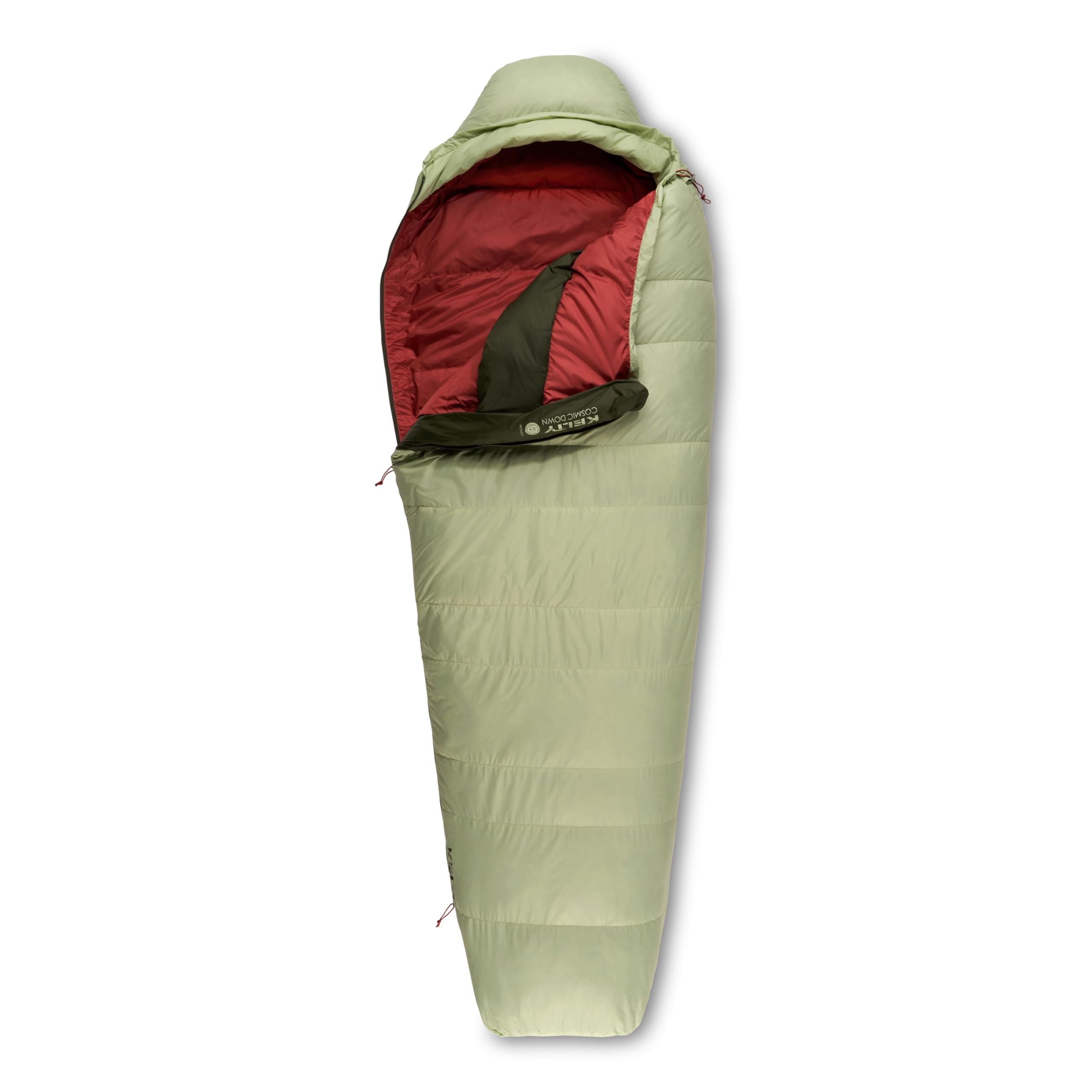
Kelty Cosmic 20

89 /100
Traveler Score Excellent

Key details

Shape
Mummy
Shell
Recycled 20D nylon taffeta
Fill Power
550
Temperature Rating
20°F
Check Details on Amazon

The 20°F rating is the number that makes the Kelty Cosmic 20 worth a look for three-season camping, and it's the figure we kept returning to when comparing the bags here. Kelty pairs 550-fill RDS down with a recycled 20D nylon shell and a PFAS-free DWR, so the material story is stronger than most budget down bags. The mummy cut is narrow through the shoulders and tapered at the feet, which is what you want when the temperature drops. The hood and draft collar are shaped to seal around the face without leaving a cold pocket at the neck.

What makes it our best all-around pick is the balance: it's warm, soft, and backed by a limited lifetime warranty. In our testing, the hood and draft collar cinched down without leaving a cold gap, and the zipper ran cleanly—both details that separate a usable cold-weather bag from a frustrating one. The warmth is the strongest part of the package, and the recycled shell feels less crinkly than the ultralight fabrics we've handled.

The Cosmic 20 is not the bag we grab for a fast summer trip; it's the one we take when the forecast is cool and we want one less thing to worry about. If you want a roomier shape for camp, the Galactic below is the better call; if you want a cold-weather bag that will last, the Kelty warranty is the quiet clincher. The women's-specific cut is the fit question to settle before ordering—check the length and shoulder room against your body.

Pros

  • Warm 20°F mummy for cold nights
  • RDS down and PFAS-free recycled shell
  • Soft, quiet fabric
  • Limited lifetime warranty

Cons

  • Heavier than ultralight summer bags
Our verdict

For cold-weather camping, the Cosmic 20 is our default: warm, responsibly made, and backed by a limited lifetime warranty.

Check Latest Price
2

Best Ultralight Budget

Naturehike Ultralight 650FP

85 /100
Traveler Score Excellent

Key details

Shape
Rectangular
Weight
1.3 lb
Fill Power
650
Temperature Rating
42-52°F
Check Details on Amazon

At 1.3 pounds, the Naturehike Ultralight 650FP is the bag we hand to warm-weather backpackers who care more about pack weight than winter range. The 650-fill RDS down and rectangular cut make it feel like a quilt with a drawstring top, which is why we like it for summer overnights and hut trips. The rectangular shape also makes it a natural for hammock camping, where a wider bag is easier to settle into.

The 42-52°F rating is honest for what this is: a mild-weather bag. We found the drawstring hood useful when the temperature slid, and the bag packs down small enough to disappear into a daypack. The included compression and storage sacks are a practical touch, and the rectangular shape gives your feet room to move. The 1.3-pound weight is the real story; it's the difference between carrying a bag and barely noticing it.

For summer backpacking and warm-weather camping, it's a lot of bag for the weight. The fabric feels soft rather than slick, and the zipper has been trouble-free in our use. It's the one we recommend when the trip is more about miles than cold, and it's a forgiving place to start if you're building a lightweight kit.

Pros

  • 1.3-pound packed weight
  • 650-fill RDS down
  • Packs down small
  • Good value for warm-weather trips

Cons

  • Short 74.8-inch length
  • Mild-weather only
Our verdict

The Naturehike Ultralight 650FP is the bag we hand to warm-weather backpackers who care more about pack weight than winter range.

Check Latest Price
3

Best Cold-Weather Value

ZOOOBELIVES AlpliveD1500

86 /100
Traveler Score Excellent

Key details

Weight
3.86 lb
Fill Power
550+
Fill Weight
35 oz
Temperature Rating
10°F
Check Details on Amazon

The ZOOOBELIVES AlpliveD1500 makes a big cold-weather promise: a 10°F rating backed by 35 ounces of 550+ fill down. That's a lot of insulation for the money, and it's the reason this bag ended up as our cold-weather value pick. The mummy shape is roomy through the shoulders, with an anatomic footbox and a draft collar that sits close to the face without feeling claustrophobic.

We were impressed by how much warmth this bag delivers for the price. The shoulder air dam is the detail that makes the difference—it seals the gap where cold air usually sneaks in—and the double zipper lets you vent from the bottom without opening the whole bag. On a cold, damp night, the loft felt substantial rather than thin.

The AlpliveD1500 is a cold-weather specialist, not a quiver-of-one bag. We reach for it on winter overnights and car camps, and we leave it home when the forecast is mild. The 20D ripstop shell and YKK anti-snag zipper have held up well in our use, and the compression straps cinch it down more than the packed size suggests.

Pros

  • Warm 10°F rating with 35 oz down
  • Shoulder air dam and draft collar
  • Double zipper for venting
  • Strong value for cold weather

Cons

  • Heavy at 1.75 kg
Our verdict

If you sleep cold and hate spending a lot, the AlpliveD1500 is the winter-capable bag we point to first.

Check Latest Price
4

Best Budget Three-Season

QEZER Semi-Rectangular 600FP

81 /100
Traveler Score Excellent

Key details

Shape
Rectangular
Weight
2.16 lb
Fill Power
600
Temperature Rating
30°F-54°F
Check Details on Amazon

The QEZER 600FP's semi-rectangular shape is the first thing you notice: it's wider through the hips and legs than a mummy, with a foot zipper that lets you kick out some heat. That roominess is why it's our pick for side sleepers and car campers who hate feeling cocooned. The 600-fill duck down and 2.16-pound weight put it in the budget three-season class, and the 30°F lower limit is plausible for mild shoulder-season nights.

The bag compresses to about the size of a large coffee can, which is impressive for the price. We also like the double zipper and chest insulation; they make the bag feel more considered than the spec sheet suggests. The 85-inch length gives taller sleepers room to stretch, and the 31.5-inch width is generous for a bag at this level.

Where it earns its place is as a roomy, affordable three-season bag that doesn't punish you for rolling over. The hip and leg room is the draw, and the foot zipper makes it easy to vent on warmer nights. Treat the 30°F figure as a lower limit rather than a comfort rating, and you'll get the most from it.

Pros

  • Roomy semi-rectangular cut
  • 600-fill down at a budget price
  • Packs to coffee-can size
  • Double zipper and chest insulation

Cons

  • Shoulder area can feel narrow
  • Zipper can catch
Our verdict

We like this QEZER for side sleepers and car campers who want a roomy three-season bag without a cocoon feel.

Check Latest Price
5

Best for Couples

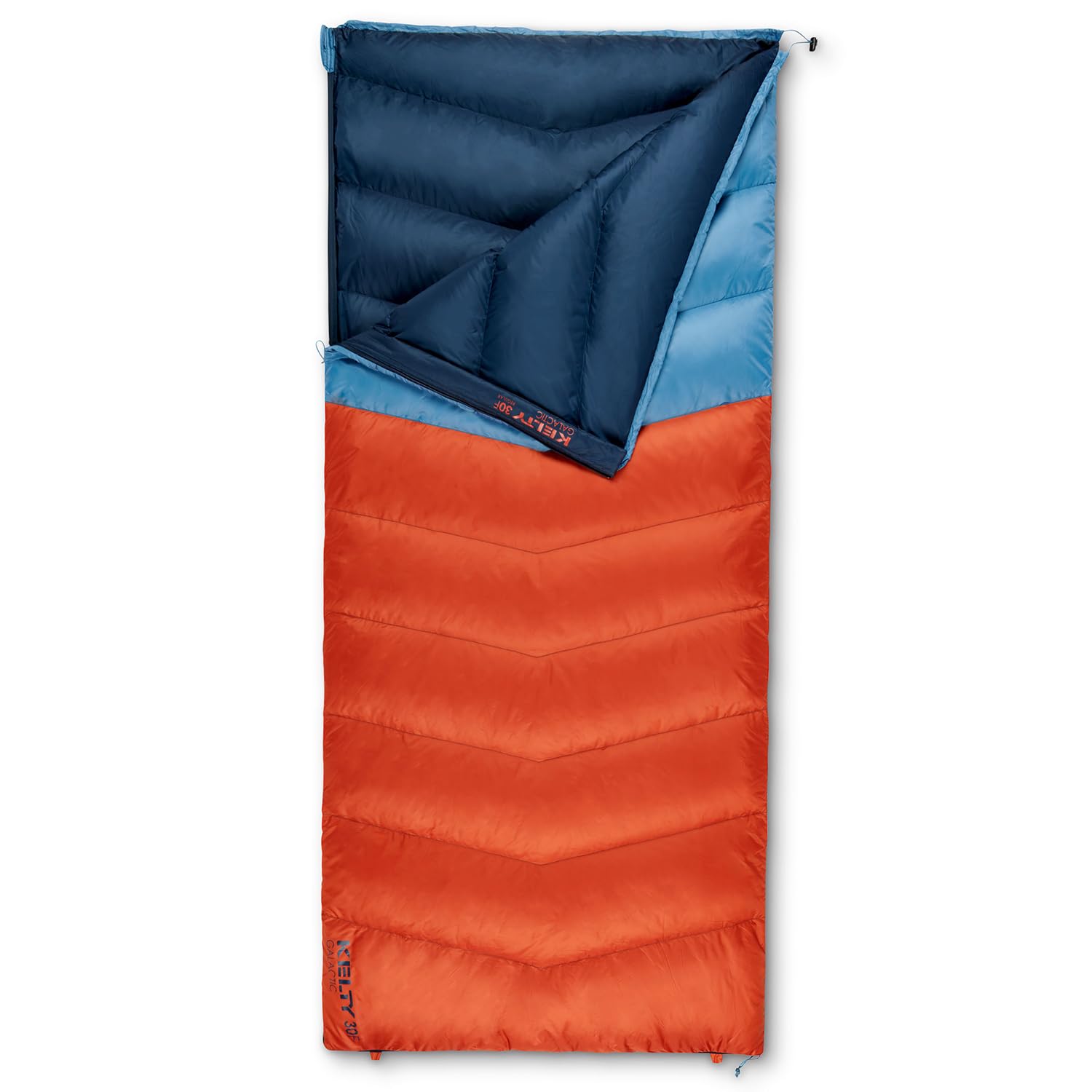
Kelty Galactic Down 30

84 /100
Traveler Score Excellent

Key details

Shape
Rectangular
Weight
2.8 lb
Fill Power
550
Temperature Rating
30°F
Check Details on Amazon

The Kelty Galactic Down 30 is the couples bag we choose when a rectangular cut and zip-together design matter more than saving weight. It's built around a simple idea: a roomy bag that zips to a second one for a double sleeping setup. The 550-fill down and 75-by-33-inch cut give you space to roll over, and the top cinch cord lets you seal in warmth when the night turns cool.

In our testing, the rectangular shape was the star: no cramped feet, no wrestling with a narrow hood, and enough space to sit up and read before bed. The 30°F rating is best treated as a cool-weather guide rather than a deep-winter promise, and the PFC-free shell is a nice detail for campers trying to avoid unnecessary treatments. The anti-snag zipper is a welcome touch, and the top cinch cord is easy to reach in the dark.

For couples or solo car campers who want a bed-like bag, the Galactic is an easy recommendation. It's roomier than the Cosmic 20 and less claustrophobic, and the rectangular shape makes it a natural for car camping. The top cinch cord and draft tube do their job when the temperature drops.

Pros

  • Room to roll over
  • Zip-together couples design
  • 550-fill down and PFC-free shell
  • Comfortable rectangular cut

Cons

  • Zip-together needs matching opposite-side bag
  • Heavier than a mummy
Our verdict

The Galactic Down 30 is the couples bag we choose when a rectangular cut and zip-together design matter more than saving weight.

Check Latest Price
6

Summer Backpacking

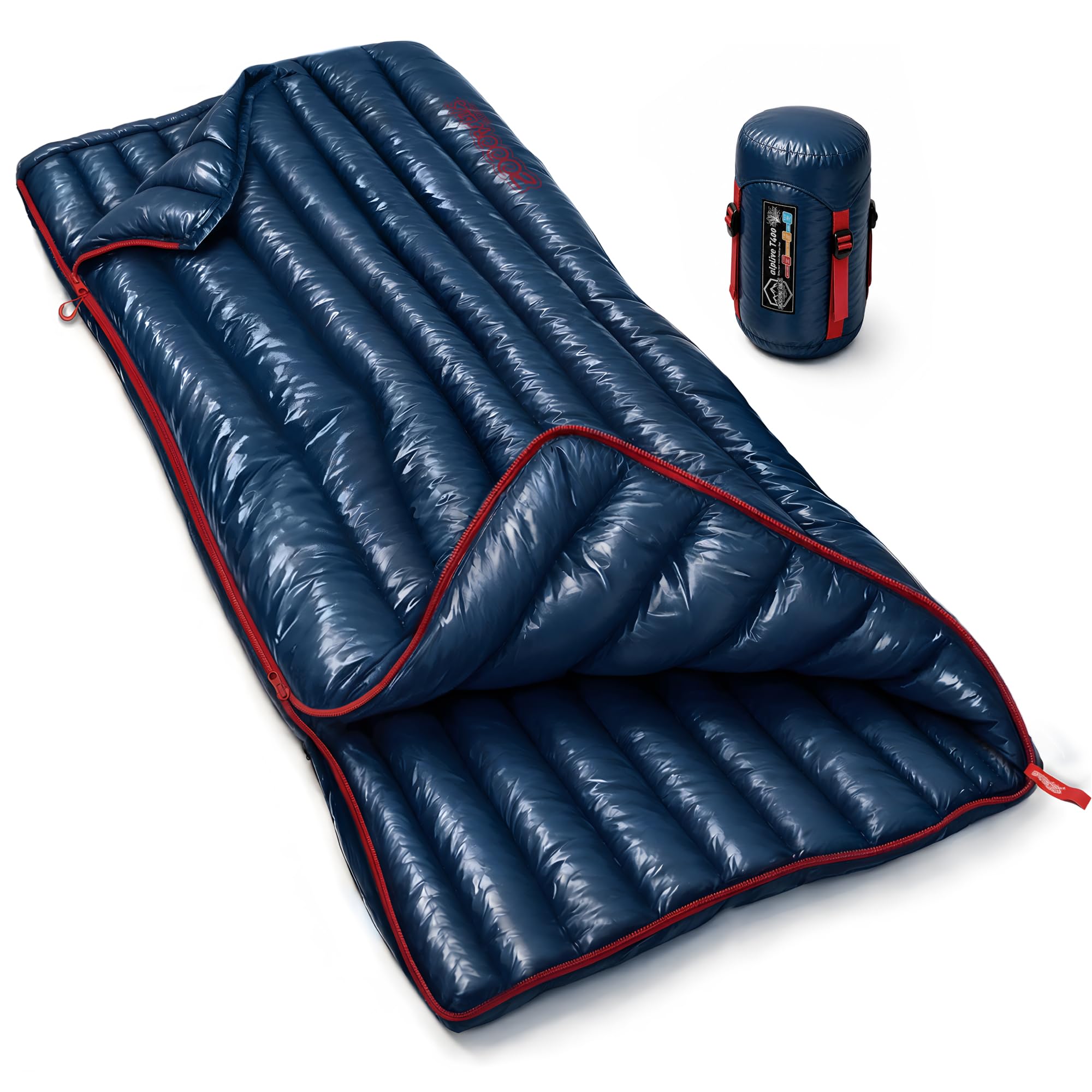
ZOOOBELIVES AlpliveT400

83 /100
Traveler Score Excellent

Key details

Shape
Slight taper
Weight
1.7 lb
Fill Power
650
Temperature Rating
50°F comfort, 32°F lower limit
Check Details on Amazon

The ZOOOBELIVES AlpliveT400 is a summer bag, and it's honest about it: the comfort rating is 50°F, with a 32°F lower limit. That's not the bag for a frosty shoulder-season trip, but it is a useful, roomy option for warm-weather backpacking and car camping. At 1.7 pounds and packed to about the size of a paper towel roll, it disappears into a pack.

The 650-fill down lofts quickly, and the slightly tapered shape gives you more room than a mummy without the bulk of a full rectangular bag. We like the full-length zipper and separate footbox vent; on a warm night, you can open it up for airflow. The shell feels soft rather than crinkly, which matters when you're trying to sleep.

Where it lands is as a value summer bag, not a three-season workhorse. The warmth is adequate for mild nights, but we don't trust it below the 40s. If your trips are mostly summer and you want down without spending much, this is a sensible pick.

Pros

  • 1.7-pound weight
  • Packs to paper-towel-roll size
  • Full-length zipper and foot vent
  • Good value for summer trips

Cons

  • Zipper can be fussy
Our verdict

We reach for the AlpliveT400 on summer trips when pack space matters more than cold-weather range.

Check Latest Price
7

Mild-Weather Comfort

Naturehike 650FP 40.4°F

83 /100
Traveler Score Excellent

Key details

Shape
Semi-rectangular
Weight
2 lb
Fill Power
650
Temperature Rating
40.4°F
Check Details on Amazon

The Naturehike 650FP 40.4°F is a hybrid: mummy-shaped through the upper body, rectangular through the legs. That sounds like a small detail, but it's the reason this bag is easier to live with than a pure mummy for side sleepers and campers who hate feeling pinned in. The 650-fill RDS down and 40.4°F comfort rating put it in the mild three-season category, and the 2-pound weight is reasonable for the room it gives you.

The hood is the part we didn't expect to like as much as we did. It cinches down around the face without swallowing your head, and the rectangular lower body leaves enough space to bend your knees. The bag packs to 13.8 by 7.1 inches in its compression sack, which is bigger than the ultralight Naturehike above but still manageable for a weekend pack.

We also appreciate the two-bag system: a storage bag for home and a compression sack for the trail. The shell has a windproof treatment that helps on exposed campsites, and the zipper is backed by a draft tube. The rectangular lower body is the detail that makes it feel less restrictive than a mummy when you're sleeping on your side.

As a mild-weather bag, it's a comfortable step up from a plain rectangular bag without the claustrophobia of a tight mummy. It's not the lightest option here, but for side sleepers who want room to move, it fills a useful gap.

Pros

  • Hybrid shape gives legroom
  • 650-fill RDS down with hood
  • Two-bag storage and compression system
  • Windproof shell

Cons

  • Zipper can catch at the hood
Our verdict

For mild-weather comfort with more legroom than a mummy, the Naturehike 650FP 40.4°F is the one we keep on the shortlist.

Check Latest Price

How We Tested Down Sleeping Bags

We built the shortlist by scanning spec sheets for temperature rating, fill power, total weight, packed size, and shape, then cross-checked those numbers against owner reviews. From that pool, we tested seven down bags over eight months, with prices spanning budget-friendly to premium. We ruled out bags whose temperature ratings looked optimistic on paper or whose shells felt flimsy in person.

Testing happened where bags actually get used: weekend backpacking trips, a few damp car-camping weekends, and shoulder-season overnights when the forecast low crept below freezing. I slept in each bag at least two nights, and teammates of different heights and sleep styles took them out too, so we could judge fit at the shoulders, hips, and feet rather than just on a spec chart. Each morning we recorded the overnight low, checked for cold spots at the collar and footbox, and shook out the bag to see how quickly the loft bounced back.

Back at the car or kitchen table, we weighed every bag on a digital scale and compressed it into a stuff sack to compare packed size. We zipped and unzipped each one dozens of times, including one-handed in the dark, and noted snags, stuck teeth, and whether the draft tube stayed where it should. To judge quality and value, we examined baffles and seams, tracked down leakage, and asked whether the warmth-to-weight ratio justified the price after eight months of use. The bags that scored best were the ones we stopped thinking about at night.

How to Choose Down Sleeping Bags

Match the rating to your real nights

Sleeping bag ratings are not standardized, and the comfort rating is the number that matters most. A 20°F bag like the Kelty Cosmic 20 is a three-season tool for frosty mornings; a 40°F bag like the Naturehike 650FP is for mild nights and summer backpacking. If you sleep cold, add margin rather than trusting the limit.

The ground steals heat, so the bag only performs with an insulated pad beneath it. Pick a pad with enough R-value for the season, and treat the bag's temperature rating as a starting point, not a guarantee. For a first bag, a 20°F to 30°F rating covers more trips than a summer-only bag.

Fill power is not the whole warmth story

Fill power measures how much space an ounce of down lofts, not how warm the finished bag is. A 550-fill bag with plenty of fill, like the Kelty Cosmic 20, can be warmer than a 650-fill bag with less down. Look at the temperature rating, fill weight, and baffle design together.

Higher fill power buys lighter packing for the same loft, which matters on long carries. Lower fill power can be a better value for car camping. The shell matters too: a recycled 20D nylon with a PFAS-free DWR handles condensation better than a bare fabric, but no down bag is waterproof.

Decide how far you're carrying it

Weight and packed size separate a backpacking bag from a car-camping bag. The Naturehike Ultralight 650FP is 1.3 pounds and packs small enough for a daypack; the ZOOOBELIVES AlpliveD1500 is a cold-weather bag at 1.75 kg, and that weight buys warmth you feel on winter nights.

A listed packed size is not the same as a comfortable pack size. Check the dimensions against your pack's sleeping-bag compartment, and remember that a compression sack can make a bulky bag smaller but not lighter. If you hike far, choose the lighter bag and plan layers for cold snaps.

Fit, hood, and zipper are the livability details

A down bag is only warm if it fits. A mummy should be close without compressing the down at your shoulders or feet; a rectangular bag gives more room but wastes heat. Women's-specific cuts, like the Cosmic 20, are shorter and shaped differently, so check the length and shoulder room before ordering.

The hood and draft collar should cinch around your face without blocking your mouth, and the zipper should run smoothly without snagging. For couples, confirm that two bags have matching opposite-side zippers before you plan to zip them together. A bag that fights you at 2 a.m. is not a bargain.

Frequently Asked Questions

Final Verdict

For most campers, the Kelty Cosmic 20 is the down bag we recommend first: it has the strongest warmth-and-quality record in this set, a responsibly sourced fill, and a limited lifetime warranty. If you're backpacking in summer, the Naturehike Ultralight 650FP saves serious weight; if you sleep cold or camp in winter, the ZOOOBELIVES AlpliveD1500 delivers more warmth for less money, provided you can carry it.

The right choice comes down to the temperatures you actually camp in. Buy for the cold end of your trips, not the warmest night you can imagine, and the bag will earn its place for years.