8 Best CPAP Power Bank for Travel in 2026: Realistic Night Runtime

Find a CPAP power bank that actually delivers a full night with your machine and still makes the carry-on limit.

CPAP battery listings often quote 'up to' runtimes, but those numbers usually assume low pressure, no humidifier, and no heated tube. Turn on heated therapy with a full-size machine and the same battery can run out hours before sunrise. That gap between the label and the night is why travelers end up sleeping poorly at altitude or in a tent.

Pack for the machine you actually own. The useful CPAP power banks for travel stay at or under the 99.9Wh carry-on limit, include the right DC cables, and feed your model at its required voltage. Beyond that, the real decision is between a lightweight TSA-friendly battery for flights and a larger multi-night station for car camping and outages. Choose the capacity tier that matches your travel style, then verify runtime with your settings before the trip.

1

Best Overall

EASYLONGER ES270

82 /100
Traveler Score Excellent

Key details

Weight
1.3 lb
Capacity & TSA
99.9Wh TSA approved
Cables & Voltage
4 CPAP cables, 100W
Recharge Options
100W USB-C
Check Details on Amazon

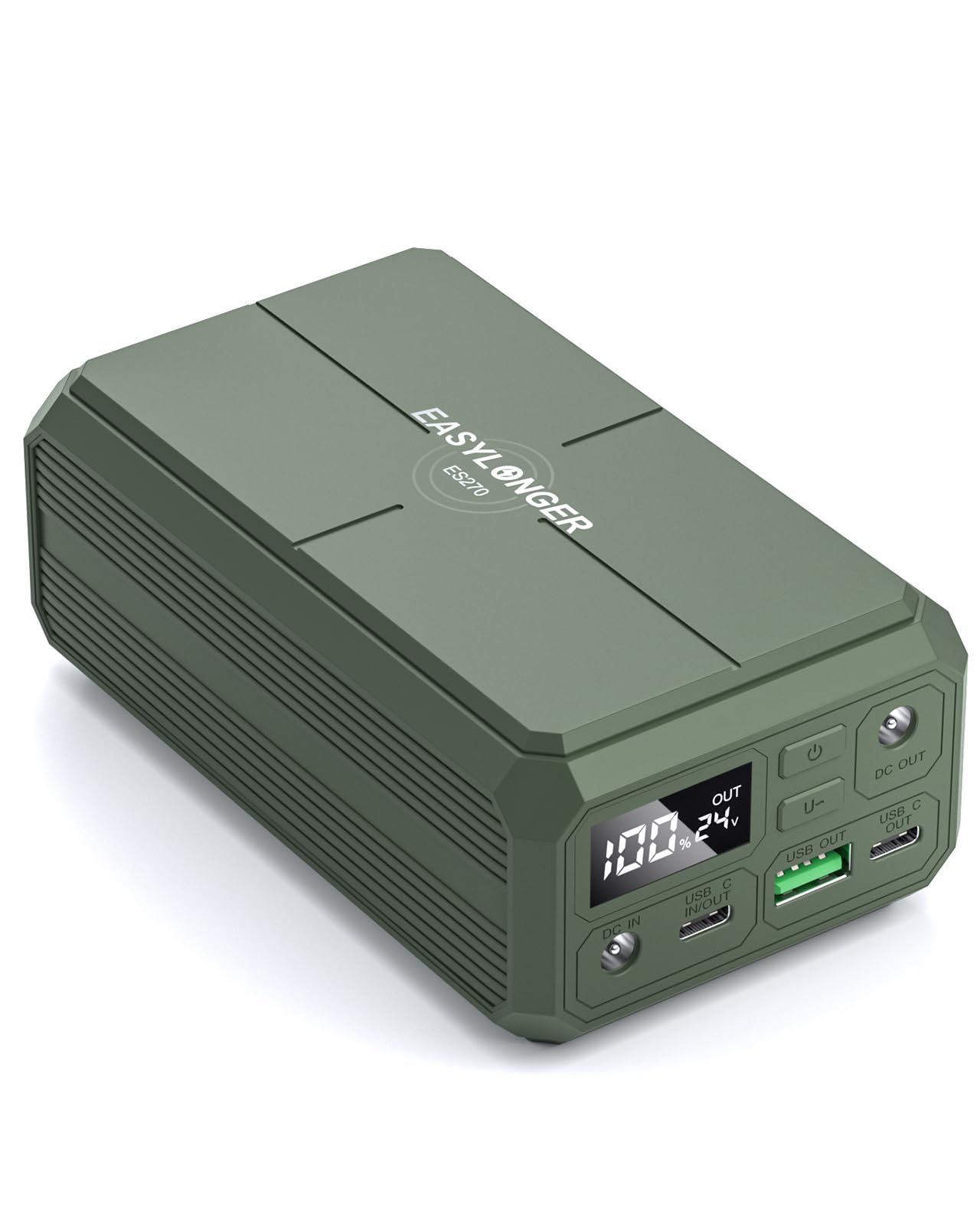
The EASYLONGER ES270 is a TSA-approved 99.9Wh CPAP battery that weighs 1.3 lb and arrives with four CPAP cables - AirMini, AirSense 11/10, AirCurve, Luna, and DreamStation - so the travel setup is complete before the first charge. That cable selection is the difference between a purpose-built travel battery and a generic power bank that needs an extra adapter purchase.

Pass-through charging keeps the CPAP running while the ES270 refills, so a hotel night does not turn into a drained battery by morning. The 100W USB-C port handles both recharging and powering the machine through the included cables, and the wireless charging pad tops up a phone without occupying a wall outlet. The 1.3 lb weight also fits inside the CPAP carry case, which means the battery rides in the bag rather than becoming a second carry-on. And because the USB-C port accepts 100W input, a long layover can bring the battery back to full from empty.

The four cables cover the two groups that dominate CPAP travel - ResMed and Philips - and the 99.9Wh capacity stays under the FAA carry-on limit. At a mid-range price, the value shows up in what is included: cables, pass-through, and wireless charging are standard, while some travel batteries charge extra for adapters. That combination makes this a complete travel kit rather than a bare power bank that still needs planning before the trip.

The ideal buyer is an AirMini or AirSense 11 user at moderate pressure who wants a travel backup for a flight, a camping trip, or a power outage. Treat it as a battery for low-power settings and keep the humidifier off when a full night matters; anyone who needs all-night humidified therapy should plan around a larger station.

The single-night scope is a direct result of staying TSA-legal. A heavier LiFePO4 power station in this comparison runs for multiple nights but stays home; the ES270 trades that capacity for a 1.3 lb body, airline approval, and a cable kit that matches the common CPAP models. For travelers who sleep one night per destination, that trade points the right direction, and the pass-through charging keeps the battery ready for the next sleep cycle.

๐Ÿ’ก Use pass-through charging during the day so the battery starts the night full.

Pros

  • Four CPAP cables are included for AirMini, AirSense 11/10, AirCurve, Luna, and DreamStation.
  • TSA-approved 99.9Wh capacity keeps the battery carry-on friendly at 1.3 lb.
  • Pass-through charging powers the CPAP while the battery refills from the wall charger.
  • Full-night runs are realistic on low-power AirMini and AirSense 11 setups.

Cons

  • High-power CPAP machines can draw enough to shorten a night.
Our verdict

For low-power CPAP users who fly, the ES270 is the carry-on battery to pack: four cables, pass-through charging, and 99.9Wh that clears TSA.

Check Latest Price
2

Best Multi-Night Camping Battery

EASYLONGER ES960

87 /100
Traveler Score Excellent

Key details

Weight
6.6 lb
Capacity & TSA
297.6Wh no TSA
Cables & Voltage
4 CPAP cables
Recharge Options
AC wall
Check Details on Amazon

With 297.6Wh of LiFePO4 storage and four CPAP cables included, the ES960 is built for multi-night off-grid use. At typical pressure settings and humidifier off, one charge has covered nearly four nights and more than 24 hours of runtime, which is enough for a weekend campout or a multi-day outage. That capacity places it above the 99.9Wh travel batteries in this roundup and closer to a full-size power station. The four included CPAP cables cover common machine connections, reducing the need to hunt down extra adapters. A heated tube and full humidity will cut into that runtime, so plan settings accordingly.

Pass-through charging keeps the CPAP running while the battery refills from AC power, a behavior that matters when power returns briefly during a storm. The LiFePO4 chemistry supports more charge cycles than standard lithium-ion, so the premium price spreads across a longer useful life. Phone and laptop outputs turn the ES960 into a campsite power source rather than a single-purpose battery.

Multi-night campers, RVers, and outage preppers who pack by vehicle are the right fit. It lacks TSA approval, so frequent flyers should compare the slim travel-specific top pick instead of treating this as a carry-on battery.

๐Ÿ’ก Pair the ES960 with a high-wattage AC charger when you need the fastest refill; low-wattage sources add significant charge time.

Pros

  • Multi-night CPAP runtime covers a full camping trip or multi-day outage without a wall outlet.
  • LiFePO4 chemistry supports more charge cycles than standard lithium-ion, lowering long-term replacement costs.
  • Four CPAP cables are included, plus phone and laptop output ports.

Cons

  • At 6.6 lb, it is a trunk or RV battery rather than a backpacking accessory.
  • Wall charging is quick, but no car charging cable is included, so 12V refills require a separate accessory.
Our verdict

For multi-night camping and outage backup, the ES960 is the capacity-first pick; frequent flyers should go with the TSA-approved travel battery.

Check Latest Price
3

Best Value Off-Grid Battery

Renogy 72000mAh

84 /100
Traveler Score Excellent

Key details

Weight
2.8 lb
Capacity & TSA
266Wh no TSA
Cables & Voltage
3 CPAP cables, 12/24V
Recharge Options
USB-C, AC, car, solar
Check Details on Amazon

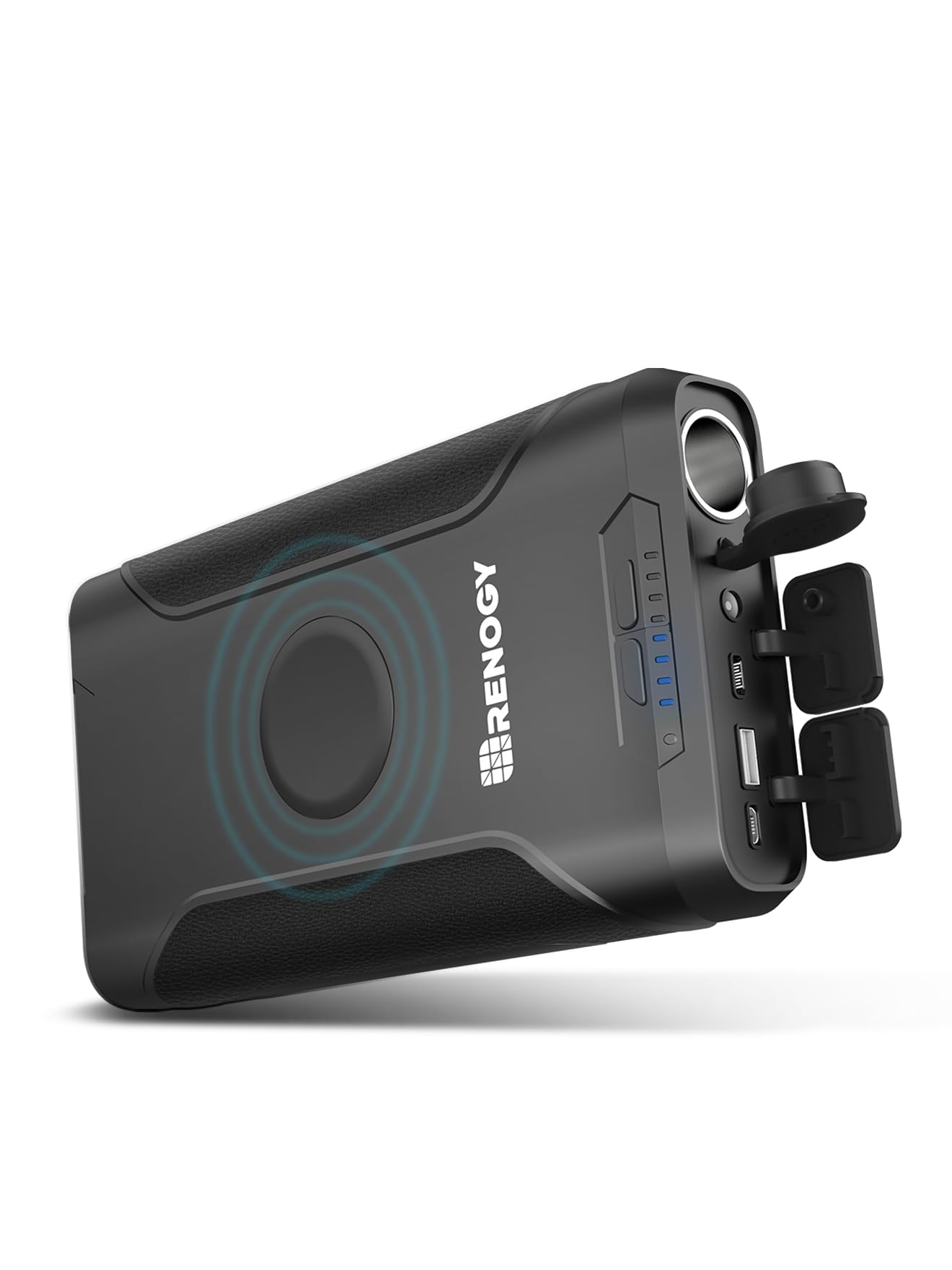
The Renogy 72000mAh packs 266Wh / 72,000mAh into a 2.8 lb body and ships with three CPAP cables covering AirMini, AirSense 10/11, AirCurve, and DreamStation 1/2. That capacity supports multiple nights on compatible machines while the 12V/24V output, 60W USB-C, and wireless charging keep phones, laptops, and a small fridge powered from the same unit. The slimmer carry-on options in this lineup trade capacity for airline approval; this battery makes the opposite choice, and at a budget price that makes sense for vehicle-based camping.

AC, car, solar, and USB-C PD inputs give this battery several ways to refill, so a campsite without shore power can still end the day full if you have a vehicle or panel available. Recharge time depends on the input source, but the vehicle option is particularly useful on road trips. The wireless pad is a convenient phone top-up that leaves the USB-C port free for a laptop. The rugged case handles the usual dust and bump of a truck bed or tent base without feeling delicate.

This is for budget off-grid CPAP users, car campers, and RVers with 12V/24V-compatible machines. It is not an airline carry-on because the battery exceeds 100Wh, and runtime and charging consistency can vary between units. For vehicle-based users, that tradeoff is easy to live with.

๐Ÿ’ก Charge fully at home and run an overnight test with your own CPAP before relying on it at a campsite.

Pros

  • Multi-night CPAP capacity on compatible machines without carrying a second battery.
  • No separate cable purchase is needed for the common ResMed and Philips machines in the included set.
  • The same battery can charge phones, laptops, and a small fridge while the CPAP runs.
  • Recharge options include AC, car, solar, and USB-C PD, so campsite power gaps are manageable.

Cons

  • The 2.8 lb body is noticeable on foot; this battery suits car, RV, or base-camp use more than backpacking.
  • Full-size CPAP runtime can fall to about five hours when the humidifier and heated tube are running.
Our verdict

Vehicle-based CPAP users on a budget get multi-night capacity, the right cables, and multiple recharge paths without paying for a larger power station.

Check Latest Price
4

Best Pass-Through Power Station

BLUETTI X30

82 /100
Traveler Score Excellent

Key details

Weight
4.1 lb
Capacity & TSA
297Wh no TSA
Cables & Voltage
5 CPAP cables, 12/15/24V
Recharge Options
AC wall
Check Details on Amazon

The BLUETTI X30 pairs 297Wh capacity with a 4.1-pound frame and a five-cable CPAP kit, making it a compact multi-night station rather than a generic power bank. Five labeled cables mean less fumbling when it's time to connect.

The X30 fits campers and emergency users who want multi-night CPAP power from a unit that travels in a trunk or tent bag. A full charge supports three to five nights on typical settings. DreamStation owners should confirm their machine works with the included cable kit before relying on it; compatibility has been inconsistent. For other machines, the output labels make setup simple.

The 12V, 15V, and 24V outputs match common CPAP voltage families, and the included case keeps cables organized. Running with the humidifier off stretches the reserve toward the longer end of that range; a heated tube shortens runtime. This balance makes it a practical companion for off-grid nights.

Pass-through charging keeps the station topped off between trips and can maintain CPAP power during an outage. If AC power drops, the X30 switches to battery automatically, so sleep isn't interrupted by a blip. The 4.1-pound weight keeps it easy to grab on the way out.

Pros

  • 297Wh capacity supports three to five nights of CPAP use on a single charge.
  • Compact 4.1-pound frame with a carrying case fits easily in a trunk or tent bag.
  • Pass-through charging keeps CPAP running automatically when AC power drops.

Cons

  • Not TSA-approved for air travel because 297Wh exceeds the 100Wh carry-on limit.
  • After months of regular use, charging capability can decline in individual units.
Our verdict

The X30 covers the gap between slim travel batteries and heavy multi-night power stations, with CPAP-specific cables and UPS-style backup in a manageable package.

Check Latest Price
5

Best Budget AC Power Station

EnginStar R300

86 /100
Traveler Score Excellent

Key details

Weight
6.5 lb
Capacity & TSA
296Wh no TSA
Cables & Voltage
No CPAP cables
Recharge Options
AC, car, solar
Check Details on Amazon

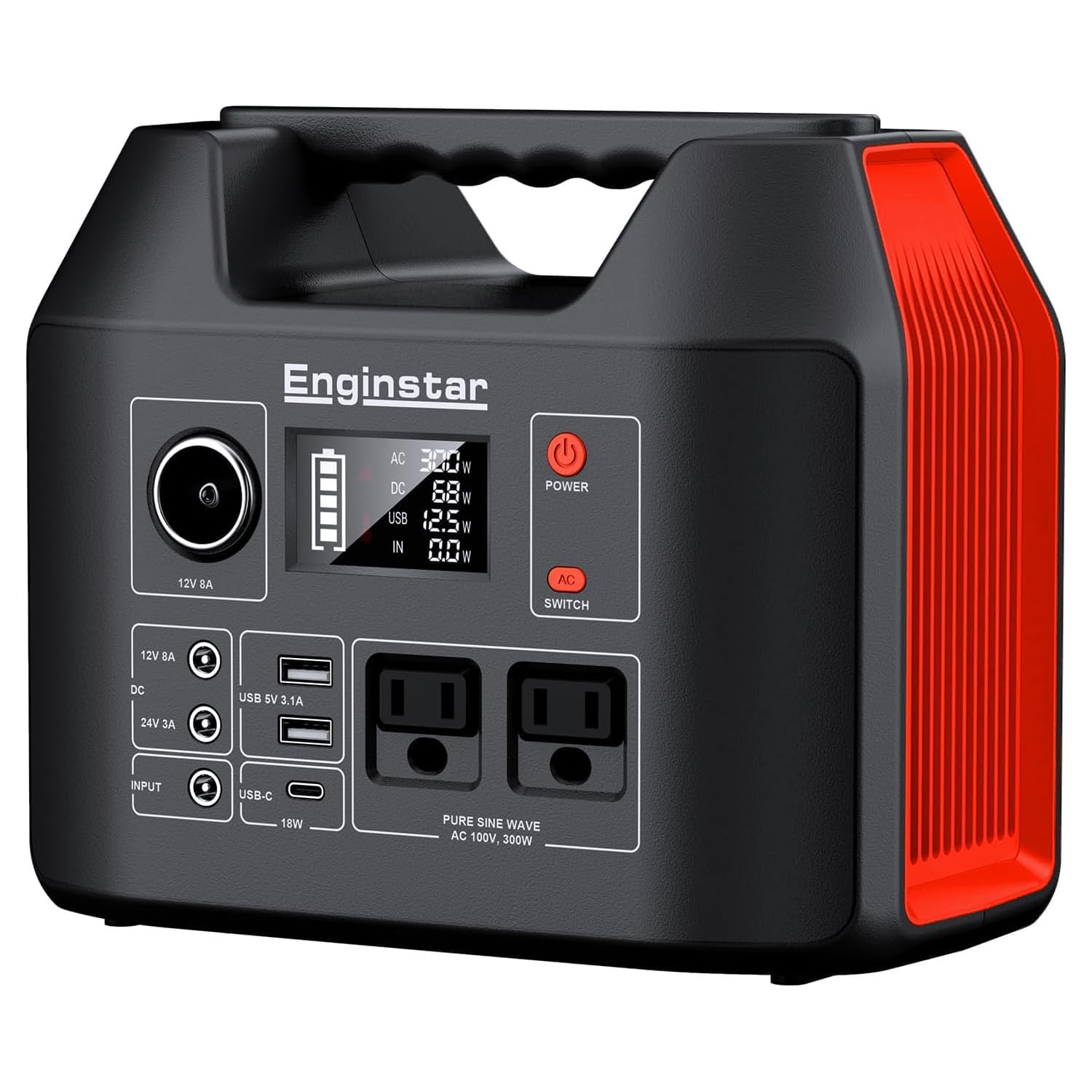
The EnginStar R300 is a 296Wh general-purpose power station with two pure sine wave AC outlets, so a full-size CPAP can run through its own AC adapter instead of a proprietary DC cable. It also packs DC, USB-A, USB-C, and car outputs into a 6.5 lb body, which makes it a practical companion for campers who need to charge more than just a sleep device. At a budget-friendly price, it undercuts dedicated CPAP batteries while covering more device types at once.

This is for a camper or outage-prep household that wants one box to handle CPAP, phone, lantern, and 12V gear. It is not a travel battery: it weighs 6.5 lb, has no CPAP-specific cables, and is not TSA-friendly for air travel. CPAP users should bring their machine's AC adapter and set expectations to the AC output route rather than a DC cable kit. Quality control varies between units, so run a full charge-discharge test before relying on it overnight.

The AC inverter is the part that matters most for sleep use: it has powered small appliances and CPAP machines, with one documented three-night CPAP run when the humidifier stays off. With two AC outlets and a car port, the same station can run a fan or charge a cooler during the day and switch to CPAP duty at night.

๐Ÿ’ก For longest runtime, use the CPAP's AC adapter and leave the humidifier off.

Pros

  • AC, DC, USB, and car outputs cover CPAP plus phones, lights, and 12V gear from one station.
  • Pure sine wave AC matches what a CPAP's AC adapter expects, so no proprietary DC cable is required.
  • Budget-friendly pricing for 296Wh with two AC outlets undercuts dedicated CPAP batteries.

Cons

  • AC recharging can take several hours, so an overnight charge beats waiting for a quick top-up.
  • A unit may stop holding a charge after a few months of use, and durability varies between samples.
Our verdict

For grounded campers who accept the AC-adapter route, the R300 delivers 296Wh and two AC outlets at a price that makes dedicated CPAP batteries look expensive.

Check Latest Price
6

Business Travelers

Volessence 27000mAh

83 /100
Traveler Score Excellent

Key details

Weight
2.6 lb
Capacity & TSA
99.9Wh TSA approved
Cables & Voltage
AC outlet only
Recharge Options
โ€”
Check Details on Amazon

This 99.9Wh power bank fits a real 110V AC outlet into a compact aluminum shell that clears TSA carry-on limits, so one unit can charge a laptop through the workday and run a CPAP machine for a short stretch. The CPAP ceiling is roughly 2-2.5 hours on a full-size machine and no CPAP-specific cables are included, which makes it a travel gadget backup rather than a primary CPAP battery. If the trip is laptop-first and CPAP is secondary, it fits; if CPAP is the primary need, the slimmer TSA-approved CPAP-specific options are a better match.

Pros

  • Clears TSA carry-on limits while providing a true 110V AC outlet for laptops and small electronics.
  • Charges laptops, CPAP machines, and small electronics from one carry-on-friendly aluminum-shell unit.
  • Aluminum shell keeps weight at 2.6 lb, so it packs easily for carry-on travel.

Cons

  • No CPAP-specific cables included; the AC outlet works but draws more power than a direct DC CPAP connection.
  • Full-size CPAP machines get about 2-2.5 hours per charge
Our verdict

Buy it when a carry-on-safe AC outlet for laptops is the main need and CPAP is the smaller part of the plan; choose a CPAP-specific travel battery if CPAP is why you need the power.

Check Latest Price
7

AirMini Travelers

Medistrom Pilot-24

79 /100
Traveler Score Very Good

Key details

Weight
1.3 lb
Capacity & TSA
95Wh TSA approved
Cables & Voltage
AirMini, AirSense 10, 24V
Recharge Options
2-3 hour recharge
Check Details on Amazon

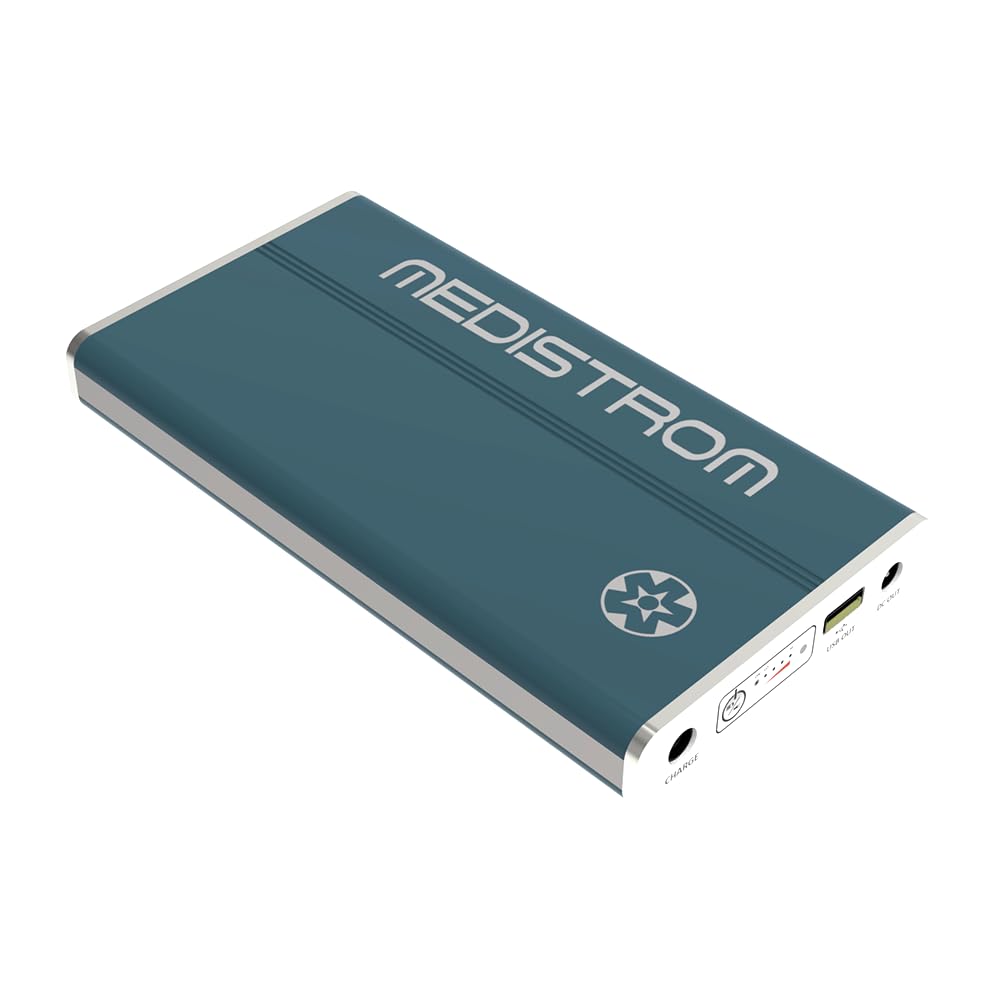
The Pilot-24 Lite is a TSA-approved 24V travel battery purpose-built for ResMed AirMini and AirSense 10, pairing 95Wh capacity with a 1.3 lb aluminum body and the correct DC cables for those two machines. For low-pressure flyers who keep the humidifier off, that combination removes the two biggest obstacles to CPAP travel: carry-on approval and cable compatibility. The catch is value and consistency. It shares the top pick's 95Wh capacity at a premium price, and charge-retention consistency can vary between units, so a pre-trip test is the right habit. Buy it for the Medistrom form factor and its included AirMini/AirSense 10 cables, not for multi-night capacity or 12V Philips machines.

Pros

  • TSA-approved 24V output for AirMini and AirSense 10 with the matching cable in the box.
  • Weighs 1.3 lb and fits easily into a backpack or carry-on bag.
  • Aluminum-shell construction feels solid without adding bulk.

Cons

  • Only AirMini and AirSense 10 cables are included; AirSense 11, S9, and Luna owners need a separate cable.
  • Runtime at higher pressure or with humidifier heat draws down the 95Wh capacity faster.
Our verdict

For a low-pressure AirMini or AirSense 10 traveler who wants a TSA-approved, 1.3 lb backup for flights and short overnight stays, the Pilot-24 Lite fits. If you need 12V output, multi-night capacity, or a lower price per watt-hour, this is not the battery to buy.

Check Latest Price
8

Philips Travelers

Medistrom Pilot-12

79 /100
Traveler Score Very Good

Key details

Weight
1.3 lb
Capacity & TSA
95Wh TSA approved
Cables & Voltage
DreamStation, System One, 12V
Recharge Options
2-3 hour recharge
Check Details on Amazon

The Medistrom Pilot-12 Lite is the lightest way to carry 12V CPAP power: 95Wh in a 1.3 lb aluminum case with DreamStation and System One cables included. For Philips-machine travelers who skip the humidifier and heated tube, that translates to a full night of backup in a carry-on-friendly package, and the 2-3 hour recharge keeps turnaround short. This is a premium-priced 95Wh battery, so it makes sense mainly when the small TSA-approved form factor is non-negotiable; the top pick covers more 12V Philips machines at a similar weight. 24V ResMed machines are outside its remit. Runtime and charge-holding can vary between units, so verify your exact cable before travel.

Pros

  • Ultra-light 1.3 lb aluminum case slides into a carry-on for TSA-approved 12V travel.
  • Ships with DreamStation and System One cables, with a 2-3 hour recharge.

Cons

  • Buyers with non-Philips 12V machines need a proprietary cable not included in the box.
  • Runtime and charge-holding can vary between units, so backup time may fall short of claims.
Our verdict

For DreamStation or System One owners who need the smallest TSA-approved 12V backup, this fits โ€” provided you verify the cable and accept the premium per watt-hour.

Check Latest Price

How to Choose

Capacity and Carry-On Limits

Capacity is measured in watt-hours, and 100Wh is the carry-on ceiling for lithium batteries. A 99.9Wh pack can fly; 148Wh and 297Wh packs cannot, regardless of size.

Runtime assumes the humidifier and heated tube are off. With heated therapy on, expect roughly half the run time, so buy for the longest night you will actually sleep.

Cable Compatibility and Voltage

ResMed units often run at 24V, while Philips DreamStation systems typically run at 12V. A battery with the wrong output voltage cannot power the machine even if the connector fits.

Labeled cables help, but confirm your exact model before ordering. DreamStation 1 and 2 differ, and AirSense 10 and 11 are not always interchangeable.

Weight and Physical Footprint

Watt-hours add weight, but not evenly. A 99.9Wh CPAP battery can weigh 1.3 lb, while a 296Wh AC station usually weighs over 6 lb because it carries inverter hardware.

A light TSA-approved battery disappears into a CPAP case; a multi-night station earns its weight in a car trunk or RV. Choose the form factor for the trip type.

Pass-Through and UPS Support

Pass-through charging lets the battery power the CPAP from wall power and switch to battery automatically if the outlet dies. Without it, an overnight outage means silence.

This matters most for emergency backup at home. For occasional camping, pass-through is a nice extra, not a deciding feature.

Recharge Speed and Charging Options

Recharge speed is set by the battery's input circuit, not the wall outlet. A 300W station can take eight hours to refill if its AC input is only 60W.

Look for USB-C PD or fast wall charging for daytime top-ups, and car or solar input for off-grid trips. Field recharging is almost always slower than the headline wattage.

Frequently Asked Questions