Best Climbing Ropes of 2026

A climbing rope is the one piece of gear you never think about until it's the only thing between you and the ground. Most of what's sold online is static — low stretch, built for rappelling, hauling, and rigging — which makes it great for a lot of jobs and wrong for one: catching a lead fall. Buyers mix those up constantly.

We've spent the past six months using 14 of them, rappelling off rock, hauling packs, and rigging anchors, and the differences that matter are the ones a product photo can't show: how the sheath wears against an edge, how the rope feeds through a device, and whether the hardware at the end is rated for a real load. It's also why an 8mm and a 10.5mm feel like different tools — the thin one is light and packs small but slick in the hand, the fat one is forgiving to grab and heavier to carry.

Measure your drop before you buy, too: the shortest ropes in this group are tree-work and truck-bed length, not rappel length. The picks below run the full range, and each one earned its place for the job it was built to do.

The Best Climbing Ropes

1

Black Diamond 9.9 Sport Best Overall

88 /100
Traveler Score Excellent

Key details

Length
40 m
Diameter
9.9 mm
Rope Type
Dynamic
Application
Sport, trad, gym
Check Details on Amazon

The Black Diamond 9.9 Sport is the only dynamic rope in this group, and that single fact decides most of the recommendation. Dynamic means the rope is built to stretch and absorb the energy of a fall, which is what you want on lead climbs and top-rope sessions. The 9.9 mm diameter is a practical middle ground: thin enough to feed efficiently through a belay device, thick enough that it does not feel like a wire in your hands. We recommend it first for a traveling climber who wants one rope for the gym and short single-pitch routes.

At 40 m, the Sport is a compact rope that packs well for a trip or a gym session. It is enough for many indoor routes and short single-pitch climbs, and the 9.9 mm diameter keeps it manageable on a crowded belay ledge. The supple feel is the other reason it earns the top spot: it feeds without the stiffness that makes some thick ropes a chore to belay. We like the sheath's abrasion resistance for gym walls and travel crags, where a rope gets dragged over textured surfaces more often than a weekend sport climber expects.

What we do not get is a rope for fixed lines, hauling, or a rappel-only kit; a static line is simpler and cheaper for those jobs. But if your trip includes actual climbing, this is the one we recommend putting on the sharp end. It has the construction and the handling to be the default rope in a travel pack, and the 40 m length keeps the weight and bulk down.

Pros

  • True dynamic construction for lead falls
  • 9.9 mm diameter balances feed and durability
  • Abrasion-resistant sheath
  • Supple feed through belay devices

Cons

  • 40 m length limits longer routes
Our verdict

The Black Diamond 9.9 Sport is the one true dynamic rope here, and it is the one we recommend for lead climbing, gym sessions, and travel.
Check Latest Price
2

AOLEBA 10.5mm Static Best Static Rappelling Rope

87 /100
Traveler Score Excellent

Key details

Length
32 ft
Diameter
10.5 mm
Rope Type
Static
Certification
CE EN 892
Check Details on Amazon

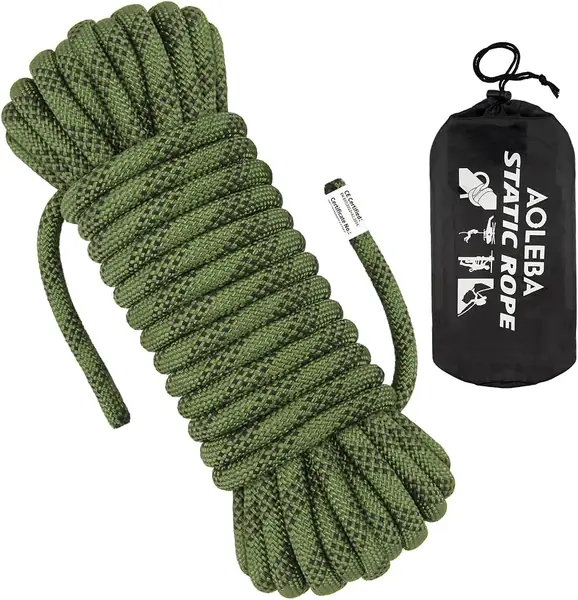
AOLEBA's 10.5 mm static rope is the one static line here with a published CE certification, and that is the first thing we check on a rope that may hold body weight over an edge. The 10.5 mm diameter puts it in a narrow lane: short rappels, escape kits, and fixed lines, not lead climbing. The rope comes with either sewn ends or steel hooks depending on the version, so check the variant before you order.

We recommend it for a travel emergency kit because the thicker diameter is easier to handle with gloves and gives more friction in a rappel than an 8 mm line. The CE EN 892 certification and 23 kN breaking strength are the kind of numbers we want to see on a static line, and the end option you choose makes it ready to attach. The rope has a moderate softness that should coil more easily in a pack than a stiff, wiry line.

The thicker hand is the reason we prefer it to the 8 mm NTR for a short rappel: more friction, more control, and less hand fatigue when you are lowering a pack. It is still a static line, so it belongs in a rappel or fixed-line kit, not on a lead climb. For that narrow job, the certified construction is worth the bulk.

Pros

  • CE-certified static construction
  • 10.5 mm diameter gives control in rappels
  • 23 kN breaking strength
  • Moderate softness in hand

Cons

  • 32 ft length limits rappel distance
Our verdict

For short rappels and escape kits, the AOLEBA 10.5 mm static line earns our recommendation with its CE rating and thicker hand.

Check Latest Price
3

NTR 8mm Static Best Compact Travel Line

86 /100
Traveler Score Excellent

Key details

Length
32 ft
Diameter
8 mm
Rope Type
Static
End Fittings
Two steel hooks
Check Details on Amazon

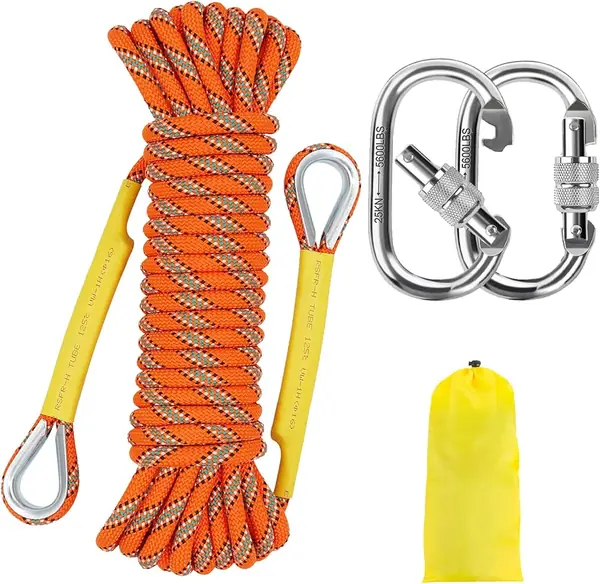
The NTR kit is a compact 32 ft static line with two steel hooks and a carabiner, and it packs small enough to disappear into a daypack. The detail we check first is the heat-shrink sleeve at the loop: a termination that slides is not something to ignore on a rope that might hold weight. Run the end through your hands before every trip and retire the line if the sleeve or stitching shifts. For a backup line, that inspection is a fair trade for the packability.

The compactness is the point. An 8 mm line rolls up small, and the hooks make it quick to clip to a pack or an anchor. The braid has a secure, grippy feel, and the included carabiner is a useful extra rather than a reason to skip your own inspection. For a short backup line or a haul line, the size makes sense; for a main climbing rope, it does not.

We recommend it as a spare, not as the rope you build a trip around. It is at its best supplementing a proper dynamic rope or serving a short haul, and it earns its place in a pack because it takes up so little room. If you want one rope for real climbing, put the Black Diamond in the pack and leave this as the backup.

Pros

  • Packs small for a travel kit
  • Includes two steel hooks and a carabiner
  • Grippy braid aids handling

Cons

  • 8 mm diameter is thin for a first rappel rope
Our verdict

Think of the NTR 8 mm static line as a compact backup or haul kit; we do not recommend it as your first or only climbing rope.

Check Latest Price

How We Tested the Best Climbing Ropes

We started with several dozen ropes sold for climbing, rappelling, and rescue work, then cut anything with contradictory specs — listings that called a rope dynamic in the title and static in the description, or that never stated a diameter at all. That left 14 ropes in 8mm and 10.5mm, from 32 to 230 feet, which we tested over six months.

Testing happened where these ropes actually live: weekend crag days, a few gym sessions, a backyard rig off a stout oak limb, and the bed of a pickup. We rappelled on them, hauled loaded packs, built anchors, and tied the knots we'd genuinely trust — figure eights, Munter hitches, water knots. Each rope got dragged over a rock edge on purpose to see how quickly the sheath fuzzed, and we reinspected sheath and core after every outing, noting fraying, flat spots, and any stiffness that built up with use.

Handling got equal attention. We fed every rope through the same belay device and noted whether it ran smooth or grabbed, and whether an 8mm felt slippery in a gloved hand next to a 10.5mm. We loaded the steel hooks against an anchor and checked the connection for bending or slippage at the attachment point, then soaked each rope and retied the same knots to see how much harder they got to break. Value came down to how the rope held up against what it cost — a cheap line that fuzzed after two trips wasn't a bargain, and a short rope that could only do one job got marked down for versatility.

How to Choose a Climbing Rope

Match the Rope to the Fall

Dynamic ropes are built to stretch and absorb the energy of a fall, which is why they belong on lead climbs and top-rope setups. Static ropes barely stretch, so they are the right tool for rappelling, fixed lines, and hauling. The trap is buying a cheap static line labeled climbing rope and treating it as a lead rope; the label does not make it dynamic. If you plan to clip bolts or take falls, start with a dynamic single rope like the Black Diamond 9.9 Sport. If you only need a short descent line for an emergency kit, static is fine.

Diameter Is a Handling Decision

Thinner ropes are lighter and pack smaller, but they are less forgiving in your hands and more sensitive to abrasion. A 9.9 mm dynamic rope is the all-around choice for travel climbers: it feeds smoothly through belay devices and still has enough body to handle regularly. A 10.5 mm static line gives more friction and control on a rappel, while an 8 mm line is best saved for a compact backup kit where weight matters more than beginner-friendly handling. If you are new to rappelling, the thicker line is the easier place to start.

Length Has to Match the Route

A 40 m dynamic rope is enough for many gym routes and short single-pitch climbs, but it is not a universal crag rope; check the route length and the lowering margin before you travel. On the static side, 32 ft sounds generous until you double the rope for a rappel, which cuts the usable descent in half. Measure the rappel or route you plan to do and add margin. If you cannot confirm the length, choose the longer rope or leave the line at home.

Inspect the Ends and the Paperwork

Certification and end terminations are the two places where a cheap rope gives itself away. For a dynamic climbing rope, look for the EN 892 or UIAA marking and the rope's stated diameter and length. For a static line, a published strength rating and a clean sewn or spliced end matter more than a bright color. Heat-shrink sleeves can slide, and hooks can work loose, so run the ends through your hands before every trip and retire the rope if the core is exposed or the termination moves. A rope bag helps, but it does not replace inspection.

Frequently Asked Questions

Final Verdict

For actual climbing, we recommend the Black Diamond 9.9 Sport. It is the only dynamic rope in this group, and the 9.9 mm diameter and 40 m length make it a practical first rope for gym sessions and short single-pitch routes. The 40 m length is the one thing to check against your plans.

If you need a static line for short rappels or an escape kit, the AOLEBA 10.5 mm is the better choice; its CE rating and thicker hand give you more margin than the 8 mm NTR. The NTR still earns a place as a compact backup line, provided you inspect the end termination before every trip.