Best Climbing Helmets of 2026

A climbing helmet is the one piece of gear you hope never earns its keep. Most days it does quieter work — deflecting a dropped carabiner, holding a headlamp when the rappel runs past sunset, staying comfortable enough that you forget it's on. What decides whether that happens is fit, and a helmet that shifts every time you look up is one people quietly stop wearing.

I've climbed in everything from gym loaners to shells that felt like hard hats, and over the past six months my team and I have worn 12 helmets on rock, ice, and plastic. The in-mold foam-and-shell build behind several of these saves weight without giving up protection, but the dials and straps matter just as much: a helmet that fit perfectly in the shop can sit wrong once you add a beanie, a ponytail, or a headlamp strap.

Weight and price don't track as neatly as you'd expect, either. A very light shell is a joy on long approaches and a little more precious about being stuffed into a pack — the picks below cover both kinds of climber.

The Best Climbing Helmets

1

Black Diamond Half Dome Best Overall
93 /100
Traveler Score Outstanding

Key details

Shell And Liner
ABS shell, EPS foam
Stated Weight
12.5 oz
Headlamp Mounts
Integrated clips
Size Range
23-25 in (M/L)
Check Details on Amazon

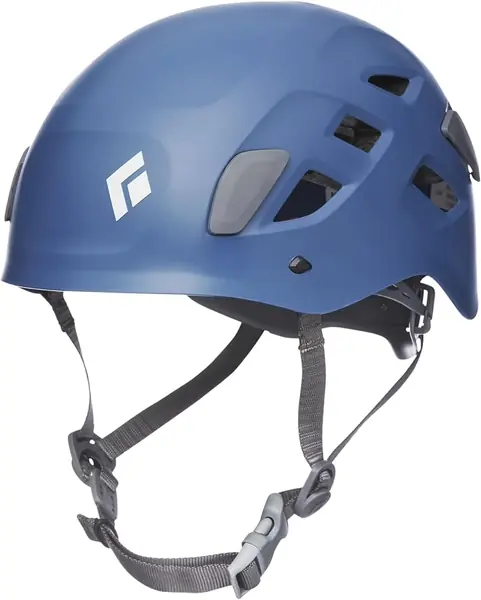
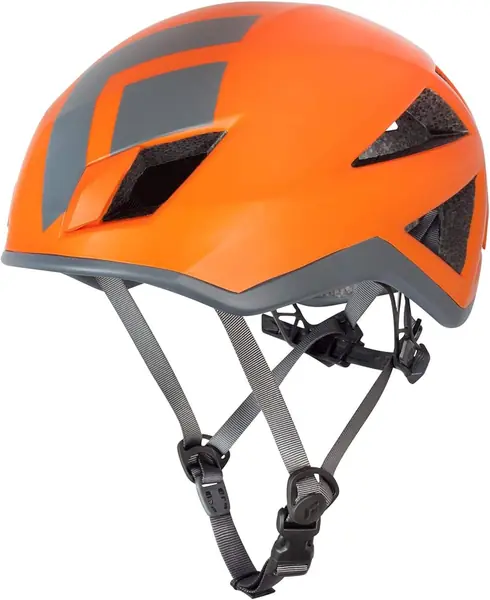
At 354 grams, the Half Dome is light enough that you stop thinking about it on the approach, and the large vents do their job when the sun is on the wall. We like that Black Diamond did not make the basics fussy: the ABS shell and EPS foam liner are the expected combination, the chin strap adjusts easily, and the integrated headlamp clips are there for dark starts. For most climbers, that is the whole argument. It is not the most specialized helmet here, but it is the easiest one to live with.

Fit is where it earns its keep. The Medium/Large is listed for 23 to 25 inches, and the low-profile suspension and rear dial give you a useful range to work with. We paid attention to that dial because a helmet only protects you if it stays level, and this one has enough adjustment to sit down on the head rather than perch. The chin strap is easy to set once and leave alone.

The trade-off is coverage. This is an all-around lid, not a caving shell, and the Petzl BOREO is the better choice when you want more side and back protection or a tougher shell for abrasive rock. The Half Dome is also not the lightest helmet in this group. Neither point undoes the recommendation: for cragging, gym sessions, and alpine routes where you want one helmet that fits a wide range of heads, this is the one we reach for first.

Pros

  • Light enough for long approaches
  • Generous M/L fit with a rear dial
  • Large vents and integrated headlamp clips
  • Strong all-around value

Cons

  • Less side and rear coverage than the BOREO
Our verdict

We recommend the Black Diamond Half Dome as the all-around default for cragging, gym days, and alpine routes: it is light, ventilated, and easy to fit.
Check Latest Price
2

Petzl BOREO Best for Rough Terrain

92 /100
Traveler Score Outstanding

Key details

Shell And Liner
ABS shell, EPP/EPS foam
Stated Weight
11.6 oz
Headlamp Mounts
Two front clips, rear elastic
Storage
Headband folds into shell
Check Details on Amazon

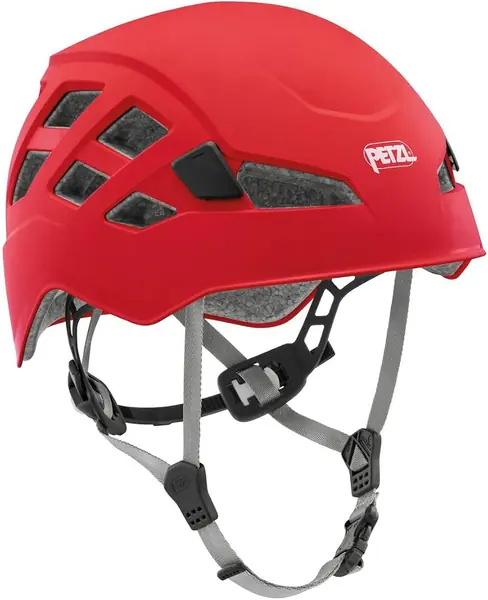
The BOREO starts with a tougher brief than most climbing helmets: an ABS shell, a fully foam-lined interior, and coverage that extends around the sides of the head. That makes it a natural match for via ferrata, canyoning, caving, and any climbing where the rock is close enough to scrape a helmet rather than just catch a fall. The shell is the first thing you notice; the second is how much of the inside is padded.

We like the BOREO most for that rough-terrain role. The full EPP/EPS lining gives it a more substantial feel than the thin foam in a basic lid, and the soft headband folds into the shell when you stuff it in a pack. The two front clips and rear elastic hold a headlamp securely without adding hardware that can snag. It is not the helmet we choose for a hot day of sport climbing, but it is the one we trust when the day is more about rockfall and abrasion.

Packing is where the BOREO pulls ahead: the headband tucks into the shell, so it takes up less room in a full pack. The fit is the one place it asks for patience; there is no rear dial, so getting the shell level takes a little more attention, especially with a hat underneath. If you already know your size and want a tougher helmet for ugly terrain, that is a fair trade.

Pros

  • Full EPP/EPS lining and side coverage
  • Tough ABS shell for abrasive terrain
  • Headband folds into the shell
  • Front clips and rear elastic for headlamps

Cons

  • Soft headband is fussier to adjust than a dial
Our verdict

We choose the Petzl BOREO when the day involves via ferrata, caving, or abrasive rock and we want more side coverage and a tougher shell.

Check Latest Price
3

Black Diamond Vector Best Ventilation

89 /100
Traveler Score Excellent

Key details

Shell And Liner
Co-molded PC shell, EPS foam
Headlamp Mounts
In-mold clips
Adjustment
Ratchet dial, push buttons
Ventilation
Large ports
Check Details on Amazon

The Vector is the helmet we choose when airflow matters more than saving money. Its co-molded polycarbonate shell and EPS foam keep the profile low, and the large ventilation ports are the most purposeful in this group. On a hot climb, that difference is easier to feel than a few grams on the spec sheet. The in-mold headlamp clips are another detail we appreciate: there is nothing to lose or leave at home.

The Vector also gives you more coverage at the back and temples than a basic lid, which is the sort of thing you notice when a fall swings you toward the rock. The ratchet adjuster with molded push buttons is easy to work with one hand, and the suspension tucks away for storage. We like the tuck-away system for a pack that is already full, though it is one more step at the trailhead.

This is the top-tier helmet in this set, and the extra spend goes toward ventilation, coverage, and a more refined fit system rather than a different certification. If you climb in hot places, wear a helmet for hours, and want the most breathable option here, the Vector is the one that makes sense. If your priority is a simple, proven lid for weekend cragging, the Half Dome is the more sensible match.

Pros

  • Large vents for hot climbs
  • More rear and temple coverage
  • One-hand ratchet adjuster
  • In-mold headlamp clips

Cons

  • Premium price
Our verdict

We keep the Black Diamond Vector for hot, long climbs where airflow matters and a more refined fit is worth the premium.

Check Latest Price
4

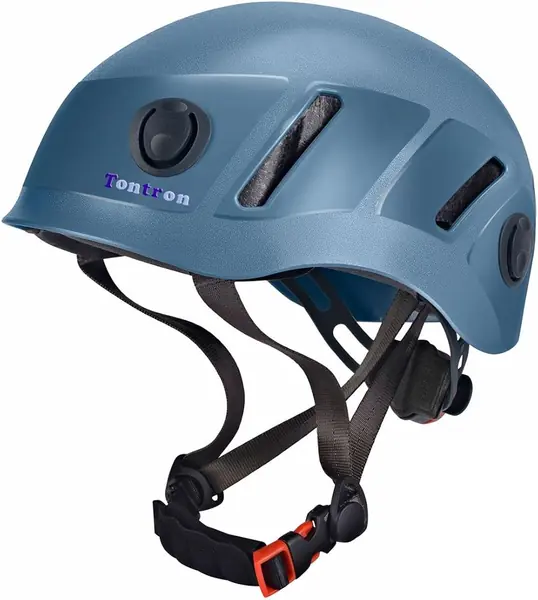
Tontron TC-CH02 Best Budget

88 /100
Traveler Score Excellent

Key details

Shell And Liner
ABS shell, EPS foam
Stated Weight
13.8 oz
Size Range
21.6-23.6 in (55-60 cm)
Certification
CE EN 12492
Check Details on Amazon

The Tontron is the helmet that makes the least sense until you check the certification. It is the lowest-priced helmet in this group, and it lists CE EN 12492. The ABS shell and EPS liner are basic but appropriate, and the rear closure adjusts over the stated 55 to 60 centimeter range. For a first helmet, a spare, or a caving lid, the spec sheet is more serious than the price suggests.

On the head, the compromises show up in the fit. The shell sits higher on some heads, and the Large is not generous for bigger skulls even though it covers 55 to 60 centimeters. That is the main reason to try it on before a big trip, or to choose the BOREO if you know you need a deeper fit. The rear dial is the part we appreciate most, because it lets one shell cover a range of heads and stay put once set.

We still think the Tontron earns a place for caving, club use, and anyone who wants a certified climbing helmet without spending much. The BOREO is the better helmet for rough, scraped-up terrain, but the Tontron gets you a safe basic lid for a fraction of the cost. Just check that the shell lands level before you commit.

Pros

  • CE EN 12492 certification
  • Rear dial adjusts over a wide range
  • Headlamp buckles included
  • Lowest price in this set

Cons

  • 390 g feels heavy on long approaches
  • Shell can sit high on some heads
Our verdict

We see the Tontron TC-CH02 as the budget standout for occasional climbing or caving, provided the shell sits level on your head.

Check Latest Price
5

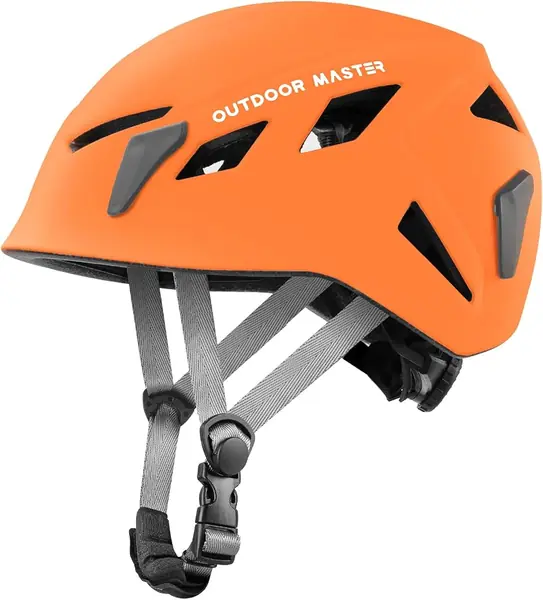
OutdoorMaster Climbing Helmet Best for Lightweight Caving

87 /100
Traveler Score Excellent

Key details

Shell And Liner
PC shell, EPS core
Stated Weight
10.9 oz
Headlamp Mounts
Two front, two rear clips
Size Range
20.86-24 in
Check Details on Amazon

The OutdoorMaster says one size, but the 20.86-to-24-inch range is the number to read closely. The shell runs small, so a head near the top of that range may find it snug or perched rather than properly seated. That is not a reason to dismiss it; it is a reason to measure first and treat the upper end of the range with suspicion.

At 0.31 kilograms, it is the lightest listed helmet here, and the in-mold PC and EPS construction keeps the weight down without a bulky feel. The one-hand adjustment and two front and two rear headlamp clips cover the basics for caving, hiking, or easy cragging. We like it as a light second helmet or a first lid for a smaller head, provided you are not asking it to be a premium fit system.

Pros

  • Light 0.31 kg listed weight
  • In-mold PC and EPS construction
  • One-hand adjustment and four headlamp clips
  • Budget-friendly price

Cons

  • Runs small for its stated range
Our verdict

We like the OutdoorMaster for smaller heads and light caving or cragging use, but check its fit range before ordering.

Check Latest Price

How We Chose and Tested the Best Climbing Helmets

We started with every climbing helmet sold with a stated head circumference range — entry-level shells up through alpine and via ferrata models, in-mold and hardshell alike — then cut the list so it spanned the price range. Twelve made it into testing, and they stayed in rotation for six months.

They came to the gym on Tuesday nights, to a local crag most weekends, and on a few long days where the helmet stayed on for six hours straight. Fit came first: I measured each tester's head, set the retention dial from scratch, and checked whether the shell was still sitting level after an hour rather than creeping up the forehead. I wore each one over a thin beanie and with hair tied up, since a helmet that fits only one way fails half its buyers, and I noted whether the chin strap left ears clear and the buckle landed somewhere that didn't dig.

Comfort got judged at hour three, not minute three. We watched for hot spots, padding that flattened, sweat running into eyes, and anyone reaching up to loosen a dial mid-route. Each helmet went on a kitchen scale and then on a 45-minute approach, because a shell that feels light in the hand can still pull at your neck once you're racked up. We also clipped a headlamp to every set of clips and shook the helmet to see if the strap stayed put.

For protection, we looked at how far the shell came down the back of the head, how steady the retention system held it when we pushed from the side, and how cleanly the foam met the shell at the edges. Quality showed up over months instead of minutes — strap anchors that loosened, padding that peeled, scuffs that turned into cracks. Value came last: what each helmet included for its price, and whether the cheaper ones gave up anything that mattered.

How to Choose a Climbing Helmet

Start With Fit, Not Size

Measure your head at the widest point, then compare that number with the stated range rather than the label. A helmet should sit level, with the front just above the eyebrows and the rear covering the back of the skull; if it tips back, the adjustment is not the fix. The Half Dome's Medium/Large spans 23 to 25 inches, while the OutdoorMaster runs small for its 20.86-to-24-inch claim. If you are between sizes, choose the larger shell and dial it down.

Match Coverage to Your Terrain

Sport climbing and gym falls put different demands on a helmet than via ferrata, caving, or alpine rock. For clean falls and general cragging, a ventilated all-around lid is pleasant to wear. For loose rock, canyon walls, or caves, look for more side and rear coverage and a shell that can take abrasion. The Petzl BOREO is the obvious example here, with a full foam lining and ABS shell; the Vector takes a more ventilated route to extra coverage. More coverage usually costs weight or airflow, so choose the terrain you actually climb.

Weigh Ventilation Against Durability

Ventilation is not a luxury on a long, hot route: a helmet that traps heat makes you want to take it off, which is the opposite of what you need. Large ports and a close-fitting shell help, but more vents can mean less shell or foam in the places that take a hit. The helmets here span roughly 0.31 to 0.39 kilograms, and a couple of ounces is less noticeable than a bad fit. We prioritize airflow for summer rock and a tougher shell for cold, abrasive places.

Plan for Headlamps and Pack Space

Most climbing days start or end in the dark, so headlamp attachment belongs on your short list. Front clips and a rear elastic are simple and secure; in-mold clips are neater and less likely to snag. If the helmet rides on the outside of your pack, a tuck-away suspension or a headband that folds into the shell keeps it from catching on branches. The BOREO's fold-flat headband and the Vector's tuck-away suspension are the two designs here that make packing easier.

Buy Certified, Not Just Cheap

Climbing helmets are not the place to improvise. Look for a recognized climbing standard such as CE EN 12492 or UIAA, and treat a construction hard hat or bike helmet as a different tool even if it looks similar. The Tontron shows that a low price and a real climbing certification can coexist; the premium Vector buys ventilation and coverage, not a different safety standard. Spend for fit and the features you will use, and check the inside of the shell for the certification label.

Frequently Asked Questions

Final Verdict

The Black Diamond Half Dome is the helmet we recommend to most climbers. It is light enough for long approaches, ventilated enough for warm rock, and adjustable enough to fit a wide range of heads, with headlamp clips already in place. That combination makes it the easiest default here.

Choose the Petzl BOREO if your days lean toward via ferrata, caving, or abrasive rock and you want more side coverage and a tougher shell. Choose the Black Diamond Vector if ventilation and a more refined fit system are worth the premium to you.