Suunto MC-2 Best Overall
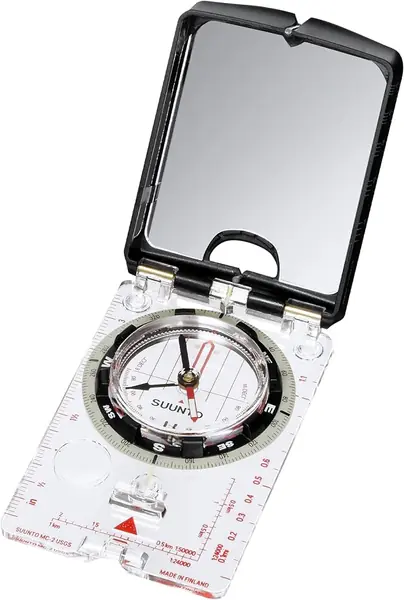
Key details
- Weight
- 4 oz
- Sighting
- Mirror with sighting hole
- Slope
- Built-in clinometer
- Declination
- Adjustable
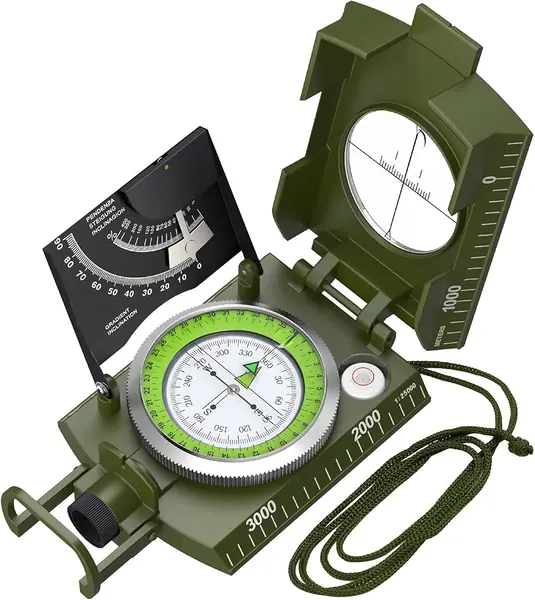
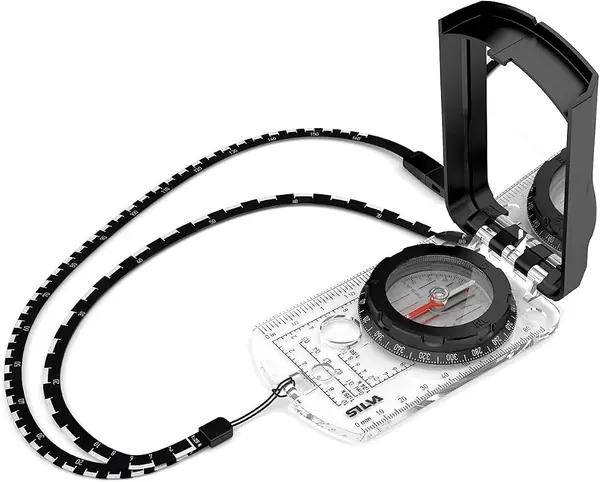
The cut-out in the mirror lid is the detail that makes the MC-2 worth carrying. Instead of tilting the whole compass to line up a summit, you sight through the notch in the raised lid and read the bearing in the mirror at eye level, with the object and the dial in the same view. On a ridge where three tops look alike, that is the difference between a bearing you trust and one you guess at.
We especially like that the navigation math happens on the instrument. The declination key rides on the lanyard, so you set the local value once and the dial carries the correction on every bearing after that. Add the clinometer for slope angle and the magnifier over the transparent baseplate, and the MC-2 covers a whole navigation course rather than the first lesson of one. The markings are bright enough to read in low light without switching on a lamp, which matters more than it sounds when your hands are cold.
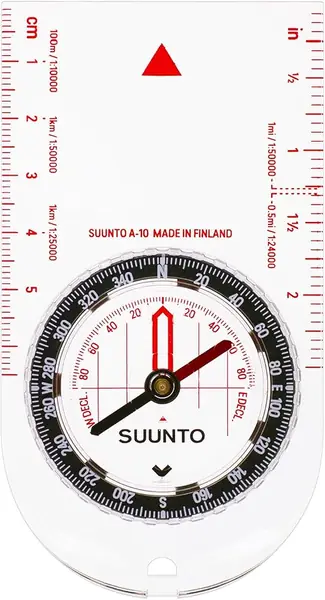
Size is the trade. At 4.98 inches long and 4 ounces, it fills a jacket pocket and weighs four times what the A-10 does, so a compass that lives in a shirt pocket and comes out for quick checks will feel the difference. The composite body takes knocks better than the mirror suggests, and the needle settles quickly for a mirror compass, which is the part that actually matters when you are holding it one-handed in wind.
One more thing worth knowing: the mirror doubles as a signal mirror. It is the feature you buy once and hope stays folded.
Pros
- Mirror cut-out allows eye-level, one-handed bearings
- Declination adjuster keyed to the lanyard
- Clinometer and magnifier cover slope and map detail
- Readable in low light without a lamp
Cons
- Bulky and heavy for a shirt pocket
We recommend the MC-2 to anyone who wants one compass that handles sighting, declination, and slope without extra gear.