Best Fleece Jacket for Hiking of 2026

A fleece jacket is what you reach for when the forecast shrugs — too cool for a tee, too warm for a puffy. The trouble is the category splits in two: the plush ones that leave you clammy a mile in, and the thin ones that might as well be a long-sleeve shirt. The right one holds warmth through a windy ridge, breathes on the climb, and fits well enough that you stop thinking about it. That's the job — one layer that handles the temperature swings of a single hike.

I've hiked in fleece for years, and over the past eight months my team and I have worn 12 jackets on real trails. The keepers rarely won on specs. They won on the zipper running clean with one cold hand, a hem that stayed put under a hipbelt, and a cut that looked intentional at the trailhead and the brewery after. Color and fit matter more than hikers admit — this is the layer in every photo. Below are the ones worth the pack space, sorted by what they're actually good at.

1

Best Overall

Columbia Steens Mountain 2.0

95 /100
Traveler Score Outstanding

Key details

Style
Men's full-zip fleece
Weight
1.04 lb
Pockets
Zippered hand pockets
Check Details on Amazon

At 1.04 pounds, this is a fleece you can carry all day and forget about, which is the whole argument for a midlayer you spend more time holding than wearing. That is the case for the Steens Mountain: light enough that bringing it costs you nothing, warm enough that it is the only insulation you need on a shoulder-season hike.

We like the details that are actually about hiking. The full-length zip lets you dump heat on a climb without stopping to wrestle a layer over your head, and the zippered hand pockets mean a key and a couple of bars stay where you put them when you are scrambling. The cut is roomy enough for a base layer underneath and still slides under a shell without bunching at the shoulders.

Wind is the limit. Fleece is an air-permeable knit by design, which is why it breathes so well on the uphill and why an exposed ridge will cut straight through it. That is the shell's job rather than a fault in the jacket, and it is the trade you make for a layer that does not turn into a sauna at the steep part.

One thing worth knowing before you order: the black reads closer to charcoal in person. We did not find that it mattered on the trail, but if the color is the reason you are buying this one, expect a softer, greyer dark than the photos show.

Pros

  • About a pound, so it disappears into a daypack
  • Zippered hand pockets keep keys and snacks secure
  • Roomy enough to wear over a base layer
  • Air-permeable knit vents heat on the climb

Cons

  • Body runs generous for some builds
Our verdict

Our pick for most hikers: it weighs about a pound, warms far beyond its bulk, and has the zippered pockets a day on the trail actually needs.

Check Latest Price
2

Best for Women

Columbia Fast Trek II

93 /100
Traveler Score Outstanding

Key details

Cuffs
Elastic cuffs
Pockets
Five, including an arm pocket
Adjustability
Waist cinch
Check Details on Amazon

The Fast Trek II is the most expensive fleece in this group, and it is the one we hand to a woman who is hiking rather than walking the dog. What the extra money buys is a cut and a pocket layout built for movement rather than for the parking lot.

Count the pockets: two outer hand pockets, two inner drop pockets and a small one on the left arm, all of them closed. On a trail that is the difference between a phone in your pocket and a phone somewhere on the trail behind you. There is a waist cinch too, which stops the hem riding up under a pack belt, and the body falls at the hip rather than over it.

The balance is what sells it. This is a soft, slightly fluffy fleece rather than a slick one, so it traps air well for its weight, and the warmth is real for cool mornings and evenings around fifty degrees. It is not a winter layer on its own, and it is not windproof either, so plan on a shell over the top.

Sizing is the catch: it is cut close through the chest and shoulders, and the safe move is a size up if you want anything more than a base layer underneath. What you get for the money is a jacket that comes through the wash without pilling, which is not something every fleece here manages after a season.

Pros

  • Five closed pockets, including two internal ones
  • Waist cinch keeps the hem under a pack belt
  • Comes through repeated washing without pilling
  • Soft, lofty fleece warm for its weight

Cons

  • Runs small; size up if layering
Our verdict

If you hike rather than walk to the parking lot, the extra money buys a better cut, five closed pockets and fleece that comes through the wash unfuzzed.

Check Latest Price
3

Best Lightweight

Rdruko Full-Zip Hiking Fleece

91 /100
Traveler Score Outstanding

Key details

Cuffs
Elastic cuffs
Style
Men's full-zip fleece
Pockets
Five, including a chest pocket
Check Details on Amazon

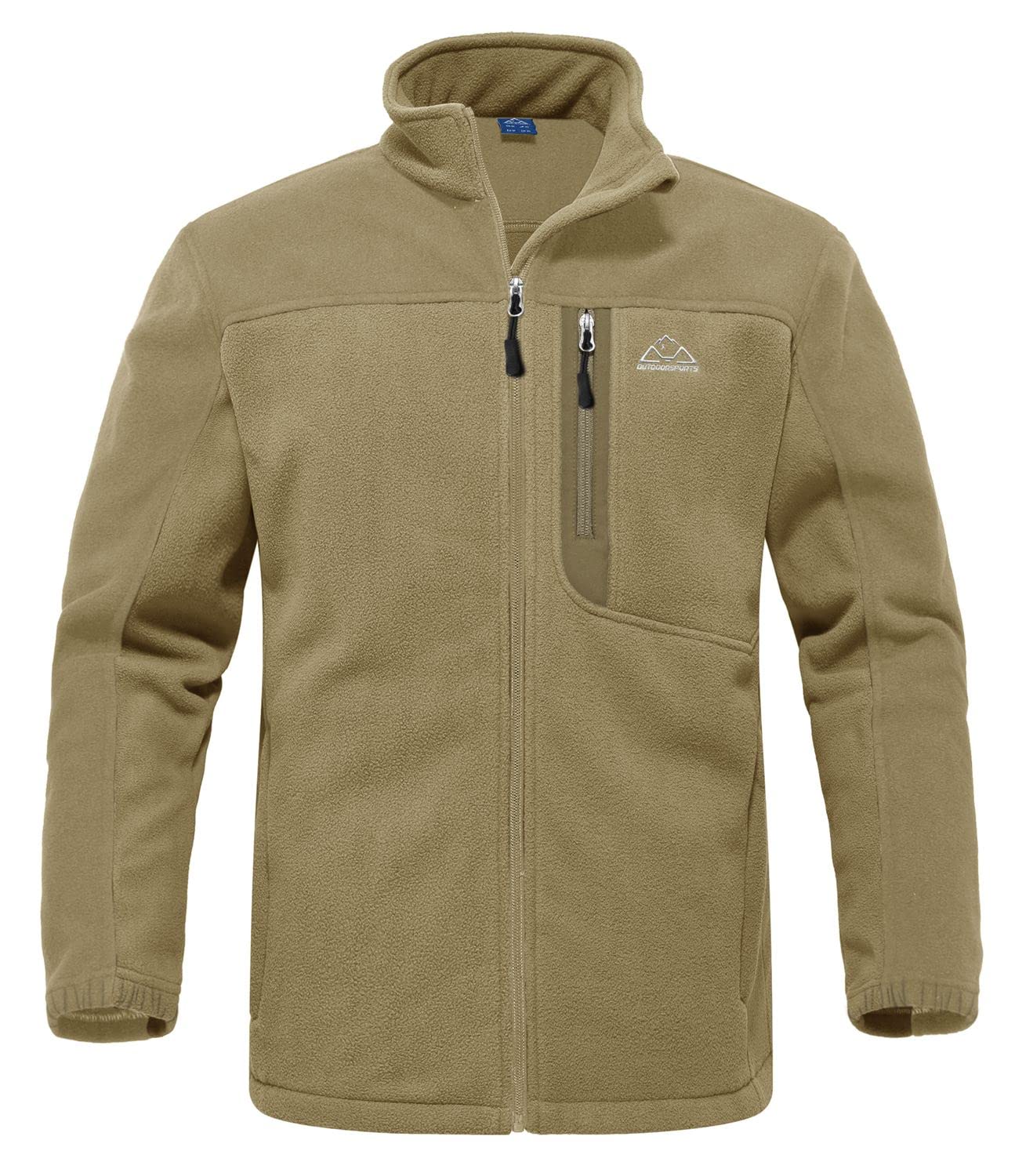
Cool mornings with a forecast in the forties and low fifties are this jacket's window. The Rdruko is a thin, light fleece built for the part of a hike when you are moving and generating heat, not for the part where you are standing around at a summit.

Five pockets, including a zippered chest pocket, is generous at this price, and enough places for a phone, a snack and a map to stay separate. The elastic cuffs seal at the wrist, which matters more than it sounds when you are reaching for a pole in cold air, and the sleeves are genuinely long enough, a common failure at this end of the range.

Where it earns its place is the climb. It is thin enough that you can push uphill without steaming up, and still warm enough for the top of the hill in fall. What it is not is windproof, since there is no membrane and no tight weave here, so a gusty ridge will find you and this is a layer to put a shell over rather than rely on.

Order a size up. The size chart is the weak link on this one, and the cut reads small through the chest and shoulders, so treat the listed size as a starting point rather than an answer, especially if anything is going underneath.

Pros

  • Thin enough to climb in without overheating
  • Five pockets, including a zippered chest pocket
  • Sleeves that are actually long enough
  • Elastic cuffs seal out cold at the wrist

Cons

  • Size chart reads small; order up
Our verdict

We recommend it for cool mornings and fast, sweaty climbs where a heavier fleece ends up tied around your waist by the second mile.

Check Latest Price
4

Best Budget for Men

Amazon Essentials Men's Polar Fleece

91 /100
Traveler Score Outstanding

Key details

Style
Men's full-zip
Fabric
Polar fleece
Pockets
Zippered hand pockets
Check Details on Amazon

This is the least expensive fleece in the group that still earns a place on a hike. Nothing about the Amazon Essentials polar fleece feels like a corner cut: the knit has real loft, the body is long enough to stay put under a pack belt, and the hand pockets close.

We think it is the best value here. Polar fleece is a thicker, loftier knit than the thin micro-fleece that usually turns up at the budget end of a group like this, so it holds warmth better than its weight suggests. Zippered hand pockets are the feature we insist on for a trail layer, and they are here.

What it will not do is stop wind, and no fleece in this group will, so it wants a shell over the top when the weather turns. The zip is the one part that feels budget, taking a couple of tries to seat the slider, but that is a fair trade at this price and the rest of the construction holds up to regular washing.

The long body is the detail that keeps it in rotation. It stays put under a hipbelt instead of bunching at the waist, which is not something every cheap fleece gets right, and it is the jacket we suggest to anyone building a first hiking kit.

Pros

  • Loftier polar fleece than the price suggests
  • Zippered hand pockets on a budget jacket
  • Long body stays under a pack belt
  • Washes well and stays soft

Cons

  • Thin fleece, so a three-season layer only
Our verdict

The least expensive fleece here we would still take on a hike: loftier than its price suggests, with zip pockets and a long body that stays under a hipbelt.

Check Latest Price
5

Best Budget for Women

Amazon Essentials Women's Polar Fleece

89 /100
Traveler Score Excellent

Key details

Cuffs
Elastic cuffs
Fabric
Polar fleece
Pockets
Zippered hand pockets
Check Details on Amazon

Budget fleece usually means a thin, scratchy knit and a zip that fights you the whole way up. This one is not that. The Amazon Essentials women's polar fleece is soft, has real loft, and comes with zippered hand pockets, the feature that matters most on a trail and the first thing cheap jackets drop.

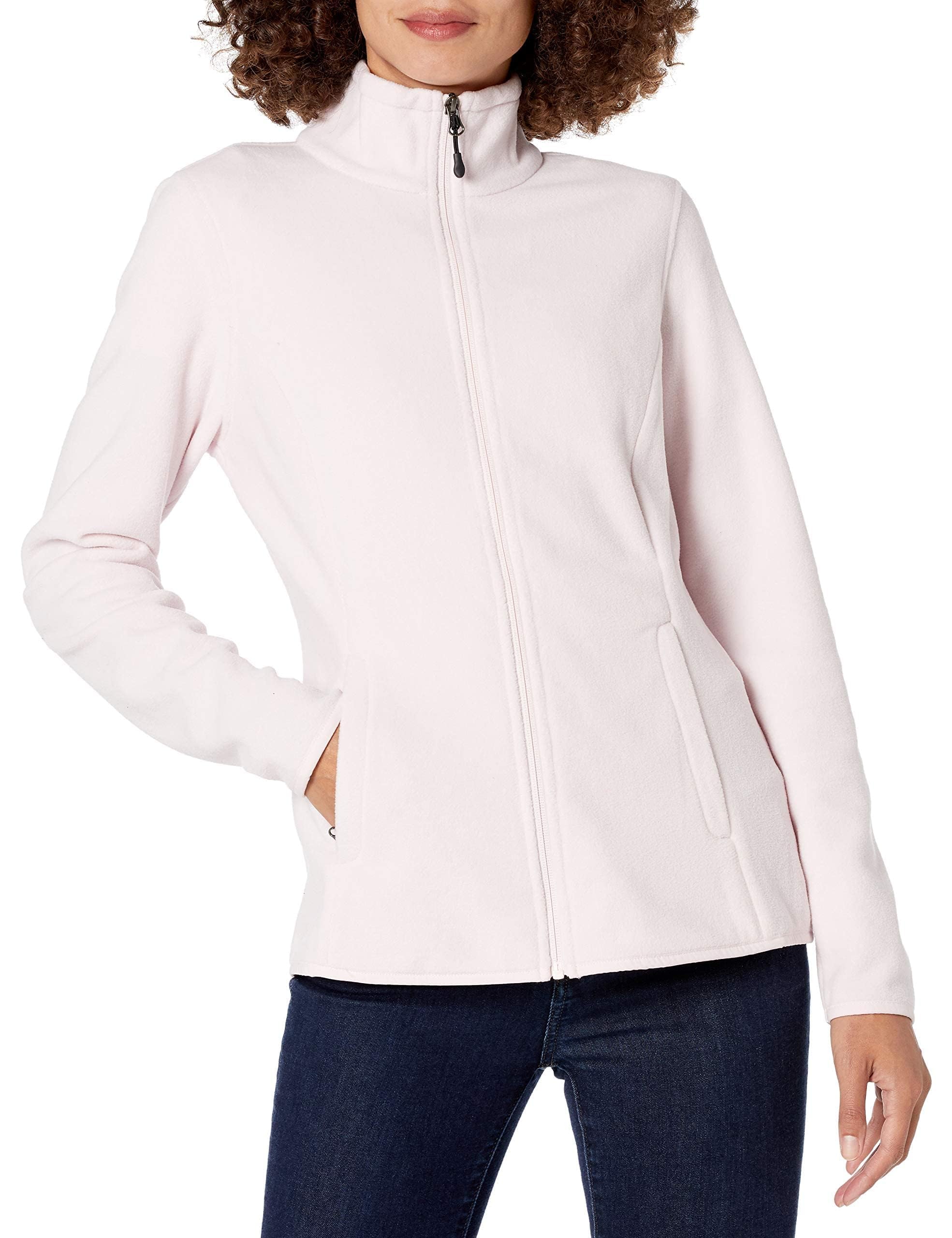
It layers without drama: the classic fit leaves room for a base layer without turning into a tent, and the elastic cuffs sit close enough at the wrist to keep the draft out. Colors are the strong suit, though the pink runs warmer and more orange than the photos suggest.

Sizing is the main thing to plan around. It runs small, so go up at least one size, and two if you want a midlayer underneath rather than a t-shirt.

The zip is the part to watch. On a jacket at this price it is where failures show up first, so run it up and down a dozen times the day it arrives, while the return window is still wide open. Do that, and you have a soft, warm, zip-pocketed fleece that covers most three-season days.

Pros

  • Soft, lofty polar fleece at a budget price
  • Zippered hand pockets for keys and a phone
  • Clean layering fit over a t-shirt

Cons

  • Runs small; go up a size
Our verdict

Our women's budget pick: genuinely soft polar fleece with zippered pockets and a clean layering fit, provided you go up a size.

Check Latest Price
6

Long-Body Coverage

GIMECEN Full-Zip Polar Fleece

91 /100
Traveler Score Outstanding

Key details

Cuffs
Covered elastic cuffs
Length
Below hip
Pockets
Zippered hand pockets
Check Details on Amazon

Length is the reason to look at this one. The GIMECEN falls below the hip, long enough to cover your seat when you crouch over a pack or sit on a cold log, and that is a shape that is scarce among the rest of this group.

The rest is solid: zippered hand pockets, covered elastic cuffs that do not dig in, and a soft, thick polar fleece that is warmer than its weight suggests. It is the kind of layer you leave in the car and end up wearing all weekend.

The fit runs a little large through the body and long in the sleeve, and the fabric lets wind through, so it is a layer for still, cool days rather than an exposed ridge.

The zip is where we hesitate. It is the mixed part of this jacket, with plenty holding up fine and others quitting early, so we rank it below the Columbia and Amazon jackets for a layer you will be opening and closing all day on a climb. For a long, soft fleece in a color you actually like, worn around camp rather than up a scree slope, it is a good buy.

Pros

  • Below-hip length covers your seat
  • Zippered hand pockets and covered cuffs
  • Soft, warm polar fleece

Cons

  • Runs large in the body, long in the sleeve
  • Zip is the weak point
Our verdict

We like it for the length and the softness: a below-hip fleece for camp and cool evenings, as long as you are not counting on the zip.

Check Latest Price
7

High-Output Cold Hikes

baleaf Fleece Running Jacket

93 /100
Traveler Score Outstanding

Key details

Cuffs
Thumb holes
Fabric
Water-resistant, fleece-backed
Pockets
Rear zip pocket
Check Details on Amazon

This is not a fleece in the traditional sense. The baleaf is a stretchy, water-resistant shell with a fleece back, cut close to the body, and for fast hiking in cold weather that combination beats a pile of polyester.

The details are aimed at movement: thumb holes keep your hands covered without gloves, a zip pocket across the back swallows a phone and keys, and there is enough stretch that a full stride does not pull at the shoulders.

We rate it the best of these for high-output cold-weather hiking and the weakest for standing still. The water resistance is light, the fleece back is thin, and it will not keep you warm at a summit lunch the way the Steens Mountain will. If your hike is a steady climb and a quick descent, that trade is worth making.

The cut is deliberately snug and the sizing runs small, so size up if it is going over a midlayer rather than a base layer. And it is a layer for movement, not for warmth: if you want one jacket for a cold start, a long summit break and the walk out, this is not it.

Pros

  • Stretchy and close-cut for fast movement
  • Thumb holes cover hands without gloves
  • Rear zip pocket for phone and keys
  • Light water resistance for damp mornings

Cons

  • Light water resistance only; not a rain jacket
  • Runs small and is cut snug
Our verdict

Buy it if you run hot and move fast; we rate it a shell-first layer for cold-weather effort, not a fleece that keeps you warm standing still.

Check Latest Price

How We Chose and Tested the Best Fleece Jackets for Hiking

We started by pulling together everything we could find in the category and cutting the list down by what the label actually told us: fabric weight, fiber blend, the size range offered, and whether the jacket came in enough colors to be worth writing about. From that pile we bought 12 and handed them to testers of different heights and builds, since a fleece lives or dies on fit.

Testing ran eight months, from late-winter hikes through summer mornings at elevation and back into fall. Every jacket went on at least four day hikes, worn over a base layer and, on windy ridgelines, under a shell. We noted where sweat collected first — usually the shoulder blades and lower back under a pack — and how quickly each one dried once we were back at the car. We zipped and unzipped every jacket with gloves on, watching for snags, split coils, and pull tabs too small to grab. At home we ran a tape down the center-back and sleeve length and compared it with the size chart, then washed each jacket three times and checked the cuffs, underarms, and collar for pilling.

Every jacket also got weighed on a kitchen scale and, where it could, stuffed into its own pocket. Testers swapped sizes to see how much the fit really shifted from one body to the next, and we judged colors in daylight against the listing photos, noting which shades showed lint, dog hair, and trail dust by the end of a hike.

How to Choose the Right Fleece Jacket for Hiking

Pick the weight for the weather you hike in

Fleece comes in thicknesses, and the difference is how much heat it traps against how much you sweat getting it. A midweight like the Columbia Steens Mountain is the versatile choice for spring, fall and cool summer mornings; a thin one like the Rdruko is better for sustained climbs where you generate heat the entire way.

The trap is buying for the worst day you can imagine. A fleece that is too warm comes off in twenty minutes and rides in the pack for the rest of the hike, so match it to the temperature you will be moving in and add a shell for the summit.

Buy the pockets that close

Hand pockets on a hiking fleece hold the things you cannot lose, and an open pocket on a jacket that swings and rides will shed them on a steep descent. Zippered is the standard worth paying for. The Fast Trek II goes further with two internal drop pockets and a small arm pocket; the baleaf puts its zip pocket across the back.

Check placement against your pack, too. A pocket sitting under a padded hipbelt is a pocket you will never open on the move.

Fit for layering, and the sizing trap

A hiking fleece sits over a base layer and under a shell, so it needs room in the shoulders and chest without a tent of fabric at the waist. Sleeve length matters more than most shoppers expect: short sleeves ride up under a pack strap and let cold air in at the wrist.

Here is the trap. Sizing across this category is inconsistent enough that the letter on the label tells you very little. Go by the chest measurement and by whether you plan to layer, and size up when you are between sizes; the Rdruko and the Fast Trek II both read small, while the GIMECEN reads large.

Weight matters in the pack, not on the scale

A fleece spends much of a hike either on your back or in it. Around a pound is the useful benchmark in this group, and both the Steens Mountain and the Fast Trek II sit there, which is light enough that carrying one as insurance costs you nothing.

Anything noticeably heavier is a jacket you commit to wearing all day. If your hike mixes cold starts with warm afternoons, a lighter fleece plus a warmer base layer beats one heavy midlayer you keep stopping to take off.

Fleece is not windproof, so plan the shell

Fleece is a knit pile that traps warm air; it does not block wind, and on an exposed ridge you will feel that within a minute. This is not a fault, it is the same property that lets it breathe on the climb, and every jacket here shares it.

Treat a fleece as the middle of a three-part system: base layer, fleece, shell. Then check that your shell fits over the fleece you buy, not just over a t-shirt, because a shell sized for a base layer alone will compress the fleece and cost you the warmth you paid for.

Frequently Asked Questions

Final Verdict

The Columbia Steens Mountain is what we tell most hikers to buy. It weighs about a pound, it is warm enough for a shoulder-season day, the hand pockets close, and nothing about it asks to be handled carefully. That combination is the whole job of a hiking midlayer.

Choose the Fast Trek II instead if you want a women's cut with a waist cinch and five pockets, and the Rdruko if your hiking is fast and your weather mild, since it is the layer that stays out of your way on the climb.