Best Car Bike Racks of 2026

The first five miles with bikes on the back are the tensest miles of any trip. You keep checking the mirror, listening for a rattle, wondering whether the strap you tugged twice is actually holding. What you want from a rack isn't clever engineering; it's the ability to forget it's there. We installed 12 racks over eight months, on hatchbacks and pickups alike, to find the ones that earn that kind of trust.

The first decision is hitch or trunk mount. Trunk racks cost less and fit almost anything with a hatch, but every strap is one more thing to check, and a loose strap is how bikes end up on the pavement. Hitch racks ride steadier and carry more, as long as the receiver matches and the rack folds or tilts — otherwise you're unloading bikes just to reach the cooler.

The picks below are the ones we'd load our own bikes onto, whether that's a quick shuttle to the trailhead or a two-state run with a heavy e-bike on the back.

The Best Car Bike Racks

1

Allen Sports Deluxe 4-Bike Hitch Rack Best Overall
91 /100
Traveler Score Outstanding

Key details

Bike Capacity
4
Hitch Size
2 inches
Rear Access
Mast tilts; arms fold
Carrying Style
Hanging frame cradles
Check Details on Amazon

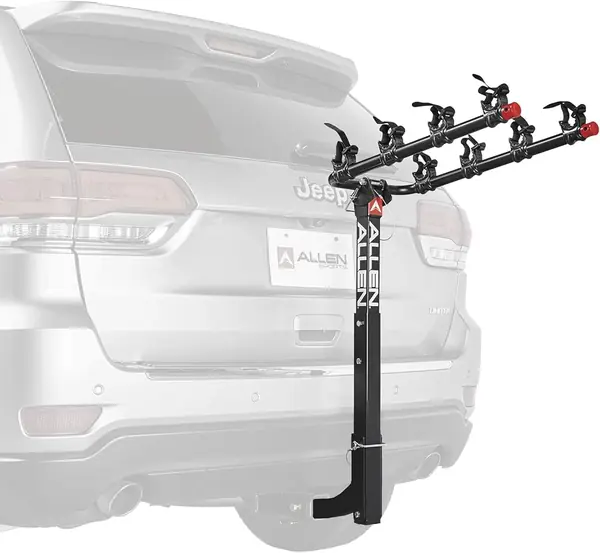
Twice the bikes of the platform racks here that cost more, plus folding arms and a mast that tilts away from the hatch: that's the case for the Allen 542RR-R, and it's why we point most people with a 2-inch receiver to it first.

The tilt is the feature we kept coming back to. Load up, pull the pin, and the whole mast leans back so the liftgate opens without a bike coming off — on a road trip that's the difference between using the cargo area and living out of the front seats. The carry arms fold flat when the rack is empty, and each cradle holds its own frame with a separate tie-down instead of one strap threading through everything.

Four is the number on the box, and it's honest with a caveat. Two adult bikes disappear onto the arms, a mix of adult and kids' bikes is easy, and four full-size frames take some shuffling before everything clears. Assembly is minor, and the no-wobble bolt takes the slack out of the receiver, though it's a bolt you tighten rather than a mechanism that adjusts itself, so give it a check after the first few miles.

One wrinkle worth knowing before you order: the hitch pin hole is sized for a 1/2-inch pin rather than the 5/8-inch pin most locking receivers use, so a locking hitch pin may need the hole opened up. A cable through the frames and around the mast covers security either way.

Pros

  • Carries four bikes for less than the two-bike e-bike racks
  • Mast tilts for hatch access with bikes loaded
  • Individual cradles keep frames from rubbing
  • No-wobble bolt quiets the receiver

Cons

  • Four full-size bikes need careful arranging
Our verdict

For a 2-inch receiver, this is the rack we recommend first: four bikes, folding arms, and a mast that tilts clear of the hatch without unloading a thing.
Check Latest Price
2

Allen Sports Deluxe 2-Bike Trunk Rack Best for Cars Without a Hitch

89 /100
Traveler Score Excellent

Key details

Bike Capacity
2
Load Capacity
70 lb
Mount Type
Trunk straps
Vehicle Fit
Sedans, hatchbacks, minivans, SUVs
Check Details on Amazon

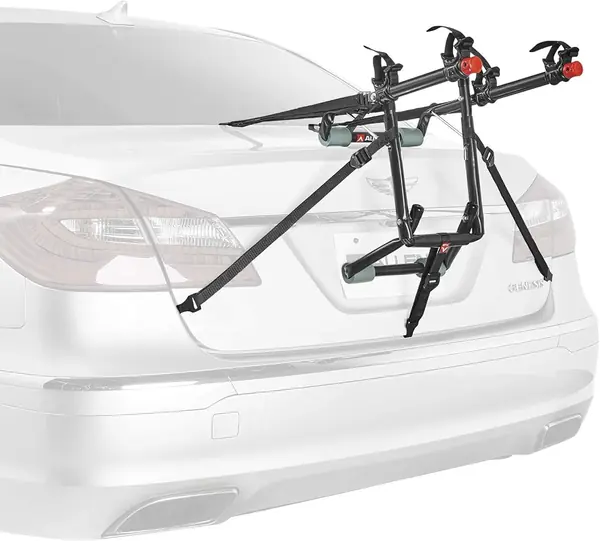
It arrives assembled, weighs next to nothing, and goes onto a trunk lid in seconds — the 102DN-R is the rack we hand to someone who has never carried a bike on a car. No hitch, no roof bars, no toolbox.

What we like most is how little it asks of the car: six straps, padded feet against the trunk lid, and a lower frame that keeps handlebars and pedals off the paint. The trade-off is that a strap rack leans on bodywork, and the hooks that grip the trunk lid's edge can leave marks, so put a scrap of cloth or a square of clear film under each hook before you tension anything.

It wants a trunk lid with a clean, flat edge to hook onto. Sedans and hatchbacks are the easy fit; spoilers and plastic trim are where trunk racks go wrong, so look at how yours closes before you count on it, and check that there's a solid lip at the bottom for the lower straps to pull against.

Off the car it folds down to roughly the footprint of a camp chair, which means it lives in a closet or on a trunk floor instead of permanently on the paint.

Pros

  • Arrives assembled and installs without tools
  • Padded lower frame keeps bikes off the paint
  • Folds flat for closet or trunk storage

Cons

  • Two bikes only, and wide cruisers crowd the arms
  • Strap webbing is the part that ages
Our verdict

The cheapest sensible way onto a car without a hitch: it arrives assembled, straps onto a trunk lid in seconds, and carries two bikes without a single tool.

Check Latest Price
3

Saris Bones 2-Bike Trunk Rack Best Trunk Rack Upgrade

88 /100
Traveler Score Excellent

Key details

Bike Capacity
2
Mount Type
Trunk straps
Vehicle Fit
Fits most, including spoilers
Frame
Injection-molded composite
Check Details on Amazon

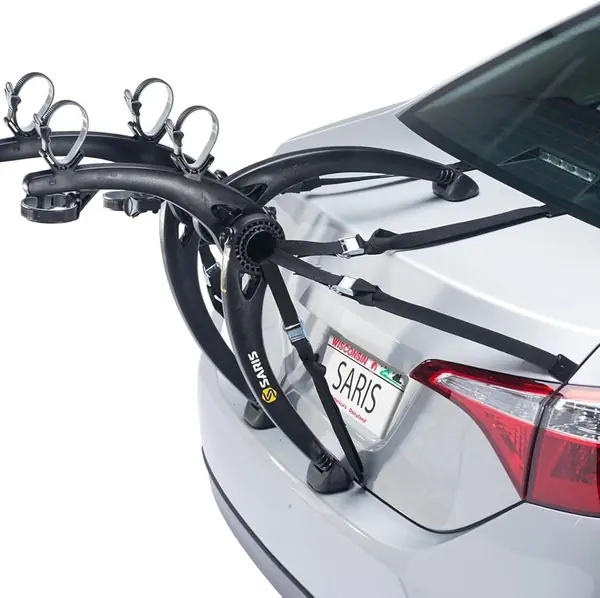
The Bones is the one rack here you can leave in the rain without watching it rust. The arms and legs are injection-molded composite rather than steel, and the arc shape carries two bikes on separate levels so handlebars, pedals, and derailleurs never touch.

It handles cars that defeat most trunk racks, too. The legs are shaped to clear a spoiler, and the rubberized feet spread the load across the trunk lid instead of digging in at four points. Setup is the fiddliest part of owning one: the straps run through spring-buckle and ratchet fittings, and getting the tension even takes a couple of tries the first time.

The separation is the point. Two bikes on different rungs means no handlebar through a derailleur and no paint rubbed off at the contact points, which is the usual tax on a cheap trunk rack. It costs more than the other trunk racks here, and it earns that on materials and vehicle fit rather than capacity.

One thing that caught us out: on a hatchback or SUV, the Bones sits exactly where the backup camera and rear sensors look. Expect to silence the parking alarms while it's mounted — a two-second button press, not a reason to skip the rack.

Pros

  • Composite frame won't rust
  • Arc design keeps the two bikes apart
  • Clears spoilers and protects paint

Cons

  • Top straps can work loose on long drives
Our verdict

The trunk rack to buy when the car matters as much as the bikes: composite arms that won't rust, an arc that keeps frames apart, and a fit that clears spoilers.

Check Latest Price
4

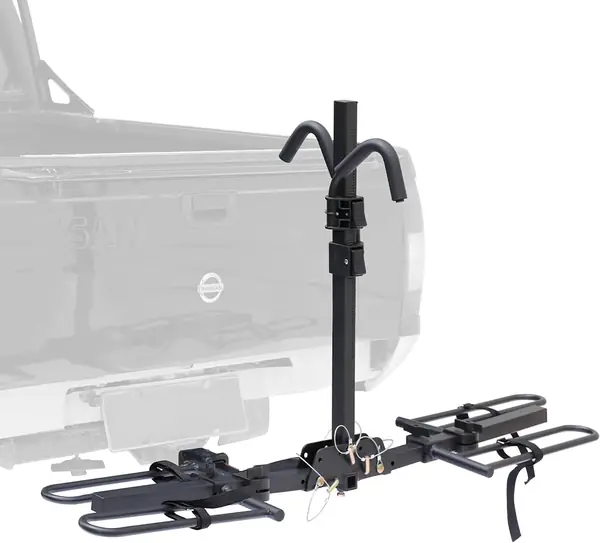
Young 2-Bike Ebike Rack with Ramp Best for E-Bikes

86 /100
Traveler Score Excellent

Key details

Bike Capacity
2
Hitch Size
2 inches
Load Capacity
200 lb
Loading Aid
Included ramp
Check Details on Amazon

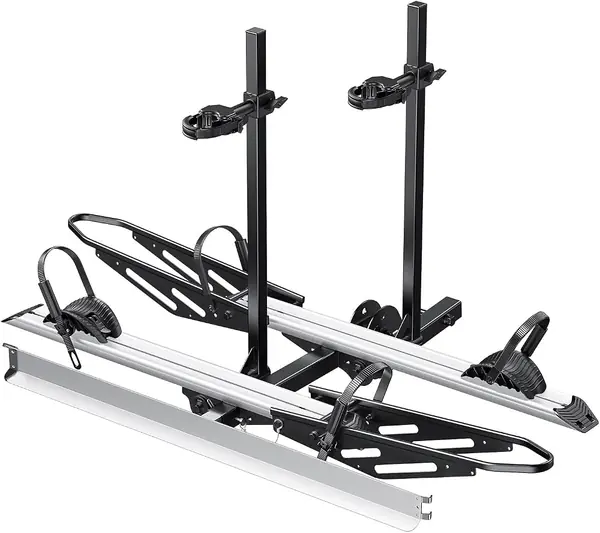
The ramp is the whole idea. Instead of muscling a 65-pound e-bike up onto a hook, you roll it along a channel and drop the front wheel into a cradle — the difference between an e-bike rack you use and one you find excuses not to.

The rest of the design follows the weight. Bikes ride on their tires rather than hanging from a frame, the platform is rated to 200 pounds total, the mast folds, and the ramp clips onto the rack so it's at the trailhead with you instead of in the garage. Fat tires and standard bikes both fit the cradles.

The one thing we minded is the weight of the thing itself. At 56 pounds, sliding it into the receiver the first time is easier with two people, and the instructions are the weakest part of the package — the assembly makes sense once the hardware is sorted, but plan on an evening and check the bolt bag before you start.

For a household with two e-bikes, though, it removes the reason those bikes stay home. Two 65-pound bikes sit well inside the 200-pound rating, the wheel cradles hold them without a strap across a painted frame, and the ramp means you load them the way you wheel them out of the garage.

Pros

  • Built-in ramp stores on the rack itself
  • 200-pound rating covers two e-bikes
  • Holds bikes by the tires, not the frame
  • Folds up when the bikes are off

Cons

  • 56-pound rack is awkward to mount alone
  • Hold-down straps can slip in transit
Our verdict

If your bikes weigh 65 pounds apiece, this is the rack that keeps them on the car: roll them up the built-in ramp and into wheel trays instead of lifting them onto hooks.

Check Latest Price
5

Season Guard 2-Bike Hitch Rack Best Value Platform Rack

85 /100
Traveler Score Excellent

Key details

Bike Capacity
2
Hitch Size
2 inches
Load Capacity
160 lb
Tire Fit
Up to 5-inch fat tires
Check Details on Amazon

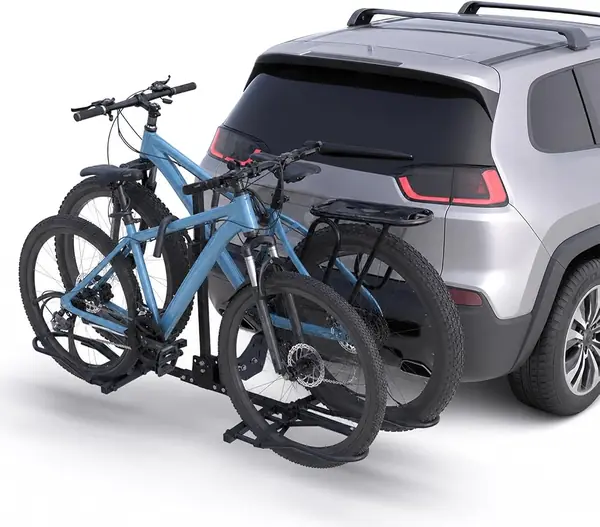
Two bikes, 160 pounds, a mast that tilts away from the tailgate and a frame that folds flat: the Season Guard does the whole platform-rack job for less than the other 160-pound racks here, and nothing about it feels like the cheap option.

The tilt earns its keep more than the marketing suggests. With both bikes loaded, the platform drops clear of the tailgate so you can get into an SUV at a trailhead without unloading anything. At the hitch it stays flat and quiet on a long drive — we noticed the silence more than the hardware.

The caveats are practical ones. Budget about an hour for assembly, and there's no lock in the box, so add a cable and a locking hitch pin if the rack lives on the car. The sliding trays open wide enough for 5-inch fat tires and adjust without tools, a small thing until you're swapping a mountain bike for a cruiser on the same afternoon.

One detail that matters if your setup is unusual: it's rated for trailers and RVs as well as cars and SUVs, so the same rack can move between a camper bumper and a daily driver without a second purchase.

Pros

  • Tilts clear of the tailgate with bikes loaded
  • 160-pound rating covers two e-bikes
  • Fits fat tires up to 5 inches
  • Rated for trailers and RVs as well as cars

Cons

  • No lock included in the box
  • Assembly runs about an hour
Our verdict

The value pick: a tilting, folding platform that carries two e-bikes for less than any other rack here with that combination of rating and hardware.

Check Latest Price
6

TANX 2-Bike Hitch Rack Best for Mixed Bike Sizes

84 /100
Traveler Score Excellent

Key details

Bike Capacity
2
Hitch Size
2 inches
Load Capacity
160 lb
Rack Weight
33.4 lb
Check Details on Amazon

On paper the TANX looks like the Season Guard with a bigger price tag: same 160-pound rating, same two-bike platform, same fold-and-tilt hardware. What the extra money buys is adjustment — trays that slide further apart and cradles that fit a wider range of bikes — and whether that's worth it depends on what you're loading.

The adjustable cradles are the part we rate. They slide to fit a 20-inch kid's bike or a fat-tire e-bike without swapping parts, and the padded hooks clamp the frame without a strap biting into paint. For a household whose two bikes never match, that flexibility is the reason to pick it over a fixed-tray rack.

The instructions are the weak link. Assembly is doable in an evening, but the diagrams are cramped and the order of steps isn't obvious, so sort the hardware first and expect to back up once. Once it's together, nothing about it feels improvised — the trays lock where you set them and the padding on the hooks is thick enough to matter.

At 33 pounds it's light enough for one person to hang on a receiver and heavy enough to feel like equipment rather than a bracket, and the whole platform folds up against the bumper when the bikes are off.

Pros

  • Sliding trays fit kids' bikes and fat tires
  • Padded hooks protect painted frames
  • Folds and tilts for storage and rear access

Cons

  • Play can develop at the tilt joint
  • Two trays only, with no way to add a third
Our verdict

For two mismatched bikes — a fat-tire e-bike and a kid's bike on the same trip — the sliding trays and padded hooks make the TANX the most flexible platform rack here.

Check Latest Price
7

Amazon Basics 4-Bike Hitch Rack Best for Budget Four-Bike Trips

83 /100
Traveler Score Excellent

Key details

Bike Capacity
4
Hitch Size
2 inches
Load Capacity
132 lb
Rack Weight
23.6 lb
Check Details on Amazon

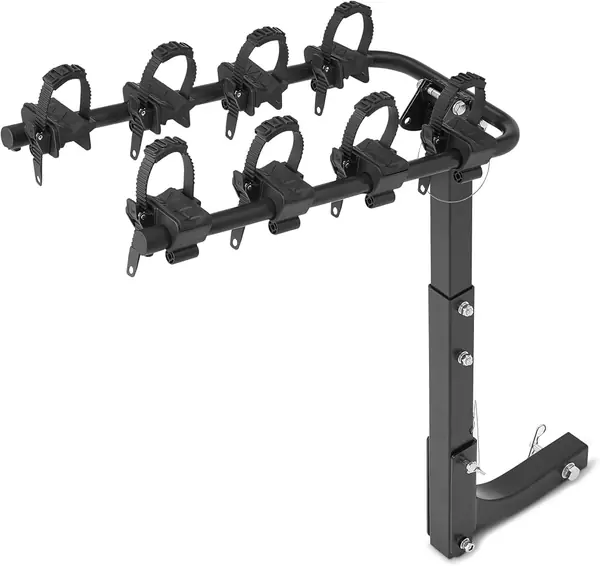
Four bikes on a hitch for less than the Allen costs for the same count — the Amazon Basics rack is the budget answer, and it makes its compromises in obvious places rather than hidden ones.

The frame is powder-coated steel with a folding mast and an anti-rattle fitting at the hitch, and assembly is a short job with the hardware in the box. Bikes hang from their top tubes on padded cradles, and the whole thing folds up out of the way when the car is empty.

Where it gives ground is the hanging design. A step-through frame, a kid's bike, or anything with a swooping top tube won't sit straight on the hooks without a frame adapter bar, so budget for one before you order. We found two adult bikes load in minutes and hold steady, and the padded cradles keep frames from grinding against each other on the way.

Pros

  • Four bikes for less than the other four-bike pick
  • Short assembly with the hardware included
  • Folds flat against the vehicle
  • Anti-rattle fitting at the hitch

Cons

  • 33-pound-per-bike rating rules out e-bikes
  • Four bikes need careful arranging
Our verdict

The budget four-bike hitch rack: it holds four standard bikes for less than the Allen, as long as nobody in the house rides an e-bike or a step-through frame.

Check Latest Price
8

Young 2-Bike Platform Hitch Rack First Platform Rack

82 /100
Traveler Score Excellent

Key details

Bike Capacity
2
Hitch Size
2 inches
Load Capacity
80 lb
Per-bike Limit
40 lb
Check Details on Amazon

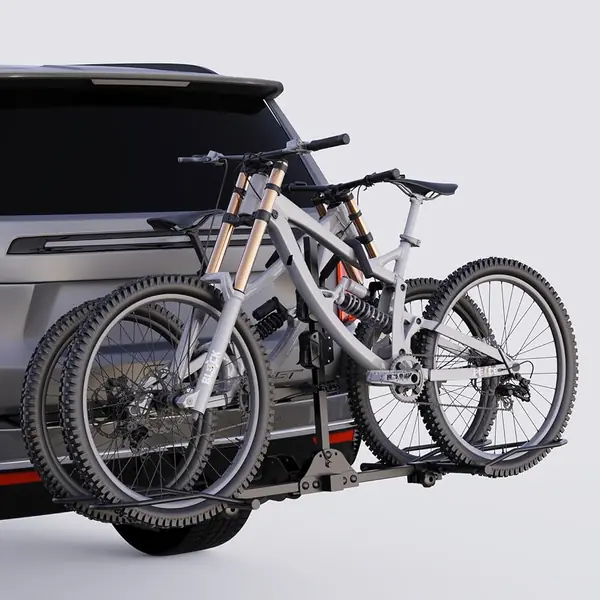
Eighty pounds total is the number that defines this one. The Young platform rack is built for two ordinary bikes — a pair of hybrids, a couple of mountain bikes, a commuter and a cruiser — and the rating says so plainly.

Within that limit it's a tidy piece of kit: a folding platform that carries bikes by the wheels, soft cushioned hooks that clamp the frames without scratching, and adjustable knobs that let you set the trays for different wheelbases. It goes onto a 2-inch receiver in minutes and folds up against the bumper when it's empty.

Expect a little play where the rack sits in the receiver. It's the kind of noise you notice once and then forget, and an aftermarket hitch tightener quiets most of it.

What we didn't expect is the lesson. Once you've rolled two bikes into trays and strapped the wheels down, hanging a bike from a hook by its top tube stops making sense. For a first platform rack on a pair of standard bikes, that lesson costs less here than anywhere else in this group — but 40 pounds per bike is a hard ceiling, and an e-bike blows straight through it.

Pros

  • Wheels-in trays hold bikes without frame contact
  • Folds flat for storage
  • Lowest-priced platform rack here

Cons

  • 40-pound-per-bike limit excludes e-bikes
Our verdict

The cheapest way to try a platform rack: wheels-in trays and a folding frame for two standard bikes, as long as neither one is electric.

Check Latest Price

How We Tested 12 Car Bike Racks, From Driveway to Highway

We started with research, not wrenches: reading listings for both hitch and trunk racks and cutting anything whose receiver size, stated capacity, or cradle spacing ruled it out for a typical sedan or SUV. That left 12 racks. We ran them for eight months — long enough that each one got installed, loaded, and pulled off dozens of times and spent weeks mounted in the rain.

Every rack got the same first test: installed alone in a driveway by someone who hadn't read the instructions twice, with a stopwatch running. We noted where the hardware fought back — bolts that needed a second wrench, straps that wanted three hands. Then we loaded a 34-pound trail bike and a 50-pound e-bike and checked whether the arms and cradles held both without the wheels rotating or the frames rocking.

Driving followed the same route every time: 40 miles of highway at speed, a washboard gravel access road, and a low-clearance parking garage. We watched the mirror for sway, stopped halfway to see whether any strap had gone slack, and folded or tilted each rack with bikes loaded to measure how much hatch access we actually got.

After each trip we ran a hand over the frame pads and paint for rub marks, and left every rack mounted through a few weeks of sun and rain to watch for rust and stretched straps. We also walked away from loaded bikes for a 45-minute lunch to see what would slow a thief down, and on trunk models we kept checking whether the straps crept loose over the hatch seams. A rack that was fussy at any stage had to earn its keep on price, and most didn't.

How to Choose a Car Bike Rack

Start at the Receiver

Walk to the back of the car and look at the hitch opening. A 1-1/4-inch receiver is common on sedans and small crossovers; 2-inch receivers are standard on trucks, most SUVs, and many minivans. Almost every rack here is 2-inch only, so a 1-1/4-inch receiver narrows your choices sharply. Adapters exist, but each one adds a joint that can move, and a rack built for your receiver is the better answer.

No hitch at all means a trunk rack. The Allen and the Saris both strap on in minutes and come off for storage, which is also why they suit a leased car or a vehicle you share.

Hanging or Platform

Hanging bike carriers suspend bikes by the top tube from two hooks and a strap. They're cheaper, lighter, and fold out of the way in seconds, and the frame takes the load. Platform racks cradle the wheels instead: more money, more weight at the hitch, and the right answer for e-bikes, carbon frames, and step-through designs with no top tube to hang from.

If anyone in the house rides a cruiser or a kid's bike, price a frame adapter bar into the hanging-rack option before you decide — it's the accessory people forget until the bike is on the car and hanging crooked.

Match the Rating to Your Heaviest Bike

Racks are rated in total pounds, and modern bikes eat that budget quickly. A 132-pound four-bike rack works out to about 33 pounds a bike; put one e-bike on it and you are over the number before the second bike goes on. Check the per-bike figure as well as the total, and weigh the battery if it stays on the bike.

Remember you also have to lift the rack into the receiver. A 56-pound platform is a two-person install on a tall SUV, and that is a calculation you make every time you take it off.

Tilt, Fold, and Getting Into the Back

Tilt and fold do different jobs, and makers swap the words freely. Tilt drops the loaded rack away from the tailgate so the hatch opens with bikes aboard; fold lays the arms or the platform down for storage and tight parking. Both are worth having on a hitch rack, and neither can be added later, so check which one a rack actually does before you pay for the feature.

Wobble and Paint

Movement at the hitch is the sound of a rack that isn't tight. A threaded no-wobble bolt or an included hitch tightener does more for a quiet drive than any amount of padding, and it's the first thing to check when a rack starts rattling at highway speed.

At the car end, anything touching paint needs something soft between it and the clearcoat. Trunk-rack hooks are the usual culprit, and rubberized feet only help if the trunk lid is clean before you set them down.

Frequently Asked Questions

Final Verdict

If your vehicle has a 2-inch receiver, the Allen Sports 542RR-R is the rack to buy: four bikes, folding arms, and a mast that tilts clear of the hatch without unloading anything. No hitch? The Allen 102DN-R straps onto a trunk lid in seconds for a fraction of the money.

And if the bikes are electric, skip both. The Young rack with the built-in ramp is the one that gets a 65-pound e-bike onto the car without a lift, which is the difference between owning an e-bike rack and using one.