Best Camping Tents of 2026

The trip is usually going fine right up until the rain starts, and then everything depends on a single sheet of nylon. I have lain awake listening for the first drip through a seam, and I have packed up at dawn with a puddle for a floor. A tent that pitches without a fight, actually fits the people and gear you brought, and keeps the weather outside fixes all of that. Our team has pitched 14 tents over the past eight months, from two-person backcountry models to big car-camping cabins.

Here is what first-timers get wrong: capacity numbers are generous. A four-person tent sleeps four only if nobody brought a duffel, so check floor dimensions and peak height instead. Sizing up costs a little weight and money and buys you a lot of goodwill. The picks below earned their spot on easy setup, honest sizing, rain protection that holds through a real storm, and hardware, zippers especially, that survives a second season.

1

Best Overall

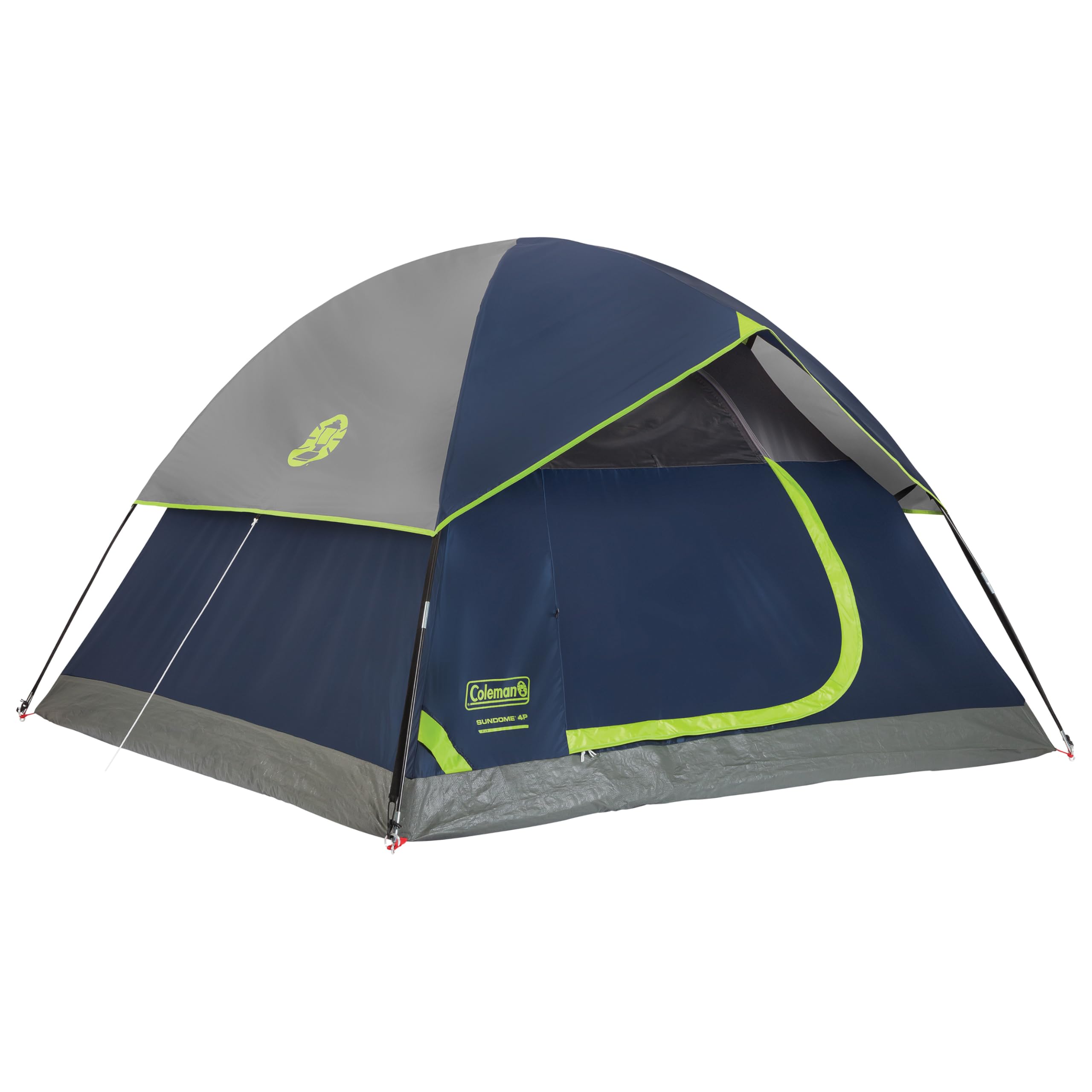
Coleman Sundome 4-Person

93 /100
Traveler Score Outstanding

Key details

Floor Size
9 x 7 ft
Packed Weight
9.1 lb
Pole Material
Aluminum
Sleeping Capacity
4 person
Check Details on Amazon

Four-person is the optimistic part. Nine feet by seven gives a queen mattress with a walkway down one side, or two sleeping bags and a duffel, and that's the honest capacity: three adults is a squeeze and four is a slumber party. We still send most first-time campers here, because nothing else in this set pairs a clip-on aluminum frame and an included rainfly with a packed weight around nine pounds at this end of the price range.

Pitching is the part people underestimate until it's raining. The poles clip to the body instead of threading through sleeves, so one person can push the dome up and stake it out without a helper holding the far end. The listed time is five minutes, and that felt optimistic on our first pitch and generous by the third.

Weather protection is better than the price suggests. The rainfly covers the roof and upper walls, the frame is rated to 35 mph winds, and the low dome sheds gusts that push a taller cabin around. The two big windows and the ground vent matter more than they sound, because condensation, not rain, is what soaks most weekend tents by morning.

One detail worth knowing before you order: the floor is a coated sheet rather than a tub that turns up the walls, so site selection does real work. Pick ground that drains and don't pitch in a hollow, and a cheap groundsheet underneath covers the rest of the gap.

Pros

  • Aluminum poles where rivals use fiberglass
  • Pitches solo on clip-on poles
  • Included rainfly and a 35 mph frame rating
  • About nine pounds packed

Cons

  • No standing room at the peak
  • Single door for a four-person floor
Our verdict

Our default for most campers: aluminum poles, an included rainfly, and a floor plan that sleeps two adults in real comfort, all for less than most tents here.

Check Latest Price
2

Best for Large Families

CORE 9-Person Instant Cabin

93 /100
Traveler Score Outstanding

Key details

Floor Size
14 x 9 ft
Setup Time
2 minutes
Peak Height
78 in
Packed Weight
27.6 lb
Check Details on Amazon

Unfold, extend four legs, done. The Instant Cabin's frame comes pre-attached, so there are no poles to sort and nothing to thread through a sleeve, and the two-minute claim is one we stopped doubting after the first pitch. What that speed buys is a tent that's standing while everyone else is still reading the instructions by headlamp.

Size is the reason to buy it. Fourteen by nine feet is 126 square feet, which means two queen air beds with a walkway between them and gear pushed to the walls, though the nine-person figure assumes sleeping bags laid shoulder to shoulder with no luggage. The 78-inch center height lets most adults stand to change, and the near-vertical walls keep that height out at the edges instead of tapering it away the way a dome does.

Fabric and frame are where it gives ground. The body is 68D polyester and the stakes in the bag are on the light side, so this is a tent that wants a sheltered pitch and a proper stake-out rather than a field in a gale. Seams are where any tent like this gives first, and the fly here is taped and coated to 1200mm, so pitch it at home and hose it down before a trip that matters.

The two-door layout earns its keep with kids. The divider hangs between the doors, so early risers sleep on one side and the people who drove all night get the other, and nobody climbs over anybody at six in the morning. That sounds minor in a listing and stops being minor on the third morning.

Pros

  • Up in about two minutes, solo
  • 126 square feet with a 78-inch ceiling
  • Two doors plus a hanging divider

Cons

  • 27.6 pounds and bulky in the trunk
  • Steel poles can bend in a hard blow
Our verdict

If you're sleeping four or more, this is the one: a two-minute frame, a 78-inch ceiling, and enough floor for two queen air beds.

Check Latest Price
3

Best Value Instant Tent

FanttikOutdoor Zeta C6 Pro

89 /100
Traveler Score Excellent

Key details

Floor Size
10 x 9 ft
Setup Time
60 seconds
Peak Height
66 in
Water Resistance
1500mm
Check Details on Amazon

Of the instant tents here, this is the one that undercuts the rest. You give up floor and a foot of ceiling against the big CORE cabin, and in exchange you get a tent one person can walk out of the car and have standing in about a minute. Sixty seconds is the claim, and the pre-attached steel frame makes it believable.

Ten by nine feet is 90 square feet: two queen mattresses side by side with the door clear, or a family of four on sleeping bags with a duffel in each corner. The mesh ceiling is the detail we didn't expect to care about. On a clear night you sleep under the stars with the bugs on the other side of the screen, and by day it's the vent that keeps the inside from raining condensation.

The door is where the tent asks for patience. The zip runs bottom to top on a single slider and the storm flap sits exactly where the pull travels, so getting in with an armful of gear is a two-handed job; the drainage channel at the door's base helps with rain but does nothing for the flap. Expect that annoyance and the rest is a lot of shelter for the price, which is why it stays near the top of this list.

Pros

  • Instant frame at the low end of the field
  • Mesh ceiling for stargazing and airflow
  • 1500mm fabric with a door drainage channel

Cons

  • No standing height at 66 inches
  • Poles are the weakest part of the build
Our verdict

The instant tent to buy when the big cabins are more than you need: 90 square feet, a 66-inch ceiling, and a frame that's up in about a minute.

Check Latest Price
4

Best Budget Cabin

UNP 6-Person Cabin Tent

89 /100
Traveler Score Excellent

Key details

Floor Size
10 x 9 ft
Peak Height
78 in
Mesh Windows
5
Packed Weight
17.8 lb
Check Details on Amazon

Seventy-eight inches of center height is the whole argument for this tent. At that height you stand to pull on trousers, hang a lantern from the loop, and dress a child without a wrestling match, and it lands in the same price territory as the Coleman dome here, which is the other half of the argument. For standing room at this price, nothing else in the set beats it.

The floor is 10 by 9 feet, so two air mattresses fit with a gap between them and gear along the walls; six adults will not, whatever the label says. Five mesh windows plus a mesh roof panel move a lot of air, which is what stops a tall tent from becoming a condensation trap on a cold night. The steel frame clips rather than threads, and one person can manage it in about ten minutes.

The door zip is the frustration. It's a single slider on a long door, it binds where the fabric flap folds, and the pull needs guiding by hand the whole way round; a second slider at the top would have fixed most of it. Hold the flap clear with your free hand as you zip and it behaves. The rest is ordinary in a good way: basic polyester, adequate stakes, and a price that says so.

Pros

  • 78-inch ceiling at dome-level money
  • Five windows and a mesh roof panel
  • Clips together in about ten minutes solo

Cons

  • Seams can seep in sustained rain
Our verdict

A cabin you can stand up in for about what a mid-size dome costs, if you can live with a fussy door zip.

Check Latest Price
5

Best Dome for Tall Campers

Coleman Skydome 6-Person

84 /100
Traveler Score Excellent

Key details

Door
Wider single door
Floor Size
10 x 8.5 ft
Setup Time
5 minutes
Peak Height
6 ft
Check Details on Amazon

If you're six feet tall and tired of getting dressed lying down, this is the dome that stops it. The walls are nearly vertical, which Coleman reckons is 20 percent more headroom than a traditional dome, and the peak sits at six feet. It's the first dome in this guide where a tall adult stands up in the middle without stooping.

The height is worth the step up from the Sundome, and the door is what makes it practical. It's a wide single door, so a queen air bed slides through instead of folding in half, and the pre-attached poles mean a five-minute pitch without hunting for the pole bag. Eighty-six square feet is comfortable for three and workable for four on sleeping bags.

Weather gear is the quiet over-delivery. The floor turns up at the corners, the seams are inverted, and the fly is a full one, which is the difference between a dome that shrugs off a night of rain and one that doesn't. The interior stays genuinely dark at dawn too, no small thing when the sun is up at six and the kids aren't.

Pros

  • Six-foot peak in a dome
  • Wide door takes a queen air bed
  • Pre-attached poles, five-minute pitch

Cons

  • Single door on a six-person floor
  • Poles can bend on a windy first trip
Our verdict

Six feet of headroom inside a dome, plus a door wide enough for an air bed, is the pick for tall campers who don't want a cabin.

Check Latest Price
6

Best for Big Groups

CAMPROS CP 8-Person

89 /100
Traveler Score Excellent

Key details

Rooms
2 with hanging divider
Floor Size
14 x 9 ft
Peak Height
72 in
Packed Weight
17.6 lb
Check Details on Amazon

CAMPROS sells this as a two-room tent; what you get is one long dome with a curtain hanging from the ceiling. That's not a criticism. The divider is the difference between a tent where four kids eventually fall asleep and one where they fall asleep on time, and it unclips out of the way for the daytime.

The floor is the real story: 14 by 9 feet, 126 square feet, under a 72-inch ridge. Two queen air mattresses fit with room left for a cooler and a folding table, and you can stand at the center to change. The straight walls do more for usable space than another foot of length would.

Pitching takes two people about five minutes, and the pole set is fiberglass, which is where the weight saving comes from and where the durability question sits. A split fiberglass section is a splintered thing, so don't force a bent pole back through a sleeve and don't strike the tent with the poles still tensioned.

Then there's the door. One long single-slider zip that drags on the storm flap all the way round: two hands every time, and a headlamp in your teeth if you're the last one back from the fire. It's a design flaw rather than a defect, and it's survivable with patience. We still recommend the tent, because nothing else here gives a group this much room for the money, but the door is why it sits below the CORE.

Pros

  • 126 square feet under a 72-inch ridge
  • Hanging divider splits the floor in two
  • Sealed seams and a full rainfly

Cons

  • Fiberglass poles can split under load
  • Tight for eight; plan on four to six
Our verdict

The most room for a group in this guide: 126 square feet, a hanging divider, and standing height, with a stubborn door as the entry fee.

Check Latest Price
7

Best Budget Two-Person

Amazon Basics 2-Person Dome

89 /100
Traveler Score Excellent

Key details

Rainfly
Removable
Floor Size
84 x 60 in
Packed Weight
6.11 lb
Sleeping Capacity
2 person
Check Details on Amazon

Two fiberglass poles through sleeves, four stakes, and a rainfly you can leave off on a clear night: this is the simplest tent in the guide, and the one we hand to somebody who has never pitched one. The body is coated polyester with welded seams, and the floor turns up at the edges so a puddle has to work to wick in.

Inside, 84 by 60 inches is a full air mattress with a few inches spare at the foot, plus room for a pack and a pair of boots. One small window and a back vent do enough on a summer night, and a cool-air port lets you run a cord in for a fan or a phone. It goes from bag to standing in about four minutes and comes down faster.

Of the budget tents here, this is the one we buy, and the framing is honest: it's a fair-weather tent. The rainfly is a small one covering the roof and the back window rather than a full storm fly, so a sustained downpour is where the fun stops. For a first tent, a festival field, or a backyard sleepover, that trade is the right one.

Pros

  • Welded seams and a coated body
  • Fly comes off for clear nights
  • Two-pole pitch in about four minutes

Cons

  • Low ceiling, so you sit up rather than stand
  • Door zip catches the fabric flap
Our verdict

The cheapest way into a decent tent: welded seams, a removable rainfly, and a two-pole pitch for solo weekends and festival fields.

Check Latest Price
8

Long Family Stays

UNP 8-Person Tunnel Tent

84 /100
Traveler Score Excellent

Key details

Doors
2
Peak Height
80 in
Packed Weight
32 lb
Sleeping Capacity
8 person
Check Details on Amazon

The six-foot screened section at the front is what makes this tent interesting. It's where you sit with a coffee while the dew dries, where the boots and the dog go, and the reason a family of five can spend a wet afternoon in a tent without anyone climbing the walls. Nothing else here has anything like it.

Behind the screen is a 14-by-9 sleeping area under an 80-inch ceiling, so adults stand upright and a queen mattress leaves room on both sides. Six windows and two doors cross-ventilate the full length, and the 1500mm coating over steel legs is a step up in weather gear from the budget cabins. It is also a lot of tent: 32 pounds, and a bundle that wants two people to move it.

Setup is the trade. Eight steel poles and color-coded sleeves go together in about fifteen minutes with two people, and the instructions assume you've done it before, so the first pitch in the dark is not the time to learn. The frame also depends on the stake-out: 19 stakes and eight guylines ship for a reason, and the tunnel won't hold its shape until they're in.

We think of it as a base-camp tent rather than a weekend one, because it rewards a site you'll stay at for four nights and punishes a one-night stop. Long-term history is the caveat: there's less of it behind this tent than behind the Coleman and CORE picks. What there is reads well, and nothing about the build suggests a fair-weather trip will be the one that disappoints.

Pros

  • Screened porch is a room of its own
  • 80-inch ceiling and cross-ventilation
  • 1500mm coating on a steel frame

Cons

  • Wants a large, open pitch
Our verdict

A fair-weather base camp with a screened porch nothing else here offers: buy it for the space and the view, not for a quick pitch.

Check Latest Price

How We Tested Camping Tents, Rain and All

We built the shortlist from manufacturer specs, gear forums, and thousands of reader reviews, then cut anything whose listed floor area looked optimistic for its stated capacity or whose pole design we had seen fail. Fourteen models made it into the field, and we lived with them for eight months, long enough to see which zippers still ran smoothly after a season of sandy weekends.

Every tent got the same first test: a timed solo pitch in the backyard, from stuff sack to standing, then a teardown timed the same way. We noted whether poles snagged in their sleeves, whether the fly went on straight in a crosswind, and whether the whole thing went back in the bag without a wrestling match. Then we laid sleeping pads side by side, measured the usable floor rather than trusting the listed dimensions, and stacked packs in the vestibule to see what actually fit. We kept a running note on price per usable square foot, so value got judged on space and hardware rather than sticker price alone.

The real work happened on trips: several weekends of car camping, plus one wet week in the Appalachians where it rained for three days straight. Each morning we checked ceilings, corners, and the spots where a sleeping bag pressed against the wall for dampness, watched whether water beaded off the fly or soaked through, and looked for pooling on the floor. Every door and window zipper was run 50 times, including with a loaded pack pushing against it, and we packed and unpacked each tent repeatedly to see where pole joints, stitching, and guyline loops started to give.

How to Choose Camping Tents

Capacity labels are aspirational

Tent makers count sleeping bags laid shoulder to shoulder with no gear in the way. In practice a four-person dome gives two adults a comfortable night, and a six-person cabin is a family of four with duffels. Floor area per sleeper is the number to work with: about 15 square feet each is snug, 20 to 25 is comfortable, and a queen air mattress covers a third of a nine-by-seven floor before anyone's bag comes in.

Weather protection lives in the fly and the seams

A hydrostatic rating in millimeters tells you how much water pressure the fabric resists: 1,000mm handles steady rain, 1,500mm is better, and much below 1,000 is festival territory. The rating isn't the whole story, because fly coverage matters as much. A full fly that stakes out over the doors keeps rain off the walls, while a cap fly leaves the lower panels exposed. Seams and floor come next, and welded or taped seams with a floor that turns up at the edges are what you want. Pitch any new tent at home and hose it down before you trust it on a trip.

Instant frames versus pole-and-sleeve

An instant tent keeps its poles attached to the body, so pitching means unfolding it and extending the legs; the Fanttik and the CORE both go up in about the time it takes to stake a tarp. You pay in bulk and weight, and the leg joints are the parts that give first. A conventional dome with clip-on poles takes five to ten minutes, packs smaller, and is easier to repair. Camp twice a year out of a car and the instant wins; carry the tent or keep it for a decade and the dome does.

Height, shape, and standing room

Peak height is the specification nobody checks and everybody notices. Under about five feet you dress lying down; six feet in a dome means standing only at the center; 78 inches in a cabin means standing almost anywhere. Shape matters as much as height, because a dome tapers and its usable floor is smaller than the footprint suggests, while near-vertical cabin walls hold their height out at the edges. Tall tents catch more wind, so budget the extra staking time, because the trade is real.

Doors and zips decide how the tent feels at 2 a.m.

The zip is the most-used and most-abused part of any tent, and it's where the cheaper tents here separate from the better ones. Two sliders let you vent from the top without opening the door to the rain, and a storm flap that sits proud of the zip is the difference between a one-handed entry and a two-handed fumble. Count doors on anything group-sized. One door on an eight-person floor means whoever sleeps nearest is on duty all night.

Frequently Asked Questions

Final Verdict

For most people the answer is the Coleman Sundome. Nothing else here puts an aluminum frame, an included rainfly, and a pitch one person can manage together at the sharp end of the price range, and it's the tent we point first-time campers toward without a caveat.

If four people are genuinely sleeping inside, move up to the CORE, where 126 square feet and a 78-inch ceiling change what a family trip feels like. Couples watching the budget should start with the Amazon Basics two-person dome, and anyone staying a week in one place should look hard at the UNP tunnel and its screen porch.