11 Best Backpacking Water Filter of 2026: Balance Speed, Weight, and Reliability

Stuck between a lightweight straw and a fast gravity system? This guide matches the best backpacking water filter to your trail style.

Most backpacking water filters use the same 0.1-micron hollow fiber technology, but real-world performance varies dramatically. Hikers often find themselves frustrated by slow flow rates, leaking pouches, or filters that clog after a few liters of silty water.

The core trade-off is between weight and speed. Ultralight straws save ounces but limit you to direct drinking, while squeeze systems offer faster collection yet often ship with fragile bags. This guide matches each filter to specific trail needs, so you spend less time fussing and more time hiking.

Whether you're a solo ultralight hiker or leading a group camp, the right filter is the one that fits your water volume and patience level.

1

Best Overall

Sawyer Squeeze

95 /100
Traveler Score Outstanding

Key details

Weight
2.5 oz
Cleaning
Backwash
Flow Rate
1.7 L/min
Filtration
0.1 micron hollow fiber
Check Details on Amazon

The Sawyer Squeeze delivers the fastest flow in its line – 1.7 liters per minute when squeezed or hung as a gravity system. Weighing just 2.5 ounces, it packs smaller than most pump filters while offering noticeably quicker filtering than the slimmer Sawyer option. Its adaptable setup lets you squeeze directly into a bottle, hang it for gravity feed, or fit inline with a hydration reservoir.

This setup suits solo and duo backpackers who want to process water fast without the weight of a pump. The included pouches, however, can develop seam tears after extended trail use – a known limitation that many hikers sidestep by swapping to standard Smartwater bottles. For those willing to replace pouches occasionally, the Squeeze remains a lightweight, high-speed primary filter.

💡 Replace supplied pouches with standard 28mm threaded bottles for better long-term durability.

Pros

  • Fast flow rate
  • Lightweight and compacts small for pack storage
  • Multi-mode operation

Cons

  • Included pouches may develop seam tears after moderate use
  • No integrated drinking bottle
Our verdict

For solo and duo backpackers who want the fastest filtering without the wait, the Squeeze delivers – just plan to swap out the included pouches or use Smartwater bottles.
Check Latest Price
2

Best for Virus Protection

GRAYL GeoPress

93 /100
Traveler Score Outstanding

Key details

Weight
15.9 oz
Cleaning
Replace cartridge
Flow Rate
5 L/min (press)
Filtration
Electroadsorption + carbon
Check Details on Amazon

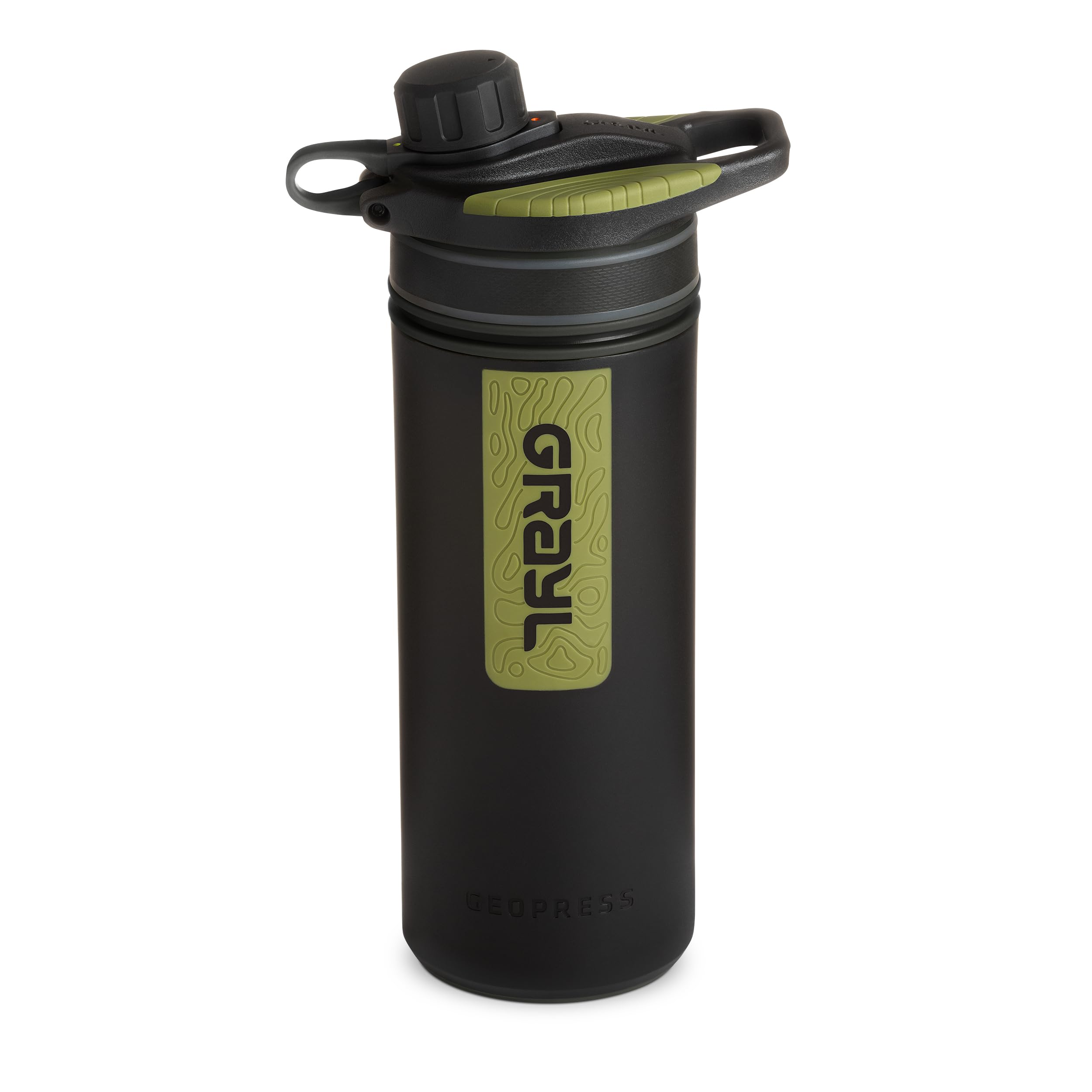
The GRAYL GeoPress is the only all-in-one bottle in this roundup that removes viruses, including norovirus and hepatitis, using an electroadsorption and carbon filter. That capability fills a gap for anyone heading to regions with viral water risks, but the design carries real weight: 15.9 oz, far more than squeeze or straw filters aimed at backpackers. The press mechanism also demands firm upper-body force, especially with cold hands, which limits its appeal for long days on the trail.

💡 Warm the unit or wear gloves when pressing in cold weather to reduce the required force.

Pros

  • Removes viruses, bacteria, and protozoa in a single press action.
  • Fast filtration

Cons

  • At 15.9 oz, it's considerably heavier than most backpacking filters (typically 2-3 oz).
  • Requires significant hand strength to press fully, especially in cold conditions.
Our verdict

Best for international travelers or car campers who need virus protection and can accept the weight and pressing effort – not a fit for ounce-counting backpackers.

Check Latest Price
3

Best Ultralight & Emergency

LifeStraw Personal

96 /100
Traveler Score Outstanding

Key details

Weight
1.4 oz
Cleaning
None
Flow Rate
Filtration
0.2 micron membrane
Check Details on Amazon

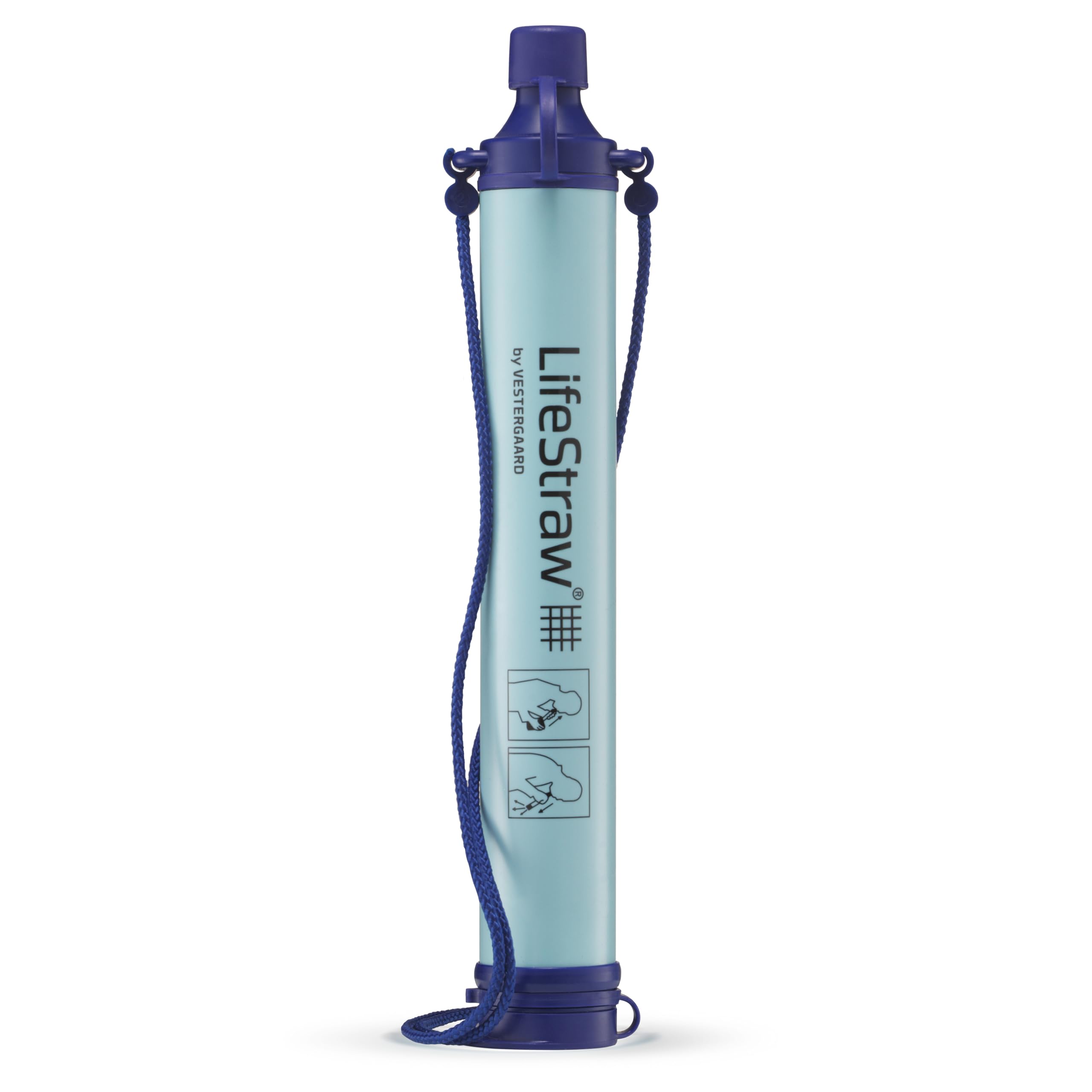
Weighing just 1.4 ounces, the LifeStraw Personal is the lightest water filter in this roundup – a decisive advantage for ultralight solo hikers. It functions strictly as a drinking straw: dip the bottom end in a stream or bottle and suck. There's no way to fill a separate container without an optional adapter, and the flow rate is slow enough that you'll need steady suction. This makes it ideal for emergency kits and short trips where weight and simplicity matter more than water collection speed. For group use or cooking water, a squeeze filter or pump is more practical.

💡 Sip slowly and steadily rather than gulping to maintain flow rate.

Pros

  • Weighs just 1.4 ounces
  • Filters 1,000 gallons before replacement
  • No moving parts or batteries; works immediately when needed.

Cons

  • Can only drink directly from the source
  • Flow rate is slow when sucking; requires steady suction effort.
Our verdict

Best for solo ultralight hikers and emergency kits who prioritize weight and simplicity over water collection speed.

Check Latest Price
4

Best for Group Camping

Waterdrop Gravity

92 /100
Traveler Score Outstanding

Key details

Weight
4.64 oz
Cleaning
Backwash
Flow Rate
0.7 L/min (gravity)
Filtration
0.1 micron + carbon
Check Details on Amazon

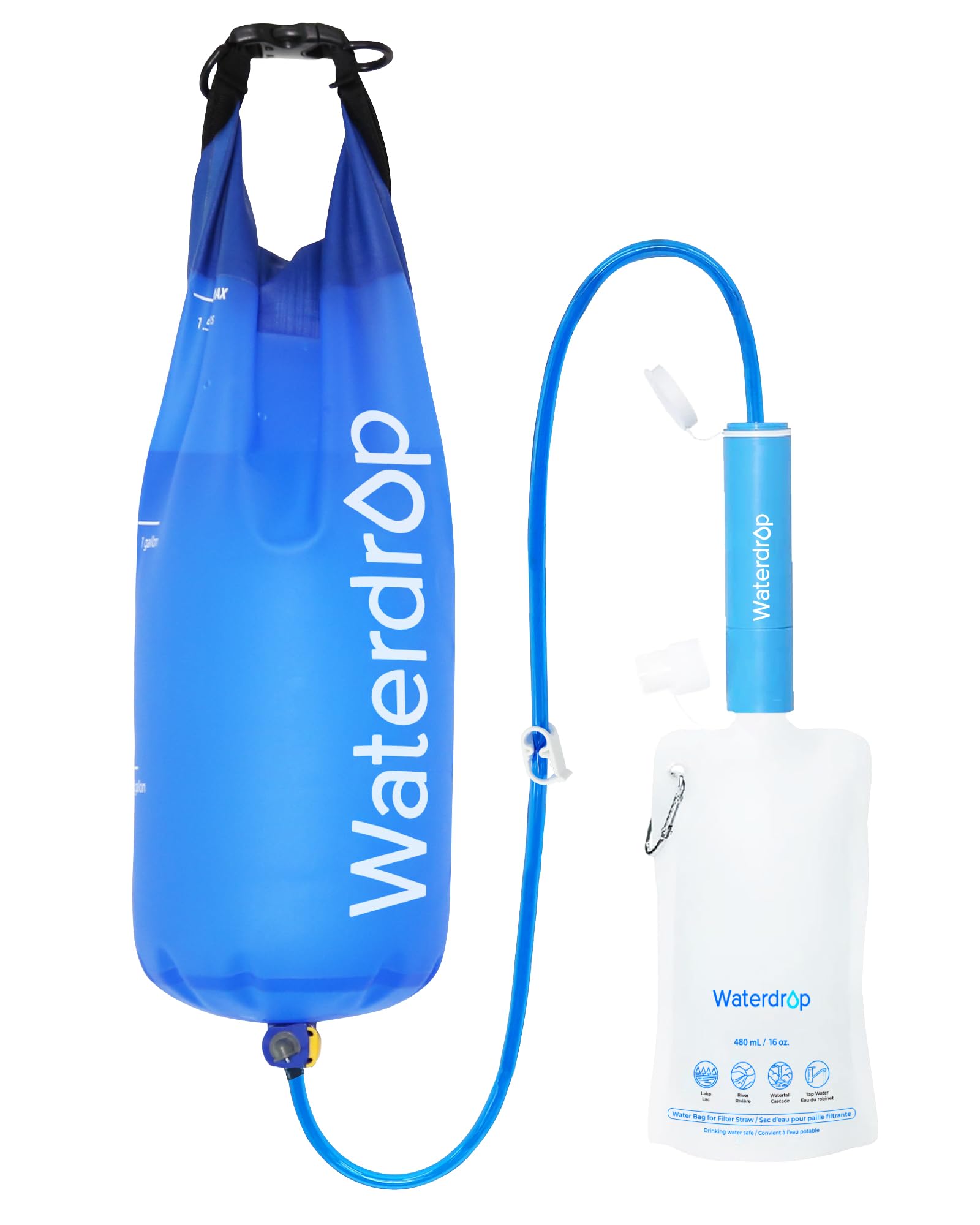
The Waterdrop Gravity sets itself apart from lightweight squeeze systems by prioritizing volume over portability: its 1.5-gallon bag provides enough water for a small group without requiring constant pumping or squeezing. Flow rate depends on head height and water clarity — silty water can slow things down, and the bag needs to hang above your collection bottle for gravity to work. This makes it a better fit for base camps or emergency prepping than for solo fast-packing, where a smaller, lighter filter would be easier to manage on the move.

💡 Hang the bag at least 3–4 feet above your collection bottle for the best gravity flow.

Pros

  • Large 1.5-gallon bag supplies multiple people without refills.
  • Includes backwash syringe and bag for long-term filter maintenance.

Cons

  • Flow slows noticeably with silty water; requires elevation for optimal gravity feed.
Our verdict

A practical base-camp filter for groups that can hang the bag and wait — solo backpackers will find lighter, faster options more appropriate.

Check Latest Price
5

Best Budget Versatile

Sawyer Mini

95 /100
Traveler Score Outstanding

Key details

Weight
2 oz
Cleaning
Backwash
Flow Rate
0.5 L/min
Filtration
0.1 micron hollow fiber
Check Details on Amazon

The Sawyer Mini is the smallest and most affordable filter that screws onto standard water bottles — at 2 ounces and $29, it is a natural fit for ultralight solo trips. The 0.1-micron hollow fiber removes bacteria and protozoa, and it can be used inline with most hydration packs for hands-free drinking. Flow rate runs about 0.5 L/min, noticeably slower than the larger Squeeze model, and the included pouch has been noted to develop leaks over time, but those who pair it with a Smartwater bottle for gravity setup find the tradeoff acceptable. Best for budget-conscious hikers wanting a lightweight backup or thru-hikers who prioritize pack weight over speed.

💡 To avoid pouch leaks, thread the Mini directly onto a standard water bottle — the Smartwater bottle is a popular choice.

Pros

  • Weighs 2 oz and fits in a pocket
  • Screws onto most standard water bottles, hydration packs, or pouches.
  • Backwashable for long filter life

Cons

  • Included pouch can develop leaks over time.
  • Flow rate around 0.5 L/min is slower than larger squeeze models
Our verdict

A strong value for solo hikers who don't need fast group hydration. Pair it with a Smartwater bottle and you get a lightweight gravity system that is hard to beat at this price.

Check Latest Price
6

Bottle-Ready Hikers

LifeStraw Peak

96 /100
Traveler Score Outstanding

Key details

Weight
3.5 oz
Cleaning
None
Flow Rate
2.5 L/min
Filtration
Microfiltration membrane
Check Details on Amazon

The LifeStraw Peak delivers the fastest flow of any straw-style filter (2.5 L/min) and threads onto standard water bottles for easy refills. Its durable construction handles day hikes well. However, it costs more than the original LifeStraw, weighs 3.5 oz, and still lacks virus removal — making it a better fit for travelers who prioritize speed and bottle attachment over pack weight.

Pros

  • Fastest flow rate among straw-style filters
  • Threaded base screws onto standard bottles for hands-free hydration.

Cons

  • Higher price than the original LifeStraw, with added weight and still no virus removal.
Our verdict

Choose this if you want the fastest straw-style flow and need bottle attachment for day hikes, and don't mind the extra weight and cost over the basic LifeStraw.

Check Latest Price
7

Preppers & Families

Practical Surv. 5-Pack

94 /100
Traveler Score Outstanding

Key details

Weight
2 oz each
Cleaning
Backwash with plunger
Flow Rate
Filtration
0.1 micron hollow fiber
Check Details on Amazon

As a lightweight backup straw for car camping or emergency kits, this five-pack offers low cost per unit and long shelf life. However, for active backpacking where you need to fill bottles or thread onto standard containers, the threading can be mismatched, and individual straws limit adaptability. Consider this for group preparedness rather than solo backcountry use.

Pros

  • Multi-pack design provides backup filters for family or group emergency kits.
  • Each straw comes individually sealed with a cleaning plunger for extended filter life.

Cons

  • Threading may not fit all standard water bottles
Our verdict

A practical choice for preppers building emergency supplies for multiple people, but not the best fit for backpackers needing a single all-in-one system.

Check Latest Price
8

Ultralight Runners

Katadyn BeFree 1L

93 /100
Traveler Score Outstanding

Key details

Weight
2.24 oz
Cleaning
Shake clean
Flow Rate
2 L/min
Filtration
0.1 micron hollow fiber
Check Details on Amazon

Weighing just 2.24 oz, the BeFree collapses flat and delivers a fast 2 L/min squeeze flow with a shake-clean membrane. However, the collapsible bottle can develop pinhole leaks, making it better suited for day hikes and ultralight runs than multi-day backpacking where durability is a priority.

Pros

  • Ultralight and collapses flat
  • Fast squeeze flow (2 L/min) and a shake-clean membrane that needs no tools.

Cons

  • In day-to-day use, the bottle can develop pinhole leaks that shorten its lifespan
Our verdict

Best for ultralight day hikers and runners who want the lightest possible filter and are willing to treat the bottle gently.

Check Latest Price
9

Emergency Kits

Logest 4-Pack

94 /100
Traveler Score Outstanding

Key details

Weight
1.48 oz each
Cleaning
None
Flow Rate
Filtration
0.1 micron hollow fiber
Check Details on Amazon

At under $6 per straw, this four-pack is the lowest-cost entry for emergency kits or group camping where each person gets a dedicated filter. Each straw weighs 1.48 oz and fits easily into a daypack or survival bag. Without a backwash tool, these cannot be flushed clean — clogs are possible after heavy use, making them disposable rather than serviceable. For preppers and groups needing spares, the value is hard to beat; backpackers seeking a single, cleanable system should consider a Sawyer Squeeze or LifeStraw with backflush instead.

Pros

  • Four-straw pack at a budget-friendly per-unit cost for family or group emergency use
  • Compact and lightweight at 1.48 oz per straw, easy to stow in multiple bags

Cons

  • No backwash tool included; each straw may clog over time and cannot be cleaned
Our verdict

Ideal for preppers assembling multiple emergency kits or groups wanting each person to have a personal straw; backpackers needing a long-term reusable filter should look elsewhere.

Check Latest Price
10

Traditional Pumpers

Katadyn Hiker

93 /100
Traveler Score Outstanding

Key details

Weight
11 oz
Cleaning
Field-cleanable
Flow Rate
0.95 L/min
Filtration
Pleated glassfiber
Check Details on Amazon

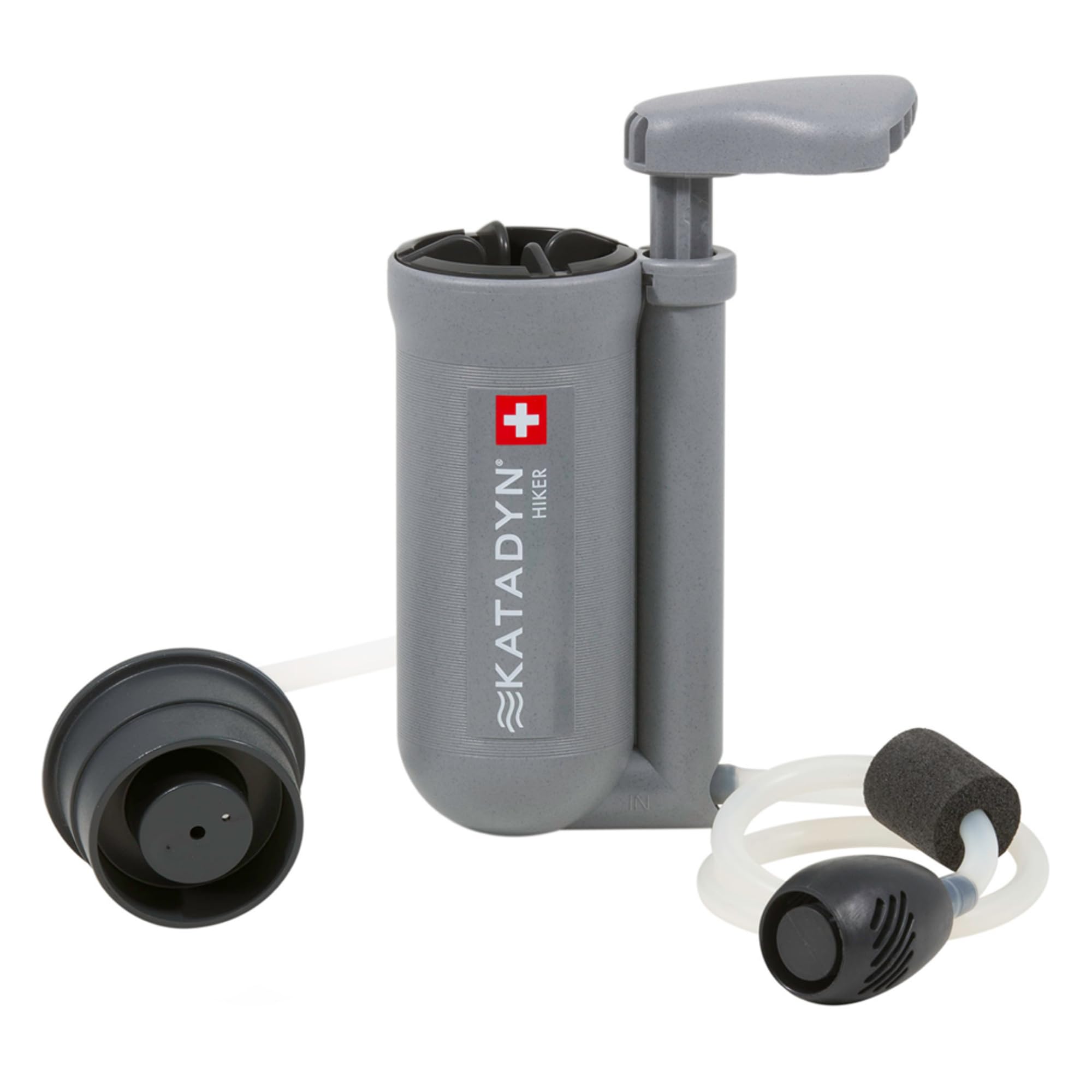
The Katadyn Hiker’s glassfiber filter is field-cleanable and lightweight at 11 oz – practical for backpackers drawing from clear alpine streams. It has a long service record. That said, it lacks activated carbon, so water from murkier sources retains an earthy taste.

Pros

  • Long service life
  • Lightweight for a pump and easy to field-clean.

Cons

  • Replacement filters are costly and may be difficult to source.
Our verdict

For backpackers who prioritize a simple, field-cleanable pump and draw water from clear alpine streams, the Hiker remains a practical choice despite its taste and cost tradeoffs.

Check Latest Price
11

Group Pump Users

Katadyn Hiker Pro

91 /100
Traveler Score Outstanding

Key details

Weight
11.2 oz
Cleaning
Field-cleanable
Flow Rate
1 L/min
Filtration
Pleated glassfiber
Check Details on Amazon

The Hiker Pro offers a transparent pump housing that reveals filter condition, a feature absent from other pumps. Its flow rate suits group use, and the pump action is straightforward. However, the intake hose barb and o-ring seals have shown occasional breakage, and at 11.2 oz it's heavier than squeeze alternatives.

Pros

  • Good flow rate for group use
  • Field-cleanable glassfiber filter extends lifespan without special tools.

Cons

  • Intake hose barb may break under stress; o-ring seals can leak.
Our verdict

Best for a small group that prefers pump mechanics and values seeing filter condition, but check for early breakage.

Check Latest Price

How to Choose

Filtration and Micron Rating

The micron rating determines what contaminants are removed. A 0.1-micron absolute hollow fiber filter stops bacteria and protozoa but not viruses. For virus removal, you need a purifier that uses electroadsorption or chemical treatment.

In practice, most backpackers in the US and Europe only need 0.1-micron filtration. If you travel to regions with viral water risks (norovirus, hepatitis), pay the weight penalty for a purifier like the GRAYL GeoPress.

Flow Rate

Flow rate directly affects how long you spend collecting water. A squeeze filter at 1.7 L/min fills a 1L bottle in about 35 seconds, while a straw at 0.5 L/min takes 2 minutes. For solo hikers, the difference is minor; for groups, it adds up fast.

Faster flow usually comes from larger surface area and bigger pores – but that also means the filter can clog more easily if you don't pre-filter silty water. Gravity systems give you a steady flow while you set up camp, but they rely on elevation and clean bags.

Weight and Packed Size

Every ounce matters when you carry it for miles. Straw filters (1.4–2 oz) are the lightest, but they only work for direct drinking. Squeeze filters add an ounce or two but let you fill bottles and cook. Pump filters weigh 10+ oz and are bulkier.

The trade-off is simple: lighter means less water processing flexibility. If you need to collect water for cooking and a companion, a 3-oz squeeze filter is worth the extra weight over a 1.4-oz straw.

Filter Lifespan

Manufacturers claim huge capacities (100,000 gallons for Sawyer), but that's based on clear laboratory water. In real silty conditions, expect 50–70% of the rated life. Backwashing restores flow, but eventually the fibers clog permanently.

For most backpackers, filter life is rarely a limiting factor – a typical thru-hike uses maybe 200 gallons. Don't pay extra for a high-capacity rating if you only take weekend trips.

Ease of Cleaning

All hollow fiber filters need periodic backwashing or shaking to clear trapped sediment. Straws with no backwash capability (LifeStraw, Logest) are disposable after clogging. Squeeze and gravity filters with syringes or plungers can be restored many times.

Pump filters with field-cleanable elements (Katadyn Hiker series) let you disassemble and scrub, but they require more maintenance time. If you hike in murky water, choose a filter that can be backwashed easily.

Frequently Asked Questions