Best Backpacking Tents of 2026

Backpacking tents ask you to make a deal: shave weight, and you usually give up space, durability, or a good night's sleep. The right one makes that trade-off feel invisible—it pitches without a fight, holds its shape in a gust, and still leaves room for two pads and a dry place to wait out a storm. The wrong one turns every extra ounce into a complaint and every drizzle into a restless night. That's why I care less about spec-sheet bragging rights and more about how a tent behaves when you're tired and the weather is turning.

Over the past seven months, we pitched eight backpacking tents—ultralight two-person models to sturdier three-season options—on weekend trips, in backyards, and through a soggy night in the White Mountains. We weighed each one, timed solo setups, and noted what product photos miss: whether the rain fly covers the corners, how much condensation collects by morning, and whether two sleeping pads fit without a wrestling match. The picks below are the ones we kept reaching for.

1

Best Overall

Naturehike Cloud Up 2

90 /100
Traveler Score Outstanding

Key details

Doors
1 door, 1 vestibule
Floor
82.7 x 51.2 in
Packed Weight
4.3 lb
Waterproof Rating
3000mm+
Check Details on Amazon

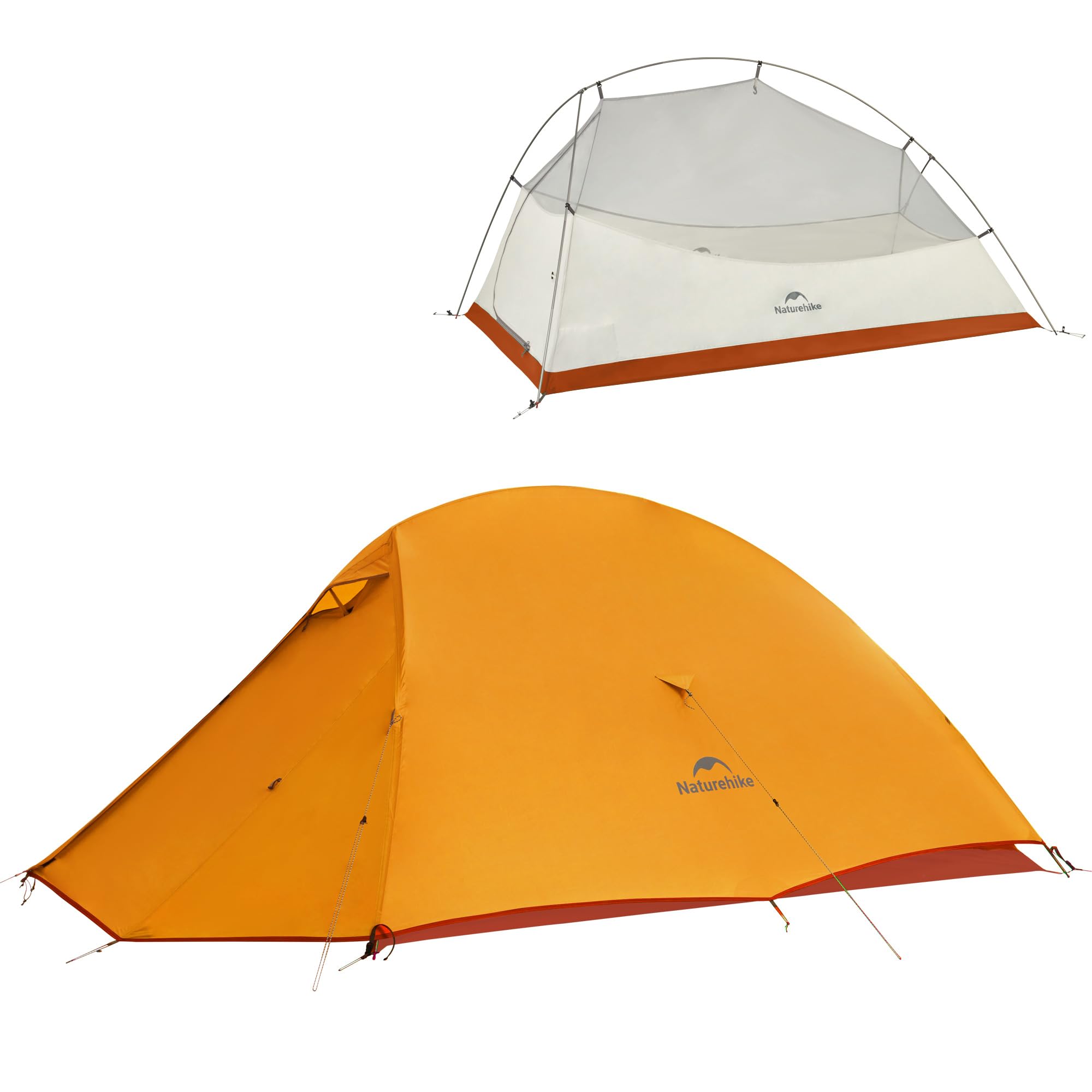
The footprint comes in the bag, and that's the detail that decided it for us. Groundsheets are usually the first thing a tentmaker sells back to you separately, so finding one folded in with the poles and stakes changes what a complete shelter actually costs. The tent is listed at 4.3 pounds, with the footprint adding about eight ounces on top.

What earns the top spot is the fly. A 3000mm coating over a full-coverage polyester shell, with a ventilation window above the front door on this Base version, kept the inner dry through a long, steady rain. Packed, the bundle runs about 16 inches, short enough to drop inside a 40-liter pack beside a sleeping bag instead of strapping it on top.

The floor is 82.7 by 51.2 inches, and the 51 is the number to think about: two 25-inch pads sit wall to wall with nothing left over, so packs end up under your knees or out in the weather. We like it best as a generous solo shelter, or for a couple who sleep close and travel light.

Setup is a clip-on frame that goes up alone in a couple of minutes, and we came to appreciate that on evenings when the light was going. Pitch it once in the yard and the sequence sticks: stakes, pole, clips, fly, done.

Pros

  • Footprint included, so nothing extra to buy
  • 3000mm fly keeps the inner dry in steady rain
  • Packs to a short bundle for a 40-liter pack
  • Two-minute solo setup

Cons

  • One door and a small vestibule for two
  • Fabric tears at stress points in some cases
Our verdict

The best all-round backpacking tent here for two people in three-season weather: light enough to carry, sealed enough for real rain, and sold with its footprint.
Check Latest Price
2

Best Two-Door Value

Night Cat 2-Person

86 /100
Traveler Score Excellent

Key details

Doors
2 doors, 2 vestibules
Floor
82.6 x 55.1 in
Poles
Aluminum
Packed Weight
4.4 lb
Check Details on Amazon

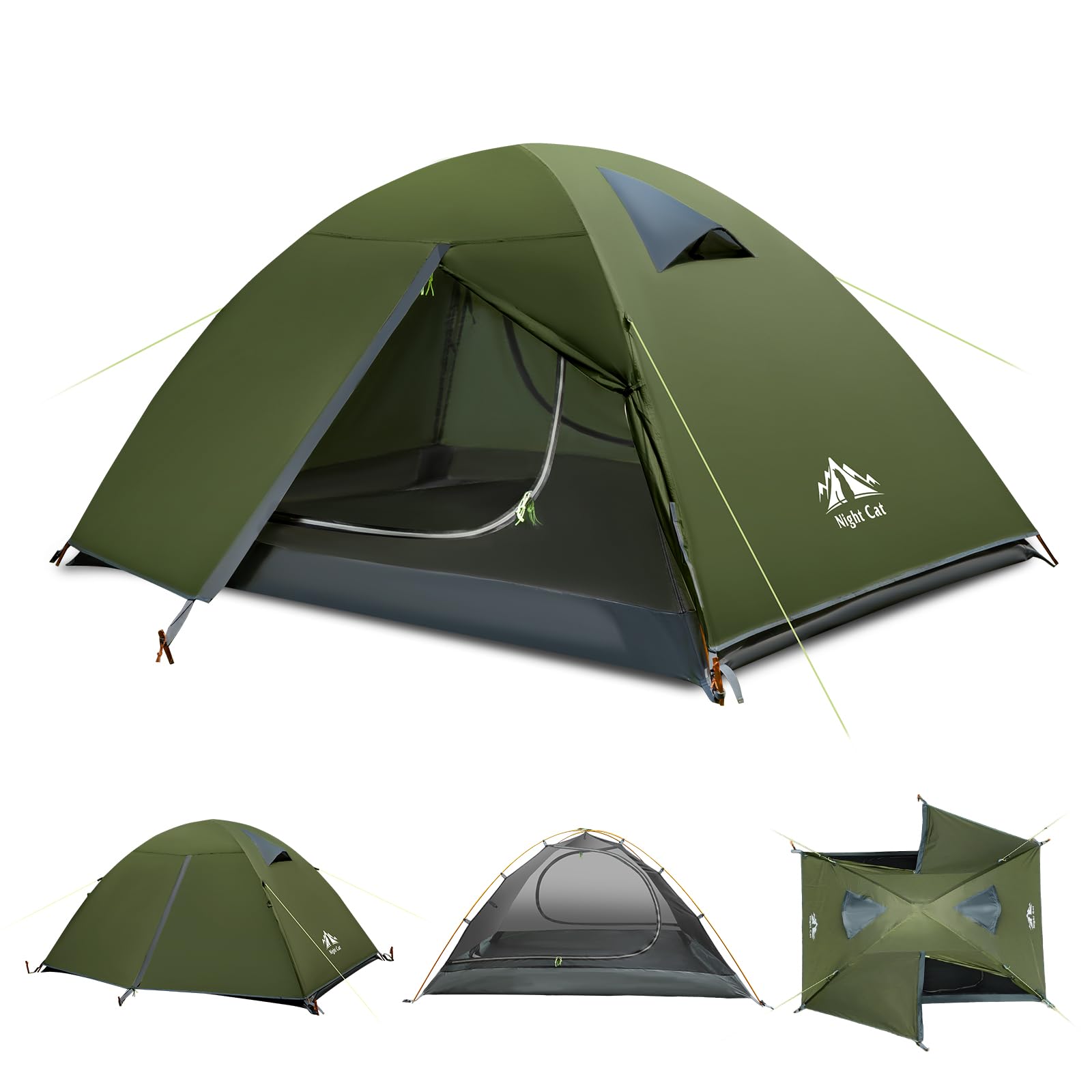
Two doors and two vestibules at 4.4 pounds is the trick this one pulls off, and it's the lightest two-door tent in this group. The two poles are aluminum rather than the fiberglass that turns up on a lot of budget tents, which is the right call for something you'll pitch and strike hundreds of times.

The 55.1-inch floor is where it wins us over. That's a twin air mattress with room down both sides, or two adults who don't have to negotiate every time someone rolls over. Two doors mean separate entries, and two vestibules mean a wet side and a dry side, which matters more once it rains than it does on the product page.

Three-season weather protection is sound: a full-coverage fly over a welded tub floor, with seam tape where it counts. The 4.4-pound carry is honest rather than optimistic, and the package breaks down small enough for a motorcycle pannier or the bottom of a 50-liter pack.

Small things land well too. There's a hanging loop for a lantern, and the stuff sack takes the tent back without a wrestling match at seven in the morning. For a budget two-person shelter, that's a lot of tent.

Pros

  • Two doors and two vestibules
  • 55-inch floor fits a twin air mattress
  • 4.4 pounds with aluminum poles
  • Packs small for a 50-liter pack

Cons

  • Only three guylines supplied
  • Three-season build, no snow load
Our verdict

Buy this if two people want separate doors and a wide floor without paying much: at 4.4 pounds it's the lightest two-door tent here and the easiest budget recommendation.

Check Latest Price
3

Best for Two People and Gear

Forceatt 2-Person

92 /100
Traveler Score Outstanding

Key details

Doors
2 doors, 2 vestibules
Floor
88.6 x 53.1 in
Packed Weight
5.5 lb
Waterproof Rating
3000mm
Check Details on Amazon

The Forceatt is the roomiest two-person tent here that still counts as carryable: 88.6 inches of floor, 53 inches across, and 43 inches at the peak. That's long enough for a tall sleeper to lie flat without a bag pressed against the walls, which is more than several tents here can claim.

Two doors and two vestibules do the work that matters on a real trip: separate entries, somewhere to leave wet boots, and nobody climbing over anybody at three in the morning. The double wall earns its keep too, since condensation forms on the fly rather than the inner, so your bag stays dry even when the tent doesn't.

At 5.5 pounds it isn't a solo tent, whatever the occupancy label says. Split between two packs it comes to under three pounds each, which is how we've carried it, and that arithmetic changes the whole proposition. Weather protection is solid for the money: a 3000mm fly, a welded floor, and a shape that came through a hard night of rain with a dry inner.

Setup runs about three minutes with color-coded poles and reflective guylines, and the reflective line is genuinely useful when you're staking out by headlamp.

Pros

  • 88-inch floor sleeps a tall camper flat
  • Two doors and two vestibules
  • Double wall keeps condensation off the inner
  • Under three pounds per pack when split

Cons

  • Poles have snapped on early trips in some cases
  • No footprint in the box
Our verdict

The pick for two people who want space and a door each: 88 inches of floor and a double wall, as long as you're splitting the 5.5 pounds between two packs.

Check Latest Price
4

Best for Cold Weather

OneTigris Stella 2-Person

90 /100
Traveler Score Outstanding

Key details

Floor
82.7 x 49.2 in
Seasons
4 season
Packed Weight
4.8 lb
Waterproof Rating
3000mm
Check Details on Amazon

The Stella's party trick is an outer layer that lifts off, leaving a mesh inner for warm, dry nights and a sealed shelter when the temperature drops. Most four-season tents commit you to one personality; this one changes clothes.

Sealed up, it's the warmest shelter in this group. A 20D nylon fly with a 3000mm rating and a 40D floor kept us comfortable on frosty nights, and the low profile shrugs off wind that rocks taller domes. The catch is ventilation: close every vent on a mild evening and the inside turns clammy, so we crack a door until the cold really settles in.

Interior space is the honest trade. At 49.2 inches wide and 28.3 square feet it's a palace for one person and a squeeze for two. As a solo winter shelter it's close to ideal.

It's the most expensive tent here, and the premium buys a shelter you can take into November and trust. If your season ends in September, the three-season tents here will do the same job for less.

Pros

  • Warm enough for freezing nights
  • Removable outer for milder trips
  • Roomy for one, with 45 inches of peak
  • Fast pitching at about three minutes

Cons

  • Heavier than the three-season tents here
  • Vestibule barely covers two packs
Our verdict

The cold-weather choice: a four-season shelter that stays warm below freezing and makes a roomy solo tent, provided you can live with the weight and a narrow floor.

Check Latest Price
5

Best Ultralight Solo

Naturehike Star Trail

82 /100
Traveler Score Excellent

Key details

Footprint
Included
Fly Rating
1500mm+
Floor Rating
3000mm+
Trail Weight
2.3 lb
Check Details on Amazon

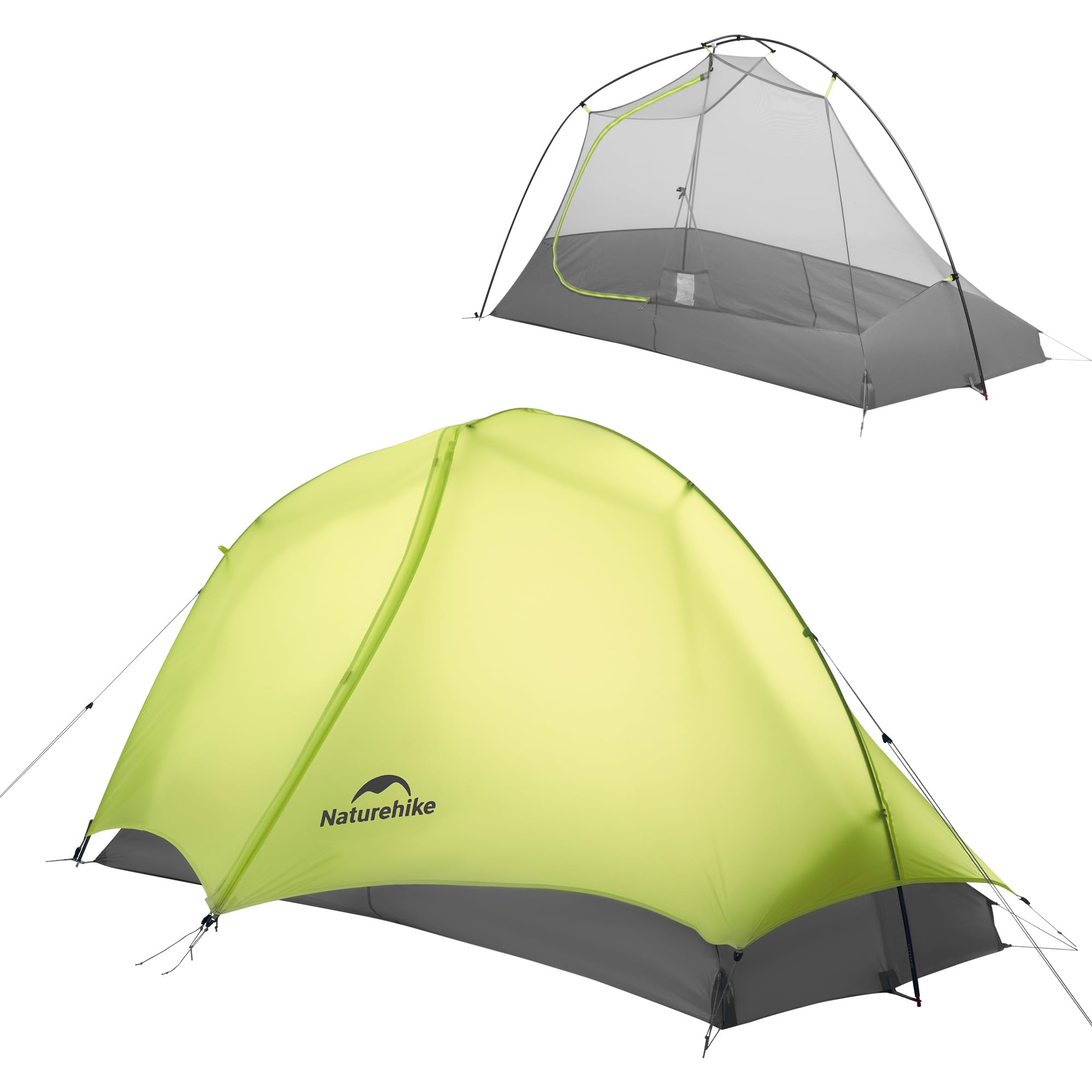
At 2.3 pounds, the Star Trail is the one tent here that earns the word ultralight without an asterisk. The listing covers both a one- and a two-person version, and 2.3 pounds is the solo build, footprint included. On the trail it disappears into the pack in a way that changes how far you're willing to walk.

Lightness like that comes out of the fly. The 10D shell carries a 1500mm rating, the lowest stated figure here, and it's the part of this tent we think about most. The floor is a thicker 20D at 3000mm and the included footprint does real work, so the sensible way to own this tent is to pick a clean, cleared pitch and always use both layers.

Inside, it's a solo shelter with a single door and just enough room for a pad and a pack. Setup is a three-minute job once you've done it twice.

Compared with the Cloud Up 2, it saves about two pounds of carry and gives up a door, five inches of width, and a good deal of weather margin. For a solo hiker counting grams on a three-season route, that's the right trade. For anything with a serious forecast in it, it isn't.

Pros

  • 2.3-pound solo build
  • Footprint included with the tent
  • 3000mm floor under a lighter fly
  • Quick setup at about three minutes

Cons

  • 10D fly is fragile at zips and stake points
  • Tight for sleepers much over six feet
Our verdict

The ultralight solo pick: 2.3 pounds with a footprint in the bag, bought at the price of a thin fly and an interior that asks you to pack light.

Check Latest Price
6

Best for Solo Trips With Extra Room

Kelty Grand Mesa 2

88 /100
Traveler Score Excellent

Key details

Doors
1 door, 1 vestibule
Floor Area
30 sq ft
Trail Weight
4 lb
Waterproof Rating
3300mm
Check Details on Amazon

Kelty's Quick Corners are the kind of detail you notice on a windy evening: the pole ends seat into the corners and stay there while you feed the rest of the frame, so one person can raise the tent without chasing a collapsed pole across the site.

Weather protection is the surprise at this size: a 3300mm fly, full coverage down to the ground, taped seams, and a bathtub floor. Construction is the most consistent of anything here, with color-coded clips, a smooth EZ-Zip vestibule, and stitching that has taken a full season without complaint.

The floor is 30 square feet and 45 inches wide, and that's the boundary of what this tent is for. Two adults fit if they like each other. One adult with a pack, a bear canister, and a change of clothes fits comfortably, which is how we've used it most.

Packed it runs 4.8 pounds, but the four-pound trail weight is real, and leaving the stuff sack and spare stakes at home is a genuine option on a short trip.

Pros

  • Quick Corners make solo pitching easy
  • 3300mm fly with full ground coverage
  • 30 square feet for one person plus gear
  • Four-pound trail weight

Cons

  • Single door and one vestibule
Our verdict

Best as a one-person shelter with room to spread out: the Quick Corners pitch fast, the fly is rated 3300mm, and the 45-inch floor is the honest limit on two adults.

Check Latest Price
7

Two-Door Comfort

Marmot Crane Creek 2P

90 /100
Traveler Score Outstanding

Key details

Doors
2 doors, 2 vestibules
Warranty
Limited lifetime
Floor Area
32 sq ft
Packed Weight
5.29 lb
Check Details on Amazon

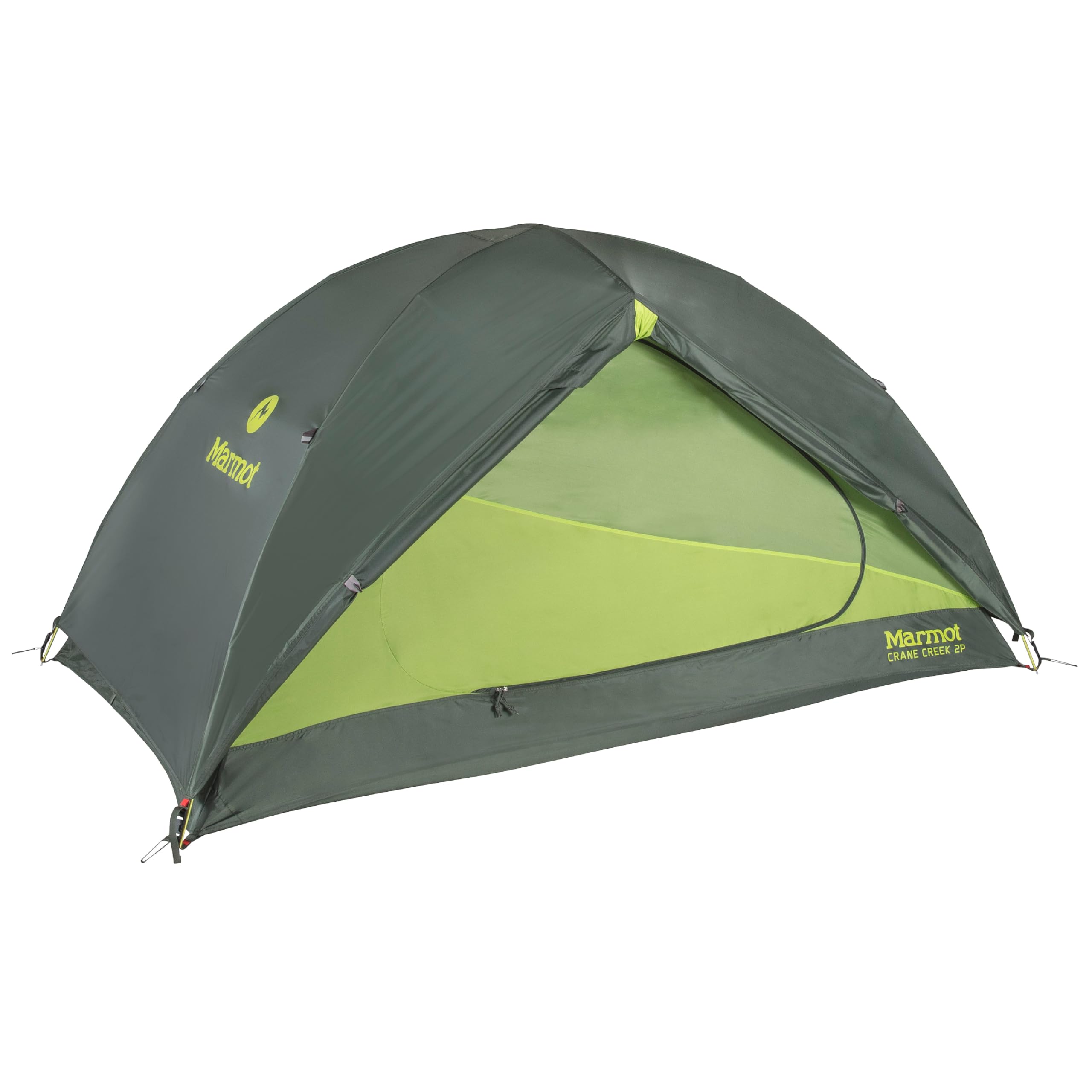
A limited lifetime warranty is unusual on a tent at any price, and it's the first thing we point out about the Crane Creek. That coverage is a big part of why it's on this list at all.

The shelter itself is a proper two-door, two-vestibule design, with no crawling over your partner and wet gear on one side and dry on the other, built on 7000-series aluminum poles with a seam-taped floor and fly. In wind it's among the more planted tents here; the low profile and taut pitch don't wander.

The floor is 32 square feet and 51 inches across, which is two pads and a little gear, no more. At 2400 grams it's honest three-season weight rather than a gram-counting build, and it carries well enough that the number stops mattering on the second day.

Two vestibules are what sell it: a wet fly and a dry pack never have to share a space, and on a three-day trip that's the difference between a good morning and a grim one.

Pros

  • Limited lifetime warranty
  • Two doors and two vestibules
  • Holds a taut pitch in wind
  • Seam-taped floor and fly

Cons

  • Seam separation has shown up inside a season
  • No footprint in the box
Our verdict

Worth it for two people who want two doors and a limited lifetime warranty behind them; the trade is weight and a seam question the warranty partly answers.

Check Latest Price
8

Winter Solo Trips

Underwood Aggregator 1-Person

91 /100
Traveler Score Outstanding

Key details

Floor
86.6 x 31.8 in
Seasons
4 season
Trail Weight
4.4 lb
Waterproof Rating
5000mm
Check Details on Amazon

This is the least expensive way into a genuine four-season shelter here, and it doesn't feel like a compromise where it counts. A PU5000 fly, a sealed inner, and two aluminum poles add up to a tent that stayed dry in rain and warm on a freezing night.

Warmth is the point. The small interior heats up fast with one person in it and the sealed inner holds it there, so on a cold, clear night you sleep instead of lying awake. Condensation is the price, since a sealed one-person tent traps moisture, so we keep the two vents open and wipe the walls down before packing.

At 31.8 inches wide and 86.6 inches long it's a sleeping tube rather than a room: a pad, a bag, your boots, and the pack out under the fly. The 35.8-inch peak means sitting up is a shuffle, not a stretch.

For late-season trips where the forecast is genuinely cold and wet, this beats a three-season tent plus a bigger sleeping bag. That's the case it's built for, and it covers it for less than anything else on this page.

Pros

  • Warm on below-freezing nights
  • PU5000 fly and floor protection
  • 86-inch floor suits a tall camper
  • Simple two-pole setup

Cons

  • 4.4 pounds for a one-person shelter
Our verdict

The cheapest way here into a real four-season solo shelter: warm, sealed and protected to 5000mm, for a late-season camper who accepts a narrow tube and a heavy pack.

Check Latest Price

How We Tested the Best Backpacking Tents

We started with a shortlist of 30 tents from established backpacking brands, then narrowed it by packed weight, floor area, peak height, price, and whether the rain fly and footprint were included. We ended up with eight tents that represent the range most shoppers actually compare: ultralight two-person shelters, freestanding three-season models, and a couple of budget-friendly options.

Testing ran for seven months, from early spring through late fall, across weekend trips, backyard pitches, and one rainy overnighter in the White Mountains. I weighed every tent on a digital scale—packed weight and trail weight—then stuffed each one back into its sack to judge how compact it really was. I timed solo setup and teardown with a stopwatch, including a wet pitch, and watched whether the rain fly went on cleanly or left corners exposed. For water resistance, I hosed down each fly for five minutes and checked for weeping at the seams and damp spots inside.

Inside, we measured usable floor space with two regular sleeping pads and a weekend's worth of gear, noting whether the corners tapered too sharply or the vestibules left room for wet packs. After each trip, we inspected seams, zippers, stake loops, and floor abrasion; a tent only scored well on durability if it still pitched cleanly after repeated use. For ventilation, we compared condensation on the inner walls after cold, still nights and breezy ones. We also factored in what came in the box—stakes, guylines, footprint—against the sticker price, because a cheap tent that needs expensive extras isn't a good value.

How to Choose Backpacking Tents

Weight, and Who Is Carrying It

Two numbers matter and they aren't the same. Trail weight is the body, fly, and poles; packed weight adds stakes, guylines, and the stuff sack. Compare tents on the same figure, then divide by the number of people carrying it. A 5.5-pound two-person tent is under three pounds per pack, while a 4.3-pound tent carried alone is a genuine burden.

The trap is treating a two-person tent as a light tent when you're the only one carrying it. If you hike solo most of the time, buy the lightest solo shelter you can afford and borrow space when a partner comes along.

What a Two-Person Tent Actually Holds

Occupancy ratings count sleeping bodies and nothing else. Do the arithmetic on the floor: two standard 25-inch pads need 50 inches of width, so a 51-inch floor is wall-to-wall pads with no gap, and a 45-inch floor is a one-person-plus-gear tent whatever the label says.

Then look at the vestibule, because that's where packs, boots, and wet shells actually live. A two-door design saves you the crawl over your partner at three in the morning, and it's worth real weight if you camp with someone else.

Waterproof Ratings and Fly Coverage

Coating ratings in this group run from 1500mm to 5000mm, and the number describes the fabric rather than the tent. Seam taping, a fly that reaches the ground, and a bathtub floor decide whether water gets in, so a 3000mm tent with taped seams and full coverage beats a higher-rated one with a skimpy fly.

If a listing gives no rating at all, judge it on coverage and seams rather than guessing at a number.

Poles, Fabric, and How Tents Fail

Aluminum poles bend and spring back; fiberglass splinters, and the splinters find your hands. Fabric weight works the same way: a 10D fly saves real grams and tears on a sharp stake, while 68D and heavier polyester shrugs off a season of abuse.

Most failures happen at the joints and zips rather than in the middle of a panel, so stake the corners, set the guylines before you tension the frame, and clear stones and roots from under the floor.

Ventilation Is What Keeps You Dry

Condensation, not rain, soaks most sleeping bags. Every person in a tent puts moisture into the air overnight, and a sealed shelter traps it against the walls. Double-wall designs move that moisture onto the fly, away from the inner, and mesh panels let it out, which is why a four-season tent can be the wrong choice in July.

Pitch with the vents open, choose a site with airflow rather than a hollow, and don't zip everything shut on a mild, still night.

Frequently Asked Questions

Final Verdict

Buy the Naturehike Cloud Up 2. It carries at 4.3 pounds, seals up with a 3000mm fly, and arrives with the footprint most tents make you buy separately, which is the best balance here of weight, weather protection, and what's actually in the box.

If your trips run into freezing weather, the OneTigris Stella is the warmer and tougher shelter. And if two people want a door each without spending much, the Night Cat 2-Person is the one to order.