9 Best Action Camera for Snowboarding of 2026: Stabilization and Battery That Endure Cold

Find an action camera that keeps footage smooth and battery alive in freezing snow conditions without overpaying for unused features.

Snowboarding demands an action camera that handles two things most shooters don't think about until they're on the mountain: rock-solid stabilization at speed and battery life that doesn't vanish in the cold. Many models perform well in summer hikes or bike rides but fall apart on icy slopes.

The trade-off is straightforward. Budget cameras pack impressive specs on paper but their electronic stabilization can't keep up with fast turns, and their batteries often last under 30 minutes in freezing temps. Premium cameras solve both, but you pay for features you may not need if you only film a few runs a year.

This guide focuses on the real-world performance gap between marketing claims and mountain use. The right choice depends on how often you ride, how much you value horizon-level stabilization, and whether you can swap batteries mid-day.

1

Best Overall

DJI Osmo Action 5 Pro

93 /100
Traveler Score Outstanding

Key details

Battery Life
240 min claimed
Stabilization
HorizonSteady (360°) + RockSteady
Video Resolution
4K120fps
Waterproof Depth
20m no case
Check Details on Amazon

The Osmo Action 5 Pro locks the horizon through full 360-degree spins, a capability the cheaper Action 4 lacks. Combined with a battery that records 3.5 to 4 hours on a single charge, it eliminates spare battery needs during a day on the mountain.

In cold conditions, battery performance stays consistent – no sudden drop-off after an hour. The stabilization handles high-speed carving and landing from jumps without jarring shake. The 1/1.3-inch sensor captures crisp 4K at 120fps with accurate color reproduction even in flat light common on overcast days.

This camera is built for advanced snowboarders who want professional-grade edits without worrying about horizon drift or runtime. The premium price – $80 more than the Action 4 – is justified for frequent riders who need the extra stability and battery. The subject tracking and advanced menus take a few runs to master, but that learning curve is manageable for those willing to explore the settings.

Built-in 47GB storage means no scrambling for an SD card before a trip. Dual OLED touchscreens remain visible in bright snow glare, and the rugged build is waterproof to 20 meters without a case – plenty for slushy conditions or creek crossings.

Pros

  • Horizon stays level through full rotations, even on spins and flips.
  • Battery lasts a full day of riding
  • 4K video with accurate colors and good low-light performance.
  • Built-in 47GB storage reduces setup steps before hitting the slopes.

Cons

  • Subject tracking can lose lock during fast carving
  • Costs $80 more than the Action 4, with the main difference being horizon lock and longer battery.
Our verdict

For snowboarders who film daily or want to capture complex runs without cutting to change batteries, the Action 5 Pro is the camera to buy.
Check Latest Price
2

Best Value

DJI Osmo Action 4

92 /100
Traveler Score Outstanding

Key details

Battery Life
160 min tested
Stabilization
RockSteady+
Video Resolution
4K120fps
Waterproof Depth
18m no case
Check Details on Amazon

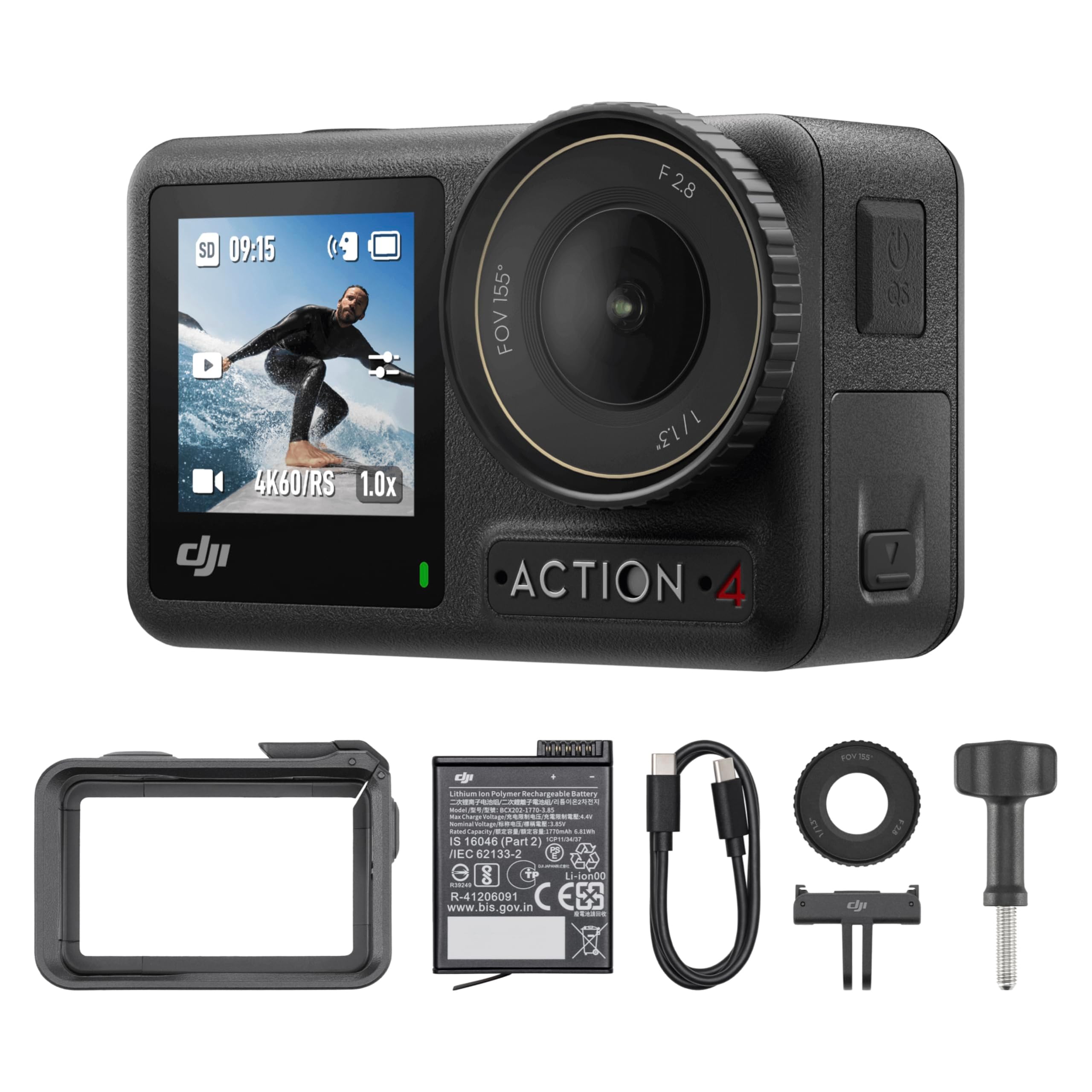
The Action 4 delivers the same RockSteady+ stabilization as the higher-priced Action 5 Pro, but without the premium cost. Unlike the Pro, it lacks HorizonSteady – so the horizon tilts during spins – and its battery life is shorter, rated at 160 minutes versus 240 minutes.

This combo suits snowboarders who prioritize image stabilization and 4K slow-motion over all-day battery life or horizon-lock gimmicks. If you aren't spinning 360° on rails, the horizon tilt won't matter, and keeping a spare battery in your pocket solves the cold-weather range limitation.

💡 Carry a spare battery in an inner pocket to maintain consistent runtime on cold days.

Pros

  • RockSteady+ eliminates shake on rough terrain for smooth snowboarding footage.
  • Video quality stays sharp with natural colors, even in low light at 4K/120fps.
  • Cost-effective alternative to GoPro with comparable stabilization performance.

Cons

  • Battery life drops below the 160-minute claim when temperatures fall below -10°C.
  • Requires smartphone app with data permissions for initial setup and some features.
Our verdict

The Action 4 delivers professional-grade stabilization without the premium features you don't need, at a mid-range price that makes it a strong fit for focused snowboarders.

Check Latest Price
3

Best for 360° Creativity

Insta360 X5

94 /100
Traveler Score Outstanding

Key details

Battery Life
208 min claimed
Stabilization
FlowState + 360° Horizon Lock
Video Resolution
8K30fps 360°
Waterproof Depth
IP (10m+)
Check Details on Amazon

8K 360° capture with an invisible selfie stick effect lets you record a run and later choose any angle – including a stabilized third-person shot that follows you down the mountain. No other action camera can do this. The tradeoff: you are not getting a point-and-shoot experience. Every clip must be reframed in the Insta360 app or desktop software, adding time to your workflow.

This camera fits snowboarders who produce social media content and value unique perspectives over simplicity. If you want to pull a clean follow-cam shot of a carve without a gimbal, the X5 makes it possible. However, editing 360° footage is more involved than cutting standard video, and battery life drops noticeably when recording 8K in sub-freezing temperatures – expect well under the claimed 208 minutes.

Stabilization is strong for a 360 camera – the FlowState horizon lock keeps the horizon level through spins, though it is not as aggressive as DJI’s dedicated horizon-steady modes. Low-light performance is better than previous generations, with usable shadow detail in overcast conditions.

💡 Keep the camera and spare batteries inside your jacket to maintain warmth – 8K recording in sub-freezing temperatures will drain the battery faster than the official rating.

Pros

  • 360° capture lets you reframe shots after recording
  • 8K video delivers crisp footage with good dynamic range, even in low light.
  • FlowState stabilization keeps the horizon level during turns and jumps.

Cons

  • Battery life in 8K or cold conditions can be significantly shorter than the claimed 208 minutes.
  • Editing 360° footage requires additional software and time
Our verdict

For content-focused riders who want to post unique POV shots without worrying about framing, the X5 delivers a perspective no other camera can – but be prepared for a steeper editing curve and shorter battery life on bluebird days.

Check Latest Price
4

Best Budget Bundle

AKASO EK7000 Pro

91 /100
Traveler Score Outstanding

Key details

Battery Life
140 min per battery (2 incl.)
Stabilization
EIS (digital)
Video Resolution
4K30fps
Waterproof Depth
131ft with case
Check Details on Amazon

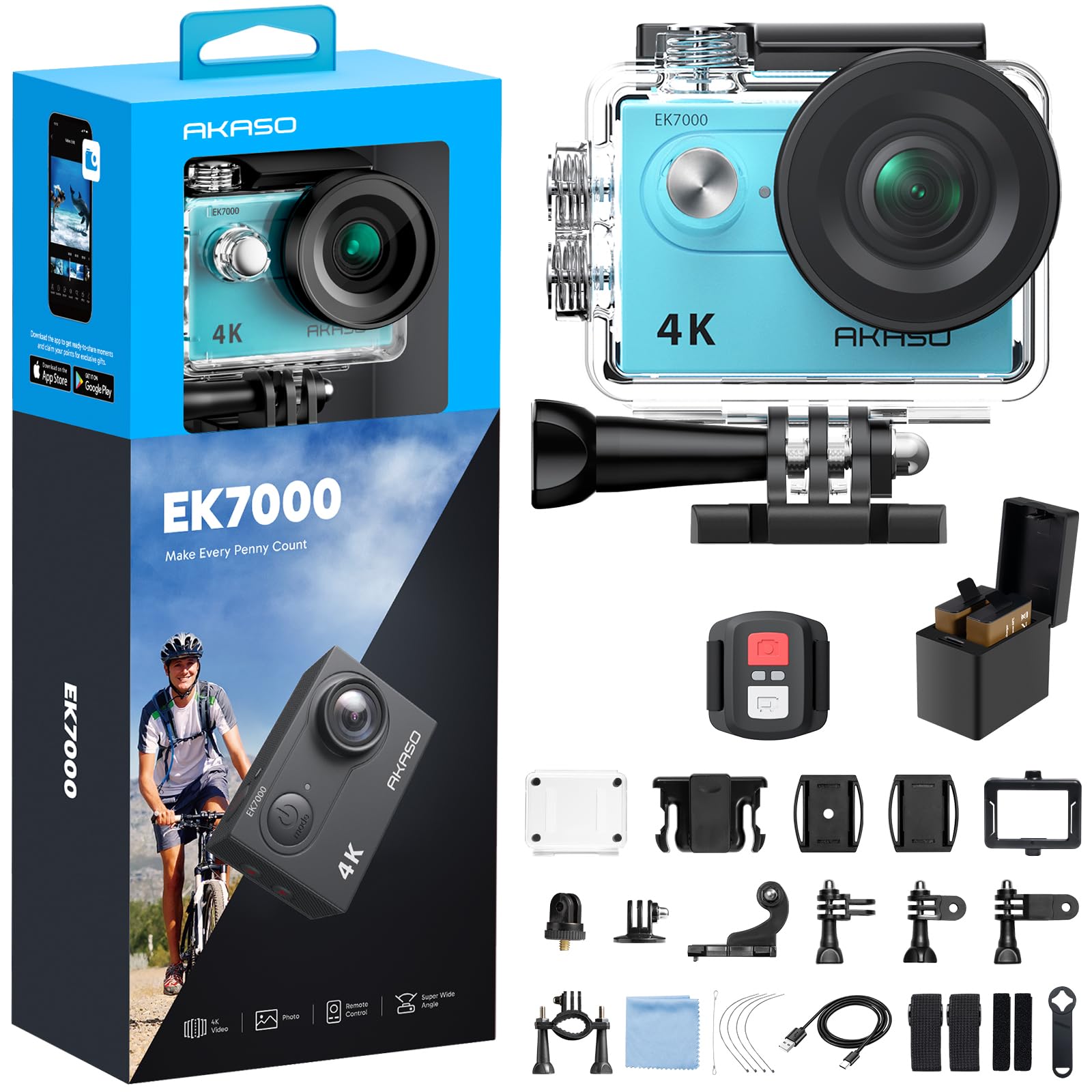
The floating hand grip and two-battery bundle make this the most complete kit at this price point, especially for water-bound activities. It improves on the basic EK7000 with longer battery life and a touchscreen, while undercutting the cheapest front-screen option by including the practical floating handle. The accessory set alone justifies the cost for beginners who don't want to shop for mounts separately.

This camera suits budget-conscious travelers and newcomers who want one box for snorkeling, hiking, and casual family clips. The electronic image stabilization and soft 4K upscaling mean it does not deliver smooth, detailed footage on fast snowboarding runs. For low-speed POV or stationary shots, the video quality is clear enough, but the cold saps battery life quickly, and the stabilization blurs anything with rapid movement.

In cold conditions, battery runtime can drop to around 30 minutes per cell, so the included spare is essential. The touchscreen and remote make operation easy even with gloves, though the remote range is limited. For mixed activities where you alternate between water and land, the floating grip adds confidence at the beach or lake, but on the slopes it is more of a bulk than a benefit.

💡 Keep spare batteries in an inner pocket; cold significantly shortens runtime.

Pros

  • Complete accessory kit with floating hand grip and two batteries saves extra purchases.
  • Touchscreen and remote control make operation straightforward in most situations.
  • Video quality is acceptable for daytime, low-speed recording at this price tier.

Cons

  • Electronic stabilization is insufficient for fast snowboarding or high-speed action.
  • Battery life shortens noticeably in cold weather, sometimes to 30 minutes per battery.
Our verdict

A sensible starter kit for casual water activities and low-speed recording, but not for capturing clean snowboarding runs.

Check Latest Price
5

Best Low-Light & Leica Color

Insta360 Ace Pro 2

90 /100
Traveler Score Outstanding

Key details

Battery Life
2 batteries incl. (capacity not spec'd)
Stabilization
FlowState
Video Resolution
8K30fps / 4K120fps
Waterproof Depth
39ft no case
Check Details on Amazon

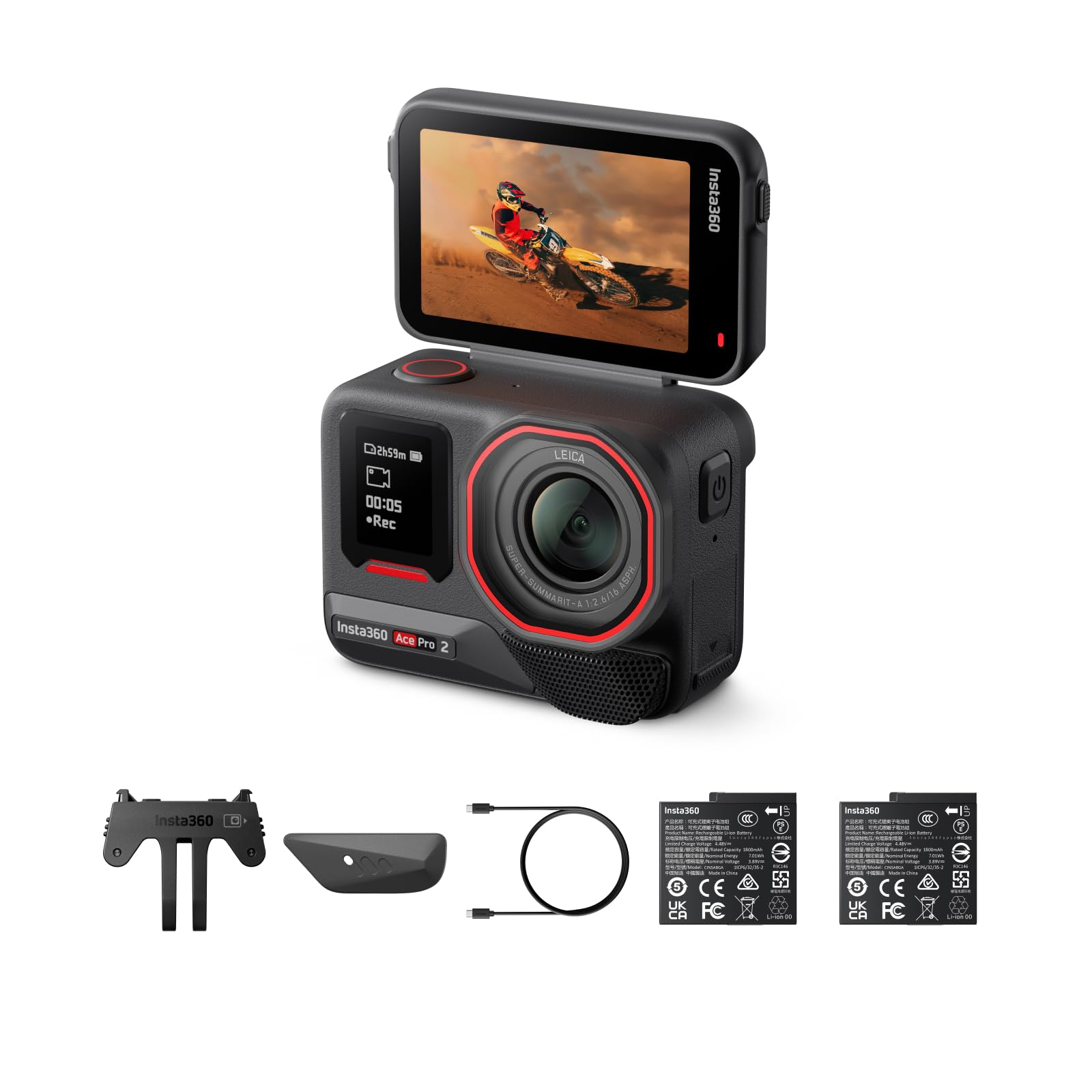
The Ace Pro 2 delivers vibrant, sharp footage with Leica color science and Active HDR that rivals mirrorless cameras. Its PureVideo mode uses AI noise reduction to capture usable video in dim conditions where other action cameras struggle. FlowState stabilization keeps the frame smooth during most runs, though it doesn't lock the horizon during full spins like DJI's HorizonSteady.

This camera suits photography enthusiasts who prioritize color accuracy and low-light quality. The dual battery bundle provides enough power for multiple short runs, making it a capable choice for capturing specific moments rather than a full day of uninterrupted recording.

💡 Swap batteries between runs to keep filming all day.

Pros

  • Leica color science and Active HDR produce vivid footage with natural tones.
  • PureVideo low-light mode captures clean video in dim conditions.
  • FlowState stabilization delivers smooth footage, including underwater use.

Cons

  • Battery life is modest; even with two batteries, managing swaps is necessary for a full day.
  • Some units may overheat and shut down during extended 8K recording.
Our verdict

If Leica color science and low-light performance are your priorities, the Ace Pro 2 delivers — but for all-day snowboarding in cold, the DJI Action 5 Pro is the more predictable choice.

Check Latest Price
6

Ultra-Budget Beginners

AKASO EK7000

89 /100
Traveler Score Excellent

Key details

Battery Life
90 min per battery (2 incl.)
Stabilization
EIS
Video Resolution
4K30fps
Waterproof Depth
131ft with case
Check Details on Amazon

The AKASO EK7000 delivers surprising picture quality in good light and comes with a comprehensive accessory kit including a wrist remote and two batteries. Video at 4K is soft and lacks detail compared to higher-tier options, a trade-off that becomes less noticeable in standard 1080p mode. For snowboarding, the camera's weak stabilization and short battery life create noticeable limitations, making this a better fit for casual snorkeling or hikes where you don't need smooth action footage.

Pros

  • Exceptional value for the price
  • Solid image quality in bright conditions, with clear video and photos for the money.
  • Complete bundle includes remote, extra battery, and multiple mounts

Cons

  • Electronic stabilization is basic; footage can turn shaky during fast snowboarding or biking.
  • Battery life in 4K mode runs only 20-30 minutes, requiring frequent swaps even with the spare.
Our verdict

The AKASO EK7000 is a safe entry-level pick for casual adventures, but if snowboarding is your primary use, plan for a camera with stronger stabilization and longer battery life.

Check Latest Price
7

GoPro Loyalists

GoPro HERO12 Black Bundle

89 /100
Traveler Score Excellent

Key details

Battery Life
90 min at 5.3K
Stabilization
HyperSmooth 6.0
Video Resolution
5.3KHDR / 4K120fps
Waterproof Depth
33ft no case
Check Details on Amazon

The GoPro HERO12 Black Bundle combines HyperSmooth 6.0 stabilization with 5.3K HDR video that keeps footage steady and vibrant on the mountain. The included 50-piece accessory kit adds immediate value for helmet and chest mounts. However, battery life struggles in cold conditions, draining faster than competitors when recording at high resolution. Some units may arrive non-functional or develop issues shortly after purchase, so testing immediately is advised. For consistent cold-weather performance, DJI's alternatives hold the edge. This setup suits GoPro veterans who can manage battery swaps and are comfortable with the ecosystem.

Pros

  • HyperSmooth 6.0 stabilizes footage on rough terrain with minimal shake.
  • 5.3K HDR video produces vivid colors and crisp detail in good light.

Cons

  • Battery life drops sharply in cold weather and high-res recording modes.
  • Some units may be non-functional on arrival or require early servicing.
Our verdict

For GoPro loyalists who already own mounts and accept the battery constraint, this bundle offers strong stabilization and decent value. If cold-weather longevity or worry-free reliability is critical, look at DJI's offerings.

Check Latest Price
8

Ultralight Vloggers

Sixmou i3 Thumb Cam

86 /100
Traveler Score Excellent

Key details

Battery Life
150 min (1080p)
Stabilization
Digital
Video Resolution
4K30fps
Waterproof Depth
40m with case
Check Details on Amazon

Weighing just 35 grams and clipping onto a hat or jacket, the Sixmou i3 is the lightest hands-free camera available. It includes a 64GB card and accessories, making it a good value for casual recording. For snowboarding use, its design prioritizes portability over the stabilization and framing controls needed for action sports.

Pros

  • Extremely compact and lightweight
  • Comes with a 64GB card and essential accessories, offering good value.
  • Decent 4K30 video for casual walk-and-talk recording.

Cons

  • No built-in screen
  • Digital stabilization is too weak for high-speed snowboarding
Our verdict

Works well as a lightweight clip-on camera for casual mountain vlogs, but not for capturing actual snowboarding runs where stable footage and a viewfinder are essential.

Check Latest Price
9

Casual POV Riders

Ahlirmoy 4K Body Cam

81 /100
Traveler Score Excellent

Key details

Battery Life
350 min with charging case
Stabilization
EIS 2.0 (6-axis)
Video Resolution
4K30fps
Waterproof Depth
33ft no case
Check Details on Amazon

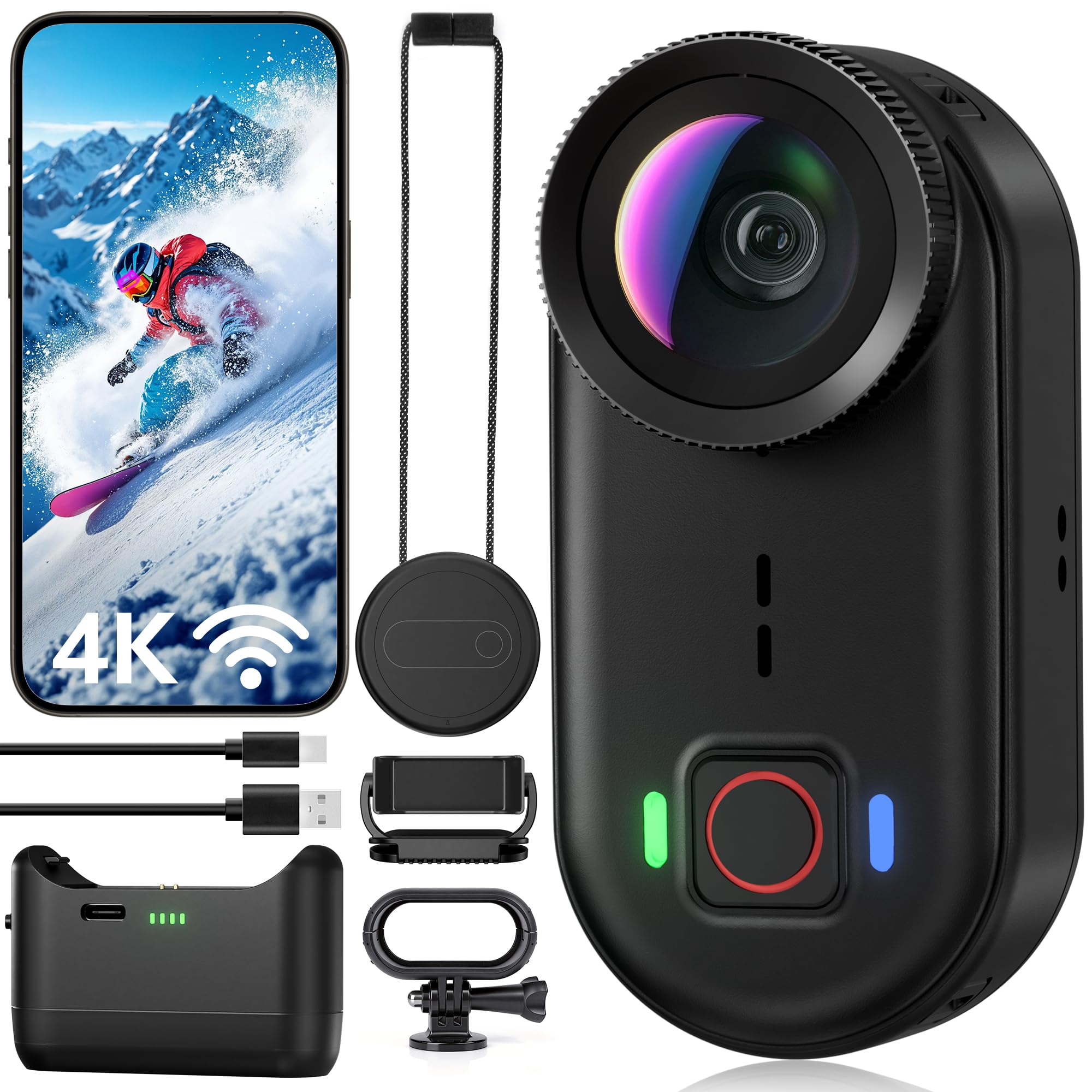
The Ahlirmoy body cam excels as a lightweight daily carry for casual POV clips, thanks to its 350-minute total battery from the charging case and built-in 64GB storage. The magnetic clip and wearable design make it easy to attach to a hat or jacket for hands-free recording. However, the 4K footage is soft and the electronic stabilization falls short for fast motion, so snowboarding or skiing runs will look shaky. Water resistance is limited to 33 feet without a case, which is fine for rain or splashes but not for snow immersion or water sports.

Pros

  • Magnetic wearable design with charging case provides 350 minutes total recording time.
  • Built-in 64GB storage eliminates the need for a separate SD card.

Cons

  • 4K video quality is soft and stabilization is basic, resulting in shaky footage during fast motion.
  • Waterproof to only 33ft without a case, limiting use in snow or water sports.
Our verdict

Best suited for daily POV recording or bike commuting where battery life and convenience outweigh video quality.

Check Latest Price

How to Choose

Stabilization

The most important spec for snowboarding is how the camera handles vibration. Electronic image stabilization (EIS) uses gyroscopes to crop and shift frames, but basic EIS can't keep up with high-speed turns and bumps. DJI's RockSteady and GoPro's HyperSmooth use more advanced algorithms that predict motion, producing smooth footage even on rough terrain.

For advanced riders who spin or jump, look for horizon-leveling stabilization that keeps the horizon line flat regardless of camera rotation. This feature is only available on premium models like the DJI Action 5 Pro and Insta360 X5. Without it, your clips will tilt every time you carve.

Waterproof Depth

Snow is essentially water in solid form, and a camera used for snowboarding will get wet from melting snow or accidental submersion in slush. Most action cameras are waterproof to a certain depth without a housing, but the rating matters. A camera rated for 10m without a case (like the DJI Action 4) is adequate for snow, while a budget camera requiring a plastic housing can fog up or leak if the seal isn't perfect.

The trade-off: cameras with built-in waterproofing are more convenient, but if the battery door seal fails, the camera is done. Cameras with a waterproof case offer more protection but add bulk and can fog in cold weather if not dried properly before sealing.

Video Resolution and Frame Rate

4K at 60fps is the sweet spot for snowboarding. It gives enough detail for slow-motion replays without the file sizes of 8K. Most budget cameras claim 4K but actually upscale from lower resolutions, resulting in soft footage. Look for real 4K sensors (1/1.3-inch or larger) for crisp detail.

Frame rate matters more than resolution for action. 120fps at 4K allows smooth slow-motion of jumps and tricks. Lower-end cameras max out at 30fps, which creates judder when you slow down the clip.

Battery Life in Cold

All lithium-ion batteries lose capacity in freezing temperatures. A camera that lasts 90 minutes at room temperature may die after 20 minutes on a -10°C slope. Cameras with larger batteries (like the DJI Action 5 Pro's 240-minute claimed life) have enough reserve to remain usable. Some models include two batteries in the box, which helps but means swapping batteries with cold fingers.

The hidden factor is battery chemistry. DJI uses cells rated for -20°C operation, while many budget cameras use standard cells that fail quickly in cold. If you plan long backcountry days, prioritize a camera with cold-weather battery ratings and consider a portable power bank.

Mounting Versatility

A helmet mount is the most common for snowboarding, but chest mounts and selfie sticks also work. The camera's shape and included accessories matter. Some budget cameras come with a dozen mounts in the box, saving you $30-$50 on extras. But cheap plastic mounts can break in cold weather or under vibration.

Also consider the mounting system. GoPro-compatible mounts are the universal standard. Cameras with odd-sized bases (like some Insta360 models) may require proprietary adapters. A front-facing screen is useful for framing helmet shots without guessing.

Frequently Asked Questions