Best 360 Action Cameras for Skiing of 2026

A 360 camera doesn't point at anything in particular — it captures everything at once, and you choose the frame later. That's a gimmick until you're skiing and can't decide whether to film your buddy's face or the drop ahead. The catch is that not every model handles a ski day the same way: cold saps batteries, gloves make buttons useless, and flat light turns sharp footage to mush. What you're buying is a camera that keeps up when your hands are frozen and the light is flat.

I've been skiing with a 360 camera on my helmet for a few seasons, and the difference between a good one and a frustrating one shows up in small moments — a mid-run battery swap, a clip that's editable on the drive home. This past winter, our team took six 360 cameras up the mountain over a full ski season, across groomers, powder, and night sessions. We watched how they handled cold, how easy they were to run with gloves, and whether the footage was worth editing. The picks below are the ones that made us want to keep filming.

1

Best Overall

Insta360 X5

92 /100
Traveler Score Outstanding

Key details

360 Video
8K30fps
Battery Life
208 minutes
Stabilization
FlowState + 360° Horizon Lock
Water Resistance
Waterproof
Check Details on Amazon

The built-in wind guard is the detail that makes the Insta360 X5 feel purpose-built for skiing. Wind noise is the thing that ruins more chairlift and descent clips than shaky footage, and the X5's guard sits right where the microphones need protection. We also like that the 360 lens means you can start recording without aiming; on a run, that is one less thing to think about when your hands are cold and your skis are pointed downhill.

The footage itself is the strongest argument for the X5. It records 8K30 360 video from dual 1/1.28-inch sensors, and the extra resolution gives you room to reframe a wide shot into a tight follow-cam without the image falling apart. FlowState stabilization and 360° Horizon Lock did the heavy lifting on choppy traverses; the horizon stayed level even when the camera was tilted on a pole. In flat light, the X5 held color and detail better than the 5.7K cameras here, which is exactly when a ski day tends to turn gray.

The replaceable lens is the feature we did not know we wanted until we thought about ski poles, tree branches, and the inside of a gear bag. A scratched lens is a real risk on the hill, and swapping it is far better than retiring the camera. The body is waterproof, so wet snow and a slushy fall are not automatic disasters. Battery life is rated at 208 minutes, but 8K and cold will shorten that; carry a spare and keep it warm.

For most skiers, the X5 is the most complete package here: it has the resolution, stabilization, weather sealing, and lens protection to handle a full day. The 360 workflow still asks you to reframe later, but the X5 makes the capture part feel almost automatic.

Pros

  • 8K30 360 footage with strong low-light detail
  • FlowState stabilization plus 360° Horizon Lock
  • Replaceable lens and waterproof body
  • 208-minute battery rating

Cons

  • Premium cost compared with the rest of this set
  • At 500 g, heavier than the lightweight picks
Our verdict

We recommend the X5 as the best all-around ski 360 camera because it combines 8K capture, horizon lock, waterproofing, and a replaceable lens in one confidence-inspiring package.

Check Latest Price
2

Best Value

Insta360 X3

93 /100
Traveler Score Outstanding

Key details

360 Video
5.7K
Stabilization
FlowState + Horizon Lock
Water Resistance
Waterproof
Single-lens Video
4K30fps
Check Details on Amazon

The Insta360 X3 is the value play that still feels like a serious ski camera. It shoots 5.7K 360 video and 4K single-lens footage, and it is waterproof, so it can handle snow, spray, and a day in a jacket pocket. The 360 frame is the real draw: you can record the whole run and pick the angle later, which is handy when you are skiing with friends and cannot predict who will throw the best spray.

What we appreciate most is how little the X3 asks of you on the hill. The 2.29-inch touchscreen is one of the larger screens here, and the menu is simple enough to set up in the lodge before you head out. FlowState stabilization and Horizon Lock keep the footage steady on choppy snow, and the invisible selfie stick effect gives you a third-person shot without a second skier. The 5.7K file is not the sharpest here, but it is enough for social edits and leaves room to reframe.

The X3 has been around long enough that its role is clear: it is the camera to buy when you want 360 capture without paying flagship money. The app is free and the editing tools are approachable, though the keyframe workflow takes a little practice. If you mostly post short clips and want a waterproof camera you can toss in a pack, this is a sensible place to land.

Pros

  • Waterproof 360 body for snow and spray
  • FlowState stabilization and Horizon Lock
  • Large 2.29-inch touchscreen
  • 5.7K 360 and 4K single-lens capture

Cons

  • Reliability is the open question
Our verdict

The X3 is the value pick for skiers who want waterproof 360 capture and proven stabilization without paying flagship money.

Check Latest Price
3

Best Budget 8K

GoPro MAX2

85 /100
Traveler Score Excellent

Key details

Lenses
Replaceable glass
360 Video
8K
Stabilization
HyperSmooth
Water Resistance
Waterproof
Check Details on Amazon

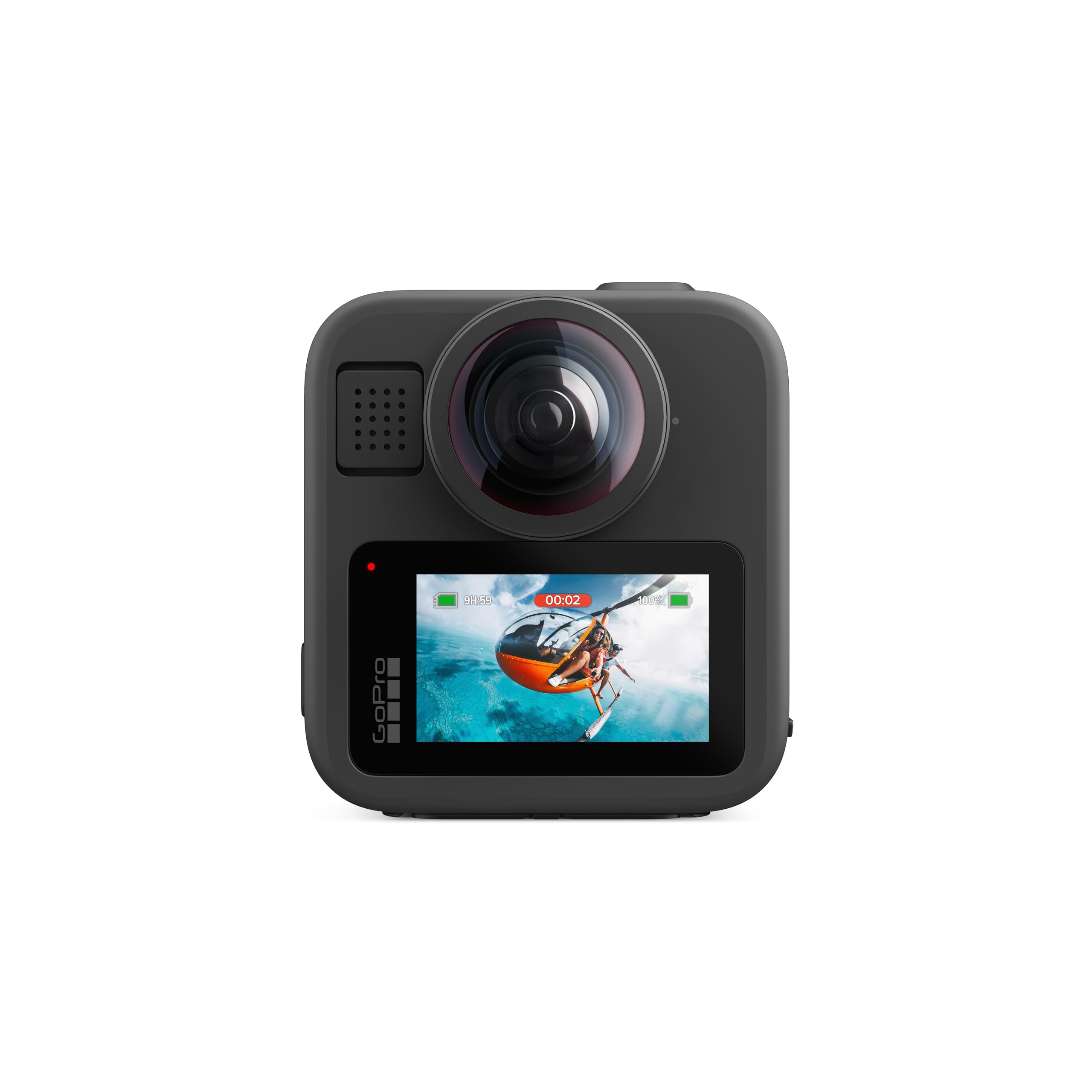
True 8K 360 at a midrange price is the GoPro MAX2's headline, and it is not a shortcut: the camera records 8K spherical video, so you can reframe a ski run into a flat clip and still have detail left for a punch-in. HyperSmooth stabilization and six microphones are the ski-specific parts we care about. Wind noise is the enemy on a chairlift, and the extra mics give the audio a better chance.

The replaceable glass lenses are another detail we appreciate. Ski gear gets scratched, and being able to swap a lens without replacing the whole camera is the kind of insurance that matters. The included Enduro battery is a sensible choice for cold weather, and the 1.82-inch touchscreen is small but usable for checking settings. GoPro's invisible mounting also works well on a pole, so you can get a follow-cam look without a second skier.

Where the MAX2 gives us pause is heat and long-term reliability. Long stationary 8K takes can shut the camera down, and the cold air on a ski hill helps only so much. We also treat reliability as an open question, so buy from a retailer with a straightforward return policy and test the camera before a trip. On the mountain, keep clips short and let the body cool between runs.

For a skier who wants 8K 360 without stepping up to the top pick, the MAX2 is the most direct route. The 360 editing workflow is app-based, but the results are shareable, and the replaceable lenses make it easier to live with.

Pros

  • True 8K 360 video
  • HyperSmooth stabilization and six microphones
  • Replaceable glass lenses
  • Enduro battery included

Cons

  • Battery life is inconsistent
Our verdict

The MAX2 is the budget route to true 8K 360 for skiers who want GoPro's stabilization and replaceable lenses, provided they plan around heat and reliability.

Check Latest Price
4

Best for Low Light

DJI Osmo 360

86 /100
Traveler Score Excellent

Key details

Weight
6.46 oz
Sensors
1-inch 360°
360 Video
8K30fps
Water Resistance
Waterproof
Check Details on Amazon

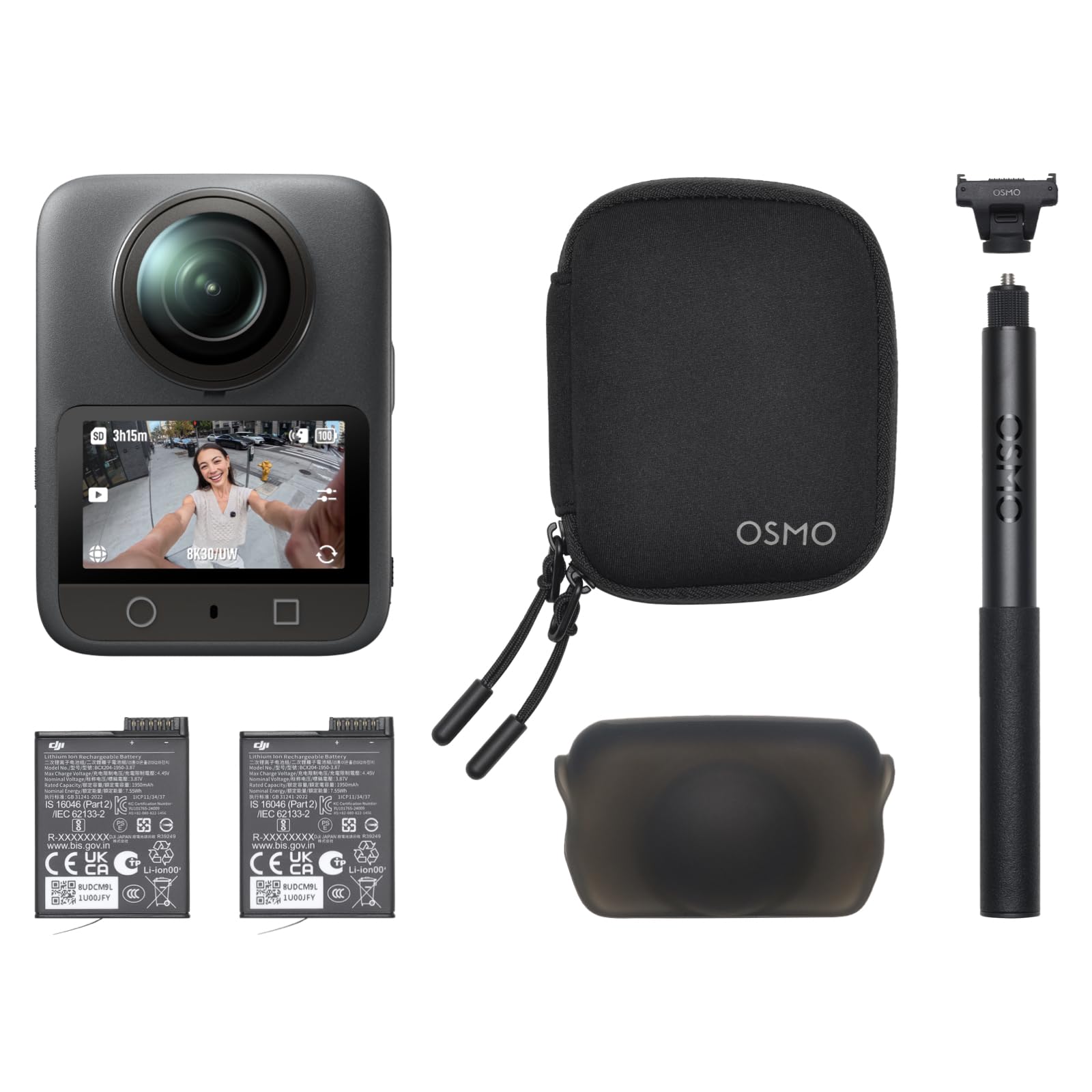
Flat winter light is where the DJI Osmo 360 makes its case. We found the 1-inch 360 sensors are the reason to pick it over the smaller-sensor cameras here: they pull more detail out of shadowed tree lines and late-afternoon runs, and the 8K30 360 footage gives you the same reframing freedom as the top pick. When the sun is low and the snow is blue, that extra sensor area is not a spec-sheet nicety.

At 183 g, the Osmo 360 is one of the lighter 8K 360 cameras in this group, and the magnetic quick-release mount makes it easy to move between a chest rig and a pole. The Essential Combo includes a 1.2 m invisible selfie stick, which is the accessory that makes third-person ski shots possible without a second skier. The waterproof body means wet snow is not an immediate problem, and the 2-inch screen is enough for framing checks.

The catch is the workflow. Editing has a learning curve, and the camera can lock up at random, so update the firmware and test it before a trip. Those are the kinds of quirks that show up before the first run, not in the middle of one, if you do a shakedown at home.

If low light is your priority, the Osmo 360 is the pick. It is also the lightest way to get 8K 360 here, which matters if you plan to switch mounts during the day. The app and the lock-ups are the trade-off; the sensor is the reward.

Pros

  • 1-inch 360 sensors for low light
  • 8K30 360 video
  • 183 g body and magnetic quick-release mount
  • Includes 1.2 m invisible selfie stick

Cons

  • Battery charge can be inconsistent
  • Premium cost compared with the rest of this set
Our verdict

The Osmo 360 is the low-light specialist for skiers who want 1-inch sensor detail and a light 8K body, with a workflow that asks for patience.

Check Latest Price
5

Dry Snow

AKASO 360

86 /100
Traveler Score Excellent

Key details

Sensors
Dual 1/2-inch 48MP
360 Video
5.7K
Stabilization
360° Horizon Steady
Water Resistance
Water resistant
Check Details on Amazon

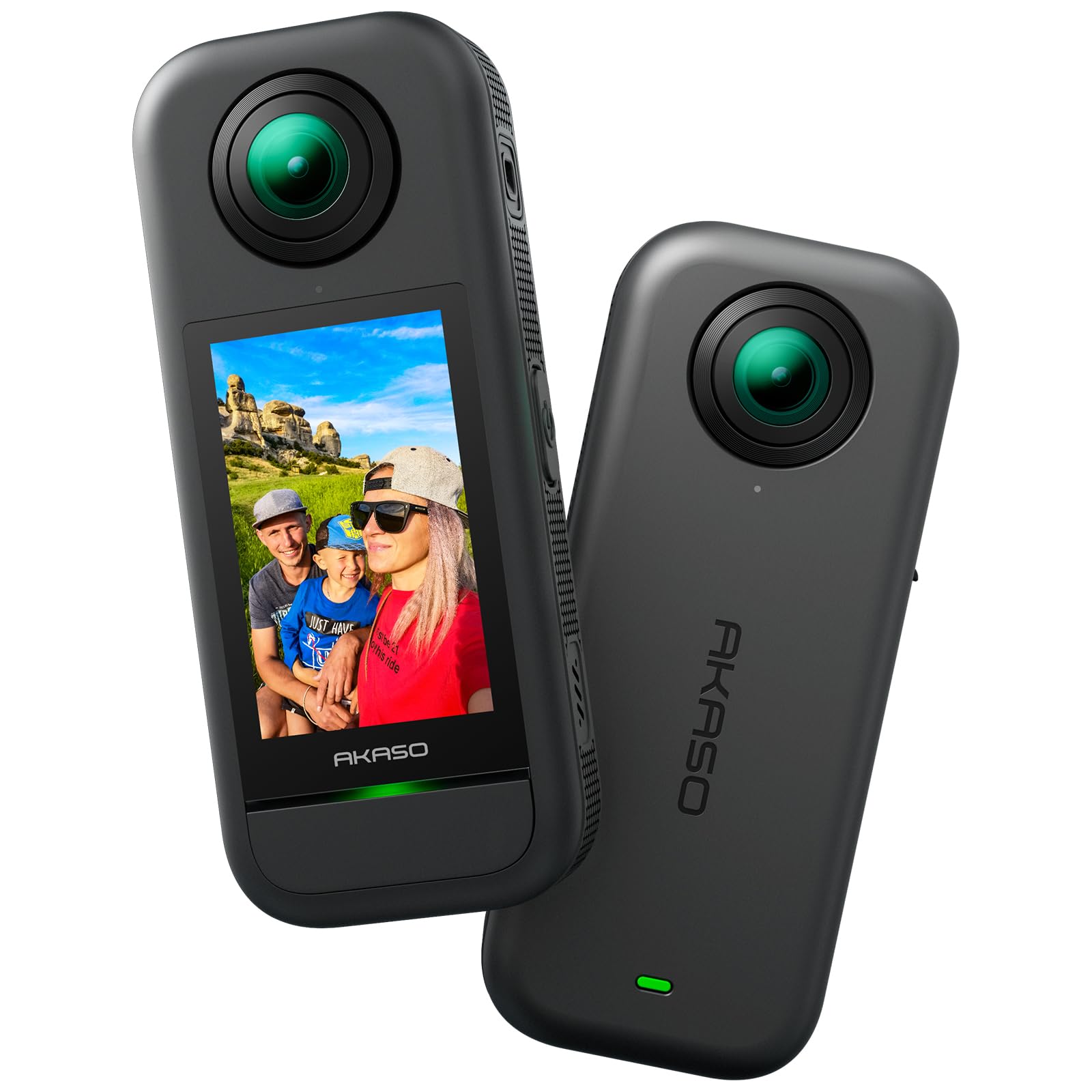
The AKASO 360 is the budget camera for dry snow days. It is not the camera for wet snow, slush, or rain, and that distinction is the first thing to settle before you buy it for skiing.

For a budget camera, the specs are serious: 5.7K 360 video, dual 1/2-inch 48MP sensors, 360° Horizon Steady, and two batteries in the box. We appreciate the second battery more than almost any other feature here, because cold weather drains every camera and a spare is the difference between one run and a full day. The 360° Horizon Steady keeps the footage level when you tuck or traverse, and the 5.7K file is easy to reframe in the app.

The app is the part that needs patience. The Wi-Fi connection can be finicky enough that you should pair the camera at home before you rely on your phone, and the touchscreen feels more budget than the Insta360 and GoPro picks. For dry-snow days and social clips, though, it covers the basics and leaves room in the budget for a spare mount.

The two-battery bundle is what makes it feel more ski-ready than the rest of the package suggests. If your season is mostly cold smoke and bluebird days, that is enough.

Pros

  • 5.7K 360 video with dual 48MP sensors
  • 360° Horizon Steady stabilization
  • Two batteries included
  • Budget-friendly for dry-snow use

Cons

  • Low-light footage loses detail
Our verdict

The AKASO 360 is a sensible budget pick for dry-snow ski days, but it is not the camera for wet snow or low-light runs.

Check Latest Price

How We Tested 360 Action Cameras for Skiing

We started by narrowing a list of 360 cameras down to six that seemed built for winter: compact enough for a helmet mount, sealed against snow, and backed by an app that could reframe footage without a computer. We ruled out anything that required a separate dive case or whose battery couldn't be swapped with gloves on. Then we skied with them from December through April, on groomers, powder days, park laps, and night sessions under the lights.

Each camera got a full day on the mountain, mounted to a helmet and sometimes a chest rig. We noted how quickly it turned on in the cold, whether buttons or a touchscreen worked with thick gloves, and how many battery swaps we needed from first chair to last run. We also timed how long it took to pair with a phone on the chairlift and transfer a clip in the lodge — if the app dropped the connection or the download crawled, that counted against it.

Back inside, we reframed the same run from each camera, watching for sharpness, color, and how well the stabilization handled chopped snow. We shot in flat light, direct sun, and after dark to see where the image fell apart, and we checked whether the field of view actually captured both skis and sky without stretching faces at the edges. Finally, we asked whether the footage and build felt worth the cost, and whether the camera was versatile enough to justify carrying it every ski day.

How to Choose 360 Action Cameras for Skiing

Weather Sealing and Lens Protection

Snow is water once it melts on a warm lens or a jacket pocket, so we put sealing near the top of the list. A waterproof body is the safer choice for skiing; water-resistant models can handle dry snow but not slush, rain, or a fall into a puddle. Replaceable lenses are the other ski-specific feature we look for. A pole, a branch, or a gear bag can scratch a lens, and swapping a lens is much cheaper than replacing the camera. The Insta360 X5 and GoPro MAX2 both make lens replacement part of the design, which is a real advantage. If the lens is fixed, use a cap and a microfiber cloth, and avoid wiping grit across the glass.

Stabilization and Horizon Lock

360 footage is not automatically steady. Skiing adds vibration from edges, chatter, and speed, so look for electronic stabilization that works in 360 mode and a horizon lock that keeps the frame level when you tilt the camera on a pole or chest mount. Horizon lock is the feature we notice most in playback: without it, a camera that leans slightly makes the whole run feel off-kilter. Test both before you trust them. Walk down stairs while tilting the camera; if the horizon stays put, the stabilization is doing its job.

Resolution, Battery, and Cold

8K 360 gives you more room to reframe and crop, but it also creates large files and drains the battery faster. If you mostly post short clips, 5.7K is still useful and easier to manage. For skiing, battery management matters more than the resolution badge: cold reduces runtime, so carry a spare, keep it in an inside pocket, and start the day with a warm battery. The X5's 208-minute rating is the longest here, but treat any rating as a best-case number and plan for less in 8K and subfreezing temperatures.

Mounting, Weight, and Wind

A helmet mount gives you a skier's-eye view, but it is not the right choice for every camera or every helmet. Check the helmet manufacturer's guidance before attaching anything, and use a tether so the camera does not become a projectile in a fall. A chest mount is often more comfortable and keeps the weight off your head; the DJI Osmo 360 is 183 g, while the X5 is 500 g, so weight is worth checking before you choose a helmet mount. Wind noise is the other issue: a built-in wind guard or multiple microphones helps, but no camera eliminates it. Keep the camera out of direct wind, and test audio before a trip.

Editing and Reframing

360 footage is only half the job; the other half is turning a sphere into a watchable clip. Look for an app that lets you reframe, keyframe, and export without a desktop computer, and practice the workflow before you leave. AI-assisted reframing can speed things up, but it works best when the subject is clear and the camera is steady. If you want to post from the lodge, choose a camera with an app you find intuitive, not the one with the longest feature list.

Frequently Asked Questions

Final Verdict

For most skiers, the Insta360 X5 is the clear default: it pairs 8K 360 capture with horizon lock, a waterproof body, and a replaceable lens, so it can handle cold, wet snow, and the inevitable scrape. The Insta360 X3 is the value alternative if 5.7K and a proven waterproof body are enough; the GoPro MAX2 is the budget route to 8K, and the DJI Osmo 360 is the one for flat winter light.