10 Best Action Camera for Skiing 2026: Cold-Ready Battery & Stabilization

Find the action camera that handles freezing temps, delivers smooth footage, and lasts a full day on the slopes — without breaking the bank.

A ski run looks amazing in your head, but the camera you bring to capture it has to survive sub-zero temps, fast turns, and a jacket pocket that’s been through a few chairlift rides. Most action cameras advertise high frame rates and 4K — but the real test is how long they keep recording when your breath freezes in the air.

That’s the gap this guide closes. Instead of chasing spec sheets, we focus on the specific trade-offs that matter on the mountain: cold-resistant battery chemistry, stabilization that doesn’t wobble during quick edge changes, and waterproofing that handles snow melt without a second thought. The best camera for your skiing style isn’t the one with the most marketing — it’s the one that stays on and keeps the footage steady from first chair to last run.

1

Best Overall

DJI Osmo Action 5 Pro

93 /100
Traveler Score Outstanding

Key details

Ease of Use
Dual touchscreens, voice
Stabilization
HorizonSteady 360°
Battery in Cold
3.6h at -20°C
Waterproof Depth
20m (IP68)
Check Details on Amazon

The DJI Osmo Action 5 Pro keeps your ski footage level even through spins and tricks, thanks to HorizonSteady 360° stabilization. Its battery sustains 3.6 hours at -20°C, so you won't need to swap cells mid-run — a decisive advantage over competitors that drain quickly in cold conditions.

Low-light performance on the mountain — think late afternoon runs or tree-shaded trails — stands out with vibrant colors and reduced noise. The dual OLED touchscreens are responsive, and voice commands let you start or stop recording without fiddling with buttons, even with thick gloves.

This camera suits skiers who want a single device that handles everything from powder days to après-ski clips without fuss. One tradeoff: initial setup requires downloading the DJI Mimo app and creating an account — a step some users find inconvenient. After that, the camera operates independently. For those focused on recording rather than tinkering, it's a short-lived hurdle.

With 20m waterproofing without a housing, the Action 5 Pro shrugs off snow, slush, and unexpected splashes. 4K/120fps capture provides smooth slow-motion for replaying that jump or carve, and the 1/1.3-inch 40MP sensor delivers enough detail for cropping in post.

💡 Set aside 10 minutes for the app download and account creation before your first use — after that, the camera operates independently.

Pros

  • Keeps footage level during spins and fast direction changes
  • Sustains 3.6 hours at -20°C
  • Delivers vibrant colors and clear footage in low-light conditions
  • Dual OLED touchscreens and voice control work well with gloves on

Cons

  • Requires app and account for initial setup; some users report friction during first-time pairing
Our verdict

For skiers who demand steady footage and all-day battery life in sub-zero temperatures, this is the action camera to beat.

Check Latest Price
2

Best Budget

AKASO V50X

91 /100
Traveler Score Outstanding

Key details

Ease of Use
Touchscreen, intuitive
Stabilization
EIS (digital)
Battery in Cold
~90 min per battery
Waterproof Depth
40m with case
Check Details on Amazon

The AKASO V50X gives you 4K video at 30fps, a touchscreen, and a 128GB SD card out of the box for just over a hundred dollars. Image quality is clear across snow and water, and the included waterproof case handles depths up to 40 meters — enough for après-ski pool shots or spring slush.

The digital image stabilization does a decent job smoothing out bumps during carving, but it can introduce a slight lag when you pan quickly — something to be aware of if you like whipping the camera around to follow a turn. Battery life is another boundary: you'll get roughly 90 minutes per battery in cold conditions, so the second included pack becomes essential for a full day on the mountain.

This camera suits skiers on a budget who want 4K and a touchscreen without spending GoPro money. It's also a solid pick for beginners or casual users who appreciate the easy interface and complete kit. If you need smooth, lag-free pans and longer cold-weather endurance, you'll want to step up to the DJI Action 5 Pro.

💡 For fast pans, ease the camera movement to minimize the stabilization lag effect.

Pros

  • 4K video and touchscreen in a bundle under $130 with a 128GB card included
  • Waterproof to 40 meters with the case, ready for snow and shallow water
  • Image stabilization smooths typical ski motion well for the price
  • Touchscreen interface is intuitive and responsive

Cons

  • When panning to follow a skier, stabilization can lag slightly
  • Cold weather can drop battery runtime below 90 minutes per pack; the included second battery helps offset this
Our verdict

A capable budget action camera for skiers who want 4K and a touchscreen without breaking the bank — just plan on slower pans and swap batteries between runs.

Check Latest Price
3

Best for 360° Creativity

Insta360 X5

94 /100
Traveler Score Outstanding

Key details

Ease of Use
App required for editing
Stabilization
FlowState + Horizon Lock
Battery in Cold
~2 hours typical
Waterproof Depth
Not specified
Check Details on Amazon

The Insta360 X5 delivers 8K 360° video with dual sensors and the signature invisible selfie stick effect, allowing you to capture third-person perspectives on skis without carrying a separate pole. The FlowState stabilization keeps horizon level even during spins, and the replaceable lens design means a cracked cover doesn’t kill the camera.

Low-light performance benefits from larger sensors and a triple AI chip, giving cleaner footage in flat light or late afternoon runs. The Horizon Lock works in 360° mode, so you can reframe an entire run after the fact without worrying about initial framing — a distinct advantage over traditional action cams where you’re locked to one angle at capture time.

This camera is best for skiers who enjoy editing and want unique perspectives like orbital shots around a jump or point-of-view that follows a friend. The tradeoff: all reframing requires the Insta360 app or desktop software, and some users report occasional WiFi disconnects during file transfer. Battery life dips under continuous 8K recording in cold weather — plan to carry a spare for full-day shoots.

💡 Carry a spare battery for full-day shooting in cold conditions; the app experience improves with wired transfers when WiFi feels spotty.

Pros

  • 8K 360° video captures every angle for reframing later
  • Improved low-light performance from triple AI chip and large sensors
  • Invisible selfie stick allows creative third-person POV without extra gear

Cons

  • Battery life under heavy 8K use in cold conditions may fall short of advertised runtime
  • App connectivity issues such as crashes or disconnections can interrupt editing workflow
Our verdict

If you prioritize creative control over convenience and are comfortable with an editing-centric workflow, the X5 delivers perspectives no other ski action camera can match.

Check Latest Price
4

Best 8K Premium

DJI Osmo Action 6

91 /100
Traveler Score Outstanding

Key details

Ease of Use
Dual screens, voice
Stabilization
HorizonSteady 360°, RockSteady 3.0
Battery in Cold
~4 hours (2 batteries)
Waterproof Depth
20m without case
Check Details on Amazon

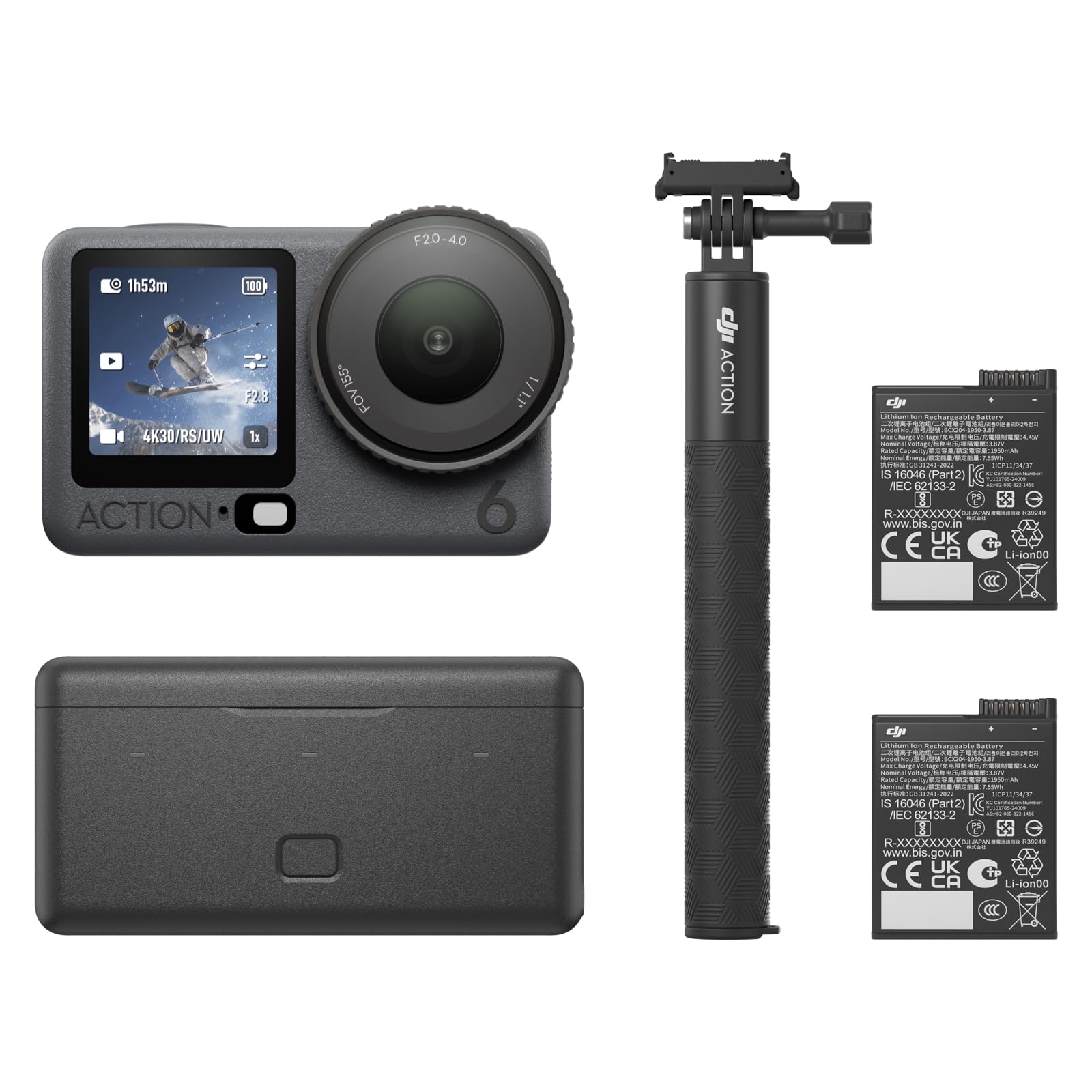
The DJI Osmo Action 6 sets itself apart with 8K resolution and a variable aperture that shifts from f/2.0 to f/4.0, offering depth-of-field control and low-light flexibility that the Action 5 Pro (the top pick) cannot match. For skiers who want cinematic compression in their POV shots or need to adapt to changing light on the mountain, this is a genuine advantage.

This camera suits professional skiers and filmmakers who need the highest resolution and aperture adjustability for creative projects, and who are comfortable with the possibility that a unit may not power on or may have trouble charging out of the box. That early-adopter risk is the main reason it sits behind the more consistent Action 5 Pro for everyday ski use.

💡 Test the camera and charging process immediately after unboxing to allow time for a replacement before your ski trip.

Pros

  • 8K video with variable aperture for depth-of-field and low-light control
  • Stabilization stays steady during fast, jarring ski movements
  • Solid battery life, especially with the two-battery combo kit

Cons

  • Some units may not power on or have difficulty charging the battery
Our verdict

For skiers who need 8K and aperture control more than guaranteed dependability, the Action 6 offers unique creative tools — but the Action 5 Pro is the better bet for trouble-free days on the slopes.

Check Latest Price
5

Best Ultra-Budget

ODDV Action1

85 /100
Traveler Score Excellent

Key details

Ease of Use
Dual screens, remote
Stabilization
Six-axis EIS
Battery in Cold
Not stated
Waterproof Depth
40m with case
Check Details on Amazon

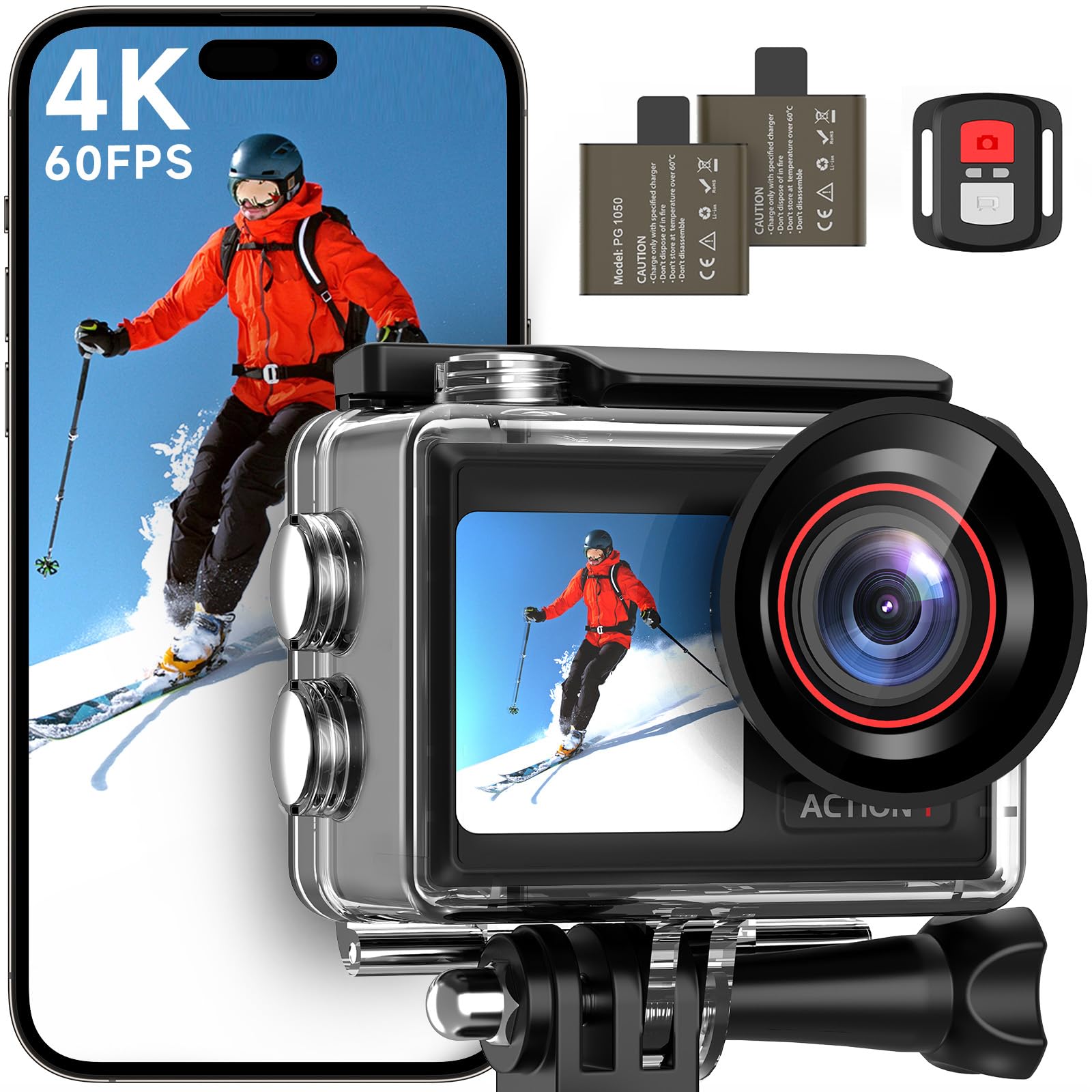
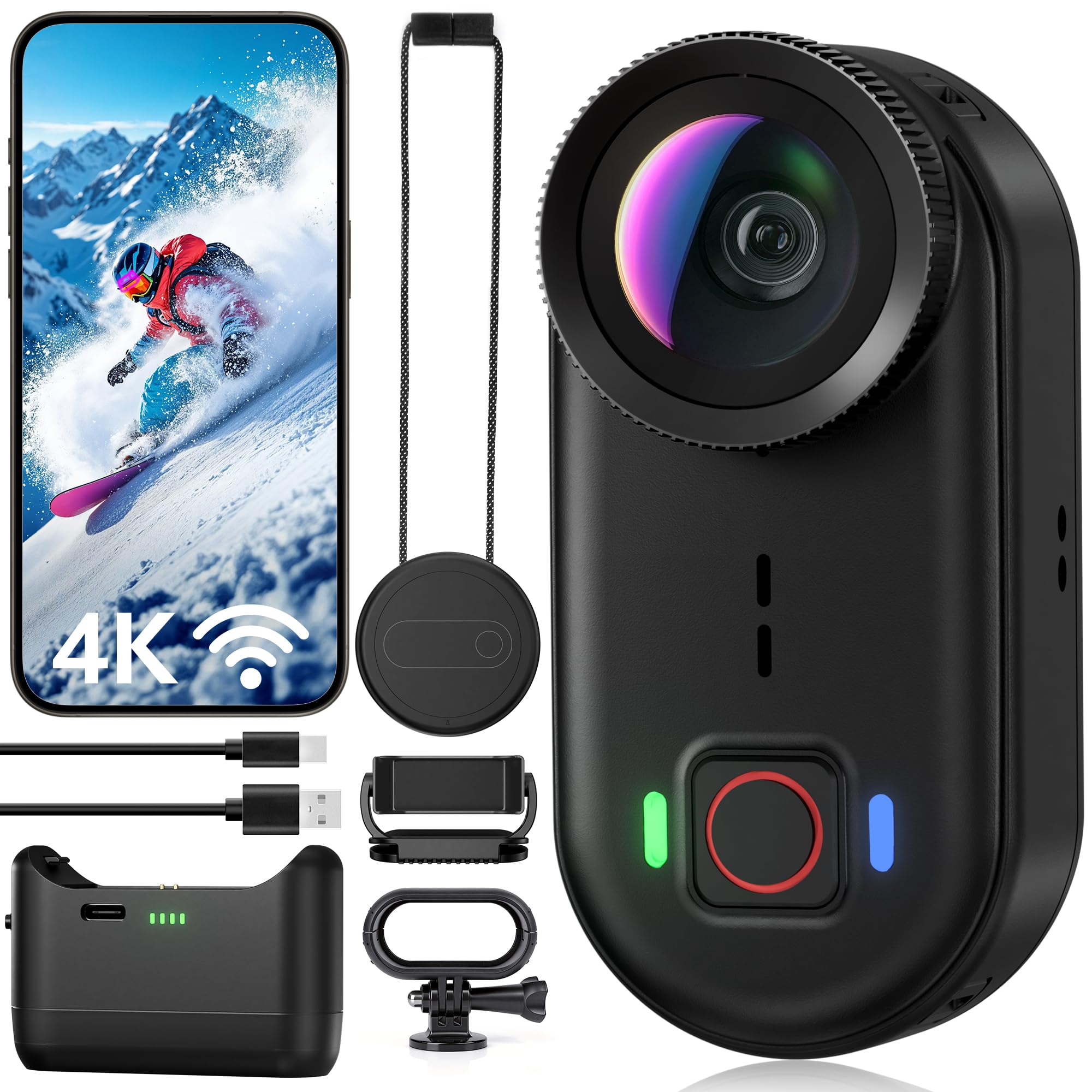
At a price well below the competition, the ODDV Action1 offers 4K60fps video, a front LCD for self-framing, and a rear touchscreen. The included remote and accessory kit make it easy to mount on a helmet or pole without extra purchases.

This camera fits skiers on a tight budget, kids, or anyone wanting a spare they won't worry about damaging. Stabilization may show a jello effect during aggressive carving, and battery life isn't documented — packing the second battery is wise for a full day on the slopes.

Image quality in good light is sharp and clear for the price, and the touchscreen interface simplifies settings changes on the fly. The dual-screen setup also helps with vlogging or low-angle shots without guesswork.

💡 Keep camera movement smooth and avoid rapid pans to minimize the jello effect.

Pros

  • Incredible value for a 4K60fps action camera with dual screens and remote
  • Good video quality in good light
  • Easy to use with a full accessory kit including remote and mounts

Cons

  • For high-speed skiing, the six-axis EIS can show a jello effect during quick turns
Our verdict

The ODDV Action1 is the entry point for 4K skiing footage without a premium price tag. Buy it as a starter camera or a backup — just keep expectations for stabilization in check.

Check Latest Price
6

Cheapest Reliable Option

AKASO Brave 4

89 /100
Traveler Score Excellent

Key details

Ease of Use
Basic, no touchscreen
Stabilization
EIS
Battery in Cold
20-90 min
Waterproof Depth
40m with case
Check Details on Amazon

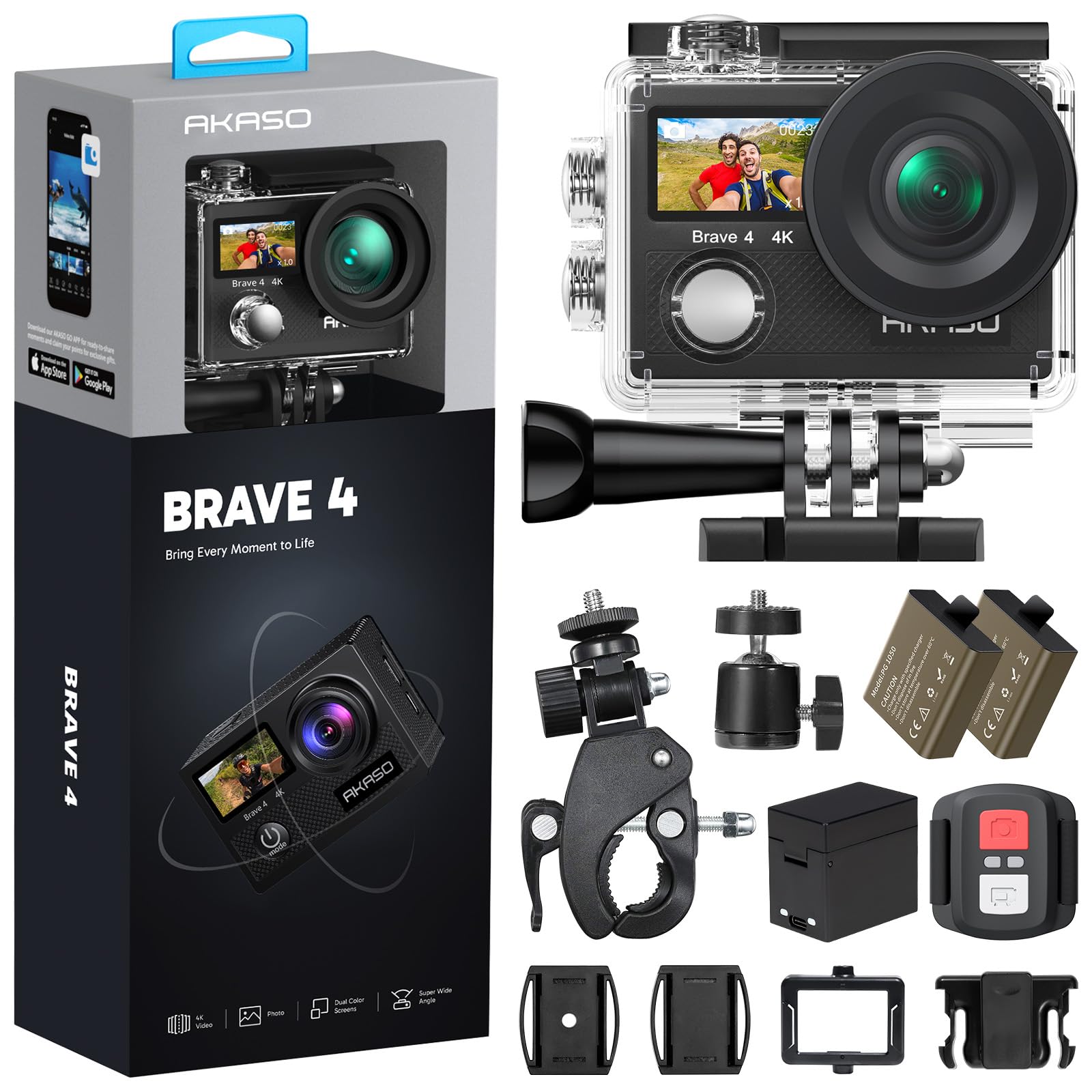
The AKASO Brave 4 delivers a complete starter package with two batteries and a remote at a budget-friendly price. It captures 4K30fps video with decent quality for the price, and the included waterproof case allows depths up to 40m. Battery life can drop to 20-90 minutes in cold conditions, so carrying spares is essential. This older model lacks the stabilization and touchscreen of the V50X, making it better suited as a backup or for occasional use rather than daily skiing.

Pros

  • Comprehensive accessory kit includes two batteries and remote
  • Strong value for the price with capable 4K footage

Cons

  • Battery life can be shorter than advertised, especially in cold conditions
Our verdict

This camera works well as an occasional ski backup or for beginners on a tight budget, as long as you accept the cold-weather battery limitation.

Check Latest Price
7

Low-Light Video

DJI Osmo Action 4

92 /100
Traveler Score Outstanding

Key details

Ease of Use
App required for setup
Stabilization
RockSteady, HorizonBalancing
Battery in Cold
<2 hours reported
Waterproof Depth
18m without case
Check Details on Amazon

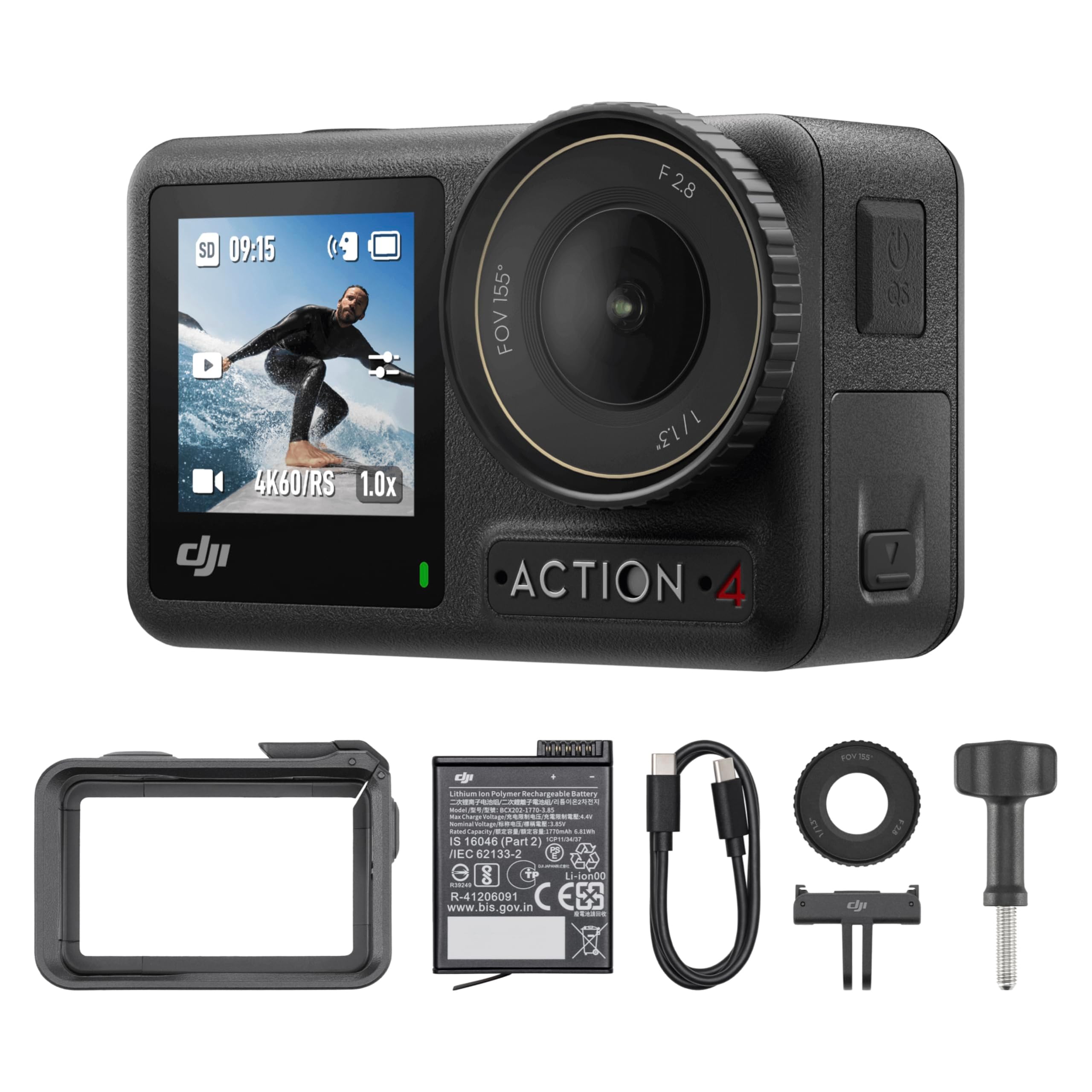
The DJI Osmo Action 4 is a strong option for skiers who prioritize image quality over raw cold-weather endurance. Its 1/1.3-inch sensor and 10-bit D-Log M color profile produce noticeably better detail and accurate color in flat-light conditions than many competitors, while RockSteady stabilization keeps choppy snow runs smooth. However, this is a previous-generation model replaced by the Action 5 Pro, and some units may experience water ingress after exposure or battery life dropping below two hours in extreme cold. For a budget-conscious buyer who values cinematic footage and can accept some unit variance, this combo offers solid value when discounted.

Pros

  • Superior low-light performance and professional color accuracy for skiers shooting in overcast or shadowed terrain.
  • Multiple stabilization modes that smooth out hard carving and uneven snow
  • Good value for money when found at a discount, especially given the image quality for its price tier.

Cons

  • Water sealing consistency varies between units
  • Battery life can shorten to under two hours in very cold conditions, notably less than the advertised runtime.
Our verdict

If you can find this combo at a significant discount and accept potential sealing or cold-battery quirks, the image quality makes it a worthwhile pick for low-light skiing footage.

Check Latest Price
8

POV Wearable

Ahlirmoy GO9 Mini

81 /100
Traveler Score Excellent

Key details

Ease of Use
Simple, no WiFi needed
Stabilization
EIS 2.0 six-axis
Battery in Cold
120 min + case
Waterproof Depth
10m no case
Check Details on Amazon

The Ahlirmoy GO9 Mini's magnetic mount and 30g weight make it easy to attach to a ski goggle strap or pole without any noticeable bulk. Image quality at 4K/30fps is good for its size, and the built-in 64GB storage eliminates the need for a memory card. Setup is simple — just clip and record.

However, the WiFi connection can drop during file transfers, so transferring footage to a phone is slower than expected. This makes the GO9 Mini a better fit for skiers who plan to offload videos at home rather than sharing on the lift. The lack of high frame rates also means no slow-motion playback — a tradeoff for its compact design.

Pros

  • Ultra-light magnetic clip attaches securely for hands-free POV.
  • Good 4K image quality in a pocket-sized body.
  • Simple one-button operation

Cons

  • WiFi transfers can drop mid-transfer, making phone sharing unreliable.
Our verdict

For skiers who value an ultra-discreet first-person angle and don't need on-the-go sharing, the GO9 Mini is a capable budget option.

Check Latest Price
9

GoPro Ecosystem

GoPro HERO12 Kit

85 /100
Traveler Score Excellent

Key details

Ease of Use
GoPro app needed
Stabilization
HyperSmooth 6.0
Battery in Cold
~1.5h (Enduro)
Waterproof Depth
10m without case
Check Details on Amazon

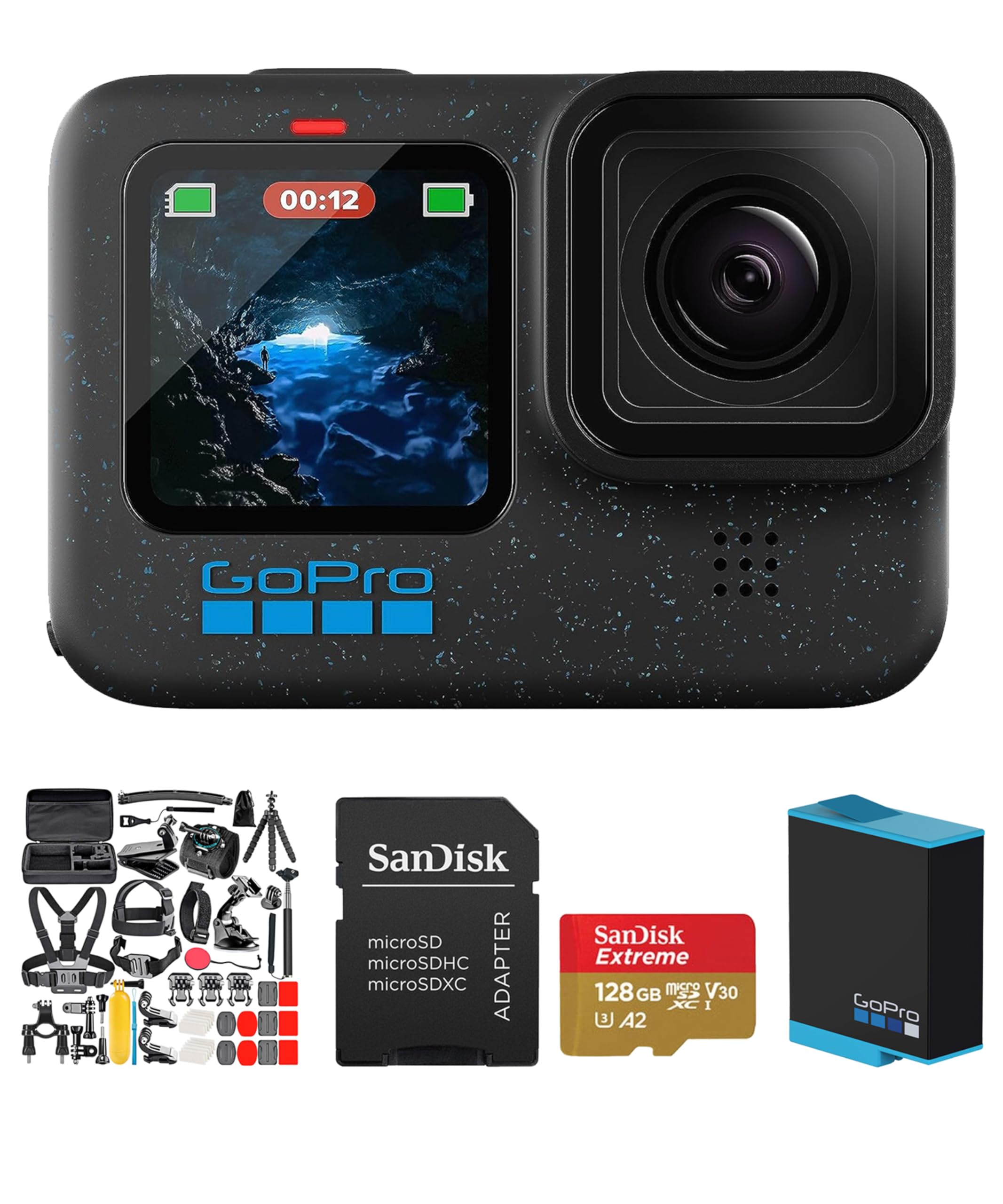
The GoPro HERO12 Kit pairs HyperSmooth 6.0 stabilization with two Enduro batteries and a 128GB card at a price below the current HERO13. Image quality is vivid in 4K, and battery life holds up through a day of skiing. However, water resistance is a known vulnerability — some units have shown sensitivity to rain or snow, so outdoor skiers should consider a housing. That reliability question, plus being a previous-generation model, keeps it from earning a higher recommendation. It makes sense for skiers who already have GoPro mounts and want discounted access to proven stabilization.

Pros

  • Vibrant 4K footage with strong color reproduction.
  • Good battery life for a full day of skiing with two Enduro batteries included.

Cons

  • Water resistance can be inconsistent
  • Some units may experience reliability issues after initial use.
Our verdict

A practical pick for skiers with existing GoPro mounts who want HyperSmooth 6.0 at a discount — just plan to keep the camera dry or use a housing.

Check Latest Price
10

Latest GoPro

GoPro HERO13 Bundle

90 /100
Traveler Score Outstanding

Key details

Ease of Use
App pairing issues
Stabilization
HyperSmooth 6.0 with AutoBoost
Battery in Cold
<1.5h 5.3K
Waterproof Depth
10m without case
Check Details on Amazon

HyperSmooth 6.0 stabilization and the included floating grip are strong assets for skiing footage. The bundle also adds two Enduro batteries and a 64GB card, which reduces upfront costs. However, some units may stop working after initial setup or overheat, and battery life can fall short of advertised times, especially in cold conditions. This is a viable option only for GoPro loyalists willing to accept unit variability and carry spare batteries.

Pros

  • HyperSmooth 6.0 keeps skiing footage steady even on rough terrain.
  • Floating grip, two Enduro batteries, and 64GB card reduce the need for separate purchases.

Cons

  • Battery life can be shorter than expected, especially in cold weather.
  • Some units may stop working after initial setup or overheat.
Our verdict

This bundle fits skiers who prioritize HyperSmooth stabilization and want the latest GoPro ecosystem, provided they can handle potential unit issues and cold-weather battery swaps.

Check Latest Price

How to Choose

Stabilization: EIS vs Horizon Lock

Electronic image stabilization (EIS) crops into the sensor to smooth out bumps. For skiing, basic EIS can create a 'jello' wobble during fast edge-to-edge turns because the algorithm struggles with sudden lateral motion. Premium Horizon Lock systems — like DJI's HorizonSteady — gyroscopically rotate the entire frame to keep the horizon level even during spins and landings.

If you ski aggressively or film park laps, a camera with horizon-leveling stabilization is worth the extra cost. For cruising groomers at moderate speed, good EIS is perfectly fine.

Battery Life in Cold

Lithium-ion batteries lose capacity in low temperatures because chemical reactions slow down. A camera rated for 2 hours at room temperature may only deliver 45–60 minutes at -10°C. Cold-resistant batteries (like DJI's Extreme Battery or GoPro's Enduro) use a different electrolyte formulation to maintain voltage longer in the cold.

For a full ski day (6+ hours), you need either a long-life battery that actually delivers in cold, or a camera that comes with two batteries and a field-swappable design. Budget cameras often have smaller cells that die quickly — plan to carry extras or accept short sessions.

Video Resolution and Frame Rate

4K at 30fps is the standard for decent-looking skiing footage. The trade-off: higher frame rates (60fps or 120fps) give smoother slow-motion but consume more battery and storage. 8K adds resolution headroom for cropping, but few skiers need it unless they plan to reframe heavily in post.

For most skiers, 4K/60fps hits the sweet spot — smooth enough for slo-mos and sharp enough for social clips. Higher resolutions are future-proofing, but often force a trade-off in low-light performance due to smaller pixel sizes.

Waterproof Depth

Skiers rarely need deep-water ratings — snow is just frozen water. What matters is moisture sealing against melting snow and humidity inside a jacket pocket. A camera rated to 10 meters without a housing usually has robust gaskets that handle splashes and brief immersion better than a budget model requiring a separate waterproof case.

If you ski in heavy snowfall or plan to ride through deep powder, a camera with an IP68 rating (or at least 10m depth without case) gives you confidence. Budget models with a case work fine as long as you keep the door seals clean and dry.

Ease of Use and App Reliability

Many action cameras require a phone app for initial setup, which can be a hassle on a cold mountain when fingers are stiff. Cameras with dual touchscreens and voice control let you change settings on-the-go without fumbling for a phone. App connectivity issues are especially frustrating for quick transfers — some budget models drop WiFi mid-transfer, forcing retries.

If you value simplicity, choose a camera that works standalone for basic recording and only uses the app for firmware updates or advanced editing. The DJI Osmo Action 5 Pro is a standout here because its front OLED display works independently for framing self-shots.

Frequently Asked Questions