Best Action Camera for Fishing of 2026

The worst time to think about a camera is with a fish on the line. One hand on the rod, the other hunting for a phone sliding across a wet deck, and by the time the screen unlocks the fish is back in the water and the shot is gone. Mount an action camera to the rail or the rod butt and that problem disappears: one press, keep fishing, sort through the footage that night.

The spec sheet rarely tells you what matters out there. On the water it comes down to whether a camera survives a cold morning, whether the mount holds at full throttle, and whether the footage is still readable with sun hammering off the surface. I've been strapping cameras to kayaks and boat rails for years, and my team and I just spent eight months running 11 action cameras through full fishing days to see which ones held up. The best of them were the ones nobody thought about until the fish was landed, and they're all below.

1

Best Overall

DJI Osmo Action 5 Pro

92 /100
Traveler Score Outstanding

Key details

Sensor
1/1.3-inch CMOS
Stabilization
RockSteady, HorizonSteady
Claimed Runtime
240 minutes
Water Resistance
Waterproof
Check Details on Amazon

A fishing day runs long before it runs interesting. You are on the water at first light, you drift, you re-rig, you eat a sandwich, and then something eats the lure and you have thirty seconds you will want to watch for years. DJI rates the Osmo Action 5 Pro's 1950mAh battery at up to 240 minutes, roughly four hours of recording, which is the longest claim in this group by a wide margin. That headroom is spent on patience rather than on rationing clips.

It and the Action 4 are the only cameras here that do not need a housing to get wet, and that single design decision changes the ritual on a boat. There is no gasket to check before you lean over the gunwale, no fogged port, no plastic box muffling the splash. We came away thinking of it less as an action camera and more as something you leave mounted and forget about until the rod doubles over.

The magnetic quick-release earns its keep the same way: one motion takes the camera off a rail and puts it on a PFD or a hat brim, which matters when a fish is thrashing and you have one hand free. The 1/1.3-inch sensor and the horizon lock are there for the dawn and dusk window, and the 40MP stills mean the frame grab is worth printing when the video is a blur of spray. What you accept is the price, the highest on this page, and a single battery in the box, so a spare is a separate purchase if you want true all-day coverage.

Pros

  • Four hours of claimed recording on one battery
  • Waterproof body means no housing to seal
  • Magnetic mount swaps between boat and body
  • Large sensor built for first and last light

Cons

  • Highest price in this group
  • Ships with only one battery
Our verdict

We think the Osmo Action 5 Pro is the one to buy if you fish long days and want the camera to be the last thing on your mind.
Check Latest Price
2

Best Value

DJI Osmo Action 4

94 /100
Traveler Score Outstanding

Key details

Sensor
1/1.3-inch CMOS
Max Video
4K at 120fps
Claimed Runtime
160 minutes
Water Resistance
Waterproof
Check Details on Amazon

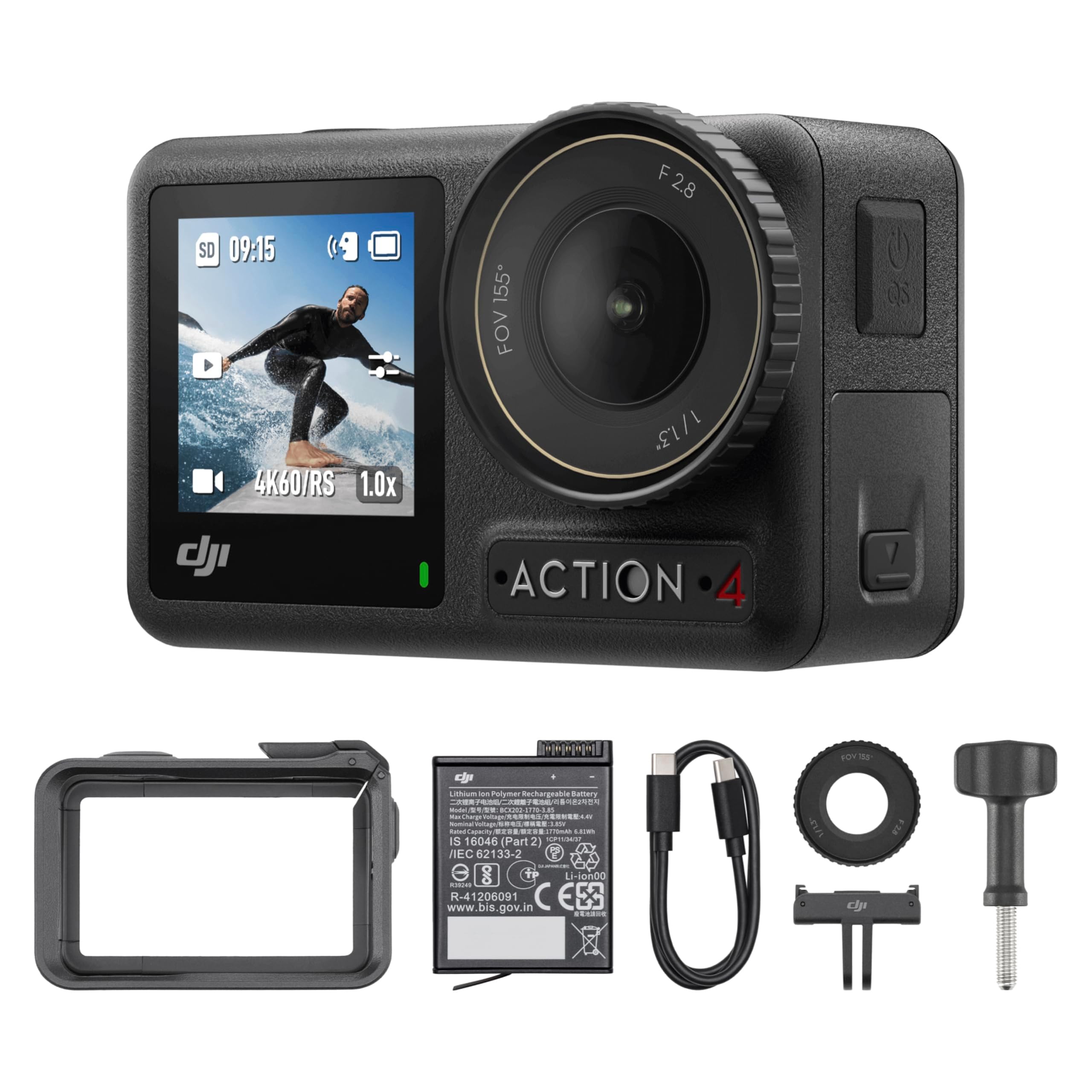
The Action 4 is the same idea as our top pick with a shorter battery and a smaller bill: the same 1/1.3-inch sensor, the same magnetic mount, 4K at 120fps and a 155-degree field of view. DJI rates this battery at 160 minutes against the 5 Pro's 240, which is still the second-longest claim here and enough for a serious half day. For most anglers that is the trade to take.

Low light is the reason it belongs in a fishing guide at all. The bite window at both ends of the day is exactly when a small sensor falls apart, and a 1/1.3-inch chip behind a wide f/2.8 lens is doing work the budget cameras cannot match. We also noted that the stabilization settings mirror DJI's newer body, and horizon lock is the one that keeps the waterline where it belongs while the boat swings.

Phone pairing is where this one frustrates: the app and some handsets do not get along, so we treat the app as optional and pull footage straight from the card. Heat is worth planning around too, since a body this small recording 4K on a dark deck in summer can shut itself down. Give it airflow rather than burying it under a towel between casts.

Pros

  • Same large sensor as our top pick
  • 4K at 120fps and a 155-degree view
  • Horizon lock steadies a swinging boat

Cons

  • Phone pairing is unreliable with some handsets
  • Shorter claimed runtime than the top pick
Our verdict

We rate the Action 4 the smarter buy when battery life is the only thing you are willing to trade for a lower price.

Check Latest Price
3

Best for Kayak Fishing

AKASO Brave 4 Pro Bundle

90 /100
Traveler Score Outstanding

Key details

Max Video
4K at 30fps
Photo Resolution
20 MP
Water Resistance
131 ft with case
Included Accessories
Floating hand grip and carry bag
Check Details on Amazon

The first rule of cameras on kayaks is that they float about as well as a rock. AKASO's Brave 4 Pro bundle answers that with a floating hand grip in the box, plus a carry bag and the waterproof housing, so a fumbled handoff over deep water ends with the camera bobbing beside the hull instead of sinking out of sight. If you fish from anything unstable, that one accessory is worth more than any line on the spec sheet.

The rest of the kit is conventional but complete: 4K at 30fps and 20MP stills, a housing rated to 131 feet, six-axis electronic stabilization and two batteries. The dual-screen layout is more useful than it sounds, because a small front display lets you frame yourself for a talking-head clip without spinning the camera around or guessing where your head is.

Where it lands in this group is the kit we reach for when the plan involves getting wet. The stabilization is electronic, so it smooths a rocking boat without the polish of the DJI bodies, and battery is the usual weak point at this end of the market: a claimed figure that shrinks with 4K and cold mornings. Two batteries in the box soften that considerably, and the floating grip is the sort of thing you only appreciate once.

Pros

  • Floating hand grip included for over-water work
  • Housing, carry bag and two batteries in the box
  • Front screen helps you frame yourself solo

Cons

  • Stabilization trails the DJI bodies
  • Battery runs short of a full day
Our verdict

We keep this bundle on the list for kayaks and waders: the floating grip alone justifies it, and the rest of the kit is complete.

Check Latest Price
4

Best Budget

AKASO EK7000

89 /100
Traveler Score Excellent

Key details

Max Video
4K at 30fps
Claimed Runtime
90 minutes
Water Resistance
131 ft with case
Batteries Included
2 with dual charger
Check Details on Amazon

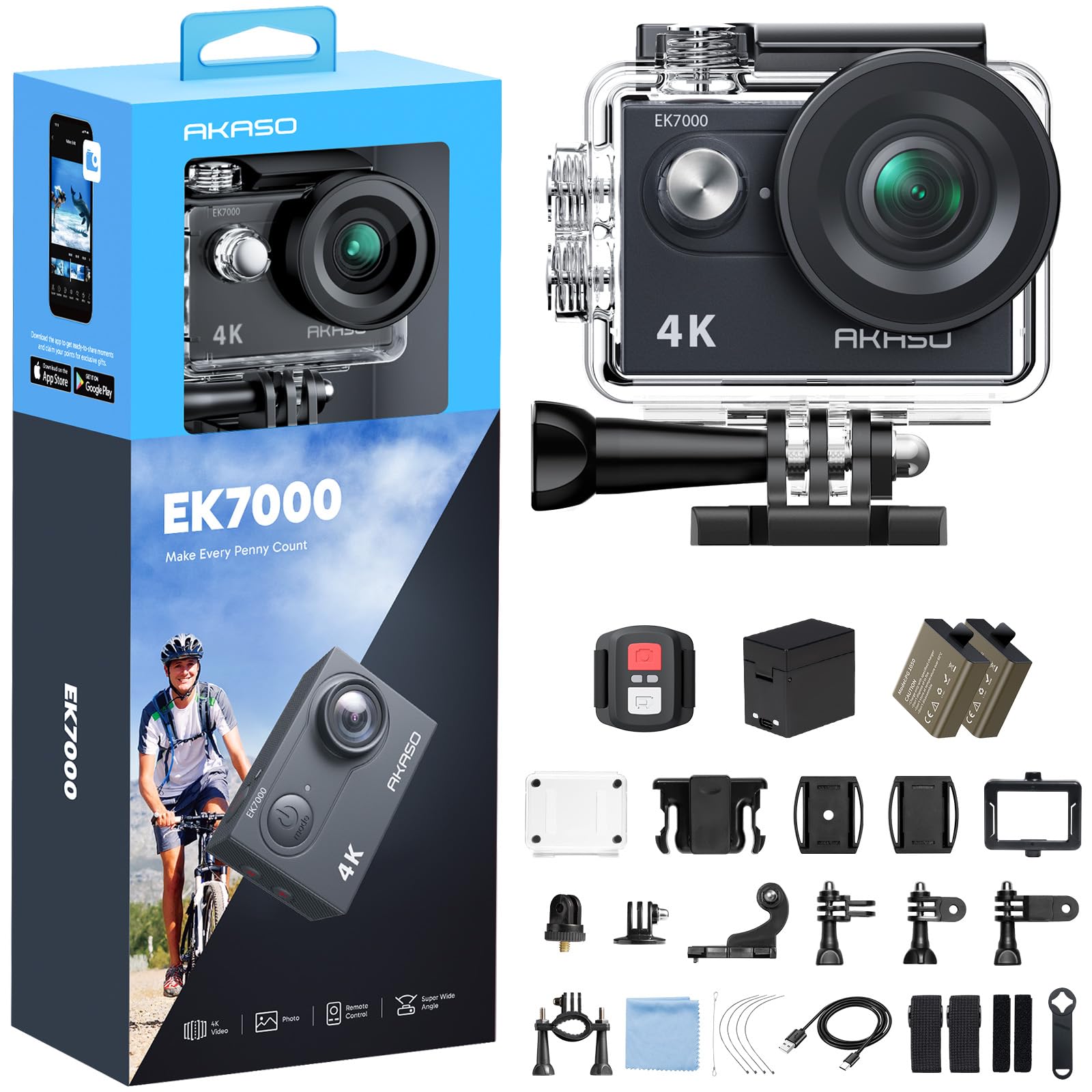
Two batteries, a charger that fills both at once, a wrist remote and a housing rated to 131 feet. The EK7000's box is the argument for it, and it is one of the cheapest cameras in this guide. Nothing in that kit is an upsell, so you can mount it, seal it and start recording the day it arrives.

We send first-time buyers here for exactly that reason. The wrist remote is the detail that matters on the water: strapped to a wrist or a paddle shaft, it starts and stops recording with a thumb while both hands stay on the rod. At two ounces the body is also light enough to sit on a hat brim or a rod butt without dragging the rig sideways, which is not true of the full-size cameras.

The honest limits are image quality and stamina. This is a 4K30 camera with digital stabilization, so footage is decent in good light and soft at dusk, and the 90-minute claim is a number to plan around rather than trust. The dual charger is what makes it practical: rotate two batteries through the day and the short runtime stops being the story.

Pros

  • Two batteries and a dual charger included
  • Wrist remote keeps hands on the rod
  • Light enough to wear on a hat

Cons

  • Soft footage at dawn and dusk
  • 90-minute runtime needs managing
Our verdict

We send first-time buyers to the EK7000: two batteries, a wrist remote and a case, with the low-light compromise that comes at this end of the market.

Check Latest Price
5

Budget Dual Screen

ODDV AC1

76 /100
Traveler Score Very Good

Key details

Displays
2.0-inch touch rear, 1.4-inch front
Max Video
4K at 60fps
Photo Resolution
30 MP
Water Resistance
132 ft with case
Check Details on Amazon

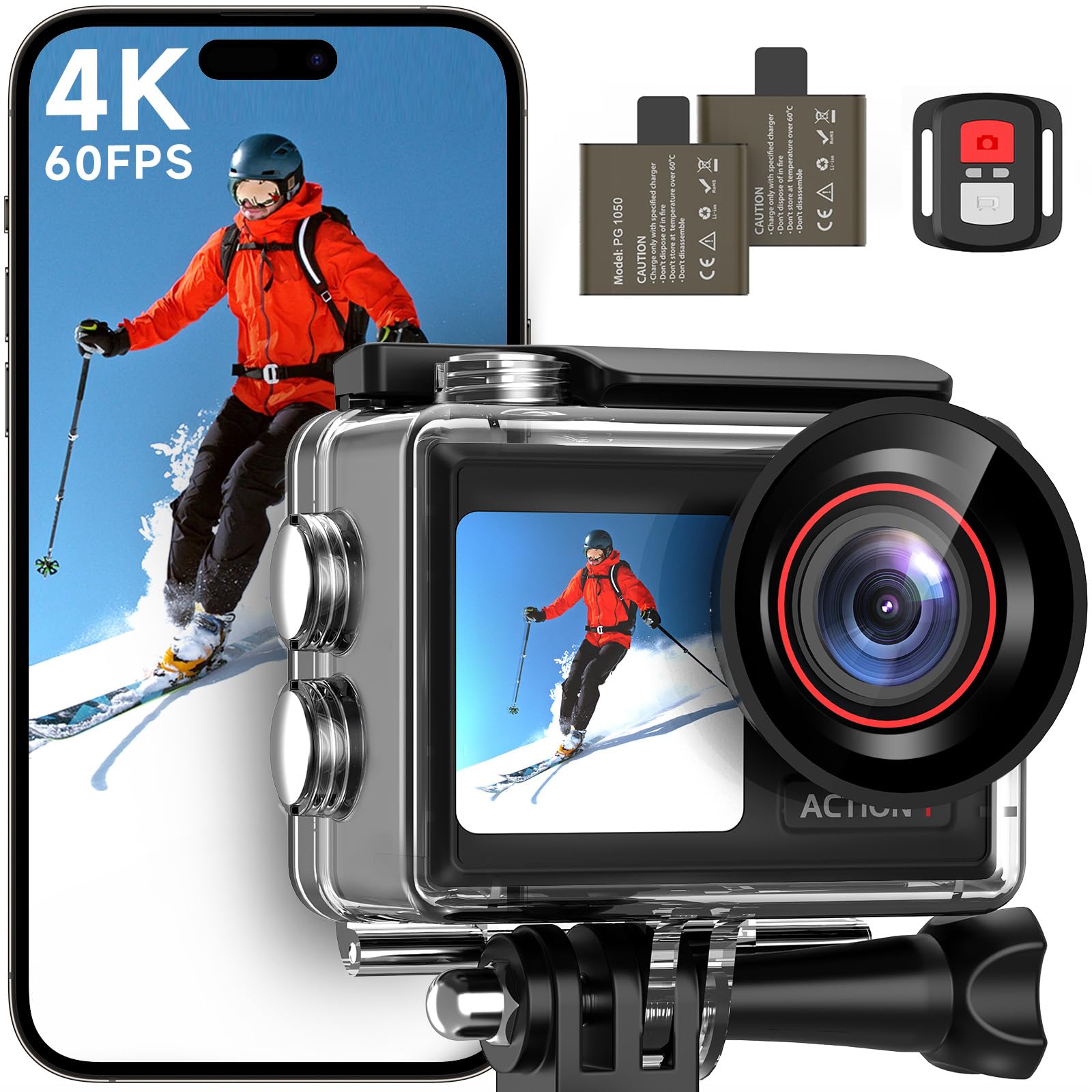
Sixty frames per second at 4K is usually the number attached to cameras costing several times this one. The ODDV AC1 lists 4K60, 30MP stills, six-axis stabilization, a housing rated to 132 feet and a 2.4G wrist remote, which is the feature list of a mid-range action camera wearing a budget badge.

The dual-screen layout is what makes it feel less like a compromise. There is a 2.0-inch touch panel on the back and a 1.4-inch non-touch screen on the front, so you can check your own framing without turning the camera around. Alone in a boat with a fish on, that is the difference between a usable clip and a shot of your own elbow.

Our reservation is the sensor. A 1/4-inch chip is the smallest type in this guide, and dawn and dusk are precisely the hours you care about on the water. Call the ODDV a daylight camera and the maths works: plenty of frame rate and screen for the money, with the housing, remote and mounts covering the practical side of a trip.

Pros

  • 4K at 60fps for smoother playback
  • Front screen for solo framing
  • Remote and 132-foot housing included

Cons

  • Small sensor limits first-light footage
Our verdict

We like the ODDV for daylight trips: two screens, 4K60 and a full accessory kit at the budget end.

Check Latest Price
6

Clip-On POV

Catchallway H88

78 /100
Traveler Score Very Good

Key details

Field Of View
140°
Claimed Runtime
90 minutes
Built-in Storage
128 GB
Water Resistance
Waterproof case included
Check Details on Amazon

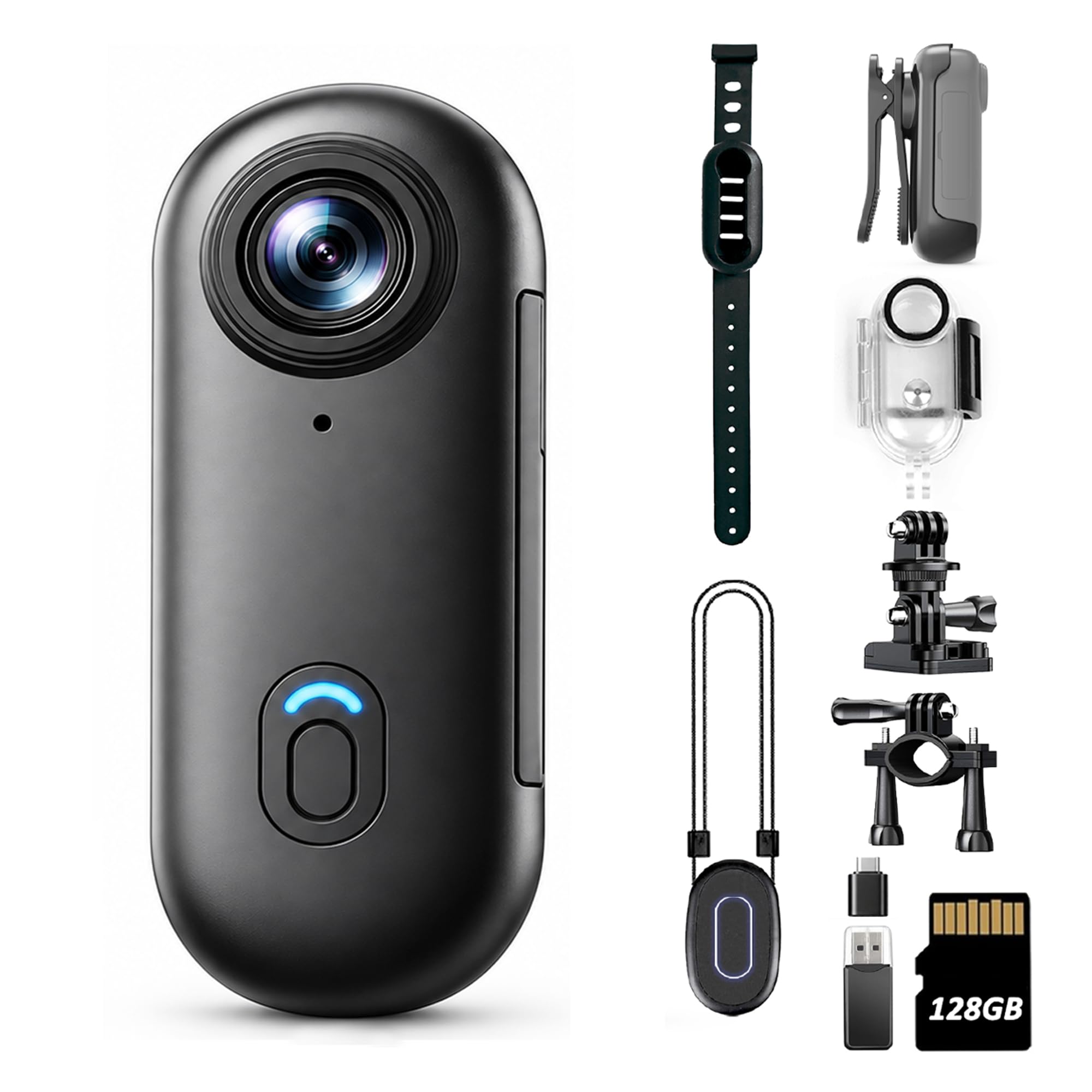
The most forgettable part of any action camera is the memory card. Leave it in the laptop and the trip becomes a lesson in nothing, which is why the H88's built-in 128GB is the right idea for a grab-and-go fishing camera. There is nothing to load, and the 140-degree lens is wide enough to hold a rod, a net and a fish in the same frame.

Mounting is sorted in the box as well: a 360-degree swivel clip, a magnetic lanyard, a bicycle holder and a waterproof case. For fishing, the clip and magnet are the useful half, since they go onto a collar, a wader strap or the brim of a cap with no tools and nothing to thread.

The failure to watch for is a dead-on-arrival unit. Where these cameras do go wrong, they seem to go wrong immediately rather than after a season, so record something the day it lands and keep the packaging until you have watched it back. That is not a reason to avoid it at this price, but it is a reason not to open it in the parking lot on the way to the lake.

Pros

  • 128GB built in, no card to forget
  • Clip, magnet, bike holder and case included
  • 140-degree lens fits the whole scene

Cons

  • Storage is fixed with no card to swap
  • About 90 minutes per charge
Our verdict

We recommend the H88 when you want to grab a camera and go, with one condition: record a test clip the day it arrives.

Check Latest Price
7

Hat-Mounted POV

Intepoll TO 3S

79 /100
Traveler Score Very Good

Key details

Weight
1.27 oz
Claimed Runtime
90 minutes
Included Storage
128 GB card
Water Resistance
IPX7 case, to 100 ft
Check Details on Amazon

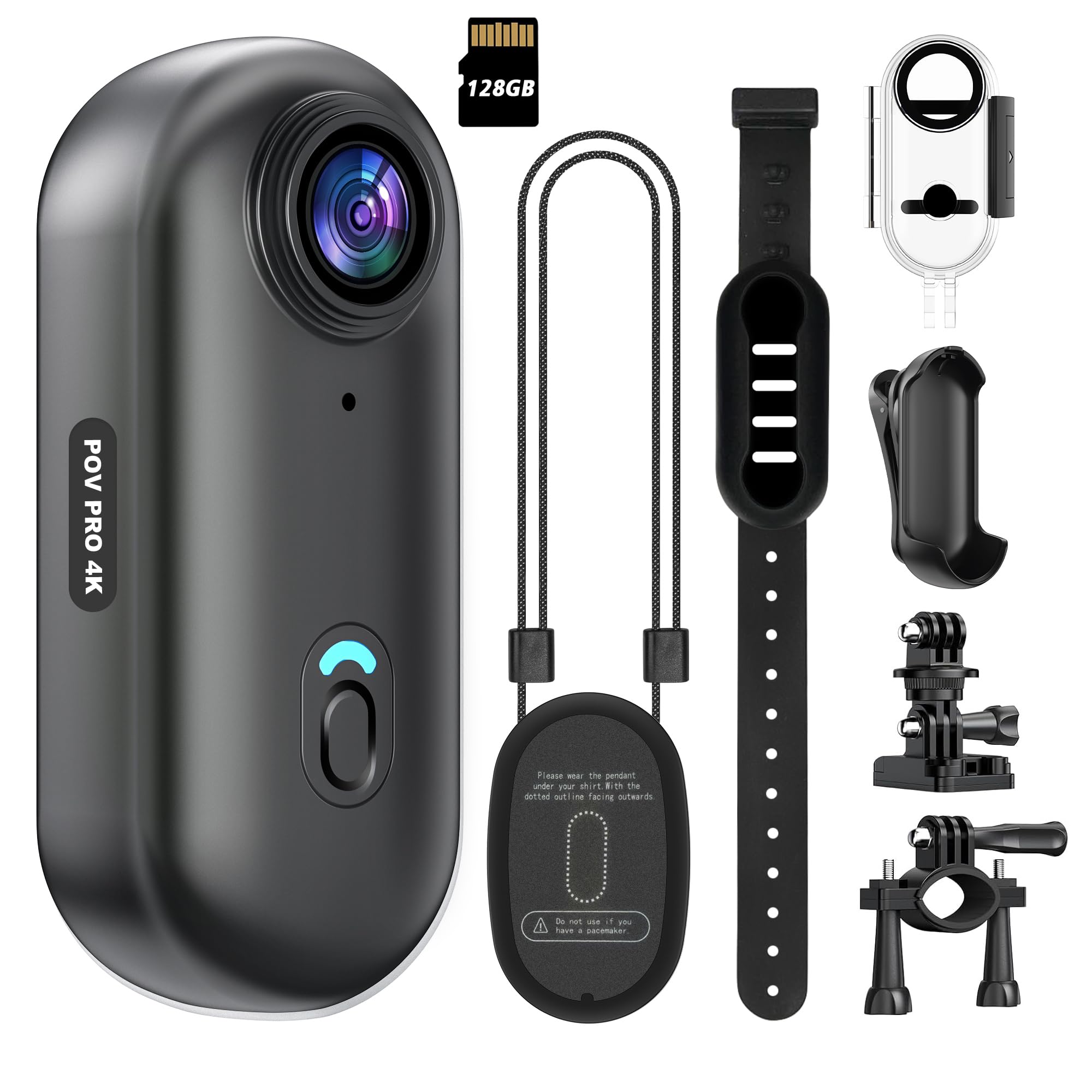
The appeal of a camera this small is that it disappears: 1.27 ounces clipped to a hat or hanging from a magnetic pendant, and you forget it is running. The thing that does not disappear is the app. Pairing the TO 3S with a phone is the weak link in the package, and a boat with wet hands is the worst possible place to fight with it.

The rest of the hardware is more thought through than the price suggests. The 90-minute runtime is quoted with Wi-Fi switched off, which tells you exactly what the radio costs you: leave it off, record to the included 128GB card, and pull the footage later. The housing is rated IPX7 to 100 feet, and the box includes a back clip plus helmet and bike mounts.

Where it fits is the angle nothing else here gives you. A hat-brim view of your own hands working a lure, or a chest-height shot of the net coming under a fish, is a perspective the full-size cameras make awkward to get because there is nowhere clean to put them.

Our read is that it earns a place in a tackle bag, not on the shortlist of cameras you trust with the fish of a lifetime. Buy it for one specific shot, keep the phone out of the workflow, and it does a job the bigger bodies cannot.

Pros

  • 1.27 ounces disappears on a hat or lanyard
  • 128GB card and mounts included
  • Housing rated IPX7 to 100 feet

Cons

  • One-inch screen makes framing depend on the app
Our verdict

We rate this a second camera rather than a first: brilliant for a POV angle, provided you shoot to the card and skip the app.

Check Latest Price

How We Tested 11 Action Cameras for Fishing

We started by rounding up every action camera we could reasonably mount to a rod, a boat rail, or a chest harness, then cut the list by waterproof ratings, mounting standards, battery specs, and price. That left 11 cameras, a mix of models we already knew from other trips and a few we hadn't touched before. Testing ran for eight months, beginning with a cold-weather launch and carrying through summer topwater mornings, so nothing got judged on one perfect day.

Each camera got the same treatment: powered on at the ramp, mounted on a rod butt or a rail, and left running until the battery died or we trailered the boat. We logged the exact time each one quit and how long a swap took with cold, wet hands. Back home we watched the footage on a laptop, looking at how much detail held on a fish against a bright sky, whether the stabilization kept a horizon steady while we stood in chop, and whether dawn clips were usable or just grain.

Ease of use got tested the way it actually happens. One editor pocketed each camera, worked the buttons with gloves on, and checked whether the screen was legible in direct sun. Accessories we judged by what came in the box and whether the mounts held a camera steady at speed. For connectivity, we offloaded clips to a phone at a ramp with no signal and timed it. Durability and reliability came from the less glamorous stuff: hose spray, a few drops on the deck, salt left overnight, and whether each camera switched on the next morning without a fuss.

How to Choose the Right Action Camera for Fishing

Sealed body or waterproof housing

An action camera survives water one of two ways. A sealed body, which is what the two DJI Osmo cameras use, means nothing to open, nothing to fog and nothing between the microphone and the splash. A housing gets you to 131 feet for far less money but adds a step: the camera goes in dry, the gasket gets checked, and once it is closed you are changing settings by feel and listening to the splash through plastic.

Think about how often the camera will be on when you lean over the side. If the answer is often, the sealed body removes a ritual that gets skipped the moment a fish is on.

Battery life on the water

Every runtime on this page is a best case: a fresh battery, a warm day and a resolution you would actually choose. Cold mornings and 4K both take a bite, which is why the number of batteries in the box matters as much as the claim. DJI's 240-minute figure on the Action 5 Pro is the outlier that makes a single charge plausible for a full trip; a 90-minute claim means planning a swap.

A dual charger, like the one packed with the EK7000, turns two modest batteries into a working day. Count chargers, not just batteries.

Mounts and how fast you can move the camera

The mount decides whether you get the shot. A magnetic quick-release lets you pull the camera off a rail and clip it to a PFD one-handed; a threaded housing and locking screw take two hands and a moment you may not have. Weight matters just as much, and it is the reason the thumb-sized cameras exist: an ounce on a hat brim is invisible, while a full-size body needs a solid mount or a chest harness.

Pick the three places you want the shot from, then count the seconds each move costs.

Stabilization and low light

A drifting boat never stops moving, and electronic stabilization is what keeps the horizon from rolling with it. Horizon lock is the setting worth finding, because it holds the waterline flat even when the camera tilts. Low light is the other half of the job. The largest sensors here are 1/1.3-inch and the smallest are 1/4-inch, and that gap is the difference between usable first-light footage and mush.

If you fish dawn and dusk, pay for sensor size before you pay for frame rate.

Frequently Asked Questions

Final Verdict

Most anglers should buy the DJI Osmo Action 5 Pro. It is the camera here that handles battery, water and mounting without a workaround, and the difference shows up at exactly the moment a fish is at the boat and you have one hand free.

If the price is the sticking point, the Action 4 keeps the same sensor and the same stabilization and gives up roughly an hour and a half of claimed recording, which is a trade most people can live with. Kayak anglers who want a camera that floats should start with the AKASO Brave 4 Pro bundle instead.