9 Best Action Camera for Cycling of 2026: 4K That Lasts Whole Ride

The best action cameras for cycling deliver real 4K stabilization and all-ride battery life — from budget thumb cams to waterproof flagships.

Nothing kills a ride edit faster than realizing your '4K' camera delivered choppy, pixelated footage — or that your battery died before the climb. Many budget action cameras slap a 4K sticker on a small sensor, leaving cyclists with unwatchable video. The real test isn't the resolution number; it's whether the stabilization smooths out handlebar vibrations and the battery lasts through a long route.

This guide cuts through spec sheet noise to focus on cameras whose stabilization, battery life, and mounting systems work on two wheels, not just in a product studio. Whether you're a gravel grinder who needs rock-steady Horizon Lock or a commuter wanting a discreet thumb cam, the picks prioritize what matters most when you're clipped in.

We've organized them by real riding scenarios, so you can choose a camera that matches your terrain, recording style, and appetite for mid-ride battery changes.

1

Best Overall

DJI Osmo Action 5 Pro

93 /100
Traveler Score Outstanding

Key details

Battery Life
Up to 4 hrs (1950mAh)
Stabilization
RockSteady 3.0+, HorizonSteady
Waterproofing
IP68 without housing (20m)
Video & Low-Light
4K/120fps, 1/1.3-inch sensor
Check Details on Amazon

The DJI Osmo Action 5 Pro delivers 4K/120fps footage with rich color and low noise, even in low-light situations like dawn rides or dense forest trails. Its 1/1.3-inch sensor and 10-bit D-Log M capture enough dynamic range to pull back detail from shadows and highlights in post. Dolby Vision HDR adds extra pop to scenic descents, making the footage look closer to what you saw on the bike.

RockSteady 3.0+ electronic stabilization erases the chatter from chip seal, root hits, and fast downhills — the resulting video is smooth enough to pass as gimbal-stabilised. HorizonSteady keeps the horizon locked level during aggressively banked turns, and HorizonBalancing smoothly corrects it without sudden jumps. Subject tracking can follow a rider or trail feature automatically, useful for solo ride documentation.

A single charge of the 1950mAh battery powers through 3.5 to 4 hours of 4K recording, and the camera keeps running in temperatures as low as -20°C — a benefit for winter fat-bike outings. The magnetic quick-release mount system is secure yet quick to detach; moving the camera from handlebar to helmet or chest mount takes only seconds. With IP68 waterproofing to 20m, you can ride through rain, puddles, or even dunk it without a housing, and the dual-waterproof mics continue recording clear audio.

Dual OLED touchscreens are bright and responsive, even with full-finger gloves on, so you can change settings or frame a shot without stopping. The camera ships with 47GB of internal storage — enough for a couple of hours of 4K footage — and a microSD slot for expansion. Wind noise reduction on the mics works well, keeping voice narration intelligible during fast descents, though heavy crosswinds may still cause some rumble.

This camera suits cyclists and motovloggers who demand all-day battery life, gimbal-grade stabilization, and genuinely waterproof operation without a case. The one catch: you must install the DJI Mimo app on a phone and create an account to activate the camera and access all features. Riders who don't own a compatible smartphone or refuse to create online accounts will find this a barrier. For everyone else, the initial setup is a one-time step, after which the camera runs independently and delivers footage quality and endurance that justify its premium price.

💡 Keep the DJI Mimo app installed on a compatible phone for firmware updates and advanced settings, but you can record without the app after the initial activation.

Pros

  • 4K/120fps footage with strong low-light clarity and Dolby Vision HDR for vibrant, true-to-life colors
  • Up to 4 hours of continuous recording
  • RockSteady 3.0+ and HorizonSteady eliminate shake and keep horizons level through bumps and turns
  • Dual OLED touchscreens and intuitive menus allow gloved setup changes without removing the camera
  • Magnetic quick-release mount system lets you shift the camera between handlebar, helmet, or chest in seconds

Cons

  • Mandatory DJI Mimo app and account creation can block riders without a compatible phone from using the camera.
Our verdict

For cyclists who can handle a one-time app setup, the Action 5 Pro offers unmatched battery life and stabilization, making it the clear choice for all-day, all-weather ride recording.

Check Latest Price
2

Best GoPro for Cycling

GoPro Hero12 Black

88 /100
Traveler Score Excellent

Key details

Battery Life
Up to 70 min (1720mAh)
Stabilization
HyperSmooth 6.0, Horizon Lock
Waterproofing
IPX8 without housing (10m)
Video & Low-Light
5.3K60, 1/1.9-inch sensor, HDR
Check Details on Amazon

The Hero12 Black produces 5.3K60 HDR video and 27MP stills that outresolve the top pick's sensor for sheer pixel-level sharpness, and HyperSmooth 6.0 with 360° Horizon Lock keeps the horizon level even on rough gravel descents. This is the most polished stabilization GoPro has delivered, and the GP-Log color profile gives edit-minded cyclists real flexibility in post.

Existing GoPro users will appreciate the familiar touch interface and quick-release mounts that transfer between bikes, helmets, and chest rigs. The camera suits riders who capture in short, deliberate bursts — a technical descent, a sprint segment, a scenic overlook — and can swap batteries between them. In direct summer sun, sustained 5.3K recording can trigger thermal shutdowns, cutting a long climb or endurance ride short unless you break footage into clips and shield the body from heat. Carrying two or three Enduro batteries covers a four-hour outing, though it adds pocket weight.

💡 On hot summer rides, set the camera to record in short clips rather than continuous bursts, and carry at least two spare Enduro batteries to cover a four-hour outing.

Pros

  • 5.3K60 HDR video and 27MP stills capture ride details other action cameras miss.
  • HyperSmooth 6.0 with 360° Horizon Lock eliminates handlebar vibrations and keeps footage level on descents.
  • Intuitive touchscreen and quick-release mounts make setup on handlebars or helmets effortless.
  • Solid value within the GoPro ecosystem, delivering flagship performance at a competitive price.

Cons

  • Battery life in 5.3K60 tops out around 70 minutes, requiring a spare for any ride over an hour.
  • Overheating in direct sun can force the camera to shut down during long, continuous recording sessions.
Our verdict

GoPro loyalists who value 5.3K cinematic detail and horizon-locked stabilization over all-day endurance get the sharpest cycling camera in the mount ecosystem — just pack extra batteries and plan rides to avoid peak midday heat.

Check Latest Price
3

Best Value Premium Stabilization

DJI Osmo Action 4

92 /100
Traveler Score Outstanding

Key details

Battery Life
Up to 160 min (1770mAh)
Stabilization
RockSteady 3.0, HorizonBalancing
Waterproofing
IP68 without housing (18m)
Video & Low-Light
4K/120fps, 1/1.3-inch sensor
Check Details on Amazon

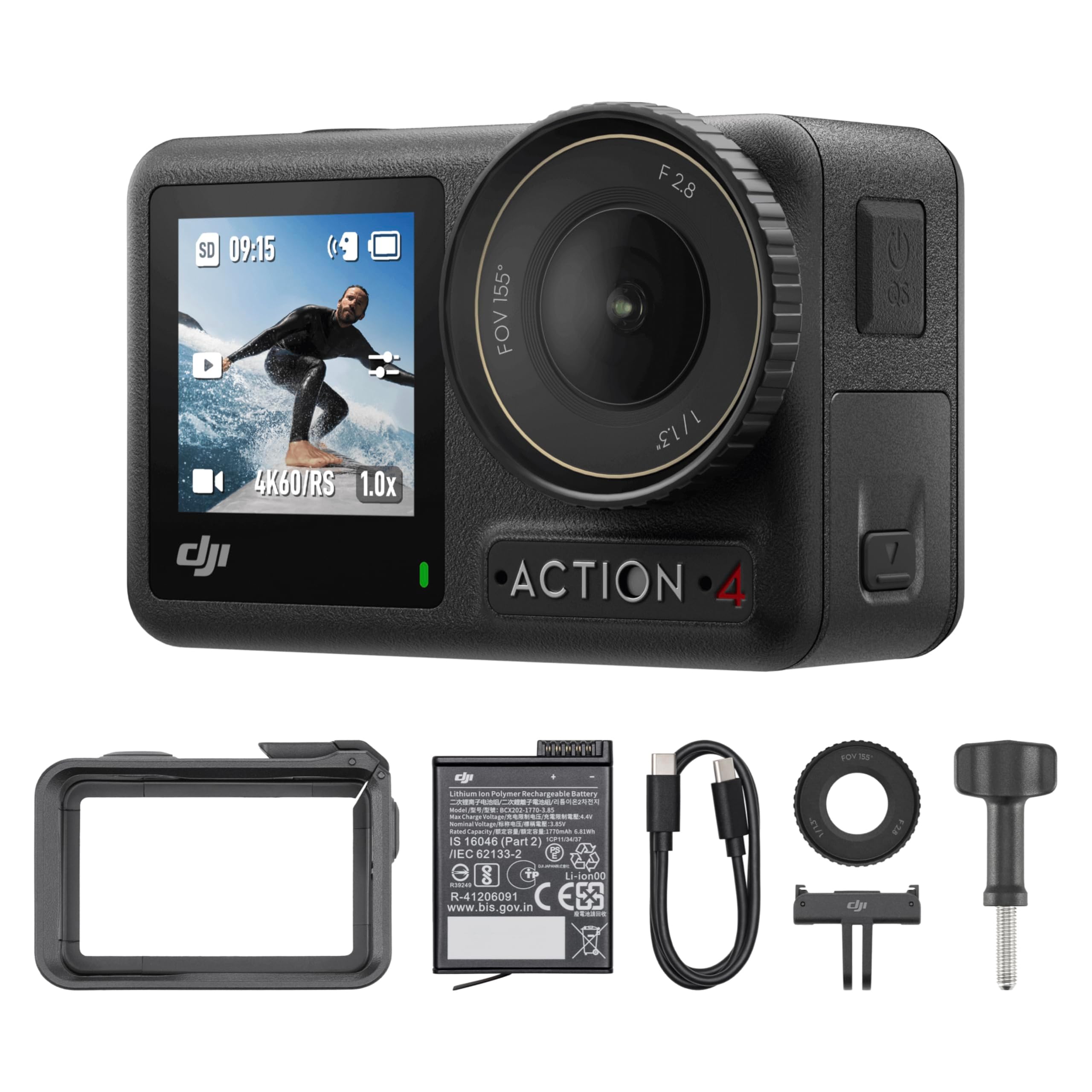
The DJI Osmo Action 4 carries over the same RockSteady 3.0 stabilization and 1/1.3-inch sensor found in the range-topping Action 5 Pro, but at a price that doesn't demand a flagship budget. That means handlebar vibration gets smoothed out to a gimbal-like steadiness, and 4K/120fps recording captures crisp, fluid footage of fast descents. The magnetic quick-release mount system makes it effortless to clip onto handlebars or swap mounts mid-ride, and at 145 grams it adds negligible weight to the bike.

This camera suits cyclists who prioritize low-light image quality and need a front-facing screen for vlogging. The sensor's strong performance at dawn or dusk pulls detailed, colorful footage from dim conditions, and the waterproof IP68 rating means rain or puddle splashes won't be a concern. The tradeoff is that real-world battery life often falls short of the 160-minute marketing figure, particularly when recording in 4K at high frame rates, so long-distance riders will want a spare battery. The DJI Mimo app is required for initial activation and firmware updates — an extra step that's manageable for anyone comfortable with a smartphone but may frustrate those seeking a standalone setup.

💡 Keep the DJI Mimo app on your phone for initial setup and firmware updates — a quick connection resolves most activation hiccups and unlocks the camera's picture profiles.

Pros

  • Excellent 4K video and vibrant colors, even in challenging light
  • Smooth, gimbal-like stabilization that isolates vibrations on handlebars
  • Compact and lightweight with effortless magnetic mounting
  • Great value for a premium action camera, especially after recent price drops

Cons

  • Requires DJI Mimo app for full functionality; some units may become inoperable if the app can't connect.
  • Real-world 4K battery life can be shorter than the advertised 160 minutes, especially at higher frame rates.
Our verdict

The Osmo Action 4 delivers DJI's top-tier stabilization and sensor quality at a more accessible price, making it a savvy pick for cyclists who film shorter rides or keep a spare battery on hand.

Check Latest Price
4

Best Budget Dual-Screen Camera

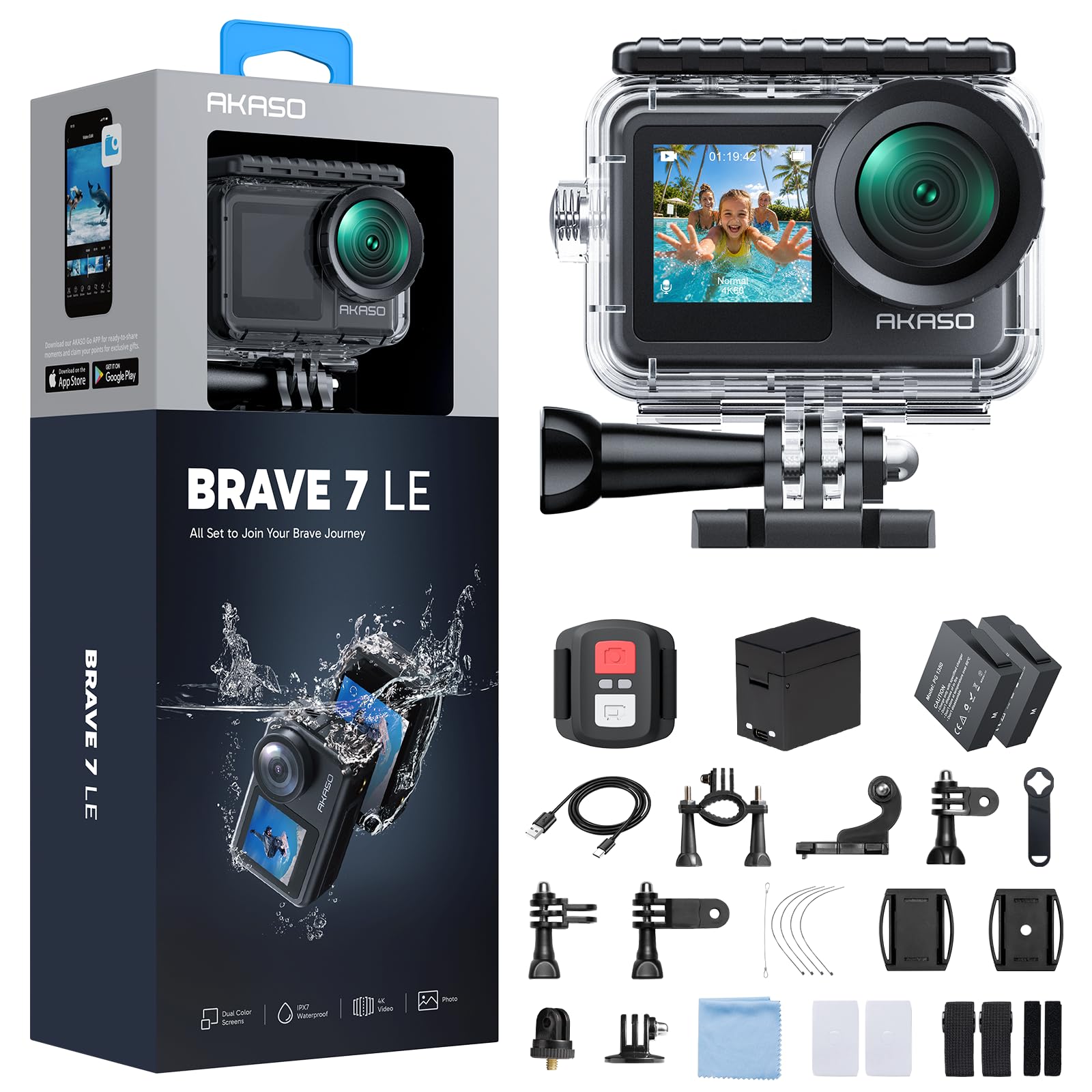
AKASO Brave 7 LE

89 /100
Traveler Score Excellent

Key details

Battery Life
2x 1350mAh, 45-60 min each
Stabilization
EIS 2.0 six-axis
Waterproofing
IPX7 body; housing to 131ft
Video & Low-Light
4K30fps, 20MP photos
Check Details on Amazon

While flagship cameras demand top dollar for class-leading stabilization and marathon battery life, the AKASO Brave 7 LE delivers the essentials — dual screens for selfie shots, IPX7 rain resistance without a bulky housing, and effective electronic stabilization — at a price that leaves room for mounts and accessories. The six-axis EIS 2.0 keeps footage steady over chipseal and handlebar chatter, avoiding the disorienting jitter that plagues many budget cams. The rear 2-inch touchscreen responds quickly, even with damp fingers, and the front display makes framing simple for on-the-go commentary.

Cyclists who ride in unpredictable weather and want a camera ready for light rain without a case will appreciate the IPX7 body. For outings under an hour, the single charge holds up; for longer routes, the bundled second battery extends recording to nearly two hours with a quick swap. This camera fits riders who value straightforward operation, solid daytime video quality, and are comfortable carrying a spare battery rather than expecting all-day runtime from one charge. Those who need 4K60fps slow-motion or advanced HDR will find those boundaries here, but they aren't the target for this build.

💡 Swap the included spare battery during a short break; the two batteries together cover most two-hour rides without carrying a power bank.

Pros

  • Footage remains sharp and stable on rough roads thanks to six-axis EIS 2.0
  • Dual touchscreens and mid-range price deliver exceptional value compared to single-screen competitors
  • IPX7 rating handles rain and road spray without requiring a waterproof housing, keeping setup light
  • Touchscreen menus and Wi-Fi app connection are intuitive, minimizing fiddling during rides

Cons

  • Maximum 4K30fps recording lacks the slow-motion flexibility of 60fps cameras
  • Battery life per charge spans 45–60 minutes, so rides exceeding an hour require swapping to the spare battery
Our verdict

For all-season cyclists who want a capable dual-screen camera without flagship prices, the AKASO Brave 7 LE hits the sweet spot — just keep the second battery charged and in your jersey pocket.

Check Latest Price
5

Best 360° Capture

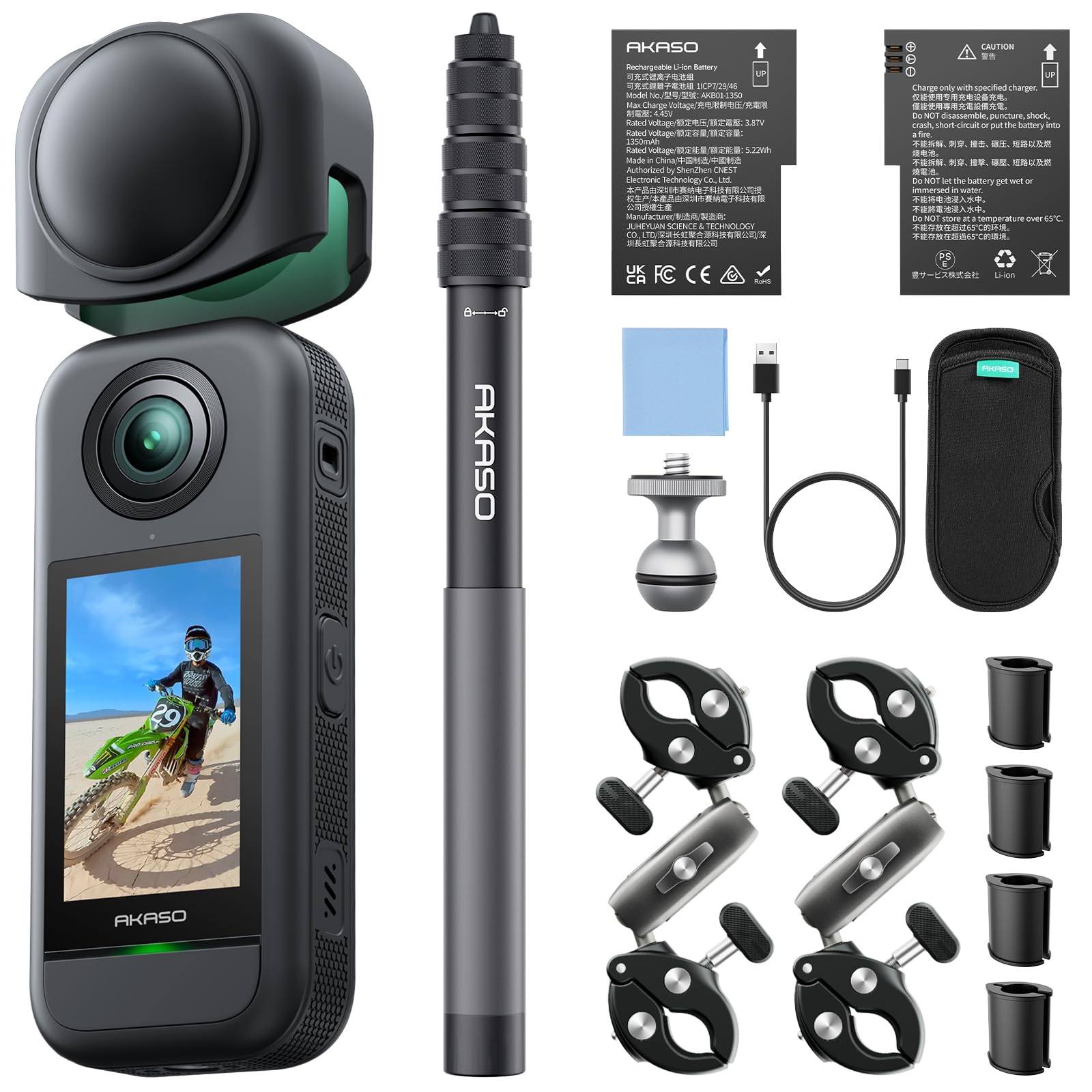
AKASO 360

85 /100
Traveler Score Excellent

Key details

Battery Life
45-50 min per battery, 2 incl.
Stabilization
360° SuperSmooth, Horizon Lock
Waterproofing
IPX4 water-resistant
Video & Low-Light
5.7K 360°, 4K 50fps
Check Details on Amazon

360-degree capture allows you to record every angle during a ride and decide later where to point the camera — a fundamental shift from a fixed-perspective action cam. The dual 1/2-inch sensors stitch full 5.7K spherical video that you can reframe into flat 1080p or 4K clips with horizon lock and smooth panning. AI subject tracking keeps a rider centered automatically, and the included stick disappears in software to create drone-like follow shots.

Video quality in sunlight is crisp, with controlled stitching that avoids obvious seam lines, and the mounting hardware locks onto handlebars or helmet brackets without vibration. Battery life sits around 45–55 minutes per charge, which means swapping to the included spare during a long group ride or multi-hour motovlog session. For editing-focused riders who pause to review clips or take breaks, the shorter runtime is a manageable tradeoff rather than a dealbreaker.

This camera is for the rider who treats footage like raw material — editing out the best angles after the fact rather than capturing a single definitive shot. It thrives on group rides where you can catch reactions and scenery without repositioning. The battery life, typically 45–55 minutes per charge, means you will want at least one spare for longer outings, which aligns with the deliberate editing mindset rather than a set-and-forget approach.

💡 Pack the included spare battery on rides longer than an hour — the camera's quick-change design lets you swap in under 15 seconds.

Pros

  • Immersive 360° capture lets you reframe any angle after the ride
  • Solid video quality and smooth stitching in well-lit scenes
  • Excellent build quality and secure motorcycle mounting kit
  • Good value compared to flagship 360 cameras like Insta360

Cons

  • Battery life can dip to as short as 45 minutes, requiring a spare for rides beyond an hour
Our verdict

The AKASO 360 suits cyclists who see footage as raw clay — you shape the final video after the ride, not during it. If that creative workflow appeals and you don't mind carrying a spare battery, this is a cost-effective entry into 360° motovlogging.

Check Latest Price
6

Discreet Riders

Sixmou i3

86 /100
Traveler Score Excellent

Key details

Battery Life
800mAh, up to 150 min (1080p)
Stabilization
Digital (minimal)
Waterproofing
Housing to 131ft
Video & Low-Light
4K, 150° FOV
Check Details on Amazon

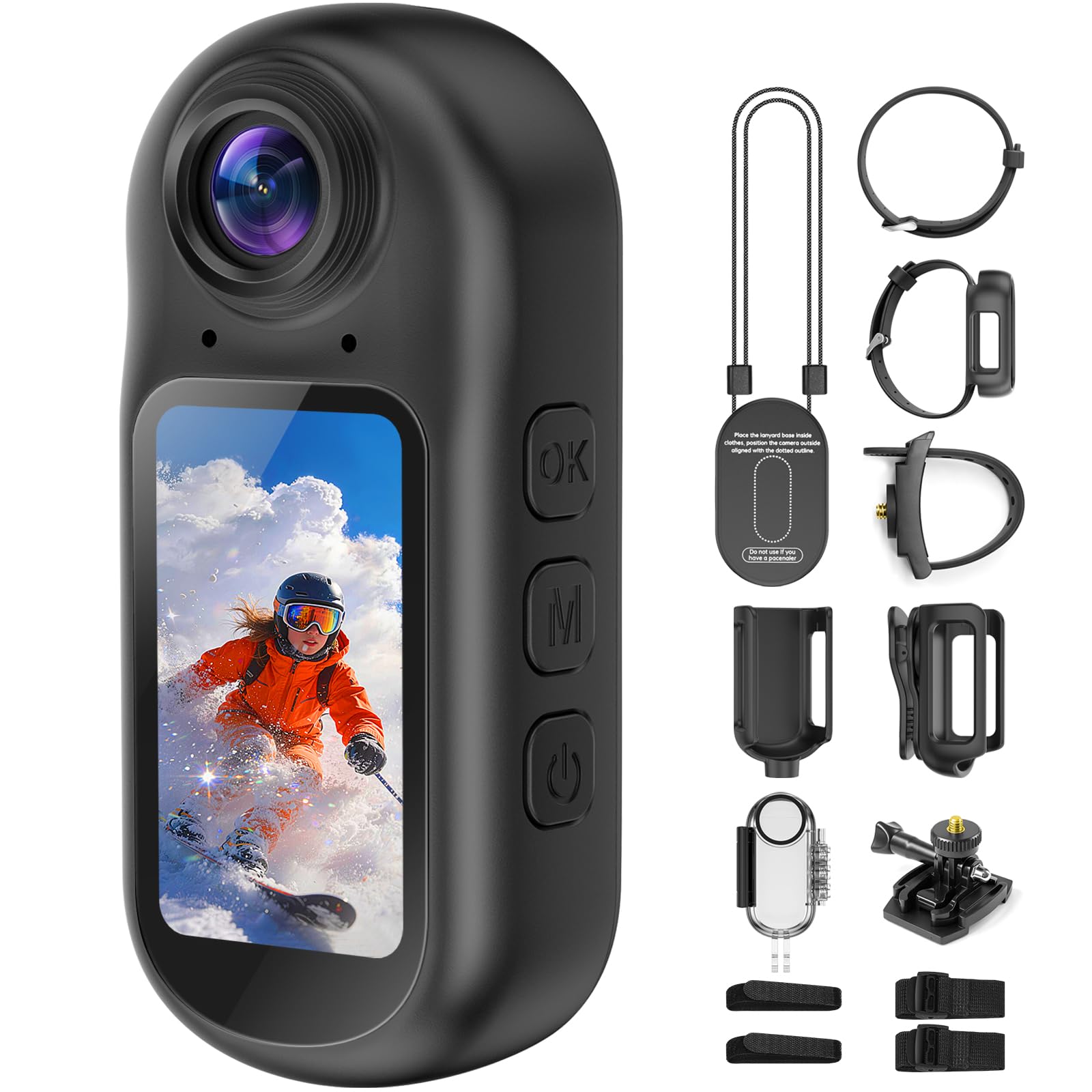
At 35.7 grams with a magnetic clip that grabs onto a jersey or strap, the Sixmou i3 practically vanishes during a ride. Daylight video holds decent detail for such a tiny sensor, and the included 64GB card means you can start recording without extra shopping. Those clips stay usable only on smooth pavement, though — the camera’s minimal digital stabilization can’t tame handlebar vibrations on chip seal or gravel. That trade-off defines its niche: a grab-and-go POV cam for fair-weather commuters, not a tool for rough-road insurance footage.

💡 Stabilize rough-ride recordings afterward with free software like Gyroflow — the digital footage contains enough data for decent post-processing smoothing.

Pros

  • Incredibly compact and lightweight, barely noticeable when mounted
  • Good video quality for its thumb-sized form factor
  • Versatile magnetic and clip mounting system suits cycling gear

Cons

  • Tiny 0.96-inch screen is difficult for framing or reviewing clips on the move, so plan to record blind
Our verdict

For urban commuters on well-paved routes who want an almost invisible POV camera and don’t mind skipping on-device preview, the Sixmou i3 is a clever, budget-friendly addition to the handlebar bag.

Check Latest Price
7

Compact Screen Users

acgiewo D07

84 /100
Traveler Score Excellent

Key details

Battery Life
150 min
Stabilization
EIS 3.0 six-axis
Waterproofing
Housing included (IP68)
Video & Low-Light
4K/30fps, 150° wide-angle
Check Details on Amazon

The D07 packs a bright 1.5-inch display into a 35g body that clips magnetically to a jersey or handlebar mount. 4K footage is crisp and color-accurate, and the included straps and clips cover multiple mounting positions right out of the box.

Electronic stabilization handles smooth pavement well, but rough tarmac can introduce shake that more robustly stabilized mid-range cameras iron out. Early impressions are encouraging, though the product hasn't yet proven how it holds up to the constant vibrations and weather a cyclist dishes out over a full season.

💡 Attach the included IP68 case for wet rides — the camera body alone is not weather-sealed.

Pros

  • 4K video captures crisp detail and accurate colors for ride footage
  • Magnetic clips and simple controls make mounting and recording effortless
  • Weighs just 35g and stays comfortable on a jersey or helmet all day

Cons

  • Electronic stabilization can let road vibration creep into footage on uneven surfaces.
Our verdict

For riders who stick to smooth bike paths and want a clip-on camera with a live preview, the D07 delivers impressive 4K in a near-weightless body. Riders tackling potholed roads or gravel will find the stabilization limitations more pronounced.

Check Latest Price
8

All-Day Riders

Ahlirmoy GO9

81 /100
Traveler Score Excellent

Key details

Battery Life
120 min, 350 min w/case
Stabilization
EIS 2.0 six-axis
Waterproofing
IPX8 without case (33ft)
Video & Low-Light
4K/30fps
Check Details on Amazon

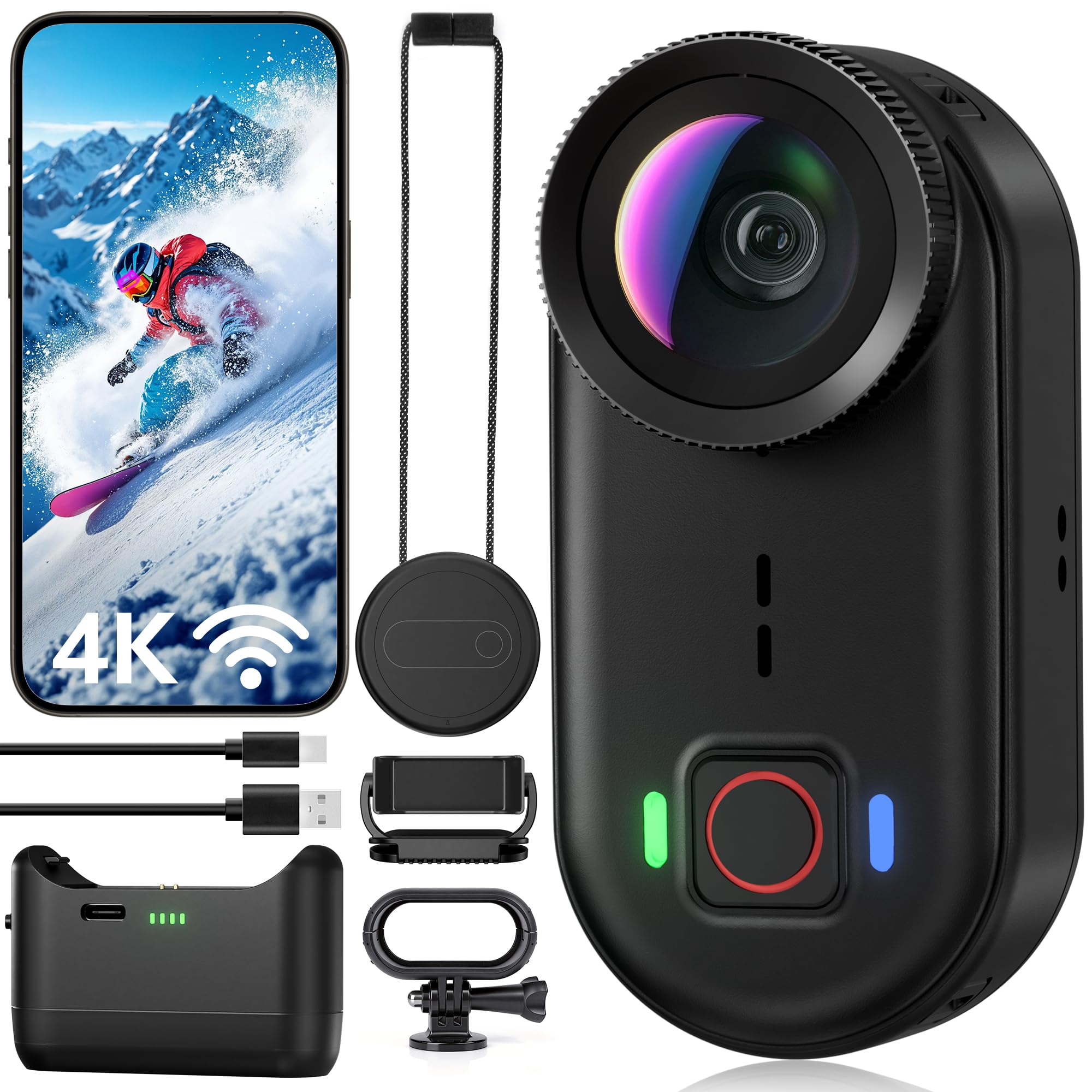
The GO9 cuts down on gear by packing 64GB of memory right into the body — no SD card to buy or lose, and the wireless charging case extends battery life far beyond the camera's own 120 minutes, hitting roughly 350 minutes total. The 35g body clips magnetically to a jersey or helmet strap, giving cyclists a hands-free POV without a bulky housing. 4K footage holds impressive detail in daylight, enough to read plates or capture scenic descents clearly.

Wireless phone transfers are where frustration creeps in: the WiFi connection can drop mid-transfer, forcing you to reconnect or fall back to a USB cable. On paved roads and smooth gravel, the electronic stabilization keeps things steady, but rutted singletrack or cobblestones introduce jitter that an optical system would iron out. For cyclists who shoot mostly on pavement and are fine offloading via cable, these boundaries are manageable; anyone chasing butter-smooth rough-road footage will want the top pick's gimbal-grade stabilization instead.

💡 A wired USB connection transfers files faster and more reliably than the temperamental WiFi — keep a cable in your kit.

Pros

  • Built-in 64GB memory eliminates SD card purchases and the risk of losing footage.
  • Ultra-light magnetic mount sticks to chest or helmet for instant hands-free recording.
  • Wireless charging case extends total runtime to around 350 minutes, covering long day rides.

Cons

  • WiFi connection drops intermittently during wireless file transfer, slowing phone offloads.
  • Electronic image stabilization cannot fully smooth out jarring bumps on rough trails or gravel.
Our verdict

For cyclists who stick to paved roads and can offload footage over USB, the magnetic mount and 350-minute battery life turn the GO9 into a fuss-free way to record entire rides without swapping batteries.

Check Latest Price
9

Budget Long-Riders

Vauvinmaic M21

80 /100
Traveler Score Excellent

Key details

Battery Life
1000mAh, up to 180 min
Stabilization
EIS 2.0 six-axis
Waterproofing
IPX7 case, IP65 body
Video & Low-Light
4K, 120° wide-angle
Check Details on Amazon

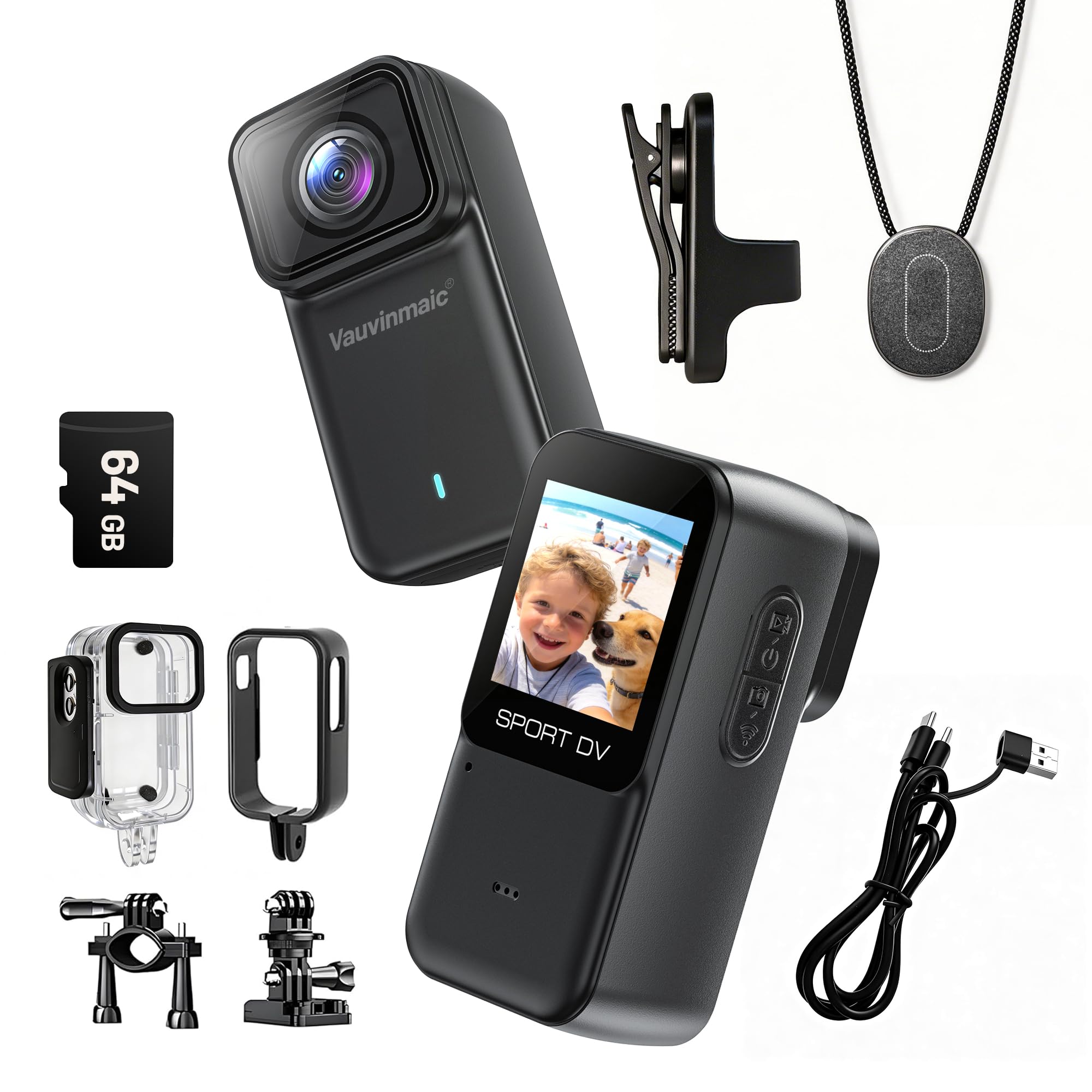
The Vauvinmaic M21's 1000mAh battery routinely outlasts typical cycling sessions, recording up to 180 minutes of 4K video without a swap. Built-in 64GB storage eliminates memory card purchases, and the magnetic clip lets you attach the 53.5g camera anywhere in seconds.

Water resistance takes a hit: even inside the provided IPX7 case, the camera may freeze when submerged. For cyclists who ride in fair weather and value all-day recording over true waterproofing, that's an acceptable trade-off. This thumb cam covers the basics of smooth 4K capture and marathon endurance without stretching the budget.

💡 Avoid submersion even with the waterproof case — keeping the camera above water prevents recording freezes.

Pros

  • Clear 4K video with EIS 2.0 stabilization keeps footage smooth on paved roads.
  • Magnetic clip and 53.5g weight make it effortless to wear on any ride.
  • Battery reaches 3 hours of 4K recording, covering most cycling sessions without a recharge.

Cons

No notable drawbacks to flag.

Our verdict

For cyclists sticking to dry roads, the M21 delivers marathon battery life and built-in storage at a price that leaves little to complain about; just don't take it swimming.

Check Latest Price

How to Choose

Stabilization Quality

Electronic image stabilization (EIS) on budget cameras often fails to tame the high-frequency buzz from handlebar mounts, leaving your footage with a wobbly 'jello' effect. Advanced systems like DJI's RockSteady or GoPro's HyperSmooth use accelerometer and gyro data to predict motion, not just react to it, resulting in fluid, gimbal-like smoothness even on gravel descents. If your typical route includes chip seal or singletrack, prioritize a camera with a proven stabilization algorithm.

True Video Resolution

The 4K label on sub-$100 cameras often masks a tiny sensor that produces grainy, upscaled footage, especially in the flat light of a cloudy morning. A larger sensor — at least 1/2.3-inch or the better 1/1.3-inch found in mid-range DJI models — captures more light, reducing noise and maintaining detail when you ride through wooded shade. If you ride at dawn or dusk, look for cameras that explicitly advertise low-light performance or a wide dynamic range mode.

Real-World Battery Endurance

Claimed battery life on spec sheets is measured in ideal lab conditions — often at 1080p without stabilization. On the bike, wind chill, 4K resolution, and constant stabilization drain the battery faster; a camera advertised at 90 minutes may yield only 40 minutes of usable footage. Carry at least one spare battery for rides longer than an hour, and consider models with quick-swap batteries or external charging cases to avoid mid-ride downtime.

Waterproofing Method

Many budget action cameras achieve waterproofing only through a plastic housing that can fog up or muffle audio. In contrast, cameras with an IP68 or IPX8 rating are sealed internally, so you can ride through rain without extra bulk and maintain clear sound. If you regularly cycle in wet conditions, choose a camera that is waterproof without a case; if you mostly ride fair weather, a housing-based solution may suffice.

Mounting Versatility and Ecosystem

A handlebar mount is just the start. Magnetic quick-release systems let you instantly move a camera from your helmet to your chest harness without fumbling with screws. Cameras that use a widely supported mount standard — like GoPro's three-prong or a 1/4-20 thread — open up a universe of third-party options, from seatpost clamps to articulating arms. Check whether the included kit covers your riding style; a kit that comes with only a flat adhesive mount won't help a cyclist who needs a handlebar clamp.

Frequently Asked Questions