Best 3-Season Sleeping Bags of 2026

A three-season sleeping bag is a compromise by design: warm enough for a frosty spring night, light enough to carry, and comfortable enough that you don't wake up wrestling with a snagged zipper. That balance is what separates a bag you tolerate from one you look forward to crawling into. Over the past eight months, my team and I slept in 12 different bags—on weekend camping trips, a rainy backpacking trip, and backyard overnights that included one 30°F night—weighing each one, stuffing it into its sack, and noting how the fabric felt against bare skin.

The bags that kept us warm without feeling like a straitjacket shared a few traits: a zipper that doesn't snag, a hood that cinches down, and a shell that breathes instead of trapping sweat. Price didn't always predict quality—a couple of mid-priced bags beat ones that cost nearly twice as much. Temperature ratings are a starting point, not a guarantee; your sleep style and what you wear to bed change everything. The picks below cover ultralight, roomy, and budget-friendly options.

1

Best Overall

Venture 4th XXL Sleeping Bag

93 /100
Traveler Score Outstanding

Key details

Shape
Envelope
Weight
4.4 lb
Dimensions
90" x 39"
Temperature Rating
30°F to 70°F
Check Details on Amazon

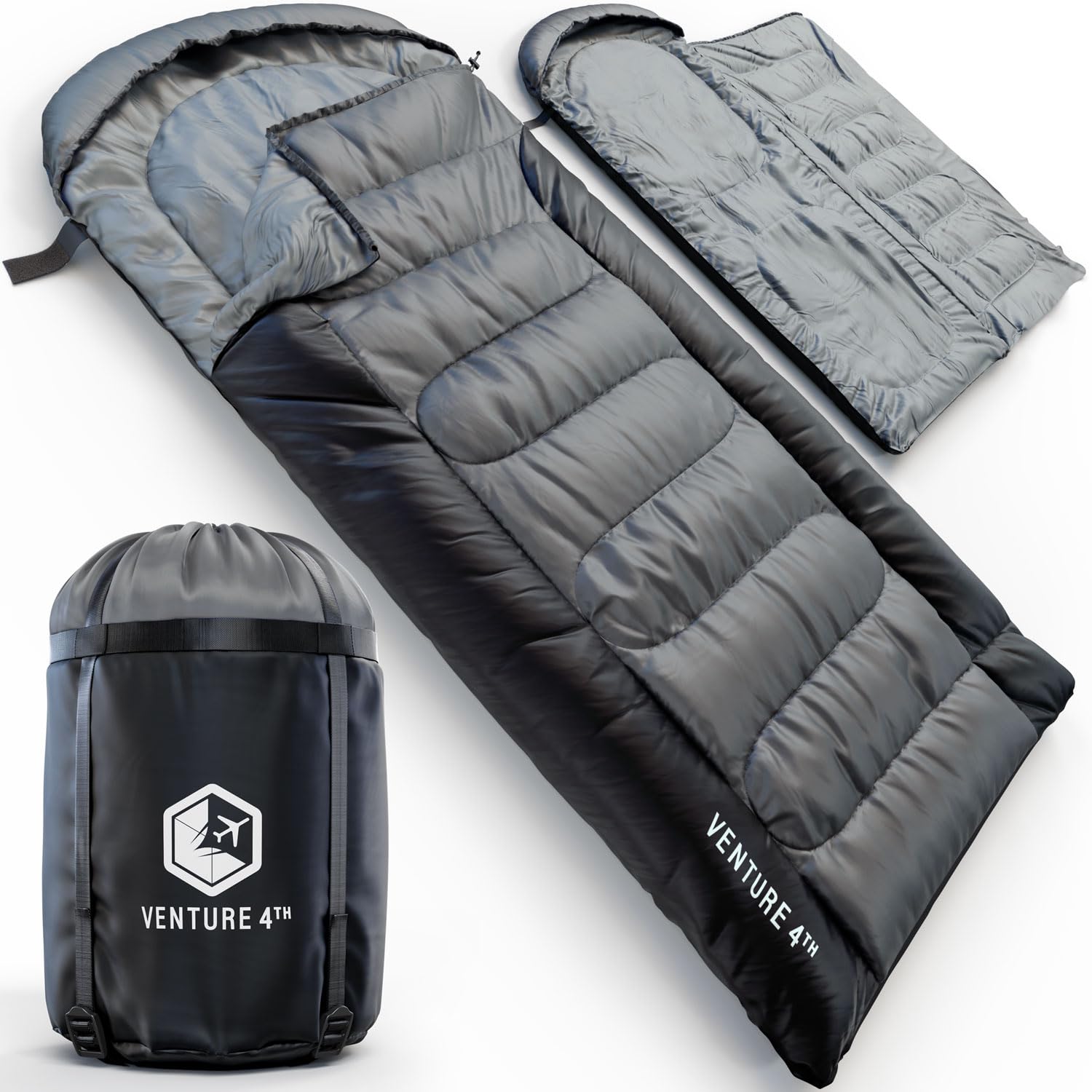
Thirty-nine inches of width is what decided it for us. The solo rectangular bags on this list run 31 to 33 inches across, and that missing six inches is the difference between sleeping on your side and waking up with a seam in your shoulder. The 90-inch length leaves room to sprawl as well, which is why this is the bag we hand to anyone who describes themselves as too big for a sleeping bag.

The rating reads 30°F to 70°F, and the cold end is the number to plan around. Hollow-fiber fill and a water-resistant 210T polyester shell are the standard synthetic recipe rather than a luxury one. What the width changes is how the bag feels at night: a roomier bag takes longer for your body to heat, but a bag you can turn over in is a bag you stay asleep in, and staying asleep is most of what a sleeping bag is for.

Where it belongs is car camping, van trips, and cabins, and the 4.4 pounds that come with all that room is the honest cost of it. A drawstring at the head snugs the opening down when the temperature drops, and the compression sack that ships with it is big enough to be usable rather than a fight. The lifetime replacement guarantee is the part we did not expect at this level and the part that tipped the ranking.

The zip is what we mention to anyone buying one, because it is the first component to give trouble on bags in this bracket. Run it the full length before every trip and again when you pack up, and the guarantee is there if it lets you down.

Pros

  • 90 by 39 inches fits broad and tall sleepers
  • Rated 30°F to 70°F for real shoulder seasons
  • Lifetime replacement guarantee
  • Water-resistant 210T shell with hollow-fiber fill

Cons

  • Heavy at 4.4 pounds beyond car camping
Our verdict

We made this our top pick for the width and the 30°F rating together; if you camp from a car and you're tired of a bag you can't turn over in, start here.

Check Latest Price
2

Best Value

Sportneer 3-Season Sleeping Bag

91 /100
Traveler Score Outstanding

Key details

Shape
Rectangular
Weight
3.3 lb
Dimensions
87" x 31.5"
Temperature Rating
32°F to 80°F
Check Details on Amazon

Sportneer prints 32°F at the bottom of the range and 80°F at the top, a wider spread than anything else on this list, and the design backs the claim up: a two-way zip that separates at the foot, a semi-circular hood with a drawstring, and 190T polyester inside and out. A bag that claims to cover March to October is promising to be the only one you pack all year, and this is close to that job.

We think it's the value pick of the group, and not narrowly. At 3.3 pounds and 87 by 31.5 inches it fits most adults, it rolls into its compression sack without a wrestling match, and it costs less than nearly everything else here. If you are outfitting two people or a teenager who will outgrow the hobby in three years, this is where the money goes furthest.

What you give up for the price is cut. The bag runs close through the shoulders and hips, which is fine on an average build and cramped on a broad one, and the zip is the piece most likely to give trouble — true of nearly every bag at this end of the market, and worth a thirty-second check the full length before each trip.

Pros

  • 32°F to 80°F rating covers three seasons
  • 3.3 pounds with a compression sack
  • Two-way foot zip vents warm nights
  • Costs less than most of this list

Cons

  • Cut close through the shoulders and hips
Our verdict

We think it's the best value here: a three-season rating, 3.3 pounds, and a price that leaves room for a decent pad.

Check Latest Price
3

Best for Backpacking

OneTigris Bushcrafter's Sleeping Bag

89 /100
Traveler Score Excellent

Key details

Shape
Mummy
Weight
3.1 lb
Dimensions
82.6" x 33"
Temperature Rating
46.4–59°F (8–15°C)
Check Details on Amazon

The mummy shape is the reason to pick this one. It is the only true tapered bag in the group, it weighs 3.1 pounds, and it rolls down small enough to disappear into a pack — the bag you want when you are the one carrying it up the hill.

The details are the good kind of boring. YKK zippers with an anti-snag backing, a cord-stopped hood that closes around your face, a 300T pongee shell that shrugs off tent condensation, and seven ounces of polycotton fill. The comfort range on the listing runs 46.4 to 59°F, which we read as a mild-night bag and a layering bag rather than a shoulder-season workhorse — pair it with a warm base layer and a pad and it earns its keep into the forties.

The taper is the trade. It is narrow through the middle, and side sleepers who draw their knees up will feel the walls against their hips. For a back sleeper covering distance, that narrowness is exactly what the weight savings are made of, and it is why this one stays in the pack rather than the trunk.

Pros

  • True mummy cut saves weight and bulk
  • YKK zips with anti-snag design
  • 3.1 pounds and packs to a small roll
  • Cord-stopped hood seals in warmth

Cons

  • Narrow through the middle for side sleepers
  • Comfort range stops short of freezing
Our verdict

We take this one when the bag has to be carried, and the YKK zips and 3.1-pound weight are the reasons.

Check Latest Price
4

Best Flannel Feel

REDCAMP Flannel Sleeping Bag

90 /100
Traveler Score Outstanding

Key details

Fill
2 lbs cotton
Lining
Cotton flannel
Dimensions
75" x 33"
Temperature Range
50–77°F (10–25°C)
Check Details on Amazon

Cotton flannel is the whole argument for this bag. The lining feels like bedding rather than the slick polyester most bags use, and after a night in one you notice it in a way you never notice a temperature rating. The comfort topic backs that up — this is the bag people describe as cozy rather than merely warm.

We appreciate that REDCAMP tells you what the fill weighs and what each weight is good for. This variant's 2-pound fill is rated 50–77°F, and the same bag comes in 3-, 4-, and 6-pound versions if you want more. Read the label honestly: this is a mild-weather bag, and three-season here means spring through early fall rather than October in the mountains.

The 75-by-33-inch cut fits sleepers to about six feet, which is shorter than most of this list, and the two-way zips let you join a pair into a double for a couple or a kid who wants in. It is also the bag we hand to someone who says they hate the feel of sleeping bags, which is a real category of camper and a difficult one to convert.

Pros

  • Cotton flannel lining feels like bedding
  • Two-way zips join two bags together
  • 2-pound fill rated 50–77°F
  • Ripstop polyester shell with waterproof treatment

Cons

  • Short at 75 inches for taller sleepers
  • Cotton fill packs bulkier than synthetic
Our verdict

We recommend it to anyone who wants bedding instead of a nylon shell, and who camps in mild weather rather than deep cold.

Check Latest Price
5

Best for Couples

AGEMORE Double Flannel Sleeping Bag

92 /100
Traveler Score Outstanding

Key details

Lining
Cotton flannel
Weight
7 lb
Occupancy
2 person
Dimensions
86.6" x 59"
Check Details on Amazon

The AGEMORE is two flannel-lined single bags zipped into one 86.6-by-59-inch double, and it splits back apart when one of you wants out at 2 a.m. without waking the other. That sounds like a gimmick until you have spent a night next to someone who runs at a different temperature than you do.

The measurements put it closer to a full than a queen, and seven pounds is a lot of bag to move around. Both halves are cotton flannel over a 210T polyester shell, which is why it feels like bedding and why it does not compress like a synthetic mummy. The listing's 6–15°C range is honest about what it is: a mild-weather double for summer and the warmer end of fall.

We were struck by how much of the appeal is the shared bag rather than the specification sheet. Two people under one cover are warmer than two people in two bags side by side, the bag doesn't slide apart in the night, and it turns a two-person tent into something closer to a bed. Give it the 48 hours the listing asks for out of the package to loft before you judge it.

Pros

  • Splits into two single bags
  • Cotton flannel lining on both halves
  • 86.6 by 59 inches sleeps two
  • Compression sack included

Cons

  • Seven pounds is heavy and bulky to pack
  • Long twin zips are the wear point
Our verdict

We rate it for couples who want one shared bag in mild weather, not for two people heading out in a hard frost.

Check Latest Price
6

Cold Nights, Car Camping

Coleman Brazos Sleeping Bag

85 /100
Traveler Score Excellent

Key details

Weight
5.2 lb
Draft Tube
Thermolock
Fits Up To
5 ft. 11 in.
Temperature Rating
30°F
Check Details on Amazon

Coleman prints 30°F on this bag, and the detail that makes the number believable is the draft tube behind the zip. That is exactly where a rectangular bag loses its heat, in a cold strip running the length of your side, and the Thermolock tube is the fix. We paid closer attention to that than to the rating itself.

Fiberlock construction keeps the fill from migrating into the corners, which is the slow death of a cheap rectangular bag, and the shell is polyester over a cotton-blend fill. It is machine washable, which matters more than most shoppers think on a bag that will spend weekends in a tent and a winter in a closet.

It is sized for campers to five foot eleven, weighs 5.2 pounds, and comes with a stuff sack and a five-year limited warranty. Two of them zip together, which makes a sensible pair for a couple who each want their own bag and their own side of the tent.

This is the bag we point at when the trunk is doing the carrying and the forecast is ugly. Almost everything about it is unfashionable — the weight, the bulk, the cotton blend — and none of that matters when the bag lives in the tent and the car is twenty feet away. Where it stops making sense is a trailhead a mile from the road.

Pros

  • Rated to 30°F with a Thermolock draft tube
  • Fiberlock keeps fill from shifting
  • Machine washable with a 5-year warranty
  • Two bags zip together

Cons

  • Bulky and stubborn to get back in the sack
  • Fits only to 5 ft. 11 in.
Our verdict

We point cold-weather car campers here: a 30°F rating, a draft tube that earns it, and bulk you only notice when you pack up.

Check Latest Price
7

Lightweight Shoulder Season

TANSTRIDER Compact Sleeping Bag

87 /100
Traveler Score Excellent

Key details

Shape
Rectangular
Weight
3 lb
Dimensions
86.6" x 31.5"
Temperature Range
55–60°F comfort, 40°F limit
Check Details on Amazon

The useful number on this bag is the limit, not the headline: a 40°F recommended limit against a 55–60°F comfort range. That is an honest description of a lightweight three-season bag, and it tells you exactly which trips it is for. We would rather see a modest claim stated plainly than an optimistic one printed in large type.

At 3 pounds and 86.6 by 31.5 inches it fits campers to about six foot one, packs into a compression sack, and carries the details that matter on a cool night: a draft collar around the neck, a hood with drawstrings, and a foot zip you can open when the tent warms up. The shell is polyester and the bag is machine washable, which keeps it usable through a muddy season.

We think it is the best of the inexpensive bags here for real shoulder-season camping, because the 40°F limit puts it a step ahead of the summer-weight bags without asking much more money. What it does not have is anything underneath you. Plan on a pad with some R-value and you will sleep warmer than the number on the label suggests.

Pros

  • 40°F limit covers shoulder-season nights
  • 3 pounds with a compression sack
  • Draft collar and hood drawstrings
  • Foot zip vents a warm tent

Cons

  • Fits campers up to about 6 ft. 1 in.
Our verdict

We like it as the inexpensive bag that still handles a shoulder-season night, as long as you put a pad under it.

Check Latest Price
8

Warm-Weather Camping

MalloMe Sleeping Bag

91 /100
Traveler Score Outstanding

Key details

Shape
Rectangular
Weight
About 3 pounds
Dimensions
86.6" x 31.5"
Temperature Rating
50–80°F
Check Details on Amazon

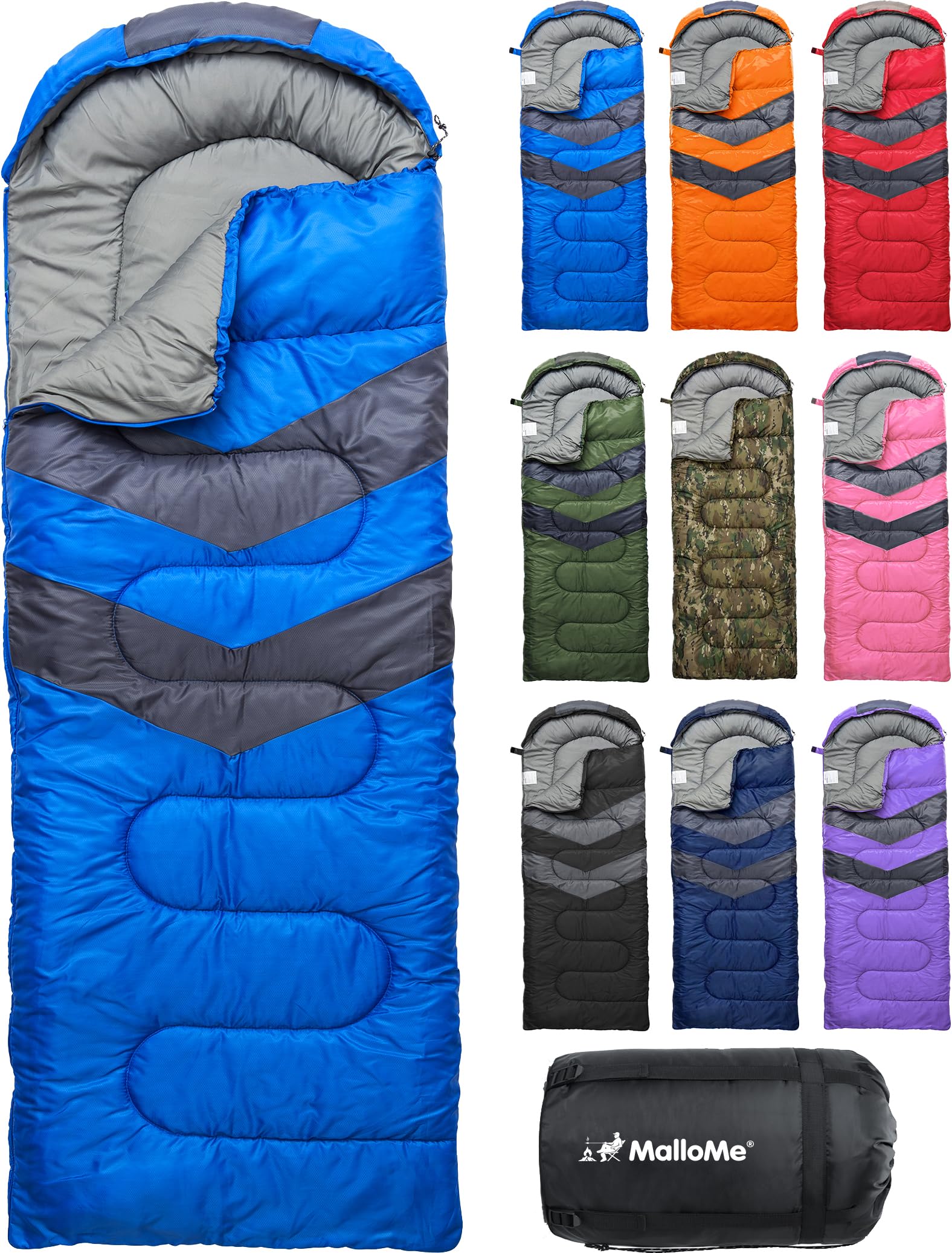
The price is the first thing anyone notices about this bag, and the second is the temperature range: 50 to 80°F, which is a summer bag wearing a three-season label. That is not a knock on the bag so much as a translation of it. Buy it for what it does and it will serve you well.

Where it is fine is where inexpensive bags actually get used — festival weekends, a kid's first night in a tent, the guest room floor, a summer trip where the car does the carrying. It measures 86.6 by 31.5 inches, weighs around 3 pounds, and rolls back into its sack without the fight that ruins the last morning of a trip.

Where it is not fine is a genuinely cold night. Below about 50°F you are relying on what you are wearing rather than on the bag, and the cut runs narrower than a standard rectangular bag, so broad-shouldered sleepers feel it in the hips as well as the shoulders. The zip is the other thing to check: run it the full length when the bag arrives and again before you take it anywhere.

We keep it on the list because it does the summer job cheaply and packs small enough that there is no excuse to leave it at home. It is the bag that lives in the back of the car for the night you didn't plan, and it is not the bag you take into the mountains in October.

Pros

  • Rolls up small and packs easily
  • Warm enough for mild summer nights
  • Low-cost way to equip a family

Cons

  • Comfort range stops at 50°F
  • Narrower than a standard bag
Our verdict

We keep it for summer nights and sleepovers; it's cheap, light and easy to pack, and it isn't a cold-weather bag.

Check Latest Price

How We Tested the Best 3-Season Sleeping Bags

We started by researching the market, comparing temperature ratings, packed sizes, shell materials, and prices, then narrowed a list of more than 30 contenders down to 12 bags. Over eight months, those bags went on weekend camping trips, a rainy spring backpacking trip, and a handful of backyard overnights, including one night that dropped to about 30°F. We also used them on milder nights to see if they’d sleep too hot.

Warmth was the first thing we judged: we slept in each bag in similar clothing, noted cold spots at the shoulders and feet, and checked whether drafts crept in around the zipper. For size, we measured internal dimensions and had testers of different heights lie in each bag to see if they could stretch out without their feet pressing the fabric. We zipped and unzipped every bag dozens of times, including in the dark and with gloves on, looking for snags, separation, and stuck fabric.

Weight and portability came next—we weighed each bag on a kitchen scale, then stuffed it into its sack and carried it on hikes to see how it rode. We also timed how long it took to pack each one away, because a bag that fights you at 6 a.m. is a bag you’ll resent. Comfort got judged over full nights: we rolled from back to side, checked whether the hood cinched without pressing on the face, and noted how the lining felt against bare skin. Finally, we compared each bag’s price against its performance—some budget picks held their own against pricier models, while a few expensive bags didn’t justify the extra cost.

How to Choose 3-Season Sleeping Bags

Read the Rating as a Range, Not a Promise

A comfort rating is the temperature at which an average sleeper stays warm through the night; a limit rating is where a cold sleeper is working to stay comfortable. When a listing gives one figure, treat it as closer to the limit. That is why the same label covers so much ground: our top pick's 30–70°F is a genuine fall-and-spring range, while a bag with 50–80°F printed on it is a summer bag with a shoulder-season label on the box.

Decide how cold your coldest realistic night will be, then buy a bag whose number sits below that figure rather than on it. If you camp in the mountains in October, that means a 30°F bag and a warm layer. If your season ends in September, a mild-weather bag will do the job and cost you less.

Match the Shape, Width, and Length to the Sleeper

Mummy bags taper to save weight and hold heat; rectangular and envelope bags give you room to turn over and charge you weight and warmth for it. Width is the number to read closely, because the solo rectangular bags here run 31 to 33 inches across and the 39-inch Venture is the roomiest of the set. If you sleep on your side or wake up pinned, that extra width does more for you than a few degrees of rating.

Length matters just as much, and the headline lies more often than the tape measure does. A 75-inch bag is a squeeze for a six-foot camper, and a 90-inch bag is wasted bulk on someone five foot six. Buy from the stated dimensions and the stated maximum height, not from the marketing copy.

Weigh Fill and Packed Size Against How You Travel

Under about 3.5 pounds, a bag is realistic to carry on your back; past 4.5 pounds, it belongs in the trunk. Fill explains most of the difference. Hollow-fiber and polyester fills compress well and tolerate damp, while cotton and polycotton fills feel like bedding and pack down poorly, which is why the flannel bags here run from 5 to 7 pounds.

Neither is the better choice in the abstract. If your tent is a hundred yards from the car, buy the comfort and take the bulk. If you are carrying the bag uphill, buy the weight and accept a thinner night's sleep on the coldest trip of the year.

Check the Zipper and the Draft Protection

If one component decides how long a bag lasts, it is the zip, and it is where inexpensive bags cut corners. A zipper that separates at 2 a.m. turns a sleeping bag into an expensive blanket. Look for a two-way zip so you can vent the foot, an anti-snag backing strip, and a draft tube behind the teeth. A hood with a drawstring and a draft collar at the neck do more for warmth than another half-inch of fill.

Run the zip the full length when the bag arrives and again before every trip, and check the foot end, which takes the most strain. It is a thirty-second habit that catches the failure before it happens in the dark.

Frequently Asked Questions

Final Verdict

Our default is the Venture 4th XXL. Thirty-nine inches of width and a 30°F rating answer the two things that send people back to the car at 3 a.m. — a bag too narrow to turn over in and a bag that quits at the first frost — and the lifetime replacement guarantee covers the third. If your camping is car-based and runs into October, start there.

Change one requirement and the answer changes. If the bag goes on your back rather than in the trunk, take the OneTigris: you give up room and cold-weather margin and get a 3.1-pound mummy that packs small. If the budget is the binding constraint, the Sportneer still claims 32°F for about what the summer bags cost.