Best Waterproof Winter Boots for Women of 2026

A fresh snowfall is gorgeous for about an hour. Then the plows come through, the corner turns to gray slush, and you find out fast whether your boots were built for the photo or for the walk. I've squelched home in cute pairs that leaked at the seam within a block. A good winter boot keeps water out, holds warmth in without turning your feet into a swamp, and fits well enough that you forget about it by the time you reach the office.

Fit is the piece most shoppers underestimate — a sloppy heel will rub your ankle raw by February, and sizing swings wildly between brands. Over the past six months, my team and I wore 12 pairs through snowbanks, icy parking lots, and 40-degree rain, weighing warmth, long-walk comfort, build quality, and whether each pair looked good enough to wear past the shovel. Value came down to how much boot you get per dollar. The picks below are the ones we kept reaching for.

1

Best Overall

Columbia Ice Maiden II

91 /100
Traveler Score Outstanding

Key details

Model
1554172
Style
Snow boot
Department
Women's
Check Details on Amazon

Three things make a winter boot worth its space in the closet: water stays out, heat stays in, and you can walk a mile without thinking about your feet. The Ice Maiden II does all three without an obvious weak link, and that balance is why it is the one we recommend first.

Warmth is its strongest card. This is a boot built for movement — it holds heat on the walk to the train, across a slushy parking lot, and through an afternoon of errands — and it is less convincing when you are standing still in hard cold, where the chill eventually works through. Water is handled better: the surface sheds rather than soaks, and feet stay dry through slush, sprayed sidewalks, and wet snow.

Fit is worth sorting out before you order. These come up roomy, so your usual size with a thick sock is the safer bet than sizing up out of habit. Grip is the other consideration: packed snow feels secure underfoot, polished ice does not, and a pair of pull-on cleats is a cheap fix if your route includes a slope or a frozen crosswalk.

What makes it the travel pick is that nothing about it looks like equipment. It reads as a normal boot with jeans, so it covers a city afternoon and a snowy trailhead without a change of shoes, and it is the most city-appropriate shape in this group. Buy it once for the season and stop thinking about your feet.

Pros

  • Warm on the move without bulk
  • Keeps feet dry through slush and wet snow
  • Comfortable for a full day of walking
  • Reads as a normal boot, not gear

Cons

  • Falls short when standing still in hard cold
Our verdict

The pair we recommend first: warm enough for a real winter, dry through slush, and comfortable enough to be on your feet all day.
Check Latest Price
2

Best for Wet City Days

Sperry Saltwater Duck Boot

93 /100
Traveler Score Outstanding

Key details

Model
34DC094-OFW
Style
Waterproof duck boot
Weight
4 lb
Department
Women's
Check Details on Amazon

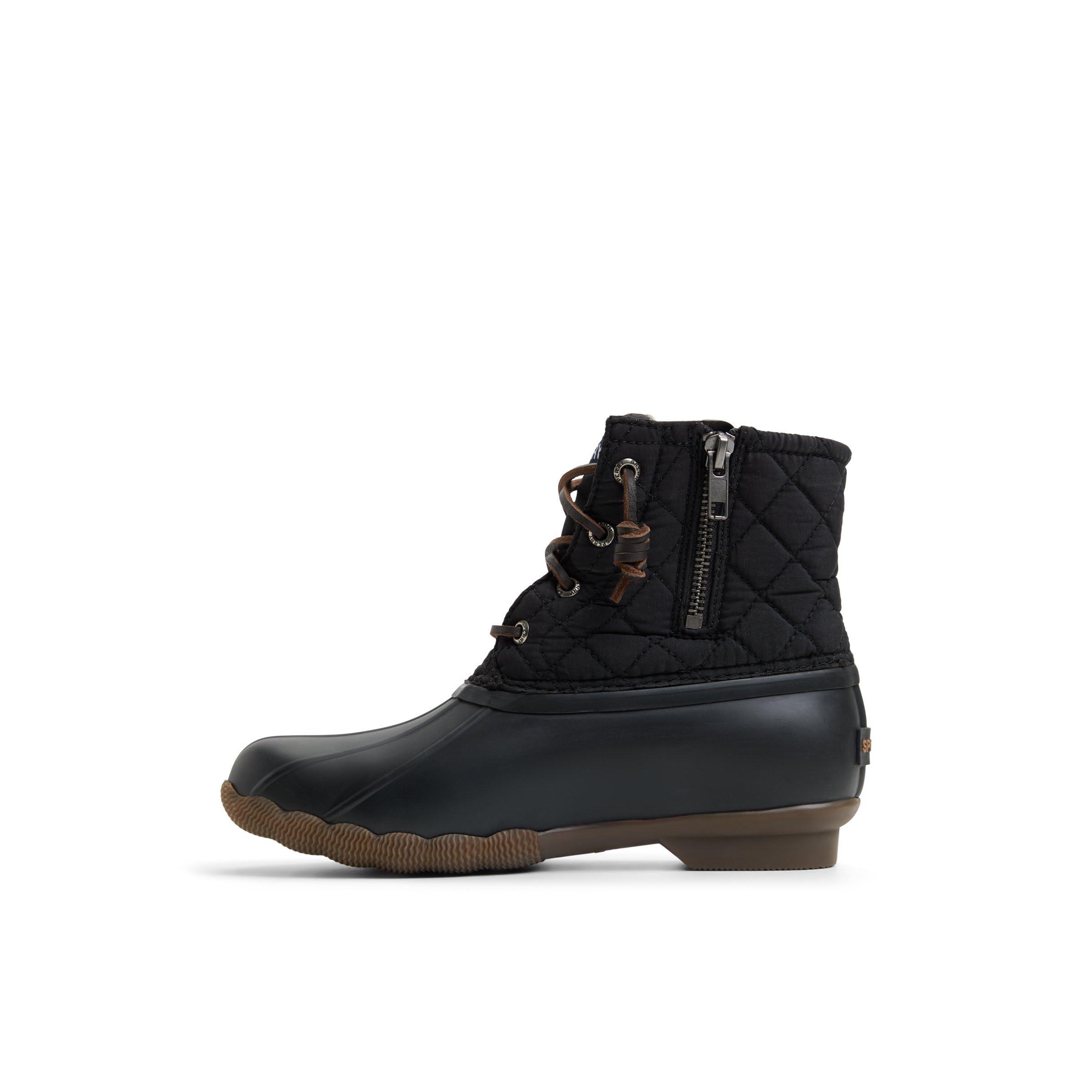
A rubber lower and a leather upper, laced like a boot rather than pulled on like a wellington: the Saltwater is the old duck-boot formula, and it still makes sense for a winter that cannot decide between rain and snow.

That construction is why we like it for the messy middle of winter. The rubber foot goes through puddles and slush without a second thought, the leather keeps it from feeling like a chore to wear, and the cushioned insole is comfortable enough for a long walk to the office. Warmth, though, is decent rather than serious — this is a lined duck boot, not an insulated snow pack, so it is at its best in cold wet weather and thin when the temperature drops hard. It also does not turn your feet into a swamp indoors, which is more than most heavy boots manage.

Sizing runs true with room for a thick sock, and the side zip and pull loops make them quick to get on with cold hands — the difference between a boot you wear and one you avoid when you are running late.

It is also the best-looking boot in this group, which matters on a trip where one pair has to work at dinner as well as on a wet cobblestone street. Not the lightest thing in a suitcase, but the most versatile.

Pros

  • Rubber lower handles puddles and slush
  • Cushioned enough for a long walk
  • Side zip and pull loops for cold hands
  • Looks like a boot you would wear on purpose

Cons

  • Shallow tread struggles on wet leaves and ice
  • Trim and seams can separate before the sole wears
Our verdict

For wet, messy winters that rarely turn brutal, this is the duck boot we choose — waterproof where it counts and smart enough to wear all day.

Check Latest Price
3

Best for Deep Snow

MUCK Arctic Sport II Tall

93 /100
Traveler Score Outstanding

Key details

Model
AS2T3TW
Weight
4.5 lb
Department
Women's
Boot Height
Tall
Check Details on Amazon

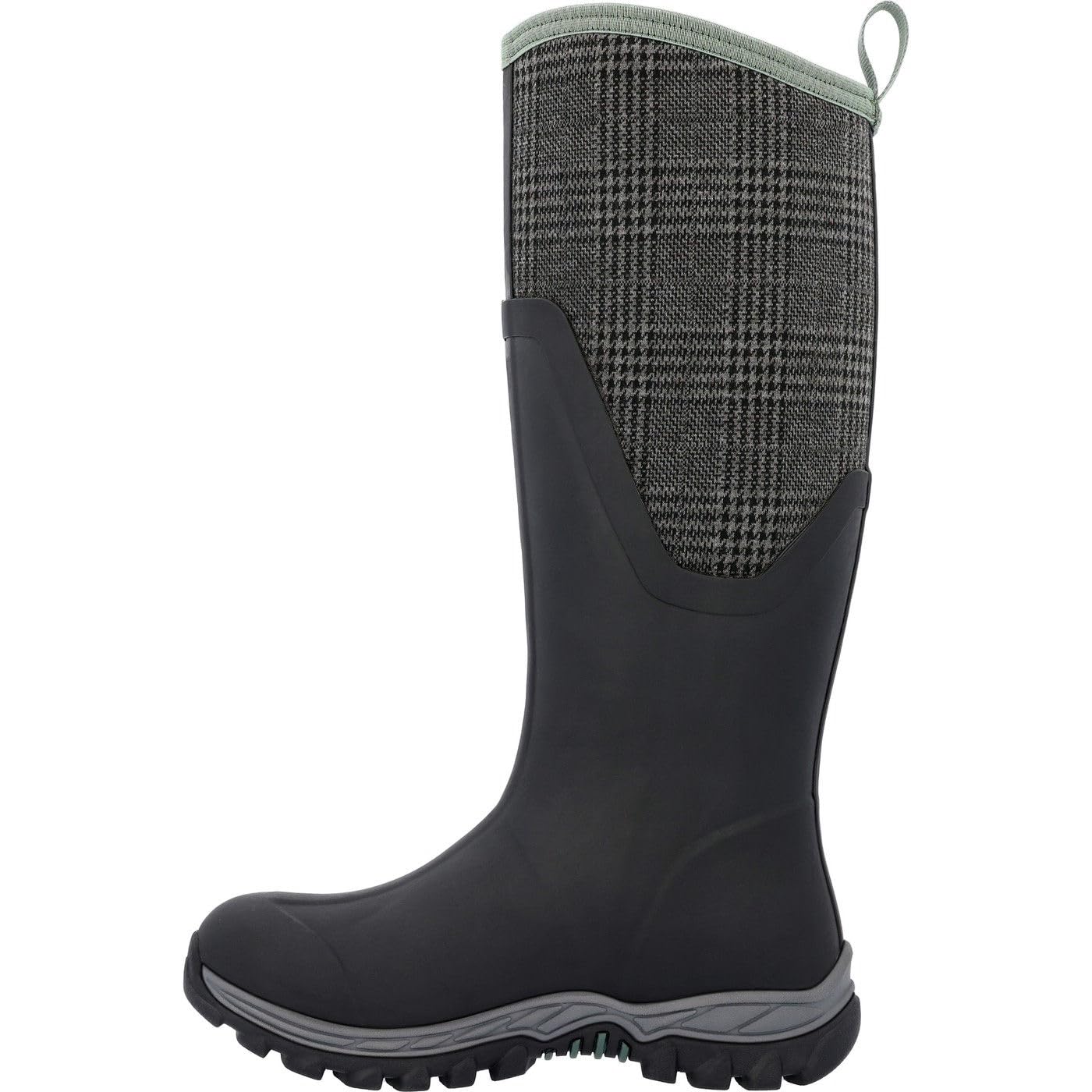
Coverage is the whole idea here: the shaft comes up high and sits snug at the top, so a walk through a drift does not end with snow inside your sock.

Below the knee it behaves like a proper winter boot. The tread is aggressive enough for packed snow and icy ruts, the shell keeps water out when you are standing in it, and feet stay warm in genuinely cold weather — this is the pair in the group we trust when the plow has not been through yet.

Weight is the price. This is a heavy boot, and you feel it after a mile and behind the wheel; it is not the pair we choose for a day of shopping or a flight with a tight connection.

Set it beside the Columbia and the split is obvious: that one is for sidewalks and errands, this one is for standing in weather. Ours lives by the back door from December through March.

Pros

  • Tall shaft keeps deep snow out
  • Confident grip on snow, ice, and mud
  • Stays dry in standing water and mud

Cons

  • Ankle seams can separate with hard use
  • Tall shaft fits awkwardly on shorter legs
Our verdict

If your winter means deep drifts and unplowed lanes, this is the boot we pull on — warm, grippy, and genuinely waterproof.

Check Latest Price
4

Best Budget

COOJOY Mid-Calf Snow Boot

94 /100
Traveler Score Outstanding

Key details

Style
Mid-calf snow boot
Lining
Fur-lined
Department
Women's
Waterproofing
Waterproof
Check Details on Amazon

The inside of this boot is the reason to buy it. A pile lining runs the full length rather than stopping at the ankle, so your whole foot is warm instead of just the top of it, and it is the pair we hand to anyone who feels the cold first.

Cold-weather performance is more complete than the money suggests. Feet stay warm in hard freezing, the boot is light enough to walk in without a clomp, and the tread grips icy pavement and packed snow. Salt wipes off the upper instead of staining it, which matters anywhere the roads get treated.

Water is where it gives ground. This handles a snowy sidewalk and a slushy crossing; an hour of wet snow or a deep puddle is past what it is built for. Sizing runs close, so try your usual size with the socks you will actually wear before going up.

For a cold, dry winter on a tight budget, that is a trade worth making — and at this end of the range it is the pair that feels least like a compromise.

Pros

  • Full-length lining warms the whole foot
  • Light enough to walk in all day
  • Grip holds on ice and packed snow
  • Resists salt staining

Cons

  • Water protection fades in long wet outings
Our verdict

When the budget decides, this is the pair we point to: warm, light, and grippy, with a wet-weather ceiling worth knowing about.

Check Latest Price
5

Best for Walking

ANJOUFEMME Hiking Snow Boot

91 /100
Traveler Score Outstanding

Key details

Style
Ankle hiking boot
Lining
Fur-lined
Department
Women's
Waterproofing
Waterproof
Check Details on Amazon

Most winter boots make you choose between warm and walkable. This ankle-height pair is the closest thing in the group to having both.

Fur lining runs through the whole boot, so warmth arrives the moment you put them on rather than after ten minutes of walking, and the sole flexes through a stride instead of clomping. On packed snow and icy patches the grip is confident. They also look better than a technical boot has any right to, which is how they end up worn to dinner on a trip where one pair has to do everything.

Two small things are worth knowing before you order. The black reads closer to charcoal than the photos suggest, so anyone matching a coat should expect a softer shade. And they carry a little more weight than the ankle height implies, though not enough that we noticed after the first block.

The measure we care about is the last hour of the day, when a heavy boot starts to feel like a bad decision. These stop being noticeable well before that.

Pros

  • Warm from the first step, not after a mile
  • Grip holds on packed snow and ice
  • Looks good enough for dinner

Cons

  • Toe-to-sole bond can fail within a season
Our verdict

For trips built around walking, this is the pair we pack — warm from the first step, grippy on ice, and light enough to keep going in.

Check Latest Price
6

Best Value Duck Boot

DREAM PAIRS Mid-Calf Duck Boot

91 /100
Traveler Score Outstanding

Key details

Style
Duck boot
Height
Mid-calf
Department
Women's
Check Details on Amazon

There is a particular shopper this boot is built for: someone who wants the duck-boot shape for the school run, the bus stop, and a walk to the shops, and who does not plan to stand in a field all afternoon.

Warmth is the strongest thing about it. Feet stay warm through the worst months, the boot keeps snow and slush off your socks instead of letting it creep over the ankle, and the neutrals go with everything in a winter wardrobe. For the money, that combination is hard to argue with.

It is the second pair we keep by the door and do not mind salting, not the one we take on a walking trip. Sizing runs generous, so your usual size is a safer start than going up for thick socks.

It is also the least precious boot here: a scuffed toe and a salt line do not ruin the look, which is exactly what you want from the pair that handles a wet errand in a hurry.

Pros

  • Reliably warm through the coldest months
  • Keeps snow and slush off your socks
  • Neutral colours go with everything

Cons

  • Flat sole offers little support for long walks
  • Upper and laces wear through in a hard season
Our verdict

For the duck-boot look without the duck-boot spend, this is our pick — warm, dry, and made for errands rather than hikes.

Check Latest Price
7

Slush and Mud

TIDEWE Neoprene Boot

0 /100
Traveler Score Fair

Key details

Toe
Reinforced
Shaft Height
Mid-calf
Comfort Rating
-4°F/-20°C to 50°F/10°C
Shaft Circumference
13 inches
Check Details on Amazon

Minus 4 degrees is the number that matters: that is the bottom of the comfort range this boot is rated for, and nothing else in this group goes lower.

The construction explains it. A 6 mm neoprene shell with a rubber outsole works the way a wetsuit does — it holds warmth against your foot and does not let water through at all, which is a firmer promise than the treated fabrics on most boots here. The shaft comes up mid-calf at 13 inches around, the toe is reinforced, and a nub at the heel lets you kick them off without bending down. Mud hoses off in the yard.

Sizing is the trap. The top end of the chart runs men's numbers, so order from the women's conversion rather than assuming your usual size. They are also genuinely heavy, and they fit like a rubber boot — wide and roomy rather than snug.

This is not the pair for a city break or a long walk to dinner. It is for the wet end of winter — standing water at the bus stop, a muddy field, a driveway that turns to slush — and for that, we have not found anything here more capable.

Pros

  • Rated down to minus 4 degrees
  • Fully waterproof neoprene and rubber shell
  • Reinforced toe and heel kick-off
  • Hoses clean after mud and salt

Cons

  • Sole can separate from the upper over time
Our verdict

For standing water, deep slush, and genuine cold, this is the boot we reach for — provided you are not walking far in it.

Check Latest Price
8

Wide Feet

EARLDE Mid-Calf Snow Boot

91 /100
Traveler Score Outstanding

Key details

Style
Mid-calf snow boot
Department
Women's
Waterproofing
Waterproof
Check Details on Amazon

Toe room is the reason to look at this pair. If most winter boots pinch across the ball of your foot, these are built wider through the front and leave space for a thick sock without squeezing.

Warmth is solid — the lining runs through the boot and feet stay warm in real cold — and the tread handles snowy sidewalks and icy patches better than the money suggests. They pull on in a hurry, which is most of what you want from the boot by the door.

Water is where they are uneven. These are fine in snow and a short slushy walk, but a long wet commute or a day of melting snow can get through, so they suit a cold winter better than a wet one. If your winters are mostly rain and slush, the Sperry handles that far better.

For a cold, dry winter and a foot that is hard to fit, they are a lot of boot for the money — and the width is the first thing we noticed when we put them on. Genuinely wide winter boots are scarce at this end of the range.

Pros

  • Wide through the toe with room for thick socks
  • Warm lining through the whole boot
  • Grip holds on snowy, icy sidewalks
  • Quick to pull on in a hurry

Cons

  • Too wide for a narrow foot
Our verdict

If wide feet are the reason other boots fail you, this is the pair to try — warm, roomy, and easy to pull on.

Check Latest Price

How We Tested the Best Waterproof Winter Boots for Women

We started with spec sheets, narrowing a field of roughly 40 styles down to 12 by filtering for genuine waterproof construction rather than water-resistant finishes, insulation that holds up below freezing, and lug depth deep enough to grip packed snow. We also kept a mix of heights, widths, and lace versus zip closures so there would be an option for narrow calves and wide feet alike.

Testing ran across six months, from the first slushy week of November through the spring thaw, and each pair went where boots actually go: dog walks before work, the commute, school pickup, standing still at a bus stop, and the half-frozen parking lot at the end of the day. We stood in ankle-deep slush for two minutes and checked our socks afterward, and we ran each boot under a faucet for five minutes to see whether water beaded off or soaked through the seams.

For fit, we noted whether each pair ran true to size, wore them with both thick wool socks and thin liners, and walked a flight of stairs and a hill to feel where they rubbed. Comfort got judged at hour eight, not hour one. We weighed each boot, checked tread wear and seam stress at the end of the season, and wore the pairs with jeans and with a work outfit to see how they read. Value came down to cost per wear against how much winter each pair could handle.

How to Choose Waterproof Winter Boots for Women

Waterproof Is a Claim, Not a Guarantee

Water almost never gets in through the sole. It comes over the top, along a lace path, or past a side zip, so the question to ask is where the waterproof layer stops rather than whether the box says waterproof. A molded rubber lower is sealed all the way to its collar. A leather or fabric upper depends on a treatment and taped seams, and both give up over time.

Match the boot to your worst regular condition. Standing water and deep slush want rubber; packed snow, cold dry days, and a plowed sidewalk are fine with a treated upper and a snug cuff. A zip-up boot is only waterproof to the zip, which is worth remembering when the slush is ankle deep.

Match Warmth to Standing, Not to the Thermometer

Insulation does more harm than good when it is mismatched. A boot warm enough for a frozen sideline will have you sweating on a twenty-minute walk to the station, and damp feet chill fast once you stop moving. Walking errands want moderate insulation and a lining that breathes; standing around — a bus stop, a playground, a lift line — wants more.

Ratings rarely appear on the listing, and the ones that do are worth reading closely. The TIDEWE, for instance, states a comfort range from minus 4 to 50 degrees, which tells you it is a standing-still boot, not one for a long walk.

Height Buys Coverage and Costs You Weight

A tall shaft keeps snow out when the drift is deep, and it is the right call if you walk through unplowed snow or work outdoors. Everything else about a tall boot is a cost: more weight, less ankle freedom, a shaft that can hit the wrong place on a shorter leg, and a boot that is awkward to drive in and miserable to pack.

Ankle and mid-calf pairs handle sidewalks, packed snow, and a slushy crossing, and they travel. If the deepest snow you meet regularly is a plowed curb, you are paying for coverage you will never use.

Traction on Ice Is Its Own Problem

Lug depth gets you through snow; it does nothing on polished ice, where the rubber compound and the size of the contact patch do the work. None of the boots here is an ice boot, and even the deepest tread slides on a wet crosswalk.

If your route includes a slope, a bridge, or a shaded driveway that never melts, plan on pull-on cleats and choose the boot for everything else — warmth, comfort, and getting it on in a hurry.

Fit It With the Socks You'll Actually Wear

Winter boots are sized for the sock you wear with them, which is why the same foot can be one size in July and another in January. Try them on with the wool socks you will live in, late in the day when feet are at their largest, and do not assume a bigger size is the safe answer — a roomy boot with a thin sock rubs as badly as a tight one.

Wide feet should look for a boot that is wide through the toe box rather than simply going up a size. The EARLDE is the one here that solves that properly; sizing up just gives you a longer boot with the same pinch.

Frequently Asked Questions

Final Verdict

Buy the Columbia Ice Maiden II if you want one pair for a normal winter: warm on the move, dry in slush, and comfortable enough that a day on your feet does not end early. If your winters are wet rather than cold, the Sperry Saltwater is the better answer to rain and puddles, and for unplowed snow and deep cold, the MUCK Arctic Sport II goes where the others stop.

And when the budget decides, the COOJOY covers cold and ice for a fraction of the money — as long as the wet stays shallow.