Best Women's Winter Jackets of 2026

A winter jacket has one job — keep you warm — but the good ones do it without making you feel like a sleeping bag. The trick is balance: enough insulation for a raw morning, a shape you don't mind seeing in the mirror, and pockets that actually hold gloves and a phone. I've spent six months wearing 14 different jackets through commutes, weekend walks, and a couple of bitter cold snaps, and the right one fixes the morning negotiation: it keeps the cold out, fits over a sweater without swimming at the shoulders, and feels comfortable enough to forget you're wearing it.

A few things I wish more shoppers knew: size is a wild card — jackets marked the same size can fit like different species — and a zipper that snags on day one rarely gets better. We also judged appearance and style, because a coat you don't want to wear stays in the closet, and tracked durability at cuffs, seams, and zipper pulls through the full six months. The picks below are the ones that held up.

1

Best Overall

Orolay Thickened Down Jacket

91 /100
Traveler Score Outstanding

Key details

Type
Down puffer
Pockets
Zipped, plus side hem zips
Shipping Weight
2.73 lb
Check Details on Amazon

It's a light jacket that behaves like a heavy one, and that's most of the reason the Orolay is the first one we recommend. The down warms up fast, the fleece-lined hood is the part you notice on a 7 a.m. walk, and the body is cut generously enough to close over a sweater without making you look like a sleeping bag. For one coat that has to handle a city winter, a trip, and a dinner reservation, this is the safest money in the group.

The details keep us coming back to it. The hand pockets are zipped and set high, which keeps them clear of a crossbody strap even if it puts them at an odd angle for cold hands, and the side zips at the hem open the coat up when you're climbing into a car or adding a chunky knit underneath. There are more zippers here than the design strictly needs, but the useful ones are the ones you'll actually touch.

Fit is the thing to plan for. It runs small, so if you want a sweater underneath, order up rather than hoping the side zips buy you the room — they widen the hem, not the shoulders. Get the size right and it's a coat that disappears into a trip: warm enough for real winter, tidy enough for dinner, and easy to fold onto the back seat of a car.

Pros

  • Warm down fill without much weight
  • Generous cut layers over a sweater
  • Fleece-lined hood and zipped pockets
  • Side hem zips add room to move

Cons

  • Main zip can stick and grab fabric
Our verdict

We recommend the Orolay as the default winter coat for most women: warm, roomy, good-looking enough for work, and easy to travel with.

Check Latest Price
2

Best Everyday Workwear

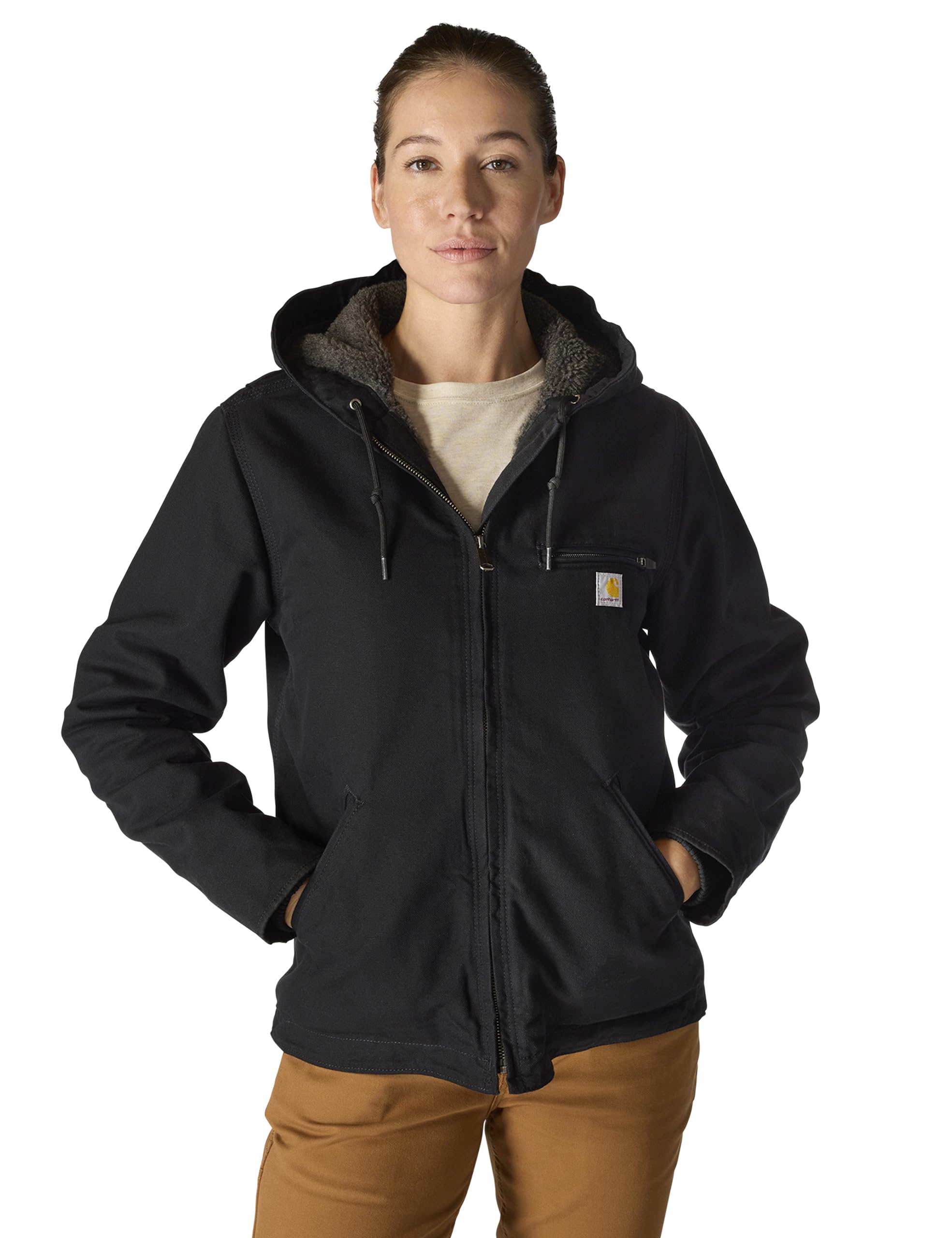
Carhartt Washed Duck Active Jac

95 /100
Traveler Score Outstanding

Key details

Fit
Roomy enough to layer
Type
Insulated duck jacket
Shell
Washed cotton duck
Check Details on Amazon

Nothing about this jacket is trying to be soft. The shell is washed cotton duck, the fabric Carhartt builds work coats from, and it feels like something you can brush past a brick wall, a branch, or a wet dog and not think about again. It's warm without the bulk of a puffer, and it's the jacket we take when a trip involves wood smoke, a trailhead, or any real chance of getting dirty.

What we like most is how it layers. The body is roomy enough to wear a hoodie or a thick sweater underneath without sizing up, which is what makes it work from late fall into real winter, and the shoulders and hips sit where they should instead of pulling. It's a boxy workwear shape — if you want a coat that nips at the waist, this isn't the one — but for walking, hauling bags, or standing around a cold field, that shape is exactly right.

The other appeal is that there's nothing to maintain. No membrane to re-proof, no down to redistribute after a wash, no delicate shell to baby. It takes a knock, it gets dusty, it goes back on the hook. Of everything here, this is the one we expect to still be in rotation years from now.

Pros

  • Tough duck shell resists scuffs and wind
  • Warm without puffer bulk
  • Roomy enough to layer a hoodie
  • Deep pockets and easy care

Cons

  • Stiff duck fabric takes breaking in
Our verdict

Buy the Carhartt if you want a warm jacket that can get dirty — it layers well, shrugs off wind, and outlasts everything else here.

Check Latest Price
3

Best Waterproof for Wet Snow

wantdo Hardshell Ski Jacket

93 /100
Traveler Score Outstanding

Key details

Type
Hardshell ski jacket
Shell
Waterproof, windproof
Shipping Weight
3.09 lb
Check Details on Amazon

Ski shells are where a budget actually buys you something, and this wantdo is the example we keep pointing to. The shell is waterproof and windproof, the front closes with a zip and then a velcro flap over the top of it, and the whole thing is cut for layering rather than for looking sleek. On a wet, raw day it does the job of a shell costing considerably more.

The pockets are the surprise. There are plenty, most of them zipped, the hand pockets take a gloved hand, and there's enough room to leave a phone and a card case where you can reach them. The sleeves finish in thumb holes, which sounds like a gimmick until you're hauling a glove on in the wind and the cuff stays exactly where you put it.

Warmth depends on what's underneath. This is an insulated shell rather than a parka, so on the coldest days it wants a fleece or a heavy sweater below it; wind and wet are where it does its real work. Ordering is the fiddly part — the fit draws complaints in both directions depending on which size you normally wear — so buy it somewhere with an easy return window.

What we watch with a jacket at this level is the seams. Side seams have split on some of these, so give them a look after the first hard season rather than assuming the jacket is indestructible. Treated as a jacket for trips and messy winters rather than a decade-long investment, we think it's excellent value.

Pros

  • Waterproof shell handles wet snow
  • Lots of deep zipped pockets
  • Thumb-hole cuffs stay put under gloves
  • Zip plus velcro front seals weather out

Cons

  • Side seams can split under hard use
Our verdict

For wet, windy winters and ski trips, we think the wantdo is the smart buy: real waterproofing, usable pockets, and change left over.

Check Latest Price
4

Best Lightweight Ski Jacket

Camel Crown Ski Jacket

92 /100
Traveler Score Outstanding

Key details

Type
Ski jacket
Shell
Waterproof, windproof
Lining
Soft brushed
Check Details on Amazon

This one stops at the hip, and that's the first thing to know about it: if you want a coat that covers your seat and closes the gap between your sweater and your jeans, look at the longer puffers instead. What the short cut buys you is the lightest, softest ski jacket in this group — genuinely warm for its weight, with a brushed lining that feels good over a t-shirt and none of the crisp, technical-shell feel.

It handles weather better than a fashion puffer. The shell is waterproof and windproof, rain and wet snow stay out long enough to get where you're going, and it's light enough to wear on a mild day without overheating. Deep pockets are the practical detail we appreciate most: zipped and angled down and back, so a phone sits against your hip instead of sliding out when you bend over.

Sizing is straightforward — true to size, with a body that's cut wide and short, so going up mostly buys width you don't need. It's the jacket for a trip where the cold is real but the days are active, and for anyone who would rather wear a base layer and a light coat than one heavy one.

Pros

  • Warm for its light weight
  • Water-resistant shell sheds rain and snow
  • Deep zipped pockets angled down
  • Soft brushed lining

Cons

  • Cut short and boxy through the body
Our verdict

We point travelers to the Camel Crown when warmth matters more than coverage: it's light, water-resistant, and easy to pack.

Check Latest Price
5

Best 3-In-1

Magcomsen 3-in-1 Parka

91 /100
Traveler Score Outstanding

Key details

Type
3-in-1 parka
Liner
Removable fleece jacket
Shell
Waterproof, windproof
Check Details on Amazon

Two jackets in one is the pitch, and it holds up: this is a waterproof shell with a fleece jacket zipped inside it, and each half works on its own. Wear the shell alone in wet, mild weather, the fleece alone on a cold morning, or both together when the forecast stops being polite.

Where it earns its place for us is a trip with a question mark over the weather. One jacket in the bag covers a wet, 45-degree day and a dry, 20-degree one, and the fleece is smart enough to wear indoors without looking like you forgot to take your coat off. The outer shell blocks wind properly, which is the first thing we check on any 3-in-1.

The quirks are small but real. The fleece liner zips in while it's inside out, which is confusing the first time and obvious by the third, and the liner has no pockets of its own, so your phone stays in the shell. The hood is enormous — excellent over a hat, less so when the wind comes from the side. Size up if you're between sizes.

Pros

  • Shell and fleece work apart or together
  • Waterproof, windproof outer shell
  • Fleece layer smart enough for indoors
  • Wide choice of colors

Cons

  • Runs small through the shoulders
  • Hood is oversized
Our verdict

One purchase, two jackets: we recommend the Magcomsen when the forecast is a question mark and packing space is tight.

Check Latest Price
6

Best for Deep Cold

Carhartt Washed Duck Sierra Jacket

95 /100
Traveler Score Outstanding

Key details

Hem
Drops at the back
Type
Insulated duck jacket
Shell
Washed cotton duck
Check Details on Amazon

This is a heavy jacket, and it's meant to be. Pick it up and the duck shell feels like a piece of equipment; put it on in real cold and the weight stops registering, because the wind doesn't get through it and the back hem drops low enough to cover the spot where a shorter coat rides up.

What it isn't is puffy. It's thick, but it sits close with room for a sweater underneath, and the pockets are deep inside and out — the kind you can drop a phone and keys into without checking twice. The colors read dressier than the workwear shape suggests, and it's the least precious coat here: wet, dusty, and covered in dog hair is a normal Tuesday.

We trust it most in the cold you don't want to think about — raw wind, a long walk, a day standing around outside. It's the one here we reach for when the temperature is genuinely serious, and the one most likely to still look good in its fifth year. The trade is bulk: it takes up real room in a bag, so it's a wear-it-on-the-plane jacket rather than a pack-it one.

Pros

  • Wind-blocking duck shell
  • Back hem covers the lower back
  • Deep inside and outside pockets
  • Built for years of hard use

Cons

  • Heavy and bulky to pack
Our verdict

If your winter is genuinely brutal and you want one coat to outlast the rest, the Sierra is the one we buy.

Check Latest Price
7

Mild, Damp Winters

TDYPCI Lightweight Puffer

91 /100
Traveler Score Outstanding

Key details

Type
Lightweight puffer
Shell
Waterproof, windproof
Pockets
Two deep zip pockets
Check Details on Amazon

This is a jacket for the cold most of us actually get: damp, grey, somewhere in the 20s or 30s, with wind coming around the corner of a building. The shell is waterproof, the fill is light, and it handles that weather well — warm without bulk, hood up, hands in deep zip pockets.

It hugs the body more than the puffers above, which is why it layers under a rain shell or a heavier coat on the worst days, and the cuffs close down over the wrist so a breeze doesn't run up your sleeve. It's light enough to be the jacket you leave in a carry-on for the one cold week in an otherwise mild trip.

Our take is that this is the best second jacket here — the one for shoulder season, a southern winter, or a destination where the evenings drop but the days don't. What it won't do is stand in for a parka when the forecast turns genuinely cold. Below freezing for days on end, it's the layer under the coat, not the coat.

Pros

  • Warm for its light weight
  • Waterproof shell with a cozy hood
  • Deep zip pockets
  • Packs small for travel

Cons

  • Runs about a size small
Our verdict

The TDYPCI earns its place as a packable second jacket for mild, damp winters — light, warm enough for the 30s, and easy to live with.

Check Latest Price

How We Tested Women's Winter Jackets

We built the shortlist by scanning jackets sold in a wide size range, comparing insulation and shell materials, checking temperature ratings, and filtering out anything that seemed too bulky for a commute or too light for actual winter. That left 14 jackets, which we tested over six months. They went on morning commutes, weekend walks, errands, and a few raw, windy afternoons when standing outside for 20 minutes was enough to tell us what a coat was made of.

Warmth and comfort got judged in real weather: I stood into the wind, walked uphill, sat in a cold car, and noted whether I overheated indoors or felt a draft at the collar. Fit and size were checked over a thin sweater and a bulky one, with a backpack on, and I paid attention to whether the shoulders pulled or the hem rode up. For pockets, I loaded each jacket with a phone, keys, and gloves, then tried using them with cold, clumsy fingers.

Zipper quality was a hands-on test — I zipped each jacket with gloves on, looked for snags, split teeth, and pulls that felt flimsy, then checked again after weeks of daily use. Durability came down to cuffs, seams, pilling, and whether the shell still looked presentable by the end. Appearance and style were judged the way anyone actually judges a coat: with jeans, with a dress, in a hallway mirror, and by whether I reached for it on a normal Tuesday rather than only in a snowstorm.

How to Choose Women's Winter Jackets

Buy for your coldest realistic day

Most people buy for the record low and then sweat through every 45-degree afternoon. Be honest about the coldest hour you'll actually spend outside — the walk to the train, the ski lift, the dog at 6 a.m. — and buy for that rather than for the forecast that makes the news. A down puffer is lovely at 20 degrees and unbearable on a warm bus; a lightweight puffer is perfect for a southern winter and useless in a Minneapolis January. If your range is genuinely wide, a 3-in-1 covers more of it than any single-layer coat here.

Wet cold and dry cold are different problems

If your winters arrive with sleet and slush, put the money into a waterproof shell. A soaked puffer is worse than no puffer, because wet insulation stops insulating — the shells here handle that weather and a down jacket doesn't. In a dry, windy cold, a tightly woven duck or down jacket with a hood that cinches keeps you warmer for the same weight. Either way, look at the front closure: a zip with a storm flap over it beats a bare zip when the wind comes sideways.

Size for the layer, not the label

Nearly every jacket here has a sizing catch in one direction or the other: some run small enough that your usual size won't close over a sweater, and some are cut generously enough that going up leaves you swimming. Decide what you'll wear underneath on the coldest day — a t-shirt, a sweater, a hoodie — and size for that, not for the number on the label. Don't size down for a slimmer look, either: compressing the insulation across the shoulders and chest is exactly where you lose warmth.

Hardware decides year two

Zippers are where budget winter jackets fail, and the main front zip is the one that matters. Favor a chunky metal-tooth zip with a storm flap behind it and a pull you can work with gloves on; thin plastic coils are what break. Check the hood next — it should cinch down and turn with your head instead of hanging over your eyes. For travel, count the pockets that close: you want one for gloves and one that keeps a phone and passport against your body.

Frequently Asked Questions

Final Verdict

Start with the Orolay. For most women, in most winters, it's the best balance of warmth, weight, and looks here, and it works as hard on a trip as it does on a commute. If your cold arrives wet — sleet, slush, ski days — the wantdo's waterproof shell is the smarter buy, and its price leaves room for a warm midlayer.

And if you want one coat to hand down rather than replace, the Carhartt Sierra is the heavy, honest option we expect to still be going long after the puffers have given up.