10 Best Waterproof Camera for Kayaking 2026: Reliable 4K & True Battery Life

The best waterproof camera for kayaking must survive dunks, deliver smooth 4K, and last the whole paddle – here are the ones that deliver on all three.

Many kayakers assume that a high-spec action camera is the only way to get decent footage. Budget cameras can produce great results when you know which specs actually matter. The catch? Battery life and waterproof seals are often the first to fail.

This guide focuses on cameras that balance video quality, durability, and real-world battery life so you spend more time paddling and less time swapping batteries. We sorted through the options to find cameras that handle kayak conditions – from splashes to full submersion – without breaking your budget.

1

Best Overall Waterproof Camera for Kayaking
AKASO Brave 4

89 /100
Traveler Score Excellent

Key details

Battery
2x 1050mAh (90min ea)
Waterproof Depth
131ft (40m) with case
Video & Stabilization
4K30fps, EIS
Check Details on Amazon

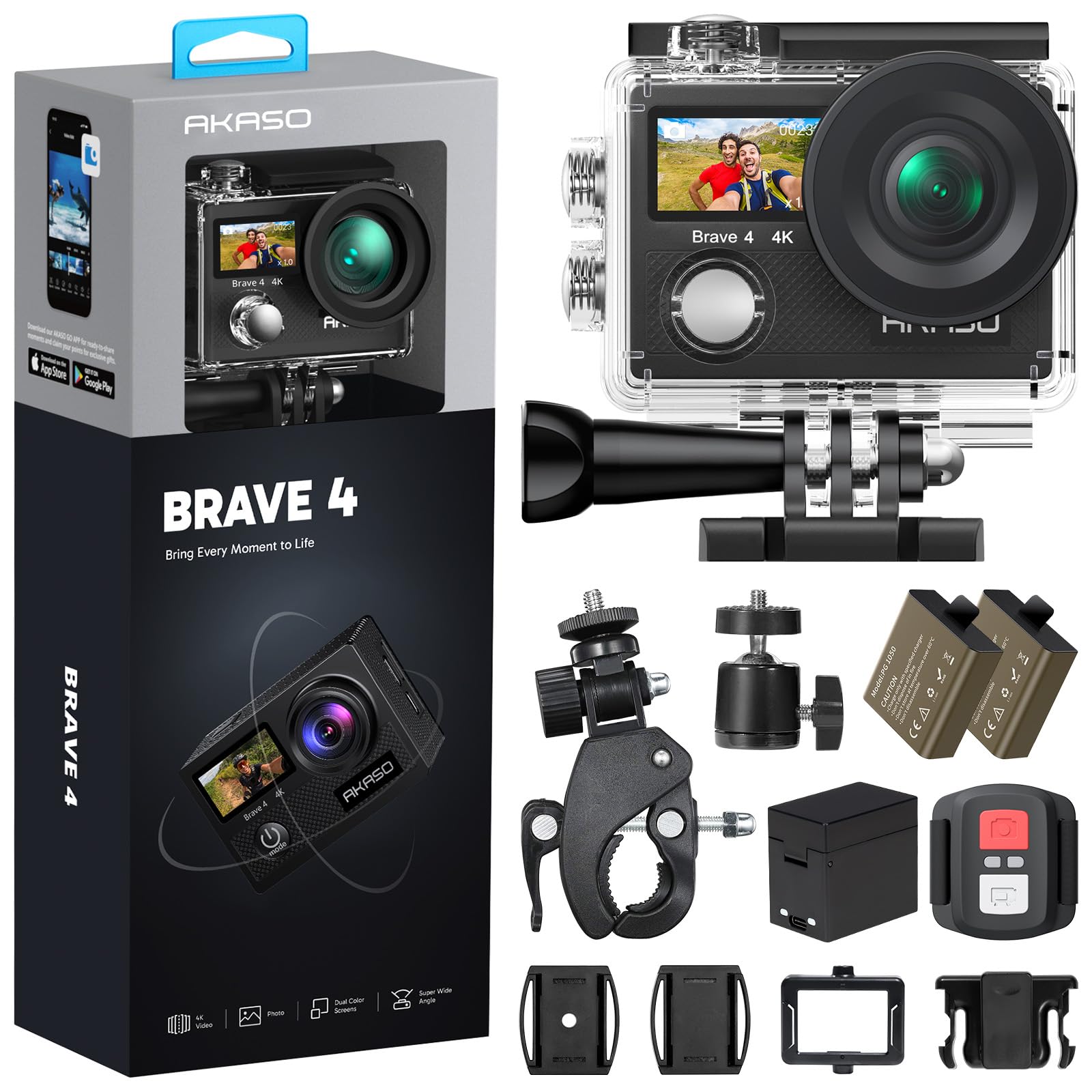
The AKASO Brave 4 delivers 4K video at 30fps with electronic image stabilization that keeps kayak-mounted footage steady through choppy water. The included waterproof case reaches 40 meters – enough for casual snorkeling and diving. Image quality in good light holds up well against cameras costing three times as much.

Battery life runs about 90 minutes per battery, which means a full day on the water requires swapping. A spare battery is included, but packing a third removes any range anxiety. In dim conditions – evening paddles or cloudy skies – video shows grain and reduced sharpness. This is a daylight camera first.

This camera suits budget-conscious kayakers who want action-cam features without the premium price tag. First-time users will appreciate the bundled remote and multiple mounts for helmet, chest, or kayak deck. Snorkelers and casual divers can shoot underwater without a separate housing. The tradeoff: if you need all-day recording without interruptions, the battery swap cadence matters.

The accessory bundle includes a remote control, adhesive mounts, and a floating hand grip – items that cost extra with most competitors. Setup is straightforward: charge both batteries, insert a microSD card, and mount it on your kayak. The touch screen on the rear is responsive, though menus are basic.

💡 Swapping batteries mid-trip is straightforward – pack a third for full-day outings.

Pros

  • Sharp 4K footage with electronic stabilization for active conditions
  • Complete kit with waterproof case, remote, and multiple mounts
  • 40m waterproof depth without needing a separate housing
  • Budget-friendly price that includes two batteries

Cons

  • Battery lasts about 90 minutes per charge
  • Low-light video shows grain and noise, limiting evening or overcast use
Our verdict

For a first action camera on a kayak, the Brave 4 delivers the essential features – 4K, stabilization, waterproofing – with a kit that leaves nothing to buy separately. Carry an extra battery and stick to daylight for best results.

Check Latest Price
2

Best Premium Action Camera

DJI Action 5 Pro

93 /100
Traveler Score Outstanding

Key details

Battery
1950mAh, 4 hours
Waterproof Depth
20m (66ft) no housing
Video & Stabilization
4K120fps, RockSteady+
Check Details on Amazon

The 1/1.3-inch sensor, 4-hour battery, and HorizonSteady stabilization set the Osmo Action 5 Pro apart from budget action cameras. Where the AKASO Brave 4 offers 80% of the performance for a quarter of the price, this DJI model delivers the remaining 20% in low-light clarity, battery endurance, and horizon-level stabilization – making it the choice for kayakers who prioritize video quality over cost.

This camera suits serious action videographers and vloggers who film in low-light conditions – dawn paddles, shaded rivers, or evening sessions. The tradeoff is the price: at $309 base, it costs about as much as four Brave 4s. Most kayakers will be better served by the budget option, but those who need the best possible footage will find the investment worthwhile.

The battery easily outlasts a full day of intermittent recording, and the large sensor handles murky underwater light without the grain common in smaller sensors. The subject tracking works reliably in open water but may lose a fast-moving kayak in dense reflections or busy backgrounds – manual framing is a safe fallback.

💡 When filming in dense reflections or fast-moving water, frame manually rather than relying on subject tracking.

Pros

  • Best-in-class low-light performance for dawn and dusk kayaking.
  • 3.5+ hour battery life outlasts a full day of intermittent recording.
  • 20m waterproof without housing
  • HorizonSteady 360° keeps the horizon level even in rough water.

Cons

  • Premium price
  • Subject tracking may lose the target in cluttered environments.
Our verdict

For kayakers who demand the best low-light video and stabilization, the Action 5 Pro is the clear choice – but for most, the AKASO Brave 4 offers better value.

Check Latest Price
3

Best Rugged Compact Camera

Olympus TG-7

85 /100
Traveler Score Excellent

Key details

Battery
Waterproof Depth
15m (50ft) no housing
Video & Stabilization
4K30fps
Check Details on Amazon

The OM System TG-7 delivers best-in-class macro photography with 1cm super macro and an F2.0 lens that pulls detail from small marine life. Its shockproof, crushproof, and freezeproof body, along with 15m waterproofing without a housing, makes it a dependable companion for rough environments — a different tool than the top pick action camera, which prioritizes video stabilization and mounting flexibility.

This camera fits scuba divers, serious snorkelers, and outdoor adventurers who want to document close-up underwater subjects without worrying about the gear. The small 1/2.3-inch sensor means low-light shots show more grain than a larger-sensor camera, and the menu system takes time to learn — not a grab-and-go device for beginners or vloggers who need a front-facing screen.

For kayakers focused on marine life documentation rather than POV action, the TG-7's dedicated underwater macro modes and rugged construction make it a specialized choice. The top pick action camera offers smoother video and easier mounting for paddle shots, but can't match the TG-7's close-up clarity or drop tolerance.

💡 Spend an hour with the manual to memorize the menu layout before a trip; it reduces fumbling on the water.

Pros

  • Exceptional macro photography with underwater-specific modes for coral and small sea life detail
  • Outstanding build quality and water resistance for serious scuba and adventure use
  • 4x optical zoom provides framing flexibility that action cameras lack

Cons

  • The button layout and menu system can be confusing for first-time users, especially in a hurry
  • In dim light, the small 1/2.3-inch sensor produces more grain than larger-sensor cameras
Our verdict

Choose the TG-7 if your kayaking priority is underwater macro stills and a camera that survives drops — not if you need smooth action video or an intuitive interface.

Check Latest Price
4

Best Budget with Touch Screen

AKASO EK7000 Pro

91 /100
Traveler Score Outstanding

Key details

Battery
2x 1350mAh (140min ea)
Waterproof Depth
131ft (40m) with case
Video & Stabilization
4K30fps, EIS
Check Details on Amazon

The EK7000 Pro upgrades the budget action camera formula with a responsive touch screen and a pair of batteries that each record up to 140 minutes. This addresses two of the biggest friction points with the Brave 4: fumbling with buttons to change settings and swapping batteries halfway through a paddle. The included floating hand grip and hard case also add convenience for kayakers who want to keep the camera close at hand.

This is the right pick for kayakers who prioritize longer recording sessions between swaps and prefer a touch interface for framing shots on the water. The tradeoff is that the 4K footage remains visibly softer than what a GoPro or DJI Action 5 Pro delivers, and low-light scenes can show grain. If your goal is crisp, shareable video for social media or YouTube, the EK7000 Pro will feel limited; but for casual paddling logs and family memories, the quality is sufficient.

💡 Storing a spare pair of batteries in a dry bag covers an entire day of paddling without worrying about charging.

Pros

  • Batteries last 140 minutes each, reducing mid-trip swaps
  • Touch screen makes menu navigation and shot framing straightforward
  • Floating hand grip and carrying case included

Cons

  • For kayakers aiming to export crisp footage, 4K video appears soft compared to GoPro or DJI sensors
  • A full day on the water may still require spare batteries despite the 140-minute runtime
Our verdict

For the kayaker who values easier controls and longer per-battery recording over absolute video purity, the EK7000 Pro is the smart upgrade from the Brave 4 – just keep expectations realistic for 4K quality.

Check Latest Price
5

Best for 360° Creativity

Insta360 X5

94 /100
Traveler Score Outstanding

Key details

Battery
208 min claimed
Waterproof Depth
10m (33ft) no housing
Video & Stabilization
8K30fps 360°
Check Details on Amazon

The Insta360 X5 captures the full 360-degree scene around you, so you can reframe the perfect kayak shot after you’ve already paddled past. Unlike standard action cams that require a fixed angle during recording, this frees you to focus on the experience instead of the framing.

This camera suits content creators who enjoy post-production and want maximum creative control. Editing is mandatory – you cannot pull a finished video off the memory card. Battery life at 8K runs about 1.5-2 hours, less than the advertised 3 hours, so bring spares for full-day outings. If your goal is instant social sharing, this workflow will feel tedious.

Low-light performance is a step above other 360 cameras, with the dual sensors and AI chip handling dusk scenes with less noise. The 10-meter waterproof rating covers kayaking without a housing. The replaceable lens system is a smart durability feature – a scratched lens can be swapped rather than scrapping the whole camera. And the invisible selfie stick mode produces a third-person perspective that looks like a drone shot.

💡 Plan your editing workflow before the trip – you can't skip it, but the reframing rewards are worth the effort.

Pros

  • Captures every angle simultaneously
  • Low-light performance is notably better than previous 360 cameras, making sunset and dusk shots usable.
  • Replaceable lens system extends the camera's lifespan if a lens gets scratched on a kayak.

Cons

  • Requires editing software to extract standard video
  • Battery life in 8K is shorter than claimed
Our verdict

For the kayaker who wants to craft cinema-style edits from every possible angle and doesn't mind the editing time, the X5 delivers unmatched creative flexibility. It’s not for someone looking to share a quick clip after the trip.

Check Latest Price
6

Best Budget Compact Floatable

YISENCE 4K 16FT

84 /100
Traveler Score Excellent

Key details

Battery
1250mAh, 70 min
Waterproof Depth
16ft (5m) no housing
Video & Stabilization
4K UHD
Check Details on Amazon

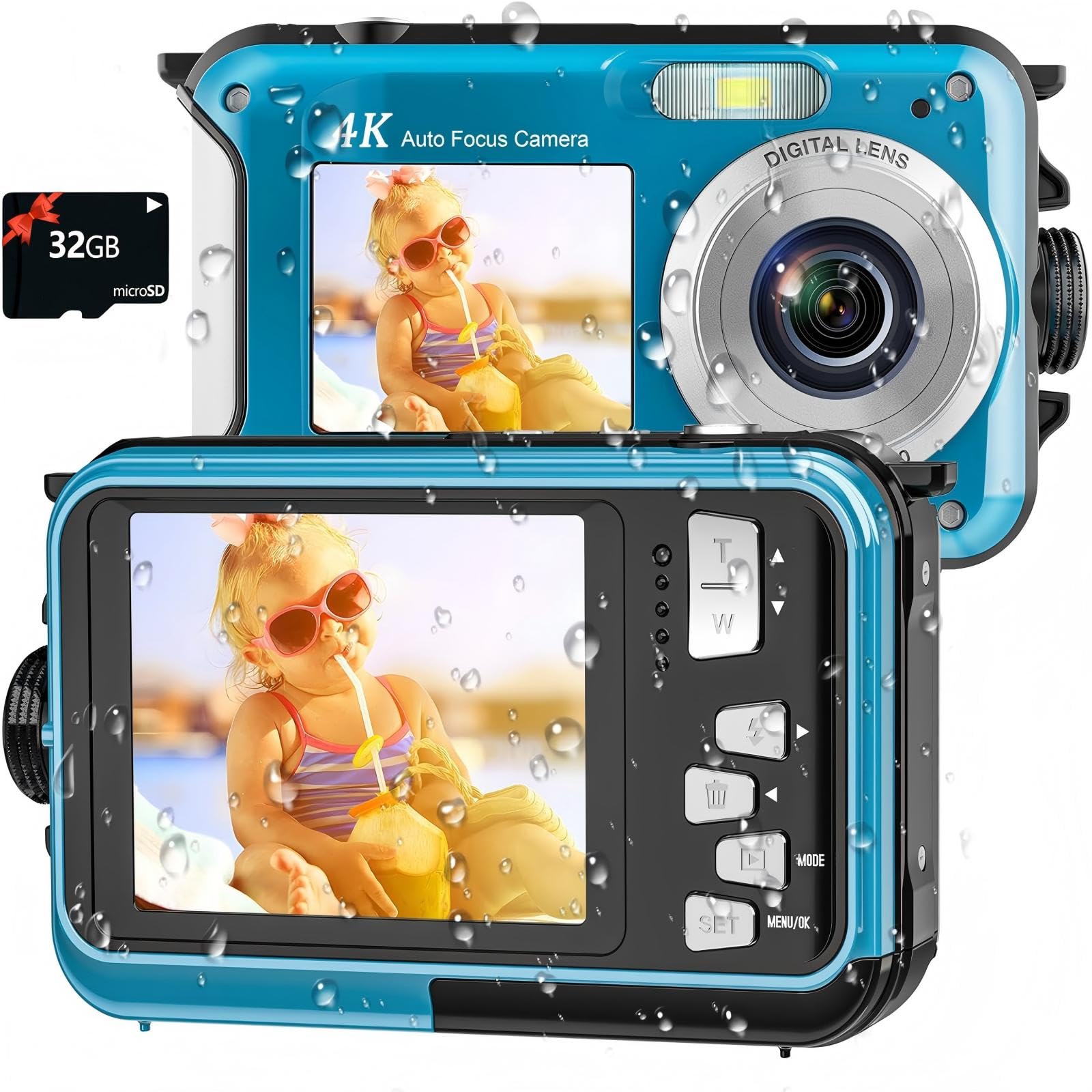
The YISENCE 4K 16FT is one of the few sub-$70 cameras that floats without an accessory — a clear advantage when kayaking on calm lakes or rivers where a dropped camera might sink. Unlike the top pick AKASO Brave 4, which requires a floating grip, this camera's body itself is buoyant. The dual-screen setup (front and back) makes self-framing simple, and the included 32GB card means zero extra cost out of the box.

In use, the autofocus works reliably in good daylight, and 4K UHD video looks acceptable for social media clips, though the lack of optical zoom means you rely on digital zoom, which loses detail quickly. Battery life is around 70 minutes — enough for a short paddle, but you'll want a spare for half-day trips. The camera's 16ft waterproof depth is fine for splash zone and shallow water, but submerging it beyond 5 feet risks damage.

This camera suits kayakers who stay near the surface, paddle in pools or gentle rivers, and prioritize a complete ready-to-go kit over depth rating. If you plan to snorkel alongside your kayak, explore deeper coves, or need optical zoom for wildlife, consider the AKASO Brave 4 with its 40m case and mounting options.

💡 Keep an extra battery in a dry bag — the 70-minute runtime suits short outings but not half-day paddles.

Pros

  • Floats without additional accessories
  • Dual screens make selfie framing simple for solo paddlers.
  • Comes with a 32GB card and two batteries
  • 4K video and 64MP photos are sufficient for casual sharing in bright conditions.

Cons

  • 16ft waterproof depth is limiting if you plan any submersion beyond surface level.
  • Digital zoom only
  • Battery life of 70 minutes falls short for full-day kayak outings without spares.
Our verdict

If your kayaking stays on the surface and you want a worry-free camera that floats and includes everything for under $70, the YISENCE is a fair value. For deeper water or mounting needs, the AKASO Brave 4 is a more versatile pick.

Check Latest Price
7

Kids Beach

Yifecial 4K 16FT

94 /100
Traveler Score Outstanding

Key details

Battery
650mAh, 70 min
Waterproof Depth
16ft (5m) no housing
Video & Stabilization
4K (likely interpolated)
Check Details on Amazon

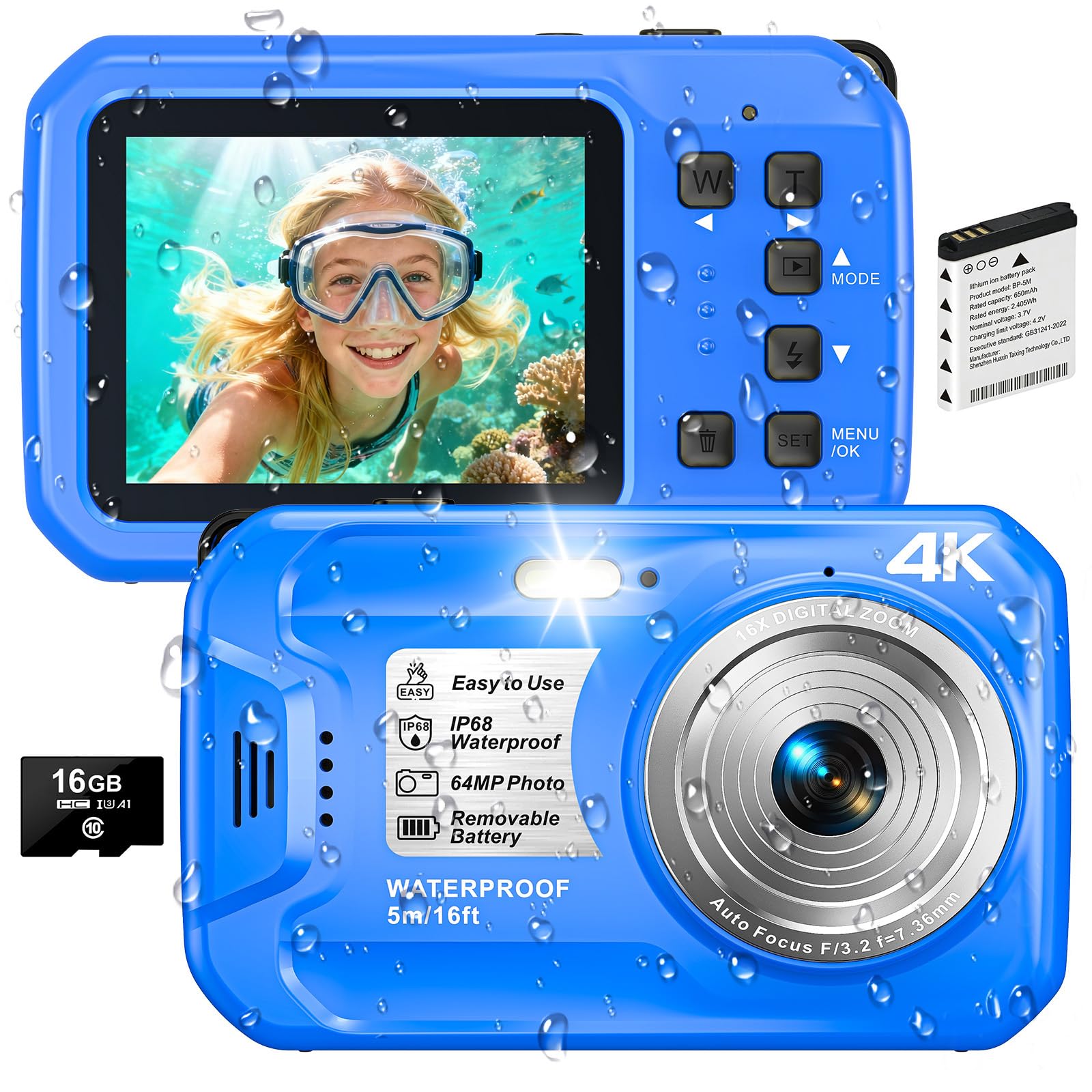
This Yifecial camera delivers on its core promise: a floatable, easy-to-use compact that keeps kids entertained at the pool or beach. Water resistance holds up in shallow water, and the autofocus works reliably with wet hands. However, with very few units in the wild, long-term durability is an unknown. The similarly priced YISENCE model offers more user feedback for those who want added peace of mind. 4K video is interpolated and the 16ft depth limit rules out anything beyond gentle snorkeling — fine for paddling pools, not for kayak runs.

Pros

  • No reported water ingress during shallow use
  • Intuitive controls work well with wet hands

Cons

  • Waterproof only to 16ft
  • 4K video is upscaled from a lower resolution, producing soft footage
Our verdict

If kayaking is the goal, look to action cameras; for a cheap, worry-free splash camera for young kids at the beach or pool, this fits — just don't rely on it for crisp video or deep water.

Check Latest Price
8

Family Beach

YEEIN 4K Dual

80 /100
Traveler Score Excellent

Key details

Battery
1050mAh, 3 hours
Waterproof Depth
17ft (5.2m) no housing
Video & Stabilization
4K UHD
Check Details on Amazon

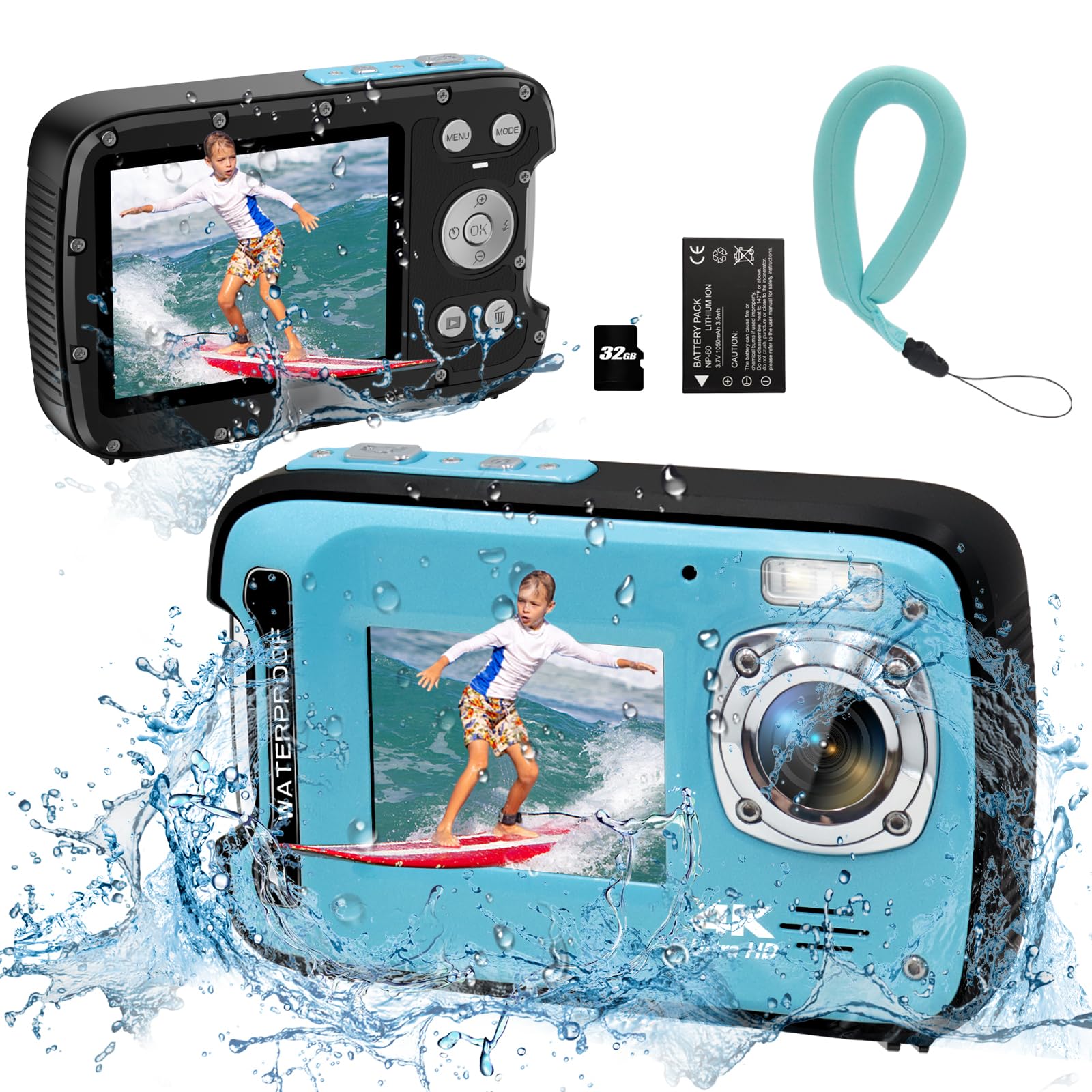
The YEEIN 4K Dual packs a floating strap, 32GB memory card, and a selfie-friendly dual screen into one box for a price that undercuts most competitors. For families heading to the beach or pool, this is a low-risk way to let kids capture underwater moments without worrying about losing the camera. Autofocus helps keep snapshots sharp, and the intuitive controls mean adults won't need to coach every shot. However, the value comes with a catch: a minority of units experience battery charging issues after a few uses, and the 17ft waterproof depth handles splashes and shallow submersion but not extended underwater sessions. If you need a camera that reliably lasts through a full day of kayaking or deeper snorkeling, models like the YISENCE provide better consistency for roughly $15 more.

💡 Test the battery charging within the first few days – if it fails to hold a charge, return promptly.

Pros

  • Complete kit includes floating strap and 32GB card
  • Dual-screen selfie mode makes framing easy for kids and teens.
  • Autofocus helps capture sharp snapshots without manual adjustments.

Cons

  • Battery may not hold charge after a few uses in some units
  • 17ft waterproof depth is fine for splashes but limits deeper use during kayaking or snorkeling.
Our verdict

A fun beach companion for families who want a disposable-style underwater camera, but not a dependable choice for all-day kayaking trips where battery reliability matters.

Check Latest Price
9

Budget Deep Water

YAXTIFIU 5K 33FT

87 /100
Traveler Score Excellent

Key details

Battery
2x included
Waterproof Depth
33ft (10m) no housing
Video & Stabilization
5K
Check Details on Amazon

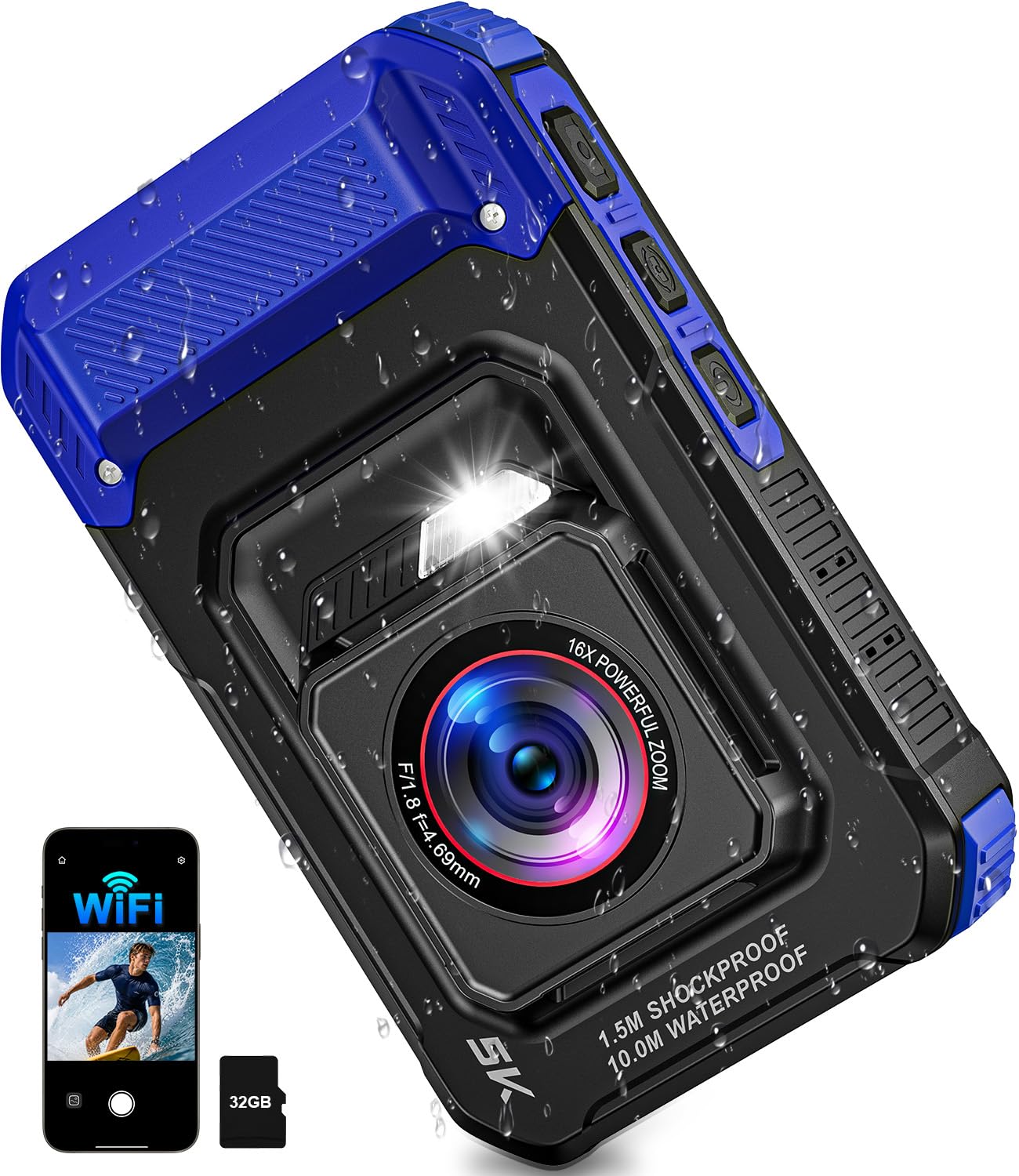
This camera packs 5K video and 33ft waterproofing without a housing at a price that undercuts most dedicated action cams. The autofocus is responsive, and the interface is simple enough for someone new to underwater shooting. However, the product has only been in users' hands for a short period — early impressions are uniformly positive, but there isn't enough history to confirm how the waterproof seal holds up after multiple kayak trips or how the electronics handle repeated saltwater exposure. For the price, you get a feature set that looks great on paper, but the lack of a proven track record means you're accepting some uncertainty in exchange for the cost savings.

Pros

  • 5K video (higher than 4K) and 33ft waterproof depth at a budget-friendly price.
  • Autofocus and menu layout make it easy for beginners to start shooting quickly.

Cons

  • Waterproof seal and overall reliability are unconfirmed over extended use in demanding conditions.
  • 5K codec may be less efficient for video editing, requiring more processing power or conversion.
Our verdict

Worth considering for kayakers who want deep waterproofing and high-res video at a low entry cost, provided they are comfortable with a shorter reliability track record.

Check Latest Price
10

Budget Snorkel

Kodak PIXPRO WPZ2

85 /100
Traveler Score Excellent

Key details

Battery
Waterproof Depth
15m (50ft) no housing
Video & Stabilization
1080p Full HD
Check Details on Amazon

The Kodak PIXPRO WPZ2 offers solid value as a simple point-and-shoot with Wi-Fi for quick photo sharing. The interface is intuitive enough for kids or beginners to pick up immediately. However, the waterproof seal is a known vulnerability — some units allow water ingress under pressure, which makes it a gamble for anyone planning frequent or deep water exposure. Battery life also runs shorter than expected on a full day out, so carrying a spare is wise. For poolside snaps or light snorkeling where a camera failure is inconvenient but not ruinous, this fits. But for a kayaking trip where you need consistent water protection and longer runtime, it's better to choose an action camera with more reliable sealing.

Pros

  • Great value for a camera with Wi-Fi and 4x optical zoom at a budget price.
  • Simple controls and clear menus make it easy for beginners to operate.

Cons

  • Waterproof seal can allow water ingress in some units
  • Battery life may run short during a full day of shooting, especially with Wi-Fi active.
Our verdict

A decent choice for casual poolside photography or sharing vacation shots on social media, but skip it for kayaking where consistent water protection matters most.

Check Latest Price

How to Choose

Waterproof Depth

This is the single most critical spec. Cameras rated for 15m (50ft) without a housing are fine for surface kayaking and snorkeling. Action cameras that require a separate waterproof case can go much deeper (up to 40m) but add bulk.

The trade-off: a built-in waterproof body is more convenient but often limits max depth. If you only paddle on calm lakes or rivers, 15m is plenty. For ocean kayaking or diving, choose a camera with a case or a higher native rating.

Video Resolution and Stabilization

4K is now standard, but on budget action cams the resolution is often interpolated – meaning the sensor isn't natively 4K. The footage looks soft compared to true 4K from a GoPro or DJI.

Stabilization (EIS) matters more than resolution for kayaking because your camera shakes with every paddle stroke. Look for cameras that mention 'gyro-based EIS' or have a separate stabilization mode. Without it, even 4K footage will be unwatchable.

Battery Life and Batteries

Battery life claims are almost always optimistic. A camera that advertises 2 hours may only last 90 minutes in real-world recording, especially in cold water or when using Wi-Fi.

The practical solution is the number of included batteries. Many budget action cams come with two batteries, doubling your shooting time. For a full day on the water, plan for at least 3 hours of total battery capacity. Spare batteries are cheap; a camera with a fixed internal battery is a liability.

Ease of Use Underwater

Underwater, buttons become harder to press through glove or wet fingers. Cameras with large, well-spaced buttons or a touch screen work better. Some rugged compacts have menu systems that are confusing even on land – imagine trying to navigate them while floating.

A front-facing selfie screen (dual-screen) helps for framing self-shots, but it also adds a potential point of water ingress. If you mainly film others, a simple rear screen is fine.

Durability

Kayaking can be rough: drops onto rocks, sand, and sudden temperature changes. A shockproof rating (e.g., 2m drop) and crushproof rating (e.g., 100kgf) mean the camera can survive being stepped on or falling off a kayak.

Action cameras in a plastic housing are less rugged than built-in tough compacts. If you tend to be clumsy or paddle in rocky environments, a rugged compact like the Olympus TG-7 is safer. For most, the housing of an action cam provides enough protection – just don't drop it on concrete.

Frequently Asked Questions