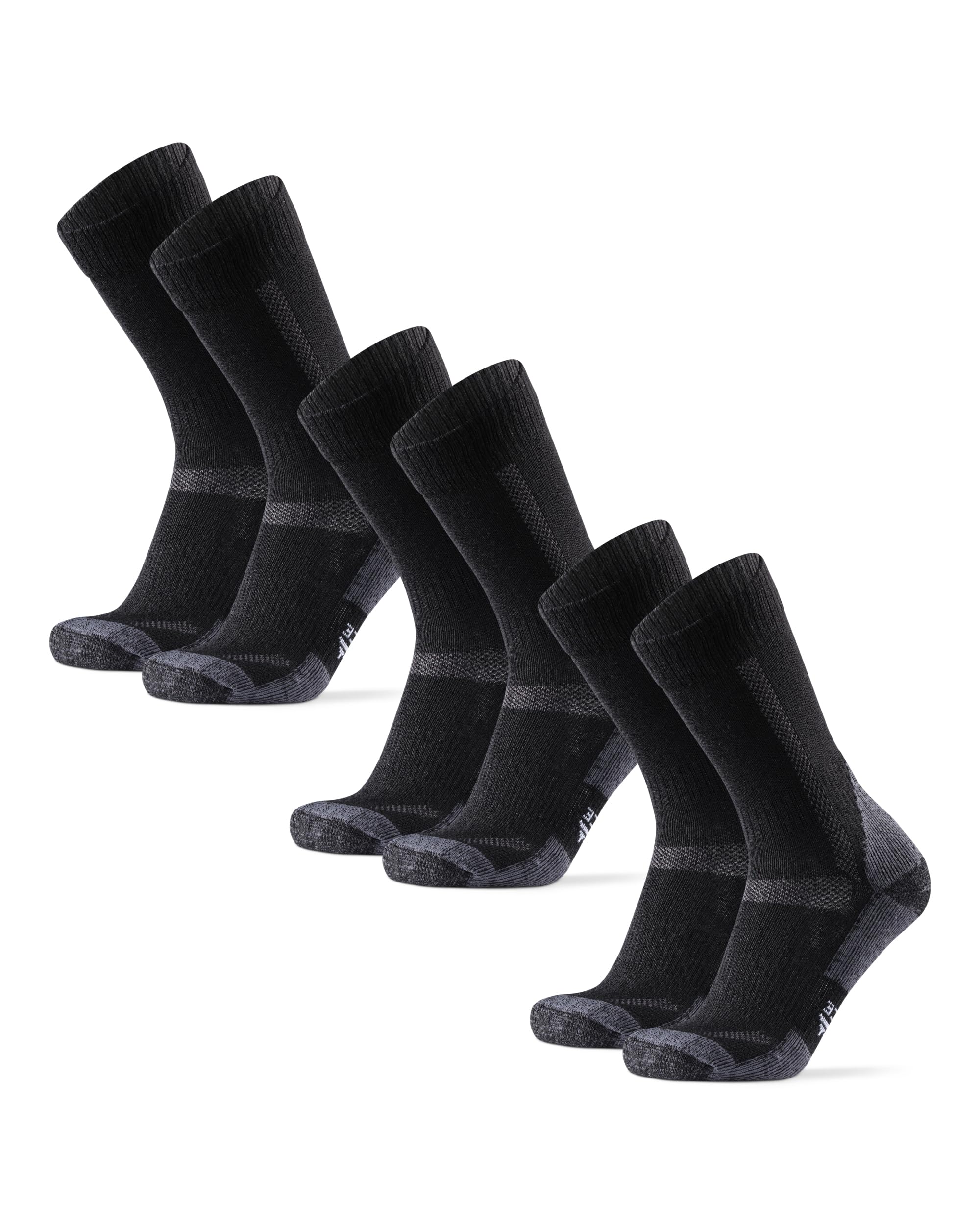
Best Trekking Socks of 2026

Every trekking sock is a trade-off you feel around mile six. Pile on cushioning and your boots fit tight and your feet cook; go thin and light and every root announces itself through the sole. Wool complicates it further — it stays warm when it's damp, which is why it dominates the category, but plenty of wool socks are mostly synthetic and go scratchy and saggy by the second wash. The right pair just disappears inside your boot, and that's what you're paying for: a foot that feels the same at mile one and mile twelve.

Here's a piece of advice I picked up the hard way: settle on socks before you commit to boots, since a thicker sock can eat half a size. My team and I spent seven months in 14 pairs, hiking rocky climbs, slogging wet weekend loops, and putting in a lot of pavement in between, and we washed every one of them until they started showing their real character. The pairs below are the ones I keep reaching for.

1

Best Overall

Darn Tough Hiker Midweight Micro Crew

95 /100
Traveler Score Outstanding

Key details

Height
Micro crew
Material
Merino wool
Warranty
Lifetime
Cushioning
Midweight
Check Details on Amazon

One pair of socks, bought once and replaced free when it wears out: that's the promise behind the Darn Tough Hiker, and it's why we hand this pair to anyone heading out for a three-season trip. The sock backs it up. Midweight cushioning sits under the heel and the ball of the foot without turning a boot into a squeeze, and the micro crew cuff finishes just above the collar of a mid-height boot — high enough to stop the leather rubbing, low enough to wear with a trail shoe.

What you're paying for is the part that gives out first on cheaper socks. On the budget merino packs here, the heel thins and then the toe goes, usually inside a season of real trail use. This one holds its shape at both far longer, and the guarantee covers the day it doesn't. That's the honest case for the price: not that the sock feels nicer, but that you buy it once.

Sizing is the thing to get right. The cut is close and fairly narrow, so if you sit at the top of a size range, or you're wide across the forefoot, go up; the band still grips firmly enough to keep the sock from sliding down inside a boot.

Weight is the other decision. If you run hot, hike in summer, or wear a low-volume trail shoe, the Light Hiker version of this sock is the better call — same fit, less between your foot and the ground. In a mid boot on a cold, wet morning, the midweight is the one. The toe seam is flat enough that we stopped thinking about it, which is the highest praise a sock seam gets.

Pros

  • Lifetime guarantee covers wear-through
  • Cushioning under heel and ball without crowding the boot
  • Cuff stays up without bunching
  • Holds its shape at heel and toe

Cons

  • Premium price for a single pair
  • Not the warmest choice for deep cold
Our verdict

The pair we hand to anyone heading out for a three-season hike: midweight cushioning that suits most boots, and a lifetime guarantee that makes the price a one-time cost.

Check Latest Price
2

Best for Warm Weather

Darn Tough Light Hiker Micro Crew

96 /100
Traveler Score Outstanding

Key details

Height
Micro crew
Material
Merino wool
Warranty
Lifetime
Cushioning
Lightweight
Check Details on Amazon

Take our top pick and pull most of the padding out from under your foot and you have this sock: the same micro crew fit, the same merino, the same guarantee. We keep a pair for hot days and long approaches, when a midweight starts to feel like too much sock inside a trail shoe.

What the lighter knit buys is airflow and fast drying. Sweat moves through instead of sitting against the skin, which is the difference between a sock that's damp at the top of a climb and one that's wet. It is genuinely thin, though: on rocky descents under a loaded pack you feel more of the trail than you want to, and if padding is the reason you're shopping, the midweight is the one.

Sizing runs small, so order up if you're between sizes or wide across the foot, and don't count on the fit loosening much. The reward is a sock that stays put under the arch and doesn't migrate down a low collar, which is most of what you want from something this light.

Pros

  • Dries quickly and stays dry in heat
  • Cooler than the midweight in the same boot
  • Guarantee covers a very thin sock
  • Sits still under the arch

Cons

  • Thin underfoot on rocky descents
Our verdict

Same fit and guarantee as our top pick with less underfoot, so we point hot-footed hikers here — just size up if you're between sizes.

Check Latest Price
3

Best Multi-Pack Value

MIRMARU 5-Pair Trekking Crew Socks

94 /100
Traveler Score Outstanding

Key details

Height
Crew
Pack Size
5 pairs
Cushioning
Cushioned foot
Moisture Handling
Moisture wicking
Check Details on Amazon

Five pairs of crew socks for about what one premium pair costs is the kind of arithmetic that usually means thin fabric and a cuff that gives up by the second wash. That isn't what this pack is. The knit is dense, the footbed is cushioned under the heel and ball, and the cuff has enough grip to stay on the shin rather than sliding into the boot.

We reach for this pack when someone is outfitting themselves for a week of hiking and doesn't want to think about laundry — five pairs, one box, nothing precious enough to baby. They hold their shape through repeated washing, they handle sweat better than the price suggests, and they warm up a cold morning without roasting you by afternoon.

The trade is per-pair longevity against volume. One premium pair outlasts any single sock here, but five of these will carry most hikers through a full season of weekends, and losing one to a hostel dryer doesn't ruin the trip.

Pros

  • Five pairs for about one premium pair's price
  • Cuff stays on the shin, even on skinny legs
  • Cushioned footbed with a wicking knit
  • Holds shape through repeated washing

Cons

  • Even cushion rather than shaped padding
  • Louder colorways than a trail sock needs
Our verdict

Five cushioned crew pairs that stay up and dry fast for about the price of one premium pair, which is why this is the pack we suggest for a full season of hikes.

Check Latest Price
4

Best Budget Women's Pack

Sandsuced 5-Pack Merino Boot Socks

93 /100
Traveler Score Outstanding

Key details

Height
Boot
Material
Merino wool
Pack Size
5 pairs
Check Details on Amazon

If your hiking boots are already snug, this is the pack to try first: a wool crew that slides in under the laces without turning a comfortable boot into a tight one. Warm without bulk is a harder combination to find than it sounds.

It's also the women's pack we suggest when the budget is the binding constraint. Five pairs of wool-blend boot socks at the low end of the price range here, warm enough for a cold trailhead, soft enough that nobody's thinking about itch, and snug enough at the cuff that they don't end up around the arch halfway up a climb.

The height earns its keep off the trail too: pull them up and they cover the ankle when you sit down on a rock, which is when feet start to get cold. They run close on the first wear and settle after a wash or two, so don't size up on the strength of a tight first try — and the colors hold up wash after wash.

Pros

  • Warmth without bulk in a boot
  • Fits inside snug boots and shoes
  • Cuff stays put on the calf
  • Five pairs at a budget outlay

Cons

  • Pills early with regular wear
  • Medium weight, not a deep-winter sock
Our verdict

The women's pack we point to when the budget is tight: warm wool boot socks that slip inside snug boots without bunching.

Check Latest Price
5

Best for Staying Put

Time May Tell Hiking Crew Socks

94 /100
Traveler Score Outstanding

Key details

Height
Crew
Cushioning
Cushioned
Moisture Handling
Moisture wicking
Check Details on Amazon

A sock that ends up bunched under your arch two miles in has failed at its only job. These don't: the cuff grips the shin, the arch is knit close, and the sock stays where you put it, even in a narrow boot where a loose crew has nowhere to hide.

Cushioning is the other half of the story — enough under the heel and ball to take the edge off a day pack's worth of walking, not so much that your boot feels tighter at lunchtime than it did at the trailhead. The colors are louder than the socks we usually reach for, and we stopped minding by the second wash.

Where this pair earns its place is the middle of the range: less than the premium merino, better fixed underfoot than the cheapest packs here, and it asks nothing of you in return — no weight class to choose, no wool content to decode, no break-in. If you want one less decision before a hike, this is a good sock to stop thinking about.

Pros

  • Cuff grips the shin without clamping
  • Cushioning without bulk inside the boot
  • Comfortable through a full day on foot

Cons

  • Men's sizing only
Our verdict

A midprice crew for hikers whose socks always slide down: the cuff holds the shin and the knit doesn't bunch, even in a narrow boot.

Check Latest Price
6

Cold-Day Warmth

Alvada Merino Crew Socks (3 Pairs)

91 /100
Traveler Score Outstanding

Key details

Height
Crew
Sizing
Unisex adult
Material
Merino wool
Pack Size
3 pairs
Check Details on Amazon

Warmth per dollar is the whole argument for these socks, and after a cold snap spent in them we think it's a strong one: three pairs of thick merino crews for less than most single premium pairs, soft enough to wear against skin, and warm enough that a winter boot feels like a different boot.

We noticed the band first. It holds without pinching, and the knit is tight enough that the sock doesn't creep down inside a boot over a long walk. They're also thick — thick enough to change the fit of a tight shoe, which is worth knowing before you put them in your best pair of boots.

Where they shine is the unglamorous end of winter: work boots, a snow shovel, a cold commute, a chair by a fire. The unisex sizing covers a lot of feet, and they soften with washing rather than stiffening up.

What they aren't is a technical trail sock. The warmth comes from bulk rather than a dense performance knit, and the fit is roomy through the toe — which is exactly why they're comfortable in a work boot and vague in a trail shoe. Judged as warm socks rather than hiking equipment, they're very good value.

Pros

  • Thick, warm merino for cold days
  • Soft against skin after washing
  • Top band holds without pinching
  • Three pairs for one premium pair's price

Cons

  • Heels and toes wear through in a season
Our verdict

Three thick, soft, warm pairs for about the price of one good trail sock — the value is the point, and the comfort backs it up.

Check Latest Price
7

First Wool Socks

Anlisim Merino Wool Hiking Socks

93 /100
Traveler Score Outstanding

Key details

Height
Crew
Sizing
Women's
Material
Merino wool
Check Details on Amazon

Order a size up. The knit is snug and the sizing runs close, so if you're at the top of your shoe size the usual number fits like a compression sleeve rather than a hiking sock.

Get the size right and the rest is easy: soft merino against the skin, warm without being thick enough to change how a shoe fits, and a cuff that stays up without leaving a red line. The colors are varied and cheerful, which matters when you're buying five pairs at once.

This is the pack we point at when someone wants to try wool without committing much: the cost per pair is low, the comfort is real, and five pairs means a dry one waiting on the second morning of a trip. For a first hiking season, a trip with laundry, or a pack split between family members, that's a fair trade.

Pros

  • Soft merino against the skin
  • Cuff stays up without a red line
  • Warm without changing how shoes fit
  • Low cost per pair

Cons

  • Heel fabric wears thin with hard use
Our verdict

A soft, warm women's merino pack at a low cost per pair, best treated as a first wool sock rather than the pair you'll hand down.

Check Latest Price
8

Year-Round Hiking

DANISH ENDURANCE Merino Hiking Socks

89 /100
Traveler Score Excellent

Key details

Sizing
Men's and women's
Material
Merino wool blend
Intended Use
Hiking and everyday wear
Check Details on Amazon

The word merino is doing a lot of work on this label. The wool here is part of a blend rather than the whole sock: the warmth is real, but the fiber content is more modest than the name suggests, and that's the gap between the label and what arrives.

The blend has an upside, and it's why these made the guide: moisture moves through them quickly. Over a long day in mild weather your feet stay dry rather than clammy, and the sock doesn't hold the day's sweat the way a heavy wool crew can. They also dry fast enough that a rinse in a sink at the end of the day leaves you with a wearable sock by morning.

We found the sizing the sticking point. The range doesn't scale cleanly at the top end, and the ankle band runs firm, so a pair that fits one foot will pinch another. If you're between sizes or near the top of the chart, buy a single pair and walk a few miles in it before committing to a bundle.

For long, sweaty days in mild weather, these do a job the heavier merino socks here don't: they move moisture without adding heat, and they stay comfortable when the day runs longer than planned. Wear them in summer and the shoulder seasons, not in February.

Pros

  • Moves moisture on long, mild days
  • Breathes well enough for year-round use
  • Dries overnight after a rinse

Cons

  • Thin for genuinely cold weather
Our verdict

Breathable, quick-drying hiking socks for long days in mild weather, if you can settle the sizing — the fit is the sticking point.

Check Latest Price

How We Tested 14 Pairs of Trekking Socks

We built the shortlist from scratch: any sock advertising at least half wool, sorted into three thickness bands — liner, mid-weight, and expedition — and sized to boot rather than shoe alone. Price per pair mattered, so we kept the range broad instead of chasing the priciest names on the shelf. That filtering left 14 pairs, which we rotated through seven months of day hikes, two overnight trips, and the unglamorous training walks in between.

Each pair went into the same boots on repeated routes, which is how we judged fit — whether the heel cup actually sat on the heel, whether the sock slid down or bunched under the arch, and whether the extra thickness pushed my toes against the front of the boot on descents. On cold mornings we noted which pairs kept feet warm through a twenty-minute stop and which went cold the moment we quit moving. We also read the fiber labels and paid attention to itch against bare skin, since a wool percentage on a tag says nothing about how it feels by lunchtime.

Durability got the least glamorous treatment: every pair went through at least a dozen washes, and we compared heels and toes against our first-day notes for thinning, pilling, and holes. Softness was a hand-feel check out of the package and again after a month, because a few pairs that felt great new turned stiff and boardy. And since socks are cheap enough to replace but not cheap enough to replace often, we worked out a rough cost per wear from how each pair was holding up at the end. Blister count, honestly, was the final arbiter.

How to Choose Trekking Socks

Match the cushioning to your boot, not the calendar

Midweight cushioning fills a roomy leather boot nicely and suits three-season hiking in cool, wet conditions. Lightweight cushioning belongs in a close-fitting trail shoe, a fast-and-light trip, or hot weather, where extra material turns into heat and pressure points. The Darn Tough Hiker and its Light Hiker sibling are the clearest example in this guide: identical fit and guarantee, separated only by how much sits under your foot.

If you own one pair of boots and hike most of the year, buy the midweight. If your summer shoe is already snug, buy the light one. Buying both is not a compromise; it's how you stop guessing in June.

Get the height right for your boot collar

Crew and micro crew socks exist to sit just above the top of the boot, where the collar and laces rub. Too low and you get a hot spot at the ankle; too high in July and you're wearing a knee sock. Put the sock on with the boot it's for: the cuff should clear the collar by an inch or two and stay there when you squat. A sock that's perfect in a low trail shoe can be miserable in a mountaineering boot, and the other way round.

What merino actually buys you

Wool's advantage is warmth when it's damp and resistance to odor, which matters most on multi-day trips where the same pair gets worn twice. Its weakness is wear: the softer the wool, the faster heels and toes thin out. Synthetic knits dry quicker and take abrasion better, but they hold smell.

Our position is simple. Spend on wool for trips where you'll sleep in the same socks, and buy a cheaper synthetic or wool-blend pack for day hikes and training walks. Read the wool share rather than the label, because a modest merino percentage changes what you're getting.

Fit is a sizing question, and sizing runs small

Most of the socks here run close, and several run outright small. Go up a size if you're at the top of the chart or wide across the forefoot — a band that clamps the arch restricts circulation and gives you the cold feet you were trying to avoid. Two things to check before a long walk: the heel pocket should sit under your heel bone rather than creeping up the ankle, and the toe seam should clear your toes instead of crossing them.

Packs, guarantees, and the cost per pair

A single premium pair with a lifetime guarantee costs more than a five-pack, but not more per mile. Buy the guarantee if you hike often and destroy socks. Buy the pack if you want a drawer full for a season of weekends, if you're outfitting more than one person, or if losing a sock on a trip shouldn't ruin an afternoon. Cost per pair is the number worth comparing, not the number on the front of the listing.

Frequently Asked Questions

Final Verdict

If you hike in boots and want one pair that covers most of the year, buy the Darn Tough Hiker Midweight Micro Crew and stop looking: the cushioning suits a mid-height boot, it stays up, and the lifetime guarantee turns the price into a one-off rather than a habit. Hikers who run hot or wear a low, close-fitting trail shoe get the same fit in the Light Hiker.

If the budget covers a household rather than one hiker, start with the MIRMARU five-pack — five honest crew socks that stay up and dry fast, at about the price of one premium pair.