Best Small Hiking Backpacks of 2026

A small hiking backpack has to do two opposite things: swallow a full day's gear without you feeling it on your shoulders, then disappear into a carry-on or under an airplane seat when the hike is done. Most packs lean one way or the other. Featherweight sacks slump the moment you add a full water bladder; overbuilt frames weigh more empty than your lunch. The gap between those extremes is where the shopping happens, and closing it is what turns a long day out from a packing puzzle into a walk.

My team and I have spent eight months hiking, commuting, and flying with 12 small packs, from ultralight stuff-sacks to tiny framed haulers. One discovery reframed the whole test: listed capacity assumes the pack is inflated to bursting, so a 24-liter and a 21-liter can hold nearly the same real load. What separates them is whether you can reach a water bottle and a snack without stopping, and whether the bag still feels solid after a season of granite. The picks below are the ones that earned a hook by the door.

1

Best Overall

SKYSPER 20L Daypack

93 /100
Traveler Score Outstanding

Key details

Weight
1.1 lb
Pockets
10 pockets, 7 compartments
Capacity
20 liters
Carry System
Breathable grooved back panel
Check Details on Amazon

Most packs this size are stuff sacks with shoulder straps. The SKYSPER has a grooved, ventilated back panel, a chest strap that crosses your sternum where it should, and a waist belt that takes real weight off your shoulders — all at 1.1 pounds. That combination is what we look for and rarely find under 25 liters, and it's why this is the small hiking backpack we recommend first.

The layout keeps it in rotation. Ten pockets and seven compartments give a shell, snacks, a map and a bottle each their own place, and one zippered pocket sits flat against your back — the one spot a pickpocket can't reach while you're wearing it. Trekking pole fixtures on the front settle what the pack is for: trail days, not souvenir runs.

The listed maximum load is 7 kilograms, about 15 pounds. That's water, lunch and layers with a little room to spare, and it's where we stop adding. Keep the heavy items against your back and the pack holds its shape instead of sagging into a lump.

It isn't the lightest thing here, and it isn't the one to fold into a suitcase — the four-ounce 4Monster does that job better. What the extra weight buys is six hours of walking without thinking about your shoulders.

Pros

  • Ventilated back panel and a real waist belt
  • Ten pockets across seven compartments
  • Anti-theft zip pocket against your back
  • Trekking pole fixtures on the front

Cons

  • Stitching at the strap anchors is the wear point
  • Hand wash only
Our verdict

For real day hikes, this is the one we hand people: 20 liters, a ventilated back panel and a hip belt, at a price that undercuts the premium brands.
Check Latest Price
2

Best for Regular Trail Use

Osprey Daylite Cinch

89 /100
Traveler Score Excellent

Key details

Weight
12 oz
Closure
Cinch top
Material
Recycled 300D polyester
Dimensions
9.4 x 16.1 in
Check Details on Amazon

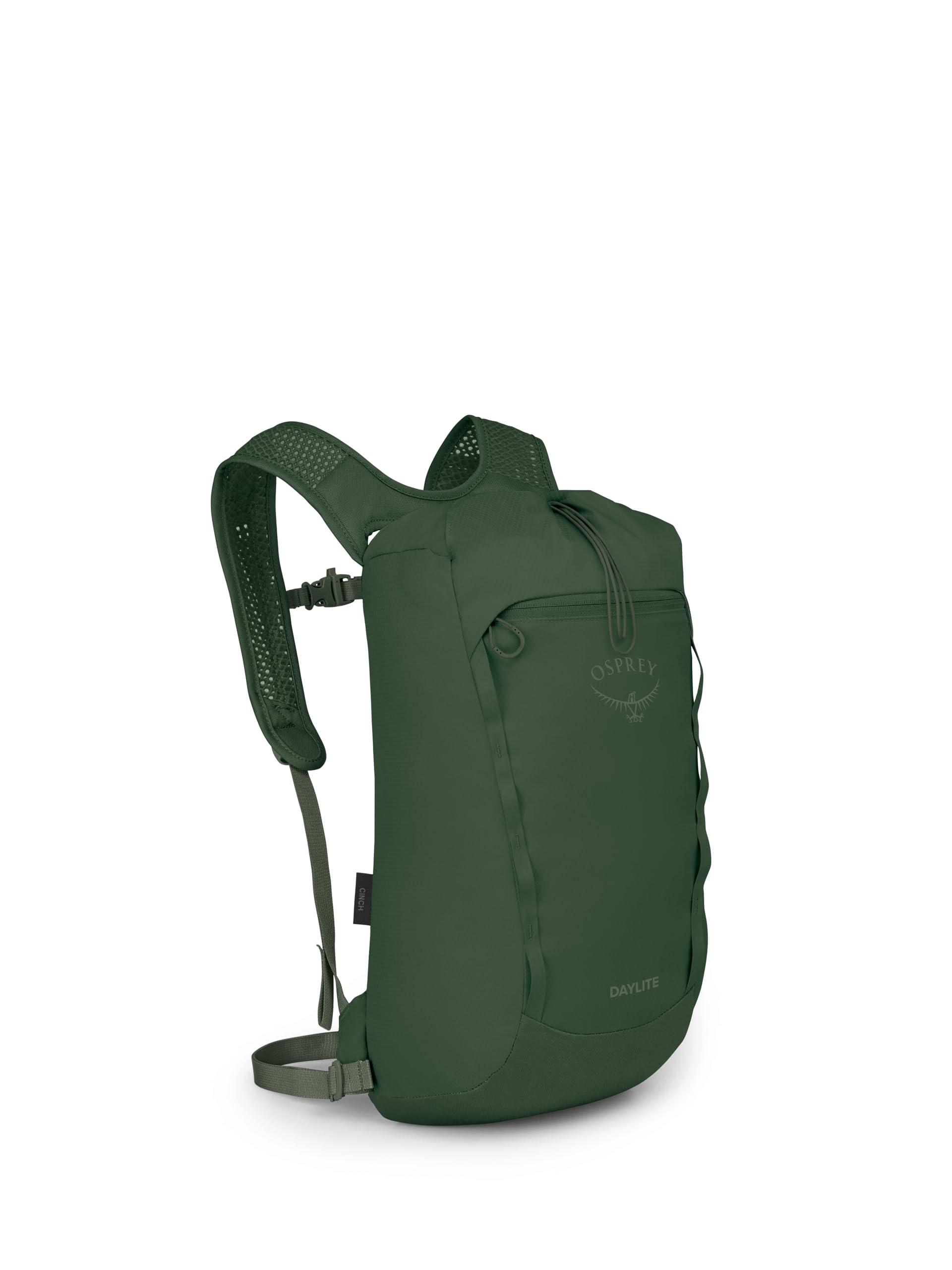
Where the SKYSPER gives you a pocket for everything, the Daylite Cinch gives you one opening and a drawstring. The top-loading cinch spreads wide, swallows a shell and a lunch, and closes in a single pull, and the whole pack is 12 ounces of recycled 300D polyester with a water-repellent finish made without PFAS.

We like it for the days when the pack should be the least interesting thing you're carrying. The ventilated mesh back panel keeps your shirt dry on a climb, there's an internal reservoir sleeve so you can drink without stopping, and the harness grab handle doubles as a luggage pass-through — a small thing that makes an airport connection easier.

It's the pack for a rider, a commuter, or a hiker who travels light and stops to drink. If you organize by category — camera here, snacks there, bottle in its own pocket — the SKYSPER's compartments will suit you better and cost you less.

Pros

  • Twelve ounces with a ventilated mesh back panel
  • Internal reservoir sleeve for hands-free drinking
  • Grab handle doubles as a luggage pass-through
  • Recycled 300D fabric with a PFAS-free finish

Cons

  • No side bottle pockets
  • One main compartment with little internal organization
Our verdict

Our pick for weekly trail and bike days: 12 ounces, a ventilated back panel and a reservoir sleeve, provided you don't need a bottle on the outside.

Check Latest Price
3

Best Packable With a Hip Belt

Eddie Bauer Stowaway 20L

89 /100
Traveler Score Excellent

Key details

Harness
Extended straps with hip belt
Capacity
20 liters
Packed Size
8.5 x 7 x 1.5 in
Open Dimensions
18 x 10 x 9 in
Check Details on Amazon

The pocket that swallows this pack becomes an internal compartment once you're wearing it. Stuff the Stowaway into its own 8.5-by-7-by-1.5-inch pouch, zip it, and it vanishes into a carry-on; pull it out and that same pocket sits inside the main compartment, holding keys and a phone where you can find them. Details like that are why it's our pick for a pack that lives in a suitcase.

Twenty liters of ripstop polyester with a water-repellent finish, and — unusual at this weight — extended shoulder straps plus a proper hip belt. On a four-mile walk with a jacket and two bottles it carries like a daypack rather than a bag hanging off your shoulders, and 18 by 10 by 9 inches open holds more than the folded pouch suggests: two one-liter bottles, snacks, a phone, and a layer for the weather that turns.

Think of it as the pack that lives in the luggage and comes out when you get there. For a long day with a camera, three liters and a tripod, the SKYSPER's harness is worth carrying; for trains, markets and a short trail at the end of them, this one is lighter and packs smaller.

Pros

  • Packs into its own pocket, which becomes internal
  • Hip belt and extended shoulder straps
  • Twenty liters that swallows two bottles and a layer
  • Ripstop polyester with StormRepel finish

Cons

  • Thin straps and a soft back for heavy loads
Our verdict

We keep this one for trips: it packs into its own pocket and still gives you a hip belt at the trailhead.

Check Latest Price
4

Best Organized Packable

WATERFLY 20L Packable

91 /100
Traveler Score Outstanding

Key details

Weight
10.2 oz
Pockets
10 pockets, 9 compartments
Capacity
20 liters
Folded Size
8.7 x 6.3 in
Check Details on Amazon

Folded, it's 8.7 by 6.3 inches and 10.2 ounces — a paperback-shaped lump that disappears into a carry-on and gets forgotten until the day you need a bag. Opened, it's 16.9 by 11.4 by 5.5 inches of recycled nylon with ten pockets and nine compartments, which is a lot of organization for something this light.

The layout is what sets it apart from the pile of cheap packables. A main compartment, two front pockets and a removable zipped pouch, and the bag opens wide enough to see the bottom — we packed it one-handed on a hotel bed without dumping everything out. Side pockets take a bottle, and the whole thing zips back into itself when you're done.

As a second bag for a trip it earns its place: markets, beaches, a four-mile trail at the end of a drive. As the only pack on a long, loaded day, the SKYSPER's harness is worth the extra weight.

Pros

  • Ten pockets and nine compartments
  • Folds to 8.7 by 6.3 inches
  • Wide opening makes packing easy
  • Removable zipped pouch

Cons

  • Unpadded straps dig in once loaded
Our verdict

Ten pockets and a wide opening in a bag that folds to paperback size — this is the packable we recommend when the destination matters more than the route.

Check Latest Price
5

Best Ultralight Backup

4Monster 16L Packable

91 /100
Traveler Score Outstanding

Key details

Weight
4.16 oz
Pockets
4 pockets, 3 compartments
Capacity
16 liters
Open Dimensions
7.1 x 11.8 x 18.5 in
Check Details on Amazon

Four ounces. That's the whole pitch: 4.16 ounces of 30-denier nylon that folds into a pouch the size of a wallet and lives in a suitcase, a glovebox or a bike bag until the day you need it. Two mesh side pockets take bottles, the main compartment holds 16 liters, and a front zip pocket keeps keys and a phone where you can find them.

We kept it in a day bag for a week to see whether the weight was a gimmick. It wasn't. This is the pack that turns a walk into a hike when you didn't plan one, and the straps are noticeably wider than the flat webbing on most packables this size — a bigger difference in comfort than the two ounces that separate the brands.

Where it stops is anything sharp or heavy. Pack it for a layer, water and lunch, and leave the tripod and the camp stove to a pack with a back panel.

Pros

  • Weighs 4.16 ounces
  • Folds to wallet size
  • Two mesh bottle pockets
  • Wider straps than most packables

Cons

  • Thin 30D fabric limits what you can carry
Our verdict

Our favorite backup pack — four ounces, a fist-sized fold, and straps wide enough for a full day's water and lunch.

Check Latest Price
6

Phone Access

BECOJADDE 15L Daypack

87 /100
Traveler Score Excellent

Key details

Weight
10.9 oz
Capacity
15 liters
Compartments
5 zippered
Strap Pockets
Phone and drawstring pockets
Check Details on Amazon

There's a zippered phone pocket on the left shoulder strap and a drawstring pocket on the right, so you can reach a phone, a card or a snack without stopping or swinging the pack around. For anyone who walks with a phone in hand, that one detail changes the whole proposition.

The rest is a compact 15-liter pack weighing 310 grams, 17.7 inches from shoulder to hem — short enough for smaller frames and older kids. The chest belt adjusts both vertically and around the body, five zippered compartments and ten pockets keep a day's kit sorted, and the front elastic mesh pocket takes a wet shell or a bottle.

What surprised us is the bottle pocket: it's deep enough that a full bottle stays put when you bend over to tie a lace, which is not true of every pack here. Between that and the strap pockets, this is the most usable small pack in the group for a busy half-day of short walks, errands and a bit of everything.

It also folds into its own zippered pocket, so it can do backup-bag duty. The Lemuvlt below adds a bladder sleeve and an insulated pocket for a bit more money; this one is lighter and easier to organize.

Pros

  • Phone pocket and drawstring pocket on the straps
  • Deep side pocket holds a full bottle securely
  • Folds into its own zippered pocket
  • Chest belt adjusts vertically and around

Cons

  • Chest strap buckle can work loose
  • 15 liters is tight once you add a puffy
Our verdict

We recommend it for anyone who walks with a phone in hand: the strap pockets and the deep bottle pocket make a half-day out easier.

Check Latest Price
7

Hydration Hikes

Lemuvlt 15L Daypack

88 /100
Traveler Score Excellent

Key details

Weight
1.08 lb
Pockets
8 pockets, 5 compartments
Capacity
15 liters
Insulated Pocket
Keeps water cool 2 to 5 hours
Check Details on Amazon

The listing claims the insulated pocket holds cold water for two to five hours, and that pocket is what separates this pack from every other 15-liter sack in the guide. There's an insulated sleeve inside the main compartment, plus a hydration bladder sleeve if you'd rather drink through a hose.

Around it sits a well-considered daypack: 15 liters, 0.49 kilograms, five zippered compartments and eight pockets, including two small ones on the waist belt that are the right size for keys and a gel. The chest strap has an emergency whistle built into the buckle, and reflective trim and a luminous logo handle the walk back in the dark.

Padding is where a cheap pack usually gives itself away, and this one has mesh padding on the back and the shoulder straps and spreads a full load of water and layers evenly enough that nothing digs in. On a hot afternoon, a pocket full of cold water is a genuinely nice thing to have.

If your hikes run long, hot and hydration-heavy, this is the pack we point to — it's built around drinking water and getting back after dark rather than around folding small. The whistle and the reflective details cost almost nothing and are the sort of thing you're glad someone thought about.

Pros

  • Insulated pocket for cold water
  • Hydration bladder sleeve
  • Emergency whistle and reflective trim
  • Two waist belt pockets

Cons

  • Wide bottles won't fit the side pockets
  • Plastic hardware is the weak point
Our verdict

The most purpose-built pack here for hot, thirsty days: an insulated pocket, a bladder sleeve, and padding that spreads a full load.

Check Latest Price
8

Short Walks

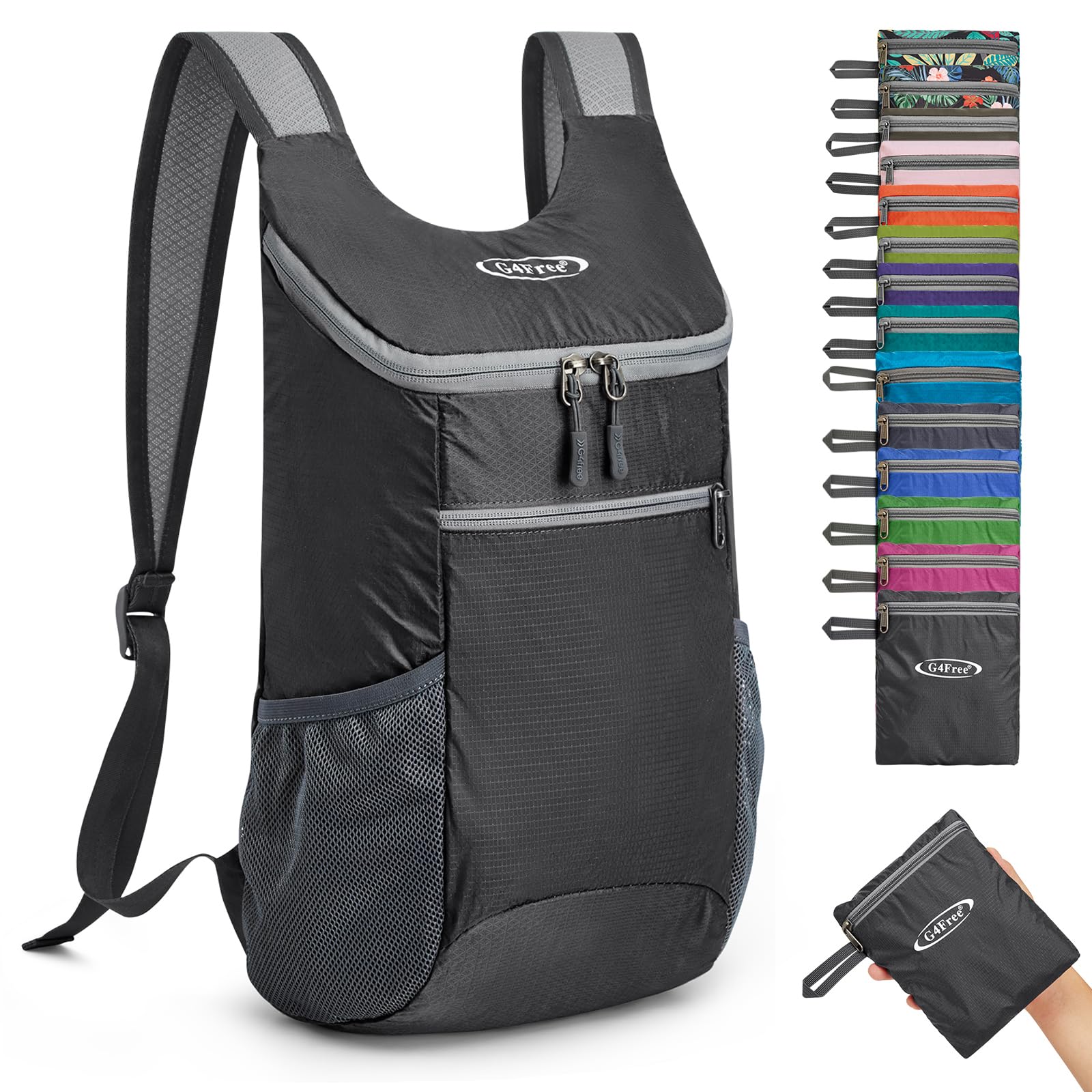
G4Free 10L Packable

91 /100
Traveler Score Outstanding

Key details

Weight
4.59 oz
Pockets
4 pockets, 3 compartments
Capacity
11 liters
Dimensions
6.3 x 8.27 x 13 in
Check Details on Amazon

Eleven liters and 4.59 ounces, with a 13-inch drop from shoulder to hem: this is the smallest pack in the group, sized for a short walk, a theme park, or a kid carrying their own water on a family hike. Two zippered compartments and two mesh side pockets are the entire layout.

It does those small jobs well. A shell, a bottle, snacks and a phone disappear into it, and at 4.59 ounces you won't notice it for the first hour. The SBS zippers run smoothly and the polyamide fabric dries fast after a shower.

Torso length is the thing to check. The 13-inch back sits high on most adults — fine over a T-shirt, less so over a winter jacket — and it's the pack that matches a kid or a short summer outing. For a full day out, the 20-liter packs here with back panels are the right shape instead.

We keep one in the car and hand another to a child for a family hike, and it earns both jobs. It's the pack for a two-hour walk with a bottle and a shell, not the pack you plan a mountain around.

Pros

  • Weighs 4.59 ounces
  • Short 13-inch back suits kids and small frames
  • Two zippered compartments plus two mesh pockets
  • Folds into a compact pouch

Cons

  • Thin fabric takes the shape of the load
Our verdict

We treat it as the short-walk pack: 4.59 ounces, 11 liters, and enough for a bottle, a shell and lunch.

Check Latest Price

How We Tested a Dozen Small Hiking Packs

We started with spec sheets rather than samples: every small pack between roughly 15 and 30 liters from brands whose bigger packs we've trusted on longer trips, plus a handful of well-reviewed newcomers. We cut anything without a hipbelt worth buckling, external access to a water bottle, or an empty weight that looked workable on paper. That left 12 packs, which we've now carried for eight months.

Each one went on a kitchen scale empty, then got loaded with the same kit: two liters of water, a rain shell, a mid-layer, lunch, and a first-aid pouch. We hiked evening loops after work and longer weekend days, wore a few on trail runs and bike commutes, and stuffed the loaded packs into overhead bins and under the seat in front of us on four flights. We noted which pockets we could reach without stopping, how much beyond the kit a pack swallowed, and whether it still sat close to the back on a fast descent.

Sturdiness and durability got the unglamorous treatment. Loaded packs were set down on granite, dragged through a rock squeeze, jammed into car trunks, and left in the sun; we checked bottom panels for abrasion, ran a thumbnail along seams, and held thin-looking fabric up to the light, since a pack that saves weight in the wrong place tends to fail at the seam first. A loaded pack that slumped over when set down was flagged, because that's usually the one that sways an hour later.

Closures we worked one-handed and with gloves on: zip pulls, buckles, roll-tops, drawcords. We noted which zippers snagged on their own storm flaps, which buckles crept loose over a full day, and whether a closure could be opened without taking the pack off.

How to Choose Small Hiking Backpacks

Match the Volume to the Load, Not the Label

Ten or eleven liters covers a shell, lunch and a single bottle, which is enough for a two-hour walk, a theme park, or a child's first hike. Fifteen to twenty liters is the sweet spot for a real day out: two bottles, a layer, a camera, and somewhere to put the layer when you take it off.

Treat the stated liters as approximate and check the open dimensions against the same page. The G4Free claims 11 liters on a 13-inch-tall body; the SKYSPER claims 20 on a 16.9-inch one. Pile your gear on the floor and pick the pack that swallows it without a fight, and go up a size if you regularly carry a camera or a second bottle.

The Harness Is What Separates a Hiking Pack From a Stuff Sack

Padded shoulder straps, a chest strap and a ventilated back panel keep a light pack from becoming a sweaty, swinging bag. A hip belt is the upgrade that matters most, because it puts the load on your pelvis instead of your shoulders; on a 20-liter pack it's the difference between a four-hour walk and a two-hour one.

Most packables don't have one. The Eddie Bauer Stowaway does, which is why it carries better than its weight suggests, and the SKYSPER pairs one with a grooved back panel. If you walk more than a couple of hours at a time, buy the harness and accept a few extra ounces.

Packability Is a Second-Pack Feature

A bag that folds to fist size is a wonderful thing to keep in a suitcase and a poor thing to carry all day: the fabric is thinner, the straps are flat webbing, and there's no structure to hold a load against your back. Buy one as a spare or a travel bag rather than as your only hiking pack.

Pockets and Access on the Move

Two side bottle pockets are the minimum, and depth matters more than the listing lets on — a shallow pocket dumps a full bottle the first time you bend over. Strap pockets are a small luxury that quickly become a habit; the BECOJADDE puts a zippered phone pocket on one shoulder strap so you never take the pack off to answer it.

A wide-opening main compartment beats a deep narrow one for packing, and a cinch top is faster to open and slower to close than a zip. Check that the pockets you'll use most sit where your hands reach them while the pack is on.

Water Resistance, Washing and Wear

Water resistant means a durable water-repellent finish on the fabric, not a dry bag. It shrugs off drizzle and keeps a shower out of the main compartment; a pack cover does more in real rain. That finish fades with abrasion and rough washing, so go easy on it.

Where lightweight packs fail, it's at the seams and the strap anchors. Keep heavy items off the outside, don't hang a loaded bottle from a daisy chain, and cinch the straps down rather than yanking them tight.

Frequently Asked Questions

Final Verdict

Start with the SKYSPER 20L Daypack. It pairs a ventilated back panel with a hip belt, ten pockets and a load rating honest enough to keep you from overfilling it, and it wears a day's water and layers better than anything else in this guide.

If you're on a trail or a bike most weekends and want one simple, tough pack, the Osprey Daylite Cinch is the alternative: lighter, plainer, and built around a bladder rather than pockets. If the pack has to live in a suitcase until you land, buy the Eddie Bauer Stowaway.