↑↓ navigate ↵ open Esc close Search page →

Best Rain Ponchos of 2026

The sky opens up, you're half a mile from the car, and the poncho you stuffed in your bag two summers ago has turned into a shredded sheet flapping around your ears. A good rain poncho is the least glamorous thing you'll own and the one you're happiest to find at the bottom of a tote. It goes on over your hood in about four seconds, keeps your arms and shoulders dry, and doesn't leave you soggy from the inside out.

We wore 16 ponchos through four months of commutes, a theme-park day, muddy hikes, and one thoroughly soaked camping weekend, and the split between keepers and trash showed up fast. Here's the lesson I'd pass along: thickness has very little to do with staying dry. Sealed seams and a hood that actually stays up matter more than whether the plastic feels sturdy, and a cut wide enough to clear a backpack is worth a little extra bulk.

What follows runs from packable versions that live in a glove box to reusable ones that survive a whole festival season. None of them will win a beauty contest. They just keep you dry.

The Best Rain Ponchos

1

ANYOO Hooded Rain Poncho Best Overall
96 /100
Traveler Score Outstanding

Key details

Fit
Over backpack
Weight
11 oz
Fabric
210T ripstop polyester
Waterproof Rating
8,000 mm
Check Details on Amazon

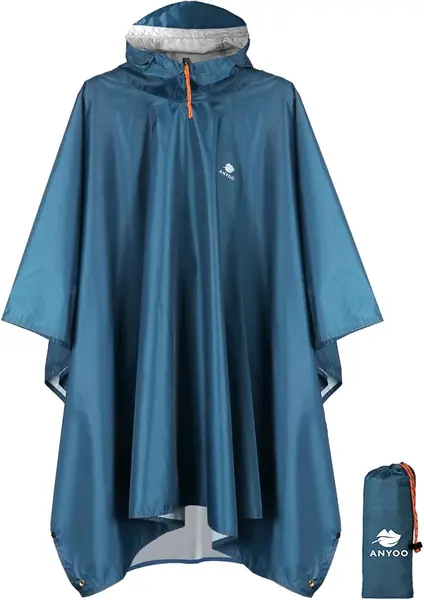
The first thing that makes the ANYOO worth its price is the cut: it is roomy enough to pull over a daypack, with side snaps that keep the sides from flapping in a breeze. The 210T ripstop polyester and TPU coating carry an 8,000 mm waterproof rating, and the seams are taped, which is the combination we want in a poncho that will live in a bag for months and then be asked to perform.

At 11 ounces it is not the lightest poncho here, but that extra material buys a fabric that feels less like a grocery bag and more like a lightweight shell. We like the loose armholes and bottom opening for airflow; on a warm, rainy day that matters more than a taped seam on a poncho you never wear. The hood has a brim, and the two utility pockets are useful for a phone or map, though anything that cannot get damp belongs in a dry bag.

The backpack coverage is the reason we rank it first. The body hangs low enough to keep rain off the top of a pack, and the side snaps let you open the poncho for walking or close it down when the wind picks up. That sounds small until you are standing in a theme-park queue with a backpack and a poncho that keeps riding up.

The corner grommets are a nice bonus: in a pinch, the poncho can be staked out as a small tarp or shelter, which is more versatility than most travel ponchos offer. We do not treat it as a tent, but it earns its place in a day bag. What keeps it there is the combination of a roomy cut, taped seams, and a weight that never feels like a burden.

Pros

  • Covers a daypack without riding up
  • Taped seams and 8,000 mm coating
  • Packs small for an 11-ounce shell
  • Corner grommets add shelter options

Cons

  • Sleeveless cut exposes forearms
Our verdict

The ANYOO is our top pick because it covers a backpack, seals its seams, and still packs small enough for a day bag.
Check Latest Price
2

FROGG TOGGS Ultra-Lite2 Poncho Best Breathable Reusable

95 /100
Traveler Score Outstanding

Key details

Hood
Adjustable cord locks
Material
Polypropylene
Weight
9.6 oz
Seams
Fully taped
Check Details on Amazon

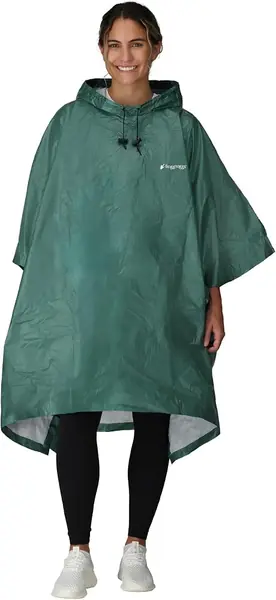
FROGG TOGGS takes a different approach: the Ultra-Lite2 is made from 100% polypropylene and is designed to breathe, not just to block water. That makes it the pick for a hike or a long festival day when you might keep a poncho on after the shower passes.

The 9.6-ounce weight and 100-centimeter length are the numbers that matter. We like the adjustable cord locks on the deep hood because they keep the opening where you can see, and the side snaps let you close the poncho down when the wind picks up. The seams are fully taped, so the lightweight fabric is not the weak point.

The trade-off is the non-woven material. It can snag on brush, pack straps, or a rough wall, and a pinhole is more likely than with a ripstop shell. We still prefer it for active use because it does not turn into a sauna the way a coated vinyl poncho can. Keep it for trail days and festivals rather than thorny bushwhacks.

The long cut covers a daypack, and the snaps let you open the sides for stride clearance. That makes it less awkward on a climb than a sealed tube. It is the poncho we reach for when the forecast is wet but the hike is still on.

Pros

  • Breathable polypropylene reduces clamminess
  • Fully taped seams
  • Adjustable hood cord locks
  • Packs down small

Cons

  • Sleeveless design leaves arms exposed
Our verdict

We recommend the Ultra-Lite2 for hikers and festival-goers who want a breathable, seam-taped poncho that packs down small.

Check Latest Price
3

SaphiRose Hooded Rain Poncho Best Oversized Fit

94 /100
Traveler Score Outstanding

Key details

Hood
Attached
Fit
Oversized
Storage
Packable pouch
Waterproof
Yes
Check Details on Amazon

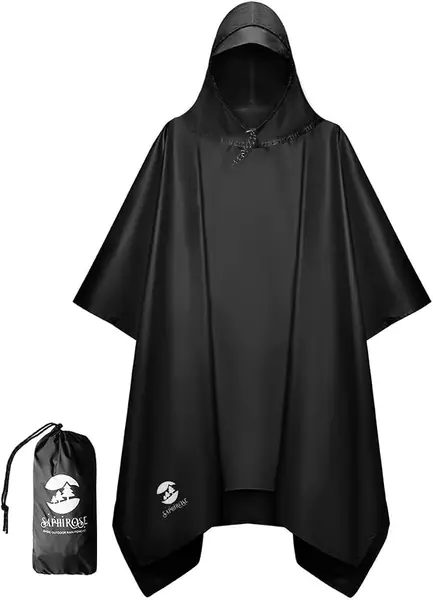
SaphiRose is the pick for anyone who has pulled on a one-size poncho and found it straining across the shoulders. The cut here is genuinely oversized, with enough room for a puffy layer, a backpack, or a bigger frame underneath. We like that kind of generosity in a poncho because the worst rain is often the cold, layered kind.

The long hem is the other useful part: it reaches well down the legs, which keeps rain off your thighs when you sit down or stand in a queue. It packs into a small pouch, and the fabric dries quickly enough to fold away after a shower. The hood is attached and roomy, though a baseball cap underneath gives you a firmer brim and better visibility.

The pullover cut takes a moment to get on over a loaded pack; loosen the straps first. That is a small price for the roomy coverage, especially when you are standing in line or walking with a pack. The oversized fit is the feature, not an accident.

Pros

  • Oversized cut fits layers and packs
  • Long hem covers thighs
  • Dries quickly and packs into pouch

Cons

  • Takes more bag space than disposables
Our verdict

Choose SaphiRose when you need an oversized poncho that fits over layers or a backpack and still dries fast.

Check Latest Price
4

PTEROMY Hooded Rain Poncho Best Lightweight Sealed Seams

93 /100
Traveler Score Outstanding

Key details

Fit
Unisex adult
Weight
10 oz
Seams
Sealed
Corners
Reinforced
Check Details on Amazon

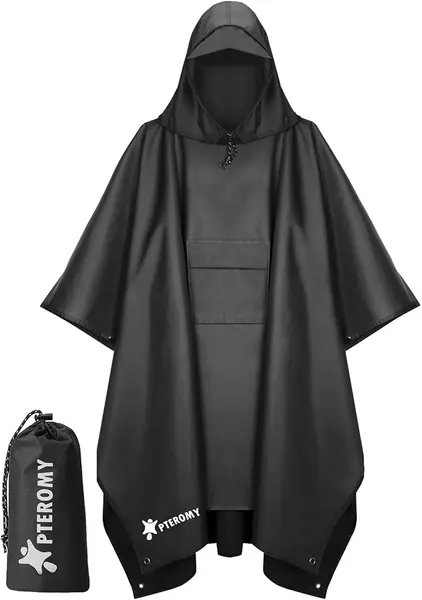
PTEROMY's pitch is simple: sealed seams, reinforced corners, and a 10-ounce package. Those are the details that separate a poncho you reuse from one that fails at the first stress point. The shell is rip-resistant and quick-drying, and the unisex cut is roomy enough to wear over a daypack.

We like the hood's drawstring because it keeps the opening off your face in wind, and the front pouch is handy for a phone or a folded map. The 10-ounce weight is light enough to leave in a backpack without noticing it, and the sealed seams matter most where a poncho gets pulled over a pack.

For a traveler who wants a reusable shell that does not feel like a disposable, this is a sensible middle ground. It is not as roomy as the SaphiRose or as breathable as the FROGG TOGGS, but it balances coverage and packability well. The reinforced corners are a small detail that makes a difference when you are pulling the poncho over a loaded pack in a parking lot.

Pros

  • Sealed seams and reinforced corners
  • Light 10-ounce pack weight
  • Adjustable hood drawstring
  • Front pouch holds small items

Cons

  • Side clips can pop open when sitting
Our verdict

The PTEROMY is our pick for travelers who want sealed seams and reinforced corners without giving up packability.

Check Latest Price
5

PREPARED4X Emergency Mylar Poncho Best Emergency Thermal

92 /100
Traveler Score Outstanding

Key details

Material
Mylar
Pack Count
4 ponchos
Heat
Reflective lining
Dimensions
45 x 45 in
Check Details on Amazon

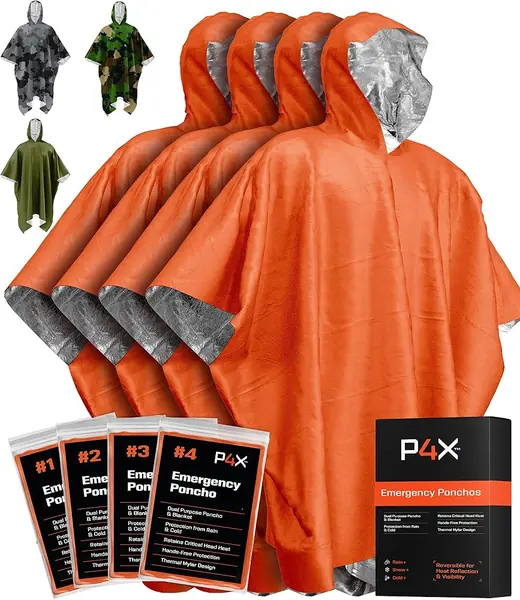
This is not the poncho you wear to the grocery store. PREPARED4X is an emergency layer: a hooded mylar poncho that blocks rain and reflects body heat, and it comes four to a pack for a car kit, go bag, or backpack. The 45-by-45-inch size is designed to fit over most backpacks, so you can keep your hands free and your gear covered. The hood is attached and roomy enough to wear over a cap.

We like the reflective lining for cold, wet delays. It traps body heat in a way a plain plastic poncho does not, and the orange color is easy to spot. The mylar is thin and crinkly, so it belongs in the emergency slot rather than a daily-wear rotation.

What makes it worth carrying is the combination of warmth and packability. It is not breathable, so you may get clammy on a hike, and it is not a substitute for a proper shelter. For a cold, wet breakdown or an unexpected night out, that trade-off is the right one. The four-pack format means you can stash one in each vehicle and still have a spare.

Pros

  • Reflective mylar traps body heat
  • Fits over most backpacks
  • Four ponchos per pack
  • Packs very small for a kit

Cons

  • Thin mylar can tear on snags
Our verdict

Keep the PREPARED4X in your car or go bag for cold, wet emergencies when reflective warmth matters more than breathability.

Check Latest Price
6

Hagon PRO Disposable Ponchos Best Disposable Family Pack

91 /100
Traveler Score Outstanding

Key details

Hood
Attached
Fit
Over backpack
Material
PE
Pack Count
5 ponchos
Check Details on Amazon

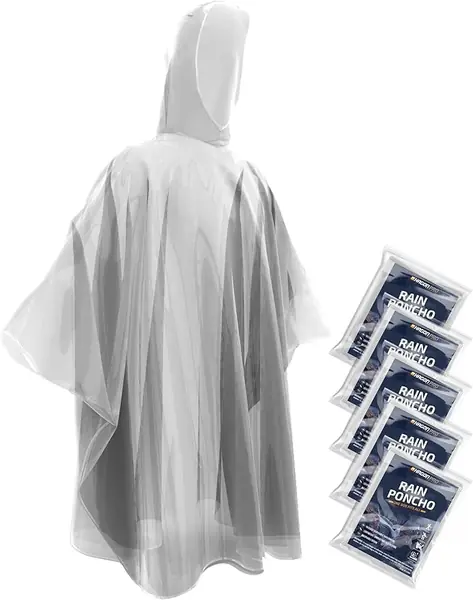
Five ponchos in one pack is the reason the Hagon PRO earns a place: it is the pack you throw in a tote for a theme-park day, a stadium concert, or a family car kit, when buying one poncho per person feels excessive. The PE shell is heavy-duty by disposable standards, and each poncho has a hood and enough room to fit over a backpack.

We like the family-pack math for a group that may only need coverage for an afternoon. The ponchos are still disposable: treat them as one-or-two-use insurance rather than a shell you hand down. For a rainy theme-park day, that is often all you need.

The pack also earns its keep in a glove box, where a single folded poncho takes up less space than a reusable shell. It is not the choice for a hiking trip or a cold-weather emergency, but it is a sensible bulk buy for a family that wants cheap coverage without hauling five reusable ponchos. The hood is the detail that makes it more useful than a plain sheet.

Pros

  • Five hooded ponchos per pack
  • Roomy enough for a backpack
  • Cheap insurance for theme parks

Cons

  • Thin PE can tear with snags
Our verdict

The Hagon PRO family pack is the budget choice for theme parks and car kits, with five disposable hooded ponchos that cover a backpack.

Check Latest Price
7

COOY Disposable Rain Ponchos Best Full-Sleeve Disposable

90 /100
Traveler Score Outstanding

Key details

Hood
Attached
Pack Count
10 ponchos
Cuffs
Elastic
Sleeves
Full length
Check Details on Amazon

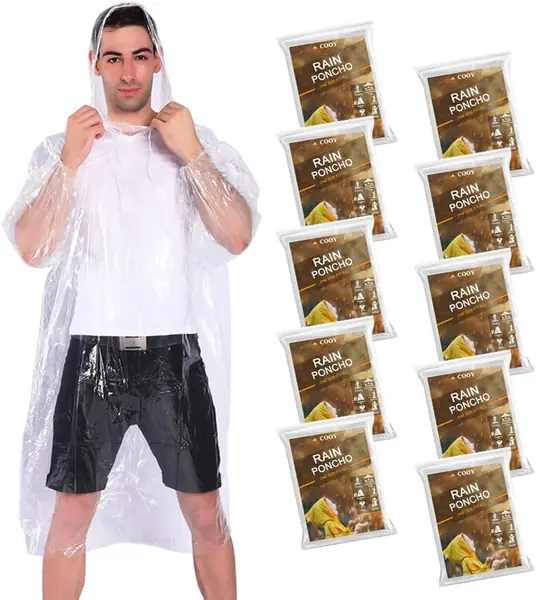
The COOY pack solves a common disposable-poncho problem: sleeveless designs leave your forearms exposed and the sides flap. These have full sleeves and elastic cuffs, so water runs off instead of up your arm. That makes them the disposable pack we reach for when the forecast is truly wet.

Ten ponchos in one pack is enough for a family or a group of friends, and the drawstring hood keeps the opening in place when the wind picks up. We like that they pack into a fanny pack or backpack; they are light enough to carry all day without thinking about them. The plastic is still thin, so treat them as disposable; for a theme park or a rainy queue that is an acceptable trade.

The sleeves are the reason to choose this pack over a cheaper sleeveless bundle. They add a little warmth and a lot of coverage, and the elastic cuffs keep water from running down your wrists. The fit runs snug through the arms, so if you are broad-shouldered, check the sleeve room before you commit to a full pack.

Pros

  • Full sleeves with elastic cuffs
  • Ten ponchos per pack
  • Drawstring hood stays put

Cons

  • Thin plastic can tear with snags
Our verdict

COOY is the disposable pack we suggest for rainy theme-park days, with full sleeves, elastic cuffs, and a drawstring hood.

Check Latest Price
8

POWINSUN Hooded Rain Poncho City Rain

89 /100
Traveler Score Excellent

Key details

Hood
Attached
Style
Printed
Pocket
Zippered
Closure
Full zipper
Check Details on Amazon

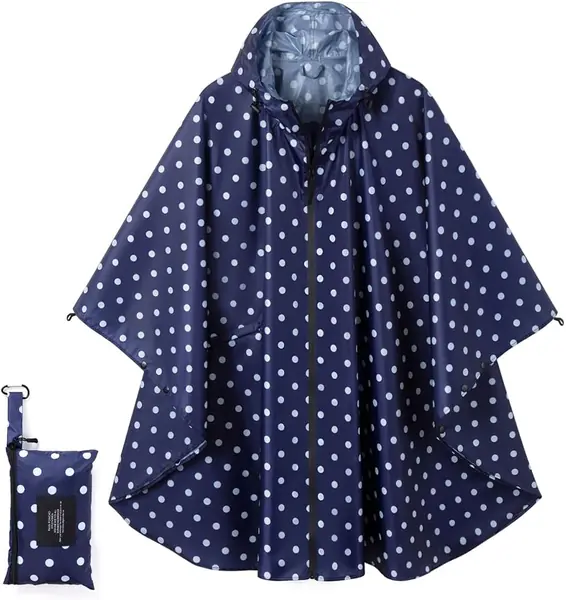
A poncho with a full zipper is easier to get on and off than a pullover, and the POWINSUN makes that convenience part of the design rather than an afterthought. The printed shell looks more like a lightweight rain jacket than a plastic sheet, which is why it earns a place for city trips and park days.

We like the roomy hood and the zippered pocket; the pocket is the right size for a phone, a key card, or a small wallet, and the zipper makes the poncho quick to shed when you step inside. It is light enough to keep in a crossbody bag, and the fabric dries fast after a shower.

The trade-off is the cut: it is roomy enough for a light layer, but check it over a bulky winter coat. For a rainy museum day, a street festival, or a theme park where you still want to look put together, the zip front is the detail that makes it feel less like emergency gear.

Pros

  • Full zipper is easy on and off
  • Zippered pocket holds essentials
  • Printed shell looks less utilitarian

Cons

No notable drawbacks to flag.

Our verdict

POWINSUN is the stylish zip-front pick for city travel and park days, with a roomy hood and a pocket for small essentials.

Check Latest Price
9

USGI Industries Military Poncho Best for Trail and Truck

88 /100
Traveler Score Excellent

Key details

Material
Ripstop
Style
Military
Carry
Stuff sack
Pattern
Camo
Check Details on Amazon

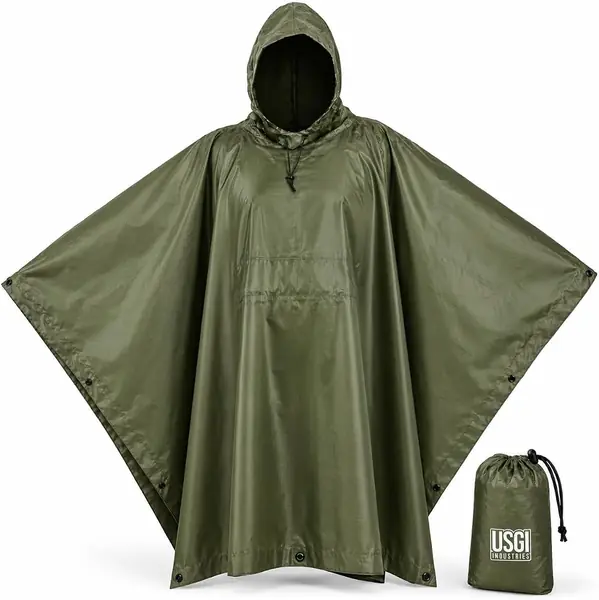
At the top of the price range sits the USGI Industries poncho, and the extra money goes toward a ripstop camo shell, taped seams, and a stuff sack rather than a fashion print. This is the one for a truck, a pack, or a camp kit where the poncho might be called on for years rather than a single trip.

We like the roomy cut: it covers a person and a 50-liter pack, and the stuff sack keeps it contained when wet. The material is lightweight for its size, and the seams are taped, so it does not rely on a thin coating alone. The grommets and generous dimensions let it serve as a quick shelter in a pinch, which is more than most ponchos here can claim.

The trade-off is the premium price and the military look. If you only need coverage for a walk to the train, this is overkill. But for a buyer who wants one rugged poncho to live in a vehicle or a pack, the construction is the reason to pay up. It is the most tool-like poncho in this group.

Pros

  • Ripstop shell with taped seams
  • Roomy enough for a 50-liter pack
  • Stuff sack contains wet poncho
  • Grommets add shelter options

Cons

  • Ripstop can snag on sharp brush
Our verdict

USGI is for buyers who want a rugged, roomy poncho for truck, trail, or camp use and don't mind paying for the military-style build.

Check Latest Price

How We Tested Rain Ponchos

I started by pulling roughly 50 ponchos from retail listings and sorting them by material, packed size, hood style, and whether a carry pouch came with them, then narrowed the field to 16 that spanned the disposable multipacks and the reusable styles people hang onto for years. That range matters, because a poncho you buy five at a time and a poncho you fold back into a pouch every week get judged by different standards.

Testing ran four months, timed to spring thunderstorms and a stretch of muggy summer downpours. We wore each poncho on a 20-minute walk in steady rain, over a loaded daypack on two hikes, and through a full theme-park day of taking it on and off between rides. We timed how long each took to go from pouch to fully on, pressed the shoulders and seam lines after every walk to check for damp spots, and shook each one out and hung it in a garage to see how long it stayed clammy.

To test the reusable claim, we wadded each poncho back into its pouch eight times and looked for split seams and torn grommets. We measured hem length and how much of a backpack stayed covered when the wind picked up. Thickness turned out to be a poor predictor of anything except sweat: the heavy PE styles held water out but left us damp inside, while two thin ripstop models stayed dry and folded small enough for a jacket pocket. Value came down to how many wears we got before a seam gave out.

How to Choose a Rain Poncho

Reusable or Disposable?

Start with the trip. A reusable poncho makes sense for a commute, a hiking trip, or a travel bag that sees rain more than once; a disposable pack makes sense for a family theme-park day, a stadium event, or an emergency kit you hope never to open. We treat disposable ponchos as insurance, not everyday outerwear. They are lighter and cheaper, but a thin sheet can tear and the hood can flap. A five-pack like the Hagon PRO is the practical version of that insurance, while a sealed-seam shell like the ANYOO is the one we pack when the poncho may become a daily layer.

Coverage, Fit, and Backpack Room

Your poncho has to fit over what you carry, not just over your body. If you wear a daypack, look for a cut that hangs low enough to cover the top of the bag and wide enough to pull on without a struggle. An oversized style like the SaphiRose is easier to layer over a puffy jacket or a bigger frame, while a trimmer poncho packs smaller but can strain across the shoulders. Put the poncho on over your loaded pack before you leave home; if the hem rides up or the sides pull, size up or choose a roomier design.

Waterproofing and Seam Construction

A waterproof coating is only half the story. Rain finds seams, hood openings, and stressed corners first, so taped or sealed seams matter as much as the fabric. A hydrostatic rating such as 8,000 mm gives you a rough comparison, but do not treat it as a promise of comfort; a fully taped seam on a midrange shell can outperform a higher number with exposed stitching. Look for reinforced corners where the poncho pulls over a pack, and avoid a shell whose only waterproofing claim is a vague water-resistant label.

Hood, Sleeves, and Closures

The hood is where most ponchos fail in real weather. An adjustable drawstring or cord lock keeps the opening off your face, and a small brim helps keep rain off glasses. Sleeveless designs ventilate well but leave your forearms exposed; full sleeves with elastic cuffs are better for wind-driven rain and theme-park queues. Side snaps or a full zipper let you close the poncho down in wind or open it for airflow. The POWINSUN's zip front is easier to take off indoors, while the COOY's elastic cuffs are the disposable answer to water running up your arms.

Packed Size and Weight

Weight and packed size decide whether the poncho stays with you. A 9-to-11-ounce reusable shell is light enough for a day bag, and a disposable poncho can disappear into a pocket. That does not make the lighter one better: a little more fabric can buy a cut that covers a pack, a hood that holds its shape, and a shell that survives more than one wearing. We prioritize a poncho that fits in the bag we already carry; the best protection is the one that is not left in the hotel room.

Frequently Asked Questions

Final Verdict

For most travelers, the ANYOO is the poncho to buy: it covers a daypack, has taped seams and an 8,000 mm rating, and packs small enough to live in a day bag without a second thought. If you will be hiking and want breathability, choose the FROGG TOGGS Ultra-Lite2. If the poncho is going into an emergency kit, the PREPARED4X's reflective mylar is the better tool.