Best Rain Pants for Hiking of 2026

Rain pants ask you to pick a side: fabric that keeps weather out usually traps sweat in, and the lightest, most packable pairs are often the ones that tear on the first scramble. The right pair ends that argument quietly — you stay dry from both directions, the knees hold up, the waist stays put under a hipbelt — and then you forget you're wearing them until the sky opens. That's the difference between a pair that lives in your pack for years and one that stays crumpled at the bottom of it.

I've been caught in enough surprise afternoon storms to be picky. Over the past six months, my team and I have worn 12 pairs on muddy forest climbs, windy ridgelines, and one memorably soggy stretch of day hikes where nothing dried. That time taught us which details actually matter: whether water beads off after the tenth wearing or starts soaking through, whether a cuff clears a boot without dragging, whether a pair dries overnight in a tent or stays clammy until you give up on it. Fit and length are where most of them quietly fail. The picks below are the ones that earned a permanent spot in the pack.

1

Best Overall

Acme Projects Rain Pants

87 /100
Traveler Score Excellent

Key details

Seams
Taped
Department
Men's
Listed Weight
10.6 oz
Waterproof Rating
10,000mm / 3,000g
Check Details on Amazon

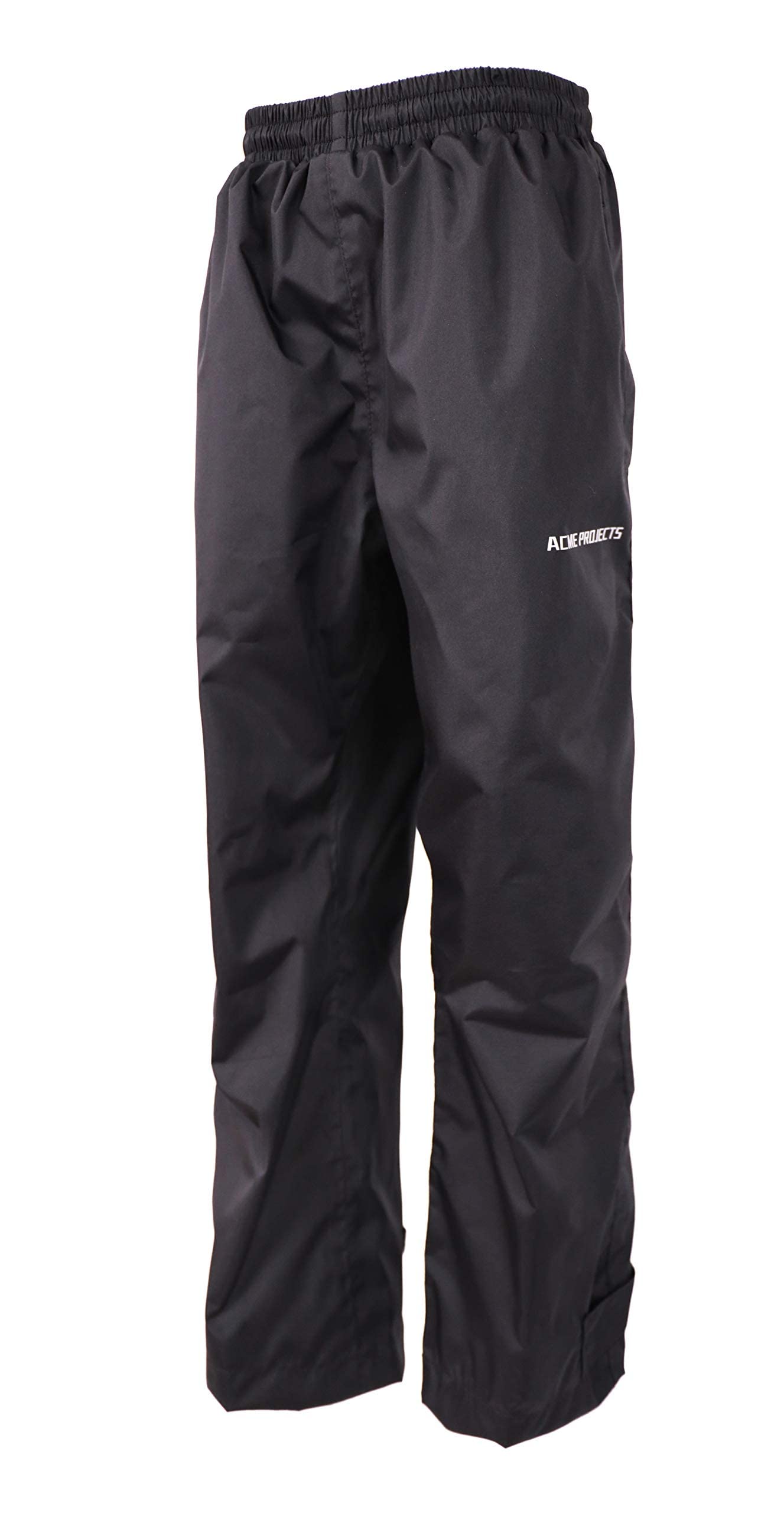
Only one pair here puts a number on its waterproofing. The Acme Projects shell lists a 10,000mm rating and a 3,000g breathability figure, and it is the only one with taped seams. Tape seals the stitch holes that otherwise leak at the thigh, and that leak is the failure that ruins an otherwise decent shell. For hiking in steady, three-season rain, it is why this is our top pick.

Weight and cut do the rest of the work. At 10.58 ounces listed, the pair sits in a daypack without announcing itself, and the leg is generous enough to pull over hiking trousers and a light fleece. Size it for those layers rather than for your street size. A shell is meant to go over things, not against skin, and the roominess that looks odd in a mirror is what lets you get it on at a trailhead on a cold morning.

Breathability is the compromise. A 3,000g figure is modest, and on a long climb in full rain gear you will feel warmth building behind the fabric whether or not the rain gets in. That is how shells work rather than a flaw in this one, and it is the trade we take for a pair this light. Wear them when it is raining or blowing, and strip them off before a big ascent if the weather lets you.

What brings us back is simpler than any specification: the pair removes a decision. It goes into the pack at the start of a trip and comes out when the sky turns, with nothing to think about in between.

Pros

  • Stated 10,000mm rating with taped seams
  • Listed at 10.58 ounces
  • Least expensive of these picks

Cons

  • Men's cut only
Our verdict

We recommend the Acme Projects pair to most hikers: it is the only shell here with a stated 10,000mm rating and taped seams, and it costs the least.

Check Latest Price
2

Best for Women

iCreek Women's Rain Pants

86 /100
Traveler Score Excellent

Key details

Style
Rain over pants
Department
Women's
Waterproofing
Waterproof (listed)
Check Details on Amazon

An elastic waistband sounds like a small thing until you are pulling a shell over damp trousers at a trailhead with cold hands. The iCreek pants have one, with no belt or fastener to deal with: step in, pull up, and the waist stays where you put it. Zips and Velcro at the ankle do the same job at the other end, opening the cuff wide enough to clear a boot.

Waterproofing is what earns the place. These hold up in heavy rain, the fabric dries quickly afterward, and the cut is light enough to wear over shorts in warm weather without feeling like a garbage bag. They pack small enough to live in a daypack through a week of uncertain forecasts, which is how most of us end up using a shell anyway.

Length is the one thing to think about before ordering. The legs run long, which is right over a hiking boot, where the hem sits where it should as you step up, and wrong if you are short, where the extra fabric gathers at the ankle and collects mud. Everything else about the fit is generous the way a shell should be: room for leggings or shorts, and a waistband that does not dig in when you sit down for lunch.

Pros

  • Keeps you dry in heavy rain
  • Light and easy to pack
  • Elastic waist plus ankle zips and Velcro
  • Dries fast between showers

Cons

  • Fabric rustles audibly as you walk
Our verdict

Our pick for women hikers is the iCreek pair: it keeps heavy rain out, dries quickly, and pulls on over a base layer without a fight.

Check Latest Price
3

Best Packable

Outdoor Ventures Rain Pants

85 /100
Traveler Score Excellent

Key details

Style
Packable rain pants
Department
Women's
Waterproofing
Waterproof (listed)
Check Details on Amazon

Packability is the whole idea. Outdoor Ventures ships these with a storage bag, and they compress small enough to live at the bottom of a daypack for a whole trip rather than being unpacked and refolded with the rest of your kit. That is what makes them our travel pick: a shell you stop thinking about until the sky goes grey.

In rain they do their job, and they dry fast enough to be stuffed away damp without soaking everything else in the bag. Wind blocking matters more than waterproofing on an exposed ridge, and it is here. So is a high waist, the detail we did not expect to care about, since it holds the shell in place when you bend to adjust a boot and covers the gap where a jacket rides up.

They are cut to go over hiking trousers, with room for a base layer underneath without the fabric pulling across the seat. Order the size that matches the trousers you hike in rather than sizing up out of habit, because the range already leans roomy.

Pros

  • Packs into its own storage bag
  • Keeps you dry in rain and wet snow
  • High waist stays put when you bend
  • Dries quickly when packed away damp

Cons

  • Long legs with no adjustable hem
Our verdict

We rate the Outdoor Ventures pair for travel: it folds into its own bag, pulls on over boots, and handles rain and wind.

Check Latest Price
4

Packed Emergency Shell

Frogg Toggs Bull Frogg Pants

85 /100
Traveler Score Excellent

Key details

Style
Zippered rain pant
Department
Men's
Waterproofing
Waterproof (listed)
Check Details on Amazon

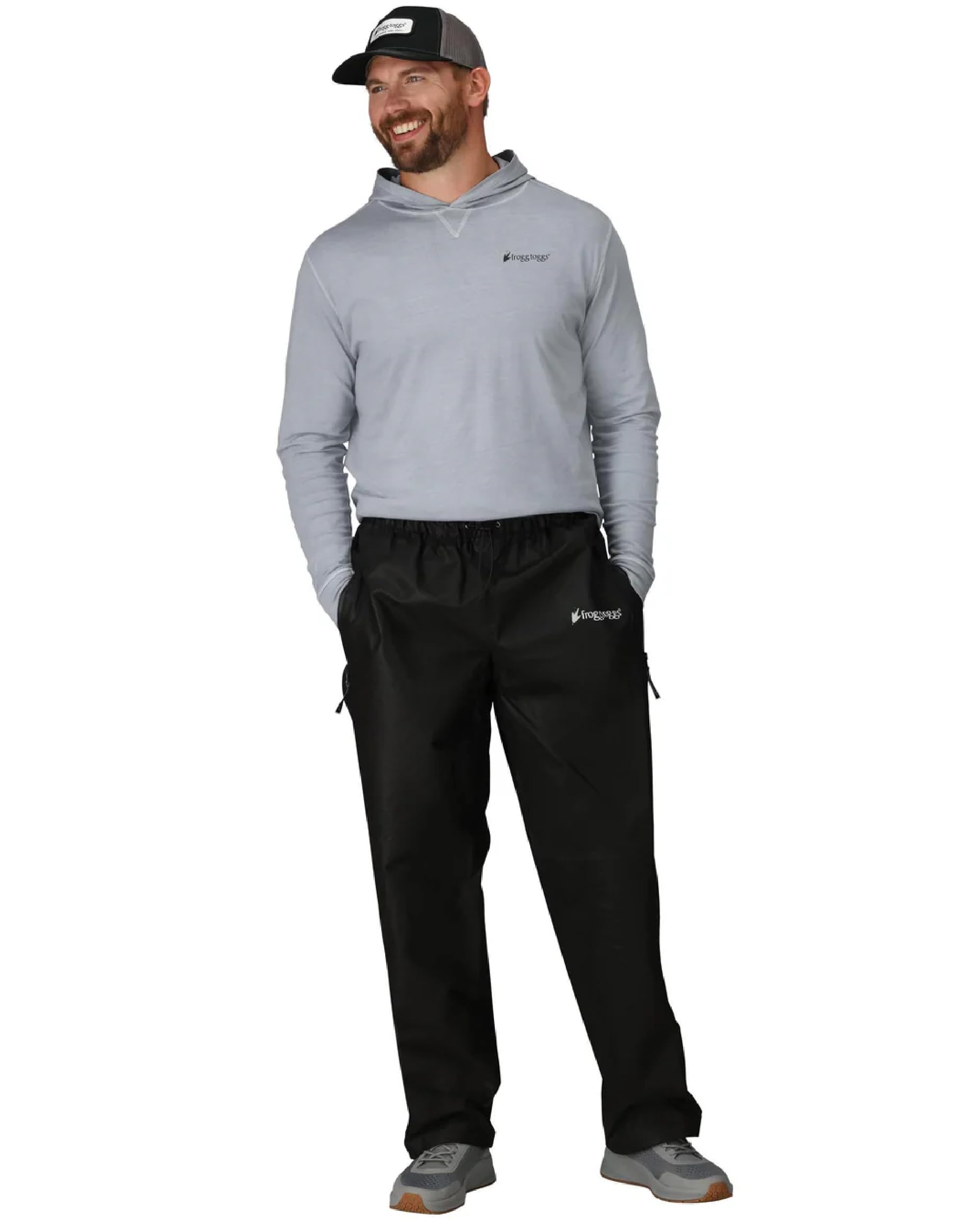
The fabric is the first thing anyone notices: stiff, papery, and loud enough that you hear yourself walking. That is the trade for a shell this light, and we will take it when the alternative is wet legs on a cold ridge. Where the pair earns its place is sustained rain, because this is a shell that keeps water out in weather that sends people indoors, at a weight that lets it live in a pack for months at a time.

The fit is roomy enough to go over jeans or a base layer without a fight, and the waist closes with a tie rather than elastic, so it adjusts to whatever you have on underneath. Knot it properly, because a loose bow slides. As something to keep folded under a car seat or at the bottom of a daypack for the afternoon the forecast changes, it does the job it is built for.

Pros

  • Keeps rain out in sustained weather
  • Light enough to keep packed year-round
  • Roomy enough to wear over jeans and layers

Cons

  • Seams can tear under abrasion
Our verdict

The pair we leave folded in a pack all season is the Frogg Toggs: light, roomy, and genuinely waterproof in sustained rain.

Check Latest Price
5

Light Rain

33,000ft Rain Pants

89 /100
Traveler Score Excellent

Key details

Style
Rain over pants
Windproof
Yes
Department
Men's
Waterproofing
Waterproof (listed)
Check Details on Amazon

Getting rain pants on over hiking boots is usually a sitting-down job: unlace, wrestle, relace. The 33,000ft pair opens at the ankle, so you can step in and close the leg without untying anything, the sort of detail that decides whether a shell gets worn or stays in the pack. Inside, a mesh lining holds the waterproof fabric off your skin instead of letting it cling.

Wind is the other half of the job, and they handle it: on a dry, breezy ridge they work as a proper extra layer rather than dead weight in the pack. Fit is what to get right. The waist and thigh run small, so size up if you are layering or broad through the leg, and treat the stated size as a starting point rather than a guarantee.

For a commute, a dog walk, or a wet afternoon at a festival, these are easy to live with: quick to get on, comfortable over trousers, and unfussy about being stuffed back in a bag damp. It is the unglamorous middle ground they cover best, the days when the forecast is uncertain and you cannot be bothered to plan around it.

Pros

  • Ankle zips go on over boots
  • Mesh lining keeps fabric off the skin
  • Blocks wind on exposed ground

Cons

  • Wets through in long, sustained rain
  • Crotch seam can split
Our verdict

We like the 33,000ft pants for light rain and short walks, where the ankle zips and mesh lining make them easy to live with.

Check Latest Price

How We Tested 12 Pairs of Rain Pants in Real Rain

We started by gathering every rain pant we could find from brands with a track record in shells and hiking layers, then narrowed the field by fabric specs, packed weight, and the size range each one comes in. Price counted only as a ratio — a spendy pair that delaminates in one season is worse value than a mid-priced one that still beads water in year three. That left 12 pairs, which we wore for six months.

Testing happened where rain pants actually live: drizzly trailheads, steady afternoon rain on exposed ridges, muddy descents where we ended up sliding down wet rock. We wore them over thin base layers and over insulated pants to see how much room the cut really gives, and we crouched, stepped over logs, and sat on wet stone to check for pull at the seat and knees. Each pair also took a controlled soak — 20 minutes under a shower head aimed at the thighs — after which we ran a hand along every seam looking for damp.

The small stuff decided most of the rankings. We noted whether a waistband stayed put under a loaded hipbelt, whether hand pockets landed where a pack belt wouldn't bury them, and whether ankle zips opened wide enough to pull the pant on over a boot without sitting down. Length got its own scrutiny: a hem that drags under a heel or stops above the boot top lets water straight in. After each wet day we hung every pair overnight and checked at breakfast whether it had dried — a pant that stays clammy for two days is one you stop packing.

How to Choose Rain Pants for Hiking

Check the seams before the fabric

A rain pant can have a perfectly good coating and still leak, because every stitch line punches holes through it. Taped seams cover those holes, and that is what separates a shell that survives an hour of steady rain from one that wets out at the thigh. The Acme Projects pair is the only one here that states a rating and tapes its seams.

A listing that says waterproof with no number is a claim rather than a specification: fine for a shower, uncertain for an all-day soaking. Look hardest at the crotch seam and the ankle hem when a pair arrives, because those are the places fabric flexes and abrades first.

Size for your layers, not your label

These go over other trousers, so the tag is only a starting point. Measure with the hiking pants and midlayer you plan to wear underneath, and accept that the shell will look big on the hanger, because a roomy cut is what lets you pull it on at a cold trailhead without a fight.

Most pairs here run large and several run long. If you are short, you are choosing between length over the boot and fabric bunching at the ankle, so decide which bothers you less before you order.

Ankle access decides how often you wear them

This is the most overlooked line on any rain-pant page. A shell that has to be unlaced and pulled on like trousers stays in the pack; one that opens at the ankle goes on in seconds, standing up, over a boot. The 33,000ft pair and both women's pairs open at the hem, which also lets you vent a climb.

The breathability trade-off nobody escapes

Waterproof fabric is a barrier in both directions. Even with a stated figure, the Acme's is 3,000g, you will be damp inside after a long climb whether or not a drop of rain gets in. That is the nature of a shell rather than a fault in any one pair, and it changes how you use them: wear them when it rains or blows, and take them off before a big ascent if the weather allows.

A lighter base layer underneath does more for comfort than any fabric upgrade, and it is the cheapest fix available.

Frequently Asked Questions

Final Verdict

For most hikers, the Acme Projects pair is the one to buy: the only shell here with a published waterproof rating and taped seams, among the lightest in the group, and the least expensive. That combination is rare in rainwear. Size it for the layers you will wear underneath and it will handle a wet ridge without complaint.

If you need a women's cut, the iCreek pair is the better bet. If you want something that folds into its own bag and disappears into a daypack, take the Outdoor Ventures.