Best Hiking Rain Jackets of 2026

Hiking rain jackets tend to force a bad choice: the waterproof ones can feel like plastic bags, while the breathable ones sometimes quit halfway up a climb. A good shell fixes that tradeoff—keeping rain and wind out, letting steam escape on the uphill, and packing small enough that you don't resent carrying it. I've spent enough drizzly mornings on trail to know the difference between a jacket that merely survives the weather and one that improves the hike.

Over eight months, I've worn 12 hiking rain jackets through misty forest walks, a sideways downpour, and windy ridge lunches, always over a base layer and a fleece. The keepers had sturdy seams and zippers, a hood that turned with my head, and a fit that left room to move without looking like a tarp. I noted which felt light in the pack, which added warmth without turning a climb into a sauna, and which looked presentable enough for the drive home. Sizing was the wild card, so I measured against each brand's chart and sized up when the cut ran trim.

1

Best Overall

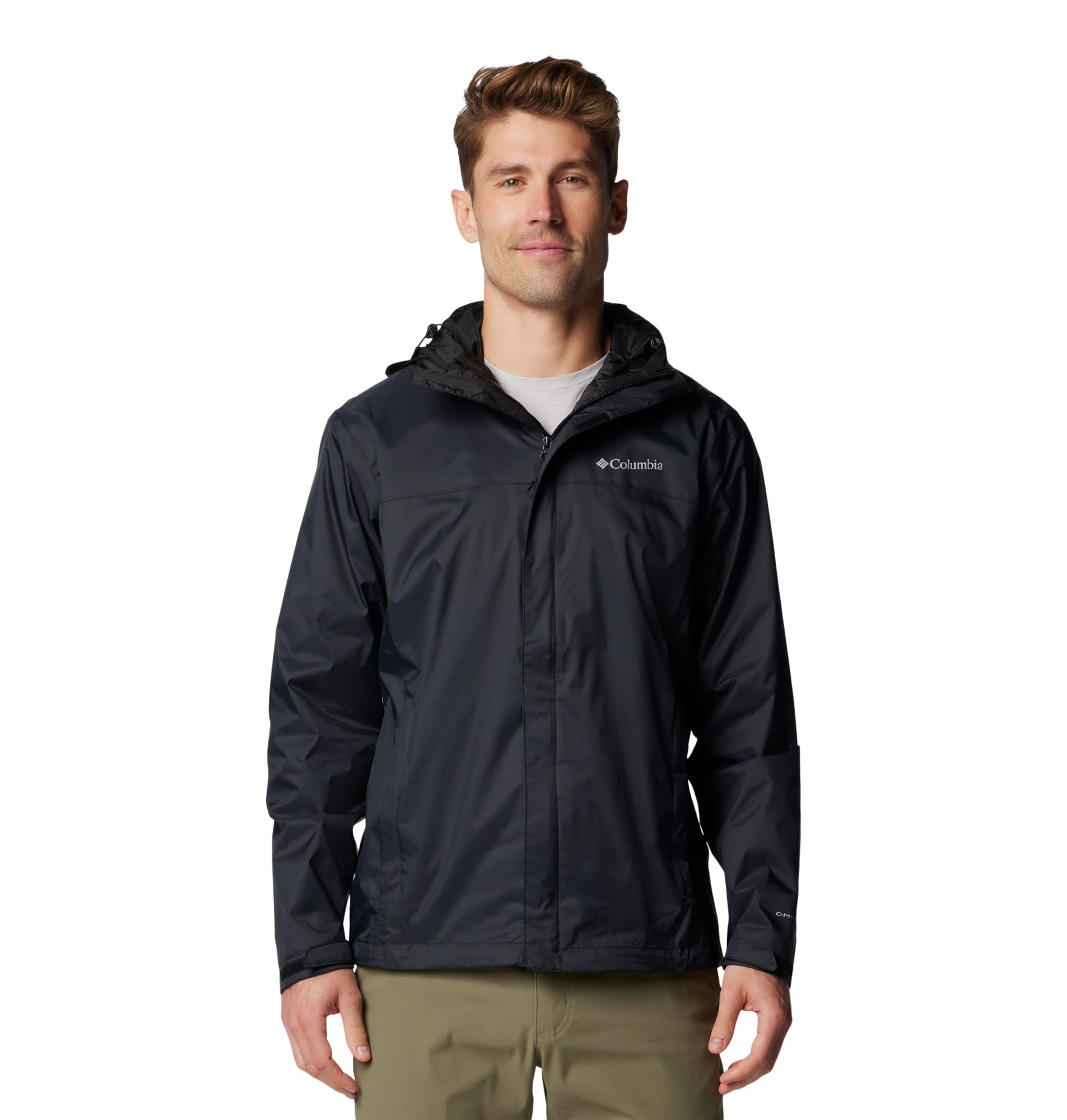
Columbia Watertight II

94 /100
Traveler Score Outstanding

Key details

Fit
Men's, runs roomy
Pockets
Zippered hand pockets
Packed Size
Packs small in a daypack
Waterproofing
Handles heavy rain
Check Details on Amazon

Rain shells live on a trade: the more protection you want, the more jacket you carry. The Watertight II gets that balance best in this group, which is why it's our top pick. We wore it through a long, steady soaking and the layer underneath stayed dry, and by the end of the day it rolled down into something we could push behind a daypack's lid.

Wind is the part people forget. A wet shell that lets wind through makes a cold day colder, and this one blocks it without turning into a sauna — step indoors and it doesn't trap heat the way a coated jacket can. It dries quickly too, so a wet morning doesn't leave you with a damp pack all afternoon.

The cut is the thing to plan around. It runs roomy, which is exactly what you want over a fleece and exactly what you don't want if you're between sizes and hoping for a trim fit, and the sleeves run long. If you're at the boundary, order your normal size and let your layers take up the space.

What earns it the top spot is consistency: this is the shell in this group with the fewest lingering questions about its waterproofing, and the one we point to first when someone asks what to buy before a week of uncertain weather. If you overheat on humid summer climbs, the vented 33,000ft shell further down is the better tool.

Pros

  • Keeps heavy rain out
  • Light and small in a pack
  • Blocks wind without trapping heat
  • Dries fast between showers

Cons

  • Runs roomy with long sleeves
Our verdict

It keeps heavy rain out, blocks wind, and packs down small — the jacket we recommend to most hikers, provided you want room for a fleece.

Check Latest Price
2

Best for Layering

The North Face Antora

94 /100
Traveler Score Outstanding

Key details

Fit
Men's, roomy for layers
Weight
Lightweight shell
Pockets
Large hand pockets
Waterproofing
Waterproof shell
Check Details on Amazon

The Antora is the most expensive jacket in this group, and the money goes into wet-weather performance rather than features you can point at. It handled storm after storm without giving up, and the cut is generous enough for a fleece and a light puffer underneath without compressing either.

We think it's the right jacket for exposed, windy hikes where you're layering anyway. Wind protection is where it stands furthest ahead of the rest of this set, and it stays comfortable when you stop for lunch instead of turning into a clammy shell. It is a shell and nothing more, though: every bit of the warmth comes from what you wear under it, so don't expect it to replace a puffy.

The price is the honest sticking point. It costs more than our top pick, and the extra doesn't buy vents, a stuff sack, or a feature you can tick off a list — it buys fabric and a cut that layers well. If most of your hiking happens in warm-weather showers, the less expensive shells here will serve you fine. If you head out in winter storms above treeline, this is the one that keeps its promises.

Pros

  • Most consistent waterproofing here
  • Best wind blocking in this set
  • Roomy enough for a fleece and puffer

Cons

  • Costs the most in this group
  • Long sleeves on shorter frames
Our verdict

If you hike exposed and cold and layer up every time you go out, this is the shell that earns its higher price.

Check Latest Price
3

Best Women's Lightweight

Columbia Arcadia II

93 /100
Traveler Score Outstanding

Key details

Fit
Women's, runs small
Hood
Covers the face
Pockets
Deep hand pockets
Waterproofing
Waterproof, Velcro storm flap
Check Details on Amazon

The hood is what won us over: it comes forward far enough to keep rain off your face rather than perching on the back of your head, and that alone puts it ahead of most inexpensive shells. Add a Velcro flap over the main zip and Velcro tabs at the wrists, and you have a jacket that seals at the places water actually gets in.

It's genuinely waterproof rather than merely repellent. Water beads and runs off the surface instead of soaking in, and the shell has stayed dry through long gray days that would have found the weak spots in a cheaper coat. It's light enough to forget you packed it, which is the other half of the job.

Sizing is the catch. It runs small, so if you plan to put a fleece underneath, go up a size rather than trusting your usual label. Get that right and it's the women's shell here that works equally well on a muddy trail and on a town errand, which is not something you can say for most of the technical jackets in this group.

Pros

  • Genuinely waterproof shell
  • Hood keeps rain off your face
  • Light enough to wear all day
  • Looks good off the trail

Cons

  • No interior pocket
Our verdict

A light, genuinely waterproof women's shell that seals at the hood, zip, and cuffs — order up if you plan to layer.

Check Latest Price
4

Best Ventilation

33,000ft Women's Packable

92 /100
Traveler Score Outstanding

Key details

Hood
Adjustable hood opening
Pockets
Zippered, plus internal zip pocket
Venting
Underarm zipper vents
Packability
Packs into included bag
Check Details on Amazon

Underarm zips are why this jacket earns its spot. On a climb you make more heat than a waterproof fabric can move, and opening a vent under each arm dumps it in seconds without letting rain in. We kept them shut in steady rain and cracked them on the ascent, and the jacket stayed comfortable through both.

That makes it the women's shell we recommend for warm, wet hiking, where the rain is heavy and the air is humid. The waterproofing has held up in real storms, and the fabric doesn't turn slick and shiny the way an inexpensive raincoat does — it reads as a soft jacket rather than a plastic bag.

The details are the ones that matter: zippered hand pockets plus an internal zip pocket for a phone, a drawstring hem, an adjustable hood opening, and Velcro at the cuffs. It rolls into the bag it ships with and takes up very little room in a daypack.

Fit is generous enough for a fleece without turning into a sack, and it runs close to size, so order your usual unless you layer heavily. It's also cut long enough to cover your seat, which is exactly what you want when the rain is blowing sideways.

Pros

  • Underarm vents dump heat fast
  • Holds up in heavy storms
  • Packs into its included bag

Cons

  • Can wet through in long, heavy rain
Our verdict

For warm, humid hikes, the underarm vents make this the women's shell we recommend first.

Check Latest Price
5

Best for Cold Weather

33,000ft Fleece-Lined

92 /100
Traveler Score Outstanding

Key details

Fit
Men's, narrow sleeves
Lining
Fleece lined
Warmth
Warm in cool weather
Water Resistance
Light-rain protection
Check Details on Amazon

Cold rain is its own problem: a shell alone leaves you shivering, and a puffy under a shell leaves you sweaty. This jacket splits the difference with a thin fleece lining bonded inside a waterproof shell, and on a raw morning that's the difference between hiking comfortably and hiking just to get warm.

Waterproofing is good for light to moderate rain rather than an all-day soaking, so this is a jacket for showers and cold drizzle, not for a storm that settles in for the afternoon. The fleece is thin, which is why it traps heat without bulk and why it works at 50 degrees — and also why it turns clammy once you're grinding uphill.

We think it's the right jacket for late-season hikes, cold-morning starts, and anyone who would otherwise carry a separate midlayer. If you run hot, or your rain arrives with humidity instead of a chill, a plain vented shell is the better tool: this one is a system, and that's either the appeal or the dealbreaker.

Pros

  • Fleece lining warms a cold morning
  • Replaces a separate midlayer
  • Solid seams and hardware

Cons

  • Sleeves run narrow
Our verdict

Buy it if your rainy hikes come with a chill: the lining replaces a midlayer, as long as you're not climbing hard.

Check Latest Price
6

Best Budget

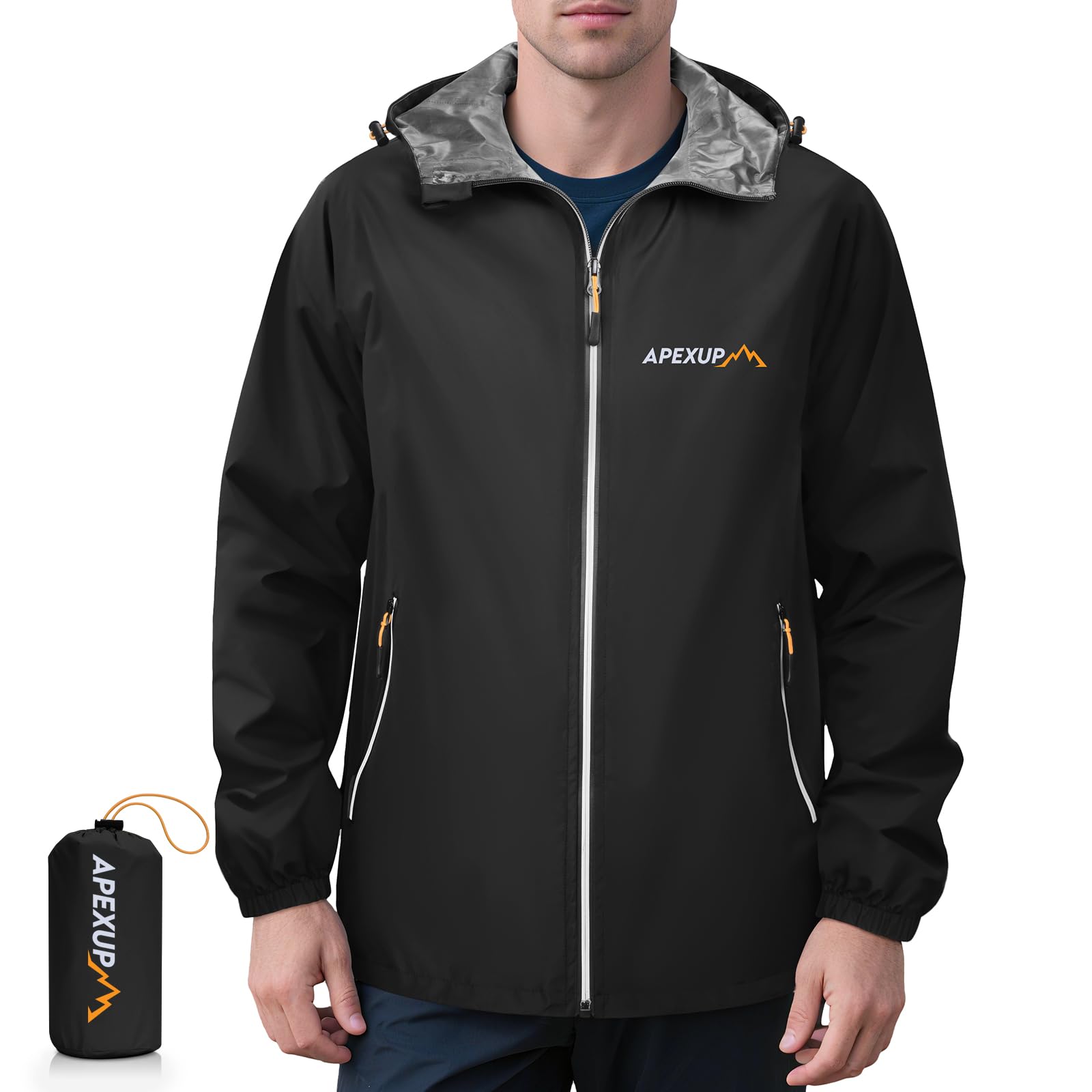
APEXUP Packable Rain Jacket

91 /100
Traveler Score Outstanding

Key details

Fit
Unisex, true to size
Pockets
Inside and outer pockets
Packability
Rolls into included sack
Package Size And Weight
9.06 x 5.12 x 2.76 inches; 8.82 ounces
Check Details on Amazon

Under nine ounces, and it goes back into the sack it ships in — that's the whole pitch. The listing puts the shipped weight at 8.82 ounces, and in practice it's the jacket that lives in the bottom of a pack without you noticing, which is what most people want from a shell they carry more often than they wear.

Rain protection is better than the price suggests. It kept us dry through moderate showers and one genuinely heavy squall, and the hood and cuffs seal well enough that water doesn't run down your neck or up your sleeves. Sizing is accurate and roomy enough for a sweatshirt, which makes it an easy jacket to buy without trying on.

So we think of it as a pack jacket rather than a hiking jacket: the one you carry in case, and the one you're glad to have on a flat walk when the sky opens. For a climb where you'll be working hard in humid air, pay more and get vents. As an emergency layer, it's hard to argue with.

Pros

  • Under nine ounces packed
  • Keeps steady rain out
  • Roomy and true to size

Cons

  • No breathability, so you dampen inside
  • Wets through in extended downpours
Our verdict

The budget pick we actually trust in steady rain, best kept as the shell that lives in your pack.

Check Latest Price
7

Visibility on Roads

baleaf Packable Rain Jacket

91 /100
Traveler Score Outstanding

Key details

Hood
Rolls away into the collar
Pockets
Zippered, packs into back pocket
Visibility
Bright high-visibility colors
Package Size And Weight
14.88 x 11.26 x 3.46 inches; 10.55 ounces
Check Details on Amazon

In the bright colorways this is the most visible jacket in the group, and that's the point: on a road shoulder in fog, or a gray evening commute, being seen matters more than shaving grams. The fluorescent options are loud in the best way, and it's the jacket we reach for on a bike for exactly that reason.

Storage is unusually good for a shell this light. Zippered pockets sit where you want them, and the back pocket turns inside out into a stuff bag, so the whole jacket packs into something you can clip to a saddle or shove in a frame bag. The hood rolls into the collar and secures with Velcro when the sky clears.

Sizing needs attention. It runs small for some builds and large for others, so order around the layer you'll actually wear underneath rather than the label on the tag, and go up if you're broad through the shoulders and between sizes.

We think it's the jacket for riding, commuting, and hikes that start and end on a road, where the visibility and the pockets earn their keep in a way a technical climbing shell never will. Get the size right and it's an easy jacket to like.

Pros

  • High-visibility colorways
  • Back pocket becomes a stuff sack
  • Hood rolls into the collar

Cons

  • Runs warm on hard efforts
Our verdict

Choose it for visibility and pockets on roads and commutes, not for a humid climb where you'll overheat.

Check Latest Price
8

Budget Women's Warmth

Diamond Candy Rain Jacket

91 /100
Traveler Score Outstanding

Key details

Fit
Women's, runs small
Lining
Warm inner lining
Weight
Mid-weight shell
Pockets
Zippered and flap-covered
Check Details on Amazon

Ordering this one is the hard part. It runs small, consistently enough that it's worth planning around: size up if you want a sweater underneath, and expect a close cut through the hips even then.

What you get for that is the warmest women's jacket in this group by a distance. The lining is thick enough that it feels like a light jacket rather than a shell, and on a cold, damp morning that's worth a lot. It's also heavier than a windbreaker and lighter than a proper raincoat, which is the useful middle ground for shoulder-season hiking.

Rain protection is decent. It sheds steady rain without trouble and the water beads and runs off the surface, and the hood zips off, the cuffs adjust, and the pockets are big and flap-covered — the details you notice on a wet walk.

For cold-weather walking, shoulder-season hikes, and anyone who feels the chill before the rain, it's the women's jacket we reach for first. Just don't buy it for a humid summer climb: the lining you want in October is the lining you'll resent in July.

Pros

  • Warmest women's jacket here
  • Feels like a jacket, not a shell
  • Big flap-covered pockets

Cons

  • Can soak through in sustained rain
Our verdict

The women's jacket here with the most warmth built in — size up, and keep it for cool-weather hiking.

Check Latest Price

How We Tested the Best Hiking Rain Jackets

We built the shortlist by combing through specs, comparing packed weight, fabric and seam construction, available sizes, and price against what most hikers actually need. We filtered out jackets with vague waterproofing claims, limited size ranges, or cuts that seemed better suited to a commute than a trail. That left 12 jackets, which I wore over eight months.

Testing happened where the jackets would actually live: morning dog walks in drizzle, a long ridge hike in sustained rain, humid climbs where I wanted pit zips open, and cold, windy lunch stops. I wore each over a thin base layer and, on colder days, a midweight fleece, checking whether the shoulders and hood soaked through and whether condensation built up inside after a hard climb. I also stuffed each into a daypack, carried it for a full day, and wore a few into town afterward to see whether they looked like technical gear or something I'd reach for on a normal errand.

For fit, I started with my usual size, then tried the next size up when a jacket ran trim; I measured chest, sleeve, and hem against each brand's size chart and noted whether the hem stayed put under a pack hip belt. Quality got the hands-on treatment: I yanked zippers, tugged hood adjustments, and checked seams and cuffs after each wet outing. Warmth was judged on 40-degree mornings and windy summits, not just in a warm room, and I noted which jackets turned clammy once I started climbing.

How to Choose Hiking Rain Jackets

Waterproof or Water-Resistant?

A water-resistant jacket is coated enough to shed a shower; a waterproof one is built to keep rain out for hours. On a hike the difference shows up in your midlayer at the end of the day. Look for sealed seams, a flap over the main zip, and cuffs that close, because those physical details do as much work as the fabric itself. The Columbia Arcadia II is a good example of an inexpensive jacket getting the sealing right.

Ask what weather you actually walk in. If you hike in drizzle and turn back when it settles in, water-resistant is fine and lighter on your shoulders. If you're out in all-day rain, buy the waterproof shell and accept the extra weight.

Venting Beats a Breathability Claim

Every shell claims to breathe, and that claim is hard to check and easy to print on a hangtag. What you can see is a physical vent. Underarm zips let you dump heat on a climb in seconds, which is why the 33,000ft women's jacket earns its place for warm-weather hiking.

If you run hot, prioritize vents and a thin fabric. If you hike cold and slow, a lined shell can replace a midlayer entirely: the 33,000ft fleece-lined jacket is warm enough that you can leave the fleece at home, at the cost of clamminess when you push the pace.

Weight and Packed Size

A shell you carry should be forgettable, light enough that you stop thinking about it and small enough to live in the pack rather than on top of it. Jackets that stuff into their own pocket or an included sack stay tidier: the APEXUP rolls into its own bag, and the baleaf's back pocket turns inside out into one.

Weight only matters against what you're doing. On a day hike, an extra ounce or two buys durability and real pockets. On a multi-day carry, a jacket that packs into its own pocket is worth more than the few ounces it saves.

Order for the Layer, Not the Label

A rain shell has to fit over what you wear underneath without flapping when you don't. Sizing across this group swings from small to generous — the Columbia Arcadia II and the Diamond Candy both run small, while the Watertight II runs roomy — so treat the label as a starting point, not an answer.

Decide on your layering plan first: a base layer only in summer, a fleece in shoulder season. Then check sleeve length, since long sleeves on a short frame push the cuff down over your hands.

Hood, Cuffs, and Pockets

A hood that sits back lets rain run down your neck; one that comes forward shields your face and your glasses. Cinch cords and a stiffened brim help, and Velcro cuffs let you close the gap over a glove.

Pockets matter more than they sound. Zippered hand pockets sit clear of a hipbelt, and an internal pocket keeps a phone dry. Those small things decide whether a wet day is merely annoying or genuinely miserable.

Frequently Asked Questions

Final Verdict

The Columbia Watertight II is the jacket we recommend to most hikers. It keeps heavy rain out, blocks wind, and packs small enough to live in a daypack, and the roomy cut leaves space for a fleece underneath. The trade is that big fit and long sleeves, so plan on layering rather than wearing it trim.

If you climb hard in warm, humid rain, the vented 33,000ft women's shell will keep you cooler. If your hikes happen in cold, exposed weather and you layer every time, the pricier North Face Antora is the one that keeps its promises.