8 Best Power Bank for Van Life in 2026: Match Your Van's Real Load

Finding the best power bank for van life means sizing your power station to your actual daily consumption, not the marketing numbers, so you avoid dead batteries or wasteful overbuying.

The biggest frustration for van lifers isn't finding a power station — it's finding one that actually fits how they live. A 288Wh unit promises weekend charging but dies before your 12V fridge finishes its second cycle. Meanwhile, a 2kWh beast might sit half-empty in the corner while you haul an extra 40 pounds everywhere.

The gap between marketing numbers and real-world use is where most mistakes happen. Out in the elements, solar recharging is often slower than you'd expect, and appliances draw more surge power than their labels suggest. The right pick isn't about getting the biggest battery — it's about matching capacity, output, and chemistry to your daily routine, whether you're a weekend minimalist or a full-timer running an air conditioner.

Some units let you expand capacity later, growing with your setup. Others prioritize blistering wall-charge speeds so you can refill during a grocery run. Understanding this trade-off means you won't outgrow your investment or spend on features you'll never use.

1

Best Overall

EcoFlow DELTA 3

94 /100
Traveler Score Outstanding

Key details

Weight (lbs)
27.5
AC Output (W)
1800W (2600W surge)
Capacity (Wh)
1024
Fast Charge Time
56 min 0-100%
Check Details on Amazon

The EcoFlow DELTA 3 starts as a 1024Wh station and accepts extra batteries to reach 5kWh, making it the only system in this group that can adapt from weekend trips to full-time van living without starting over. Its X‑Boost mode lifts output to 2600W for short bursts, letting a hair dryer or coffee maker run safely on a circuit that would otherwise trip.

Wall charging from empty takes 56 minutes, fast enough for a grocery run top-up. Solar input up to 500W recovers most of the battery during a clear day, and the cooling fans stay below 30dB, quiet enough for a sleeping area. Its UPS function transfers to battery in under 20ms, keeping a CPAP or laptop running through a power flicker.

The 1800W continuous output runs a standard compressor fridge or a small microwave, while X‑Boost mode temporarily handles resistive loads up to 2600W. A compact refrigerator can run over 5 hours on roughly 20% of the battery, leaving ample headroom for lights and device charging overnight.

Thirteen AC outlets—more than any non‑expandable 1kWh unit—let you plug in multiple devices without a power strip. The LiFePO4 battery is rated for 4000 cycles before dropping to 80% capacity, and the 5‑year warranty backs that promise. For a van dweller who cycles the battery daily, that translates to over a decade of use.

Van lifers planning to add a second fridge, induction cooktop, or more lighting over time will benefit most from the expansion path. The station also fits anyone who needs occasional high‑wattage bursts without moving to a fixed, heavier system. At 27.5 lbs, it’s heavier than some 1kWh competitors and costs more than non‑expandable models; buyers who never intend to add batteries or who prioritize the lightest carry will prefer the slimmer options in this set. Those who want the fastest wall recharge and nothing beyond 1070Wh face a different tradeoff—the speed‑focused Anker in this lineup charges in 49 minutes but can’t grow.

Pros

  • Expandable to 5kWh with extra batteries, preventing obsolescence as van power needs grow.
  • X‑Boost mode supplies 2600W for resistive loads like hair dryers or kettles, avoiding tripped breakers.
  • Recharges in 56 minutes from a wall outlet and accepts 500W solar, minimizing downtime.
  • Under‑30dB operation and UPS function make it suitable for sleeping areas and sensitive electronics.
  • LiFePO4 cells rated for 4000 cycles extend lifespan beyond typical van usage.

Cons

  • At 27.5 lbs, carrying it daily from vehicle to tent will feel heavier than slimmer 1kWh alternatives—less of an issue if it stays mounted in a van.
  • The mid‑range price reflects the expansion capability; a buyer who never adds batteries pays for a feature they won’t use.
Our verdict

For van lifers who value a system that grows alongside their electrical needs, the DELTA 3 provides a solid foundation with a clear upgrade path, backed by a 5‑year warranty that offsets the initial premium.

Check Latest Price
2

Best Mid‑Range Speed Demon

Anker C1000 Gen 2

93 /100
Traveler Score Outstanding

Key details

Weight (lbs)
24.9
AC Output (W)
2000W (3000W surge)
Capacity (Wh)
1024
Fast Charge Time
49 min 0-100%
Check Details on Amazon

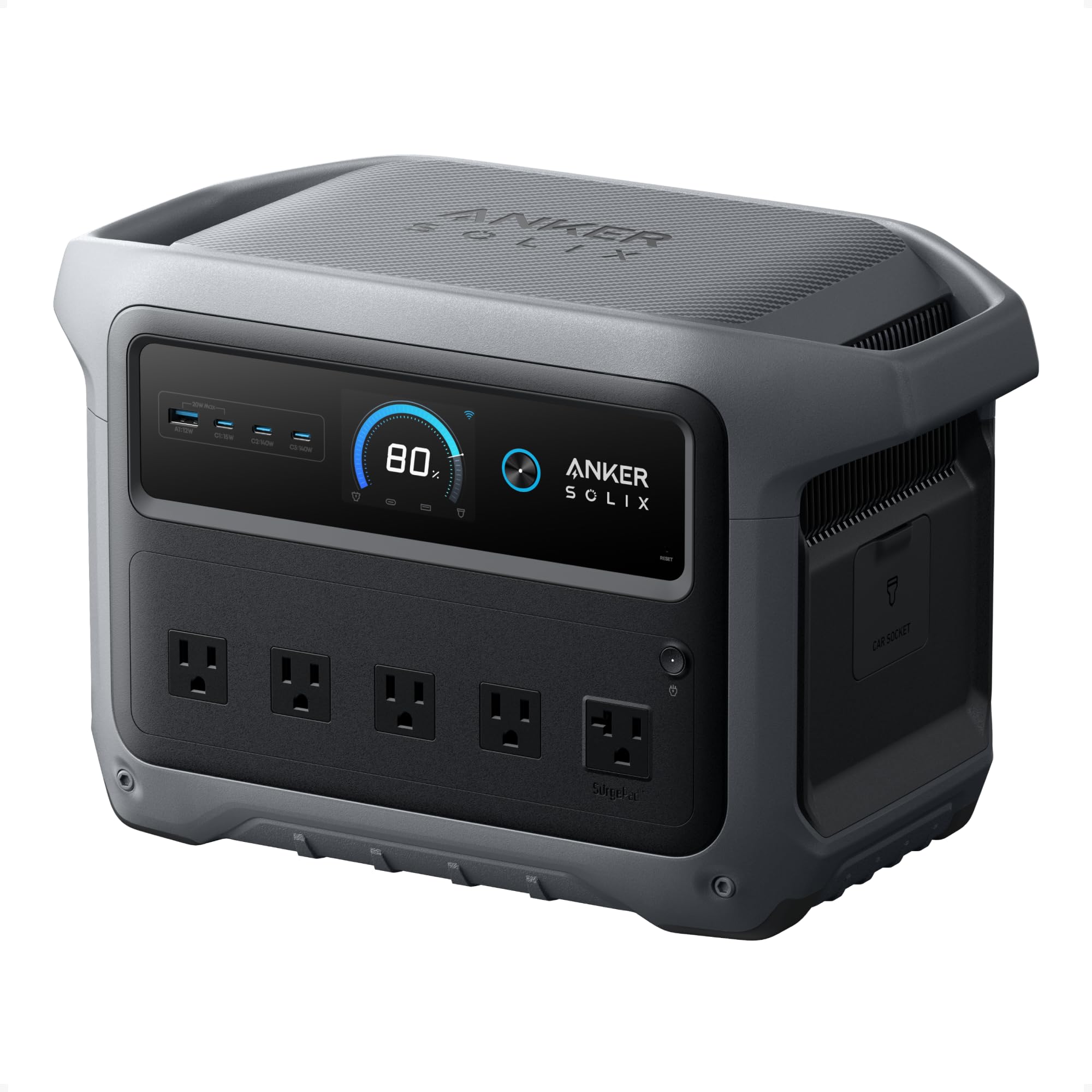
The Anker SOLIX C1000 Gen 2 hits full charge in 49 minutes on AC power, the fastest turnaround in this set — nearly twice as quick as the expandable top pick. That 2000W continuous output comfortably runs a 12V fridge, laptop, LED lights, and a small appliance like an induction cooktop on low simultaneously.

This speed suits van travelers who make frequent short stops and need a full top-up over a grocery run or cafe visit. The tradeoff is a sealed 1024Wh capacity; unlike the expandable option, you cannot add extra batteries later. If your daily consumption stays within that limit — and you value rapid AC recharging above modular expansion — this unit fits a predictable energy budget.

The companion app gives live wattage readouts and charge speed controls without requiring you to bend down to a screen on the unit. The LiFePO4 cells are rated for 4,000 cycles before dropping to 80% capacity, backed by a 5-year warranty — meaningful for daily use.

💡 Stick to AC charging for rapid top-ups; solar input caps at 600W, which is fine for steady days but won't match the 49-minute wall charge speed.

Pros

  • Recharges from 0-100% in 49 minutes on AC, so a lunch stop can fully replenish the battery.
  • 2000W output runs a fridge, laptop, lights, and a small induction cooktop simultaneously without tripping.
  • App lets you monitor load and adjust charging speed from your phone, rather than crouching to read a display.
  • Sturdy construction and a 5-year warranty reflect confidence in long-term durability.

Cons

  • At 24.9 lbs, lugging it from the van to a picnic spot may feel cumbersome
  • The sealed battery cannot be expanded later, so any increase in power needs means replacing the entire station.
Our verdict

For the van dweller with a predictable daily draw under 1000Wh, this station gets you back to full faster than any other in its class — just don't expect to grow your system later.

Check Latest Price
3

Best High‑Capacity Powerhouse

Anker C2000 Gen 2

91 /100
Traveler Score Outstanding

Key details

Weight (lbs)
41.7
AC Output (W)
2400W (4000W surge)
Capacity (Wh)
2048
Fast Charge Time
58 min 0-100%
Check Details on Amazon

With 2048Wh of LiFePO4 storage and a continuous 2400W AC output, the Anker C2000 Gen 2 powers a van’s rooftop air conditioner, induction cooktop, and fridge without throttling—a load that would trip smaller units.

The unit recharges from empty to full in 58 minutes, useful for quick top‑ups at a campsite pedestal or during a brief generator run. At 41.7 lbs, it’s 25% lighter than many 2kWh competitors, slipping under a counter in tight van layouts.

Standby drain is minimal—the battery holds its charge well across multi‑day stops, a trait that solar‑only van systems depend on when sun is intermittent.

The station suits full‑time van dwellers who can mount it semi‑permanently and accept the single AC outlet, which a compact power strip easily multiplies for running a water kettle and air conditioner at the same time. Anyone expecting to lift it in and out of the vehicle every few days will find the heft a barrier, but for those who install it once and forget it, the C2000 Gen 2 delivers class‑leading capacity per pound.

Pros

  • 2048Wh LFP battery and 2400W continuous output run air conditioners and induction cooktops at once.
  • 0–100% recharge in 58 minutes—faster than most in its class.
  • 25% lighter than comparable 2kWh models and slim enough to stash under a counter.

Cons

  • Lifting the 41.7‑lb station in and out of a van demands a careful two‑hand grip; best suited for fixed installs.
Our verdict

For van lifers who prioritize maximum capacity in the lightest possible 2kWh frame and don’t need battery expandability, the Anker C2000 Gen 2 hits a sweet spot.

Check Latest Price
4

Best Lightweight with Burst Power

BLUETTI Elite 30 V2

87 /100
Traveler Score Excellent

Key details

Weight (lbs)
9.4
AC Output (W)
600W (1500W surge)
Capacity (Wh)
288
Fast Charge Time
80% in 45 min
Check Details on Amazon

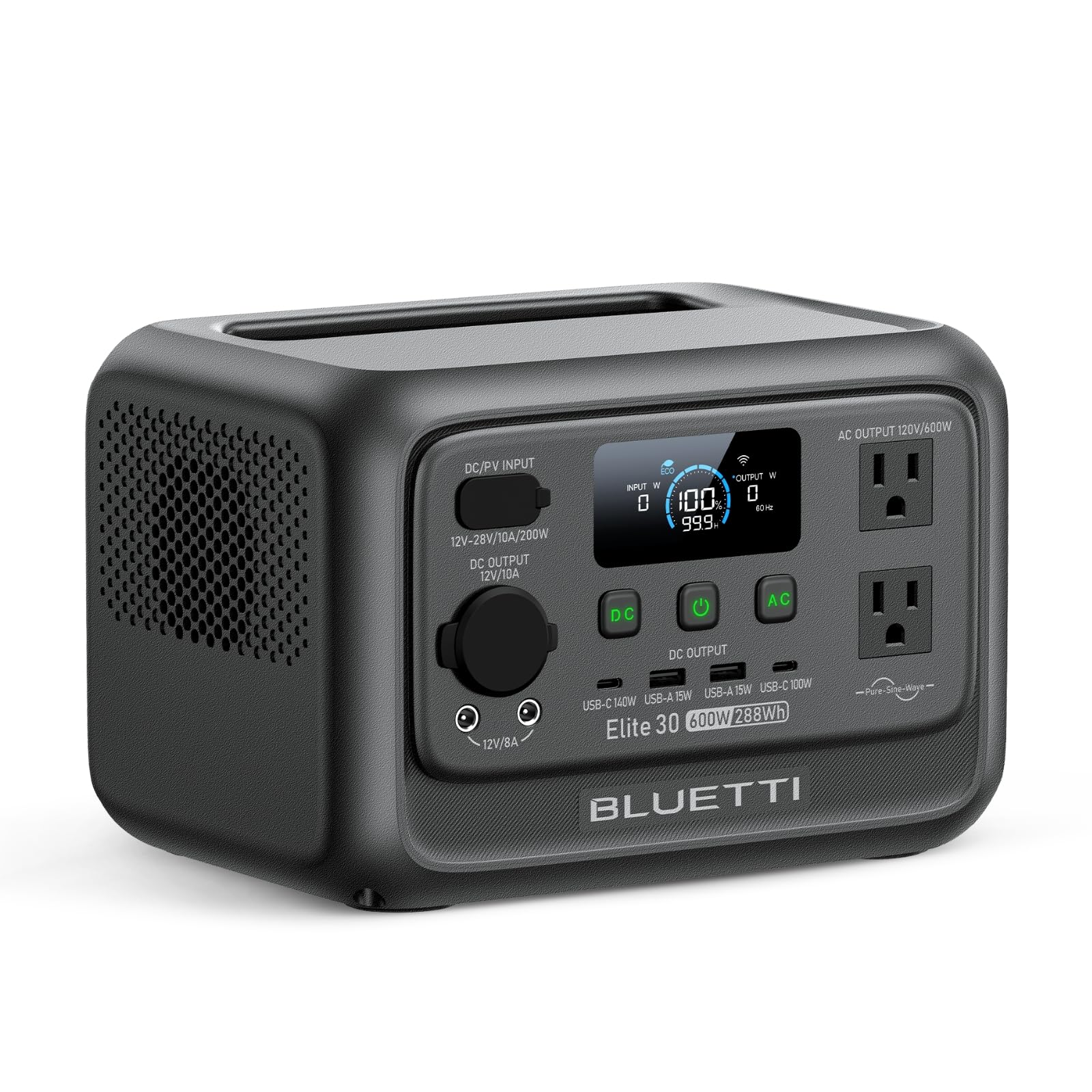
The BLUETTI Elite 30 V2's standout feature is its 1500W Power Lift mode, which lets this 9.4‑lb station briefly run appliances that normally require a much larger power station. While most ultra‑portable units top out at 300W, the Elite 30 V2 can power a coffee maker or travel hair dryer for a few minutes — a capability that sets it apart for van lifers who want some comforts without hauling a heavy battery. It also recharges to 80% in 45 minutes and doubles as an uninterruptible power supply for a CPAP or laptop, cutting over fast enough to keep devices running during an outage. The LiFePO4 battery holds up through over 3000 cycles, so daily use won’t degrade capacity quickly.

This station works best for van dwellers who rely mostly on USB and 12V gear but occasionally need a burst of AC power for a quick cup of coffee or a hair dryer session. Power Lift is designed for short, infrequent spikes — not for running a kettle for 10 minutes or powering a cooktop. With a total capacity of 288 watt‑hours, you'll need to recharge frequently if you lean heavily on AC output. For all‑day off‑grid work or sustained appliance use, a station with a larger battery is a more practical choice.

Pros

  • 1500W Power Lift mode temporarily powers high‑draw appliances like toasters or travel kettles.
  • Quick 45‑minute charge to 80% and UPS backup keep a CPAP or laptop running during an outage.
  • Compact 9.4‑lb build slips into tight van storage and is easy to grab for a campsite move.
  • LiFePO4 battery withstands over 3000 full cycles, staying viable for years of daily use.

Cons

  • A few units may arrive with a charging fault that prevents operation without AC power.
Our verdict

For van lifers who need the lightest possible station but still want the occasional hot cup of coffee, the Elite 30 V2 delivers a capability no other station in its weight class can match — just don’t expect it to replace a larger power station.

Check Latest Price
5

Best Budget Ultraportable

Jackery Explorer 300

93 /100
Traveler Score Outstanding

Key details

Weight (lbs)
7.1
AC Output (W)
300W
Capacity (Wh)
293
Fast Charge Time
Check Details on Amazon

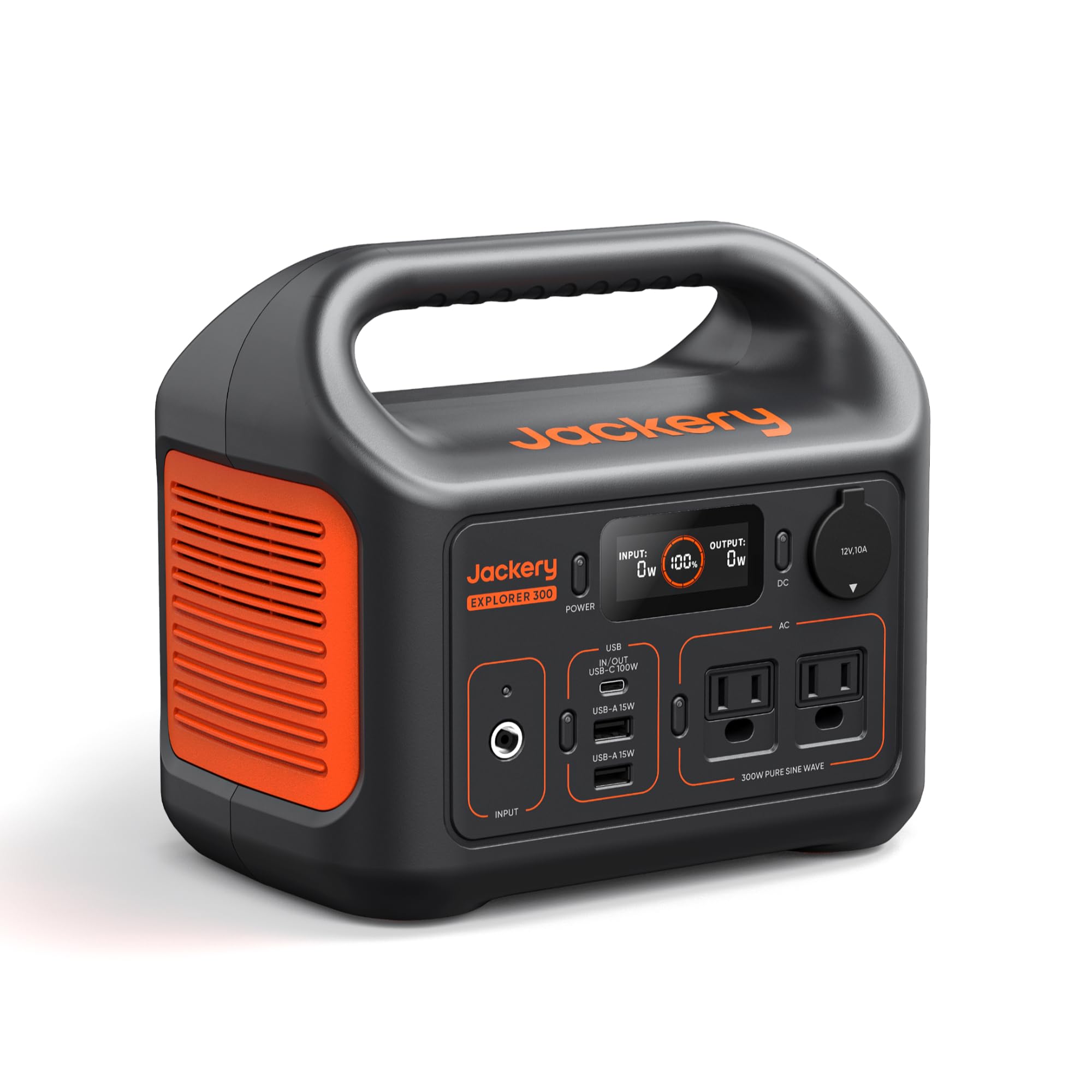
At just 7.1 pounds, the Jackery Explorer 300 brings the brand's LiFePO4 battery chemistry into an ultra-portable form that's a world apart from the larger 2kWh stations common in van builds. Its 100W USB-C Power Delivery port charges a laptop at full speed without needing the AC brick, while the 293Wh capacity covers a night of essential electronics.

Running a CPAP machine overnight or topping off a phone, tablet, and camera battery consecutively fits its strengths. The two AC outlets handle low-draw gear like lights or a small fan, and the regulated 12V car socket can keep a compact cooler running for hours. Solar recharging via the 100W input gives day-trip resilience without overcomplicating the setup.

Weekend campers, overnight CPAP users, and budget-conscious van dwellers with very low power demands will appreciate the featherweight design and lithium iron phosphate longevity. The 300W AC inverter won't start a small blender or coffee maker — that's the tradeoff for its compact frame. Accept that boundary and you get a tidy, grab-and-go battery that doesn't weigh down a backpack or cabin bag.

Pros

  • Highly portable at just 7.1 lbs, easy to carry around a van or campsite
  • Build quality holds up well for years of regular use
  • 100W USB-C PD charges laptops quickly without a bulky power brick
  • Battery life covers a full night of CPAP use or multiple device top-ups

Cons

  • Occasional charging issues or early battery degradation can occur after extended use
  • 300W AC output cannot run even small kitchen appliances like blenders or coffee makers
Our verdict

For campers and CPAP users who prize portability over appliance capability, this lightweight LiFePO4 station delivers essential power at a friendly price.

Check Latest Price
6

Also Great for Spacious Vans

Jackery 2000 v2

90 /100
Traveler Score Outstanding

Key details

Weight (lbs)
39.5
AC Output (W)
2200W
Capacity (Wh)
2042
Fast Charge Time
80% in 66 min
Check Details on Amazon

This generation trims over six pounds from the original Explorer 2000 while retaining the same 2kWh-plus battery and adding a 2200W continuous output. It recharges from a wall outlet to 80% in 66 minutes — enough for a midday boost between campsites — and the three AC outlets handle a 12V fridge, laptop, and small appliance without wrestling for plugs. The result is a station that shaves cost as well as weight, sitting below the Anker C2000 Gen 2 at checkout while delivering the same basic capacity.

Van life draws demand steady power that doesn't trip breakers on compressor surges, and the LiFePO4 pack sustains a fridge for up to 10 hours or a CPAP through the night. At 39.5 pounds, it's not an ultralight grab-and-go — hefting it into a storage bay feels substantial — but once it's in place, the weight becomes a non-issue for stationary setups. The interface keeps things simple: a bright display shows wattage in and out, and the carry handle doubles as a stable grab point for two-handed lifts.

This station is for van dwellers who already know their daily watt-hour burn and don't anticipate needing more than 2kWh on the road. There's no way to add battery modules, so you're committing to that ceiling permanently. If your system might grow later — a full-time transition, an induction cooktop, or an air conditioner — the expandable top pick makes more sense. But for a fixed, moderate load and a strong bias toward Jackery's familiar ecosystem, the 2000 v2 hits a price point that few 2kWh competitors touch.

💡 If you move the unit often, a cheap portable dolly or a waist-height storage spot makes loading and unloading far less of a chore.

Pros

  • Steady output for fridges and CPAPs, backed by LiFePO4 longevity and a 2200W surge for appliance startups.
  • Manageable one-person carry at 39.5 lbs, fitting into van storage without demanding a second set of hands.
  • Wall charge to 80% in 66 minutes lets you top up during a lunch stop, minimizing generator runtime.

Cons

  • Lifting 39.5 pounds into a high van bay can be a chore; best suited for semi-permanent installs rather than daily hefting.
  • No path to expand capacity beyond 2042Wh, so you can't add batteries later if your power needs grow.
Our verdict

Van lifers who can lock in their daily watt-hour needs and want a lower entry price than the Anker C2000 Gen 2 will find this a capable, if non-expandable, companion.

Check Latest Price
7

Compact Mid-Range

Jackery 1000 v2

94 /100
Traveler Score Outstanding

Key details

Weight (lbs)
23.8
AC Output (W)
1500W (3000W surge)
Capacity (Wh)
1070
Fast Charge Time
1 hr to 100%
Check Details on Amazon

The Explorer 1000 v2 stands out for its exceptionally fast AC recharging — a full 1070Wh in about an hour, which reclaims a full battery during a quick grocery run. Its 1500W continuous output handles a microwave, electric kettle, or a 12V fridge alongside laptops. Build quality remains sturdy, and the 23.8-lb weight with foldable handle keeps it portable for smaller vans. The trade-off is that this is a sealed system; unlike the expandable top pick in this set, you cannot add extra batteries later. For a van dweller whose power needs may grow, this capacity ceiling is a deliberate limitation. It’s best when your daily consumption is well-understood and unlikely to change.

Pros

  • Full recharge in about 1 hour via AC wall outlet, ideal for quick turnarounds between destinations.
  • 1500W continuous output handles a microwave, blender, or multiple devices without tripping.
  • Sturdy construction and a foldable handle make it manageable for a 23.8-lb station.

Cons

  • Occasional units may arrive with operational issues that require a return or exchange.
  • Capacity is fixed at 1070Wh with no way to add batteries later
Our verdict

This works when your daily watt-hours are predictable and you don't foresee adding capacity later. If you anticipate growing demands, the expandable top pick in this set offers a longer runway.

Check Latest Price
8

Value 1kWh

Anker C1000

93 /100
Traveler Score Outstanding

Key details

Weight (lbs)
27.6
AC Output (W)
1800W (2400W surge)
Capacity (Wh)
1056
Fast Charge Time
58 min 0-100%
Check Details on Amazon

The Anker SOLIX C1000 delivers 1056Wh of LiFePO4 capacity in a 27.6-pound chassis, with a 58-minute AC recharge and up to 600W of solar input for a full charge in about 1.8 hours. Its 1800W output runs essential van appliances, and long-term users note consistent performance for fridges and sump pumps. The station lacks expansion capability and the higher surge power of newer generations. A small number of units may develop a charging fault after roughly a year of use, and customer service experiences vary. That caveat kept it from top-pick status, but for budget-minded buyers or those already invested in Anker solar panels, the C1000 offers solid capacity at a meaningful discount.

Pros

  • Delivers consistent power for fridges, sump pumps, and other essential appliances
  • Typically available at a discount compared to newer 1kWh stations, offering strong capacity for the price.
  • Recharges in 58 minutes from AC and can pull up to 600W solar, hitting a full charge in about 1.8 hours.

Cons

  • A small number of units may develop a charging issue after about a year, and resolving it through customer service can be inconsistent.
Our verdict

If you already own Anker solar panels and want a budget-friendly 1kWh station without expandability, the C1000 is a solid buy — just be aware of the rare chance of a charging fault after the first year.

Check Latest Price

How to Choose

Battery Capacity (Wh)

A 288Wh unit will run a 12V fridge for about 4–6 hours, not overnight, unless solar feeds it continuously. Calculate your daily watt-hour consumption (add all devices you'll run simultaneously) and double it for cloudy-day buffer.

Inverters and voltage conversions eat 10–15% of the rated capacity before it reaches your devices. A 1000Wh station rarely delivers 1000Wh of usable AC power.

AC Output (W)

The wattage label is continuous, not the startup surge a fridge or blender demands. Even a 300W fridge can spike to 900W for a split second, tripping an under‑sized station.

Look for a surge rating at least 1.5–2× your most demanding appliance's startup draw. Units with a 'boost' or 'power lift' mode can briefly handle higher loads, but they aren't meant for sustained high-wattage use.

Weight and Portability

Under 15 lbs is easy to carry to a picnic table; over 40 lbs rarely leaves its storage spot. In a van, every pound eats into cargo space, but lighter units generally sacrifice capacity.

If you're full-time, consider a semi-permanent installation rather than daily lugging. A 25–28 lb station hits a sweet spot for most van layouts.

Battery Chemistry

LiFePO4 (lithium iron phosphate) lasts 3,000–4,000 cycles — roughly a decade of daily use — while standard lithium-ion rarely exceeds 800 cycles. The higher upfront cost pays back in years of not replacing a dead battery.

LiFePO4 also handles hot van interiors better and doesn't degrade as quickly from deep discharges, making it a non-negotiable for serious van life power.

Recharge Speed

Advertised 0-100% times often require a high‑wattage wall charger, which might not be included. Real‑world solar charging takes 2–3× longer than lab specs, so size your panel array for your daily energy deficit, not the station's maximum input.

A station that recharges to 80% in under an hour is a game‑changer when you're stealing shore power at a cafe, but verify what's in the box and budget for any extra charging cables.

Number of AC Outlets and USB Ports

One AC outlet forces you to use a power strip and can't run two high‑demand devices simultaneously. Three or more outlets let you plug in a fridge, laptop, and fan without juggling.

USB‑C Power Delivery (PD) ports bypass the AC inverter's energy loss, letting you charge laptops and phones directly at high speed. Look for at least one 100W USB‑C port.

Frequently Asked Questions