Most earplugs sold for sleep are not actively cancelling noise; they attenuate it, and the quality of the seal determines how well they work. A 33 dB-rated plug that shifts overnight can block less sound than a lower-rated plug that stays put. Fit is therefore the real specification to care about.
Foam earplugs offer the highest attenuation for snoring and ambient noise, but they require rolling, inserting, and holding until the foam expands. That works well for many sleepers, yet it can create pressure or a poor fit in small ear canals. Moldable silicone and wax plugs seal the outer ear instead, trading some raw attenuation for comfort without in-canal pressure.
The main trade-off is maximum noise blocking versus all-night comfort, and the right answer depends on your ear shape and sleeping position. Choose the form factor that matches your anatomy, not the one with the highest number on the box.
91 /100
Traveler Score Outstanding
Key details
- Fit Sizing
- Standard
- Material / Form
- Low-pressure foam
- Noise Reduction
- 33 dB NRR
- Quantity / Reuse
- 50 pairs, disposable
Check Details on Amazon
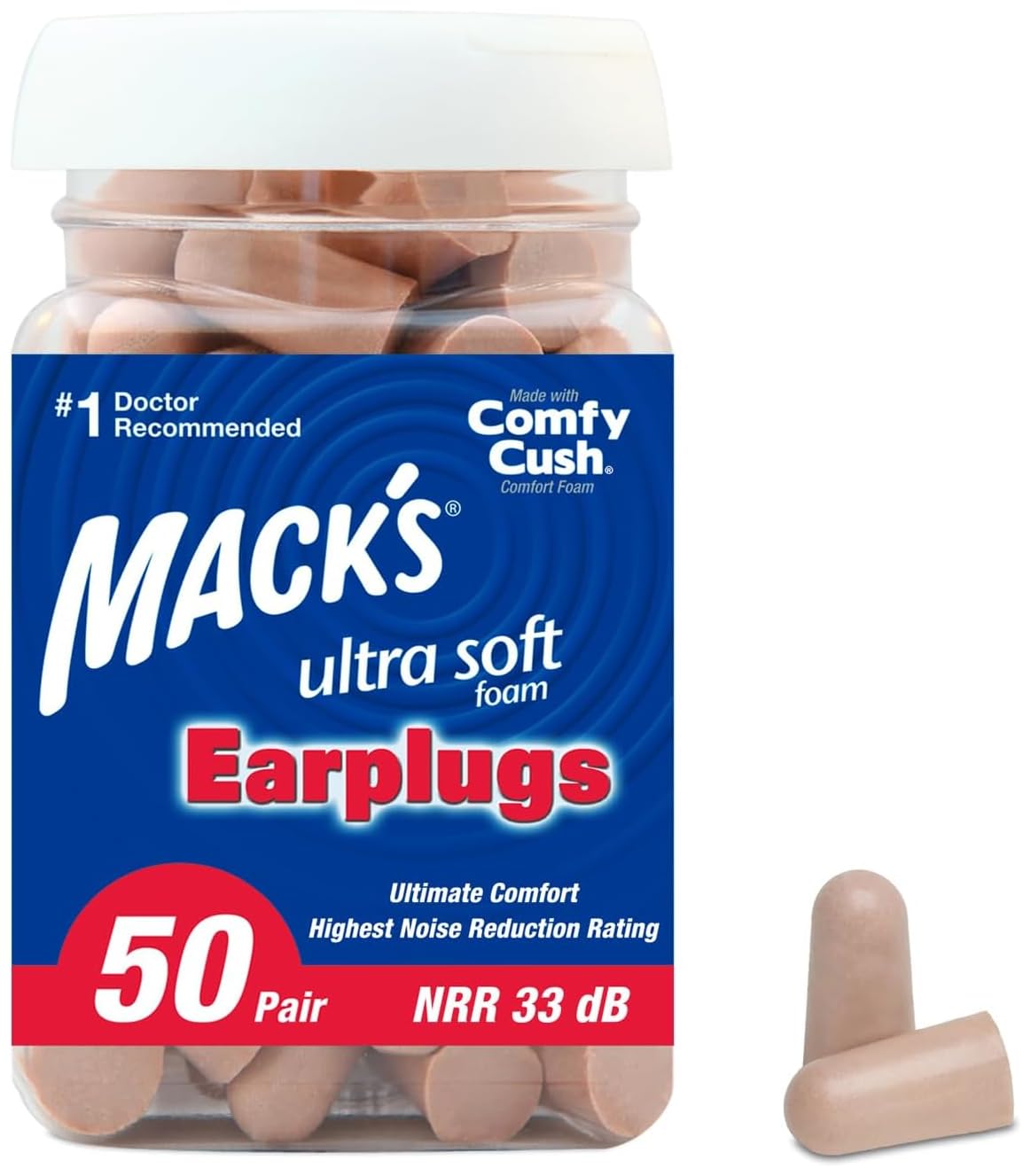
Mack's Ultra Soft Foam leads this sleep set on attenuation: 33 dB NRR low-pressure foam that blocks snoring and ambient noise once you roll and insert it properly. The 50-pair jar keeps the per-night cost down compared with smaller disposable packs, and the bulk container works as a nightstand supply that lasts for months.
Sleepers who use the standard roll-and-insert technique get quiet enough conditions for a full night, and the soft material avoids the hard, ache-inducing pressure you get from some other foam plugs. The foam expands slowly after insertion, creating a seal that holds through the night without the stiffness that can make overnight wear uncomfortable. The moldable silicone putty in this set is the better match for sensitive ears, but it cannot match this foam's raw noise blocking.
This jar suits sleepers with standard-size ear canals who are comfortable rolling foam before bed. Small or extra-sensitive canals are better served by the moldable silicone alternative, and anyone who cannot tolerate in-canal foam pressure should skip foam entirely. Ear anatomy and insertion technique determine the seal, and a loose fit lets loud noises through.
💡 Roll each plug into a thin, crease-free cylinder, pull the ear up and back, and hold it in place until the foam expands.
Pros
- Blocks snoring and ambient noise with a 33 dB NRR rating when the plug is rolled and inserted properly.
- Ultra-soft low-pressure foam stays comfortable through a full night of sleep.
- Fifty pairs at a budget-friendly price give full-time sleepers a large disposable supply.
Cons
- Not a total soundproof barrier; loud alarms or close snoring can still cut through for some sleepers.
- Standard-size foam can feel too short or too bulky depending on ear anatomy, so the seal is not universal.
Our verdict Standard-canal sleepers get the highest sleep-focused attenuation per dollar in this set, and the 50-pair jar means the supply lasts through months of nightly use.
Check Latest Price 93 /100
Traveler Score Outstanding
Key details
- Fit Sizing
- Outer-ear, one size
- Material / Form
- Moldable silicone putty
- Noise Reduction
- 22 dB NRR
- Quantity / Reuse
- 12 pairs, reusable
Check Details on Amazon
Mack's Pillow Soft Silicone molds into a cap over the outer ear, delivering a 22 dB NRR seal without entering the canal. The putty sits flush against a pillow, avoiding the pressure point of a compressed plug pushing back into the ear. Because the putty never expands, there is no pressure buildup over time.
This is for side sleepers and sensitive canals who find foam irritating and don't mind a tacky outer-ear putty. The tactile feel is the tradeoff for a fit that stays on the outer ear, a swap worth making for anyone who wakes up with sore ears after using foam.
💡 Warm the putty between your fingers and press it firmly around the outer ear before lying down.
Pros
- Outer-ear seal keeps silicone out of the canal, reducing irritation for tender ears.
- Moldable putty can be reshaped night after night, so 12 pairs last longer than disposables.
- Forms a custom seal that blocks snoring and ambient noise without deep insertion.
Cons
- The putty can catch hair and soften overnight, so the seal may need re-seating more than compressed foam.
- The 22 dB NRR leaves less margin against very loud snoring than the higher-NRR foam jar.
Our verdict For side sleepers who can't tolerate foam, this is the comfort-driven earplug to keep by the bed.
Check Latest Price 88 /100
Traveler Score Excellent
Key details
- Fit Sizing
- Tapered
- Material / Form
- Tapered contour foam
- Noise Reduction
- 33 dB NRR
- Quantity / Reuse
- 10 pairs, disposable
Check Details on Amazon
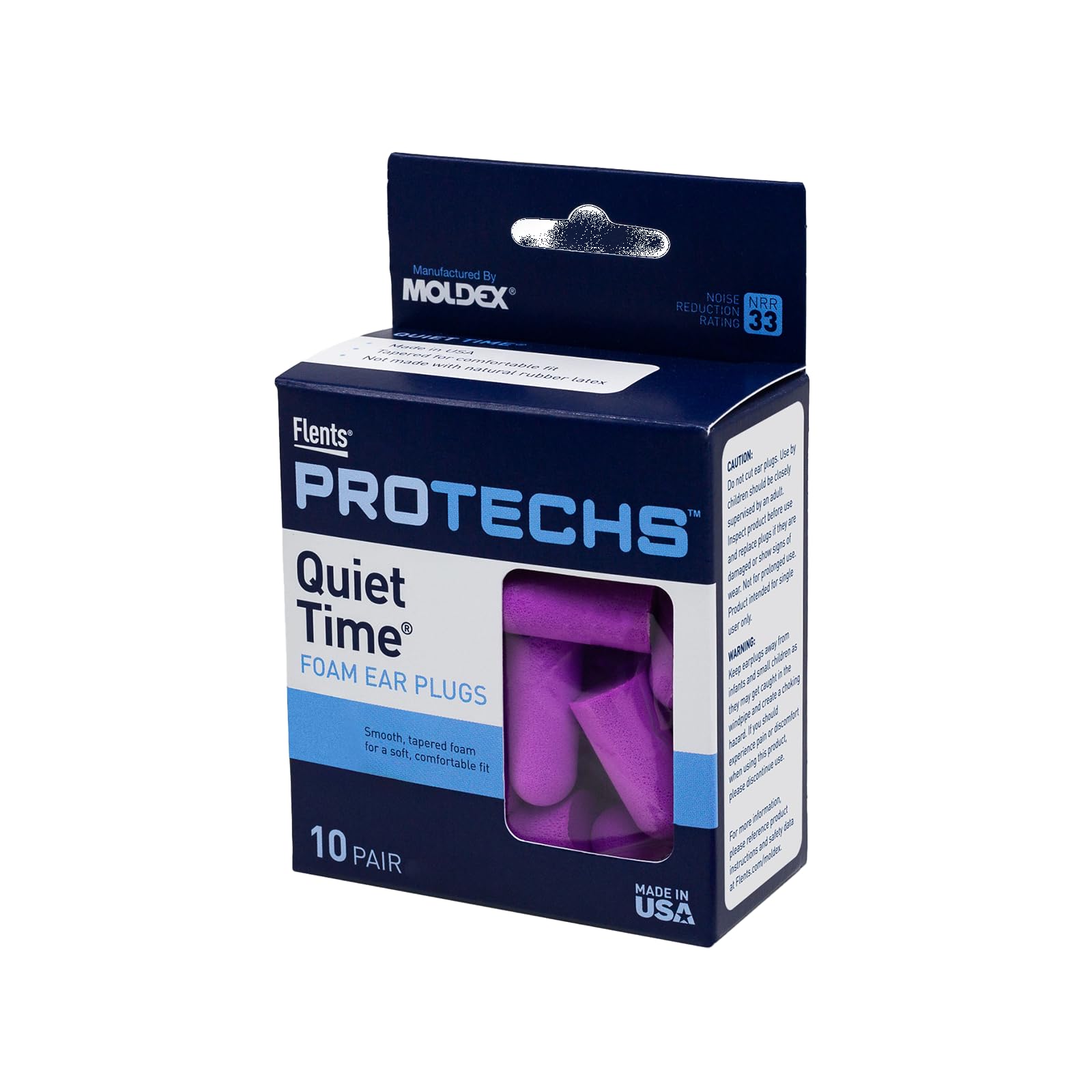
Tapered 33 dB NRR contour foam gives sleepers a comfortable alternative to the entry-price cylinder, with a shape that presses less against the ear opening. The 10-pair pack is budget-friendly, and the tapered end rolls down easily for insertion while the wider base seals the canal opening.
Best for light sleepers in moderate noise, such as household ambient sound or a snoring partner. Fit remains the main variable: some ears hold the contour plug snugly overnight, while leakage or fallout can happen in others. Very small canals call for a slimmer option, and anyone needing total silence should treat foam as noise reduction, not an off switch.
💡 Roll the plug thin, insert with the ear canal open, and hold it in place until the foam expands.
Pros
- Blocks enough noise for sleep and travel at a budget-friendly cost.
- Tapered contour reduces pressure at the ear opening.
- A 10-pair supply keeps the per-night cost low.
Cons
- The tapered shape can sit too large for very small ear canals.
- Loud snoring can still pass through when the seal is not snug.
Our verdict For sleepers who prefer a tapered plug, this contour foam is the value pick in the budget set.
Check Latest Price 86 /100
Traveler Score Excellent
Key details
- Fit Sizing
- Outer-ear, one size
- Material / Form
- Moldable silicone
- Noise Reduction
- 27 dB NRR
- Quantity / Reuse
- 1 pair, reusable
Check Details on Amazon
Becheln's 27 dB NRR moldable silicone covers the ear opening instead of pressing into the canal, which makes it comfortable for side sleepers with sensitive ears. The included travel case suits a reusable-first routine, and the outer-ear seal handles light-to-moderate bedroom noise without the insertion fuss of foam.
This is the comfort-first alternative to the top foam jar in this set: the buyer is a traveler or side sleeper who wants one reusable pair rather than a bulk foam supply. Loud snoring can still penetrate, and the silicone needs regular cleaning to maintain its seal, so the fit is light-to-moderate noise sleep rather than a heavy-snoring bedroom.
Pros
- Canal-free fit avoids in-ear pressure, making overnight wear comfortable for side sleepers with sensitive canals.
- Blocks light-to-moderate noise well for a reusable silicone plug.
- Silicone quality supports repeated overnight use without the throwaway cycle of foam.
Cons
- The canal-free outer-ear design has a lower attenuation ceiling than the deepest foam plugs in this set.
Our verdict For side sleepers and reusable-first travelers, this is the comfort-first runner-up in the sleep lineup.
Check Latest Price 88 /100
Traveler Score Excellent
Key details
- Fit Sizing
- Moldable outer-ear
- Material / Form
- Wax / silicone gel
- Noise Reduction
- 32 dB claimed
- Quantity / Reuse
- 15 moldable pillows
Check Details on Amazon
Wax pillows mold over the ear opening instead of pushing into the canal, so side sleepers with sensitive inner ears get a comfortable seal without foam-style pressure. The same putty blocks water, making it useful in the pool or shower as well as the bedroom.
The wax texture is the tradeoff: sleepers who dislike greasy textures, or need a plug they can remove quickly mid-sleep, should choose the foam jar in this comparison. For side sleepers who accept that feel, this pillow provides a soft, canal-free fit.
💡 Pull hair away from the ear before pressing the pillow into place; the seal forms around the outer ear.
Pros
- Molds over the outer ear instead of pressing into the canal, which suits side sleepers with tender ears.
- Waterproof wax holds up in the pool or shower, extending the fit beyond overnight sleep.
- Sleep quality benefits are noticeable when the wax is molded to the ear properly.
Cons
- The wax can catch hair or pillow fibers, and removal can be messy after it softens overnight.
Our verdict For side sleepers who want a canal-free plug and can live with a wax surface, this is the comfortable runner-up to the foam pick.
Check Latest Price 89 /100
Traveler Score Excellent
Key details
- Fit Sizing
- Tapered
- Material / Form
- Polyurethane foam
- Noise Reduction
- 32 dB NRR
- Quantity / Reuse
- 14 pairs, disposable
Check Details on Amazon
HEAROS Xtreme pairs a 32 dB NRR rating with silky-smooth tapered foam in a 14-pair supply, giving sleepers a contour-oriented option without committing to a bulk jar. The taper is the main difference from straight-sided foam plugs, and noise blocking carries through overnight use and travel.
Best for side sleepers who want a tapered fit and are willing to adjust insertion for a full seal. The tapered shape can be too large for some canals, and recent versions may feel smaller or softer than older ones, so returning users should treat each pair as a fresh fit check.
💡 Roll each plug as thin as possible, insert gently, and hold until the foam expands for a consistent seal.
Pros
- Strong noise blocking for snoring and ambient sleep noise.
- Sleep-quality results hold up for users who get a proper seal.
- Silky-smooth tapered foam is comfortable for sleepers who prefer this shape.
Cons
- Per-pair cost is higher than bulk foam jars when you need a long-term supply.
Our verdict This is the tapered middle ground between budget cylinders and bulk jars for sleepers who value fit contour over raw pair count.
Check Latest Price 89 /100
Traveler Score Excellent
Key details
- Fit Sizing
- Cylindrical
- Material / Form
- Slow-recovery foam
- Noise Reduction
- 33 dB NRR
- Quantity / Reuse
- 10 pairs, disposable
Check Details on Amazon
Cylindrical foam with 33 dB NRR is the lowest-cost way to get solid sleep noise blocking. It expands into a firm seal that handles light-to-moderate snoring and ambient noise when inserted properly. The tapered contour plug in this comparison has a slight edge on comfort and fit, because the straight cylinder can loosen overnight — especially in narrow canals.
Pros
- 33 dB NRR at the lowest entry price in this lineup.
- Soft foam keeps overnight wear comfortable for sleepers who want a disposable plug.
Cons
- Close heavy snoring can still be audible, so this suits light-to-moderate noise rather than total quiet.
Our verdict For budget-focused sleepers who want a disposable 10-pair pack, this is the low-cost entry point to 33 dB NRR.
Check Latest Price 88 /100
Traveler Score Excellent
Key details
- Fit Sizing
- Standard
- Material / Form
- Ultra-soft foam
- Noise Reduction
- 31 dB NRR
- Quantity / Reuse
- 60 pairs, disposable
Check Details on Amazon
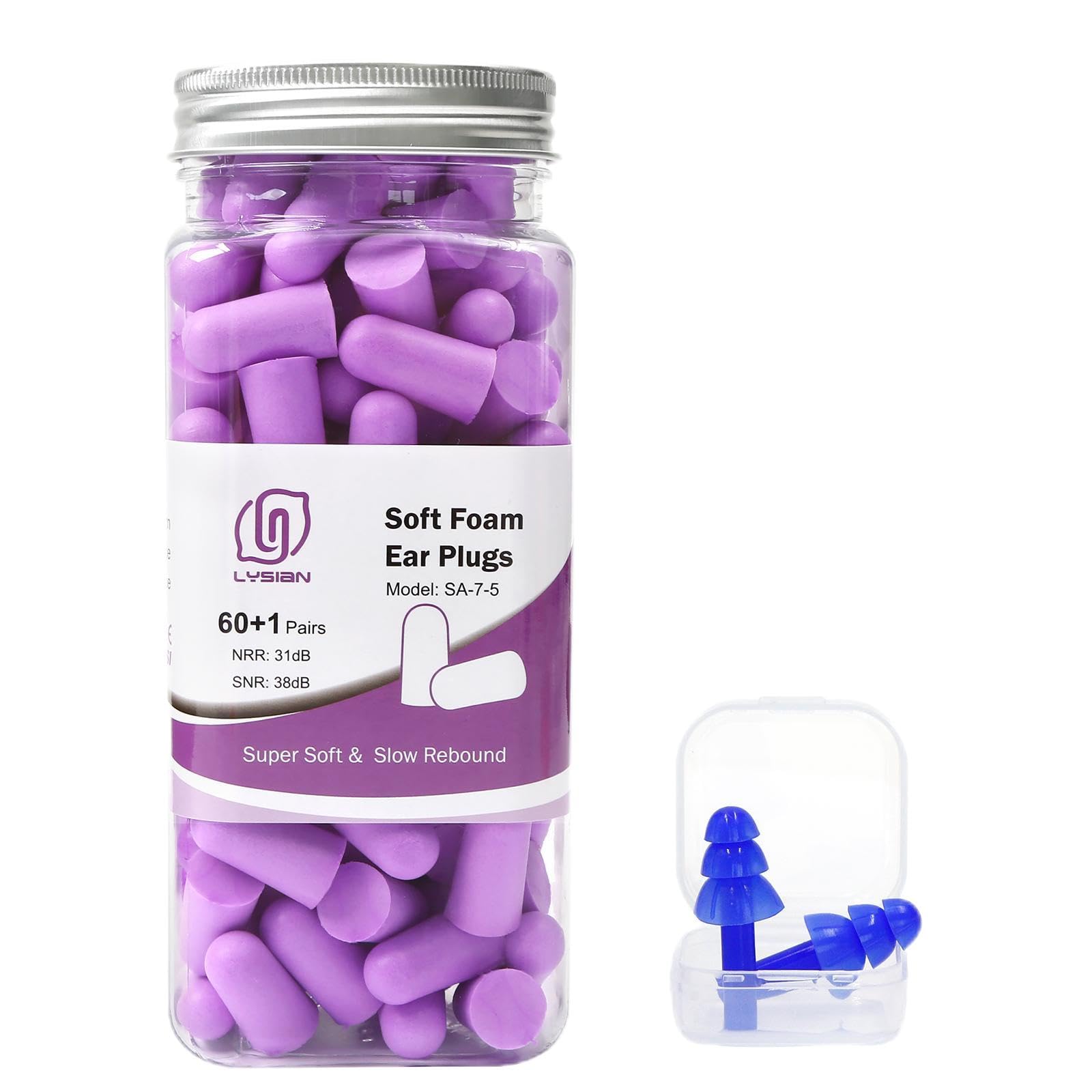
Bulk foam packs deliver genuine value: 60 pairs plus a bonus silicone pair at a budget-friendly price. The foam can be too soft or small for a secure overnight seal, which is why this supply box suits volume users and travel backups better than critical sleepers.
Pros
- Soft, low-profile foam that is easy to wear overnight.
- 60-pair supply with a bonus silicone pair at a budget price.
Cons
- Noise-blocking can vary enough that some sleepers hear almost everything.
Our verdict This is a sensible stock-up for travelers, backup supplies, and sleepers who lose earplugs; heavy snorers should choose a higher-NRR foam with a tighter fit.
Check Latest Price 86 /100
Traveler Score Excellent
Key details
- Fit Sizing
- Moldable, trim stems
- Material / Form
- BPA-free silicone
- Noise Reduction
- Not stated
- Quantity / Reuse
- 3 pairs, reusable
Check Details on Amazon
Three BPA-free silicone pairs with cases are a low-risk introduction to reusable earplugs. Comfort and build quality suit first-time reusable users, and the price is friendly. Stems can press into ears when side sleeping unless trimmed, and isolation is moderate for loud environments — a good place to start, not a high-attenuation sleep solution.
Pros
- Soft silicone build keeps first-time reusable users comfortable through the night.
- Individual travel cases make it easy to store and carry.
Cons
- No official noise reduction rating; sleepers must judge fit by trial rather than a decibel figure.
Our verdict A low-cost way to test reusable silicone before stepping up to a higher-attenuation sleep plug.
Check Latest Price 84 /100
Traveler Score Excellent
Key details
- Fit Sizing
- 4 ear tip sizes
- Material / Form
- Flexible silicone
- Noise Reduction
- 24 dB SNR
- Quantity / Reuse
- 1 pair + 4 tips
Check Details on Amazon
The Loop Quiet 2 is a 24 dB SNR reusable plug with four ear tip sizes and a carry case, and the flexible silicone shell stays comfortable for light sleepers in moderate noise. The rigid outer loop can press into the ear when side sleeping, so this design fits back sleepers, travelers, and commuters better than committed side sleepers.
Pros
- Lightweight low-profile shell with four ear tip sizes fits a range of ear shapes.
- Preserves sleep in moderate noise without the bulk of foam.
Cons
- Heavy snoring can remain audible through the seal.
Our verdict Fits the commuter or light sleeper in moderate noise who wants a low-profile reusable plug with multiple tip sizes and a carry case.
Check Latest Price 90 /100
Traveler Score Outstanding
Key details
- Fit Sizing
- One-size moldable
- Material / Form
- Soft silicone
- Noise Reduction
- No official NRR
- Quantity / Reuse
- 8 pairs, reusable
Check Details on Amazon
The VoMii pack gives you eight silicone earplug pairs with cases at a budget-friendly price — a natural backup or travel stash. Soft silicone and a waterproof build cover swimming and lighter sleep noise, but with no official NRR, fit is less predictable.
Pros
- Eight reusable pairs with individual cases make backups easy to stash in bags and swim kits.
- Soft silicone and a waterproof build handle swimming and lighter sleep noise for a small outlay.
Cons
- Water seal can loosen for certain ear shapes, letting leakage in.
Our verdict For travel backups and spare pairs, this eight-pack is cost-effective; heavy snoring calls for a higher-attenuation foam instead.
Check Latest Price 87 /100
Traveler Score Excellent
Key details
- Fit Sizing
- One-size moldable
- Material / Form
- Organic silicone
- Noise Reduction
- 32 dB NRR
- Quantity / Reuse
- 8 pairs, reusable
Check Details on Amazon
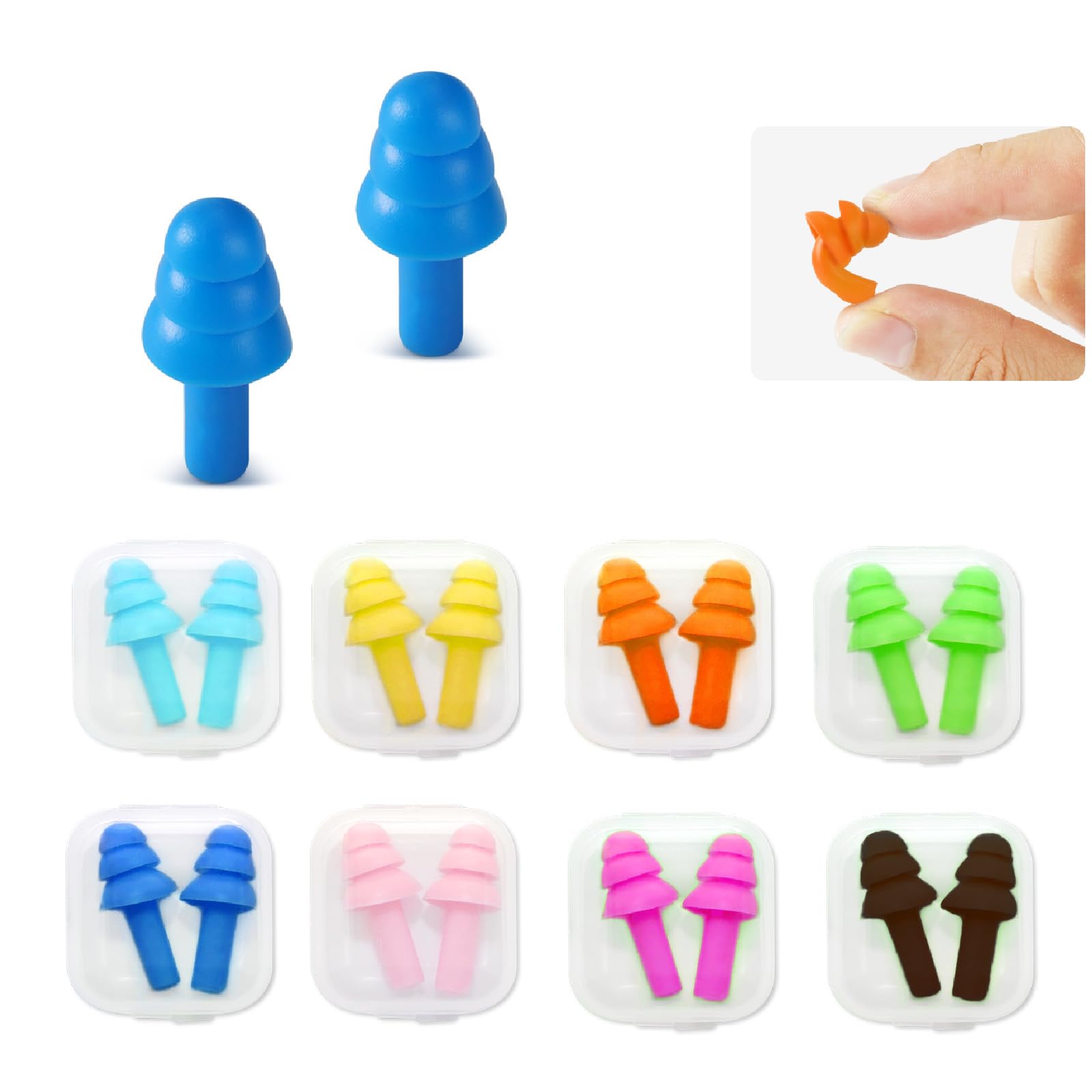
Eight color-coded pairs come with individual cases and a claimed 32 dB NRR, so this budget multi-pack suits travelers dealing with light-to-moderate noise. The silicone is soft, but fit isn't consistent: some ears find it too soft or prone to fallout, which keeps it below the strongest sleep picks for side sleepers.
Pros
- Effective for light-to-moderate noise once the plug forms a good seal.
- Eight color-coded pairs with individual cases provide good value.
Cons
- Noise blocking varies by ear shape, so heavier snoring can get through.
Our verdict For travelers who want a low-cost color-coded spare set and face only light-to-moderate noise, this multi-pack works. Heavy snorers and pressure-sensitive side sleepers should keep looking.
Check Latest Price 89 /100
Traveler Score Excellent
Key details
- Fit Sizing
- Standard, larger fit
- Material / Form
- Non-latex foam
- Noise Reduction
- 32 dB NRR
- Quantity / Reuse
- 50 pairs, 3 uses
Check Details on Amazon
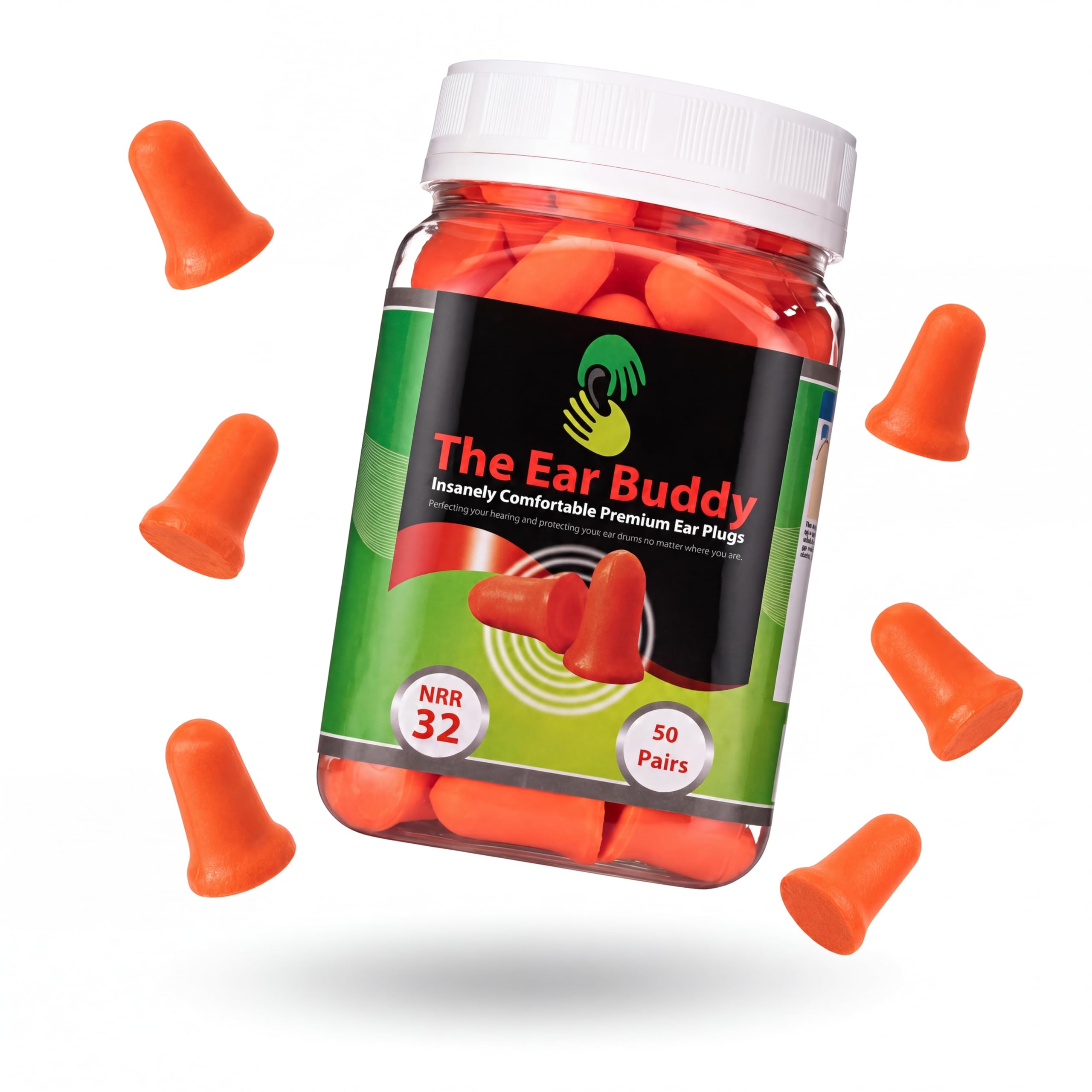
Soft, squishy 32 dB NRR non-latex foam blocks snoring and ambient noise well, and the 50-pair jar suits regular overnight use. The large foam body gives side sleepers with average or bigger canals a plush seal, but not every ear shape suits it. The upfront cost is higher than the leading 50-pair foam jars, making this a comfort-first buy rather than a per-pair value play.
Pros
- Absorbs snoring and ambient noise well for sleep, travel, and work.
- Ultra-soft compression keeps ear pressure low, a comfort advantage for side sleepers.
Cons
- The large plug can loosen overnight for sleepers who move around during the night.