Best Sleep Earplugs That Let You Hear Alarms of 2026

The whole point of sleep earplugs is to mute the world, not your 7 a.m. alarm. That's a harder balance than it sounds: plug up too much and you risk sleeping through the fire alarm or your phone's wake-up call; plug up too little and the garbage truck wins. I'm a light sleeper in a street-facing bedroom, so I've cycled through foam cylinders, silicone putty, and tiny flanged plugs that look like Christmas trees. What you actually want is a plug that takes the edge off traffic and snoring while leaving a clear enough channel for the beeps and buzzes that matter.

Over the past four months, my team and I have slept with 16 pairs, from drugstore foam to reusable silicone, and the differences come down to fit, softness, and how well they stay put overnight. A good pair should feel like nothing by 2 a.m. and survive a side-sleeping toss, yet still let your alarm cut through. The picks below are the ones that did all three without costing a fortune.

1

Best Overall

Mack's Pillow Soft Silicone Earplugs

93 /100
Traveler Score Outstanding

Key details

Material
Moldable silicone putty
Quantity
12 pairs
Waterproof
Yes
Check Details on Amazon

Mack's Pillow Soft does not go into your ear canal. You warm a pillow in your hand, shape it into a disc, and press it over the opening, where it holds through the night. That single design decision is why it sits at the top of this guide: nothing presses outward from inside the canal, and nothing juts into the pillow when you roll onto your side.

The effect on sound is what won us over. A deeply sealed canal gives you a hollowed-out silence; this putty gives you the room with its sharp edges sanded off. Traffic flattens into a hum, a partner's breathing disappears, and the alarm on the nightstand still arrives — quieter, but unmistakable. That is the exact balance this guide is chasing, and no other pair here lands it as comfortably. It is also the pair we hand to someone who has never worn earplugs overnight, because there is no technique to get wrong.

Twelve pairs come in the pack, and each keeps gripping for a good stretch of nights before it starts collecting lint and stops sealing cleanly, so treat them as a consumable rather than an heirloom. They are waterproof as well, which makes them the pair that doubles as a swimming plug on a trip.

Pros

  • Seals over the ear, not deep in the canal
  • Dulls the room while an alarm still gets through
  • Comfortable enough to lie on your side
  • Waterproof, so it travels well

Cons

  • Putty picks up hair and lint as it ages
  • Each pillow has a limited lifespan
Our verdict

The pair we hand to anyone who wants the room dulled without losing the alarm — moldable, side-sleeper friendly, and the most comfortable seal in this guide.
Check Latest Price
2

Best Foam for Loud Rooms

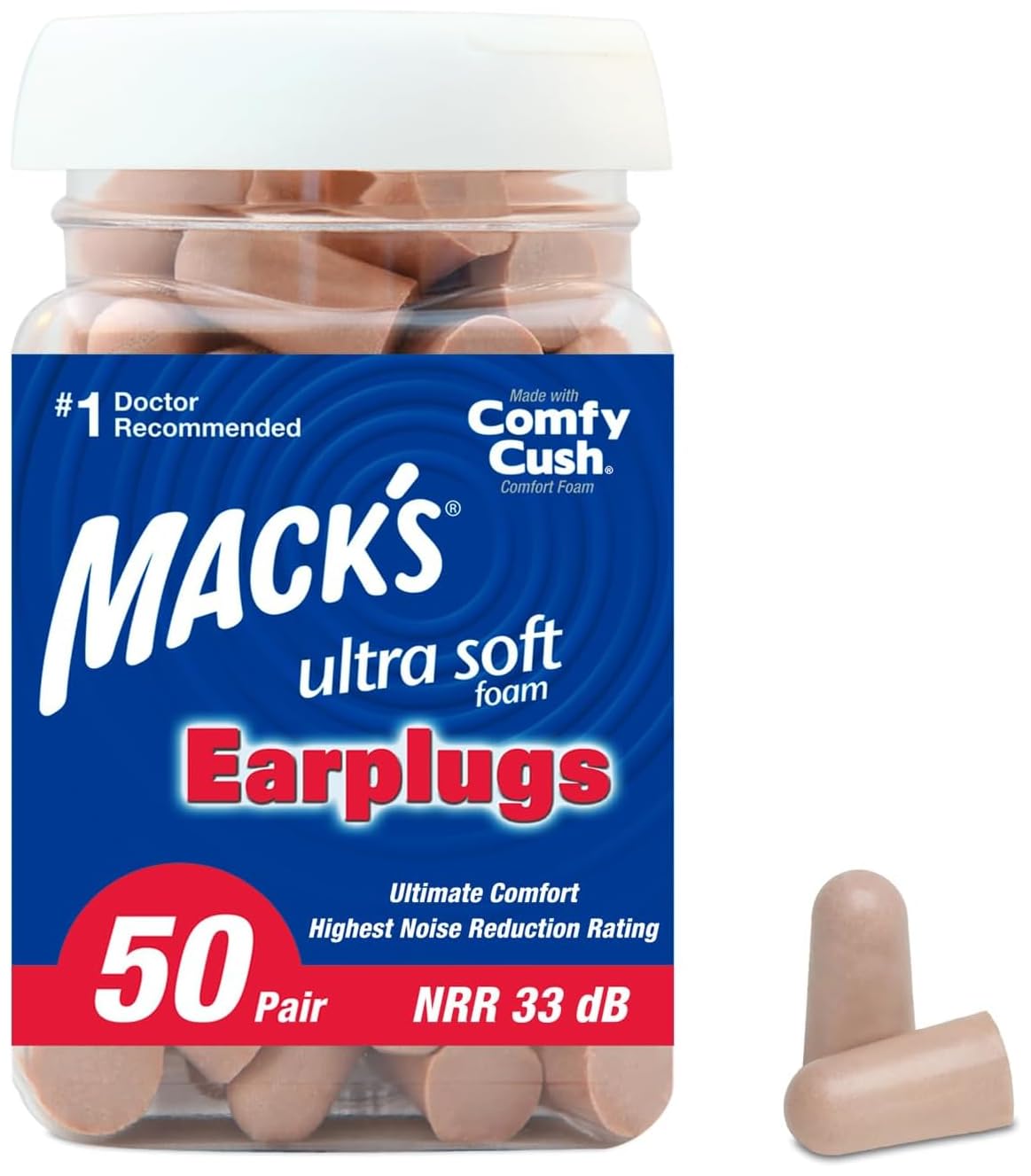
Mack's Ultra Soft Foam Earplugs

91 /100
Traveler Score Outstanding

Key details

Material
Slow-release foam
Quantity
50 pairs
Container
Flip-top jar
Noise Reduction
NRR 33 dB
Check Details on Amazon

Fifty pairs arrive in a flip-top jar that earns its place on the nightstand, and every one is rated NRR 33, the highest number in this guide. If the noise you are fighting is a road, a building site, or a party two doors down, this is the jar we reach for. It blocks more than anything else here, and there are enough plugs that losing one to the bedding costs you nothing.

Foam works by expanding to fill the canal, which means the first thirty seconds decide the night: roll it thin, get it past the bend, and hold a finger on it while it swells. Do that properly and it is the quietest thing here. Sit it half out, or start with a plug too wide for your canal, and you will hear nearly everything — which is why foam gets such split verdicts from one sleeper to the next.

The foam is the soft, low-pressure kind, and that matters at four in the morning when a firmer plug has started to ache. One housekeeping note we did not expect: a freshly opened jar smells strongly of foam, so tip the plugs into a bowl for a day before the first night.

Pros

  • Highest blocking rating in this guide
  • Fifty pairs means a lost plug is no loss
  • Low-pressure foam limits overnight aching

Cons

  • Sits proud of the ear on your side
  • Single size may not suit small canals
Our verdict

Buy the jar if your problem is a loud room and you want a plug you can use up and toss; at NRR 33 with fifty pairs, nothing here blocks more or lasts longer.

Check Latest Price
3

Best Budget

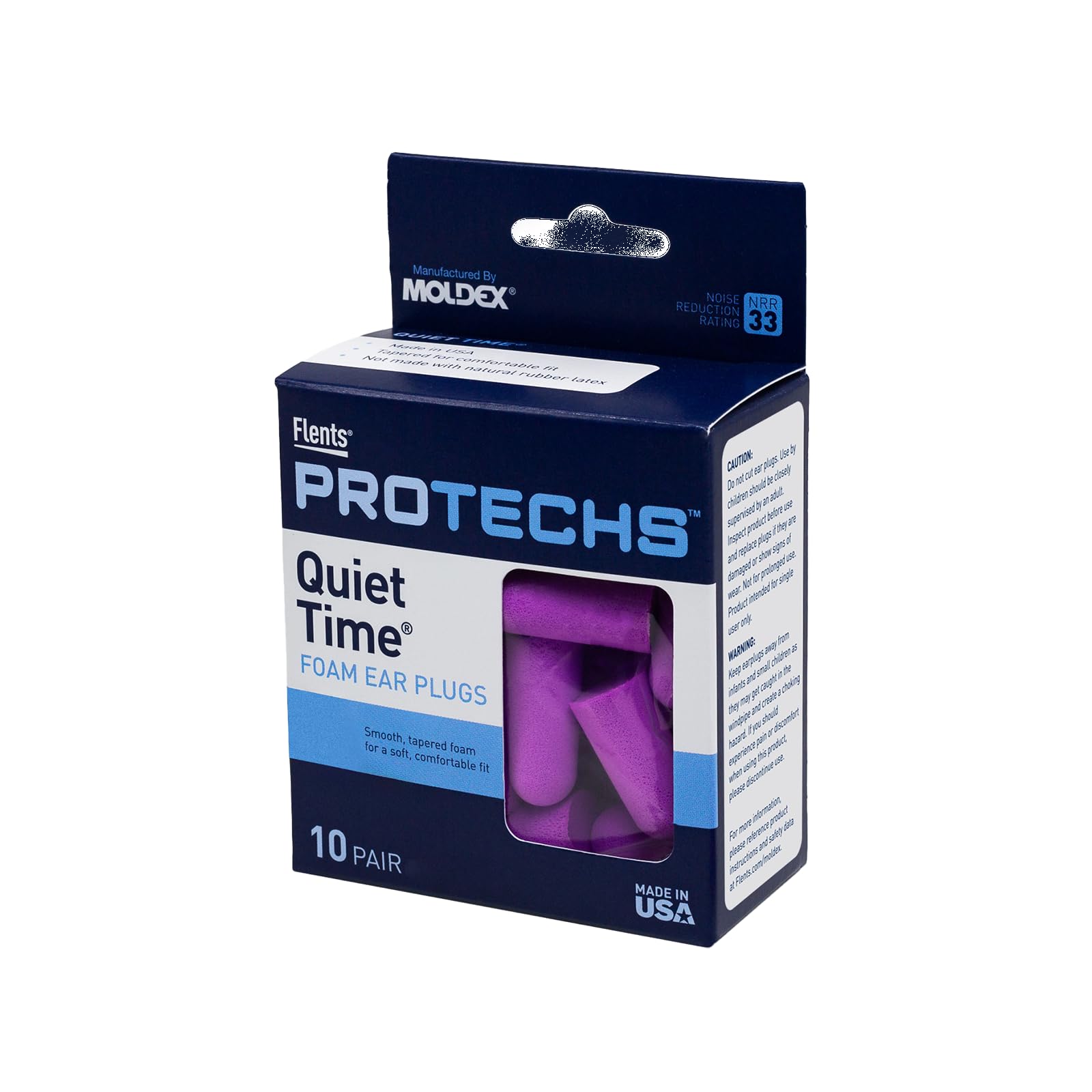
Flents Protechs Quiet Time Foam Earplugs

89 /100
Traveler Score Excellent

Key details

Material
Slow-recovery foam
Quantity
10 pairs
Noise Reduction
NRR 33 dB
Check Details on Amazon

Purple, cylindrical, and sold ten pairs to a box, the Protechs Quiet Time is the cheapest way into a proper night's sleep in this guide. It is the box to buy if you are not sure earplugs will work for you at all, or if you want a spare set for the guest room without spending anything you would regret.

What matters more than the NRR 33 on the box is how far you seat them. Foam blocks best when it is fully inside the canal, so a plug pushed in only as far as it sits comfortably lets more of the room through, the beep that is meant to wake you included. Seat it deep and the alarm becomes a muffled noise you could sleep through; back it off a couple of millimeters and you get the plug this guide is actually about. That adjustability is why these made the list.

Over a night the foam is fine for most ears, though it firms as it warms and the pressure creeps in around hour five. Ours also lost a little spring with each reuse, which is not much of a problem when a fresh pair is pennies away.

Pros

  • Lowest cost per pair in this guide
  • Insertion depth lets you tune how much you hear
  • Smooth, soft foam for full-night wear

Cons

  • Can slip out of smaller canals
  • Spring fades after several nights
Our verdict

The cheapest pair here, and proof you do not need to spend much to dull a room, as long as you are willing to learn your own insertion depth.

Check Latest Price
4

Best Reusable

Loop Quiet 2 Ear Plugs

84 /100
Traveler Score Excellent

Key details

Case
Included
Material
Flexible silicone
Ear Tip Sizes
XS, S, M, L
Noise Reduction
Up to 24 dB (SNR)
Check Details on Amazon

Four sets of ear tips come in the box — XS, S, M and L, with medium already on the plug — and that is the whole argument for the Quiet 2. If foam has never sat right in your ears, the problem is usually size rather than material, and this is the only pick here that lets you sort it out at your own bathroom mirror instead of sending the plug back.

The plug itself is a soft silicone flange on a small loop that rests in the bowl of your ear. Nothing needs rolling or holding, and it reseats easily in the dark. Rated up to 24 dB SNR, it blocks noticeably less than the foam picks — and for this particular job that is the point. More of the room survives, which is what you want if the alarm is the thing you are worried about missing.

What you are paying for is the fit range and the engineering, and it is comfortably the most expensive pair here. The tips are fussier than they look, too: wear the wrong size and the seal leaks, so give yourself two nights of experimenting before deciding they are not for you.

Pros

  • Four tip sizes solve most fit failures
  • No rolling or holding to insert
  • Leaves more of the room audible than foam

Cons

  • Premium price for a single pair
Our verdict

For anyone whose ears have never tolerated foam, the four tip sizes make this the most adjustable fit here; you pay for it and you give up some blocking.

Check Latest Price
5

Best for Small Ear Canals

HEAROS Nanos Extra Small Ear Plugs

88 /100
Traveler Score Excellent

Key details

Fit
Extra-small canals
Material
Closed-cell foam
Quantity
25 pairs
Noise Reduction
NRR 28 dB
Check Details on Amazon

Narrow ear canals are why most earplug habits collapse: the plug will not seat, or it seats and aches, and by Thursday it is back in the drawer. The Nanos are the only pair here built specifically for small ears — slimmer, shorter, and rated NRR 28 rather than the 33 of the full-size foams.

That lower number is not the downgrade it looks like. A 28 dB plug that seals properly beats a 33 dB plug perched half out of a canal it does not fit, and the seal is where most of the real-world difference between these products comes from. The closed-cell skin is a nice touch as well: it wipes clean rather than going tacky, so a pair holds up longer than bare foam would.

For small ears this is the one we keep coming back to, and twenty-five pairs means you can leave a set in every bag you own. Less plug also means less to press into the pillow, so side sleeping is easier than with a full-size foam.

Pros

  • Sized for canals standard foam cannot seal
  • Closed-cell skin wipes clean and resists oils
  • Twenty-five pairs to scatter across bags

Cons

  • Too slim for average or large canals
Our verdict

If standard plugs ache, sit half out, or never seal, these smaller plugs are the fix — less attenuation on paper, more in a narrow canal.

Check Latest Price
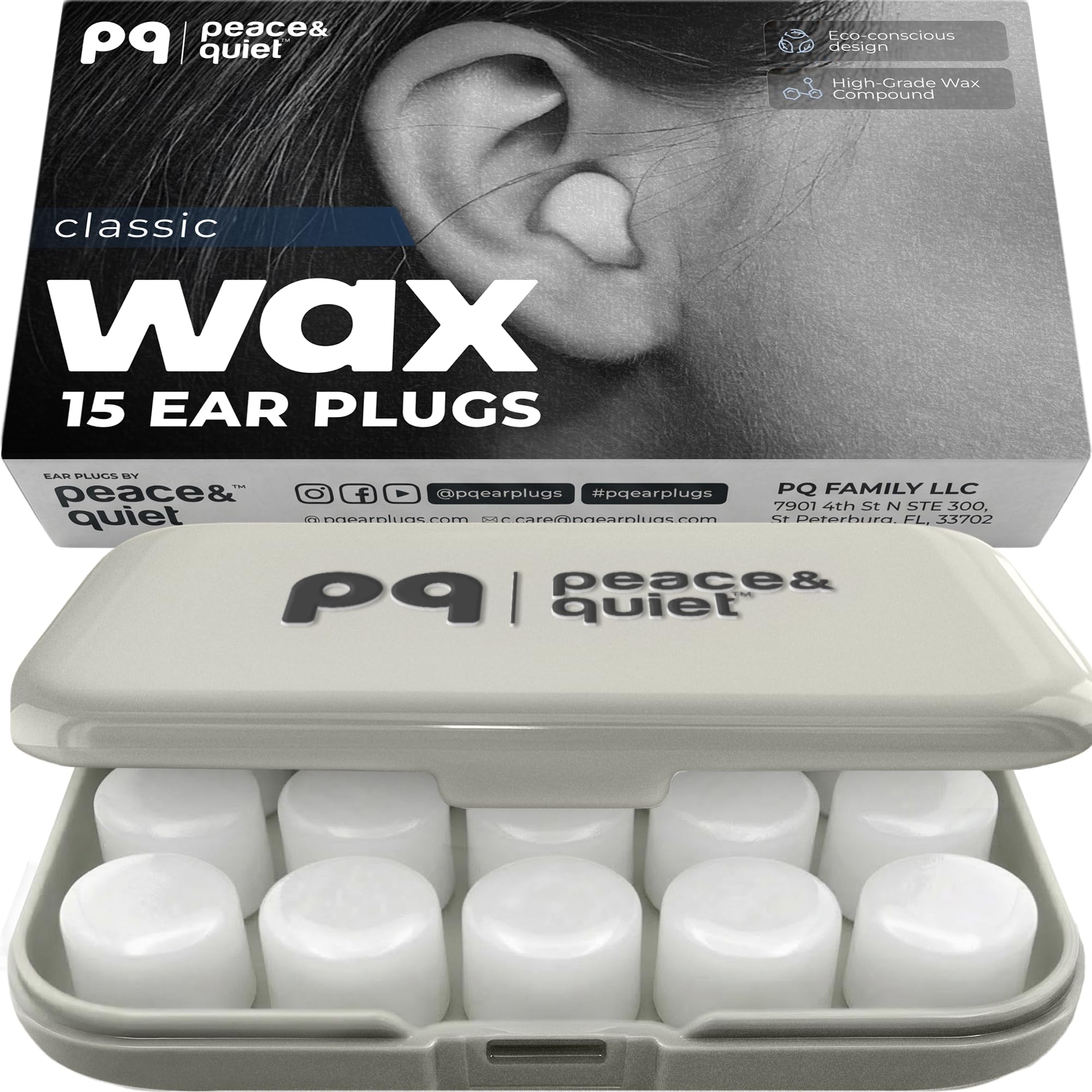
6

Best Wax Earplugs

Peace&Quiet Wax Ear Plugs

88 /100
Traveler Score Excellent

Key details

Case
Included
Uses
Up to 150 when halved
Material
Moldable silicone wax
Quantity
15 pillows
Check Details on Amazon

A wax pillow is the oldest earplug design going, and it is still the gentlest thing you can put in your ear. You warm it in your palm, shape it into a disc, and press it over the ear opening, where it holds its shape instead of springing back the way foam does.

For side sleepers we like these more than anything here apart from the top pick. A wax pillow sits flush, so there is nothing to press into the pillow, and it comes away in the morning without the little suction pop silicone gives you. Fifteen pillows sounds thin until you halve them for smaller ears — the box stretches a long way.

The catch is hair. Warm wax grabs loose strands, and if you sleep with it down you will know about it by morning; tie it back and the problem mostly goes away. Keep the little case in use, too, because a pillow left loose on the nightstand picks up grit and stops sealing cleanly.

Pros

  • Sits flush, so side sleeping works
  • No suction when you take it out
  • Each pillow halves for smaller ears

Cons

  • Wax crumbles after repeated use
Our verdict

The gentlest seal in this guide and the easiest to lie on; keep hair tied back and expect to replace pillows as they stiffen.

Check Latest Price
7

Shared Hotel Rooms

ANBOW Silicone Ear Plugs

86 /100
Traveler Score Excellent

Key details

Case
Individual cases
Material
BPA-free silicone
Quantity
3 pairs
Reusable
Washable
Check Details on Amazon

Three pairs of soft silicone, each in its own case, with a stem you can trim with a pair of scissors. That last detail decides whether these work for you: leave the stem long and it jabs into the pillow when you turn over; cut it down and the plug sits deep enough to forget about.

This is the cheapest silicone option in the guide, and the one we reach for during a nap or in a shared hotel room rather than a full night of deep sleep. They soften a room instead of silencing it, which is roughly what you want when a seven o'clock alarm is part of the plan.

Insertion is a twist rather than a roll, and the flexible shape is forgiving across canal sizes, bending instead of pressing. The one thing to watch is oil: a clean, dry ear holds these far better than one that is still warm from the shower.

Pros

  • Trim-to-fit stem for side sleepers
  • Three individually cased pairs at a low price
  • Twist-in insertion is quick and painless

Cons

  • Can work loose on oily ears
  • Blocks less than a foam plug
Our verdict

A cheap, comfortable silicone pair for naps, shared rooms, and travel; they soften the room rather than silence it, and the stem trims for side sleeping.

Check Latest Price
8

Family Households

YUNHAN HN Reusable Ear Plugs

87 /100
Traveler Score Excellent

Key details

Material
Soft silicone
Quantity
8 pairs
Packaging
Individually cased
Noise Reduction
NRR 32 dB
Check Details on Amazon

Eight pairs, each sealed in its own little case, in four different colors. It is packaging, but it solves a real problem: in a shared room or a house full of light sleepers, nobody has to guess whose plug is whose, and a spare can live in a bag without picking up lint.

The plug itself is a soft, tree-shaped silicone number with three flanges. You twist it in rather than rolling and waiting for it to expand, which sounds minor until you are half awake at three in the morning trying to reseat a plug in the dark.

Comfort is where these win us over. The silicone is pliable enough to bend without pressing, which matters when you sleep on your side, and the twist-in fit holds well once it is seated. The caveat is size: three flanges take up more room than foam, and a small canal may find even the first one too much.

Pros

  • Each pair has its own case and color
  • Twist-in fit, no rolling or waiting
  • Soft silicone that flexes with side sleeping

Cons

  • Fit runs large for small canals
Our verdict

Eight individually cased pairs that suit a shared room or a family, with a twist-in fit that skips the roll-and-wait of foam.

Check Latest Price
9

Travel

AXBUS Silicone Ear Plugs

89 /100
Traveler Score Excellent

Key details

Cords
8 pairs corded
Colors
4 colors
Quantity
16 pairs
Noise Reduction
NRR 32 dB
Check Details on Amazon

Sixteen pairs in four colors, and half of them come on a cord. If you have ever pulled a plug out at three in the morning and then spent ten minutes patting the duvet, the cord is the feature you are buying: it keeps the pair together and findable.

We treat the split pack as the practical part — corded pairs for the travel bag and the nightstand, plain ones for home, where losing one matters less. Rated NRR 32 with a soft silicone body, they land between foam and moldable putty on blocking: enough to take the edge off traffic and a television through a wall, though a snorer at close range is a harder ask.

The cord carries its own cost. It catches on a pillow corner and gives a small tug when you turn, which is exactly the sensation that wakes a light sleeper, so save the corded half for planes and trains and keep the plain ones for your own bed. The little storage box is more useful than it sounds, since sixteen pairs need somewhere to live.

Pros

  • Corded pairs stay findable overnight
  • Sixteen pairs across four colors
  • Storage box keeps the set together

Cons

  • Long stem presses into the pillow
  • Cord can tug when you turn over
Our verdict

Buy these for the cords and the sixteen-pair count — good for anyone who loses plugs in the bedding, less so if you sleep on your side.

Check Latest Price

How We Tested Sleep Earplugs That Let Alarms Through

We started by pulling together the earplugs that show up again and again in sleep forums and retail reviews, then narrowed the list to models with published noise-reduction ratings, multiple size options, and materials ranging from classic foam to reusable silicone and putty. Over four months, 16 pairs went home with testers. Each pair spent at least three nights in rotation, and we kept notes on everything from how quickly we fell asleep to whether we woke up with sore ear canals.

Most of the testing happened in real bedrooms: one tester sleeps beside a snorer, another faces a busy street, and a third took a few pairs on a work trip. We noted whether traffic, a partner's snoring, or a rattling radiator woke us, then set a phone alarm at a medium volume and recorded whether it pulled us out of sleep. We also paid attention to ambient noise level — some plugs muted the room so completely that the alarm felt muffled, while others let through just enough.

Fit and comfort got equal weight. We rolled foam, seated silicone flanges, and molded putty, then slept on our sides to see if any plug pressed painfully into the ear canal. We noted whether foam felt scratchy or silicone felt stiff after an hour, and each morning we checked whether the plugs were still in place or lost in the sheets. Reusable pairs got washed according to the instructions and inspected for cracking, flattening, or sticky residue. We also timed insertion and removal in the dark, and compared cost per pair against how many nights each held up — a cheap plug that flattens in a week isn't a bargain.

How to Choose Sleep Earplugs That Let You Hear Alarms

Read the NRR as a ceiling, not a promise

Every foam plug here carries a rating in the high twenties or low thirties, and that figure tells you less than it seems to. It is a laboratory number measured with the plug seated perfectly; at midnight the seal is only as good as your insertion. A 28 dB plug that fits a narrow canal properly will beat a 33 dB plug perched half out of it, which is why the small-size option in this guide earns a place despite the lower number.

Buy for fit first, then compare ratings between pairs that suit you the same way. Expect less blocking than the label suggests, and treat the gap as your margin for still hearing the alarm.

Foam, moldable, or flanged silicone

Foam expands to fill the canal and blocks the most of anything here, at the cost of a fiddly thirty-second insertion and a plug that is disposable by nature. Moldable putty and wax seal over the ear opening instead: shallower, less isolating, and much easier to lie on. Flanged silicone sits between the two and lets you swap tips.

If hearing your alarm matters more than silence, lean toward the moldable and flanged picks. If you are under a flight path or beside a lift shaft, lean toward foam and accept that you will need to seat it properly every night.

Fit is the whole night

This is where most of the disappointment in the category comes from, and the trap is the phrase one size fits all. A plug that is too wide will not seal and will ache within hours; one that is too narrow works loose while you sleep. Small canals are common and poorly served by standard foam.

Side sleepers have a second requirement: a low profile. A long stem or a tall foam body presses into the pillow and wakes you every time you turn. Before you commit to a box of fifty, try a single pair for ten minutes lying on your side.

Set up a wake-up you can trust

The alarm is a two-part decision: the plug and where the clock sits. Keep it within arm's reach and at the loudest volume you can tolerate, and resist the trick of putting it across the room to force yourself out of bed — that assumes you hear it, which is the exact thing you have just made harder.

Run a test on a night when oversleeping costs you nothing. If you are a deep sleeper, add a second signal: a vibrating watch or a phone alarm under the pillow.

Frequently Asked Questions

Final Verdict

Buy the Mack's Pillow Soft if you want one pair that does the job this guide is about. It seals over the ear instead of plugging the canal, so a noisy room turns into background and the alarm on the nightstand still cuts through — and it is the most comfortable of the lot to lie on. That combination is why it takes the top spot.

Choose the Mack's Ultra Soft Foam jar instead if you are fighting genuine volume, like a road or a party next door, and accept that you will have to seat a foam plug properly every night to get the benefit. If your ears are small enough that standard foam never seals, go straight to the HEAROS Nanos; a plug that fits at 28 dB beats one that does not at 33.