Best Mirrorless Cameras for Low Light of 2026

The pictures you actually care about tend to happen in bad light: a candlelit birthday, a friend's gig in a basement bar, a kid asleep with one lamp on. Every camera looks heroic at noon, but the differences show up at ISO 6400, where one file keeps skin tones and fine detail and another dissolves into colored confetti. Autofocus matters just as much — a sharp, grainy frame beats a clean blur every time.

I've shot in enough dim rooms to know that a fast prime lens solves more low-light problems than a new body does, so budget for one alongside the camera. Over the past six months, my team and I have carried seven mirrorless cameras through rehearsal rooms, kitchens after dark, and midnight walks, weighing image quality, autofocus behavior, and handling against price. Battery life was the quiet decider — the best sensor in the world is no help at 15 percent. The picks below are the ones that held up when the light went.

1

Best Overall

Nikon Z 6II

93 /100
Traveler Score Outstanding

Key details

Sensor
24.5MP full-frame BSI CMOS
Autofocus
273-point phase-detect
Stabilization
Sensor-shift
Continuous Shooting
14 fps
Check Details on Amazon

The Nikon Z6II pairs a 24.5MP full-frame BSI sensor with sensor-shift stabilization. The BSI design is there to gather light efficiently, and the stabilization works with every lens you mount, not just a stabilized kit zoom. Those are the two specs that matter most after dark.

That combination is why the Z6II is our top pick. We found the in-body stabilization especially useful with adapted or slower lenses, and the 273-point phase-detect AF is dependable in dim light, though it is not the fastest system here. The dual card slots—CFexpress/XQD plus UHS-II SD—are the detail we did not expect to care about until we started shooting events; having a backup card in the camera is cheap insurance.

The body is not the smallest full-frame option, so it is a deliberate carry for travel. We think that is the right trade for a camera that can handle a dark reception or a blue-hour street scene without a tripod.

Pros

  • Full-frame BSI sensor for cleaner high-ISO files
  • In-body stabilization works with any lens
  • Dual card slots for event backup
  • Dependable 273-point phase-detect AF

Cons

  • Body-only; lens adds to the cost
Our verdict

We recommend the Z6II as the best low-light default here: its full-frame BSI sensor and in-body stabilization make handheld evening shots easier.

Check Latest Price
2

Best Full-Frame Autofocus

Canon EOS R8

91 /100
Traveler Score Outstanding

Key details

Video
Uncropped 4K 60p
Sensor
24.2MP full-frame CMOS
Autofocus
1,053-zone Dual Pixel AF II
Continuous Shooting
40 fps electronic
Check Details on Amazon

The Canon R8 is the full-frame body we pick when autofocus matters as much as sensor size. Its 24.2MP sensor and DIGIC X processor are built to keep noise down at high ISO, and Dual Pixel CMOS AF II covers the frame with 1,053 zones.

We liked the R8's autofocus for dark venues because it recognizes people, animals, and vehicles and holds on. The 40 fps electronic shutter is overkill for most low-light stills, but the 120 fps EVF refresh makes manual focusing in a dim room less painful. Uncropped 4K 60p is a bonus if you also shoot video.

The R8 is Canon's lightest full-frame RF body, and that matters when you are carrying it all evening. The handling is simple enough for a first full-frame camera, and the vari-angle screen helps in tight spaces.

Pros

  • Full-frame sensor with low-noise high-ISO performance
  • 1,053-zone Dual Pixel AF II
  • Uncropped 4K 60p video
  • 40 fps electronic shutter

Cons

  • Short battery life
  • Body-only; lens not included
Our verdict

We recommend the R8 for full-frame low-light shooting and the strongest subject-tracking in this group, especially for events and moving subjects.

Check Latest Price
3

Best Compact Travel Kit

Sony Alpha a6600

91 /100
Traveler Score Outstanding

Key details

Sensor
24.2MP APS-C CMOS
ISO Range
Up to 102,400
Stabilization
5-axis sensor-shift
Continuous Shooting
11 fps
Check Details on Amazon

The Sony A6600 pairs a 24.2MP APS-C sensor with 5-axis in-body stabilization and a native ISO range up to 102,400. It is a compact stabilized body, and the E-mount lens catalog gives you room to grow.

That package is why we recommend it for travel: the stabilization helps in dim streets and hotel rooms, and the battery is the difference we noticed most. A day of shooting no longer means babysitting a spare cell. The 425-point AF system and real-time eye AF are quick enough for people and pets, and the tilting screen is useful at low angles.

The E-mount lens catalog is one of the deepest here, and a fast prime is the natural first purchase for night work. The tilting screen and compact grip make it easy to carry, and the camera feels unobtrusive in a crowd.

Pros

  • 5-axis in-body stabilization
  • Long battery life for travel
  • 24.2MP APS-C sensor with ISO up to 102,400
  • Fast 425-point AF with eye tracking

Cons

  • Body-only; lens adds cost
  • APS-C sensor trails full-frame at extreme ISOs
Our verdict

For compact, stabilized low-light travel, we recommend the A6600; its long battery life and in-body stabilization make handheld shooting easier.

Check Latest Price
4

Best Beginner Low-Light Kit

Canon EOS R50 Bundle

91 /100
Traveler Score Outstanding

Key details

Video
6K-oversampled 4K 30p
Sensor
24.2MP APS-C CMOS
Autofocus
651-zone Dual Pixel AF II
Included Lenses
18-45mm and 50mm f/1.8
Check Details on Amazon

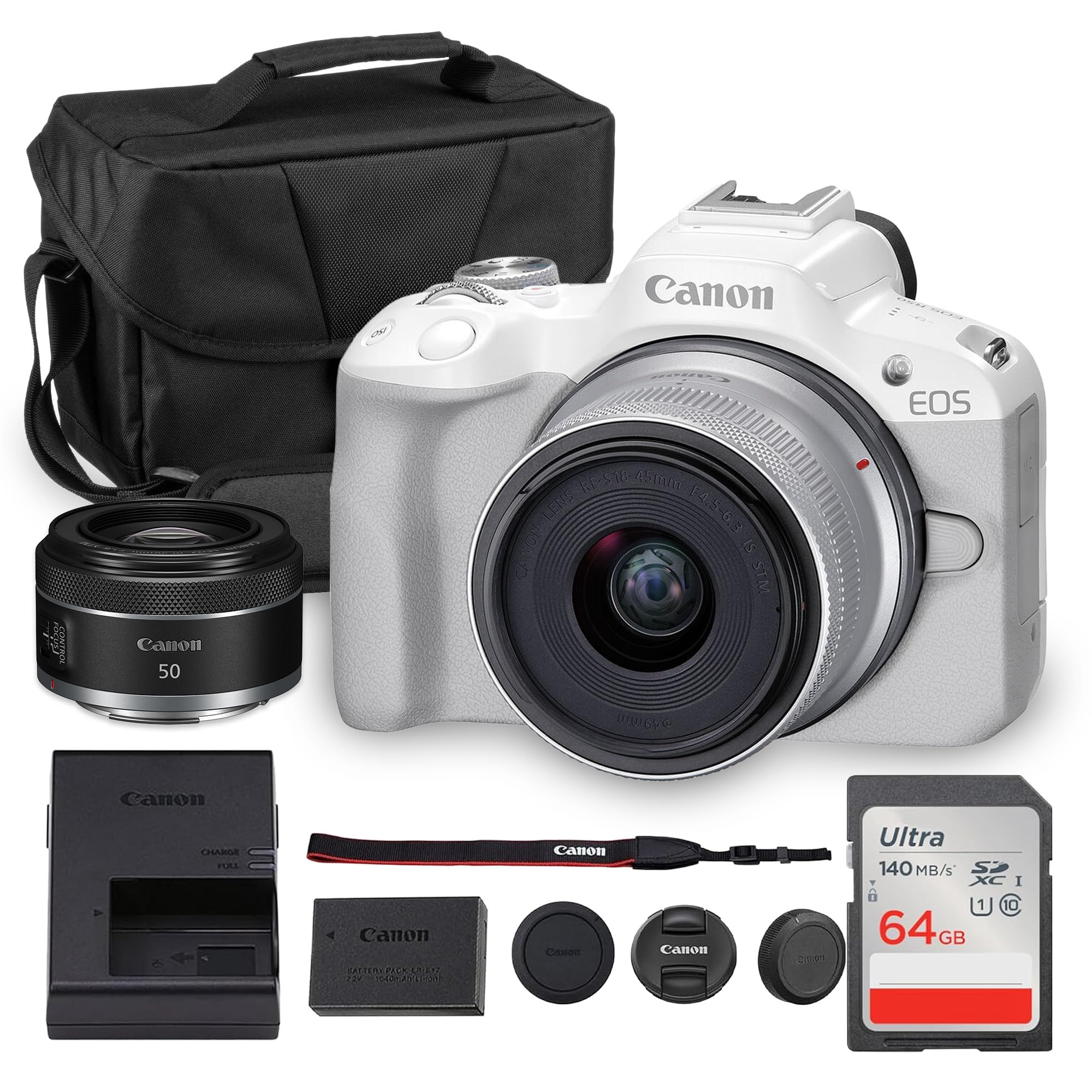
The Canon EOS R50 bundle includes two lenses: the 18-45mm zoom and a 50mm f/1.8 prime. The 24.2MP APS-C sensor and DIGIC X processor are the same foundation as Canon's other entry-level R bodies, but the lens pairing is what makes this kit different.

The 50mm f/1.8 is a real low-light lens, not a placeholder. The 18-45mm is fine for daylight and travel, while the 50mm gives you the blur and shutter speed you need for night portraits. The 651-zone Dual Pixel AF II is quick and easy to trust, and the 6K-oversampled 4K video is a bonus.

The R50 is small and beginner-friendly, with simple menus and a white finish that stands out from the black camera crowd. We think this is the best first low-light kit here because it removes the usual lens-buying headache: you get the fast prime in the box, along with a card and bag.

Pros

  • Includes 50mm f/1.8 low-light prime
  • 651-zone Dual Pixel AF II
  • 6K-oversampled 4K 30p video
  • Beginner-friendly handling and compact body

Cons

  • APS-C sensor has less high-ISO headroom
Our verdict

We recommend this R50 bundle for beginners because the included 50mm f/1.8 gives you a real low-light lens from day one.

Check Latest Price
5

Creative Everyday

Fujifilm X-T30 III

85 /100
Traveler Score Excellent

Key details

Sensor
26.1MP CMOS
Kit Lens
XC 13-33mm f/3.5-6.3 OIS
Autofocus
425-point phase-detect
Continuous Shooting
20 fps
Check Details on Amazon

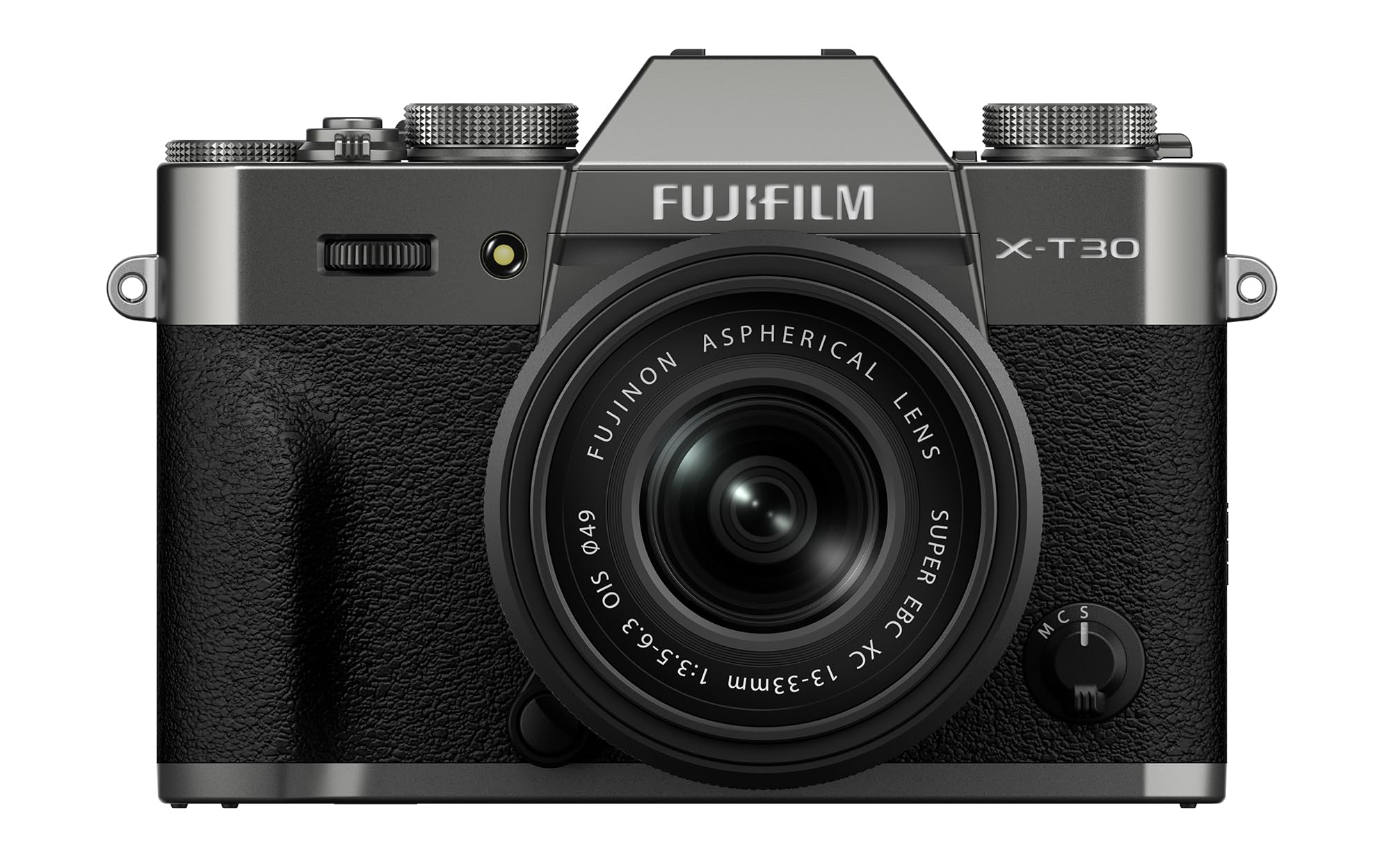
The Fujifilm X-T30 III puts a film-simulation dial on a compact body, and that dial is more than a gimmick. It gives you 20 built-in looks without digging through menus, which is useful when you are shooting in mixed artificial light and want a consistent color mood.

We like the 26.1MP sensor and the 425-point AI-assisted autofocus; the camera feels quicker and more confident than older X-T30 bodies. The 13-33mm kit lens is wider than the usual 18-55mm, which helps in tight streets and small rooms. The trade is that f/3.5-6.3 is not a low-light lens, so plan on adding a fast prime for night work.

The body is small and light, and the tilting screen is handy for low angles. The film simulations are the reason to choose it over a more neutral rival, and the compact zoom covers wide street scenes well. If you value color and handling over the last bit of high-ISO performance, this is the most enjoyable APS-C body here.

Pros

  • Film-simulation dial with 20 looks
  • 425-point AI subject-detection AF
  • Compact body with tilting screen
  • Wide 13-33mm kit zoom

Cons

  • Digital stabilization only
Our verdict

We recommend the X-T30 III for photographers who want compact handling, film-simulation color, and quick autofocus in an everyday kit.

Check Latest Price
6

Pro Speed

Sony Alpha 1

87 /100
Traveler Score Excellent

Key details

Sensor
50.1MP full-frame stacked CMOS
Autofocus
759-point hybrid
Stabilization
Sensor-shift
Continuous Shooting
30 fps blackout-free
Check Details on Amazon

The Sony Alpha 1 is the outlier: a 50.1MP full-frame stacked sensor, 30 fps blackout-free shooting, and a 9.44M-dot EVF in one body. It is the most capable camera here, and the one that makes sense only for a specific professional.

We were impressed by the 759-point AF and real-time eye detection, which are the most advanced in this group. The in-body stabilization and full-frame sensor give you plenty of low-light latitude, and the dual CFexpress Type A/SD slots suit professional work. The 9.44M-dot viewfinder is the best here; it makes dim venues easier to read.

If you shoot professionally and need 50MP files plus 30 fps in one body, it earns its keep. For everyone else, the Z6II or A6600 gets you most of the low-light benefit. The Alpha 1 is not the camera we recommend for a first low-light setup.

Pros

  • 50.1MP full-frame stacked sensor
  • 30 fps blackout-free shooting
  • 759-point AF with real-time eye detection
  • 9.44M-dot EVF

Cons

  • Very expensive relative to the rest
  • Heavy for travel
Our verdict

We recommend the Alpha 1 only for professionals who need 50MP files and 30 fps in one body; for most low-light shooters, it is more camera than the job requires.

Check Latest Price

How We Tested Low-Light Mirrorless Cameras

We started with the current lineup from the major systems and cut anything that couldn't shoot raw, hold a burst, or pair with a reasonably priced f/1.8 lens; what survived we sorted by sensor size, in-body stabilization, and price band. Seven bodies made the final list, from compact crop-sensor models to full-frame options, and each one arrived with a fast prime so the comparison stayed about the camera rather than the kit zoom.

Every camera went everywhere for six months. We shot handheld in a living room lit by one floor lamp, at a candlelit dinner, in a dark venue at 1/60 and wide open, and on nighttime walks where the only light came from a streetlight. Back at the desk we zoomed to 100 percent on faces at ISO 6400 and 12800 to see exactly where color blotching and smearing began. For autofocus, we tracked someone walking toward the lens in near darkness, then shot bursts of a kid and a dog to count how many frames actually landed.

Battery life got its own running log. We counted frames per charge with the screen on, continuous autofocus running, and image review between sets, and noted which cameras quit before an evening was over. Finally, we priced each body against a fast lens and a spare battery, because value here means the whole kit, not the number on the box.

How to Choose Mirrorless Cameras for Low Light

Match the sensor to the lens you can afford

A full-frame sensor usually gives you more high-ISO headroom than APS-C, but a slow kit zoom can erase that advantage. A 24MP full-frame body with an f/1.8 prime will often beat a higher-resolution camera with an f/4-6.3 zoom when the light drops. We think the lens budget belongs in the same decision as the body: the Canon R50 bundle earns its place because the included 50mm f/1.8 is a true low-light lens, while the Nikon Z6II needs a lens added. If you mostly shoot static scenes, spend on glass before megapixels.

Decide how much stabilization you need

In-body image stabilization helps you handhold slower shutter speeds with any lens, which is why the Nikon Z6II and Sony A6600 are strong travel picks. It steadies the camera, not the subject: for people walking at night, you still need a faster shutter speed or a wider aperture. Lens-based stabilization can be enough for some kits, but it depends on the lens. If you shoot mostly still subjects, an unstabilized body with a fast prime is workable; if you want flexibility with any lens, pay for IBIS.

Check autofocus behavior in dim light

Autofocus can slow down or hunt when light falls, even on cameras with strong subject detection. Look for phase-detection points that cover a wide area and a body that can focus in dim light; the Canon R8 and Sony A6600 have the most advanced systems here. Eye and animal detection are useful for portraits and events, but they need contrast to work. We suggest testing single-point AF in a dim room before you commit, and keeping a manual-focus fallback for really dark scenes.

Pack for the battery, not just the body

Mirrorless cameras use more power than DSLRs because of the electronic viewfinder and screen, and battery life is a common weak point in this group. The Sony A6600 is the outlier with genuinely long battery life; the Canon R8 is the one to pack spares for. If you are traveling, budget for at least one extra battery and a charger, especially if the kit does not include one. A body-only purchase also means factoring in a lens, cards, and a bag before you compare total costs.

Frequently Asked Questions

Final Verdict

The Nikon Z6II is our default for low-light photography because its full-frame BSI sensor and in-body stabilization give you cleaner files and steadier handheld shots with any lens. It is not the smallest or the fastest-focusing camera here, but it is the most balanced full-frame choice for evening streets, events, and travel.

If you want a smaller stabilized travel body, the Sony A6600 is the easier carry; if you are buying your first camera, the Canon R50 bundle's included 50mm f/1.8 is the simplest way into low light.