Best Men's Hiking Shoes for Flat Feet of 2026

Flat feet and hiking trails have a long, uncomfortable history: an arch that feels fine on carpet can start burning halfway up a rocky incline, and a shoe that feels snug in the store can let your heel slide downhill. I’ve hiked for years with a low, wide footprint, so I know the fix isn’t simply “more arch support”—it’s a stable platform, a roomy toe box, and cushioning that doesn’t quit after mile four. The right pair makes the trail feel less like a negotiation with your feet.

Over eight months, I hiked and hurried for trains in 12 pairs of men’s hiking shoes built for flat feet. I wore them on gravel, wet roots, muddy switchbacks, and long days with a daypack, then checked how they looked with jeans, how the tread wore, and how the uppers held up after puddles and scuffs. I also noted how easy each pair was to order and exchange, whether the fit ran true, and whether it felt worth the money after real mileage. The picks below kept my arches calm.

1

Best Overall

Merrell Moab 3

93 /100
Traveler Score Outstanding

Key details

Type
Low-cut hiking shoe
Model
J035896
Listed Size And Weight
15 x 10 x 5 inches; 3.06 pounds
Check Details on Amazon

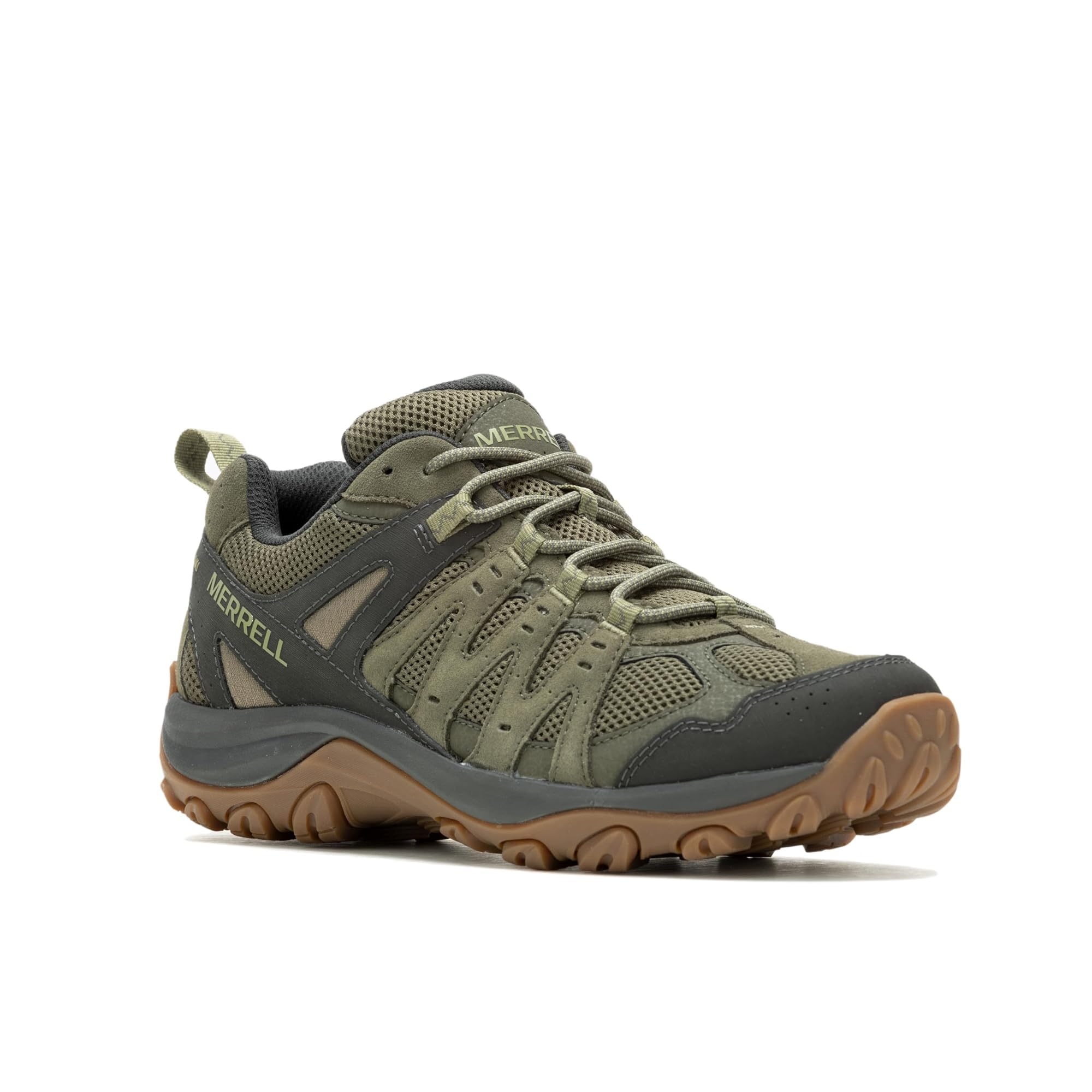
The list of things a flat-footed hiker needs from a shoe is short and hard to satisfy at once: room across the forefoot, a platform that does not wobble underfoot, and cushioning that is still there on the last mile. The Moab 3 is the shoe here that answers all three without asking you to think about it, which is why it is our default. It is also the easiest of these to buy without trying on first, provided you get the size right.

The fit is where it wins people. The toe box is wide but the shoe is not baggy — the midfoot still holds and the heel stays put, which is the combination a low arch needs. Half sizes help more here than they do on most shoes, because the gap between a fit that works and one that cramps the forefoot is often a half size rather than a whole one. There is no break-in to plan a trip around; the shoe is comfortable from the first walk.

Grip is the other place it earns its keep. The tread bites on wet rock and dry dirt alike, and the shoe feels planted rather than tippy when you are picking through roots. The caveat sits at the front, where the rubber toe bumper meets the sole: that joint is the first thing to separate, and once it goes the shoe is finished. It is a wear-out point rather than a daily annoyance, but it is why we do not describe this as a decade shoe.

Off the trail it reads as a walking shoe rather than a piece of gear, so it does not look out of place on the drive home or at dinner — a small thing that matters when you are only packing one pair.

Pros

  • Roomy toe box without a baggy fit
  • Comfortable from the first walk
  • Stable, grippy tread wet or dry
  • Half sizes make fitting easier

Cons

  • Toe bumper and sole edge can separate
Our verdict

For most flat-footed hikers this is the shoe to buy: a roomy toe box, a stable ride, and no break-in, at a price that is fair for how much shoe you get.

Check Latest Price
2

Best Arch Support

KEEN Voyageur Low

88 /100
Traveler Score Excellent

Key details

Model
Voyageur
Upper
Breathable
Height
Low
Check Details on Amazon

The shape is the story with the Voyageur: a toe box that lets the toes spread and a heel that stays narrow and locked. Most wide-fitting hiking shoes are wide everywhere, which is why they feel sloppy on descents. This one is not, and the difference is obvious the first time you point downhill.

That shape is also the best argument here for a low arch. The arch support is pronounced enough to feel like something under the midfoot rather than a flat slab, and the width is real — wide enough for a broad forefoot, not so wide that an average foot swims in it. We rate it as the strongest arch support in this group, and it is the pick for a hiker whose main complaint is that every shoe feels unsupported through the middle.

The sole is where our enthusiasm cools. Separation at the sole edge and peeling at the toe are the failures this model is known for, and they tend to arrive before the upper is anywhere near worn out. If you hike a few times a year, that is a risk worth taking for the support; if you are on trail most weekends, it is the reason to look at the Accentor 3 instead.

Give it a short walk before a long one. The heel counter is the part that takes a day or two to soften, and a rushed first hike is where it makes itself felt.

Pros

  • Most pronounced arch support in this group
  • Wide toe box with a narrow, secure heel
  • Breathable upper for hot-weather hikes

Cons

  • Sole edge and toe peeling show up early
Our verdict

Buy the Voyageur if arch support and a genuinely wide toe box are what you have been missing; just expect the sole to give out before the upper does.

Check Latest Price
3

Best for Everyday Trails

Merrell Accentor 3

87 /100
Traveler Score Excellent

Key details

Type
Low-cut hiking shoe
Closure
Bungee-style laces
Heel Cushioning
Merrell Air Cushion
Check Details on Amazon

The Accentor 3 is the simpler Merrell, and the simplification is the point: bungee-style laces you pull rather than tie, a plainer upper, and a lower price than our top pick without giving up the shape that makes these shoes work for flat feet.

The fit is the part that carries over — a wide toe box, true-to-size length, and a footbed that is noticeably stiffer than the Moab's. That stiffness is a preference rather than a fault. It feels planted on rocky ground and does not squirm under a long stride, but it will not feel plush on pavement, and if you like a soft, springy shoe this is not it.

What earns it a spot is how it wears. This is the Merrell here with the most consistent record on durability, and for a shoe that costs meaningfully less than our top pick, that is the trade we take. The one place it gives ground is water: this is not the waterproof Accentor, and water gets in just above the sole, so wet grass will find your socks. In dry conditions that costs you nothing.

The tread deserves its own mention — an aggressive lug pattern that clears mud and grips rock, and the part of this shoe that most convincingly punches above its price.

Pros

  • Wide toe box with true-to-size length
  • Most consistent durability of the Merrells here
  • Aggressive tread clears mud and grips rock
  • Pull-cord laces go on fast

Cons

  • Water gets in just above the sole
Our verdict

A supportive, wide-fitting trail shoe that outlasts its stablemate for less money — the pick if most of your hiking is dry and you want a firm ride.

Check Latest Price
4

Best Budget

adidas Terrex Anylander

90 /100
Traveler Score Outstanding

Key details

Type
Low-cut hiking shoe
Model
34DC094-OFW
Package Dimensions
13.3 x 8.86 x 5.08 inches; 2.43 pounds
Check Details on Amazon

The Anylander is the least expensive shoe here, and it earns its place on shape rather than price. The toe box is square rather than tapered, so a wide, flat forefoot keeps its full width right to the end of the toes — for a hiker tired of sizing up just to stop his toes from stacking, that is the detail that matters.

adidas got the basics right for the money, too. It fits true to size, it is roomy enough for thick socks, and the outsole has an aggressive tread that digs in on rock and loose dirt. Nothing about the shoe announces how much less it costs.

Underfoot is the gamble. The arch is pronounced enough that it feels like a lot if you are used to a flat footbed, and the cushioning under the ball of the foot runs firm — if you need a specific amount of support through the midfoot, this is not the shoe to order blind. Try it on, or buy it somewhere with an easy return, and let the low price make the experiment cheap.

The heel collar is the one spot that can bite: it rubs the back of the ankle at first, so give it a few short walks before a long one.

Pros

  • Square toe box suits wide, flat forefeet
  • True to size with room for thick socks
  • Aggressive tread grips rock and loose dirt

Cons

  • Water resistant at best, wet grass soaks through
Our verdict

The budget pick, and a good one if your forefoot is the problem: a square toe box that gives wide, flat feet room, with a firm ride to try before you commit.

Check Latest Price
5

Best for Wet Weather

KEEN Targhee 3 Low

88 /100
Traveler Score Excellent

Key details

Type
Low-cut hiking shoe
Waterproofing
Waterproof
Listed Size And Weight
10 x 15 x 6 inches; 2.14 pounds
Check Details on Amazon

The Targhee 3 Low is the waterproof pick here, and it is a real one: a leather upper that keeps rain and snow out, and a sole with enough bite that wet rock is not a gamble.

The fit runs wide — wide enough that a narrow foot will swim — and KEEN also lists wide sizes, which makes this one of the better options here for a broad, flat forefoot. The trade is that the regular width will not suit everyone; if your feet are on the narrow side, the Accentor 3 or the Anylander is the better starting point.

We recommend it for wet climates and shoulder seasons, with one reservation: the sole. Toe caps coming unglued and sole edges peeling are the failures this model is known for, and at this end of the price range that is a real risk rather than a footnote. If most of your hiking is dry and warm, a breathable shoe here is the better buy; if you are regularly on wet ground, the trade is worth it.

It looks like a leather hiking shoe rather than a sneaker, which is worth something if you want one pair that works on the trail and at a casual dinner afterward.

Pros

  • Genuinely waterproof leather upper
  • Wide fit with wide sizes offered
  • Solid tread on wet ground and snow

Cons

  • Toe cap and sole bonding can fail early
Our verdict

Buy it if your trails are wet: a genuinely waterproof leather shoe with a wide fit and solid grip, as long as you accept that the sole may let go first.

Check Latest Price
6

Easy Trails, Travel

Columbia Crestwood

88 /100
Traveler Score Excellent

Key details

Type
Low-cut hiking shoe
Model
Crestwood Waterproof
Waterproofing
Waterproof
Check Details on Amazon

Fit is why the Crestwood is here: it runs true to size and it is wide in the way buyers hope for and rarely get, with room across the forefoot rather than just extra length. It is light for a shoe with a waterproof membrane, and the tread handles mud and gravel without much drama.

Our read is that it is a very good walking and light-trail shoe that happens to be waterproof, not a wet-weather hiking shoe that happens to be comfortable. The difference shows up over a long wet day, and it is why we stop short of recommending it for an all-day soaking. For day walks, travel and the occasional muddy path, it does the job and asks very little of you, and it is easy to wear on pavement, which is why it tends to become the travel pair.

It earns a place in winter too, where the tread holds on packed snow better than most low-cut hikers manage.

Pros

  • True to size and genuinely wide
  • Light for a waterproof shoe
  • Tread handles mud, gravel and snow

Cons

  • Waterproofing can let go above the sole
Our verdict

A wide, light, waterproof shoe for easy trails and everyday wear — good value if your hiking is day walks and travel rather than all-day wet weather.

Check Latest Price

How We Tested Men’s Hiking Shoes for Flat Feet

We started by researching shoes that specifically mention flat feet, wide sizing, or removable insoles, then filtered the list by lug depth, midsole stiffness, and price. That left 12 pairs, which we tested over eight months. We ordered each in a standard size and, when possible, a wide, noting how clear the sizing guidance was and how easy it was to exchange a pair that didn’t work.

Each pair went on at least three local hikes of three to eight miles, plus errands and dog walks. We chose routes with gravel, wet roots, muddy switchbacks, and rocky descents, and we loaded a daypack for some outings. We noted heel slip, toe-box pressure, arch fatigue, and hot spots after the first mile and again at the end, then checked how the shoe felt with jeans and shorts.

To judge water resistance, we walked through wet grass and shallow puddles and checked whether socks stayed dry. After every hike we inspected seams, eyelets, lacing, and tread wear; at the end of eight months we compared that wear against the miles each pair had covered to judge value. We also watched how the uppers scuffed and creased, and whether traction held on wet rock and loose gravel.

How to Choose Men's Hiking Shoes for Flat Feet

Judge the platform, not the arch badge

Any shoe can print arch support on the box. What matters is how the sole behaves under load: press the shoe in half at the ball and twist it, and if it folds easily it will let your foot roll inward on uneven ground. A firm midsole, a shaped footbed, and a heel that holds the back of your foot do more for a low arch than a thick, soft cushion does. Cushioning still counts — we rank support above plushness when choosing.

Width lives in the toe box, not the size

Flat feet usually come with a broad forefoot, and most uppers taper right where you need room. Judge the shape of the toe box rather than the width letter: a shoe that is wide at the midfoot but tapered at the toes will still stack them, and going up a size to buy width only moves the flex point backward under your arch. The adidas Terrex Anylander's square front and the KEEN Voyageur's roomy box are both better fixes than a longer shoe.

Pick a climate, then a shoe

A waterproof membrane keeps water out and heat in, so it is a climate decision more than a quality one. Wet, cold, shoulder-season trails justify the extra warmth and the extra cost; hot, dry hiking is better served by a breathable mesh shoe that dries fast. The trap is that waterproofing usually stops at the collar and the seam above the sole, so a deep puddle or an hour in wet grass will still soak you whichever shoe you are in.

Expect the sole to fail before the upper

On the shoes here, the wear that ends a pair starts at the sole edge and the toe bumper rather than in the tread itself. Check both joints when the shoe arrives and again after a hard week: once that bond lets go, traction and stability go with it and you are shopping again. If you want a long-lived pair, look hard at those two seams before you look at any claim about outsole rubber.

Frequently Asked Questions

Final Verdict

For most flat-footed hikers, we point to the Merrell Moab 3 first: roomy where a wide forefoot needs room, stable enough that you stop thinking about your arch on rough ground, and comfortable from the first mile. If arch support is the specific thing you are missing, the KEEN Voyageur gives you more of it and asks you to accept a shorter sole life in return. If your trails are wet, the KEEN Targhee 3 Low is the pair that keeps your feet dry.