Best Lightweight Sleeping Bags of 2026

A lightweight sleeping bag is a negotiation between warmth and weight—shave too many ounces and you'll shiver, carry too much and you'll curse every step. The best ones make that trade-off feel almost invisible: they stuff down small, disappear into your pack, and still keep you comfortable when the temperature drops. I've spent the past eight months sleeping in 12 different bags—in my backyard, on weekend backpacking trips, and one memorably cold night in a lean-to—and the ones that earned a spot in my pack got the basics right.

A bag's temperature rating is only a starting point; the pad underneath and the clothes you wear matter just as much. What separates a great bag from a merely okay one often comes down to small things: a zipper that doesn't snag at 2 a.m., a cut that lets you turn over without wrestling the fabric, and a price that doesn't make you baby it. We've learned to ignore marketing claims and pay attention to how a bag feels after the fifth night, not the first. The picks below are the ones that held up to repeated stuffing, real weather, and my restless sleeping.

1

Best Overall

Teton 20F Sleeping Bag

89 /100
Traveler Score Excellent

Key details

Shape
Mummy
Weight
2.9 lb
Max Height
72 inches
Temperature Rating
+20°F
Check Details on Amazon

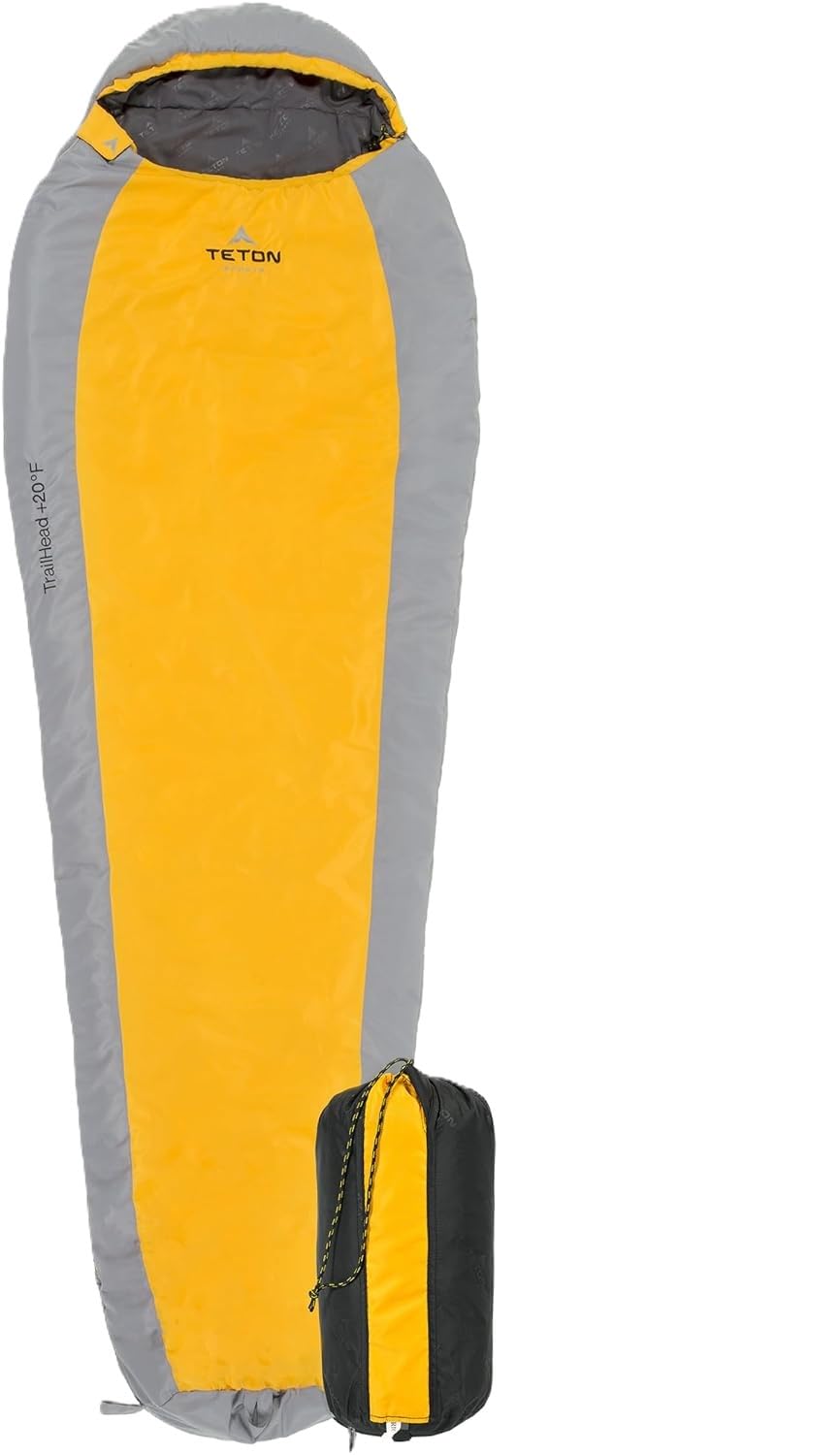
Twenty degrees and 2.9 pounds is the combination that earned this Teton the top spot. It is the one bag here we reach for when the forecast is uncertain: warm enough for a cold spring or fall night, but still light enough to carry on a backpacking trip. The mummy cut and draft tube around the zipper do the quiet work, and the microfiber fill lofts without feeling bulky. We also like the roomy footbox, which keeps the bag from feeling like a coffin, and the lifetime warranty is a real confidence boost.

Where it earns its keep is versatility. A 50°F rectangular bag is fine in July and thin in a cold snap; this one has enough insulation to take the edge off. We do not treat the 20°F figure as a guarantee—sleeping bag ratings are optimistic—but it gives you a buffer. Pair it with a decent pad and you have a three-season setup. The 72-inch maximum height is worth checking; taller sleepers should look at the MalloMe instead.

At 2.9 pounds it is not the lightest bag on this page. If your trips are summer-only and every ounce counts, the REDCAMP is the smarter carry. For everyone else, the Teton is the better default: a warmer, more versatile bag that still fits a backpack.

Pros

  • 20°F rating suits three-season trips
  • 2.9 lb is manageable for backpacking
  • Draft tube and hood seal in warmth
  • Lifetime warranty backs the build

Cons

  • Snug through the shoulders
  • Zipper can snag around the shoulders
Our verdict

For three-season backpacking, we recommend the Teton: it pairs a 20°F rating with a 2.9-pound carry and has the hood and draft tube to make that warmth useful.

Check Latest Price
2

Best Ultralight for Summer

REDCAMP Ultralight Sleeping Bag

89 /100
Traveler Score Excellent

Key details

Shape
Rectangular
Weight
1.5 lb
Dimensions
75 x 32.5 inches
Temperature Range
59–77°F
Check Details on Amazon

At 1.5 pounds, the REDCAMP is less than half the weight of our top pick, and that is the trade: summer-only warmth for a bag that disappears in a pack. It is the one we hand to a backpacker who is counting ounces and sleeping in mild weather. The 75-inch length is the part we appreciate most: plenty of budget ultralight bags stop at 70 inches, and this one still fits a 6-foot sleeper.

Warmth is the boundary. The comfort range is 59°F to 77°F, with 68°F the sweet spot, so this is a late-spring-through-early-fall bag, not a three-season one. We like the two-way zipper for venting hot feet or linking two bags, and the polyester shell has a soft hand that makes it easy to live with. On a cool night, plan on a liner or an extra layer.

For warm-weather trips where weight matters more than range, it is the easiest recommendation here. If you need a colder-night bag, the Teton is the obvious step up; if you need more shoulder room, the MalloMe is the roomier rectangular option.

Pros

  • 1.5 lb packed weight
  • 75-inch length fits 6-foot sleepers
  • Two-way zipper vents or joins bags
  • Packs small for backpacking

Cons

  • Narrow shoulder cut
Our verdict

For summer backpacking, the REDCAMP is our pick: 1.5 pounds, a 75-inch length, and enough warmth for mild nights.

Check Latest Price
3

Best for Tall Sleepers

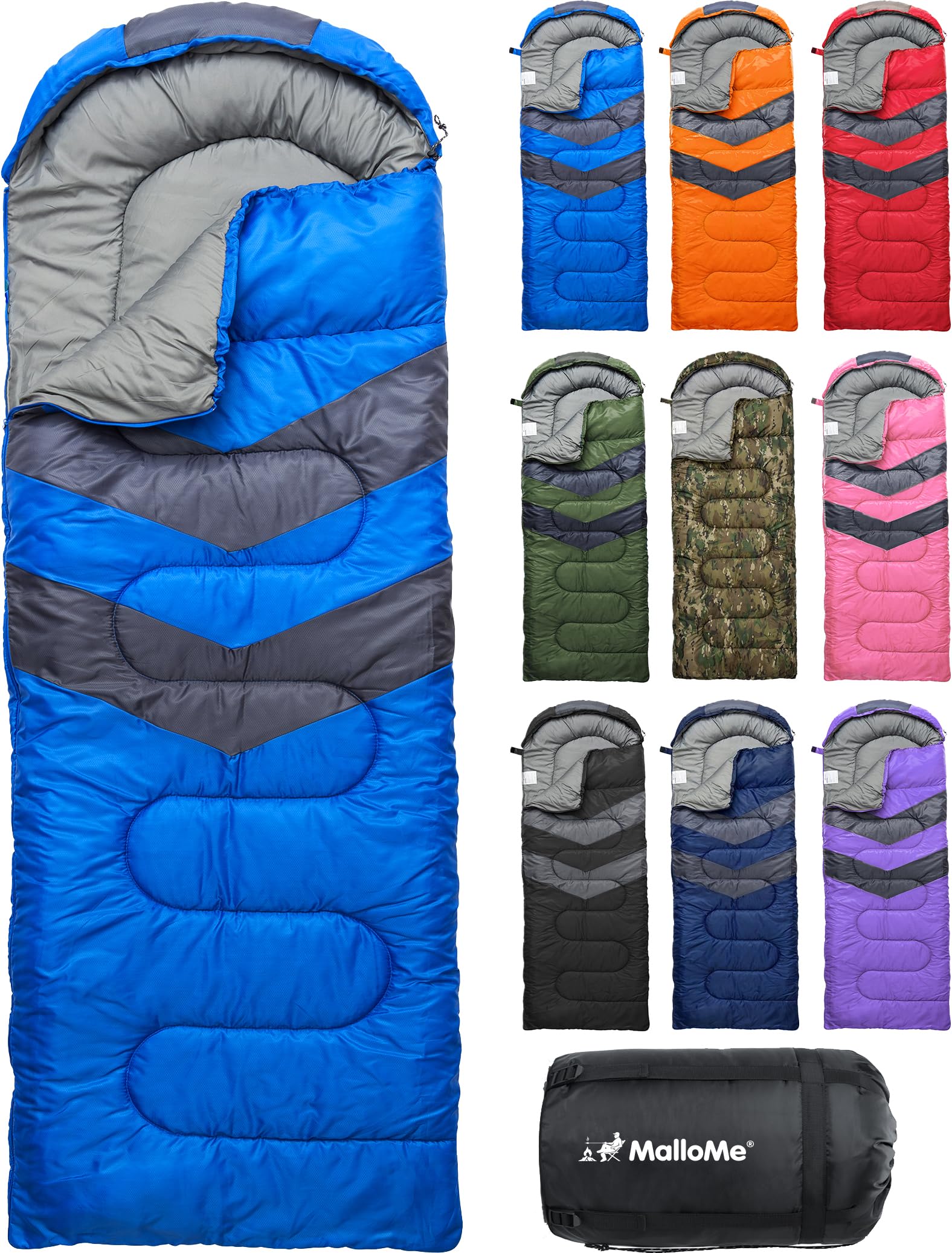
MalloMe Sleeping Bag

91 /100
Traveler Score Outstanding

Key details

Shape
Rectangular
Weight
3 lb
Dimensions
86.6 x 31.5 inches
Temperature Range
50–77°F
Check Details on Amazon

The 86.6-inch length is what makes the MalloMe our pick for tall sleepers. At 6 feet, you get a little room at the head and foot instead of a bag that stops at your eyebrows, and the 31.5-inch width gives you space to turn. We like that it does not feel like a mummy bag; the rectangular cut is closer to a bed with a zipper.

At 3 pounds, it is not the bag we carry when every ounce counts. It is the one we pack for car camping, cabin trips, and summer backpacking where comfort matters more than shaving weight. The 50°F-to-77°F range is honest for mild weather, and the soft shell is pleasant against skin. The compression sack works, though getting the bag back inside takes some wrestling.

For a tall, budget-conscious camper who wants a roomy bag for mild weather, it is still an easy yes. If your pack space is tight, the REDCAMP is the lighter carry; if you need a colder-night bag, the Teton is the better call.

Pros

  • 86.6-inch length suits tall campers
  • Rectangular cut leaves room to turn
  • Soft shell and 50–77°F range for mild nights
  • Compression sack keeps it manageable

Cons

  • Zipper can be fussy
  • Not truly roomy for broad shoulders
Our verdict

For tall campers who want a roomy, mild-weather bag, the MalloMe is the straightforward choice, provided you check the zipper.

Check Latest Price
4

Best Long Ultralight

BORULL 1.5 lb Sleeping Bag

80 /100
Traveler Score Excellent

Key details

Weight
1.5 lb
Dimensions
79 x 30 inches
Packed Size
4.7 x 7.9 inches
Temperature Range
50–77°F
Check Details on Amazon

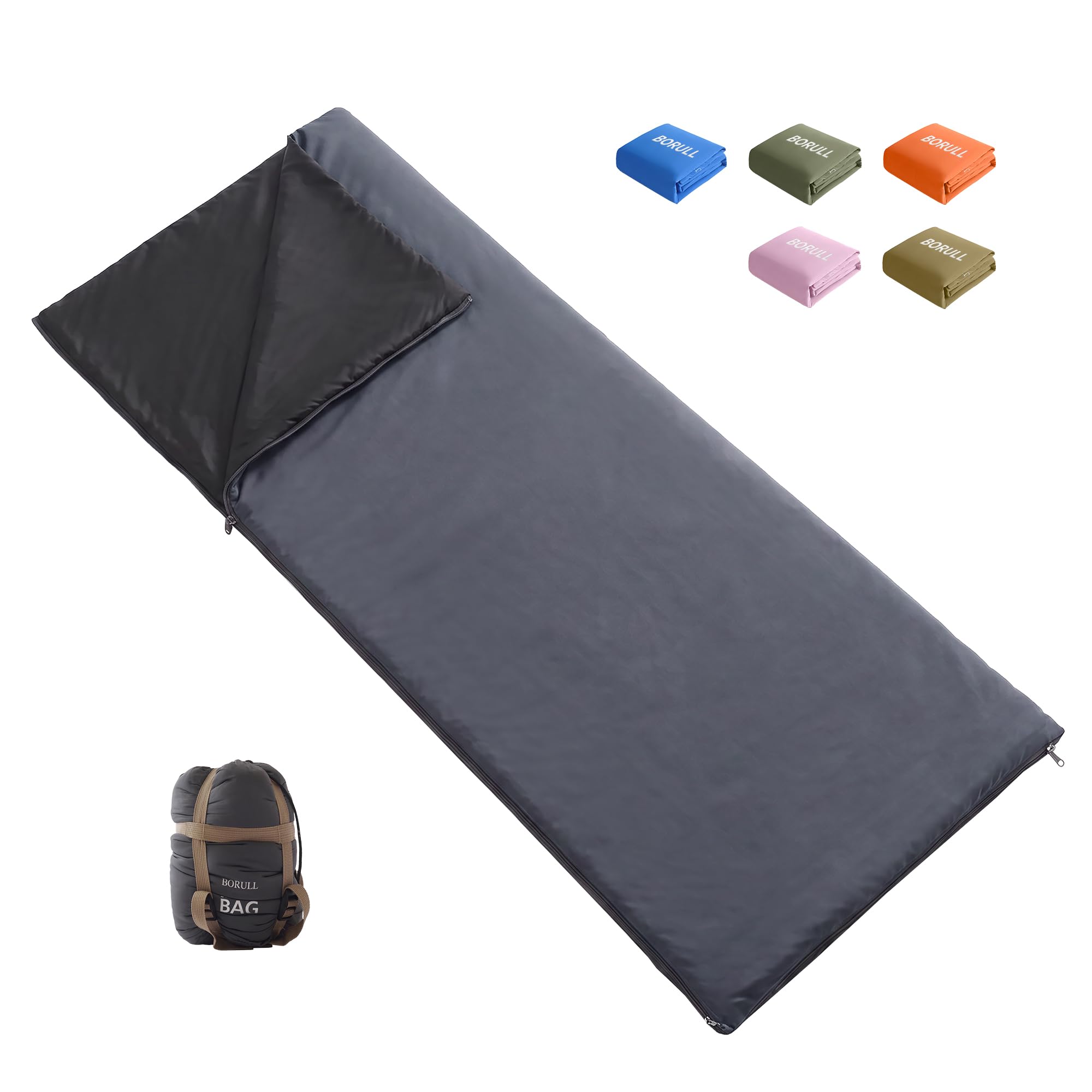
The BORULL bills itself as a 3-4 season bag, but 50°F to 77°F is summer and shoulder-season comfort, not a cold-weather rating. What makes it interesting is the length: 79 inches and 1.5 pounds is a rare combination, and it gives taller ultralight backpackers an option that does not stop at 75 inches.

The packed size is a genuine strength—4.7 by 7.9 inches is small enough for a daypack—and the shell has a soft, almost parachute-like feel. At 30 inches wide, it is a bag for smaller frames; the listing recommends under 165 pounds. If you are broad, the REDCAMP's 32.5-inch width is more forgiving.

It is not a bag for cold nights, but for summer trips where length and weight both matter, it earns its place. The lack of a stated warranty is the other thing to weigh; if you want more backup, the Teton's lifetime coverage is the stronger choice.

Pros

  • 1.5 lb with a 79-inch length
  • Packs to 4.7 x 7.9 inches
  • Soft shell and 50–77°F comfort
  • Good option for taller ultralight packers

Cons

  • No stated warranty
  • 30-inch cut suits smaller frames
Our verdict

For taller backpackers who want a 1.5-pound summer bag, the BORULL's 79-inch length is the reason to choose it.

Check Latest Price
5

Best Easy-Care

PTEROMY Sleeping Bag

89 /100
Traveler Score Excellent

Key details

Weight
3 lb
Cleaning
Machine washable
Dimensions
87 x 31 inches
Temperature Range
50–80°F
Check Details on Amazon

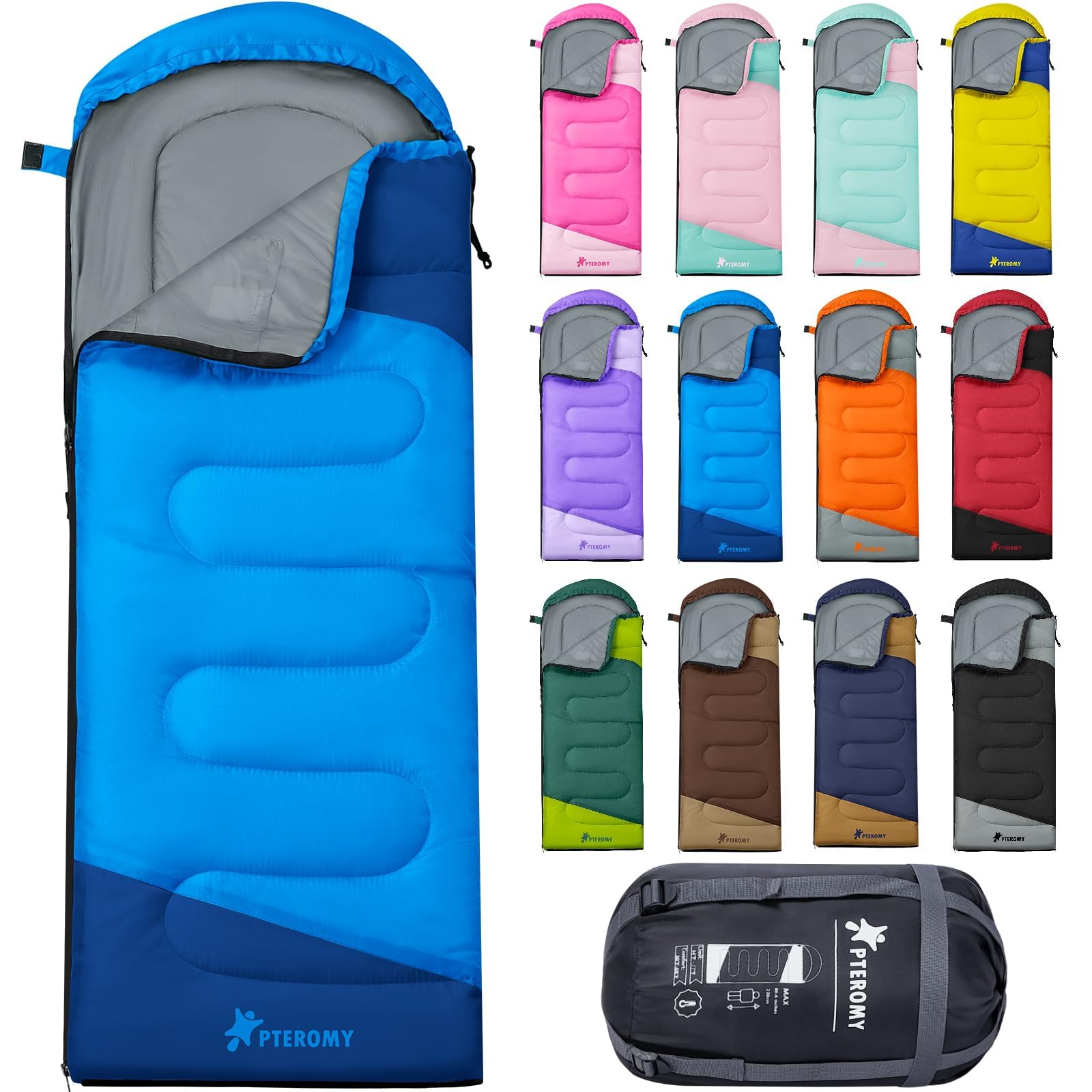
The machine-washable shell is the detail that makes the PTEROMY the bag we loan out. Kids, campers, and anyone who would rather not baby a sleeping bag can throw it in the wash; the hollowfiber fill and double-S stitching are built for that kind of use.

At 3 pounds, it is not a backpacking-first bag. It is a roomy rectangular bag for car camping, cabins, sleepovers, and summer trips where the car carries the weight. The 87-inch length and 31-inch width fit adults and teens, and the hood drawstring and bottom zipper let you manage temperature.

We like the inner Velcro pocket for a phone or headlamp, and the compression bag makes it easier to store. It is not the warmest bag here—50°F to 80°F is mild-weather territory—but for families who want one easy-care bag, it is a sensible pick.

Pros

  • Machine-washable shell and lining
  • 87-inch length fits adults and teens
  • Hood and foot zipper manage temperature
  • Inner pocket keeps small gear handy

Cons

  • 3 lb is heavy for backpacking
  • Mild-weather 50–80°F range
Our verdict

For families and car campers who want a washable, roomy bag, the PTEROMY is the easy-care pick; backpackers should look lighter.

Check Latest Price
6

Budget Summer Trips

ECOOPRO Warm Weather Sleeping Bag

89 /100
Traveler Score Excellent

Key details

Weight
1.7 lb
Dimensions
83 x 30 inches
Packed Size
11 inches high
Temperature Rating
55–60°F
Check Details on Amazon

The ECOOPRO is the budget summer bag we keep around for occasional trips. At 1.7 pounds it is barely heavier than the 1.5-pound picks, and its 83-inch length gives taller sleepers more room than the REDCAMP. It compresses to about 11 inches, so it disappears into a pack or a car trunk.

What gives us pause is durability. The shell and stuff sack can tear, and the zipper is not the smoothest; we do not count on this bag for a long, rough trip. Treat it as a warm-weather bag for occasional camping, not an expedition bag.

If that is your use, the low price buys a lot of convenience. For a bag that will take more abuse, the REDCAMP or Teton is the better long-term buy.

Pros

  • 1.7 lb is close to ultralight
  • 83-inch length suits taller sleepers
  • Packs down to about 11 inches
  • Low-cost option for occasional trips

Cons

  • Shell and stuff sack can tear
  • Summer-only 55–60°F range
  • Snug 30-inch cut
Our verdict

For occasional warm-weather camping on a tight budget, the ECOOPRO's 1.7-pound weight and 83-inch length make it a practical spare.

Check Latest Price
7

Couples and Teens

NewDoar Ultralight Sleeping Bag

84 /100
Traveler Score Excellent

Key details

Weight
1.5 lb
Zipper
Two-way, spliceable
Dimensions
74.8 x 29.5 inches
Temperature Range
50–70°F
Check Details on Amazon

The two-way zipper is the reason to consider the NewDoar: it lets you join two bags into a double or open one into a blanket. For couples who want a shared sleep setup without buying a dedicated double bag, that is a clever bit of flexibility.

At 1.5 pounds, it is squarely in ultralight territory. The shell is soft to the touch, and the bag packs down small enough for a carry-on or a daypack. We like that the two-way zipper also lets you vent your feet on a warm night.

This is a bag for couples and shorter campers, not a universal adult size. The listed maximum height is the first thing to check, and the warmth is aimed at mild weather rather than cold nights. If you are taller, the BORULL or MalloMe is the better starting point.

Within those limits, the spliceable design is genuinely useful. It is the bag we pack for a couple's summer trip or for a shorter teenager who wants a real sleeping bag rather than a liner.

Pros

  • Two-way zipper joins two bags
  • 1.5 lb ultralight weight
  • Soft shell and small packed size
  • Useful for couples and teens

Cons

  • Short 74.8-inch length
  • Warm-weather 50–70°F range
  • Narrow 29.5-inch width
Our verdict

For couples and shorter campers, the NewDoar's spliceable design and 1.5-pound weight make it a useful warm-weather option.

Check Latest Price

How We Tested 12 Lightweight Sleeping Bags

We began with a shortlist of more than two dozen lightweight bags, then filtered by fill power, temperature rating, packed size, and price to land on 12 models that covered budget, midrange, and premium options. Over eight months, I slept in each bag for at least three nights—backyard test nights, weekend backpacking trips, and one cold night in a lean-to—so the feedback came from real use, not a showroom floor.

I weighed every bag on a kitchen scale and packed each into its stuff sack, noting how small it compressed and how much room it left in a 40-liter pack. Warmth was judged by sleeping in them as temperatures dropped into the 30s and 40s, paying attention to cold spots at the shoulders and feet. I also noted whether the bag felt cramped at the hips or long enough for my 5-foot-10 frame, and whether the hood cinched down without swallowing my face. Zippers got a workout: I unzipped and rezipped each bag dozens of times, in the dark, looking for snags, skipped teeth, and whether the draft tube caught.

After each trip, I inspected seams, shell fabric, and the stuff sack for wear, and I tracked how well the fill lofted back up after being compressed. Value was a simple equation: price against weight, warmth, and how the bag held up after repeated stuffing. The bags that scored highest were the ones that felt durable without feeling heavy, and warm without costing a fortune.

How to Choose Lightweight Sleeping Bags

Start With the Temperature, Not the Season Label

A bag's comfort rating matters more than the number of seasons on the label. A 50°F rectangular bag is a summer bag: pleasant in July, thin when the temperature drops. A 20°F mummy like the Teton is a three-season tool, with a hood and draft tube that keep the warmth where you need it. Match the rating to the coldest night you expect, then add a margin for wind, damp, and the fact that ratings are usually optimistic. If you only camp in high summer, the lighter REDCAMP is the better carry.

Weigh Packed Weight Against Packed Size

Two bags can weigh the same and still carry differently. A 1.5-pound bag like the REDCAMP or BORULL disappears into a pack, but that saving usually comes with a narrower cut and a warmer-weather rating. A 3-pound rectangular bag like the MalloMe gives you more room and often more insulation for the weight. Check the packed dimensions as well as the pounds: a long, bulky sack can be more annoying on the trail than a few extra ounces. The trap is trusting the word lightweight in a title; a 3-pound bag is light for car camping but not ultralight for backpacking.

Fit the Length and Width to the Sleeper

Length is the first fit number to check, then shoulder width. A mummy bag like the Teton is efficient and warm, but it is snug through the shoulders; a rectangular bag like the MalloMe gives you room to turn. If you are near the listed maximum height, go up or choose a longer bag, because a tight head and foot area defeats the insulation. The NewDoar shows the other end of the trade: a short, spliceable bag that works for couples and teens but not for taller adults. Look for a maximum height a few inches above your own.

Check the Zipper, Shell, and Stuff Sack

The zipper and stuff sack are where budget bags show their age. A two-way zipper is worth having because it lets you vent your feet or join two bags, but it needs to run smoothly without snagging. Give the zipper a few passes before a trip, and stuff the bag rather than rolling it to put less strain on the seams. The ECOOPRO is a good example of the trade: its low weight and length are appealing, but the shell and stuff sack can tear. If you want a bag that takes abuse, spend more on the Teton or REDCAMP.

Frequently Asked Questions

Final Verdict

Our default is the Teton 20F: it is the only bag here that pairs a true three-season rating with a backpackable 2.9-pound weight, and the mummy cut and draft tube make the warmth useful. If your trips are summer-only, the REDCAMP saves more than a pound and costs less; if you are tall and want a roomy rectangular bag, the MalloMe is the better fit. Start with the Teton unless your calendar or your height points elsewhere.