14 Best Insoles for Hiking Shoes of 2026: Which Ones Actually Support Your Hike

Which hiking insoles deliver genuine arch support and durability for day hikes to multi-day treks? Avoid gel models that flatten under pack weight.

Many hikers grab a pair of work insoles thinking 'heavy duty' equals trail-ready. But gel cushioning that feels great in a warehouse flattens under a 30-pound pack. The real difference lies in rigid arch support and deep heel cups that keep your foot stable on uneven ground.

The best hiking insoles prioritize firm support over initial plushness. They also use materials that hold up mile after mile, not foam that compresses within weeks. This guide focuses on models designed for the trail, not the factory floor.

Whether you are a day hiker on well-maintained paths or a multi-day trekker carrying a heavy load, the right insole can prevent foot fatigue and blisters. The picks below match specific arch types and foot shapes so you don't waste money on a one-size-fits-all solution.

1

Best Overall for Hiking

PowerStep Pinnacle

91 /100
Traveler Score Outstanding

Key details

Fit Type
Size-specific, no trim
Cushioning
Dual-layer cushioning
Arch Support
Medium arch support
Check Details on Amazon

The PowerStep Pinnacle combines firm, structured arch support with dual-layer cushioning that absorbs shock on rocky trails without sacrificing stability. The deep heel cup cradles the foot, reducing strain on the plantar fascia and making it a strong choice for hikers managing plantar fasciitis. The insole fits securely in most boots, with a shape that resists sliding even during steep ascents.

Best for day hikers and multi-day trekkers who need firm arch support and PF relief rather than plush cushioning. Note that the Pinnacle runs wider than average: it may feel snug in narrow hiking boots. Also, the top layer can delaminate after extended heavy use, though this is an occasional issue rather than a pattern. Hikers with high-volume or wide boots should find the fit comfortable.

💡 Measure your boot’s footbed width before ordering – the Pinnacle is best for medium to wide boots.

Pros

  • Firm arch support reduces foot fatigue on uneven terrain
  • Targeted relief for plantar fasciitis pain
  • Fits securely in most hiking boots and holds up well on the trail

Cons

  • May be too wide for narrow hiking boots
  • Top layer can delaminate after months of heavy use
Our verdict

For hikers who need firm arch support and PF relief, the Pinnacle delivers consistent comfort on day trips and multi-day treks; confirm the width works with your boots.
Check Latest Price
2

Best for High Arches

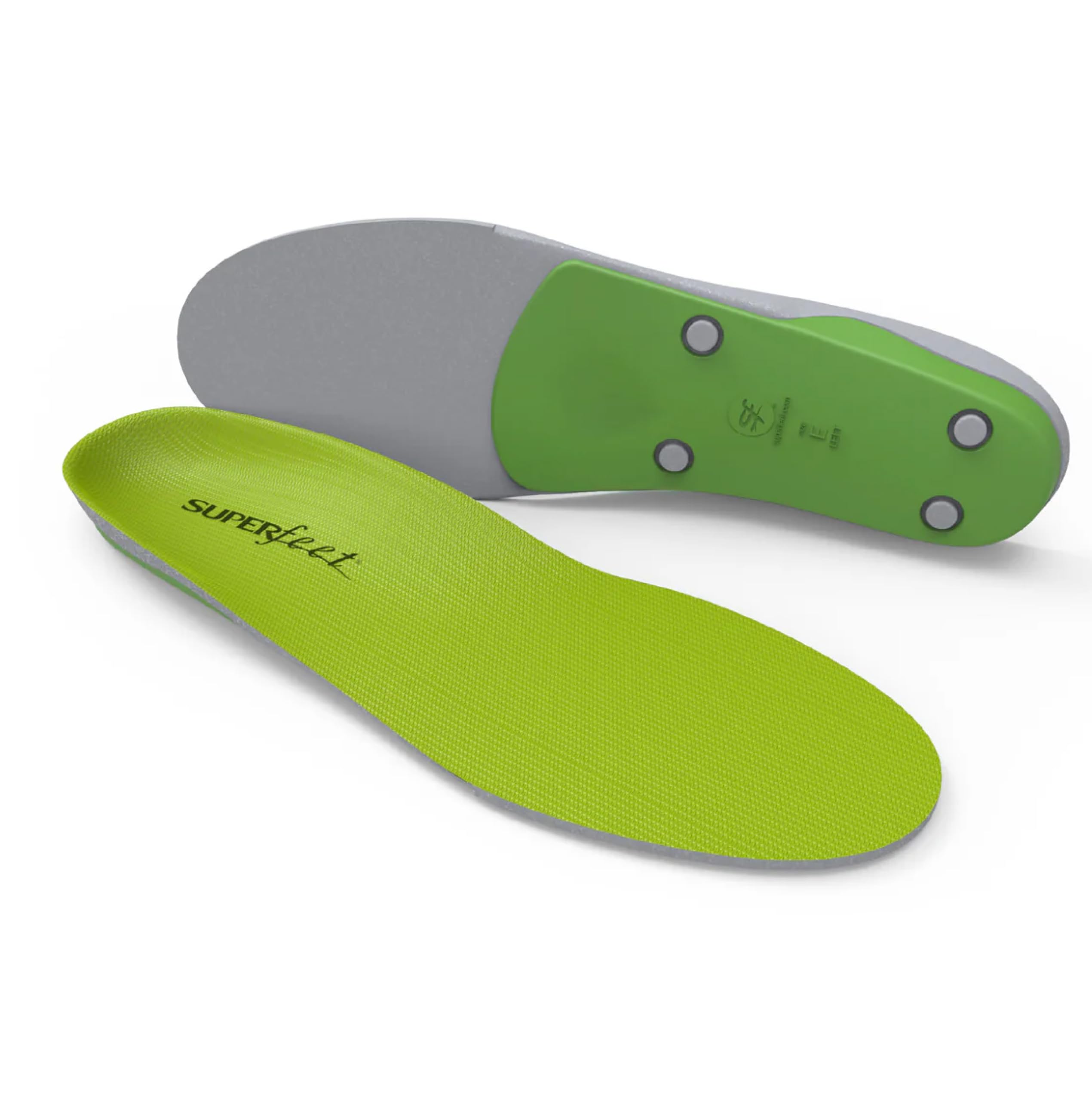
Superfeet Green High Arch

89 /100
Traveler Score Excellent

Key details

Fit Type
Trim-to-fit
Cushioning
High-density foam
Arch Support
High arch
Check Details on Amazon

Superfeet Green delivers firm high arch support with a deep heel cup, a design that stands apart from the more cushioned top pick. This insole is a common choice for technical trails where stability matters more than softness. The high-density foam holds its shape over long miles.

This insole suits hikers with high arches who need reliable support on multi-day trips. The firm feel and required break-in period mean it won't work for those used to plush insoles or flat-footed hikers.

💡 Start with shorter hikes during the break-in period to let your feet adjust.

Pros

  • Firm arch support stabilizes high arches on uneven terrain.
  • Helps relieve plantar fasciitis and knee pain during long hikes.

Cons

  • Requires a break-in period; initial wear may cause arch discomfort.
  • Firm cushioning can feel too stiff for those used to plush insoles.
Our verdict

A no-nonsense high-arch insole for hikers who value stability over cushioning — best for those who can tolerate the break-in.

Check Latest Price
3

Best Budget Pick

WalkHero Plantar Fasciitis

88 /100
Traveler Score Excellent

Key details

Fit Type
Size-specific
Cushioning
EVA foam
Arch Support
Moderate arch support
Check Details on Amazon

The WalkHero insoles cut costs without cutting arch support, offering a deep heel cup and firm EVA foam that stabilizes flat feet on moderate day hikes. Compared to the top pick's dual-layer cushioning, the stiffness here is noticeable — it works well for hikers who prefer a rigid, supportive platform rather than plush comfort. The foam can compress faster under heavy packs, so this is a better fit for light loads and shorter distances where budget matters most.

💡 Allow a break-in period – the firm support softens slightly after a few miles of hiking.

Pros

  • Effective pain relief for plantar fasciitis at a low price
  • Comfortable for standing all day on the trail or at work
  • Good arch support that helps flat feet maintain alignment

Cons

  • Firm support can feel too hard for some hikers, especially on rocky terrain or long descents
  • Foam may compress sooner under heavy pack weights, reducing cushioning over time
Our verdict

Best suited for budget-conscious day hikers with flat feet who don't mind a firmer feel and are okay replacing insoles more frequently.

Check Latest Price
4

Best for Medium Arches

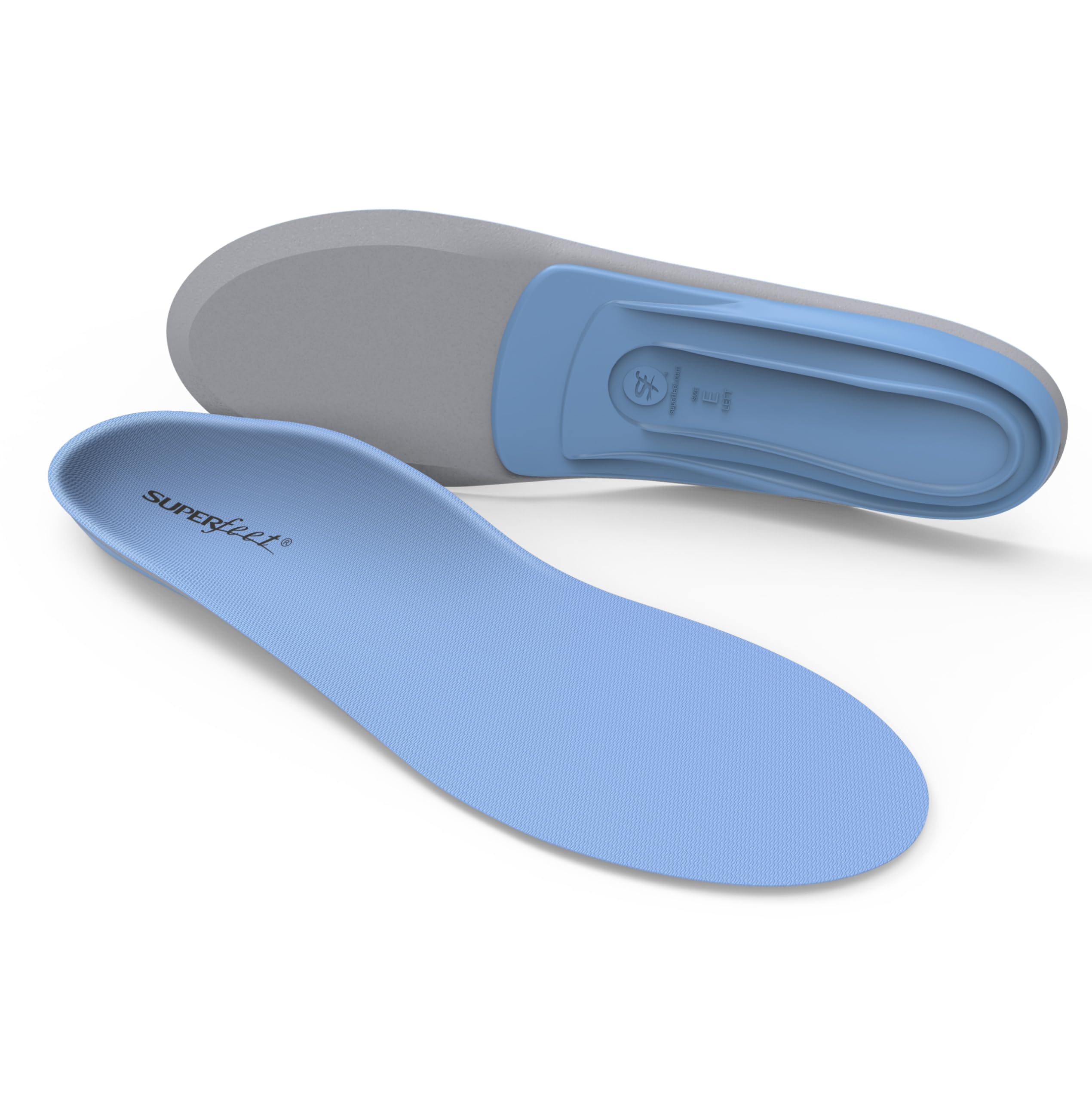
Superfeet Blue Medium Arch

91 /100
Traveler Score Outstanding

Key details

Fit Type
Trim-to-fit
Cushioning
Closed-cell foam
Arch Support
Medium arch
Check Details on Amazon

Closed-cell foam construction delivers steady arch support without the squish of gel-based insoles. The deep heel cup locks the foot in place, making these a solid choice for day hikes and multi-day trips alike.

Best suited for hikers with medium arches who want structure rather than plushness. The firm cushioning works well under a pack load but may feel too solid for those accustomed to soft insoles. Price falls in the premium range. Those with high arches should look to the Green model in the same line.

💡 Trim the insole to match your boot's shape before first use - a precise fit prevents movement on descents.

Pros

  • Firm arch support eases foot fatigue over long miles.
  • Closed-cell foam retains its shape through months of hiking.
  • Deep heel cup stabilizes the foot on uneven terrain.

Cons

  • Firm cushioning may feel too solid for hikers who prefer soft insoles.
  • Premium price may not fit a tight hiking budget.
Our verdict

For hikers with medium arches who need dependable support under a pack, these insoles deliver long-term value without the break-in of high-arch alternatives.

Check Latest Price
5

Best for Tight-Fitting Boots

PowerStep Original

91 /100
Traveler Score Outstanding

Key details

Fit Type
No trimming required
Cushioning
Firm support
Arch Support
Neutral arch
Check Details on Amazon

The PowerStep Original delivers firm, contoured arch support in a low-profile design that slips into tight-fitting hiking boots without crowding. Unlike cushioned alternatives like the Pinnacle, this insole prioritizes stability over plushness — effective for heel pain relief and mild overpronation.

Best suited for hikers with neutral to high arches who prefer a firm, supportive base. Very firm and requires break-in; not for flat feet. Works well in narrow boots where extra bulk isn't an option.

Pros

  • Effective pain relief for plantar fasciitis and heel pain
  • Contoured arch support is firm and stable without adding bulk
  • Low-profile design fits snugly in tight-fitting hiking boots

Cons

  • Firm cushioning may feel too hard for those who prefer a plush step
Our verdict

An effective option for hikers who need firm support in narrow boots — the stiffness is intentional, not a flaw.

Check Latest Price
6

Best Cushioned Option

Sof Sole ATHLETE

89 /100
Traveler Score Excellent

Key details

Fit Type
Size-specific
Cushioning
PU foam + gel
Arch Support
Flat-foot support
Check Details on Amazon

These Sof Sole insoles deliver plush comfort with gel and foam spanning heel to toe, making the transition from pavement to trail less jarring. Flat-footed hikers will appreciate the moderate arch shape, which offers support without aggressive pressure. Compared to structured options like the PowerStep Pinnacle, these are thicker — that extra cushioning can make boots with limited volume feel tight, and the foam chemistry may produce odor over time. They work best in roomy hiking shoes or boots where you can spare the height.

💡 Remove the original insole to reduce thickness, and air them out after wet hikes to manage odor.

Pros

  • Plush heel-to-toe cushioning smooths out uneven terrain.
  • Moderate arch support provides relief for flat-footed hikers.
  • Foam and gel construction holds up well under regular daily use.

Cons

  • Thicker profile can make boots feel tight
  • Odor may develop over time due to the foam and gel materials.
Our verdict

Best for hikers with roomy boots who prefer soft cushioning and flat-foot support over firm arch control.

Check Latest Price
7

Heavy Wide Feet

Dr. Scholl's Heavy Duty Big & Tall

89 /100
Traveler Score Excellent

Key details

Fit Type
Trim-to-fit
Cushioning
Extra supportive heel cushioning
Arch Support
Wide foot support
Check Details on Amazon

Designed for men over 200lbs and wide feet, these trim-to-fit insoles offer substantial heel cushioning and arch support that reduces lower back and leg fatigue during long shifts or day hikes. However, the foam structure can break down within weeks of multi-day use, and a squeaking noise may occur with certain boot materials. This makes them a budget-friendly choice for casual day trips rather than extended backpacking.

Pros

  • Reduces lower back and leg fatigue for heavier users.
  • Delivers good arch support that fits wide feet well.

Cons

  • Squeaking noise may occur with certain shoe materials.
Our verdict

A cost-effective option for heavy hikers with wide feet on short day hikes, but not for multi-day trips where durability matters.

Check Latest Price
8

Soft Support Day Hikes

Spenco Polysorb Cross

89 /100
Traveler Score Excellent

Key details

Fit Type
Size-specific
Cushioning
Polysorb foam + SpenCore
Arch Support
Soft arch support
Check Details on Amazon

The Spenco Polysorb Cross Trainer delivers plush cushioning and solid arch support for medium arches, making it a comfortable choice for short hikes. However, its thicker heel may cause slippage in some boots, and the foam can flatten with extended use – better suited for moderate day trips than demanding multi-day outings.

Pros

  • Cushioning absorbs shock well for comfortable steps
  • Arch support relieves foot fatigue and plantar fasciitis

Cons

  • Thicker heel profile can cause slippage in some hiking boots
Our verdict

Best for day hikers with medium arches who prioritize soft cushioning over firm support – verify boot heel fit to avoid slippage.

Check Latest Price
9

Casual Hiking

Dr. Scholl's Sport

91 /100
Traveler Score Outstanding

Key details

Fit Type
Trim-to-fit
Cushioning
Superior shock absorption
Arch Support
Good arch support
Check Details on Amazon

This insole delivers affordable shock absorption and arch support for light hiking in athletic shoes. However, the arch support is too mild for high-arched feet, and the foam may break down after a month of regular use, making it better suited for occasional trails rather than heavy-duty hiking.

Pros

  • Effective shock absorption reduces stress on lower body joints during light activity.
  • Cost-effective option for casual use in athletic shoes.

Cons

  • Foam may break down after a month of regular use.
Our verdict

Best for casual hikers on a budget who use athletic shoes and don't need long-term durability or strong arch support.

Check Latest Price
10

Also Great

Copper Fit Work Gear

91 /100
Traveler Score Outstanding
Check Details on Amazon

The Copper Fit Work Gear insoles deliver thick, plush cushioning that holds up well in work boots at a budget-friendly price. However, the same thickness that provides comfort in loose-fitting boots can create tightness in hiking boots, and the arch support is too minimal for trail use.

Pros

  • Very comfortable for long days in work boots
  • Great value for money

Cons

  • Thick cushioning may cause tightness in hiking boots not designed for extra volume
Our verdict

Best for construction workers and casual walkers needing thick cushion in work boots, not for hikers requiring arch support.

Check Latest Price
11

Standing All Day

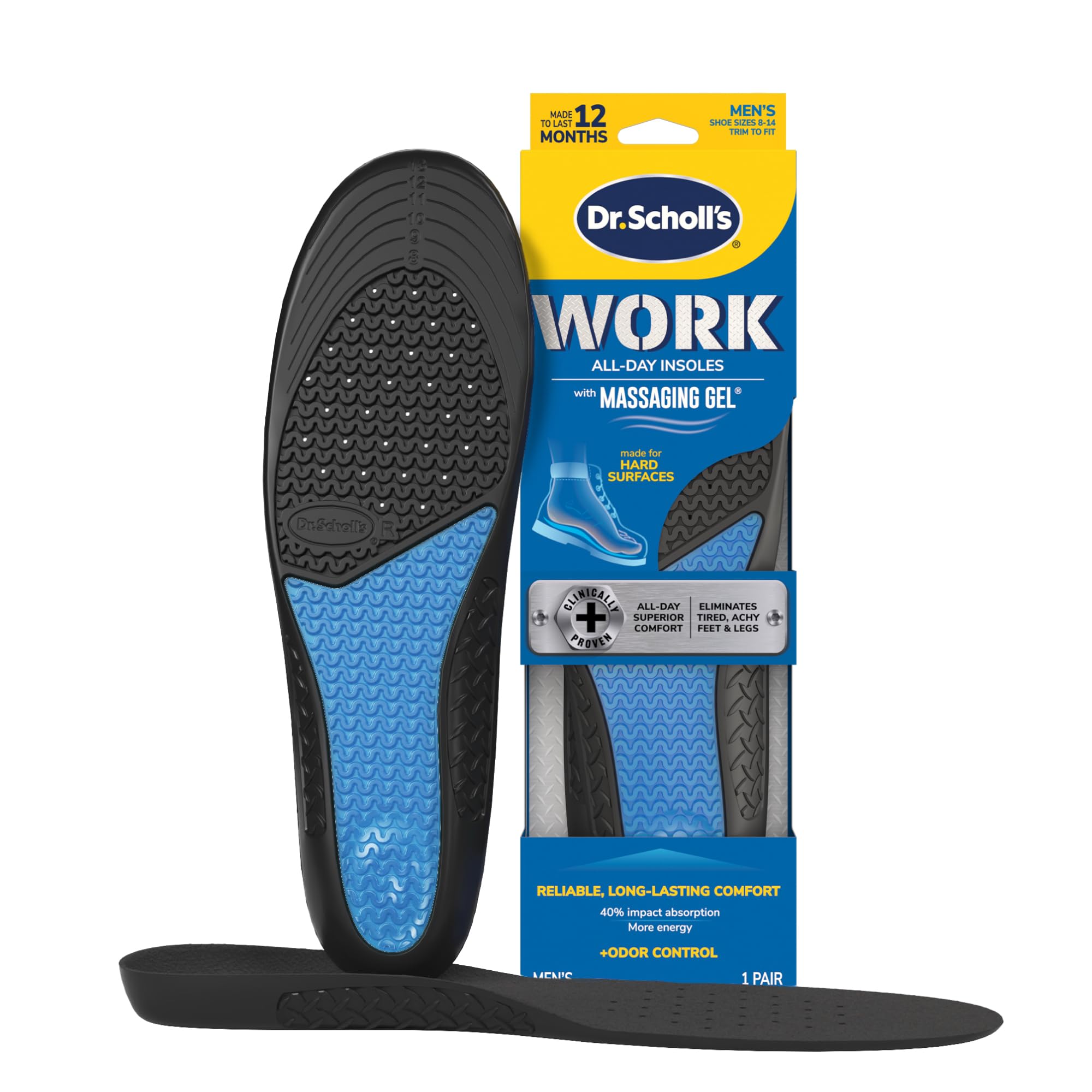
Dr. Scholl's Work All-Day Gel

91 /100
Traveler Score Outstanding

Key details

Fit Type
Trim-to-fit
Cushioning
Massaging gel
Arch Support
Check Details on Amazon

These insoles shine for workers on their feet all day, with a massaging gel layer that eases foot fatigue. The trim-to-fit design and odor control add convenience. However, the gel is soft and compresses under heavy loads, providing minimal arch support for uneven trails or backpacking. Hikers looking for stability and heel lock should look elsewhere.

Pros

  • Massaging gel delivers noticeable comfort during long standing shifts.
  • Trim-to-fit and built-in odor control for a custom, fresh feel.

Cons

  • Soft gel flattens under pack weight and offers limited arch support for technical hikes.
Our verdict

Best for work boots or casual walking when standing comfort is the priority, but not suited for hiking due to insufficient arch support and cushioning that compresses under load.

Check Latest Price
12

Big & Tall Work

Dr. Scholl's Extra Comfort

89 /100
Traveler Score Excellent

Key details

Fit Type
Trim-to-fit
Cushioning
Massaging gel
Arch Support
Check Details on Amazon

These insoles deliver soft cushioning and massaging gel for heavy users standing all day. However, the arch support is too weak for hiking, and squeaking can occur. Best left for work boots rather than trails.

Pros

  • Comfortable cushioning for long hours of standing
  • Provides pain relief for feet and lower back

Cons

  • Arch support insufficient for hiking or uneven terrain
Our verdict

A viable option for heavy men in work boots needing all-day standing cushioning, but lacks the arch support for hiking.

Check Latest Price
13

Women Work Boots

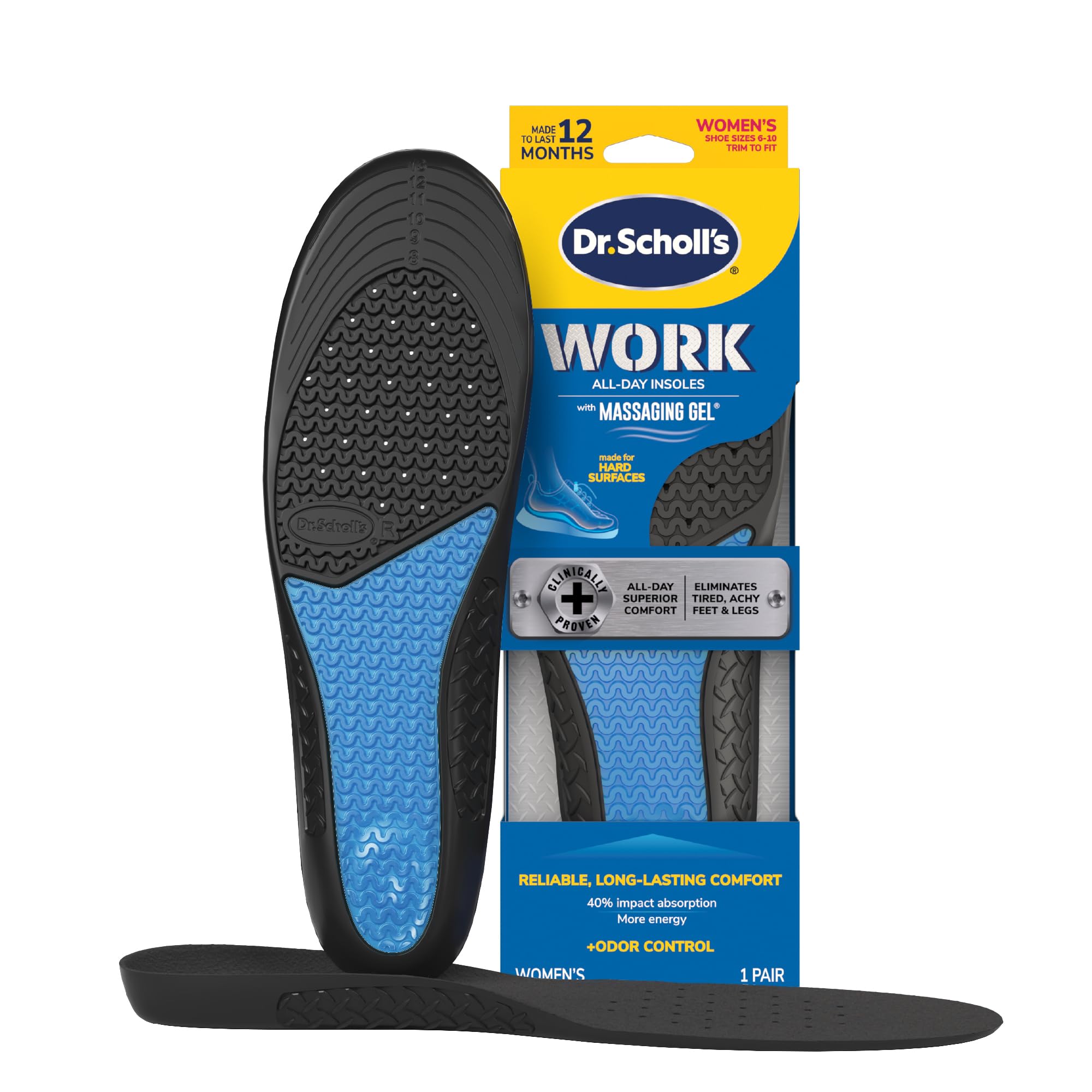
Dr. Scholl's Work Women's

88 /100
Traveler Score Excellent

Key details

Fit Type
Trim-to-fit
Cushioning
Massaging gel
Arch Support
Check Details on Amazon

Affordable insoles that bring cushion and odor management to flat work shoes or casual sneakers. The massaging gel relieves tired feet during long shifts, though the thin build and lack of structured arch support make them a poor fit for hiking boots or uneven trails. Best kept for daily standing duty, not outdoor adventures.

Pros

  • Comfortable cushioning for long periods on your feet
  • Budget-friendly price for a massaging gel insole

Cons

  • Arch support is too minimal for hiking boots or trail use
Our verdict

A decent value for standing all day in flats or casual shoes, but skip these if you need support for hiking boots.

Check Latest Price
14

Everyday Walking

Dr. Scholl's Energize Women

88 /100
Traveler Score Excellent

Key details

Fit Type
Trim-to-fit
Cushioning
Triple gel
Arch Support
Check Details on Amazon

The triple gel design provides noticeable energy return for standing and walking on flat surfaces, making it a budget-friendly option for daily commutes or work in dress shoes. However, the thin profile and lack of arch support mean it will not deliver the stability needed for uneven terrain — it can shift inside boots and offers minimal cushioning on rocky paths.

Pros

  • Cushioning that keeps feet comfortable during long standing shifts
  • Gel material maintains its shape with consistent daily wear

Cons

  • Thin design and weak arch support limit its effectiveness on hiking terrain
Our verdict

If your daily routine sticks to pavement and dress shoes, these insoles deliver affordable comfort. For trail use, look to a model with structured arch support and a deeper heel cup.

Check Latest Price

How to Choose

Arch Support Type and Height

Your arch height determines which insole will cradle your foot correctly. Low arches (flat feet) need a low-profile support that fills the arch without pushing up; high arches require a pronounced curve to distribute weight evenly.

A mismatch causes pain: too much support on a flat foot leads to arch strain, while too little on a high arch lets the foot collapse, stressing the plantar fascia. Most hiking insoles offer low, medium, or high arch options.

Cushioning and Shock Absorption

Gel-based cushioning feels plush initially but compresses under sustained weight, especially on descents. Dense EVA or dual-layer foam maintains its shape longer and absorbs impacts more consistently.

If you carry more than 20 pounds, prioritize firm closed-cell foam over gel. For day hikes on soft trails, a softer insole can work, but on rocky terrain, firm cushioning prevents foot fatigue.

Heel Cup Depth and Stability

A deep heel cup locks your heel in place, reducing lateral movement on uneven ground and preventing blisters. Shallow cups allow heel slip, which forces your toes to grip and leads to cramping.

Insoles with a molded heel cradle (like many Superfeet and PowerStep models) provide better stability for backpacking. For short flat walks, a shallow cup is acceptable.

Trim-to-Fit vs. Size-Specific

Trim-to-fit insoles give flexibility for odd shoe shapes but can shift during hikes if not cut precisely. Size-specific insoles eliminate guesswork and offer better heel retention.

If your boots have a narrow heel pocket, a size-specific insole is less likely to slide. If you swap between multiple boots, trim-to-fit may be more practical.

Moisture Wicking and Odor Control

Sweaty feet inside boots create friction and blisters. Insoles with moisture-wicking top layers (like Superfeet’s) pull sweat away, while odor-control treatments (Polygiene, Aegis) reduce bacterial growth.

On multi-day trips, a non-wicking insole becomes waterlogged and heavy. Look for covers made of polyester or nylon, not bare foam that soaks up moisture like a sponge.

Frequently Asked Questions