Best Hiking Socks for Men of 2026

There's a particular kind of misery that starts around mile eight: the boots are fine, the legs are fine, and then a hotspot on your heel starts broadcasting. Socks are the least expensive piece of hiking gear you'll buy and the one most capable of wrecking a good day. A pair that works moves sweat away from your skin, cushions the heel and ball of the foot without padding out the whole sock, and stays put inside the boot instead of sliding down under your arch.

Over the past six months, my team and I have hiked in 14 pairs — thin liners, midweight wool blends, and heavily cushioned cold-weather socks — on day hikes, an overnight or two, and a lot of ordinary neighborhood walks. The thing that surprised me most is that thickness isn't the same as warmth, and a sock that's too bulky for your boot will give you more grief than a thin one that fits properly. Wool content matters, but how the sock is knit and cut matters just as much. The picks below run from bare-bones summer pairs to socks I'd trust on a cold, wet weekend.

1

Best Overall

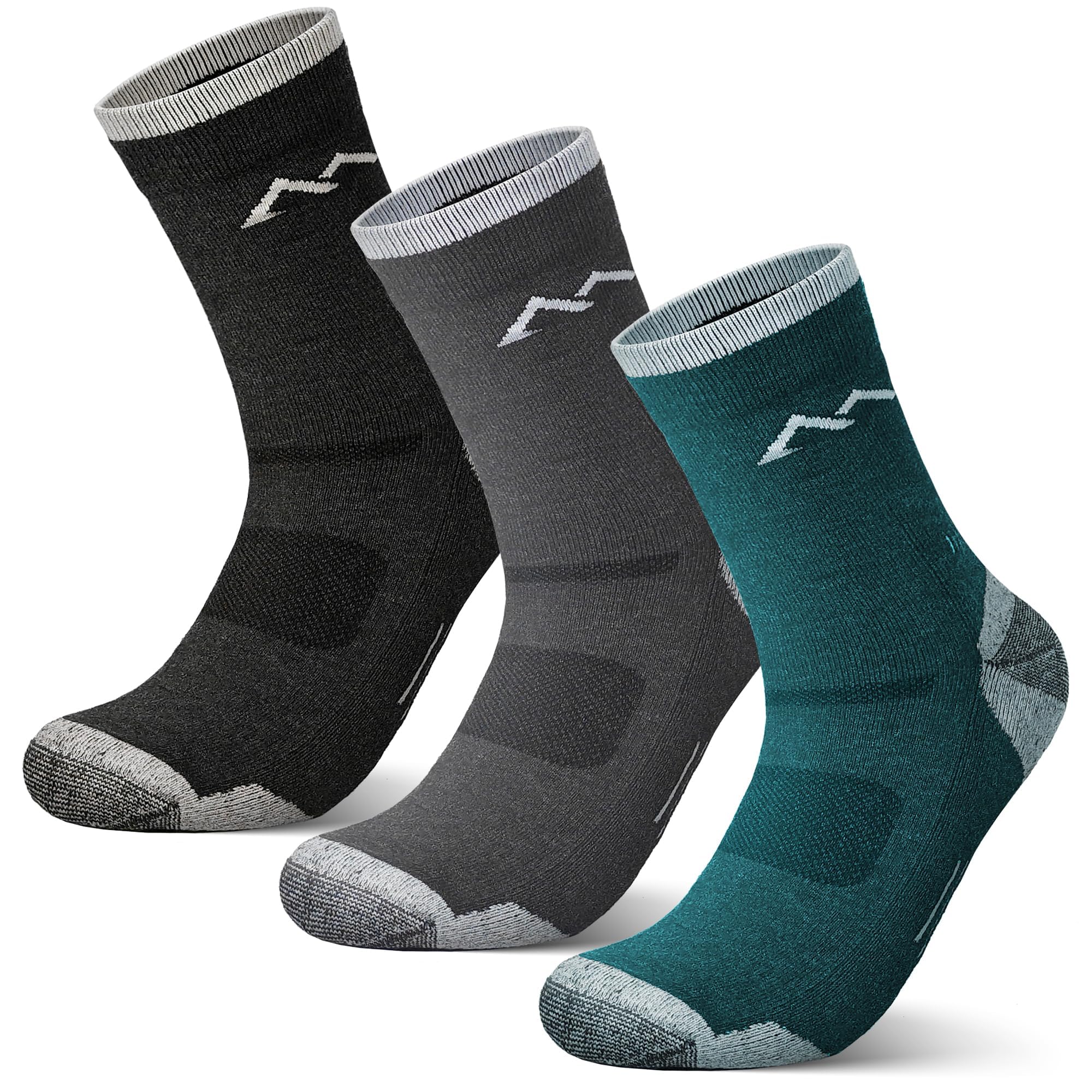
Darn Tough Hiker Boot Midweight

96 /100
Traveler Score Outstanding

Key details

Fabric
66% merino wool, 32% nylon, 2% Lycra spandex
Height
Boot
Warranty
Lifetime
Cushioning
Full cushion, seamless toe
Check Details on Amazon

A premium price for a single pair is a hard sell until you have spent a wet October day with a thin sock bunched under your arch. This is the pair we hand to anyone who asks what to buy for three-season hiking in boots: 66 percent merino wool, 32 percent nylon, 2 percent spandex, knit in Vermont, cushioned from the toe to the top of the cuff. It earns the top spot because it solves the problem most hiking socks only half solve, which is filling the boot rather than just covering the foot.

Full cushioning means the padding runs the whole sock, including the shin where a tongue and laces press. On a long descent with weight on your back, that is the difference between thinking about your feet and thinking about the trail. The merino share is high enough that odor does not build over consecutive days, and the seamless toe keeps the seam off the little toe, the exact spot where a ridge of yarn turns into a blister at mile twelve.

Sizing runs true for most feet, though some find the cuff snug at the calf, and the boot height stays where you put it instead of sliding into the heel. The care label asks for hand washing, the one instruction we take issue with on a hiking sock. Against that, the lifetime guarantee covers holes and thin spots, which is how a premium single pair can cost less across several seasons than a drawer of cheap ones.

Pros

  • Full cushioning protects the whole foot under a pack
  • High merino content keeps odor down over several days
  • Boot height stays put above the collar
  • Lifetime guarantee offsets the premium price

Cons

  • Too warm and bulky for hot-weather hiking
Our verdict

If you hike in boots with a pack on, this is the pair we point you to: full cushioning, a merino blend that shrugs off multi-day odor, and a lifetime guarantee behind the premium price.

Check Latest Price
2

Best Lightweight

Darn Tough Light Hiker Micro Crew

96 /100
Traveler Score Outstanding

Key details

Height
Micro crew
Weight
Lightweight
Cushioning
Light cushion
Check Details on Amazon

Where our top pick is built for boots and weight, this is the pair that goes in the bag for a hot trip: a lightweight micro crew that clears the boot collar without any of the bulk. In August, the gap between this and a midweight sock is the gap between warm feet and feet you forget about.

Thin does not mean flimsy. The knit is dense and smooth underfoot, the micro crew height clears a mid-cut boot, and it leaves room in a shoe that a full-cushion sock fills up, which is why it suits close-fitting trail runners. The wool moves sweat well and the sock stays put on the foot rather than twisting under the arch halfway through a descent.

We pack this one when the forecast is hot and the load is light. It wicks, takes almost no space in a stuff sack, and holds up to a few days of hotel-sink washing. Two things to know: it runs small, so take the larger size if you sit between two, and it is a summer sock rather than a three-season one. For day hikes and travel in warm places, that is a fair trade.

Pros

  • Wicks well and keeps feet dry in heat
  • Low bulk fits snug trail shoes
  • Micro crew height clears boots without extra warmth

Cons

  • Light cushioning feels thin on sharp, rocky ground
Our verdict

For hot days and light, fast trips we take this one: it wicks, dries quickly, and stays out of the way inside a low-volume trail shoe.

Check Latest Price
3

Best Budget

Time May Tell Crew Boot Socks

94 /100
Traveler Score Outstanding

Key details

Knit
Moisture wicking
Height
Crew, over the boot
Cushioning
Cushioned footbed
Check Details on Amazon

The cheapest way into a hiking sock is usually a mistake: a thin crew that slides down into the heel of your boot a mile in. This one convinced us otherwise. The cuff holds on the shin, the footbed is cushioned without turning into a pad, and the knit keeps its shape through the wash.

That makes it our budget pick. The height clears a mid boot, the cushioning is tuned for day hikes rather than loaded expeditions, and the colors are easy to find at the bottom of a pack. The listing stays vague about what the knit is made of, so treat this as a solid everyday trail sock rather than a merino one. If wool against the skin is the whole point for you, spend up to a Darn Tough instead.

Pros

  • Cuff stays up on the shin without bunching
  • Cushioned footbed without excess bulk
  • Holds shape through repeated washing

Cons

No notable drawbacks to flag.

Our verdict

Our budget pick: a cushioned crew that stays up on the shin and does not bunch, for hikers who want a solid trail sock without paying premium prices.

Check Latest Price
4

Best Quarter Height

FEIDEER Quarter Crew Socks

94 /100
Traveler Score Outstanding

Key details

Pack
Multi-pack
Fabric
Cotton
Height
Quarter crew
Cushioning
Cushioned toe and heel
Check Details on Amazon

The fit is what sold us. These sit just above a hiking boot without clamping the calf, which is rarer than it sounds, because most crews either slide down or leave a red line above the ankle by the end of the day.

They are cotton, quarter height, and sold in a multi-pack, with cushioning at the toe and heel and a dense knit that holds its shape through repeated washing. Comfort here comes from the fit rather than from padding: nothing rubs, nothing bunches under the arch, and the sock stays where you put it. For day hikes, errands, and a pair of heavy boots on a cold morning, that is plenty.

Cotton is the trade-off. It is comfortable and cheap to own in numbers, but it holds moisture where wool moves it along, so these are a day-hike and everyday sock rather than a multi-day one. Save them for dry forecasts and short approaches, and think of the pack as a rotation rather than a decade-long investment.

Pros

  • Sits above the boot without clamping the calf
  • Cushioned toe and heel for day hikes
  • Multi-pack value for building a rotation

Cons

  • Shows wear sooner than a wool pair
Our verdict

We recommend these for day hikes and everyday wear, especially if most crews feel tight at the ankle: they clear the boot without squeezing your calf.

Check Latest Price
5

Mild-Weather Hiking

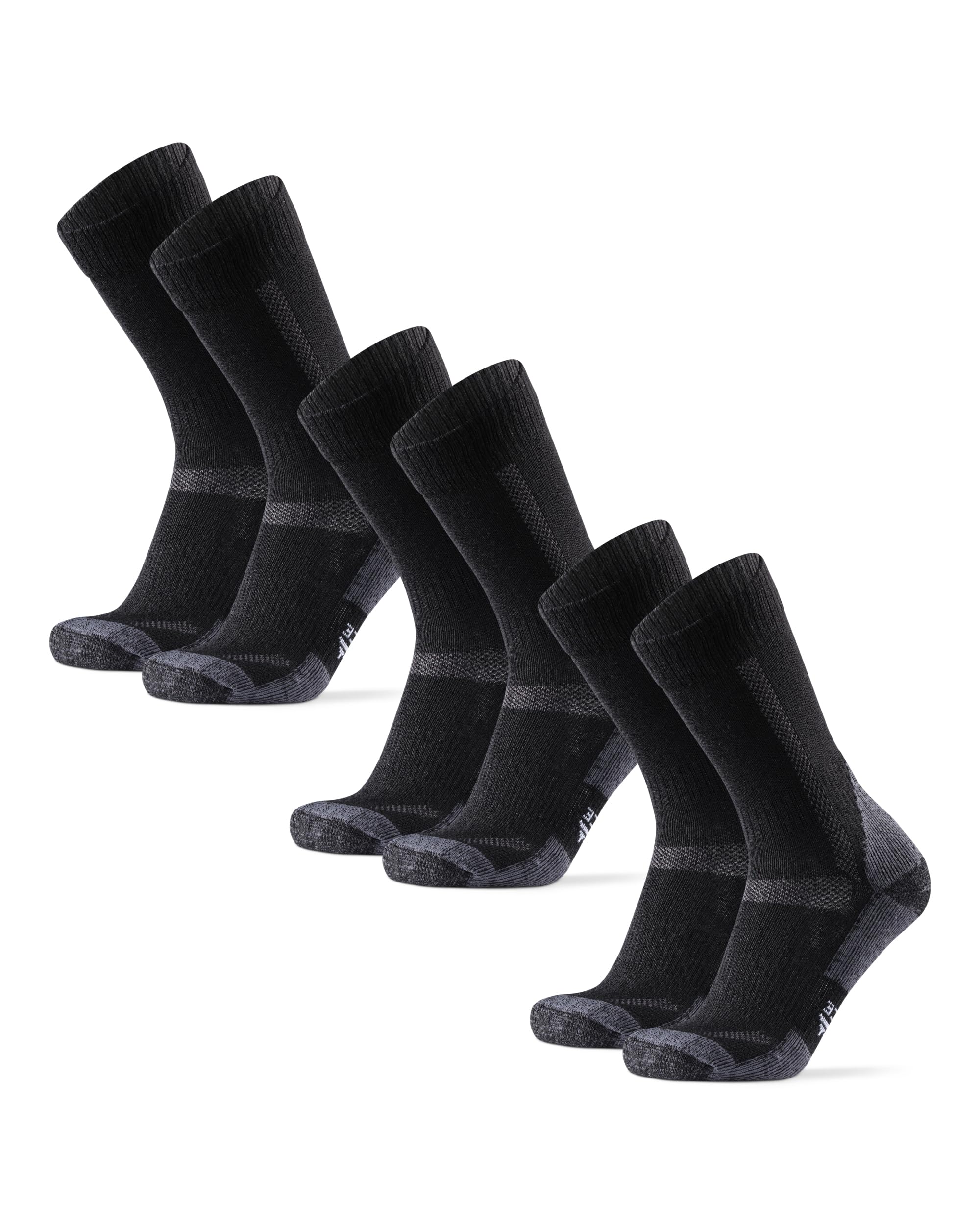
DANISH ENDURANCE Merino Hiking Socks

89 /100
Traveler Score Excellent

Key details

Fabric
Merino wool blend
Weight
Lightweight
Wicking
Moisture-wicking knit
Check Details on Amazon

A wool sock thin enough to wear in a snug shoe is a specific thing, and this is it: a merino blend crew that is warm for its weight, handles sweat well, and adds almost nothing under the laces. We reach for it in spring, fall, and mild winter days, and it is the one to consider if your boots fit close and thicker socks make your toes complain.

The knit is loose and airy rather than dense. That is why it feels light and cool on a warm climb, and why it is not much use on a cold, wet day, which is midweight boot sock territory.

Here is the trade-off that decides it: the merino share is modest, around 30 percent, so it behaves like a technical blend with wool in it rather than a high-wool sock. That still beats an all-synthetic crew on odor and moisture, and at the thinnest end of this group it fills a gap the heavier socks cannot. Buy it for warm-weather hiking and travel if you like a thin sock; skip it if you want maximum wool or real cushioning under a load.

Pros

  • Warm for its weight with no bulk under laces
  • Wicks sweat on mild-weather hikes
  • Thin enough for close-fitting boots

Cons

  • Runs large through the foot
Our verdict

A good choice if you run hot and want a thin, warm-enough wool blend for mild-weather hikes; if you need real merino content, look at our top pick instead.

Check Latest Price
6

Spare Pairs, Travel

innotree Merino Hiking Socks 3-Pack

91 /100
Traveler Score Outstanding

Key details

Pack
3 pairs
Fabric
Merino wool blend
Cushioning
Cushioned footbed
Check Details on Amazon

Three pairs of merino-blend crews for less than one premium pair is the pitch, and it is a good one when you are building a rotation from nothing or want socks that can live in a pack without being precious about them.

We rate these as spares rather than as the pair a trip is built around. They are comfortable, properly cushioned, and cheap enough to lose; when one goes, you replace a single sock instead of a set, and the other two stay in rotation. That is a different job from the guaranteed pair you wear on a long traverse, and it is a job worth having covered.

The cushioning is where they punch above the price: a soft pad under the ball and heel with just enough compression to stay put, plus a knit that handles sweat through a long, warm day. That is enough for travel, day hikes, and a backup pair in the car.

Pros

  • Three-pair pack for the price of one premium pair
  • Cushioned footbed that stays put on the foot
  • Wicks well on warm-weather hikes

Cons

  • Heels wear through before the rest of the sock
Our verdict

Buy these as spare pairs to break in or keep in the pack: three merino-blend crews at a budget price, as long as you accept that the heels may go first.

Check Latest Price

How We Tested These Hiking Socks

We started by pulling together every men's hiking sock we could find with a wool content worth mentioning, then cut anything that was mostly cotton or straight polyester, anything with a bulky seam running across the toes, and anything that came in only one universal size. That left us with 14 pairs, which we bought ourselves in the sizes each tester normally wears.

The first judgment was always fit: whether the heel pocket landed on the actual heel or floated up toward the ankle, whether the toe box left room without bunching, and whether the cuff stayed up after a few miles instead of sliding down into the boot. We re-checked fit after the first wash to see if anything had shrunk a half size. Cushioning got judged on descents over rock and loose gravel, then again that evening, when testers reported where they still felt pressure — under the ball of the foot, at the heel, or nowhere at all. If a pair made an otherwise comfortable boot feel tight across the instep, it lost points regardless of how plush it felt.

Warmth and moisture management were tested honestly rather than in a lab: a cold, wet weekend landed in the middle of our schedule, and so did a stretch of humid afternoons in the high 80s. We noted which socks came off clammy and which came off dry, and whether the heaviest pairs were genuinely warmer or merely thicker. Every pair went through the wash after each hike — ten cycles and counting — and we checked heels and toes for thinning, cuffs for lost stretch, and seams for any spot that rubbed. Value came last: whether a pair did something the cheaper ones couldn't, like holding its shape or drying overnight.

How to Choose Hiking Socks for Men

Match the Height to Your Boot

Sock height is about where the boot collar lands on your leg. A boot sock rises above the collar, which is what you want with a mid or high boot and a pack, because it keeps laces and a stiff tongue off bare skin. Micro crew clears a mid-cut boot and stops before it turns into a warm cuff. Quarter height sits at the ankle for low-cut hikers and trail shoes.

The trap is buying quarter socks for a tall boot because they feel cooler in the store. The collar then rubs exactly where the sock ends, and the sock works its way down into the heel all day. Find where your boot's collar sits, then pick a sock that finishes above that line rather than level with it.

Cushioning Changes How Your Boot Fits

Cushioning is not just comfort, it is volume. A full-cushion sock like our top pick fills a roomy boot and takes the pressure of a heavy pack off the ball and heel. A light-cushion sock leaves room in a shoe that is already snug, and it runs cooler. Same foot, same boot, very different fit.

So try the sock with the boot you will actually wear. If your toes touch the front of the boot in a thick sock, go lighter rather than up a size; a bigger boot with a thin sock will slide and rub. Pair a roomy boot with full cushion, a close-fitting one with a light cushion, and let the sock take up the slack.

What the Wool Percentage Actually Buys You

Merino earns its reputation by moving moisture off the skin and holding odor at bay for several days, which is what makes multi-day trips without laundry possible. Most hiking socks are blends, because nylon and spandex give the sock its shape and wear resistance. A high merino share is what you are paying for; a modest one behaves more like a technical synthetic with wool in the mix.

The trap is the word merino on the label. A sock that is 30 percent merino is a different product from one that is two-thirds merino, and the price does not always tell you which you are getting, so check the percentage. Cotton is the other extreme: comfortable and cheap, but it holds sweat against the skin, so it suits day hikes and not much more.

Rotation, Warranty, and Cost per Mile

Two or three pairs in rotation outlast one pair washed every night, because wool needs a rest to shed moisture and recover its loft. A guaranteed pair changes the arithmetic further: the lifetime guarantee behind our top pick means a hole gets repaired or replaced, not thrown away.

That is why we suggest buying two pairs of the best sock you can afford rather than five of the cheapest. Cheap pairs that thin at the heel in a season are not a saving; they are a subscription. Cost per mile of trail is the number that matters, and it usually favors the better sock.

Frequently Asked Questions

Final Verdict

Start with the Darn Tough Hiker Boot Midweight Full Cushion if you hike in boots with weight on your back. Full cushioning, a high merino share, and a lifetime guarantee make the premium price the least interesting thing about it.

If your hiking is summer day trips in low-cut shoes, the Light Hiker Micro Crew is the better sock for the job, and the Time May Tell crew is the sensible budget answer. Two pairs of the right sock will serve you better than five of the wrong one.