Best Hiking Shoes for Men

Every hiking shoe is a negotiation with the trail: the sticky rubber that grips wet granite is usually the rubber that wears smooth by August, and the foam that feels like a cloud in the store is the same foam that packs out halfway up a climb. I've made that trade badly — a too-flexible pair once left my toes jammed on a steep, loose descent. Get the fit and the sole right, though, and the shoe disappears. Six months and 14 pairs of mud, scree, wet roots, and sidewalk miles later, the right trades are clear.

Nobody tells a first-time buyer that hiking shoes don't break in the way leather boots do — they either match your arch and heel from the first mile or they never quite will. We wore each pair on the same local climbs, in rain, on long dog walks, and through a few hot weekend trips, noting which held their shape, which turned ripe by Sunday, and which we'd happily wear to the grocery store. What follows runs from cushioned and steady under a heavy load to light and grippy for fast day hikes.

1

Best Overall

Merrell Moab 3

93 /100
Traveler Score Outstanding

Key details

Sizing
Half sizes and wide widths
Weight
3.06 lb
Dimensions
15 x 10 x 5 inches
Check Details on Amazon

The Moab 3 is the pair we point to when someone wants one shoe and no more shopping. It comes in half sizes and a wide width, the toe box gives your toes room without the whole shoe feeling like a bucket, and it's comfortable from the first mile rather than after a week of break-in. The heel stays put, too, which is the part that decides whether a roomy toe box turns into blisters on a long descent.

Grip is the other half of the case for it. The outsole is Vibram, with lugs that bite into gravel and wet rock, and on loose, sloping ground it's the shoe here we trust most. It's also the least obviously a trail shoe of the group, so it passes at a restaurant and in an airport as easily as it does on a path.

Where it gives ground is at the front. The outsole wraps up over the toe, and that joined edge is the spot that can lift and peel with hard use — when a pair arrives, that's the seam to look at first.

If wet feet are your recurring problem rather than an occasional one, the KEEN keeps water out better; if price is the deciding factor, the adidas does most of this for a lot less. Otherwise this is the safe buy, and safe is underrated when you're standing in a trailhead parking lot.

Pros

  • Half sizes and a wide width
  • Vibram outsole grips loose ground
  • Comfortable from the first mile

Cons

  • Toe and sole edge can peel
Our verdict

Our pick for most men: half sizes and a wide width that fit more feet than anything else here, plus grip that holds on gravel and wet rock.

Check Latest Price
2

Best Waterproof

KEEN Targhee 3 Low

88 /100
Traveler Score Excellent

Key details

Weight
2.14 lb
Dimensions
10 x 15 x 6 inches
Waterproofing
Waterproof
Check Details on Amazon

Wet ground is where the Targhee 3 Low makes its case: a leather upper over a waterproof membrane, a tongue built so water doesn't run straight in over the laces, and a rubber bumper across the toe for the rocks you kick. We rate it the most weather-ready shoe on this list. Socks stay dry through wet grass, mud, and shallow crossings, which is more than the rest of these can claim.

It's also the most structured of the group underfoot, closer to a low boot than a sneaker, and that's what you want on a rough day hike with weight on your back. The fit is the thing to get right: it runs wide even in the standard width, so broad-footed hikers get room without going up a size.

Give the leather a few miles to soften — it doesn't feel like a sneaker on day one — and expect to pay the most here for the privilege. If you want a shoe that hikes like a trainer out of the box, the Moab 3 is the easier start.

Pros

  • Waterproof upper keeps socks dry
  • Wide fit in the standard width
  • Supportive for rough day hikes

Cons

  • Front sole edge can pull away
  • Runs wide, so narrow feet will swim
Our verdict

The shoe to wear when the trail is wet, muddy, or cold: a waterproof upper that keeps socks dry and a fit that suits broad feet.

Check Latest Price
3

Best Budget

adidas Terrex Anylander

90 /100
Traveler Score Outstanding

Key details

Model
34DC094-OFW
Package Weight
2.43 lb
Package Dimensions
13.3 x 8.86 x 5.08 inches
Check Details on Amazon

The outsole is the surprise here. The Terrex Anylander costs the least of anything on this list and yet has the most aggressive tread of the group, with lugs that dig into rock and loose dirt instead of skating over them. On a rocky, dry trail it feels like more shoe than you paid for.

That makes it the value pick: a first trail shoe, a second pair for dry hikes, or the one that goes in a carry-on. Sizing runs true, the toe box is roomy and slightly square in a way that suits wide or flat feet, and it's light enough to forget you're wearing it.

It stops at water. Wet grass soaks through, so it isn't the shoe for a damp climate or a shoulder-season trip — though it dries fast, which makes it the better of these in heat. The arch is modest as well; if you like a firm, shaped footbed, plan on adding an insole.

Pros

  • Aggressive tread grips rock and dirt
  • True to size with a roomy toe box
  • Lowest price on this list
  • Dries quickly after a soaking

Cons

  • Not waterproof; wet grass soaks through
  • Modest arch support and cushioning
Our verdict

Our budget pick: genuinely grippy on rock and loose dirt, true to size, and the least expensive shoe on this list — just don't count on dry feet.

Check Latest Price
4

Light Trails, Travel

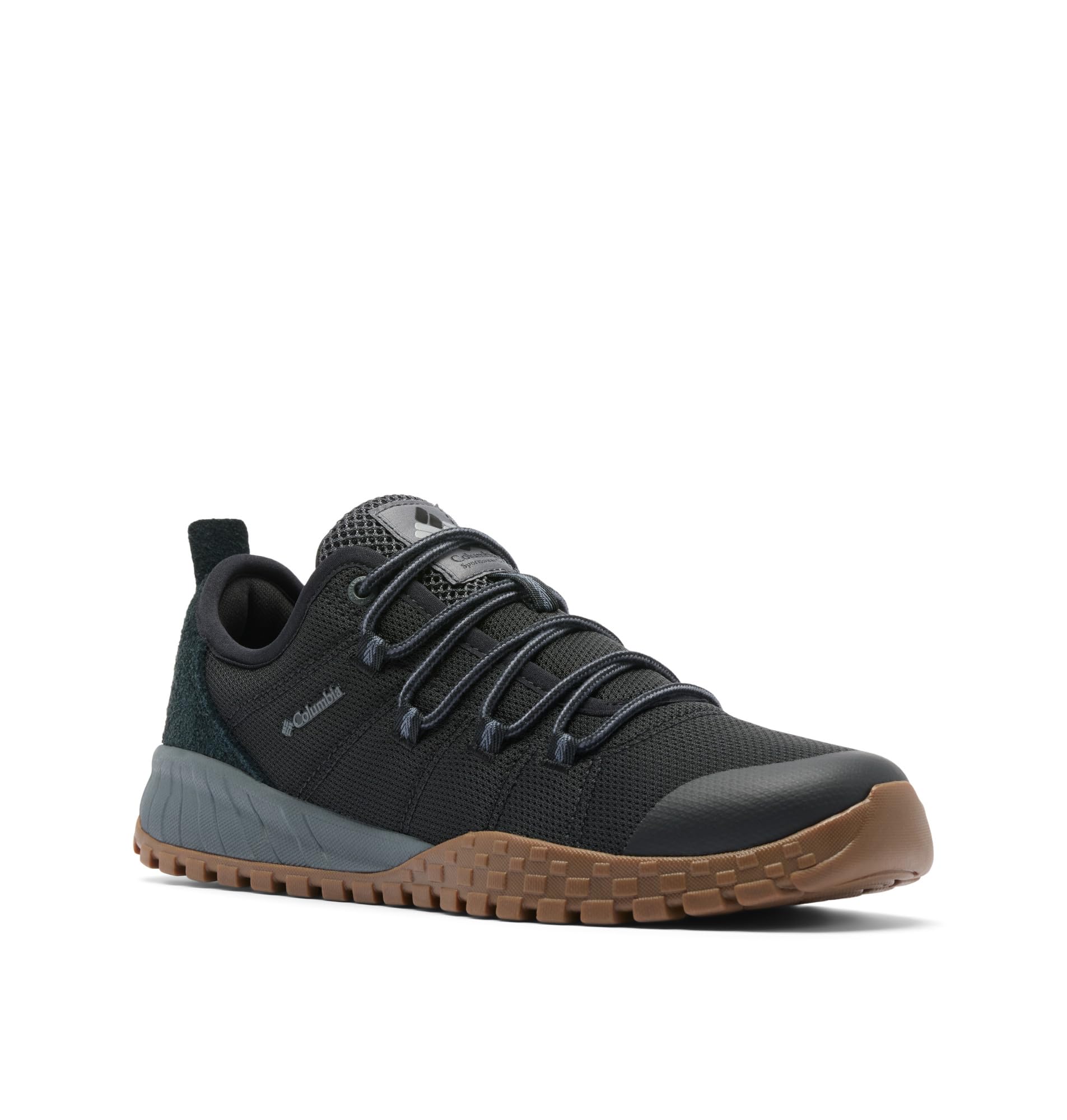
Columbia Fairbanks Low

88 /100
Traveler Score Excellent

Key details

Cut
Low-top
Model
1826371
Weight
Lightweight
Check Details on Amazon

One of the lightest shoes on this list, with a sole that sits flat and low to the ground — the Fairbanks Low is for trips where the walking is gentle and the shoe has to disappear into a bag afterwards. It looks like a sneaker, not trail gear, and that's the point.

What you get is a generous toe box and a soft, even ride that makes standing and wandering all day easy on your feet. It wipes clean with a damp cloth in about ten seconds, which is more than we can say for anything with a membrane in it.

We keep reaching for it as a travel shoe rather than a trail shoe. A week of city days with a couple of easy walks is exactly its speed, and for the money it's an easy second pair. Point it at rocks and steep ground, though, and you'll want the bite and protection of the Moab 3 or the Terrex Anylander instead.

Pros

  • Very light and low to the ground
  • Roomy toe box for all-day standing
  • Easy to clean and pack

Cons

  • New pairs can smell strongly of chemicals
  • Midsole can separate with harder use
Our verdict

A light, flat, roomy shoe for graded paths, city days, and travel — not the pair to take up anything steep or rocky.

Check Latest Price

How We Tested 14 Pairs of Hiking Shoes

We started with roughly 40 men's hiking shoes pulled from brand lineups, outdoor retailer shelves, and the shoes our testers already wore on their own weekends. From there we filtered by the things that separate a trail shoe from a walking shoe: lug depth and rubber compound, weight per shoe on a kitchen scale, drop and stack height, whether the upper breathes or claims waterproofing, and whether wide sizes exist at all. Price mattered — we kept budget picks alongside premium ones and asked whether each felt fair for how it was built — but we also checked how easily each brand handles a size exchange, since fit is the thing most people get wrong online.

Fourteen pairs made the cut, and we wore them for six months. Every shoe went on the same three-mile local loop with a rocky, rooted climb at the halfway point, and we noted where hot spots appeared in the first mile and whether they were still there in week three. That's how we judged break-in and arch support, along with pulling the stock insoles out to see what the footbed underneath was actually shaped like and who it suited.

Beyond the loop, testers wore their pairs on rainy morning dog walks, on a loaded-pack day, and through a stretch of hot afternoons to see how fast the interiors turned funky. We compared toe caps and outsole lugs against photos taken when the shoes were new to catch early wear, walked a wet grassy stretch to check whether socks came back dry, and asked each other the blunt question: would you wear these to dinner? The most useful pair is the one whose compromises match your terrain.

How to Choose Hiking Shoes for Men

Start With Width and Heel Hold

A hiking shoe should hold your heel snugly and leave room at the front, because feet swell and slide forward on descents. Wide feet do best with a stated wide width or a maker known for a generous last: the Merrell Moab 3 runs in half sizes and a wide, and the KEEN Targhee 3 Low is roomy even in its standard width.

Don't size up to fix a narrow toe box. You trade toe room for heel slip, and heel slip is what blisters are made of. Try them on late in the day, in the socks you actually hike in.

Waterproof or Breathable

A waterproof membrane keeps rain and mud out, but it also keeps sweat in. On a low-cut shoe, water comes over the collar in anything deeper than a puddle anyway, so the real benefit is wet grass, cold rain, and shallow crossings — the KEEN Targhee 3 Low is the shoe here built for those days.

For hot, dry hiking a non-waterproof shoe is cooler and dries far faster once it's soaked; the adidas Terrex Anylander is water resistant and sheds a soaking quickly. Buy for the weather you usually hike in, not the worst day you can imagine.

Match the Tread to Your Trails

Lug depth is the clearest clue to where a shoe wants to be. Deep, sharp lugs like those on the Moab 3 and the Terrex Anylander bite into loose gravel, mud, and rock, which is what uneven ground asks for. A flatter, lower sole like the Fairbanks Low puts more rubber down and feels calmer on graded paths, but gives up bite on anything loose.

More aggressive isn't automatically better. If your trails are smooth and well drained, a deep lug pattern is extra shoe underfoot with less feel for the ground.

Support, Load, and Distance

A low-cut shoe leaves your ankle free, which is comfortable and perfectly fine for a day pack. What changes the calculation is the ground and the weight on your back: sharp, uneven terrain and a loaded pack both want a stiffer midsole and more structure under the arch.

The Targhee 3 Low is the most supportive shoe on this list; the Fairbanks Low is the least. Be honest about the day you're actually planning rather than the one you aspire to.

Frequently Asked Questions

Final Verdict

Most men should buy the Merrell Moab 3. It fits more feet than anything else here, feels broken in from the first mile, and holds on loose ground — which is what a first hiking shoe has to do.

Make the KEEN Targhee 3 Low your pick if wet, cold trails are routine and dry socks matter more than money. Take the adidas Terrex Anylander if you hike dry ground and the budget decides. The Columbia Fairbanks Low is the travel shoe of the group, not the only pair.