Best Hiking Sandals for Women of 2026

Sandals and rough trails sound like a bad match until you've spent a hot afternoon in boots. What a good hiking sandal actually fixes is the misery of sweaty feet and creek crossings — it drains, it breathes, and it dries while you're still walking. The catch: open straps mean grit, hotspots, and a real chance of blisters in the first mile if the fit is off. I've worn through more pairs than I'd like to admit, and my team just spent six months in 12 pairs on rocky trails, wet creek rock, and long dog walks to sort the keepers from the returns.

Here's what first-time buyers get wrong: a sandal should hold your foot at the heel and instep, not just cup the arch, and plenty of women land in a half size different from their sneaker size. We weighed that fit against arch support, how the footbed felt at mile eight, how straps held up to scuffing, and whether the colors were ones you'd wear off the trail too. The pairs that survived are below.

1

Best Overall

KEEN Whisper

91 /100
Traveler Score Outstanding

Key details

Brand
KEEN
Department
Women's
Model Number
Whisper-w
Check Details on Amazon

A creek crossing is where a hiking sandal earns its place or loses it, and it is the reason the KEEN Whisper is our top pick. Once the straps are wet the sandal stays where you put it, the footbed drains instead of pooling, and the arch under your foot does not flatten out halfway through the day. On a warm-weather trail that runs in and out of water, that is the difference between footwear and something you end up carrying.

The strap layout does the rest. There is enough adjustment to lock the heel and take up slack over the instep without pinching the top of the foot, and we never had to re-tighten mid-walk. Sizing is the part to get right: the Whisper runs small for some feet and wide across the forefoot, so measure your foot rather than copying the size of your running shoes, and check that your toes sit behind the front edge before a long day.

It is not the lightest or the most elegant pair here. What you get in return is a shoe that handles wet rock, loose gravel, and a wading crossing in the same afternoon. We stopped thinking about our feet about a mile in, which is the highest compliment a trail sandal can get.

Pros

  • Holds the foot securely once wet
  • Supportive arch that lasts a long day
  • Straps adjust at several points
  • Drains and dries quickly

Cons

  • Among the priciest picks in this group
Our verdict

We recommend the Whisper to anyone whose hiking includes water, rock, or a full day out — it grips, supports, and stays put when other sandals start sliding.
Check Latest Price
2

Best Arch Support

Teva Tirra

91 /100
Traveler Score Outstanding

Key details

Brand
Teva
Department
Women's
Model Number
4266
Check Details on Amazon

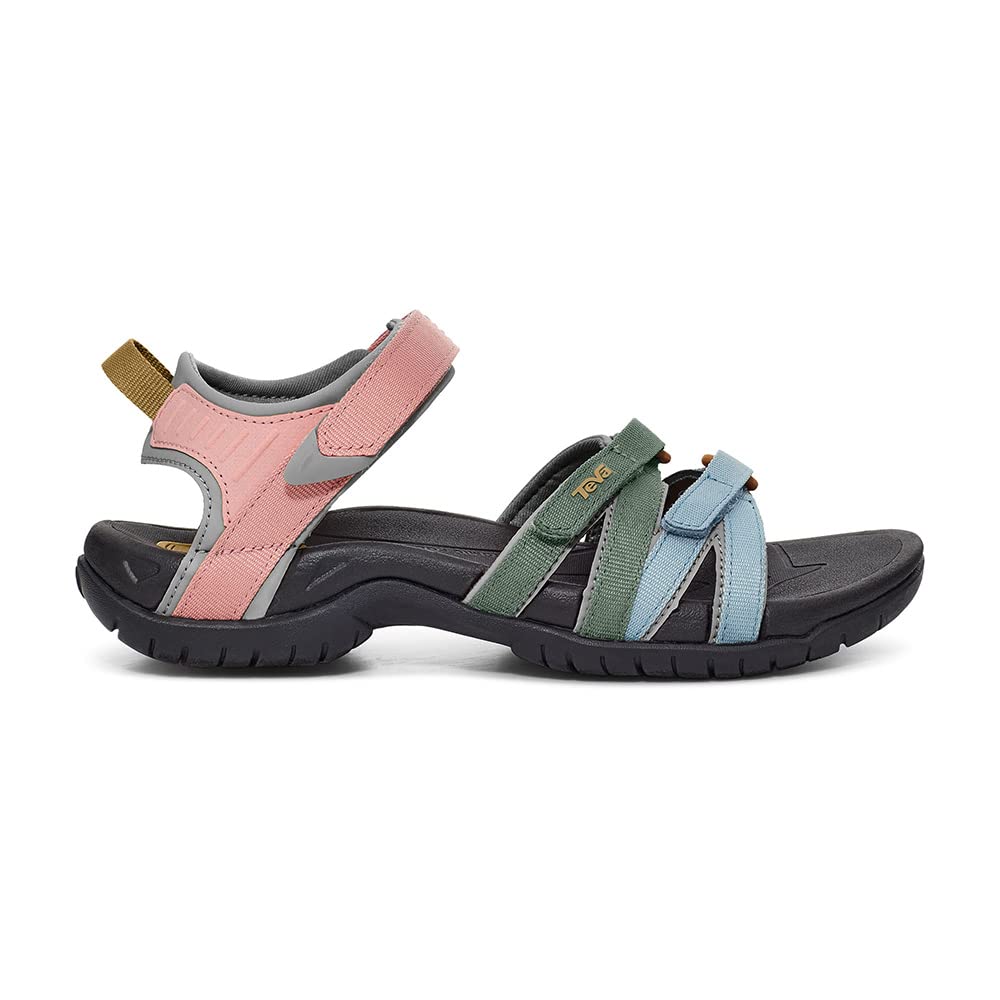
Three straps on the Tirra adjust independently — heel, instep, and toes — and that is what lets a low-volume foot sit still inside the sandal instead of sliding forward on descents. We noticed the small hook on the back strap early: it lets you pull the sandal on without undoing the fit you just dialed in, which matters on a trip where you are in and out of them all day.

The footbed is the real argument for buying it. Of everything here, the Tirra gives the firmest support under the arch without tipping into orthotic stiffness, and after a few hours on rocky ground that is the difference between tired legs and sore feet. We keep coming back to it on dry trails where the surface shifts underfoot.

It is cut for a lower-volume foot than the Whisper or the UBFEN, so if sandals usually feel baggy through the middle, start here; if they usually pinch, this one will too.

Pros

  • Firm, planted arch support
  • Three independent strap adjustments
  • Holds a low-volume foot in place

Cons

  • Front strap can rub before it softens
Our verdict

Buy the Tirra if you want the firmest arch support here and your feet swim in roomier sandals — it is the most planted pair we walked in on dry rock.

Check Latest Price
3

Best Premium Pick

ECCO Yucatan

93 /100
Traveler Score Outstanding

Key details

Brand
ECCO
Department
Women's
Model Number
06956301007
Check Details on Amazon

Most sandals in this group are built for a season or two of trails; the Yucatan is built for several. The upper holds its shape, the footbed keeps its cushioning, and it handles rain and river water without going soft underfoot.

The width is a fairly standard women's cut — easier than the Tirra, less roomy than the UBFEN or the Dannto — and the adjustment points make it simple to take up slack at a narrow heel without squeezing the forefoot.

On the foot it is a softer, more forgiving ride than the Tirra, with a cushioned footbed that needs no breaking in and an arch that reads as support rather than padding. It is also the pair here least likely to look out of place at dinner, which counts on a trip where one pair of shoes has to do everything. We reach for it when the itinerary mixes trail, town, and a restaurant at the end of the day.

Pros

  • Cushioned footbed with no break-in
  • Holds up to water and repeat wear
  • Standard women's width fits most feet
  • Looks smart enough for evenings

Cons

  • Highest price in this group
Our verdict

We point travelers who want one sandal for trails, cobblestones, and dinner to the Yucatan; its cushioning and build outlast everything else here.

Check Latest Price
4

Best Value

Teva Hurricane 4

93 /100
Traveler Score Outstanding

Key details

Brand
Teva
Department
Women's
Model Number
1093378
Check Details on Amazon

The Hurricane 4 does most of what the Tirra does for a good deal less, which is why it is our value pick. Three straps adjust at the heel, instep, and toes; the footbed is firm enough for a full day; and the sole grips wet concrete and river rock without skating.

Where it gives ground is refinement. The straps sit a little wider and the footbed is flatter than the Tirra's, so a very low-volume foot may find it roomier than it wants. Wide and flat feet tend to do well here — this is the pair we hand to someone who gave up on sandals because everything pinched across the instep.

It is happy in water, dries fast, and takes a beating on gravel and pavement alike. The sole has enough tread for a muddy path without feeling clumsy on a sidewalk, which is why this is the pair that ends up by the door rather than in the gear bin.

Pros

  • Three-point strap adjustment
  • Firm footbed for full days
  • Grip holds on wet rock and pavement
  • Suits wide and flat feet

Cons

  • Footbed can hold sweat and odor
Our verdict

Our value pick: the Hurricane 4 brings three-point adjustment, a firm footbed, and real grip for a fraction of our top pick's price.

Check Latest Price
5

Best Lightweight

Plaka Explore

89 /100
Traveler Score Excellent

Key details

Brand
Plaka
Style
Walking and hiking sandal
Department
Women's
Check Details on Amazon

Weight is the first thing you notice lifting the Plaka out of the box, and it is the reason it earns a spot here. It feels weightless on the foot, the sole flexes with you instead of fighting you, and the straps hold it in place once it is on.

It is more supportive than its weight suggests. The arch sits in the right place and the sole turns under the ball of the foot, which is why it works for miles of pavement, resort paths, and easy trail rather than just the beach. This is the pair we pack when the itinerary is mostly walking and the luggage is small.

It also dresses up better than anything else in this group, so it can go from a morning hike to a restaurant without looking like gear. On rough, loose ground it is out of its depth, though — the sole is thin and the grip is modest — so keep it for maintained trails.

Pros

  • Feels weightless on the foot
  • Supportive arch for its weight
  • Dresses up for evenings

Cons

  • Runs large for some feet
Our verdict

The Plaka is what we pack when we want one light pair for walking, travel, and easy trails — it looks good and disappears in a bag.

Check Latest Price
6

Best Toe Protection

Dannto Closed-Toe

91 /100
Traveler Score Outstanding

Key details

Style
Hiking and water shoe
Toe Style
Closed toe
Department
Women's
Check Details on Amazon

The Dannto is the only closed-toe sandal here, and that single design decision decides who should buy it. On a trail with roots, loose scree, or a lot of rock-hopping at the water's edge, a covered front keeps your toes out of trouble entirely.

It is a roomy shoe. The toe box is wide enough that the front of the foot never feels pinched, and the heel strap plus the bungee lacing let you pull the sandal back so it does not creep forward on descents. Arch support is decent rather than exceptional; if that is your main reason for buying, the Tirra and the Yucatan give you more.

It drains and dries like a water shoe and is comfortable from the first wear, which makes it a good travel pair for a trip that mixes a wet landing with an afternoon on foot. Sand rinses out of the closed front with a dunk, and there is no strap between the toes to rub.

Pros

  • Closed front protects toes on rough ground
  • Wide toe box suits broad feet
  • Drains and dries after water
  • Adjustable heel strap and lacing

Cons

  • Closed front runs hotter than open sandals
Our verdict

Buy the Dannto if your trails are rocky and your feet are wide — the closed front protects toes and it drains fast after water.

Check Latest Price
7

City-To-Trail Days

Viakix Walking Sandal

91 /100
Traveler Score Outstanding

Key details

Brand
Viakix
Style
Walking and hiking sandal
Department
Women's
Check Details on Amazon

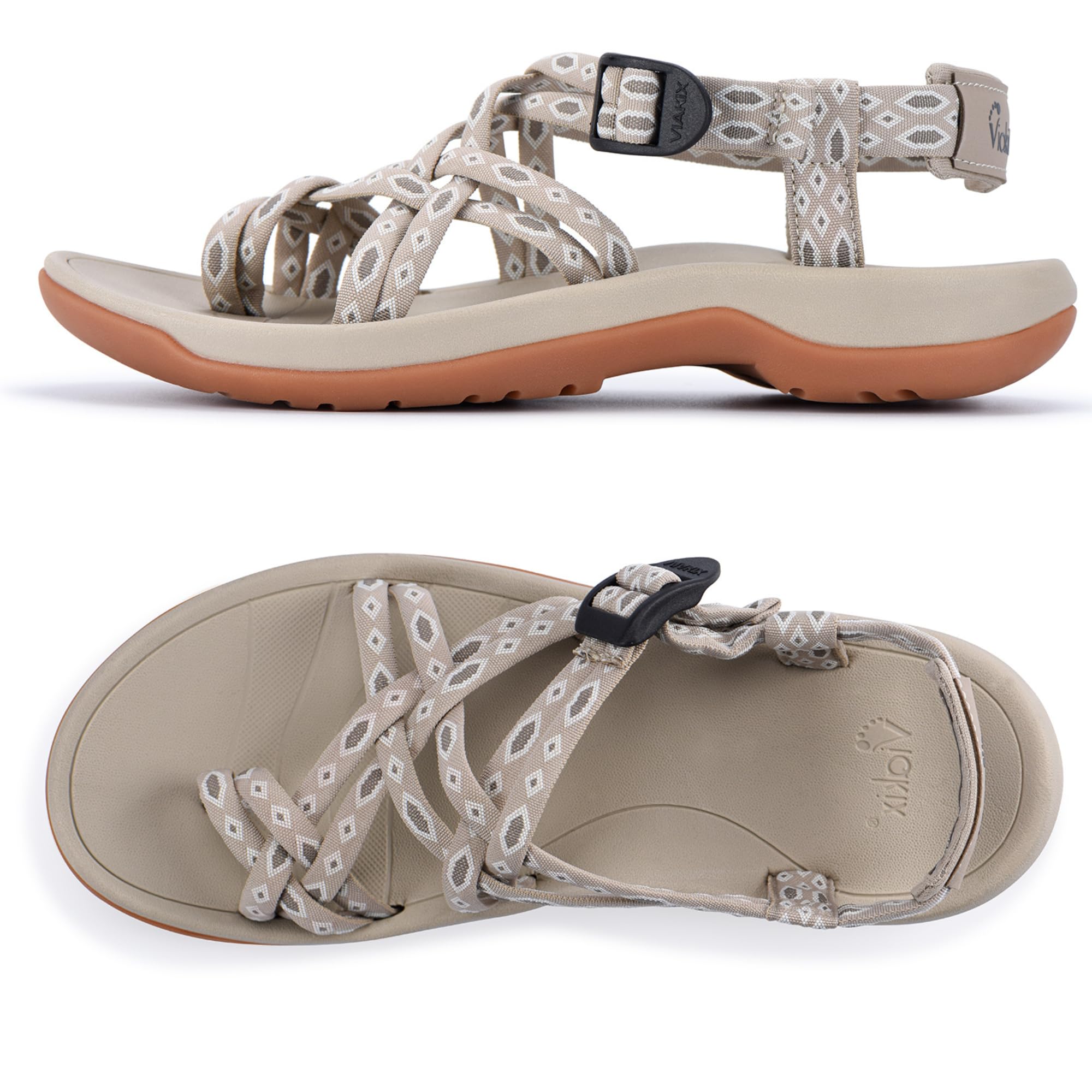
Stretch is the whole idea behind the Viakix: soft bands that pull on like a sock and need no breaking in. That makes them the pair to grab for a flight or a long day walking a city before the trail.

There is more underfoot than the soft upper suggests. The heel cup is deep, the arch holds up over hours rather than minutes, and we wore a pair for a full day out of the box without a rub.

The trade is control. Stretch gives comfort and easy on-off, but on side-sloping ground or loose scree the foot moves a little inside the sandal, so we keep these for maintained trails, travel, and long days on foot rather than scrambles.

Pros

  • No break-in period
  • Deep heel cup and reliable arch
  • Easy on and off

Cons

  • Straps wear faster than the sole
Our verdict

We recommend the Viakix for travelers and walkers who want a soft, no-break-in sandal for long days on maintained ground.

Check Latest Price
8

Wide Feet

UBFEN Hiking Sandal

91 /100
Traveler Score Outstanding

Key details

Brand
UBFEN
Style
Hiking sandal
Department
Women's
Check Details on Amazon

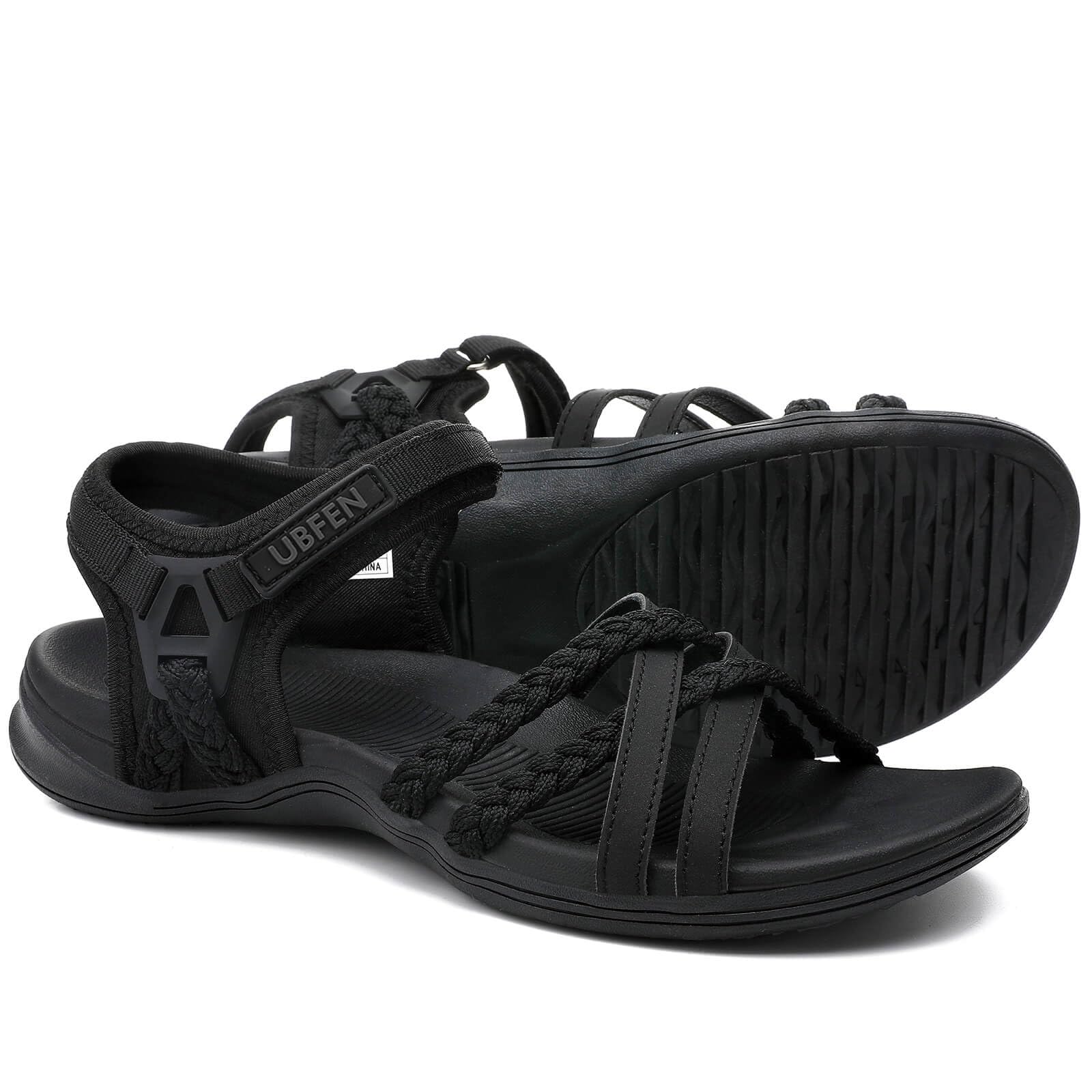
If your feet are wide enough that most sandals leave a red line across the little toe, the UBFEN is worth trying before you spend more. The forefoot is generous, the toe box is tall, and the straps slide over a bunion instead of pressing on it.

The cushioning is the other reason it earns a place. The insole is soft without turning mushy, the arch sits where you can actually feel it, and the whole sandal flexes as you walk instead of slapping the ground. It is the pair here we suggest to someone who wants a soft ride first and a technical sandal second.

Sizing runs generous, so if you are between sizes, take the smaller one. It is a low-risk way to find out whether a wide, cushioned sandal suits you before committing to a pricier pair.

Pros

  • Generous width and tall toe box
  • Soft, cushioned insole
  • Straps clear a bunion

Cons

  • Sole durability is the weak spot
Our verdict

For wide feet and a soft ride on a budget, the UBFEN is the pair we suggest trying first.

Check Latest Price

How We Tested 12 Pairs of Women's Hiking Sandals

We started by pulling every women's hiking sandal we could find from brands we already trust on trail and a few we didn't, then cut anything that came only in whole sizes, anything heavier than a day hiker needs, and anything priced beyond what most people want to spend on a shoe that gets wet. That left 12 pairs, which four testers wore for six months — on rocky local trails, on a slickrock weekend, through one memorably cold creek crossing, and on the unglamorous stuff in between: dog walks, errands, a school pickup or two.

Fit got tested the hard way. Each tester started in her usual sneaker size and walked a three-mile loop with a climb and a long descent, then reported exactly where the straps touched and where grit collected; anyone who felt a hotspot tried a half size up or down and repeated the walk. We noted how much room sat in front of the toes compared with behind the heel, whether the foot slid forward on downhills, and whether a blister appeared by mile three. Comfort was scored on that first walk and again after a 10-mile day at the end of the window, since a footbed that feels soft in the store can flatten out.

For arch support, testers stood on one foot in each sandal and walked a steep descent, which is where a flimsy midsole announces itself. Durability came down to scuffing on the straps, tread wear on the same stretch of rock over six months, and whether buckles or webbing frayed. Appearance and color we judged honestly and a little vainly — worn with shorts on the trail and with a dress to a patio lunch — and noted which pairs looked as good off the trail as on it.

How to Choose Hiking Sandals for Women

Straps and Hold Come First

Look for three separate adjustments — heel, instep, and forefoot — so you can take up slack in one place without crushing another. To test the hold before you commit, stand with the ball of your foot on a stair edge and drop your heel: if the sandal lifts away from your arch, the cut is wrong for your foot, whatever size the box says.

Stretch-strap designs are the easiest to pull on and off, but they allow more movement on rough ground than a webbing strap with a buckle or hook-and-loop closure. We treat stretch as a travel convenience, not a scrambling one.

Fit, Width, and the Sizing Trap

Sandal sizing does not track your running shoes. Measure your foot late in the day and check that your toes sit behind the front edge with a few millimeters to spare; a sandal that is short will jam your toes on every descent. Width splits the field more than length does — some models here are cut for a low-volume foot, others run genuinely wide.

Treat the size on the box as a starting point. A handful of models in this group run about a half size small or large, and the only reliable check is the toe position and whether your heel stays in the heel cup when you walk.

Traction and the Ground You Actually Walk

Wet rock and dry dirt ask different things of a sole. Sticky rubber with real lugs handles both; a smooth, flexible sole that is lovely on pavement turns skittish on a wet slab, and a wet foot sliding around on a wet footbed is its own hazard.

If your trips involve stream crossings or tide pools, put a quick-drying, grippier sandal at the top of your list and leave the lightweight pair for maintained trails. If you mostly walk dry, hardpack paths, prioritize cushioning and weight instead.

Arch Support, Cushioning, and Long Days

Soft is easy to sell and hard to live with. A pillowy footbed feels wonderful for an hour, but over ten miles you want the arch held up rather than padded. Firm footbeds suit long days better than deep cushioning, and they are the ones that still feel like support at hour six.

If you wear orthotics or manage plantar fasciitis, choose the firmest footbed you can find and expect to size for the volume an insert takes up.

Toe Protection, Weight, and Packing

Closed-toe designs protect against roots, scree, and rock-hopping at the cost of airflow. Open sandals are cooler and drain faster but leave your toes exposed to whatever the trail throws at them.

Weight matters most if the sandals are going in a bag. A light, flexible pair earns its place when you are carrying everything; a heavier, more structured sandal is the better choice if it is the only footwear you will wear for a week.

Frequently Asked Questions

Final Verdict

The KEEN Whisper is the pair we recommend first, because it solves the two things that end a hike early: a sandal that shifts when it is wet, and a footbed that gives out under the arch.

If your feet are narrow and your trails are dry and rocky, the Teva Tirra gives you more arch for less. If the budget decides, the Teva Hurricane 4 covers most of the same ground.