Best Hiking Phone Tripods of 2026

The light is finally doing the thing you hiked two hours in the dark to see — pink on the ridgeline, fog sitting in the valley — and your phone is balanced on a wet rock, sliding a quarter inch at a time. That's usually the moment the search starts. A good hiking tripod solves three problems at once: it holds your phone at the exact angle you framed, it fires the shutter without you touching the screen, and it disappears into a side pocket so you stop thinking about the weight. Miss on any of those and it stays home, which makes it useless no matter how clever the legs are.

Since spring I've been hiking with a rotating cast of them — 14 in all, from palm-sized minis to flexible-leg models that wrap around a branch when there's no flat ground anywhere. The thing that surprised me most is how little the tripod head matters compared with the clamp, and how quickly ultralight legs start flexing once there's any breeze on an exposed ridge. Every one of them went on the same trails, and the ones that earned a permanent spot in my pack are below.

1

Best Overall

EUCOS 62-Inch Tripod

93 /100
Traveler Score Outstanding

Key details

Weight
12.8 oz
Remote Range
33 feet
Folded Length
12 inches
Maximum Height
62 inches
Check Details on Amazon

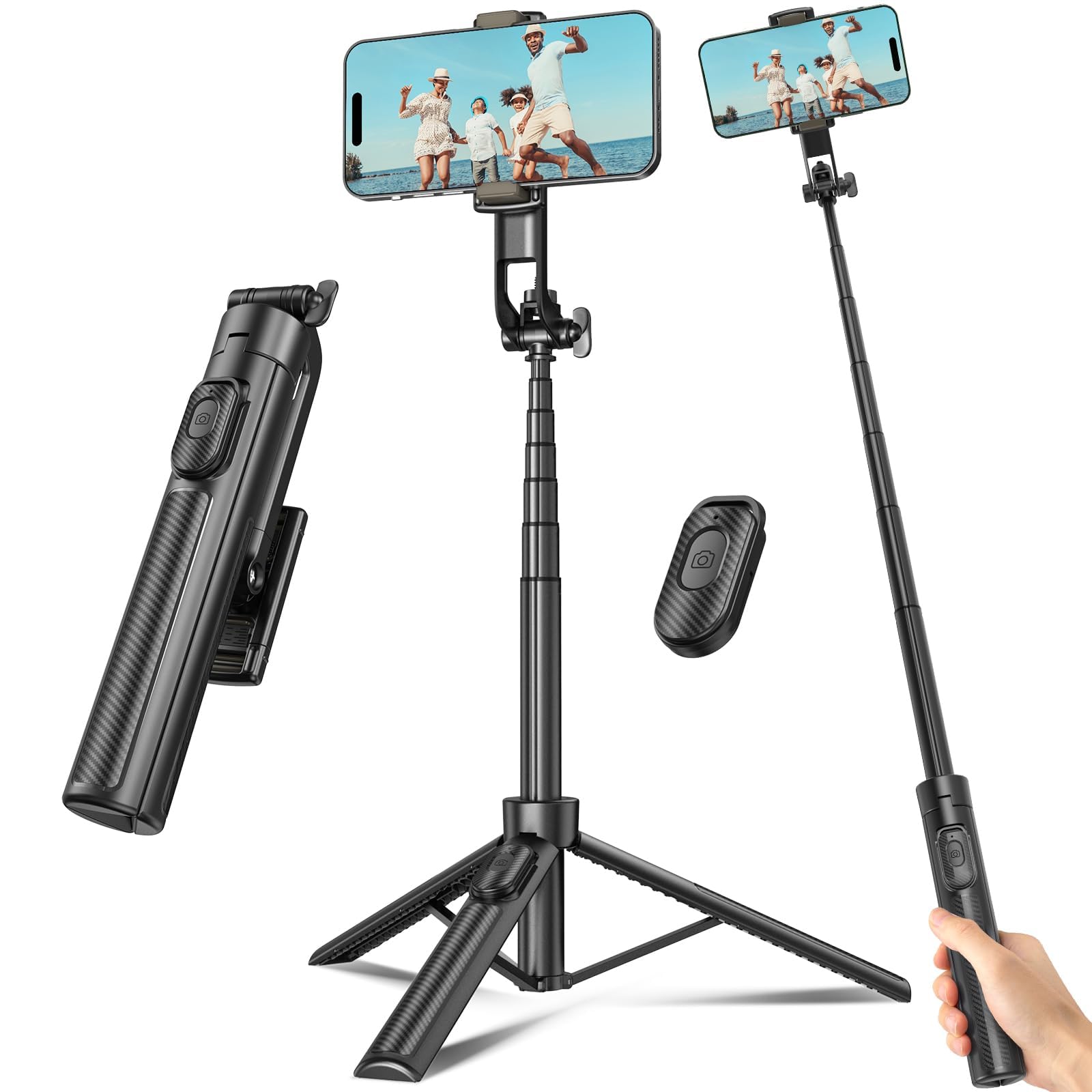
A 62-inch maximum height and a 12-inch folded length are the two numbers that explain why this EUCOS earns the top spot. On the trail, that means a stand that slides into a side pocket or lashes to a pack, then rises high enough to frame a view over tall grass or a group. We carried it as our default because it covers both the mini-tripod job and the full-size selfie-stick job without making us choose.

The phone clamp is rated for handsets 2.2 to 3.6 inches wide, and the cold shoe on top gives you a place for a small light or microphone. We paid attention to that clamp because a hiking tripod is only useful if the phone stays put when you step away. The aluminum and nylon build feels more substantial than the folded size suggests, and the extension runs in one motion rather than three separate leg locks.

The remote is the other reason it works for solo shots. It pairs over Bluetooth and reaches up to 33 feet, so you can frame a wider scene and still trigger the shutter. We liked that the remote is a separate piece you can pocket, rather than a button buried in the handle, because it lets you step into the frame without reaching back to the tripod.

It is not the smallest tripod here, and that is the honest trade: you give up pocketability for height and a more natural shooting position. The lifetime coverage is reassuring for a piece of gear that lives in a pack, and the 62-inch reach is the reason it beats the minis for portraits and group shots. If your hikes are mostly short and your shots are mostly low-angle, a lighter mini makes more sense; for everything else, this is the one we take.

Pros

  • 62-inch reach folds to 12 inches
  • 12.8-ounce carry weight
  • Remote shutter reaches 33 feet
  • Cold shoe for a light or mic

Cons

  • Not water-resistant
  • 2.2-pound load limit rules out cameras
Our verdict

We recommend this as the best all-around hiking tripod: it reaches 62 inches, folds to 12 inches, and the remote lets you step into the view without crouching.
Check Latest Price
2

Best Ultralight

Lamicall Flexible Tripod

90 /100
Traveler Score Outstanding

Key details

Weight
4.59 oz
Phone Fit
4 to 7 inches
Load Limit
3 lb
Maximum Height
11 inches
Check Details on Amazon

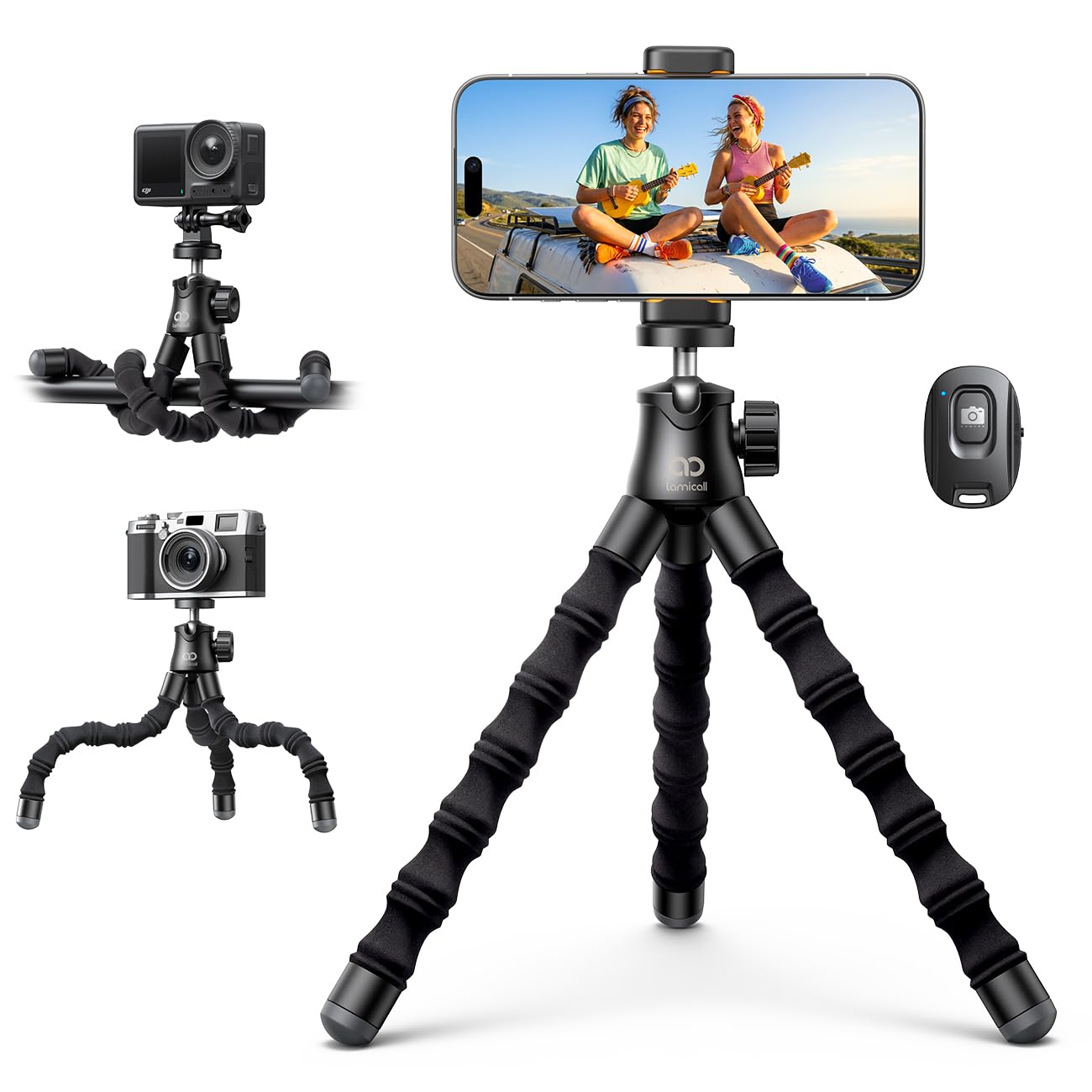
At 130 grams, the Lamicall is lighter than most phones and small enough to forget in a hip pocket. It stands 11 inches tall, works as a handheld selfie stick, and has legs that bend around a branch, rail, or pack strap. We packed it for short hikes where a full-size tripod felt like overkill and a bare phone on a rock felt like a gamble.

We found the flexible legs are the reason to carry it. The aluminum tubes and foam padding give you something to grip, and the rubber feet bite on a rock or a picnic table. The ball head rotates 360 degrees and tilts 135 degrees, enough to switch from landscape to overhead, and the 3-pound load limit leaves room for a cased phone or a small action camera. That is a lot of capability for a tripod this light.

The remote is a useful extra, not the main event. It pairs over Bluetooth, and the clip fits phones from 4 to 7 inches, so most handsets work without a case change. The trade-off is stability: the legs are flexible, and on a flat, exposed surface a tall phone can make the whole thing top-heavy. We kept the phone low when we did not have something to wrap around, and the included GoPro adapter is a small bonus for action-cam users.

Pros

  • 130-gram pack weight
  • Flexible legs wrap around branches and rails
  • 3-pound load limit
  • Remote and GoPro adapter included

Cons

  • Height tops out at 11 inches
Our verdict

We reach for this when every ounce counts: a 130-gram flexible mini that wraps onto a pack or branch and still holds a phone for trail clips.

Check Latest Price
3

Best Tall Reach

RISEOFLE 71-Inch Tripod

89 /100
Traveler Score Excellent

Key details

Weight
9.31 oz
Load Limit
4.41 lb
Folded Length
12.2 inches
Maximum Height
71 inches
Check Details on Amazon

A 71-inch maximum height is unusual in a tripod that weighs 264 grams and folds to about 12 inches. That combination is the reason the RISEOFLE is here: it can lift a phone above a crowd or frame a wide trail view without a heavy rig. We packed it when we wanted a high angle and did not want to carry a full-size aluminum tripod.

The seven-section aluminum pole extends from 12.2 inches to 70.86 inches, and the phone holder rotates 360 degrees for portrait or landscape. The remote is detachable, which makes it easier to pocket, and the 2 kg load limit is plenty for a phone. We noted that the base feels solid at low and mid height, which is where most trail shots happen.

The remote is the part we trust least. It pairs with many phones, but not every handset, so we test it at home before a trip and keep the self-timer as a backup. The detachable design is handy, but a remote that will not connect is dead weight. The 264-gram carry and 12-inch fold are the reasons it goes in the pack; the height is the reason it comes out.

Pros

  • 71-inch reach at 264 grams
  • Folds to about 12 inches
  • 360-degree phone holder
  • Detachable remote

Cons

  • Wobbles at full height in wind
Our verdict

We choose this when the shot needs height: 71 inches of reach at 264 grams, though the last few inches get wobbly in wind.

Check Latest Price
4

Best for MagSafe

Gahenwo Magnetic Tripod

86 /100
Traveler Score Excellent

Key details

Weight
1.01 lb
Phone Fit
4.7 to 7 inches
Mount Type
Magnetic and clamp
Maximum Height
69 inches
Check Details on Amazon

The magnetic phone mount is the first thing you notice. It snaps a MagSafe-compatible phone onto the stand without a clamp, and the included clamp handles phones that are not magnetic. The stand extends to 69 inches and folds into a monopod, so it covers selfie-stick and tripod duty.

We were struck by how much faster the magnetic mount made a phone change. There is no spring clamp to fight when you are wearing gloves or balancing on a rocky ledge; the phone just lands and stays. The 360-degree head and 13-to-69-inch height range give you a lot of framing options, and the rechargeable remote is a sensible touch for solo shots.

The clamp is the slower path for a non-magnetic phone, and a thick case can weaken the magnetic hold. We treat the Gahenwo as a quick-draw stand for iPhone-led hikes, not a universal mount for every handset. The 4.7-to-7-inch clamp range covers most phones, and the remote recharges over USB.

Pros

  • Magnetic mount is fast with MagSafe phones
  • 69-inch reach
  • Includes clamp for non-magnetic phones
  • Rechargeable remote

Cons

  • 460-gram weight is the heaviest here
Our verdict

We recommend this for MagSafe-compatible phones: the magnetic mount is a quick draw, and the 69-inch reach is there when you need it.

Check Latest Price
5

Best for Phone and Camera

ANXRE NT79 Tripod

89 /100
Traveler Score Excellent

Key details

Weight
12 oz
Camera Mount
1/4 inch
Folded Length
13.58 inches
Maximum Height
71 inches
Check Details on Amazon

The 1/4-inch camera screw is what sets the ANXRE NT79 apart from the phone-only picks. It reaches 71 inches, weighs 340 grams, and folds to 13.58 inches. We packed it for trips where a phone shot was the priority but a small camera might come out.

The phone holder folds down inside the tripod, which keeps it from snagging on a pack strap, and the 360-degree mount switches between portrait and landscape. The 1/4-inch mount accepts a camera or an action-cam adapter, and the 71-inch height gets you above a crowd. The same pole does both jobs without a separate adapter for the phone.

We see the NT79 as a two-tool tripod rather than a pure phone stand. The 1/4-inch mount is the reason to pick it, not the phone performance alone; if you only shoot a phone, the EUCOS is the simpler pick. For a hiker who wants one stand for a phone and a compact camera, the dual mount is the whole point.

Pros

  • 1/4-inch mount for a camera
  • 71-inch reach
  • 340-gram weight
  • Phone holder folds into the tripod

Cons

  • Folded length takes more pack space
  • Remote can be fussy with some phones
Our verdict

We recommend this for hikers who carry a camera as well as a phone: the 1/4-inch screw and 71-inch reach cover both, but it takes more pack space.

Check Latest Price
6

Best for Action Cameras

NEEWER TP34 Tripod

91 /100
Traveler Score Outstanding

Key details

Legs
7-strand flexible
Mount
Ball head
Load Limit
4.4 lb
Maximum Height
11.8 inches
Check Details on Amazon

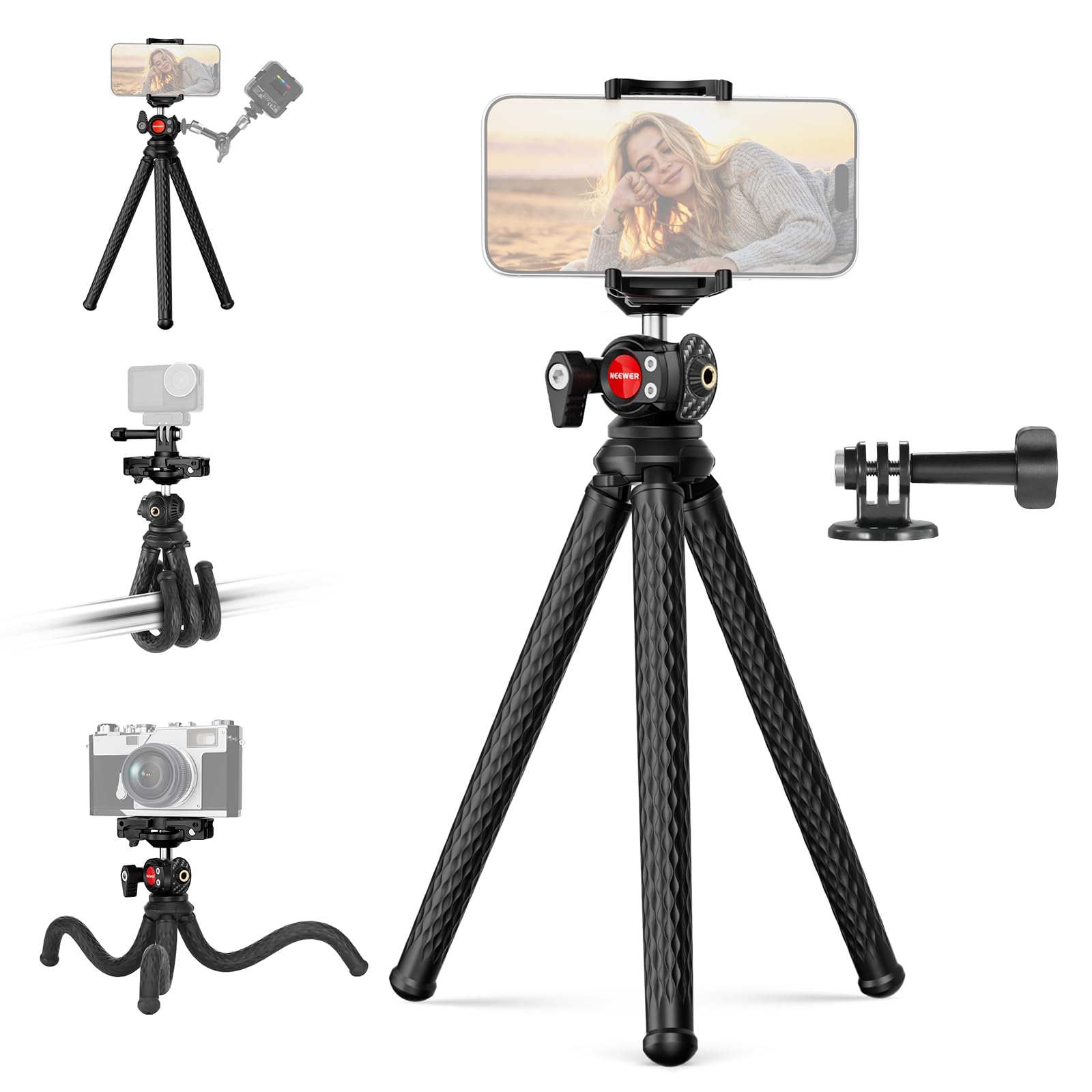
A 4.4-pound load rating is the number that makes the NEEWER TP34 stand out. That is roughly four times the capacity of the small flexible tripods here, and it means the legs can hold a phone, an action camera, or a small LED light without sagging. We were surprised by how much gear this little stand is rated to carry.

The legs are silicone-wrapped around seven aluminum strands, so they bend and hold a shape rather than flopping. The ball head swivels 360 degrees and tilts 90 degrees, and the side 1/4-inch hole lets you add an accessory. We liked the action-cam adapter in the box; it makes the TP34 more than a phone tripod.

The 11.8-inch height is the boundary. It is a tabletop and low-angle stand, not a replacement for a tall tripod, and that is the trade for the load capacity. We treat it as a support tool for gear-heavy hikes, not a stand for eye-level portraits. The 4.4-pound limit is generous, but it does not make the legs longer.

Pros

  • 4.4-pound load rating
  • Flexible legs hold their shape
  • Action-cam adapter included
  • Ball head swivels and tilts

Cons

  • Phone clamp struggles with thick cases
Our verdict

We recommend this for hikers who want one flexible stand for a phone, action camera, or small light: the 4.4-pound load rating is the reason.

Check Latest Price
7

Budget Day Hikes

Liphisy 50-Inch Tripod

91 /100
Traveler Score Outstanding

Key details

Material
Aluminum and plastic
Camera Mount
1/4 inch
Maximum Height
50 inches
Minimum Height
9 inches
Check Details on Amazon

The budget price tier is the first thing to understand about the Liphisy. It reaches 50 inches, collapses to 9 inches, and includes a 1/4-inch screw, so it can hold a phone or a small camera. That is a useful combination for a hiker who wants height without spending much, and it folds small enough for a daypack.

The head rotates 300 degrees and the holder turns 360 degrees, which gives you more framing options than the price suggests. The aluminum and plastic build is light in the hand, and the remote is a handy extra for solo shots. The 50-inch height is enough for a group shot or a phone propped above a picnic table.

The remote is the other weak spot. It works well enough for casual shots, but pairing is not as consistent as it is on the better remotes here, and a dropped connection is annoying when you are alone on a trail. We keep the self-timer as a backup and treat the remote as a bonus rather than the reason to buy.

We treat the Liphisy as an occasional-use tripod, not a daily driver. It is a good way to get height and a camera screw at the budget end, but the plastic parts are the reason it stays a backup rather than our main pick.

Pros

  • 50-inch reach with a 1/4-inch screw
  • Collapses to 9 inches
  • 300-degree head and 360-degree holder
  • Remote included

Cons

  • Phone holder can let larger phones shift
Our verdict

We see this as the budget tall tripod: 50 inches of reach and a 1/4-inch screw for occasional trail shots.

Check Latest Price

How We Tested Hiking Phone Tripods on Actual Trails

We started with a long list of roughly 40 tripods and filtered it down by the things that decide whether one gets carried: folded length short enough for a hip-belt or side pocket, weight that wouldn't be resented on a climb, a clamp that opens wide enough for a phone left in a thick case, and a remote that pairs without a fight. That left 14 models, which we hiked with for six months.

Each tripod went out on pre-dawn summit pushes, lunch stops at waterfall overlooks, and one memorably wet morning where everything got rained on and then shoved back into a pack next to a water bottle. We timed the setup — pack off the shoulders to phone framed and level — and timed the teardown, since a tripod that takes 90 seconds to fold is a tripod you stop using. We clamped each phone in, turned it sideways and upright, and watched whether it sagged or rotated under its own weight.

On a gusty ridge morning we set every tripod up in the same spot, shot bursts at the same shutter speed, and counted how many frames came out soft. We walked 30 feet away and fired each remote, noting how many presses it took to get a shot. Back home, we checked leg locks and joints for play, looked for corrosion after the wet hike, and weighed what actually came in the box against what the tripod cost — a case and a remote included can make a mid-priced model the better value than a cheaper one you have to accessorize.

How to Choose Hiking Phone Tripods

Start With Packed Size and Weight

A tripod that stays in the pack is the one you actually use. Minis like the Lamicall weigh 130 grams and disappear into a hip pocket, while full-size stands like the EUCOS run about 12.8 ounces and fold to roughly a foot. That difference is small on a day hike and obvious on a long one. Check the folded length, not just the height: a 12-inch package fits a side pocket or a pack lid, but a 13.5-inch one may need to ride outside. If you count grams, choose the mini and accept a lower camera position.

Match Height to the Shot

Height decides what you can frame. An 11-inch mini is a tabletop and low-angle tool; a 50- to 62-inch stand gets a phone near eye level for portraits, group shots, and video; a 69- to 71-inch tripod lifts the camera above tall grass or a crowd. Taller poles are less rigid, especially at full extension, so treat the top few inches as a calm-day setting. If most of your shots are boots-and-trail close-ups, a mini is enough. If you want a horizon or a group, buy the reach and plan to shorten it in wind. The RISEOFLE goes to 71 inches, but we keep it below full height when the wind picks up.

Check Stability and Phone Grip

A tripod is only as useful as its weakest joint. Flexible legs can wrap around a branch, rail, or pack strap, but the ball head still has to lock the phone without drooping. Look at the clamp width and the load rating: a clamp that fits a bare phone may not close around a thick case, and a 2.2-pound limit is phone territory, not camera territory. We check the clamp with the case on and tighten the ball head before trusting a portrait orientation. If you shoot video, a slight droop is more annoying than a wobble because it changes the frame over time.

Decide Whether You Need a Remote or a Mount

A Bluetooth remote is the difference between a group photo and a sprint back to the phone. Ranges cluster around 30 to 33 feet, but pairing is the part that varies: some remotes connect cleanly, others need to be forgotten and re-paired. Test yours at home before the trip. The mount matters too. A cold shoe gives you a place for a small light or mic; a 1/4-inch screw lets you swap in a camera or action-cam adapter. If you only shoot a phone, a phone-first clamp is lighter. If you carry a camera, the ANXRE NT79's 1/4-inch mount earns its extra folded length.

Plan for Weather and Wear

None of these tripods are water-resistant, and that is the limitation that catches hikers first. A dry bag or a pack liner keeps the joints and remote out of steady rain. Flexible legs and plastic clamps also wear at the bend points; avoid forcing a leg around a sharp edge, and wipe grit out of the joints before you collapse the pole. Aluminum legs handle knocks better than plastic, but the head and clamp are usually the parts that fail. If you hike often, spend for a simpler, sturdier head over extra height.

Frequently Asked Questions

Final Verdict

We recommend the EUCOS as the best all-around hiking tripod: it reaches 62 inches, folds to 12 inches, and the remote lets you step into the frame. The 12.8-ounce carry and 2.2-pound limit keep it phone-first, which is the right trade for most trail shots.

If you count grams, the Lamicall is the better companion at 130 grams; if you need the tallest reach, the RISEOFLE goes to 71 inches, but keep it below full height in wind. Hikers who also carry a camera should look at the ANXRE NT79 and its 1/4-inch mount.