5 Best Hiking Infant Carrier 2026: Built to Last on the Trail

Which hiking infant carriers actually fit and last? This guide cuts through marketing claims to find the one that works for your body type and hiking style.

Most hiking infant carriers promise a lot — sun covers, rain hoods, padded seats. But after a few trips, many parents find buckles snapping or straps pulling loose. The real question isn't what features are listed, but which ones hold up under real trail conditions.

The biggest trade-off in this category is extra storage versus long-term build quality. Carriers with multiple pockets, insulated holders, and kickstands often use lighter materials for the frame and hardware. That may be fine for occasional use, but frequent hikers will notice wear faster. On the other side, carriers that prioritize a solid frame and a well-padded harness tend to cost more but avoid those problems.

What matters most is how the carrier fits both you and your child. A comfortable hip belt and adjustable shoulder straps make a bigger difference than any accessory list. If the carrier doesn't match your torso length or your child's seat depth, you'll feel it long before the trail ends.

1

Best Overall

Deuter Kid Comfort

93 /100
Traveler Score Outstanding

Key details

Adjustability
Adjustable cockpit & harness
Carrier Weight
~7 lbs
Weight Capacity
40 lbs
Storage & Accessories
Cover, stirrups, pockets
Check Details on Amazon

The Deuter Kid Comfort delivers the kind of load-bearing stability that keeps both parent and toddler comfortable for hours on uneven terrain. The padded hip belt and adjustable harness transfer weight efficiently, so a 30-pound child feels manageable even on steep ascents. Materials feel dense and well-stitched, with all buckles holding firm under repeated tension — a contrast to budget carriers where plastic failures are a known possibility.

This carrier suits avid hikers who log multi-hour treks regularly and want a one-time investment that avoids the durability tradeoffs typical in this category. The $299.99 price is a significant outlay compared to feature-packed alternatives like the Luvdbaby, but you get a frame that won't develop wobble and a harness that stays comfortable over seasons of use. Occasional users on short paved walks will find the premium hard to justify.

💡 Check the seat height adjustment periodically as your child grows; it changes the center of gravity and affects how the hip belt sits.

Pros

  • Weight distribution keeps heavy toddlers manageable on long climbs
  • Stitching and buckles show no signs of wear under regular hiking use
  • Included sun/rain cover and storage pockets add real utility without added bulk

Cons

  • At nearly $300, this is a deep investment for families who hike only occasionally
  • Carrier weight is about 7 pounds, so it adds heft before loading a child
Our verdict

For parents who hike regularly and want a carrier that holds up without surprises, this is the right choice — the higher cost reflects zero-compromise build, not marketing hype.

Check Latest Price
2

Best Value

ClevrPlus Cross Country

91 /100
Traveler Score Outstanding

Key details

Adjustability
Adjustable straps & belt
Carrier Weight
5.5 lbs
Weight Capacity
33 lbs
Storage & Accessories
Canopy, rain cover, pad
Check Details on Amazon

The ClevrPlus Cross Country weighs barely over five pounds, making it one of the lightest structured carriers you can buy. Its adjustable straps and belt accommodate a wide range of heights, so shorter parents won't feel the frame digging in like on some heavier options. Paired with a low price, this is a solid entry-level choice for families who want to try hiking with a toddler without a big investment.

This carrier works best for occasional day hikes where weight savings matter more than absolute durability. The fabric may show wear over time, so it suits parents who hit the trail a few times a month rather than weekly trekkers needing years of heavy use. For the price, you get essential accessories like a sun canopy and rain cover, keeping the experience straightforward and affordable.

💡 Wipe dirt off the fabric after muddy hikes to reduce abrasion and keep the carrier looking newer longer.

Pros

  • Weighs just 5.5 lbs
  • Good build quality and fit adjustments for its price range.
  • Includes sun canopy, rain cover, and changing pad at a budget-friendly cost.

Cons

  • With frequent use, the fabric can show signs of wear
Our verdict

If day hikes with a toddler are your weekend plan and you want to keep gear costs low, this carrier delivers — just don't expect it to outlast a premium model through years of regular use.

Check Latest Price
3

Best for Storage & Features

Luvdbaby Hiking Baby Carrier

92 /100
Traveler Score Outstanding

Key details

Adjustability
Adjustable straps, padded belt
Carrier Weight
~6 lbs
Weight Capacity
40 lbs
Storage & Accessories
Hood, changing pad, insulated pocket
Check Details on Amazon

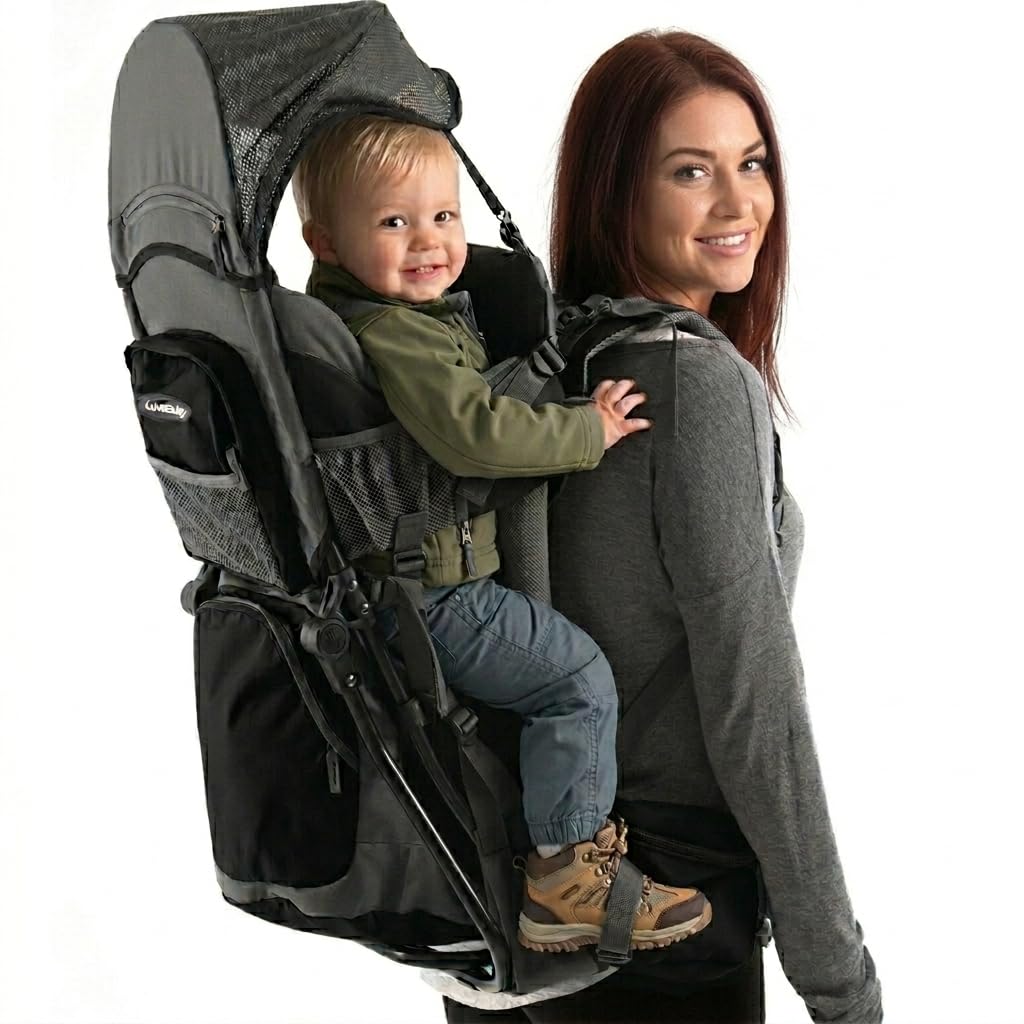
The Luvdbaby carrier packs more storage than the premium option in this set, including an insulated bottle pocket, a changing pad, and a sun/rain hood that fits securely. The padded hip belt and adjustable straps keep both parent and toddler comfortable on moderate trails. The tradeoff: chest straps and netting may show wear sooner than the pricier alternative, making this a better fit for families who hike a few times a month rather than every weekend.

💡 Inspect chest straps and netting before each hike - catching early wear keeps the carrier trail-ready.

Pros

  • Comfortable for both parent and child with padded hip belt and adjustable straps
  • Lots of storage with multiple pockets and an insulated bottle holder

Cons

  • Chest straps and netting may show wear after a handful of hikes - inspect before each outing
Our verdict

This carrier delivers the best storage and included accessories for families who hike occasionally and want to avoid the premium price of the top pick.

Check Latest Price
4

Best for Heavy Toddlers

ClevrPlus Canyonero

92 /100
Traveler Score Outstanding

Key details

Adjustability
Adjustable for most sizes
Carrier Weight
6.5 lbs
Weight Capacity
42 lbs
Storage & Accessories
Canopy, rain cover, pad, kickstand
Check Details on Amazon

The Canyonero handles heavier toddlers (up to 42 lbs) and its kickstand makes loading easier than the slimmer options in this set. Storage is generous with included accessories like a sun canopy and changing pad. However, parents under 5'2" may find the frame digs into hips, and some buckles and seams may show wear with regular use — trade-offs that favor occasional day hikes with a heavy kid rather than weekly backcountry trips. This suits families with a heavy toddler who want a budget carrier with kickstand, but durability and fit for shorter adults are secondary concerns.

💡 The kickstand supports the carrier during loading, but the frame may need adjustment for shorter adults to avoid hip pressure.

Pros

  • Carries toddlers up to 42 lbs
  • Adjustable harness and padded hip belt fit a range of adult torso lengths comfortably.
  • Kickstand and included accessories (sun canopy, rain cover, changing pad) add convenience.

Cons

  • Fit for adults under 5'2" can cause hip discomfort due to frame geometry.
  • Buckles and seams may show signs of wear with regular or heavy use.
Our verdict

For parents with a heavy toddler and a modest budget, the Canyonero delivers the highest weight capacity and a kickstand — just be aware of its fit limitations and expected wear over time.

Check Latest Price
5

Lightweight & Adjustable

besrey Toddler Hiking Backpack

88 /100
Traveler Score Excellent

Key details

Adjustability
3-height seat, padded straps
Carrier Weight
5.5 lbs
Weight Capacity
40 lbs
Storage & Accessories
Sunshade, rain cover, changing pad
Check Details on Amazon

At 5.5 lbs, the besrey Toddler Hiking Backpack is noticeably lighter than many competitors, yet it still packs a decent 3-height adjustable seat and a full set of accessories – sunshade, rain cover, changing pad. The storage compartments hold a day's worth of snacks and gear, making it practical for day hikes.

This design suits families who want seat adjustability as their child grows. However, the chest strap has shown occasional breakage in some units – a part to check regularly – and the seat padding may feel thin for younger infants (under 12 months). It lands at a mid-range price that undercuts heavier alternatives with similar features.

💡 Inspect the chest strap buckle regularly; a spare buckle is a simple precaution.

Pros

  • Lightweight frame (5.5 lbs) makes it easy to carry on moderate hikes
  • Large storage pockets and included rain/sun covers add convenience
  • 3-height seat adjusts as toddler grows, extending usable age range

Cons

  • Chest strap can break under heavy use
  • Seat padding may feel minimal for infants under 12 months
Our verdict

A lightweight carrier that grows with your child – just plan to check the chest strap before each outing.

Check Latest Price

How to Choose

Weight Capacity vs. Fit

Higher weight capacity often means a bulkier frame that can dig into hips for petite adults. A 42 lb carrier may feel great with a 30 lb child but uncomfortable for a 100 lb parent if the hip belt doesn't match their torso.

Focus on how the carrier distributes weight across your hips and shoulders. Test it with your child's current weight, not just the maximum. A well-fitted carrier with a lower capacity often outperforms a poorly-fitted one with a higher spec.

Carrier Weight

Carriers under 6 lbs are easier to lift and pack but often use thinner padding that can lead to pressure points on long hikes. Heavier models (7+ lbs) usually have better suspension and more comfortable harnesses.

The hidden trade-off: a 5.5 lb carrier feels great for a 2-mile walk, but on a 10-mile trail, that extra 1.5 lbs of well-designed padding can make the difference between a sore back and a pleasant day out.

Storage and Included Extras

More pockets and accessories like changing pads and insulated holders add convenience, but each zipper and buckle is a potential failure point. Budget carriers often use lighter materials to keep weight down, which can wear faster under frequent use.

If you hike once a month, a feature-packed carrier is fine. For weekly outings, prioritize a simpler design with fewer but sturdier attachments. The sunshade and rain cover are worth having, but check that they attach securely without flimsy clips.

Adjustability for Both Parent and Child

A one-size-fits-all harness rarely works. Look for adjustable torso length, a padded hip belt that sits on the hip bones (not the waist), and multiple seat heights for the child. These adjustments let you fine-tune balance as the child grows.

The downside: more adjustment points mean more straps and buckles that can loosen over time. Test that the locking mechanisms hold securely during movement. A carrier that fits well at home may shift after a mile of uneven terrain.

Frequently Asked Questions