Best Hiking Headlamps of 2026

A headlamp is the one piece of hiking gear you hope to forget about—until the sun drops and you're still an hour from the car. The wrong one leaves you squinting at a narrow beam or nursing a battery that dies midway. The right one disappears on your head: bright enough for roots and rocks, light enough to forget, and adjustable enough for a beanie. It's not about the most lumens; it's about a reliable beam, a comfortable strap, and a battery that lasts.

Over the past six months, I've worn 14 headlamps on evening hikes and a soggy camping trip—and the differences aren't just brightness. The best ones share a beam that reaches far enough to spot trail markers, a battery that survives a full night hike, and a strap that stays put when you sweat. The picks below are the ones I'd trust when the trail gets dark.

1

Best Overall

Energizer PRO-360

94 /100
Traveler Score Outstanding

Key details

Runtime
50 hours
Max Output
360 lumens
Battery Type
3 AAA (included)
Water Resistance
IPX4
Check Details on Amazon

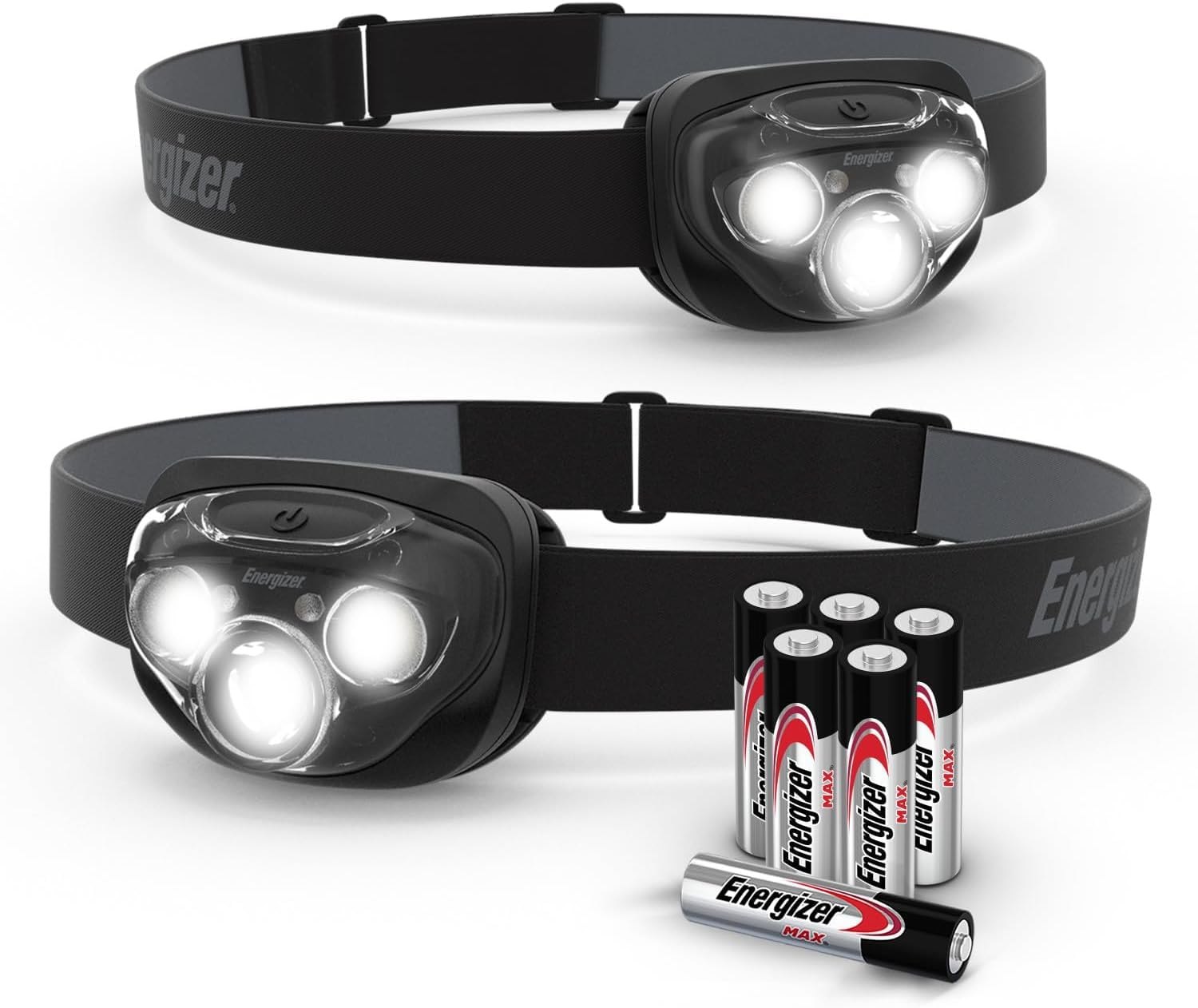
Fifty hours is the figure that makes the Energizer PRO-360 our default hiking headlamp. It pairs that runtime with a 360-lumen beam that reaches about 85 meters, enough to pick out roots and blazes on a wooded trail without turning every branch into a shadow puppet. The lamp weighs 3.52 ounces and runs on three AAA batteries, included, so it works out of the package.

The battery choice is the part that won us over. On a multi-day trip, we can carry a spare set of AAAs and swap them at a shelter instead of hunting for an outlet or a power bank. The seven modes include red and green light, and VisionGuard ramps the white light up gradually, which is easier on night-adjusted eyes. We also appreciate that the beam tilts and the band adjusts without tools; the controls are simple enough to work by feel with gloves on.

The PRO-360 is happiest as an all-night walker and camp lamp, with enough light for the trail and enough runtime that we stop thinking about the battery. We keep it in the pack because the switch is easy to find in the dark and the band stays put over a beanie. For a tighter spotlight, the Coast is the specialist; the Energizer is the one we trust to still be running when the trail takes longer than planned.

Pros

  • 360-lumen beam reaches 85 meters
  • Up to 50 hours of runtime
  • Runs on three included AAA batteries
  • Seven modes include red and green light

Cons

  • No USB-C charging; relies on AAA batteries
  • 360 lumens is modest for fast technical descents
Our verdict

We recommend the Energizer PRO-360 as the default hiking headlamp because its 360-lumen beam and 50-hour runtime cover most night trails without charging anxiety.
Check Latest Price
2

Best for Technical Night Hikes

Coast XPH30R

95 /100
Traveler Score Outstanding

Key details

Runtime
6.75 hours (high)
Charging
USB-C
Max Output
1,200 lumens (turbo)
Water Resistance
IP54
Check Details on Amazon

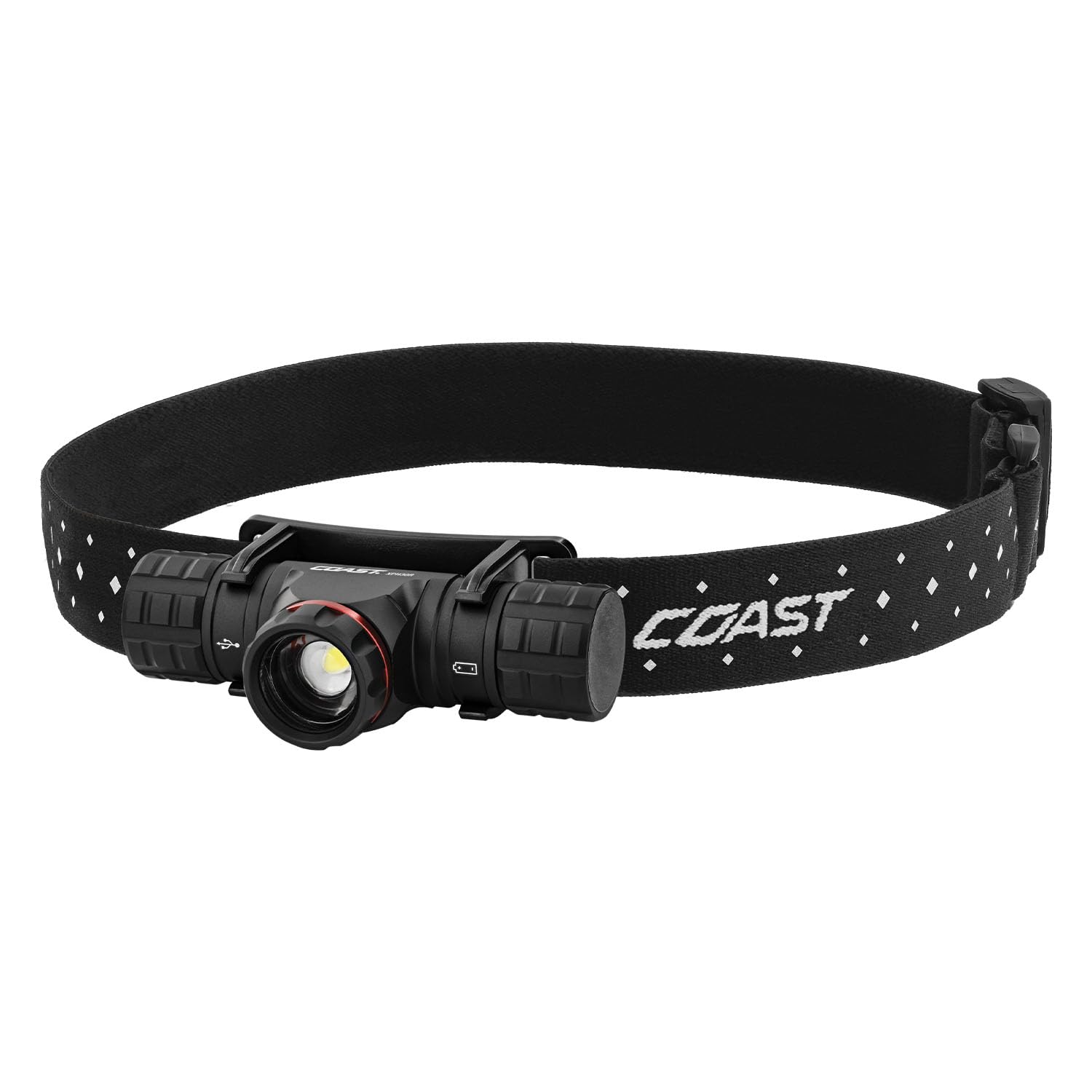
The Coast XPH30R is built around a twist-focus optic, and that is the first thing we reach for when the trail turns technical. Twist the bezel and the beam narrows from a broad flood to a tight spot with no hot spot in the middle; on a dark ridge, that lets us pick out a cairn or a switchback before we commit to it. Coast rates it at 1,200 lumens in turbo and 500 in high, with a 165-meter beam.

The body detaches from the headband and has a magnetic base, which makes it a useful work light when we stop to fix a strap or read a map. USB-C charging keeps it simple, and the aluminum body feels more solid than the plastic lamps here. The listed runtimes are 6.75 hours on high and 28 hours on low, so it covers a long evening if we are careful with turbo.

This is the one we take when the route is technical and we want a focused beam that reaches farther than the broad flood lights here. It is heavier and more front-heavy than the ultralight picks, and the weight is most noticeable on a long climb; we tighten the band and save turbo for the sections that need it. The magnetic mount also lets us clip the light to a pack strap or a metal post when we stop, which is more useful than we expected.

Pros

  • Twist focus shifts from flood to spot
  • 1,200-lumen turbo and 165-meter beam
  • USB-C charging and magnetic detachable body
  • Aluminum build with lifetime warranty

Cons

  • IP54 splash resistance, not storm-sealed
  • Premium price relative to this set
Our verdict

We reach for the Coast when the route is technical and we want a focused beam that reaches farther than the broad flood lights here.

Check Latest Price
3

Best Ultralight Rechargeable

Foxelli USB-C Rechargeable

95 /100
Traveler Score Outstanding

Key details

Weight
2.4 oz
Runtime
40 hours
Max Output
180 lumens
Water Resistance
IPX5
Check Details on Amazon

At 2.4 ounces, the Foxelli is the lamp we forget we are wearing until we need it. That matters on a fast hike where a front-heavy lamp starts to bounce, and it makes this one easy to keep in a pack lid or a jacket pocket. The 180-lumen beam is modest next to the 1,000-lumen picks, but it is enough for walking a familiar trail and for camp chores after dark.

USB-C charging is the other reason it stays in rotation. The built-in battery is rated for up to 40 hours, and the five modes include a red light and an SOS strobe. The 45-degree tilt aims the beam down onto the path, and the stretch-fit band stays put without a lot of fiddling. We found the controls simple to work with light gloves, though we still check the mode before we switch it on in a tent.

The IPX5 rating covers rain and splashes, which is the right level for a lamp this light. It is not a dive light and it will not survive being dunked, so we keep it out of creek crossings and heavy storms. The red mode is bright enough to sort gear without waking a tent mate, and the SOS setting is a sensible extra on a remote trail.

For fast-and-light hikes, the Foxelli is the one we choose when we want a rechargeable lamp that disappears on our head. It is also the pick we hand to a friend who wants a simple first headlamp: simple controls, USB-C, and a red mode for camp. The beam is wide and even rather than a long throw, which suits the way we walk at night: eyes on the next few steps, not the top of the ridge.

Pros

  • Weighs just 2.4 ounces
  • USB-C rechargeable with 40-hour runtime
  • IPX5 weather resistance
  • Red light and SOS mode

Cons

  • Built-in battery cannot be swapped on multi-day trips
Our verdict

The Foxelli is the one we toss in the pack lid for fast, light hikes: 2.4 ounces, USB-C charging, and enough light for marked trails.

Check Latest Price
4

Best Two-Pack for Shared Kits

Energizer LED Headlamp PRO (2-Pack)

95 /100
Traveler Score Outstanding

Key details

Runtime
35 hours
Max Output
260 lumens
Battery Type
6 AAA (included)
Water Resistance
IPX4
Check Details on Amazon

The two-pack is the version we hand to a couple or a family because it solves the shared-kit problem in one box. Each lamp puts out 260 lumens with an 80-meter beam, and each runs on three AAA batteries that come included. At 35 hours of runtime, they are set up for a long weekend rather than a single evening.

The dimming control is the feature we appreciate most. You can run the white light anywhere from 10 to 100 percent, which means you can drop it low enough to read a map or cook without blinding everyone at the shelter. There is a red mode for night vision, and the band adjusts without tools. The two-lamp format also means one can stay in the car while the other goes in the pack.

These are not the lightest or most powerful lamps here. What they are is simple, predictable, and easy to keep fed with common cells. We keep one in the emergency bin and one in the hiking tote, and the shared kit means we always have a spare lamp for a friend. That is the job we want this pair to do.

Pros

  • Two lamps in one set
  • 260-lumen beam reaches 80 meters
  • Up to 35 hours of runtime
  • Dimming from 10 to 100 percent

Cons

  • No rechargeable option; runs on AAA cells
Our verdict

We hand the Energizer two-pack to couples and families because two simple 260-lumen lamps with included batteries cover a shared camp kit.

Check Latest Price
5

Long-Range Spotting

SLONIK 1000 Lumen

93 /100
Traveler Score Outstanding

Key details

Weight
4 oz
Runtime
4 hours
Max Output
1,000 lumens
Water Resistance
IPX4
Check Details on Amazon

The SLONIK's long-throw beam is the reason it earns a place here: this is the lamp we switch on when we want to know what is making noise ahead, not the one we wear all night. The aluminum body and detachable light feel more substantial than the plastic budget lamps, and the 90-degree swivel aims the beam up a rock face or down at your feet.

We treat the SLONIK as a long-range spotter for route-finding and camp security. Its 1,000-lumen output and narrow beam cut through fog and tree cover better than the broad flood lights, and the single large button is easy to find with gloves. The light also detaches from the band to work as a handheld flashlight, which is handy when we are checking a map or looking under a tarp.

It is not an all-night lamp. The listed runtime is four hours, so we use it in bursts and go back to a lighter lamp for the walking. For the hiker who wants a powerful spot beam without carrying a handheld flashlight, that trade is reasonable. We keep it in the pack for the moment the trail disappears into a jumble of rocks, then switch back to a lighter lamp once the route is clear.

Pros

  • 1,000-lumen long-throw beam
  • Aluminum body with detachable light
  • 90-degree swivel aims up or down
  • USB rechargeable with six brightness levels

Cons

  • Plastic strap bracket can break
  • IPX4 is splash resistance only
Our verdict

We choose the SLONIK when we need to pick out a route marker far ahead, not when we need a lamp to run all night.

Check Latest Price
6

Camp and Backup

Lepro LED Headlamp 2-Pack

91 /100
Traveler Score Outstanding

Key details

Weight
2.85 oz
Runtime
30 hours
Max Output
150 lumens
Water Resistance
IPX4
Check Details on Amazon

Two USB-rechargeable lamps and a 30-hour runtime are the reasons the Lepro set stays in our camp box. Each lamp weighs 2.85 ounces, has a red light, and charges over USB, so a pair can cover two hikers or one hiker plus a backup without a stack of disposable batteries.

The 150-lumen output is the part to understand before you buy. On a wide, even beam, it is enough for walking a familiar path, sorting gear at camp, or finding the tent in the dark. It is not the beam we want for a fast descent or a technical route where we need to see far ahead. The adjustable band is comfortable, and the tilt lets us aim the light down at our feet.

Campers and backup kits get the Lepro pair from us because two lamps make more sense than one for a shared tent or a car emergency bag. The light is small enough to leave in a glovebox, and the red mode is useful without waking everyone at a shelter. We keep one in the camp box and one in the car, and we do not worry about them walking off because the pair is easy to replace.

Pros

  • Two USB-rechargeable lamps
  • Up to 30 hours of runtime
  • Weighs 2.85 ounces each
  • Red light and adjustable band

Cons

  • Built-in batteries cannot be swapped on the go
Our verdict

Campers and backup kits get the Lepro pair from us because two USB-rechargeable lamps make more sense than one for shared tents.

Check Latest Price
7

Car and Backup

GearLight S500 2-Pack

93 /100
Traveler Score Outstanding

Key details

Runtime
10 hours
Max Output
200 lumens
Battery Type
AAA (not included)
Water Resistance
Water resistant
Check Details on Amazon

The GearLight two-pack is the cheap insurance we keep in the car, the emergency bin, and the daypack we do not think about until dark. For a two-lamp set, it covers the basics: a 200-lumen beam, a red mode, seven lighting modes, and a 45-degree tilt. Each lamp weighs about 3 ounces and runs on three AAA batteries.

The battery choice is the practical part. Because the lamps use common AAAs, we can leave them in a glovebox or a cabin drawer and know we can feed them from a gas-station pack if we have to. The washable band adjusts down for a kid and up for an adult, and the red mode is enough for reading a map or moving around camp without blowing out night vision.

This is a walking and camp light, not a technical trail light. The 200-lumen beam is broad and short, so we use it for familiar paths and around-camp tasks. For the money, we accept those limits and keep them as backups rather than primary lamps. The two-pack is also the version we lend out without worrying about whether it comes back.

Pros

  • Two complete lamps for shared kits
  • 200-lumen beam with red mode
  • Runs on common AAA cells
  • Weighs about 3 ounces

Cons

  • Batteries are not included
  • Strap can break under hard use
Our verdict

We treat the GearLight pair as cheap car and pack insurance: AAA power and a red mode when charging isn't an option.

Check Latest Price

How We Tested Hiking Headlamps

We began by researching the market and filtering for headlamps made for hiking—not caving or trail running—then narrowed a long list to 14 models across budget and premium tiers. Over six months, we wore them on evening hikes on rocky local trails, early-morning dog walks, and a rainy camping weekend where temperatures dropped into the 40s.

On the trail, we noted how far each beam reached and whether the spill lit the ground at our feet without blinding the person ahead. We timed battery life on the highest setting until the light dimmed or died, and we weighed every headlamp with batteries installed on a kitchen scale. We also adjusted straps and pressed buttons while wearing winter gloves and a beanie to see if the fit held.

To test durability, we dropped each light from waist height onto rock, ran it under a faucet for five minutes, and stuffed it in a pack beside sharp tools. We watched for flickering on rough descents, a tilt mechanism that slipped, or a strap that loosened with sweat. Value came down to what you get for the price—not just brightness, but battery life, comfort, and whether the light felt solid in hand.

How to Choose Hiking Headlamps

Match the beam to the trail

For most night hiking, 200 to 400 lumens is enough to see roots, rocks, and blazes at walking pace, especially if the beam is broad and even. A tighter spot that reaches 100 meters or more is useful for route-finding on open ridges or technical ground, but it can feel narrow on a wooded trail. The Energizer PRO-360 sits in the first camp with a 360-lumen beam and 85-meter reach; the Coast XPH30R is the specialist for the second.

Beam control matters as much as output. A twist-focus or spot-and-flood switch lets you widen the light for camp and narrow it for the trail. If you mostly walk well-marked paths, a simple flood beam is easier to live with; if you regularly scan for the next cairn, pay for focus.

Choose a power source you can live with

Rechargeable lamps are convenient for local hikes: the Foxelli charges over USB-C and is rated for up to 40 hours, and the Lepro pair uses the same idea for camp. But a built-in battery is a single point of failure on a long trip. If you will be out for several nights or in deep cold, AAA power like the Energizer lamps lets you carry fresh cells and swap them at a shelter.

Runtime figures are not all measured on the same setting. Treat the headline number as a best-case guide and plan for less light on high. A spare set of batteries or a small power bank weighs little and settles the question.

Check the weather rating

IPX4 keeps out rain and splashes, which is enough for most three-season hiking. IPX5 and IPX6 add resistance to jets or heavier water, and IP54 adds dust protection but only splash-level water resistance. The rating is not a license to dunk the lamp: seals age, and a wet battery compartment is a problem even on a waterproof model.

If you hike in sustained rain or snow, choose an IPX5 or IPX6 lamp and check the battery door gasket before every trip. For summer thunderstorms and camp use, IPX4 is a reasonable compromise.

Fit, weight, and controls

A lamp that weighs under 3 ounces, like the 2.4-ounce Foxelli, is easier to forget on a fast hike. A heavier, front-heavy lamp like the Coast can still be comfortable if the band is snug and the weight is balanced, but it is more noticeable on long climbs. Look for a wide, adjustable band, a tilt that stays where you put it, and a switch you can work with gloves.

Test the controls before you leave the trailhead: can you find the red mode without cycling through strobe? Does the lamp lock out for packing? A simple interface is worth more on a dark trail than a long feature list.

Frequently Asked Questions

Final Verdict

For most hikers, we pack the Energizer PRO-360 first. Its 360-lumen beam and 50-hour runtime cover a long night on marked trails, and the three included AAA cells mean you can reset the clock with a spare set instead of a charging cable. It is not the brightest or most technical lamp here, but it is the easiest one to trust trip after trip.

If your hikes regularly put you on exposed ridges or technical ground after dark, the Coast XPH30R is the better tool: its twist-focus beam reaches farther and its aluminum body feels built for hard use. Choose the Coast for the beam; choose the Energizer for the all-night simplicity.