Best Hiking Daypacks of 2026

A daypack is simple until you carry one for hours. Packs that feel great in the store often dig into your shoulders by lunch, and ultra-light models can leave you repacking a rain shell three times because nothing fits. I've made both mistakes; the fix isn't more pockets. It's a pack that feels solid without being heavy — one that balances capacity, structure, and a comfortable carry so a day's gear rides without turning into a sack of potatoes.

Over nine months, my team and I tested 12 daypacks on local trails, in airport security lines, and on the commute. The best ones disappear on your back while holding a rain shell, lunch, two liters of water, and a first-aid kit, then pack down small enough for a carry-on. A pack's listed capacity is a rough guide at best; the shape of the main compartment and the harness matter more than the liter count. What follows are the packs that earned a permanent spot by the door, not just the ones that looked good on the rack.

1

Best Overall

Osprey Daylite Plus

92 /100
Traveler Score Outstanding

Key details

Weight
1.3 lb
Capacity
20 liters
Back Panel
AirScape breathable back panel
Laptop Sleeve
Fits up to 14-inch laptops
Check Details on Amazon

Twenty liters is the size most day hikers actually need: enough for a 2-liter bladder, lunch, a shell, and a warm layer without turning into a weekender. The Daylite Plus lands right there, with a panel-loading main compartment, dual bottle pockets, and a stretch front pocket for a wet shell or a map.

That is why we recommend it first. The AirScape back panel and close-to-body fit keep the load steady on steep sections, and the hip and chest belts add stability without making it feel like a technical pack. The padded sleeve fits a 14-inch laptop, which makes it a useful travel bag, but the hiking harness is the reason it earns the top spot.

We also like the details that keep a day moving: a front organizer pocket with a key clip, a hydration sleeve, and side compression straps that tighten a half-full load. The recycled polyester has a water-repellent finish that sheds light rain.

At 1.3 pounds it is not the lightest pack here, and the premium price is real. What you get for it is structure and a harness that stays comfortable when the pack is full. If your day kit is consistently bulkier than this, the 35L MIYCOO is the better shape. The side pockets swallow a 32-ounce bottle, and the front stretch pocket is the one we use most for a shell we peel off mid-climb.

Pros

  • Comfortable AirScape harness with hip and chest belts
  • 20L holds water, lunch, and layers without bulk
  • Stretch front pocket and dual bottle pockets
  • Padded 14-inch laptop sleeve adds travel versatility

Cons

  • Premium price for a daypack
Our verdict

For most three-season day hikes, this is the pack we recommend: a comfortable 20L carry with real structure, bottle pockets, and a harness that handles a full day.

Check Latest Price
2

Best Compact

Osprey Daylite

94 /100
Traveler Score Outstanding

Key details

Weight
1.1 lb
Capacity
13 liters
Attachment
Clips to select Osprey travel packs
Hydration Sleeve
Fits a reservoir or 14-inch laptop
Check Details on Amazon

The Daylite is the pack we grab when the plan is short and fast: 13 liters, 1.1 pounds, and a panel loader that opens wide enough to see everything at once. It is built for a 2-liter bladder, a shell, lunch, and not much else.

The main compartment has a multifunction sleeve for a hydration reservoir or a tablet up to 14 inches, and the dual side pockets hold bottles. Compression straps keep a half-full load from shifting. The back panel is ventilated, and the shoulder straps are wider than the pack's size suggests.

We like it best as a minimalist hiking pack, not a do-everything bag. The hip belt is little more than webbing, so it stabilizes the load but does not carry weight the way a structured harness does; keep the load light and it disappears on your back. The 13L capacity is the real limit: winter layers and a camera will crowd it.

What makes it more useful than a simple stuff sack is the attachment system: it clips onto several larger Osprey travel packs as a day bag. That gives it a second life on trips, and the narrow profile slides under an airplane seat. If you want one pack for both a summit push and a full day of gear, size up to the Daylite Plus.

Pros

  • Light 1.1-pound carry for fast hikes
  • Hydration sleeve and dual bottle pockets
  • Clips onto select Osprey travel packs
  • Ventilated back panel and wide shoulder straps

Cons

  • Minimal hip belt limits heavier loads
  • 13L capacity is tight for winter layers
Our verdict

Buy the Daylite if you hike light and want a compact pack that carries a bladder, shell, and lunch without extra bulk; it is our favorite small daypack for fast trips.

Check Latest Price
3

Best Budget Organization

SKYSPER 20L Daypack

93 /100
Traveler Score Outstanding

Key details

Weight
1.1 lb
Pockets
10 pockets across 7 compartments
Capacity
20 liters
Load Limit
7 kg maximum
Check Details on Amazon

The SKYSPER 20L is the pack for hikers who like a place for everything: 10 pockets across seven compartments, dual bottle pockets, an anti-theft zipper, and trekking-pole fixtures, all for a midrange price. We recommend it as the best budget organizer in this group, provided you respect its load limit.

The 20L body is 1.1 pounds and uses 600D polyester with a water-resistant finish. Wide shoulder straps, a chest strap, and a waist belt keep it stable on a day hike, and the grooved back panel helps with airflow. The maximum recommended load is 7 kg, which is roughly 15 pounds; that is enough for water, lunch, and layers, but not for a full camera kit and a climbing rack.

The weak point is durability at the strap anchors, where stitching can pull apart under a heavy load. Check those seams before you load it for a trip, and keep the weight within the stated limit. For a first daypack, a guest pack, or a budget hike, the organization is hard to beat; for a pack you plan to overload for years, the Osprey is the safer spend.

Pros

  • 10 pockets and seven compartments keep gear organized
  • Water-resistant 600D polyester at a midrange price
  • Chest and waist straps stabilize the load

Cons

  • 7 kg maximum load suits light day kits
  • Stitching at strap anchors can pull apart
Our verdict

Buy this if you want a budget daypack that keeps every small item in its place; the 20L SKYSPER organizes well, as long as you stay within its load limit.

Check Latest Price
4

Best Packable with Hip Belt

Eddie Bauer Stowaway

89 /100
Traveler Score Excellent

Key details

Weight
0.6 lb
Capacity
20 liters
Hip Belt
Included
Packed Size
8.5 x 7 x 1.5 inches
Check Details on Amazon

A packable bag with a real hip belt is a rare thing. The Eddie Bauer Stowaway weighs 0.6 pounds, folds into its own 8.5 x 7 x 1.5-inch pocket, and still gives you extended shoulder straps and a hip belt. That combination is why it earns a place for travel and light hikes.

We recommend it as the best packable option here for hikers who want more support than a stuff sack. The 20L body holds two 1-liter bottles, snacks, phones, and a jacket, and the StormRepel finish sheds light rain. It is still a packable bag: the structure is minimal, organization is basically one main compartment, and a heavy load will sag. Keep it for day-trip loads and it is comfortable.

The detail we appreciate most is the stuff pocket. When the pack is in use, that pouch becomes an internal pocket, so you do not have to keep track of a separate stuff sack. It is not the pack for a full day of technical gear, but for a travel day hike or an emergency layer carry, it is the one we keep in the suitcase.

Pros

  • Folds into its own pocket for travel
  • Real hip belt and extended shoulder straps
  • 20L holds two 1L bottles and layers

Cons

  • Minimal structure and organization
  • Sags when packed heavy
Our verdict

Buy this if you want a packable daypack with a hip belt for travel and light hikes; it folds small and carries more comfortably than the other packables here.

Check Latest Price
5

Best Ultralight Packable

SKYSPER 15L Foldable

93 /100
Traveler Score Outstanding

Key details

Weight
12 oz
Capacity
15 liters
Chest Strap
Includes safety whistle
Packed Size
7.9 x 6.7 inches
Check Details on Amazon

The chest strap is the detail that makes the SKYSPER 15L worth considering. On a 0.75-pound foldable, a sternum strap with a safety whistle keeps the shoulder straps from sliding when you bend over or scramble, and the deep side pockets hold two 32-ounce bottles. We recommend it as the best ultralight packable in this group for light day hikes and travel.

The 15L body has six pockets, four of them zippered, and folds down to 7.9 x 6.7 inches. The polyester is water resistant, the zippers are smooth, and the pack sits close enough to the back for a quick hike. It is not a structured hauler: the fabric is thin, the back panel is minimal, and 15L is tight once you add a warm layer and lunch.

For a summit pack, a travel backup, or a theme-park day, that trade-off is easy to accept. The chest strap and bottle pockets are the two features we miss on cheaper packables, and the whistle is a small safety bonus. If you need to carry a camera and a full shell, go up to the 20L Eddie Bauer or the Daylite Plus.

Pros

  • Chest strap with safety whistle
  • Deep side pockets hold two 32-ounce bottles
  • Folds to 7.9 x 6.7 inches

Cons

  • Thin fabric and minimal back panel
  • 15L is tight for winter layers
Our verdict

Buy this for a barely-there pack that still carries water and a layer; the chest strap and deep bottle pockets make it our favorite small foldable.

Check Latest Price
6

Best for Gear-Heavy Days

MIYCOO 35L Packable

90 /100
Traveler Score Outstanding

Key details

Weight
12.8 oz
Capacity
35 liters
Wet Compartment
Separate wet pocket
Water Resistance
IPX4 water resistant
Check Details on Amazon

The MIYCOO 35L is the pack for the day that keeps growing: bulky layers, a camera, lunch for two, or a wet shell that needs its own compartment. It holds 35 liters, folds into its inner pocket, and weighs 12.8 ounces. The separate wet pocket is the feature we appreciate most.

The main body is water-resistant to IPX4, with three zippered compartments and a total of eight compartments, plus anti-theft zipper clips and a survival whistle. Deep side pockets take two bottles, and a chest strap keeps the shoulder straps in place. It is a packable bag, not a framed hauler: the straps are thinly padded and the back has little structure.

We recommend it when the day involves more gear than a standard 20L pack can take, with the understanding that it is a packable bag, not a framed hauler. Keep the load to a reasonable day-hike weight and it carries comfortably; fill all 35 liters with heavy gear and the straps dig in. It is also more capacity than a standard three-season day kit needs.

Pros

  • 35L capacity swallows bulky layers and gear
  • Separate wet compartment for damp gear
  • Anti-theft zipper clips and survival whistle
  • Folds into its inner pocket

Cons

  • Thinly padded straps dig in when overloaded
  • More capacity than a standard day kit needs
Our verdict

Buy this when you need one packable bag for bulky layers and travel purchases; the 35L capacity and wet pocket are worth the extra size if you keep the load moderate.

Check Latest Price
7

Best Rugged Option

Mardingtop 25L

91 /100
Traveler Score Outstanding

Key details

Zippers
YKK zippers
Capacity
25 liters
Hip Belt
Removable
Material
600D polyester
Check Details on Amazon

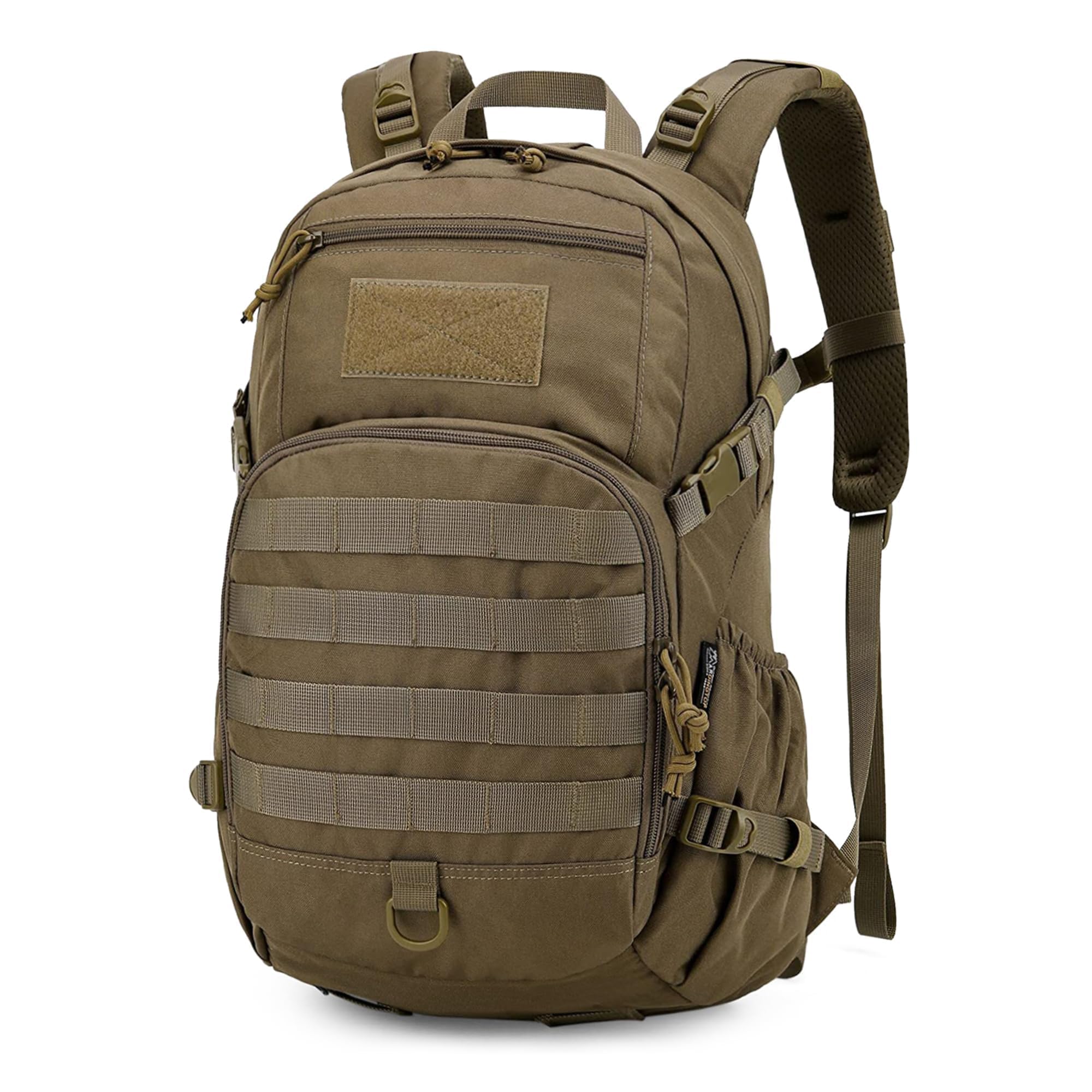
MOLLE webbing and 600D polyester put the Mardingtop in a different category from the ultralight bags here. It is a 25L daypack built for rough use: YKK zippers, a hydration compartment, side pockets that fit a Nalgene, and a removable hip belt. We recommend it for hikers who drag a pack through brush, boat decks, or a job site.

The 600D fabric feels tougher than the packable nylon on most of this list, and the zippers are the smooth, chunky kind that survive being opened with cold hands. The main compartment has a separate hydration sleeve and a top port for the drinking tube. MOLLE panels let you lash on a pouch or a knife, though they add straps and a tactical look that is not for everyone.

The catch is weather resistance. It is not water resistant, so a steady rain will soak through; pack a rain cover or a dry bag for anything important. It also carries more structure than a packable bag, which is good for gear but means it does not fold away into a suitcase.

We like it as a rugged 25L for hiking, cycling, and travel where the bag might take a beating. The removable hip belt is a useful detail for commuting, and the side pockets hold big bottles without stretching out. It is not the lightest or the most weather-ready, but it is the one we trust around sharp edges and dirty gear.

Pros

  • 600D polyester and YKK zippers for rough use
  • Hydration sleeve and tube port
  • MOLLE panels and removable hip belt

Cons

  • Not water resistant in steady rain
  • Tactical look and MOLLE straps add bulk
Our verdict

Buy this for rough, gear-heavy day trips where abrasion resistance matters more than weatherproofing; the 25L Mardingtop is the rugged pick in this group.

Check Latest Price
8

Spare Travel Pack

4Monster 16L Packable

91 /100
Traveler Score Outstanding

Key details

Pockets
4 pockets including side bottle pockets
Capacity
16 liters
Material
Water-resistant nylon
Packability
Folds into its own pouch
Check Details on Amazon

The 4Monster 16L is the closest thing here to a spare bag that disappears. It is a packable 16L daypack that folds into a wallet-sized pouch, with a main compartment, a front zip pocket, and two mesh side pockets. We recommend it as the bag to leave in a suitcase or a larger pack.

The nylon is water resistant and the side pockets hold a bottle, which is not a given on a bag this light. The straps are wider than most ultra-packable bags, so it carries a jacket and lunch without cutting in as quickly. It is still a thin, unstructured pack: there is no frame, the back panel is minimal, and the fabric feels light in the hand.

That is fine for its job. We use it for travel day trips, short hikes, and as an extra bag for souvenirs, not for a full day of technical gear. If you load it heavily, the lack of structure shows and the bag sags against your back. The 16L size is enough for water, snacks, and a layer, but not much more.

What makes it worth a spot is the packed size. It takes up almost no room in a carry-on, and the side pockets are deep enough to keep a bottle secure when the bag is half empty. For a primary daypack, choose the Daylite Plus or the SKYSPER 20L; for a spare that earns its place, this is the one.

Pros

  • Folds into a wallet-sized pouch
  • Two mesh side pockets hold bottles
  • Water-resistant nylon

Cons

  • Thin fabric and no structure
  • 16L is limited to light loads
Our verdict

Buy it as a packable spare for travel or short hikes, not as your only daypack; it folds wallet-small and still carries water, snacks, and a layer.

Check Latest Price

How We Tested 12 Hiking Daypacks on Trails, Planes, and the Commute

We started with more than 40 packs from brands known for hiking and travel, then narrowed the list using spec sheets, customer reviews, and a few hard filters: nothing too heavy for its capacity, nothing too small for a full day, and nothing that cost extra for features we wouldn't use. The final 12 ranged from minimalist stuff-sacks with shoulder straps to structured daypacks with real hipbelts. Before any trail time, we weighed each one empty, measured its dimensions, and checked it against common airline personal-item limits.

Over nine months, we took them on local day hikes of two to six hours, carried them on the daily commute, and flew with them—sliding each under a seat and wearing it through security. On the hikes, we loaded each with the same kit: a rain shell, a midlayer, lunch, two liters of water, a first-aid pouch, and a camera. We noted where the shoulder straps pressed, whether the hipbelt actually transferred weight, and how easily we could reach a snack without taking the pack off. We also checked which ones packed flat into a larger suitcase when empty.

Capacity was judged by filling, not by the liter rating: we packed the standard kit, then tried to add a bulky layer and a water bottle to see what actually fit and what had to be strapped outside. For compactness, we cinched each pack down empty and checked whether it collapsed into a neat bundle. Quality got the longest look—zippers, seam stitching, fabric abrasion, and buckles—and we tracked every sign of wear through repeated stuffing, unpacking, and a few rainy trail days.

How to Choose Hiking Daypacks

Match Capacity to the Day, Not the Trip Length

Most three-season day hikes fit in 15 to 20 liters: a 2-liter bladder, lunch, a shell, a warm layer, and a few small essentials. Go to 25 to 35 liters when you carry a bulky camera, winter layers, or a day's worth of travel purchases; the MIYCOO 35L is the pack here for that job. A 10 to 13-liter pack works for fast hikes where the kit is genuinely minimal, like the Osprey Daylite. The trap is buying for the biggest day you can imagine; if your usual load fills more than two-thirds of a pack, size up.

The Harness Decides Whether You Notice the Weight

Shoulder straps, a back panel, and a hip belt matter more as the load grows. A structured pack like the Daylite Plus spreads weight across the back and stays steady on descents; a packable bag with thin straps will carry a light load but dig in once you add a camera or a full bladder. We look for a chest strap on any pack we plan to scramble in, and a real hip belt once the load passes a few pounds. The trap is assuming every hip belt transfers weight; on ultralight packs it often just keeps the bag from swaying.

Packable Bags Are a Different Tool

Packable daypacks trade structure for convenience. They fold into a suitcase, a glove box, or a larger pack, and they are excellent for travel, summit days, and unplanned hikes. The Eddie Bauer Stowaway is the strongest all-rounder here because it adds a hip belt and longer straps; the 4Monster is the one for a true spare that disappears. The trap is expecting a packable bag to carry like a framed daypack. If you regularly carry more than water, lunch, and a layer, choose a structured pack and leave the foldable for backup.

Pockets Should Speed You Up, Not Add Clutter

Deep side pockets, a quick-access front pocket, and a hydration sleeve are the features we use most. A pack with ten pockets can still be annoying if the bottle pockets are too shallow or the main compartment is hard to reach. We prefer two bottle pockets that hold a full 32-ounce bottle, one front pocket for a shell or map, and an internal sleeve that keeps a bladder upright. The trap is counting pockets instead of testing access; if you have to take the pack off to reach water, the layout is wrong.

Check the Load Limit and the Weak Points

Every pack has a comfortable load, and some state a hard limit: the SKYSPER 20L lists 7 kg, roughly 15 pounds. Stay inside that number, especially with a budget pack. Look at the strap anchors, zipper pulls, and the fabric around the base, because those are the places a daypack fails first. Water-resistant fabric is not a rain cover; if you hike in sustained rain, add a cover or a dry bag for your insulation and electronics. A little prevention keeps a budget pack in service longer.

Frequently Asked Questions

Final Verdict

For most hikers, the Osprey Daylite Plus is the daypack we recommend first. It has the capacity for a full three-season day, a harness that stays comfortable when loaded, and the bottle and front pockets we reach for on the trail. The premium is easier to justify if you hike often.

If you need a pack that folds into a suitcase, choose the Eddie Bauer Stowaway; if you want maximum organization on a budget, the SKYSPER 20L is the better value. The right pick comes down to whether structure or packed size matters more.