Best Hiking Backpacks of 2026

Every hiking backpack is a negotiation between how much it swallows and how much it weighs empty, and the spec sheet never tells you who won. A pack's real job isn't holding your gear — it's moving the weight of that gear from your shoulders onto your hips and keeping it there, mile after mile, without a hot spot turning into a blister. Get the suspension and the sizing right and a heavy load feels almost polite; get them wrong and even a light pack starts to ache by the second hour.

Size and capacity trip up more buyers than anything else: liters on the tag, torso length on the fit chart, and pockets in spots you can't reach with the pack on. For six months we've been hiking with a dozen packs — day hikes, after-work training walks with a full load, one three-day trip that included an afternoon of steady rain — weighing each one empty, loading them all the same way, and noticing which ones still felt fine at mile eight. The short lesson before you scroll: a pack that carries well beats a pack that's light, and durability is what keeps a good one on your back for a decade instead of a season.

1

Best Overall

Teton 55L Scout

95 /100
Traveler Score Outstanding

Key details

Frame Type
Internal frame
Rain Cover
Included
Pack Weight
4.1 lb
Storage Volume
55 liters
Check Details on Amazon

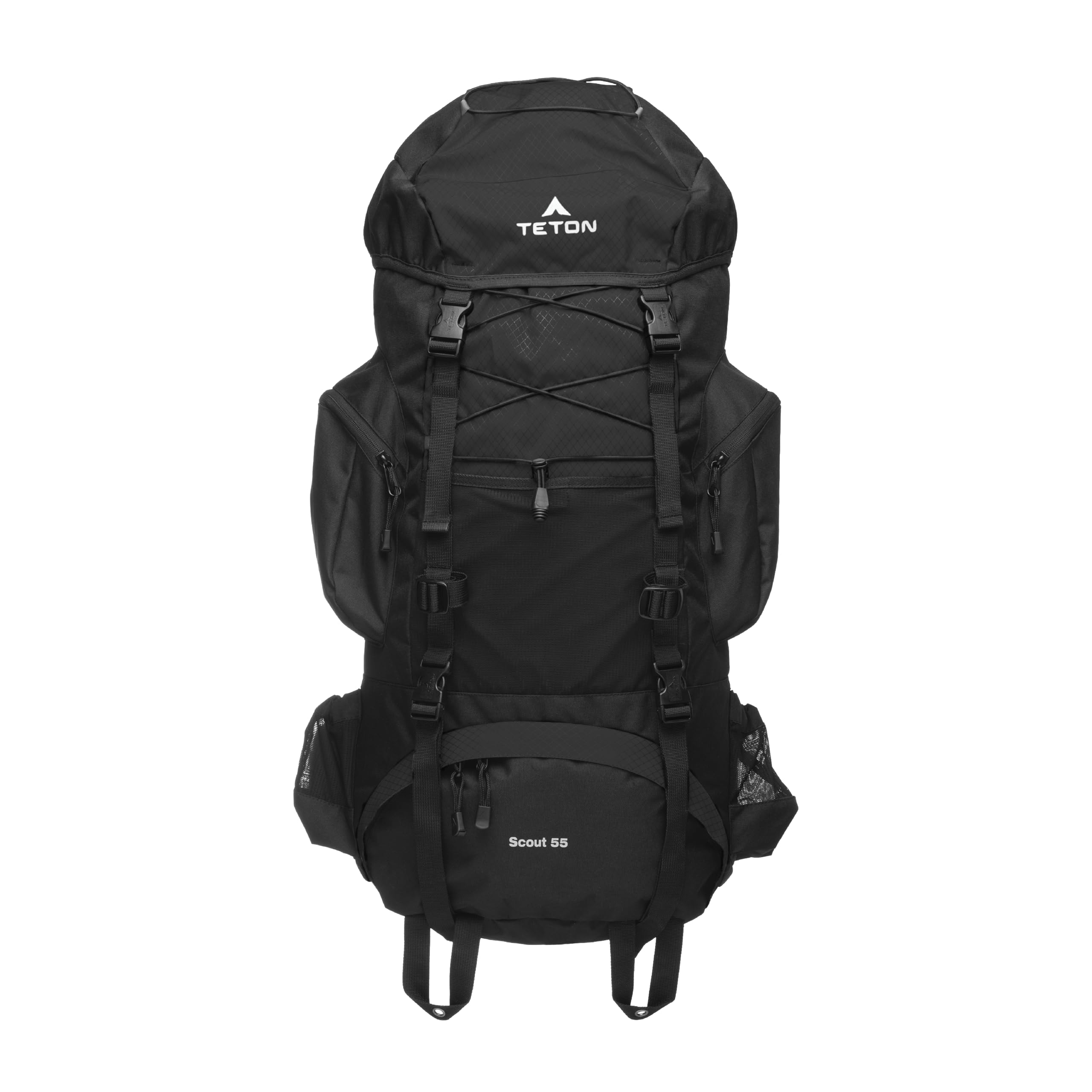
Plenty of packs on this page will get you through a day. This is the one that gets you through a night, which is most of why it's our top pick: 55 liters on an internal frame, a rain cover in the box, and a sleeping bag compartment at the base instead of one undifferentiated sack.

The frame is the part we care about most. Packed properly, the weight lands on the lumbar pad and your hips rather than hanging off your shoulders, and the molded channels behind the foam keep some air moving on a climb. The harness is the other half of that: the shoulder anchors slide through several positions, so the same pack takes a short torso and a tall one — the detail that settles it for anyone who has been sized out of fixed-harness packs.

A few things to check before you commit. The sleeping bag compartment is snug once you're stuffing a bulky synthetic bag, so a down bag or a strapped-on shelter suits it better. The side bottle pockets grip hard enough that a wide one-liter bottle is a fight, fine for a standard bottle and tedious for anything bigger. And the capacity is honest rather than generous, so plan a two- to three-night kit rather than a week's.

Pros

  • Internal frame puts the load on your hips
  • Multi-position torso adjustment fits a range of builds
  • Rain cover included, not sold separately
  • Sleeping bag compartment and compression straps steady a load

Cons

  • 4.1 pounds empty, before any gear
Our verdict

If your hiking involves a sleeping bag, this is the pack we tell you to buy: a real internal frame, an adjustable torso, and a rain cover in the box.

Check Latest Price
2

Best Daypack

SKYSPER 20L Daypack

93 /100
Traveler Score Outstanding

Key details

Pockets
10
Pack Weight
1.1 lb
Storage Volume
20 liters
Water Resistance
Water resistant
Check Details on Amazon

The zipper pulls on this daypack clip together, which sounds like an odd thing to lead with until you've left a pack on a train rack or set it down outside a café. At 1.1 pounds and 20 liters, the SKYSPER is the one we reach for when a hike starts at a trailhead and ends in a town center.

It's shaped like a pack rather than a sack. The back panel is grooved and mesh-covered, the small thing that keeps a sweaty shirt from being a foregone conclusion on a humid climb, and there are proper trekking pole fixtures instead of a hopeful loop. Ten pockets is more organization than 20 liters usually gets — one for the map, one for the snacks, one for the things you don't want to dig for.

Where it stops is the load. Twenty liters is a day's water, lunch, and a spare layer, and the pack is rated to 7 kilograms, which is the right ceiling for a harness this light. The shell is water-resistant rather than waterproof, so a shower is fine and a steady afternoon of rain will find the lid. As a daypack that also handles a city afternoon, we think it's the best value in this group.

Pros

  • 1.1 pounds, light enough to forget
  • Locking zipper pulls deter casual theft
  • Water-resistant 600D polyester and nylon shell
  • Trekking pole fixtures and ten pockets

Cons

  • Strap-anchor stitching is the wear point
Our verdict

The daypack we grab when a hike ends in town: 1.1 pounds, water-resistant fabric, and zipper pulls that lock together.

Check Latest Price
3

Best Budget Weekend Pack

Maelstrom 40L

91 /100
Traveler Score Outstanding

Key details

Pockets
10
Rain Cover
Included
Pack Weight
2.2 lb
Storage Volume
40 liters
Check Details on Amazon

Forty liters at 2.2 pounds, with a rain cover in the box, is the arithmetic that makes this pack worth a look. That's the volume for one or two nights out, or a very long day, and it's light enough that you stop noticing it on the approach.

The organization is better than the weight suggests: ten pockets, seven of them zippered, a hydration sleeve in the main body, elastic holsters on the sides for trekking poles, and reflective printing across the front that we appreciate on the walk back to the car in the dark.

The harness is the other pleasant surprise. The strap range runs long enough that a tall torso gets the belt down onto the hips instead of floating around the ribs, and the padding sits where the load actually lands. Adjust it properly and a full weekend of kit rides lighter than 40 liters has any right to.

For two or three weekends a year, this is the pack we point to. It carries a real load, it fits a tall frame, and the rain cover is in the box. If you hike most months, the Teton's frame is worth the step up.

Pros

  • 40 liters at just 2.2 pounds
  • Rain cover included with the pack
  • Trekking pole holders and reflective printing
  • Ten pockets including seven zippered compartments

Cons

  • Light 210D nylon and seams are the long-term wear point
  • One-year warranty, versus limited lifetime elsewhere
Our verdict

The most pack for a weekend on a small budget: 40 liters, 2.2 pounds, a rain cover in the box, and a harness that reaches a tall torso.

Check Latest Price
4

Best for Hydration Bladders

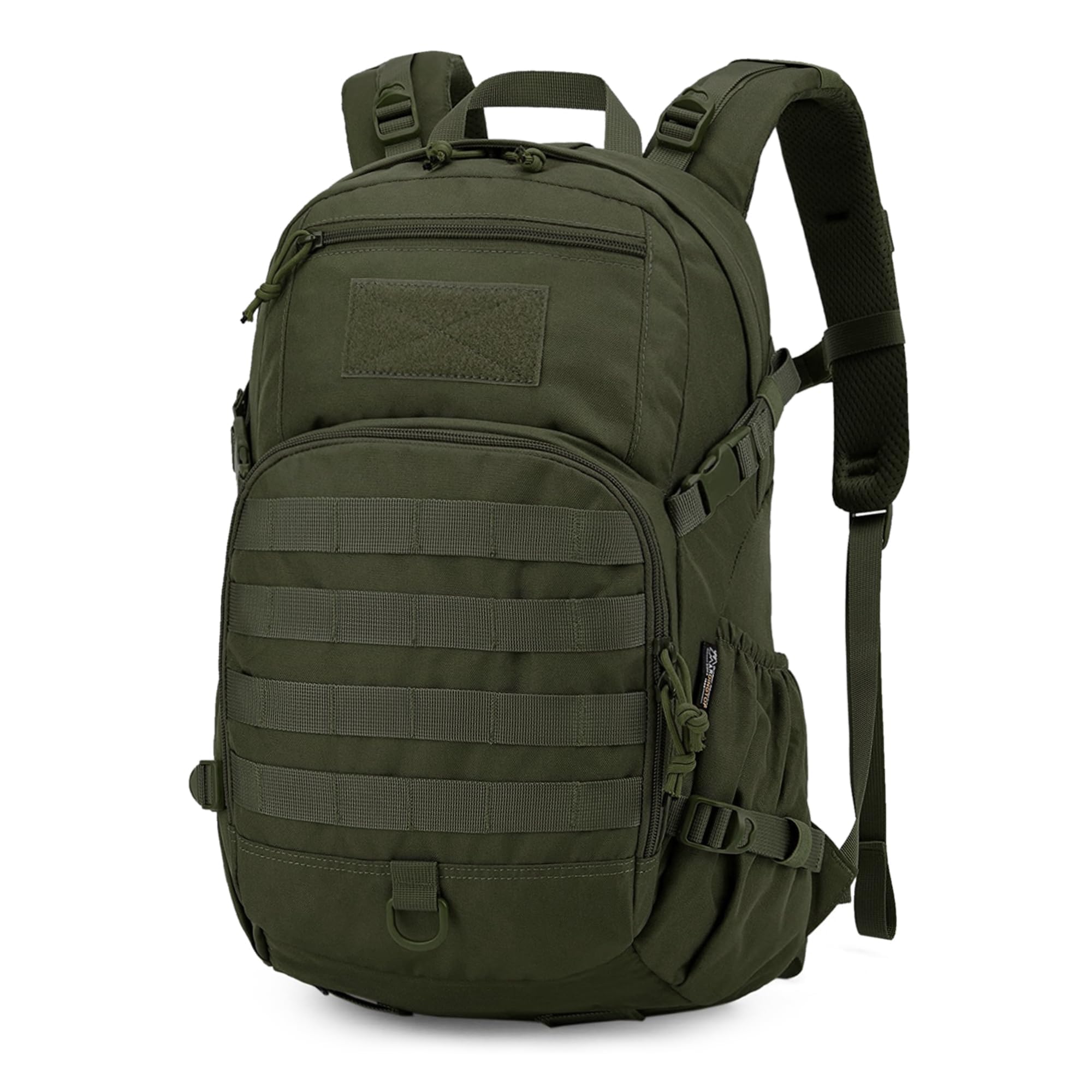
Mardingtop 25L

91 /100
Traveler Score Outstanding

Key details

Shell Material
600D polyester
Storage Volume
25 liters
Zipper Hardware
YKK
Hydration Sleeve
Separate compartment
Check Details on Amazon

If you hike with a bladder instead of bottles, this is the daypack built around that habit rather than tolerating it. The sleeve sits in the main compartment with a port at the top for the hose, so filling and threading takes a minute at the tap instead of a wrestling match with your layers.

The hardware is better than the size suggests: YKK zippers and buckles, 600D polyester, an adjustable sternum strap, and mesh padding that keeps the pack off your back. Two side pockets take a full-size Nalgene, and the top pocket swallows a phone with room left for keys and a wallet.

We found 25 liters right for a fast solo day — water, lunch, a shell, and a layer, with room for a camera — and it stays comfortable when you fill it, which is more than a lot of packs this size manage. The hip belt unclips and comes off entirely, so it does double duty on a bike or a commute without a strap swinging behind you.

Pros

  • Dedicated bladder sleeve with a hose port
  • YKK zippers and buckles
  • Removable hip belt for off-trail use
  • Side pockets take a full-size Nalgene

Cons

  • MOLLE rows won't line up with every pouch
Our verdict

For hikers who drink from a bladder, this is the daypack: a dedicated sleeve, a hose port, and YKK zippers on a 25-liter body.

Check Latest Price
5

Best Packable

MIYCOO 35L Packable

90 /100
Traveler Score Outstanding

Key details

Pockets
5
Pack Weight
12.8 oz
Storage Volume
35 liters
Water Resistance
IPX4
Check Details on Amazon

A wet compartment on a packable backpack sounds like a gimmick until you're stuffing a soaked rain shell back into its pocket on the second mile. The MIYCOO separates wet from dry, which none of the other packables here do.

At 12.8 ounces and 35 liters, it's the pack we hand people who want one bag for a trip and day hikes from the same base. Eight compartments keep a day's kit findable, the zipper pulls clip together to stop a pickpocket, and there's a whistle on the sternum strap — the sort of detail you notice once and then check for on everything else.

Thirty-five liters is the most this design carries well. Pack it as a day bag — water, lunch, layers, a camera — and it's comfortable for hours; treat it as a week pack and you'll feel every pound. It folds into its own inner pocket, which is how it earns a place in a suitcase rather than on a shelf.

Pros

  • Separate wet compartment for soaked layers
  • 12.8 ounces and folds into its own pocket
  • Zipper clips and a sternum whistle
  • 35 liters across eight compartments

Cons

  • Unpadded straps put heavy loads on your shoulders
  • IPX4 splash resistance only, not rain protection
Our verdict

The packable that behaves like a real daypack: a separate wet compartment, locking zipper pulls, and 35 liters under a pound.

Check Latest Price
6

Second Pack

WATERFLY 20L Packable

91 /100
Traveler Score Outstanding

Key details

Pockets
4
Folded Size
8.7 x 6.3 inches
Pack Weight
10.2 oz
Storage Volume
20 liters
Check Details on Amazon

What a 20-liter packable actually swallows is the question worth asking, and the answer here is a jacket, two bottles in the side pockets, lunch, and a camera — with 10.2 ounces on your back.

It folds into its own pouch at 8.7 by 6.3 inches, small enough to live in a suitcase or under a car seat between trips. The nylon is recycled, the mesh side pockets take a large bottle without a fight, and four compartments keep a shell away from your sandwich.

As a second pack it's excellent — the one we leave in a suitcase and pull out at a destination for a walk or a market, then flatten again. As a primary daypack it's a compromise, and you'll know which one you need by whether you have ever wished you had a pack in your luggage.

Pros

  • 10.2 ounces and folds to 8.7 by 6.3 inches
  • Mesh side pockets take a large bottle
  • Recycled nylon shell

Cons

  • Shoulder straps are unpadded
Our verdict

A second pack rather than a primary one: 10.2 ounces that fold to the size of a paperback and swallow a day's water and layers.

Check Latest Price
7

Minimal Day Hikes

G4Free 10L Packable

93 /100
Traveler Score Outstanding

Key details

Pockets
5
Pack Weight
8.82 oz
Unfolded Size
15.5 x 9 x 3.5 inches
Storage Volume
10 liters
Check Details on Amazon

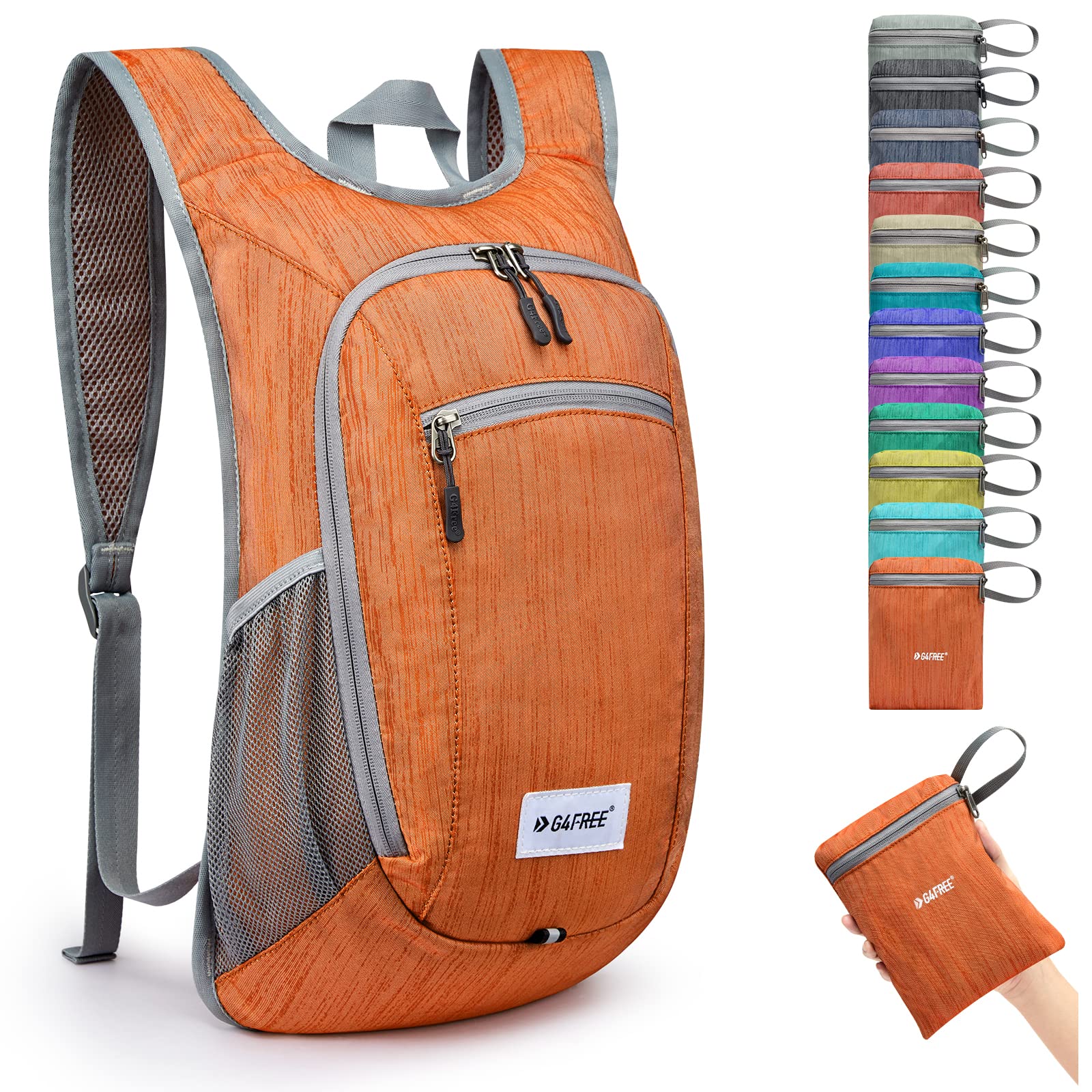
It folds into its own inner pocket — no separate stuff sack to lose — and that's most of the reason to own one. We've come to treat it as the spare pack that lives at the bottom of a duffel and comes out when a trip turns into a walk.

Ten liters is a lunch, a shell, sunscreen, and a couple of bottles in the mesh side pockets, at 0.25 kilograms, in water-resistant polyamide with an SBS zipper. The straps adjust to a snug fit, which is the only thing keeping a frameless pack steady, and the whole thing rides flat against your back.

Where it earns its place is the walk you didn't plan for — the extra hour in a town, the trail that turns out longer than the map said. Where it doesn't is a cold, wet day with layers: 10 liters fills fast and there's no hip belt to take the weight when it does.

Pros

  • Folds into its own inner pocket
  • Mesh side pockets fit standard bottles
  • Water-resistant polyamide with an SBS zipper

Cons

  • Folding it back into its pocket takes practice
Our verdict

The smallest useful pack here: 10 liters that fold into their own pocket and disappear into a larger bag until you need them.

Check Latest Price

How We Chose and Tested the Best Hiking Backpacks

We built the shortlist from spec sheets first — usable volume, torso-length range, empty weight, frame type, fabric, and price — and cut anything that came in only one torso size or couldn't be adjusted to fit a range of backs. That left a dozen packs, which have been in rotation for six months. We weighed every one on a kitchen scale empty and again fully loaded, so the weight claims on the hangtag could be checked against reality.

Each pack carried the same load: a two-person tent, a 20-degree bag, three liters of water, a stove, and two days of food, roughly 25 pounds, with a lighter 12-pound setup for day hikes. They came on after-work training walks with a full load, weekend ridgeline hikes, and a three-day trip that threw four hours of rain at us. Every couple of hours we stopped to ask where the weight was sitting, whether anything was rubbing, and how the shoulder straps and hipbelt felt under load.

Pockets were judged the way you'd actually use them — fishing a water bottle out mid-climb without stopping, finding a headlamp in the lid at dusk, checking whether a hipbelt pocket holds a phone or just a gel. For usable capacity, we packed the identical kit into every bag and noted what was left over: whether a bear canister fit, whether the lid floated above a full load, whether one pack's 45 liters swallowed what another's 50 couldn't. Durability got the least gentle treatment — loaded packs dragged over granite, wedged into truck beds, and inspected after each trip for frayed webbing, pulled stitching, and zipper snags; anything wearing thin at the frame attachment points got flagged.

How to Choose Hiking Backpacks

Match Volume to the Trip

Ten to 20 liters covers a day hike: water, lunch, a shell, and a layer. Twenty-five to 40 liters is the overnight-to-weekend zone, and it's also the size that doubles as a carry-on. Fifty liters and up is for trips with a sleeping bag, a pad, and food. We think the size question gets more people into the wrong pack than any other decision.

The trap is buying big to grow into. A half-full 65-liter pack carries worse than a full 40, and empty space invites you to fill it with things you don't need. If you're between two sizes, take the smaller one and strap the shelter to the outside.

The Harness Carries the Weight

On any framed pack the hip belt should take most of the load, resting on the shelf of your hip bones rather than circling your waist. The shoulder straps stabilise; they don't carry. That makes the real fit question whether the belt lands in the right place for your build, which is why an adjustable harness such as the multi-position anchors on the Teton is worth paying for — it moves the shoulders' relationship to the belt without changing the pack.

Load it at home and walk a lap before the tags come off. A pack that feels fine empty tells you nothing about how it behaves with a sleeping bag, two liters of water, and three days of food in it.

Framed or Frameless

An internal frame transfers the load to your hips, which is what lets you carry a real weight uphill without your shoulders burning out by lunch. Frameless packables save that structure and the pounds it costs, and they fold into a pocket — but every ounce of the load ends up on your shoulders instead.

That's a fair trade for a day of water and layers, and a poor one for a shelter and a stove. Buy frameless for the second bag in your luggage; buy framed for the trip you're planning around.

The Parts That Fail First

Straps pull out at the anchor stitching, zippers go at the curve where a pocket turns a corner, and the base panel abrades every time you set the pack down on rock. None of that appears in a spec list, so check it in person: run a thumb along the stitching where the shoulder straps meet the body, look at the zipper hardware, and see how many layers the base has.

Warranties are the other half of durability. A limited lifetime cover on the Teton is worth more than the Maelstrom's one-year term if you plan to keep the pack for years rather than a season.

Frequently Asked Questions

Final Verdict

For any trip with a sleeping bag in it, the Teton 55L Scout is the pack we point you to: a real internal frame, a harness that adjusts across torso sizes, and a rain cover in the box. Day hikers should take the SKYSPER 20L instead — a pound of pack and a day's worth of pockets.

If the budget is tight and the trip is two nights, the Maelstrom 40L carries the load for less, as long as you accept that the seams are the part you'll replace first.