Best Hiking Backpacks with Rain Covers of 2026

Nothing ruins a hike faster than watching a rain cover flap loose in the wind while the sky opens up two miles from the trailhead. That little pouch at the bottom of the pack is the one piece of gear you never think about until the forecast changes, and the cover that ships with a backpack is often an afterthought — a plastic cape that belongs on a lunchbox, not on a pack holding a down jacket and a sleeping bag. A pack with a genuinely good rain cover keeps your layers, your food, and your phone dry without making you stop and wrestle it on with cold hands.

That's why we've spent the past six months hiking and camping with 12 backpacks that come with their own covers, from weekend daypacks to multi-day haulers. One thing first-time buyers don't realize: liters aren't a universal measurement — internal pockets, a rigid frame, and a lid all eat into usable space, so two packs with the same number on the tag can swallow very different loads. The picks below are the ones that carried well, held their shape, and kept everything dry when the weather turned.

1

Best Overall

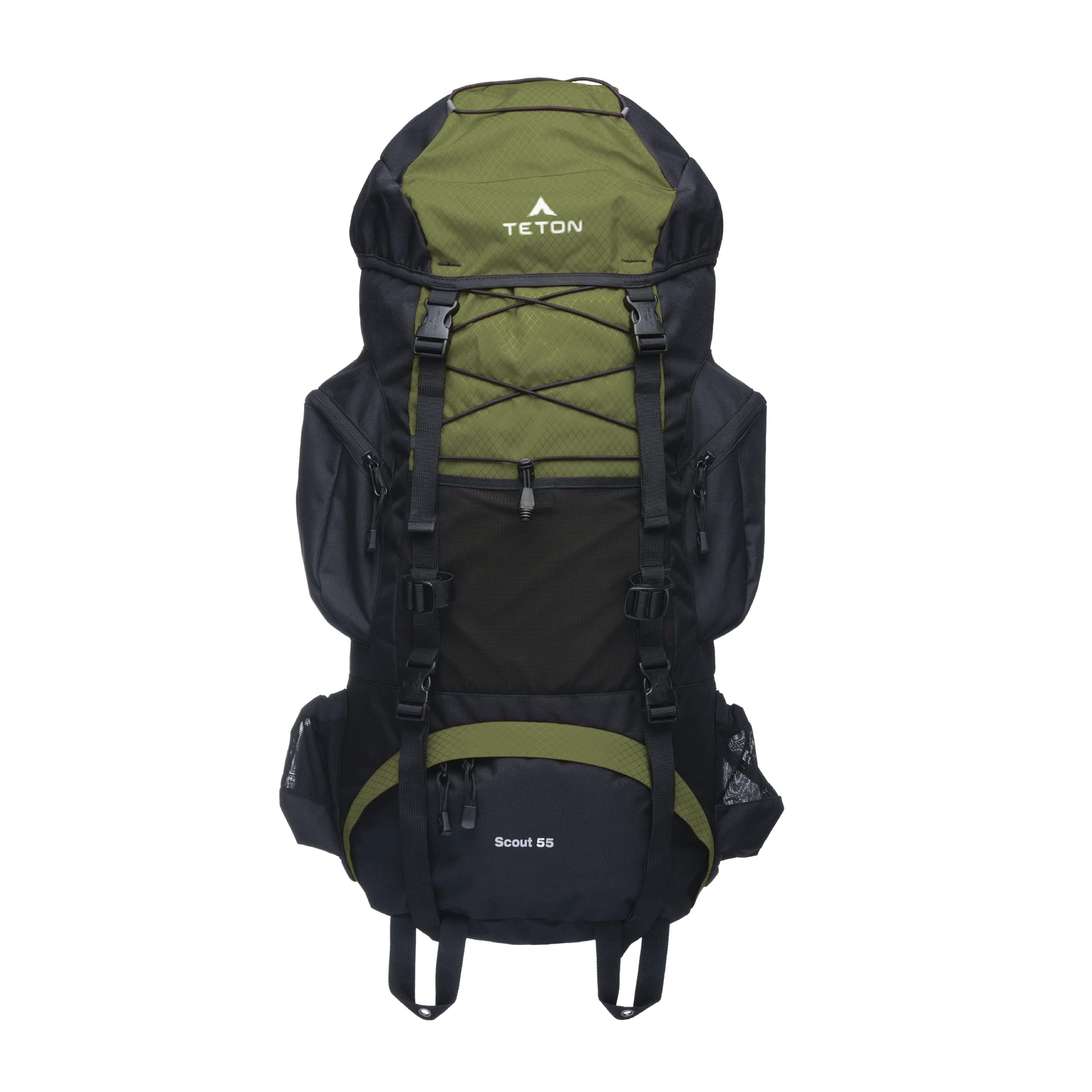
Teton Sports Scout 55L

95 /100
Traveler Score Outstanding

Key details

Volume
55 liters
Weight
4.1 lb
Torso Fit
Multi-position adjustment
Rain Cover
Included (rainfly)
Check Details on Amazon

An internal frame, a torso panel that adjusts for medium and tall frames, and a rainfly in the box: that combination is why this is the pack we take when the trip involves a tent. At 55 liters it swallows a three-day load, and at 1.86 kg it is the heaviest pack here. You are paying for structure, and it is the only pack in this group with a stated internal frame.

Packing it is straightforward: a sleeping bag compartment at the base, seven pockets in total, elastic bottle holders on both sides, and a hydration sleeve with a port for the hose. The multi-directional compression straps are what we appreciate most on a half-full pack, because once you cinch them the load stops shifting when you pick up the pace. The frame can squeak as it settles, which you notice for the first hour of a trip and then stop hearing.

Two fit notes before you order. The bottle holders are tight, so a wide one-liter bottle is a wrestling match; a narrower bottle slides in, and the side straps will take a rolled mat instead. The sleeping bag compartment is snug too, and the pack runs smaller than 55 liters suggests once a bulky synthetic bag is inside.

The rainfly is a separate cover rather than a built-in flap, so decide where it lives and keep it there. One of the top zippered pockets is the obvious spot, reachable without unpacking. It handles steady rain, but it does not seal the pack, so a liner around the sleeping bag is still worth the few ounces. Teton backs the Scout with a limited lifetime warranty, the longest stated coverage of anything here.

Pros

  • Internal frame carries the load on the hips
  • Rainfly included rather than sold separately
  • Multi-position torso fits medium and tall frames
  • Seven pockets and a sleeping bag compartment

Cons

  • Straps creep under a heavy load
Our verdict

For a loaded overnight pack, the Scout is where we point first: an internal frame, multi-position torso adjustment, and a rainfly included.

Check Latest Price
2

Best Lightweight

G4Free 50L Hiking Backpack

92 /100
Traveler Score Outstanding

Key details

Volume
50 liters
Weight
2 lb
Rain Cover
Included
Hydration Sleeve
Dedicated compartment
Check Details on Amazon

Two pounds for a 50-liter pack is the number that makes you look twice, and it is the whole reason the G4Free earns a place here. It carries like a big stuff sack with a harness, which is exactly right for clothes, a lunch, a shell, and a bladder, and it packs down small enough to live in a day bag when you are not wearing it.

Where it earns its spot is organization at that weight. Eight pockets, a shoe compartment, a dedicated hydration sleeve, SBS pull-string zippers, and a rain cover in the box. The shoulder and back padding is sewn on rather than glued down, which is the sort of detail that decides whether a light pack survives a season of bus racks and hostel floors. We keep reaching for it on travel days, when the bag is mostly luggage and only occasionally a hiking pack.

The zippers are the part to watch. They run cleanly on the main compartment but catch where the seams curve, so pull them straight rather than on the diagonal. And do not drag it across granite: lightweight nylon at this weight is a deliberate trade, and the cover protects the pack from rain, not from the ground.

Pros

  • Two pounds for 50 liters
  • Dedicated hydration bladder compartment
  • Rain cover included
  • Padding sewn on rather than glued

Cons

  • No frame, so heavy loads ride on the shoulders
Our verdict

The G4Free is the pack we reach for when weight matters more than structure: 50 liters, two pounds, and a rain cover for light loads and travel.

Check Latest Price
3

Best Daypack

Maelstrom 40L Hiking Backpack

91 /100
Traveler Score Outstanding

Key details

Volume
40 liters
Weight
2.2 lb
Pockets
10
Rain Cover
Included
Check Details on Amazon

Not every hike needs 55 liters, and the Maelstrom is built for the ones that don't: a day on the hill, a summit push from a base camp, a week away with a single bag. Forty liters at 2.2 pounds, with a padded and ventilated back panel, adjustable hip straps, and reflective printing across the front for the walk back in the dark.

Organization is where it runs ahead of the other packs here. Ten pockets and seven zippered compartments, bottle holders that take a wide bottle, elastic loops that hold a pair of trekking poles, and room for a three-liter bladder. It is also the pack in this group that slides under an airplane seat, which makes it the one to take when a hiking trip starts with a flight.

The long game is where we hesitate, and the one-year warranty is the shortest stated coverage here. Treated as a daypack rather than a duffel with straps, though, the pockets, the cover, and the price make it the most practical 40 liters in this group.

Pros

  • Ten pockets and seven zipped compartments
  • Holds trekking poles on the outside
  • Rain cover included
  • Slides under an airplane seat

Cons

  • Seams can give out under heavy loads
Our verdict

Buy the Maelstrom if your hikes are day hikes: forty liters, ten pockets, and a rain cover that also clears an airline seat.

Check Latest Price
4

Best Budget

WoneNice 50L Hiking Backpack

90 /100
Traveler Score Outstanding

Key details

Volume
50 liters (45+5)
Weight
2.56 lb
Rain Cover
Included
Sleeping Bag Compartment
Included
Check Details on Amazon

The WoneNice is the lightest 50-liter pack here at 1.16 kg, and the detail that sells it sits at the base: a separate sleeping bag compartment, so a damp bag or muddy shoes do not share space with your dry layers. It is listed as a 45+5 liter design, with a main compartment, two zipped front pockets, mesh side pockets, and adjustable chest and waist belts.

Packed for a weekend it holds more than the number suggests, with room for clothes, cooking gear, and a 64-ounce water pouch, and it slides under a plane seat once the straps are cinched down. The fabric is light nylon and polyester with a water-resistant finish, which suits a pack that spends as much time in a car boot as on a trail.

Pack it like the soft pack it is: heavy items against your back, the sleeping bag in its own compartment, and the side straps snugged down so the load does not slump on the descent. The rain cover ships with it rather than being sold separately, and it is what makes this a genuine shoulder-season pack, so leave it somewhere you can reach without unpacking.

Pros

  • Lightest 50-liter pack in this group
  • Separate sleeping bag compartment
  • Rain cover included
  • Fits under a plane seat

Cons

  • No frame, so the load rides on your shoulders
Our verdict

The WoneNice is our budget pick for overnighters: light, roomy, with a sleeping bag compartment and a rain cover included.

Check Latest Price
5

First Packs

Speedpark 40L Hiking Backpack

88 /100
Traveler Score Excellent

Key details

Volume
40 liters
Weight
1.76 lb
Rain Cover
Included
Check Details on Amazon

Start with the rain cover, because it is both the reason this pack is on the list and the reason to look closely. It is included, but the elastic that runs across the shoulder straps is loose enough that the cover can slide off the top in wind. Seat it over the pack, hook the elastic under the base, and check it before you walk into weather.

What you get is a lot of pack: 40 liters at 1.76 pounds, a hip belt and chest strap that do real work, padding through the back and shoulders, and more pockets than the price suggests, two of them big enough for a full packing cube between them.

Load it and walk a mile with the straps tightened before you commit to a long trip, because the fit reads differently with weight in it than it does empty. As a first pack, a spare, or a bag that lives in the car for day hikes, we think it is the best value in this group; as an only pack for a weekly habit, look at the framed options instead.

Pros

  • 40 liters at 1.76 pounds
  • Working hip belt and chest strap
  • Rain cover included
  • Pockets that take a full packing cube

Cons

  • Strap anchors can tear with steady use
  • Cut runs tight across the shoulders
Our verdict

Choose the Speedpark for a first pack or a spare: 40 light liters, a rain cover, and a harness that wants a careful look.

Check Latest Price

How We Tested These Hiking Backpacks

We started with roughly 50 packs and narrowed the field by reading specs and owner reviews, filtering for packs that either include a rain cover or have a dedicated pocket for one, then spread our final 12 across a range of capacities and price points so we weren't only looking at expensive gear. Every pack was packed against the same kit list — a fleece, a rain shell, a stove, two days of food, and three liters of water — so we could see how much room was actually left over and how the load sat once it was full.

Fit got checked on two testers, one at 5-foot-2 and one at 6-foot-1, adjusting torso length and hip belt on each and walking a half mile to see whether the weight landed on the hips or dug into the shoulders. We counted every pocket and then used them: could a water bottle come out without taking the pack off, did the lid pocket hold a map and a phone, did the side compression straps still work when the pack was stuffed. A loaded pack that flops over when you set it down told us plenty about its frame.

The rain covers got the worst of it. We wore the packs through steady drizzle and one honest downpour, then checked the layer nearest the shell for damp, and we stuffed each wet cover back into its pocket 10 times to see whether it still folded down small enough to stow. Zippers were opened and closed 50 times on each pack, including one-handed and with gloves on, and we noted snags, split pulls, and whether the pulls were big enough to grab in the cold. After each trip we checked stitching at the strap anchors and looked for fuzzing where the base fabric had scraped across rock.

How to Choose Hiking Backpacks with Rain Covers

Match Volume to the Nights Out

Forty liters is a daypack that also swallows a spare layer, a first-aid kit, and a day of snacks. Fifty liters covers one or two nights if your bag packs small. Fifty-five and up is where a tent, a stove, and several days of food start to fit. The trap is treating those numbers as interchangeable: a dedicated sleeping bag compartment takes a bite out of the main body, and a bulky synthetic bag can make a 50-liter pack pack like a 45.

Decide the trip first, then the number. If most of your walking is day hikes with a flight at either end, put the money into a 40-liter pack that fits an overhead bin. If overnights are the goal, buy the larger pack and compress it for short trips, because a pack that is slightly too big cinches in and one that is too small never grows.

What a Rain Cover Covers, and What It Doesn't

A cover sheds rain off the pack body and nothing else. Straps, hip belt, and anything lashed outside, from a mat to trekking poles, stay wet, and gear strapped high sits above the cover entirely. The fix is a liner: a compactor bag or a dry bag around your sleeping bag costs almost nothing and does more in real weather than any cover.

Check two things before you trust one. A cover held only by elastic across the shoulder straps can slide off the top in wind, so prefer one with a hook or a strap as well. And waterproof in a listing usually describes the fabric, not the seams and zippers, so never treat a covered pack as a dry bag.

Frames, Torso Fit, and Where the Weight Lands

Above a day's load, the hip belt carries the pack, and a frame is what lets the hip belt do it. A frameless 40- or 50-liter pack puts its weight on your shoulders, which is fine for a few hours and punishing by the end of a long day. If a tent is in your future, buy the frame.

Fit is measured by torso length, not height. Run a tape from the bony bump at the base of your neck to the top of your hip bones; that number, not your stature, is what sizing refers to. An adjustable torso panel buys margin if you are between sizes or sharing the pack with someone else.

Pack Weight, Fabric, and What You Give Up

Every pound of empty pack is a pound you carry uphill, and the lightest pack here weighs less than half what the framed one does. What you trade is structure and fabric thickness: 600-denier ripstop over a frame shrugs off granite and bus racks, while a two-pound nylon pack wants to be set down rather than dropped.

Inspect the harness before the fabric. Strap anchors and the stitching where the shoulder straps meet the body are where light packs fail first, and it is the one thing you can check in a shop or in the first ten minutes after a delivery. Pull hard on the straps, look at the bar-tacks, and send it back if the seams look rushed.

Frequently Asked Questions

Final Verdict

Start with the Scout. If the trip involves a tent and a sleeping bag, the stated internal frame and the adjustable torso are the difference between carrying a load and being dragged down by one, and the rainfly is already in the box.

Go lighter when the trip is lighter. The G4Free's two pounds and bladder sleeve suit fast day miles and travel, and if your hikes are day hikes with a flight at either end, the Maelstrom's forty liters, ten pockets, and under-seat size are the easier carry.